Insights on Going Global | Morocco: An Underestimated Blue Ocean Market for Web3

marsbitPublished on 2025-12-31Last updated on 2025-12-31

Abstract

Morocco presents a unique and underestimated Web3 market in North Africa. Despite a strict 2017 central bank ban on cryptocurrency, it has one of the highest crypto adoption rates in the region, with an estimated 10-15% of its 37 million population holding crypto assets. This grassroots, youth-driven adoption is fueled by real economic pain points: strict foreign exchange controls and inefficient traditional banking. Freelancers and businesses increasingly use stablecoins like USDT to receive international payments and settle cross-border transactions quickly via P2P platforms, bypassing slow and costly bank transfers. A pivotal moment was the 2023 earthquake, where Binance’s $3 million crypto airdrop provided immediate, tangible aid to affected users, demonstrating the utility of borderless, instant value transfer in a crisis. By 2025, the regulatory landscape is shifting. The central bank is drafting new legislation to regulate crypto assets, opening doors for compliant exchanges, custody services, and stablecoin-based payment applications. Morocco offers significant potential due to its large, tech-savvy youth population, existing educated user base, and strong demand for fintech solutions. It represents a genuine, need-driven blue ocean market for Web3 ventures, distinct from more developed hubs.

On the Atlantic coast of North Africa, Morocco is staging a unique financial experiment. It once had the world's strictest cryptocurrency ban, but at the same time, it is also the country with the highest cryptocurrency adoption rate in North Africa.

While the official iron gate remains closed, the public's door has already swung wide open. From the office buildings in Casablanca to the markets in Marrakech, digital assets are becoming an invisible weapon for millions of Moroccans to fight inflation and break through foreign exchange controls. In 2025, with the loosening of regulatory bills, it is necessary to re-examine this blue ocean with huge potential.

(The author personally traveled to Morocco this month and obtained first-hand information through random chats with passersby and shop owners on the streets of Casablanca, Marrakech, Fez, Chefchaouen, and other places)

If you only look at the legal provisions, Morocco seems like a desert for cryptocurrency. As early as 2017, Morocco's Foreign Exchange Office (Office des Changes) and the central bank jointly issued an announcement explicitly prohibiting the use of cryptocurrency for transactions, with violators facing penalties for violating foreign exchange management regulations.

However, the data tells a completely different story.

According to the "Global Cryptocurrency Adoption Index" report released by blockchain data analysis company Chainalysis, Morocco has consistently ranked first in North Africa and among the top globally over the past few years. Especially during the 2022 to 2024 period, despite being in a bear market cycle, Morocco's ranking remained strong.

Even more astonishing data comes from the holdings. According to estimates by TripleA and several local fintech institutions, the proportion of cryptocurrency holders in Morocco is approaching 10%-15% of the total population. This means that in this country of about 37 million people, millions have already or are currently engaging with crypto assets in some form.

This is not just a game for the rich. In Morocco, the popularity of cryptocurrency shows strong "grassroots" and "youthful" characteristics. This vast user base has grown organically without the presence of formal exchanges, without bank deposit and withdrawal channels, and even under the threat of legal risks.

What market logic lies behind this phenomenon of "the more it's banned, the hotter it gets"? To understand the heat of the Moroccan market, one must first understand Morocco's financial pain points.

Morocco implements strict foreign exchange controls. The Moroccan Dirham (MAD) is not a fully freely convertible currency. For ordinary citizens, transferring large amounts of funds overseas or receiving small commercial payments from abroad is not only cumbersome but also subject to strict limits.

This creates the most real and rigid demand scenario for cryptocurrencies, especially stablecoins (like USDT).

Morocco has a large number of young talents proficient in French and English who are active on global freelance platforms like Upwork and Fiverr, working in programming, design, and translation. For these young people, receiving overseas remittances through traditional banks (SWIFT) is not only slow (usually taking 3-5 working days) but also comes with high fees, and may even lead to frozen accounts due to fund source issues.

Thus, USDT became the best alternative. In Morocco's tech communities and social media groups, "P2P trading" (peer-to-peer trading) is extremely active. Freelancers receive USDT and then use platforms like Binance P2P to convert it into dirhams and transfer it to a local bank account within minutes, or exchange it directly for cash offline. This process completely bypasses the various restrictions of the SWIFT system and has become an important infrastructure for Morocco's gig economy.

Besides receiving payments, making payments is also a major challenge. Many Moroccan merchants engaged in cross-border e-commerce (such as importing small goods from China) found that applying for foreign exchange quotas through banks to pay suppliers was so slow that it could delay business opportunities.

Cryptocurrency offers the possibility of "instant settlement." Although this practice exists in a gray area, using cryptocurrency to settle part of the payment for goods has become an open secret in the business districts of Casablanca.

Real Case: "Airdrop Aid" in an Earthquake

If foreign exchange controls are a long-term driver, then the major earthquake in 2023 was a "stress test" that showed the entire society the practicality of cryptocurrency.

In September 2023, a strong earthquake struck the Al Haouz region of Morocco, causing severe casualties and property damage. During the golden rescue period of the disaster, traditional bank branches were closed, ATMs were out of power or out of cash, and victims urgently needed funds to buy supplies.

At this very moment, the world's largest cryptocurrency exchange, Binance, announced an airdrop to Moroccan users.

This was not a fictional marketing stunt, but a real case:

· Binance used user identity verification (KYC) addresses to identify users located in the hardest-hit areas of the Marrakech-Safi region.

· Directly airdropped $100 worth of BNB (Binance Coin) to these users' accounts.

· Also airdropped smaller amounts of tokens to active Moroccan users not in the epicenter.

· The total donation amounted to $3 million.

Although this money could not rebuild homes, at the time, it demonstrated a core advantage of cryptocurrency: borderless, intermediary-free, and instant transfer. Many users quickly converted these tokens into cash through P2P channels to buy urgently needed tents and food.

This event had a profound impact on the Moroccan public. It made many ordinary people who were skeptical of "virtual currency" realize that it is not just a speculative tool, but also a value transfer network that can operate in extreme environments.

Standing in 2025, the Moroccan market is undergoing a qualitative change.

As Morocco's central bank (Bank Al-Maghrib) formally drafts and submits a crypto asset regulatory bill, this North African country is moving from "complete prohibition" to "embracing regulation."

What does this mean for companies going global and investors?

  1. The opening of the compliance track: As the bill progresses, exchange licenses and custody service licenses will become scarce resources. Whoever can establish a presence first in the Casablanca Finance City (CFC) will be able to capture these millions of already market-educated users.
  2. The explosion of payment scenarios: Morocco has an extremely high mobile phone penetration rate. Once the compliance threshold is lowered, mobile payment and remittance applications based on stablecoins will experience explosive growth, directly challenging traditional remittance companies (like Western Union).
  3. Talent dividend: Morocco has one of the best engineering reserves in North Africa. The cost of Web3 developers here is much lower than in Europe and America, but their technical capabilities are not inferior.

Morocco is not the next Dubai, nor is it the next Singapore. It has a unique North African imprint: a young demographic structure, strong cross-border payment needs, and a growing regulatory awareness. The 6 million cryptocurrency users here were not created by advertising, but were forced out by life's demands. A market based on real pain points often has more vitality than a purely speculative market.

For Web3 practitioners, don't just focus on Silicon Valley and Hong Kong. Between the desert and the ocean in North Africa, Morocco, this underestimated piece, might just be the missing corner of the global puzzle.

(Note: The data mentioned in this article references the Chainalysis 2022-2024 annual reports, TripleA global adoption rate data, and public reports by Moroccan local media Hespress on the 2023 earthquake aid.)

Trending Cryptos

Related Questions

QWhat is the current regulatory stance of Morocco towards cryptocurrencies, and how does it contrast with actual public adoption?

AMorocco has one of the strictest regulatory stances, with a ban on cryptocurrency transactions issued by the central bank and foreign exchange office in 2017. However, this contrasts sharply with public adoption, as the country has the highest cryptocurrency adoption rate in North Africa, with an estimated 10-15% of the population holding crypto assets.

QWhat are the primary financial pain points in Morocco that have driven the widespread adoption of cryptocurrencies like USDT?

AThe primary financial pain points are strict foreign exchange controls, which make it difficult and slow to transfer funds abroad or receive international payments. This has created a strong demand for stablecoins like USDT, especially among freelancers and importers who use them for faster, cheaper, and more accessible cross-border transactions.

QCan you describe the real-world case study mentioned in the article that demonstrated the utility of cryptocurrency during a crisis in Morocco?

ADuring the devastating earthquake in the Al Haouz region in September 2023, the cryptocurrency exchange Binance conducted an airdrop, distributing $100 in BNB to identified users in the most affected areas. This allowed recipients to quickly convert the crypto to cash via P2P platforms and purchase essential supplies, demonstrating crypto's utility as a borderless, intermediary-free value transfer network in an emergency.

QWhat are the three key opportunities for investors and businesses in Morocco's emerging Web3 market, according to the article?

AThe three key opportunities are: 1) The opening of compliant business tracks, such as obtaining exchange or custody service licenses. 2) The explosion of payment scenarios, where stablecoin-based mobile payment and remittance apps could challenge traditional players. 3) The talent红利, as Morocco has a pool of high-skilled yet cost-effective Web3 developers.

QHow does the article characterize the Moroccan Web3 market, and what makes it unique compared to other global hubs?

AThe article characterizes it as a unique, underestimated blue ocean market with a strong grassroots and youth-driven adoption. It is not the next Dubai or Singapore but has a distinct North African identity defined by its young demographic, powerful cross-border payment needs, and awakening regulatory awareness. Its user base is driven by real-life necessities rather than speculation, making it a more resilient and organic market.

Related Reads

The Hunter Becomes the Hunted: The Most Profitable MEV Bot Gets Hacked

A well-known and highly profitable Ethereum MEV Bot, Jaredfromsubway.eth, suffered a sophisticated on-chain attack this Saturday, losing over $7.5 million. Analysis by Blockaid and others reveals this was not a conventional phishing or smart contract exploit, but a targeted "counter-MEV honeypot attack." The attacker meticulously laid a trap over several weeks, deploying 66 fake token contracts and liquidity pools disguised as major assets like WETH and USDC. These pools created the illusion of arbitrage opportunities. The MEV Bot's automated system detected these signals, executed trades, and in the process, granted approval permissions to attacker-controlled contracts. These approvals were not revoked, creating a persistent vulnerability. The attacker then exploited this in a single transaction, draining the bot's ETH, USDC, and USDT holdings. Jaredfromsubway.eth is notorious as one of Ethereum's most active and profitable MEV Bots, primarily known for executing "sandwich attacks" to profit from transaction slippage. Estimates suggest it has earned tens of millions in MEV revenue. The incident highlights escalating crypto security threats, demonstrating that even top-tier automated "predators" are vulnerable to novel, logic-based attacks designed to exploit their own operational rules. Following the hack, an unverified X account impersonating Jaredfromsubway.eth emerged, falsely offering a bounty for the return of funds, prompting developer warnings for users to stay vigilant.

marsbit26m ago

The Hunter Becomes the Hunted: The Most Profitable MEV Bot Gets Hacked

marsbit26m ago

The Reality of Payments in Latin America Is Not What You Think

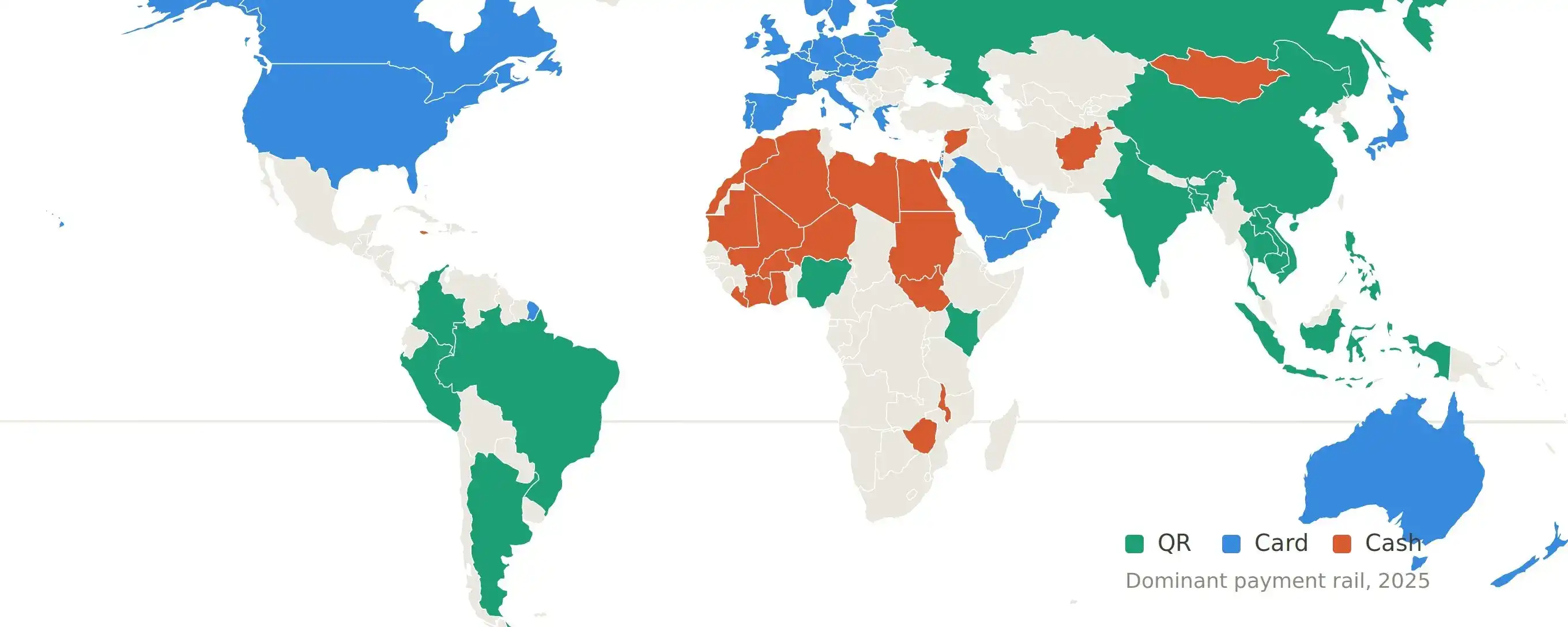
The payment landscape in Latin America is undergoing a fundamental shift, driven by on-the-ground realities that challenge common perceptions. Based on over 500 hours of field research across the region, key insights emerge. Firstly, QR code payments, like Brazil's Pix, are becoming the dominant payment method in most emerging markets, overtaking cards. However, these domestic instant payment systems lack international interoperability, creating a significant gap for cross-border users. Secondly, the narrative around crypto cards is often misunderstood; their primary volume comes from high-net-worth professionals using them for salary conversions (e.g., USDT to local currency via Pix), not retail micro-payments. Competition in payments is shifting from customer acquisition to controlling the settlement layer, leading fintechs to acquire banking licenses for efficiency. Thirdly, treating "Latin America" as a single market is a mistake. Countries like Argentina, Brazil, and Mexico have distinct economic realities, user segments, and regulatory approaches. Brazil alone has at least five distinct user segments with different financial flows. Overlooked markets like Guatemala, Honduras, and El Salvador (the "forgotten five") offer high remittance volumes with lower competitive density. Finally, regulation in Latin America is often ahead of the US, with clearer frameworks for digital assets and a pragmatic approach from regulators focused on safety rather than obstruction. The margin on stablecoin forex is rapidly compressing toward zero, meaning future winners will be those building value-added services on top of the infrastructure, not just the cheapest exchange.

marsbit41m ago

The Reality of Payments in Latin America Is Not What You Think

marsbit41m ago

Making Music in a Bear Market: The Survival Experiment of a Bitcoin Band

"Orange Pill Jam: A Bitcoin Band's Survival in the Bear Market" Orange Pill Jam is a musical group exploring themes of financial sovereignty and privacy, born from the Bitcoin community. Formed after singer Mermaid performed her song "Dollar Apocalypse" at a 2022 conference, the band creates music intended for both Bitcoin enthusiasts and general audiences. Their creative process involves Mermaid writing lyrics and melodies, which producer/multi-instrumentalist Michi then shapes with a precise, rhythm-focused approach, often demanding numerous retakes to achieve his unique standard of timing. Their songs, like "Cypherpunks' Manifesto" and "Fire of Freedom," tackle concepts of digital privacy, the pitfalls of "free" services, and personal sovereignty, influenced by experiences in places like El Salvador. Despite operating in a crypto bear market with a Copyleft model (offering music for free sharing/remixing and accepting optional Bitcoin donations), they face practical challenges. Their growth is slow on platforms like YouTube and Spotify, which aren't optimized for their niche content. The band also navigates the rise of AI-generated music. While acknowledging AI's efficiency for certain tasks, they believe human creativity occupies a unique space that algorithms cannot replicate—the ability to create new genres and capture intangible rhythmic feeling. For Orange Pill Jam, the core argument for both Bitcoin in a downturn and human artistry in the AI age lies in this irreplaceable, intentional, and imperfectly human creative process. Their project persists as an anti-algorithm experiment, valuing the unquantifiable impact of music over scalable metrics.

marsbit48m ago

Making Music in a Bear Market: The Survival Experiment of a Bitcoin Band

marsbit48m ago

Trading

Spot
Futures

Hot Articles

What is VRJAM(BLUE)

VRJAM(BLUE): Revolutionizing Live Experiences in the Virtual World Introduction to VRJAM(BLUE), $vrjam(blue) In an age where virtual experiences are becoming increasingly prevalent, VRJAM(BLUE), represented by the token $vrjam(blue), emerges as a pioneering project within the cryptocurrency space. Launched in 2022, VRJAM(BLUE) seeks to transform how live events are conducted in the digital realm by utilizing the power of blockchain technology and the Hedera Hashgraph platform. As a unique blend of immersive social gaming and interactive virtual events, VRJAM(BLUE) strives to create a comprehensive, engaging experience that resonates with users worldwide. What is VRJAM(BLUE), $vrjam(blue)? At its core, VRJAM(BLUE) is a live experience platform harnessing blockchain to facilitate immersive interactions during virtual events. It stands out as a futuristic solution that allows users to engage with one another in real time, bridging the gap between the physical and digital worlds. The platform leverages advanced technologies, including AI-powered virtual humans, which introduce customizable digital representations of users. These entities serve as avatars that enhance the social dynamics of virtual gatherings. Coupling these virtual beings with the use of non-fungible tokens (NFTs) introduces a layer of security and authenticity, ensuring that unique digital assets can be traded and valued properly within the platform's ecosystem. Moreover, VRJAM(BLUE) integrates a native cryptocurrency, the VRJAM Coin, which acts as the medium of exchange within its virtual world. This digital currency facilitates transactions for services, content, and assets while enabling users to participate seamlessly in live events and interactive experiences. Creator of VRJAM(BLUE), $vrjam(blue) The specific identity of the creator of VRJAM(BLUE) remains undisclosed, though the project is under the leadership of CEO Sam Speaight. His vision for the platform aims at leveraging innovative technology and strategic partnerships to expand the reach and impact of VRJAM(BLUE) in the rapidly evolving web3 ecosystem. Investors of VRJAM(BLUE), $vrjam(blue) VRJAM(BLUE) has garnered considerable interest from various investors and funding rounds, successfully raising a total of $5.34 million throughout 12 funding events. These various initiatives, including Initial DEX Offerings (IDO) and token launches, have provided the necessary capital to propel the project forward. However, specific details regarding the individual investors or organizations backing VRJAM(BLUE) have not been disclosed. How Does VRJAM(BLUE), $vrjam(blue) Work? The innovative approach of VRJAM(BLUE) revolves around multiple cutting-edge technologies, notably artificial intelligence, virtual reality, and blockchain. AI-Powered Virtual Humans A distinguishing feature of VRJAM(BLUE) is its integration of AI-powered virtual humans. These customizable characters respond dynamically to user interactions, enriching the overall experience of virtual events. This personalization allows users to create unique identities and facilitating more meaningful connections within the community. NFT Technology By incorporating NFT technology into its framework, VRJAM(BLUE) provides users with enhanced security and ownership of digital assets. Users can purchase, sell, or trade NFTs that represent virtual tickets, memorabilia, or other digital creations linked to live events, ensuring that ownership is verifiable and protected. Native Cryptocurrency The VRJAM Coin serves as the platform's native currency, allowing users to transact seamlessly within the virtual environment. This cryptocurrency not only supports traditional user activities but also bolsters a larger economic ecosystem tailored to the needs of VRJAM’s community. DeFi Solutions The project also embraces decentralized finance (DeFi) by incorporating trustless protocols. These solutions aim to stabilize token prices and enhance liquidity, allowing users to engage in financial transactions without intermediary restrictions. Timeline of VRJAM(BLUE), $vrjam(blue) To fully understand the evolution of VRJAM(BLUE), it's essential to take a closer look at its timeline: 2022: Launch of VRJAM(BLUE) – The platform made its debut, ushering in a new era for virtual event experiences. November 30, 2022: Completion of the Token Generation Event (TGE) – This marked a significant milestone, as the platform's native cryptocurrency became available for investor engagement. Post-TGE: Following the TGE, the distribution of tokens initiated, featuring a 20% immediate release, followed by a linear vesting phase of the remaining 80% over a period of six months. Key Features and Partnerships The success of VRJAM(BLUE) can also be attributed to its strategic partnerships and innovative features. Partnerships In its quest to bring life to the metaverse, VRJAM(BLUE) has formed alliances with prominent entities in the industry. Notably, its collaboration with Polygon aims to enhance the efficiency and reach of live events. Additional partnerships with organizations such as Agora and Enjin further bolster content distribution and the utilization of NFT technology. These collaborations are enhancing VRJAM(BLUE)'s capabilities and expanding its influence in the web3 ecosystem. Token Liquidity Protocol Operating on the Hedera Hashgraph, VRJAM(BLUE) employs a token liquidity protocol that aggregates liquidity across various trading platforms. This initiative is designed to unify token pricing, thus enhancing user confidence in the VRJAM Coin and promoting stability within the ecosystem. Web3 Economy With the overarching aim of fostering a sustainable web3 economy, VRJAM(BLUE) is diligently working on its DeFi product suite. By providing users with tools for financial engagement, such as yield farming or staking, the project is paving the way for broader participation in its virtual economy. Conclusion VRJAM(BLUE), with its token $vrjam(blue), stands at the forefront of the revolution in virtual experiences and live interactions within the digital space. By intertwining advanced technologies such as AI, virtual reality, and blockchain, the project has developed a platform that not only facilitates immersive experiences but also builds a vibrant, interactive community. As the landscape of the crypto and web3 industries continues to evolve, VRJAM(BLUE) aims to play a critical role in shaping the future of virtual events and experiences. With its commitment to innovation and community engagement, VRJAM(BLUE) is well-positioned to pave a prosperous path for digital interactions in the years to come.

620 Total ViewsPublished 2024.12.03Updated 2024.12.03

What is VRJAM(BLUE)

How to Buy BLUE

Welcome to HTX.com! We've made purchasing Bluefin (BLUE) simple and convenient. Follow our step-by-step guide to embark on your crypto journey.Step 1: Create Your HTX AccountUse your email or phone number to sign up for a free account on HTX. Experience a hassle-free registration journey and unlock all features.Get My AccountStep 2: Go to Buy Crypto and Choose Your Payment MethodCredit/Debit Card: Use your Visa or Mastercard to buy Bluefin (BLUE) instantly.Balance: Use funds from your HTX account balance to trade seamlessly.Third Parties: We've added popular payment methods such as Google Pay and Apple Pay to enhance convenience.P2P: Trade directly with other users on HTX.Over-the-Counter (OTC): We offer tailor-made services and competitive exchange rates for traders.Step 3: Store Your Bluefin (BLUE)After purchasing your Bluefin (BLUE), store it in your HTX account. Alternatively, you can send it elsewhere via blockchain transfer or use it to trade other cryptocurrencies.Step 4: Trade Bluefin (BLUE)Easily trade Bluefin (BLUE) on HTX's spot market. Simply access your account, select your trading pair, execute your trades, and monitor in real-time. We offer a user-friendly experience for both beginners and seasoned traders.

4.1k Total ViewsPublished 2024.12.11Updated 2026.06.02

How to Buy BLUE

Discussions

Welcome to the HTX Community. Here, you can stay informed about the latest platform developments and gain access to professional market insights. Users' opinions on the price of BLUE (BLUE) are presented below.

活动图片