Polkadot’s pUSD stablecoin is here! But the market already sees 3 red flags

ambcryptoPublished on 2025-09-28Last updated on 2025-09-29

Key Takeaways

What is pUSD, and why is Polkadot launching it?

Polkadot is launching pUSD, a DOT-backed stablecoin, to boost its DeFi ecosystem and reduce reliance on USDT and USDC.

What are the risks facing pUSD’s launch?

pUSD faces concerns over using Acala’s failed framework and being backed solely by DOT.


Polkadot [DOT] is preparing to roll out its own stablecoin, pUSD, in a bid to strengthen its DeFi ecosystem and reduce reliance on Tether [USDT] and Circle’s USD Coin [USDC].

The new token will be over-collateralized and backed entirely by DOT, giving the network more control over its financial infrastructure. But the move comes with baggage.

Source: polkadot.subsquare

Can Polkadot avoid another aUSD moment?

The biggest question hanging over pUSD is whether it can steer clear of the pitfalls that doomed Acala’s aUSD. The new stablecoin relies on Honzon, the same framework Acala used before its collapse.

This makes some community members uneasy.

Source: polkadot.subsquare

Many recall how the aUSD incident shattered trust, with accusations that the team deflected blame and left users uncompensated.

While some back the need for a native stablecoin, critics insisted that governance should rest with Polkadot’s OpenGov and not Acala. They argued that accountability will determine adoption.

Polkadot

Source: polkadot.subsquare

For many, clear accountability will determine whether they back pUSD or not.

The risks of sole backing

Beyond the Acala debate, pUSD faces another hurdle: it’s backed solely by DOT.

While the stablecoin is overcollateralized (making it safer than Terra’s failed UST), depending on a single asset could spark liquidation cascades and heavy sell pressure if markets turn.

MakerDAO’s DAI learned this lesson early, moving from ETH-only to a basket of crypto and even real-world assets.

There’s also an argument that Polkadot already has stronger native options like HOLLAR, designed specifically for appchains.

Source: X

For pUSD to succeed, it must prove that a DOT-only model can hold up under stress.

Can pUSD fight?

This announcement comes amid a broader trend of newer stablecoins being launched, but the big names barely flinched. For context, Tether  still rules the stablecoin market with a massive $174B market cap, while Circle’s USDC sits at $73B.

Source: Forbes

Together, they dominate global liquidity and trading pairs across exchanges.

Against these giants, pUSD is starting from scratch, backed solely by DOT and confined to Polkadot’s ecosystem.

The challenge will be to earn trust and adoption; pUSD must prove it can stand firm where others already command near-total market share.

Source: TradingView

At press time, DOT traded at $3.93, slipping nearly 1.6% since the pUSD proposal announcement. RSI hovered just above neutral at 52, while MACD showed weakening bullish signals, hinting at short-term hesitation.

Traders are perhaps treading carefully.

Share

Trending Cryptos

Related Reads

'Bear' Doomsday Prophecy: AI 'Reaching Its Peak', U.S. Stocks to Top Out Fastest in Q3, Down 30-50%

"A Short Seller's Dire Prediction: AI Boom Fading, US Stocks to Peak by Q3 with 30-50% Decline" Prominent macro investors Jeffrey Gundlach and Felix Zulauf warn that the AI-driven market rally is nearing its end, forecasting a major US stock market correction of 30-50%, potentially beginning as early as Q3. Their analysis points to alarming parallels with historical market tops, citing extreme concentration in the top AI-related stocks within the S&P 500. Zulauf's bearish thesis hinges on unsustainable capital expenditure trends among major cloud companies, negative free cash flow emergence, and soaring semiconductor prices. Gundlach highlights dangerous parallels to the 1999 tech bubble peak. A key divergence from conventional wisdom is Gundlach's view that long-term Treasury yields will not fall meaningfully even during a recession, due to America's structurally out-of-control fiscal deficits and soaring interest costs. He warns this could force the government into yield curve control or even a sovereign debt restructuring. Both investors express severe concerns about the opaque private credit market, drawing parallels to the pre-2008 financial crisis environment. They allege widespread rating inflation, misrepresented credit quality, liquidity illusions, and fraudulent asset valuations within this sector. The analysis links the AI boom and private credit crisis through financing costs. They argue that as AI companies' cash flows weaken and they seek funding, a high and sticky long-term interest rate environment will severely stress lower-rated corporate borrowers, exposing cracks in credit markets. Finally, they predict a regime shift where the US dollar weakens and US equities underperform global markets, marking the end of their long dominance. The stage is set for a significant market reversal.

marsbit6m ago

'Bear' Doomsday Prophecy: AI 'Reaching Its Peak', U.S. Stocks to Top Out Fastest in Q3, Down 30-50%

marsbit6m ago

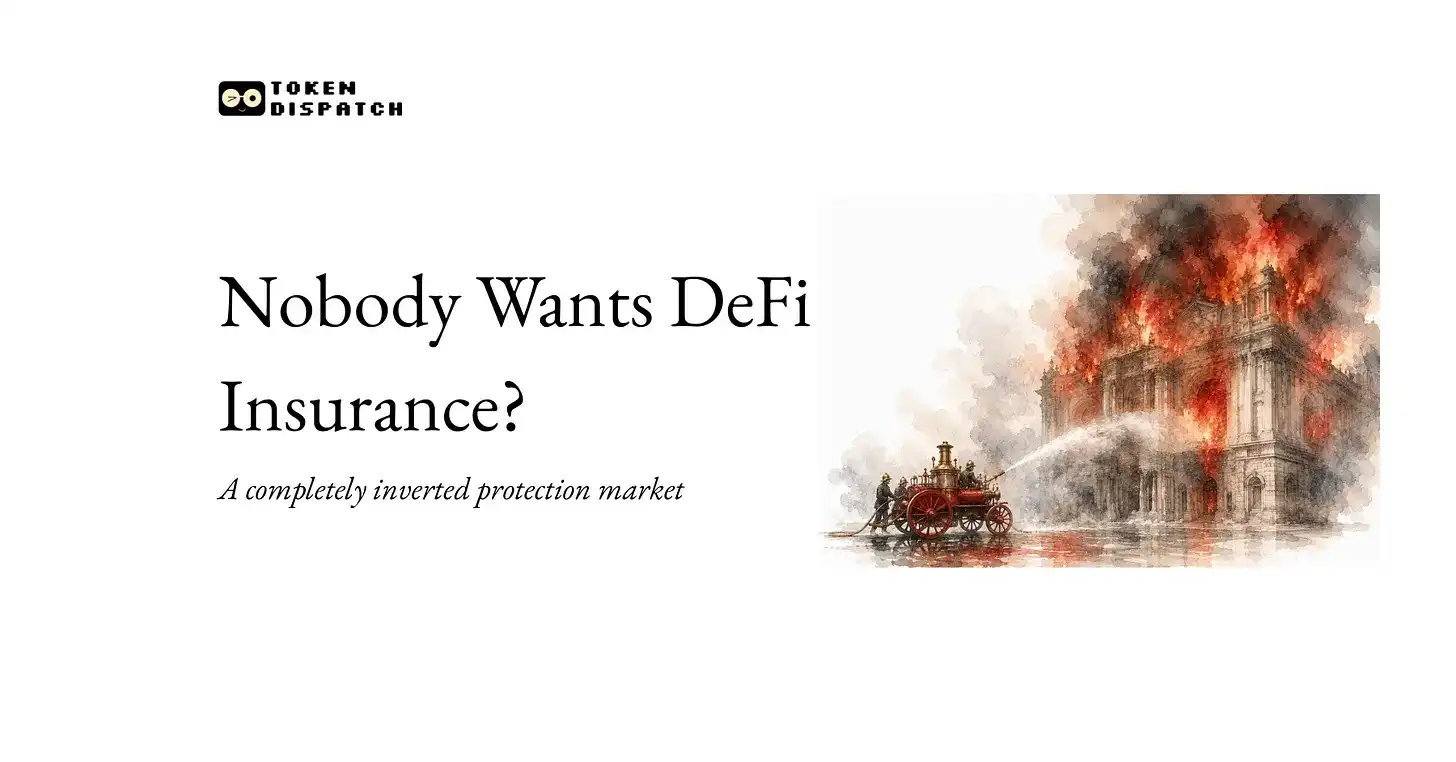
Why Does No One Buy DeFi Insurance?

**Title: Why Isn't DeFi Insurance Being Bought?** DeFi insurance, which promised automated, unbiased payouts via smart contracts, has failed to gain traction. The core issue is economic: high premiums severely erode the yields that attract users to DeFi in the first place. For example, insuring a USDC deposit on Aave V3 could cost 1.5–2.5% of the annual yield, leaving a net return barely above a savings account. For riskier platforms like Maple Finance or Ethena, premiums can even turn net yields negative. Consequently, users often forgo insurance, as it nullifies their profit motive. The market also suffers from structural flaws. First, DeFi risks are highly correlated (e.g., an oracle failure can impact multiple protocols simultaneously), unlike the independent risks in traditional insurance. This makes large-scale events potentially catastrophic for insurers. Second, the total capital in DeFi insurance pools (e.g., Nexus Mutual's ~$81.5M) is minuscule compared to the hundreds of billions in total value locked (TVL), creating a massive capacity gap. A single major hack could drain the entire industry's reserves. Furthermore, the governance model where tokenholders vote on claims creates a conflict of interest, incentivizing them to deny payouts to protect their own funds. As a result, the sector is shrinking. While pioneers like Nexus Mutual are pivoting to preventative measures (bug bounties) and seeking external capital via reinsurance, the fundamental problems remain. DeFi insurance represents a public good—its stability benefits the entire ecosystem—but without a mechanism to share costs, a "tragedy of the commons" ensues where no one is willing to pay, leaving the system vulnerable.

marsbit20m ago

Why Does No One Buy DeFi Insurance?

marsbit20m ago
Trading

Spot
Futures

Hot Articles

Discussions

Welcome to the HTX Community. Here, you can stay informed about the latest platform developments and gain access to professional market insights. Users' opinions on the price of S (S) are presented below.

活动图片