XRP 突破新高 老币凶猛背后的加密平行世界

金色财经Published on 2025-07-29Last updated on 2025-07-29

在每一轮加密行情的起落之间,总有一些熟悉的名字反复出现在涨幅榜单之上。

XRP、XLM、ADA ……这些在主流加密圈被视作「没有未来」的项目,时至今日,仍在新一轮牛市的浪潮中重新刷存在感。

它们不是新晋的创新公链,也不是叙事正火的当红炸子鸡,更谈不上什么强大生态或技术突破。 但到了牛市周期的某个阶段,

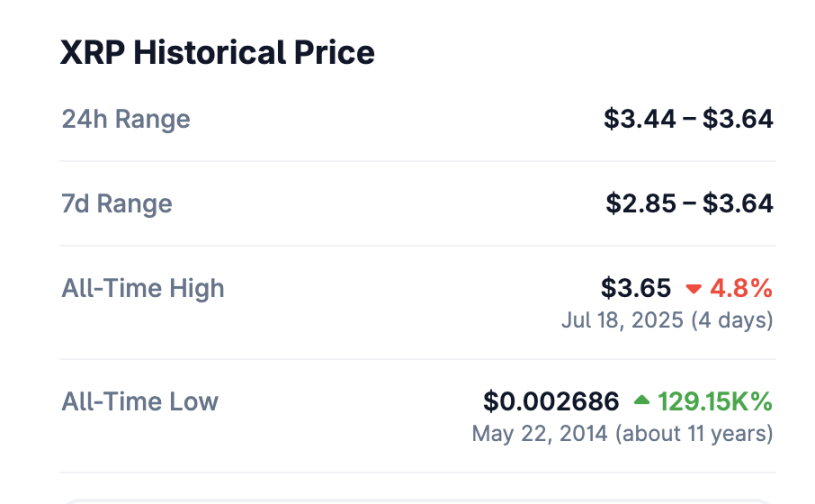
它们总能以某种难以解释的方式,逆势上涨,重回流量中心,甚至还能如 XRP 一样突破新高。
这不仅仅是金融市场中的「炒作惯性」,更像是加密行业存在一个隐秘的平行世界。

在这个平行世界中,XRP 是跨境支付的未来,XLM 是全球小额支付的希望,ADA 是智能合约治理的新秩序。

老币不死,必有不凡。

加密平行世界

如果说加密市场是一个充满热点轮动与技术革新的舞台,那么老币的生存土壤,往往存在于这个舞台的背后——一个与主流加密社群几乎平行的世界。

我们习惯了在 Twitter、Discord 或 Telegram 、微信社群里讨论新叙事和新项目,习惯了以太坊、Solana 生态或 meme 币的热点切换。

却很少意识到,这些被称为「老币」的资产,背后同样有着庞大而稳定的社群,只是他们的活跃空间并不在我们习以为常的圈子里。

XRP、XLM、ADA,HBAR……这些老币的用户,从来就不是加密推特的活跃分子,也不是社区内听信 KOL 宣传买币的投机者。

他们有自己的信息渠道、社群网络和判断逻辑——或者,更直接地说,他们并不在乎行业里正在流行什么。

XRP 的社群,在日本,美国甚至是拉美的 WhatsApp 群、Line 群和 Facebook 社团里活跃着。

这些用户大多对加密的技术逻辑并不关心,也不追逐行业热点,但他们熟悉 XRP 的跨境支付故事,认同 Ripple 与银行的合作模式,甚至会把 XRP 视为一种「金融革新的长期资产」来看待。

无论是 XRP 被 SEC 起诉,还是市场上的各种唱衰声音,这些用户的信念基本不受影响。

Stellar(XLM)的社区同样如此。

在一些发展中国家,Stellar 与本地金融服务商的合作让其拥有真实的用户基础。他们未必知道 Staking、DeFi,甚至对链上的创新生态一无所知,但 Stellar 对他们来说,已经是认知中的前沿品牌和资产。

Cardano(ADA)则有着更典型的「死忠粉」现象。

在日本、非洲、东欧、部分英语国家,Cardano 的教育、治理、社区项目为它积累了大量忠实用户。甚至在中国,也有以互联网大厂程序员为主导的 ADA 社区。
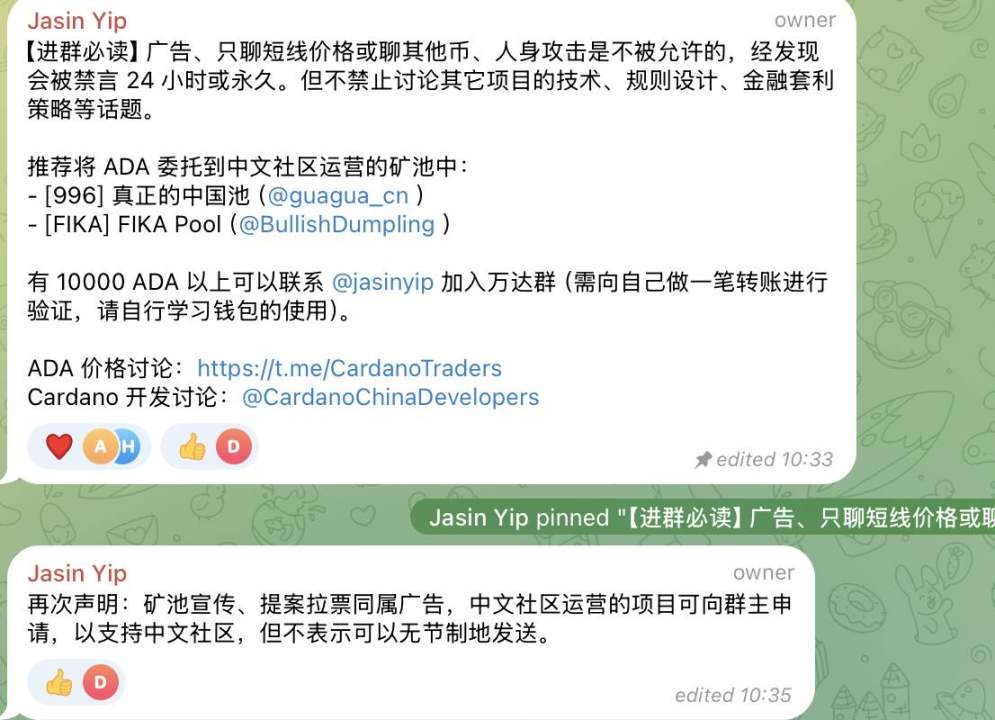
这些人常年活跃在 Reddit、Telegram 和地方论坛里,对 Cardano 的技术路线、创始人 Charles Hoskinson 的演讲如数家珍,哪怕生态发展缓慢,哪怕行业质疑声不断,他们依然坚定持有。

这些认知,在外界看来,可能早已和现实脱节,但它们构成了某种根深蒂固的持币理由。

这一切构成了一种与主流加密世界并行的生态。

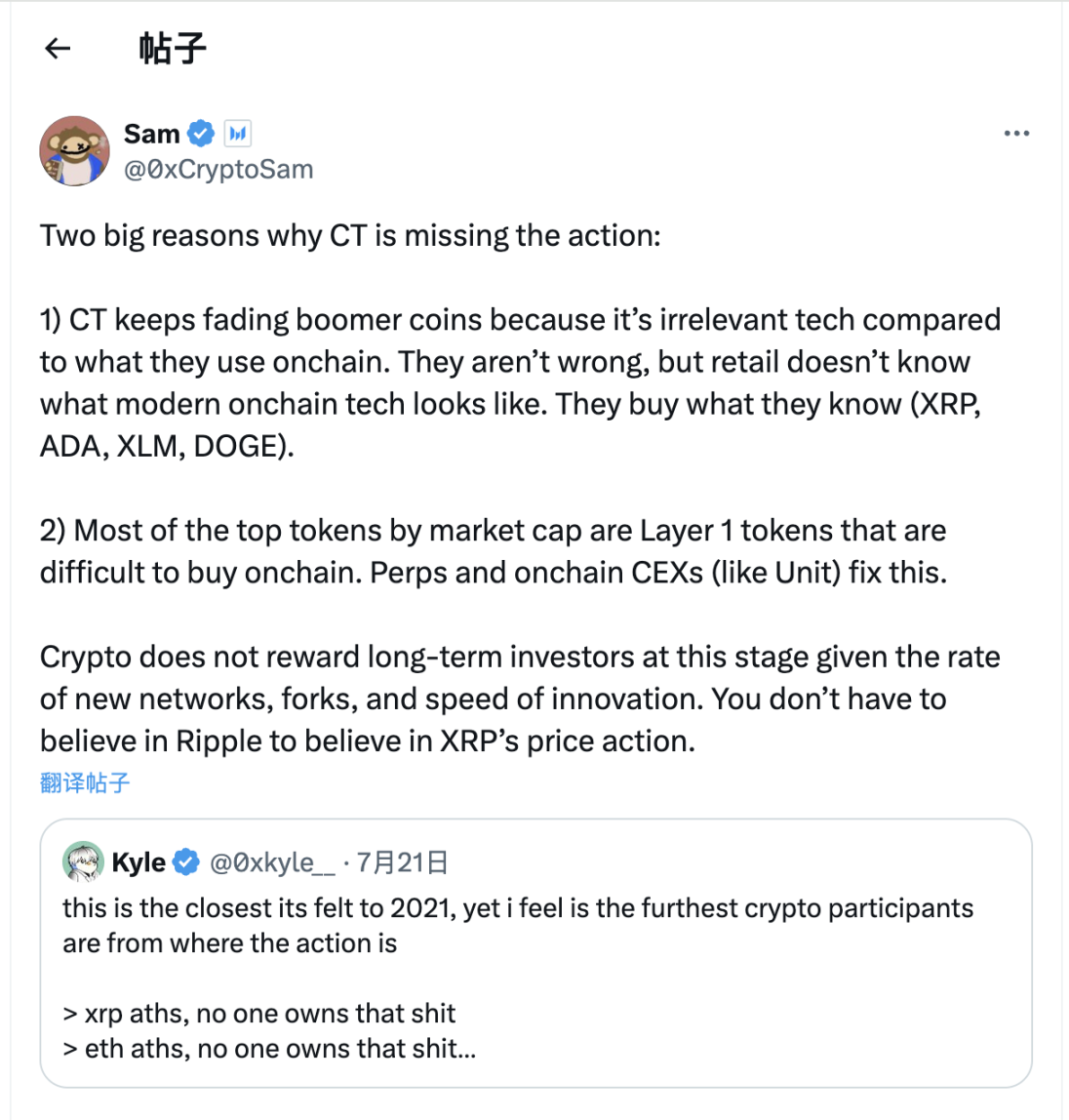
Messari 分析师 Sam 在 x 表示,加密推特总是看衰那些「老年币」,因为和他们链上用的新技术相比,这些币已经过时了。他们的判断没错,但普通散户其实并不了解什么是现代链上技术,只会买他们熟悉的币(比如 XRP、ADA、XLM、DOGE)。
它不靠热度生存,也不随市场叙事而起落,这些老币的社群运作逻辑,反倒更接近于 Web2 时代的用户文化: 品牌、习惯、情感认同,甚至是「早已习惯了」的心理惯性。

老币的生存从来都不依赖行业的主流舞台,它们的活力,藏在那些被主流加密世界所忽视的「隐秘角落」里。

也正因如此,没有交易所会轻易下架 XRP、XLM 或 ADA。

它们带来的交易量、活跃用户、市场深度和对冲需求,都是交易平台的重要组成部分。

就算项目方在技术上没什么突破,老币依旧在现货、杠杆、永续合约的交易榜单上有着不可忽视的地位。

它们成为了市场的一部分,被动资金的配置习惯,甚至是投机者心中的「老朋友」——只要行情启动,资金总会有一轮回流。

不只是资本,还有政治

除了用户和社群,这些项目方的经济和政治实力远超外界想象。

这些被视为「过气」的加密项目,之所以依然闪耀不仅因为有老用户在场,更因为它们在传统金融与政治资本中,早已稳稳占有一席之地。

以 XRP 为例,Ripple 并非一个孤立的技术与商业组织,而是长期参与传统金融与政策制定的「老玩家」。

Ripple 创始团队与高管,频繁出现在国际支付论坛、美国国会听证会和金融科技峰会的发言席上,并且与特朗普政府交往颇深。

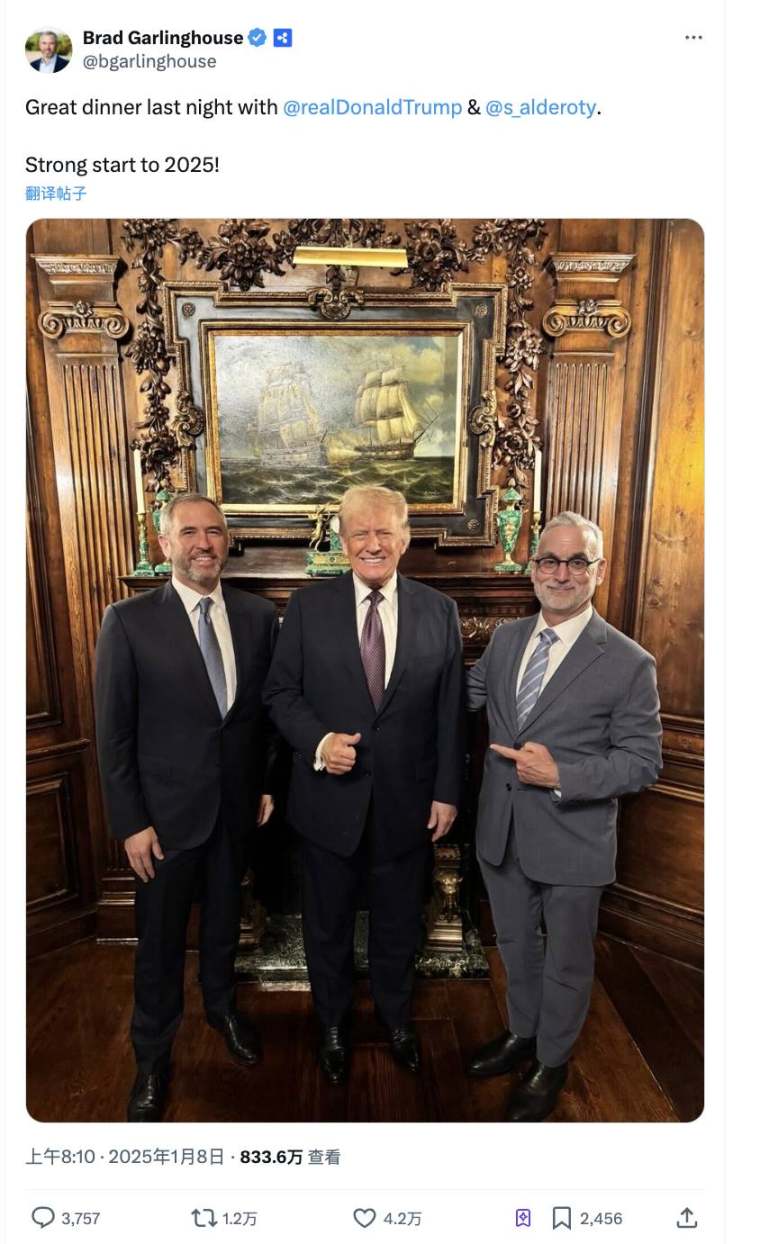
2025 年 1 月,Ripple CEO Brad Garlinghouse 受邀参加佛州度假村 Mar‑a‑Lago 的特朗普晚宴,并在推特上发布「Strong start to 2025!」的晚宴合照。
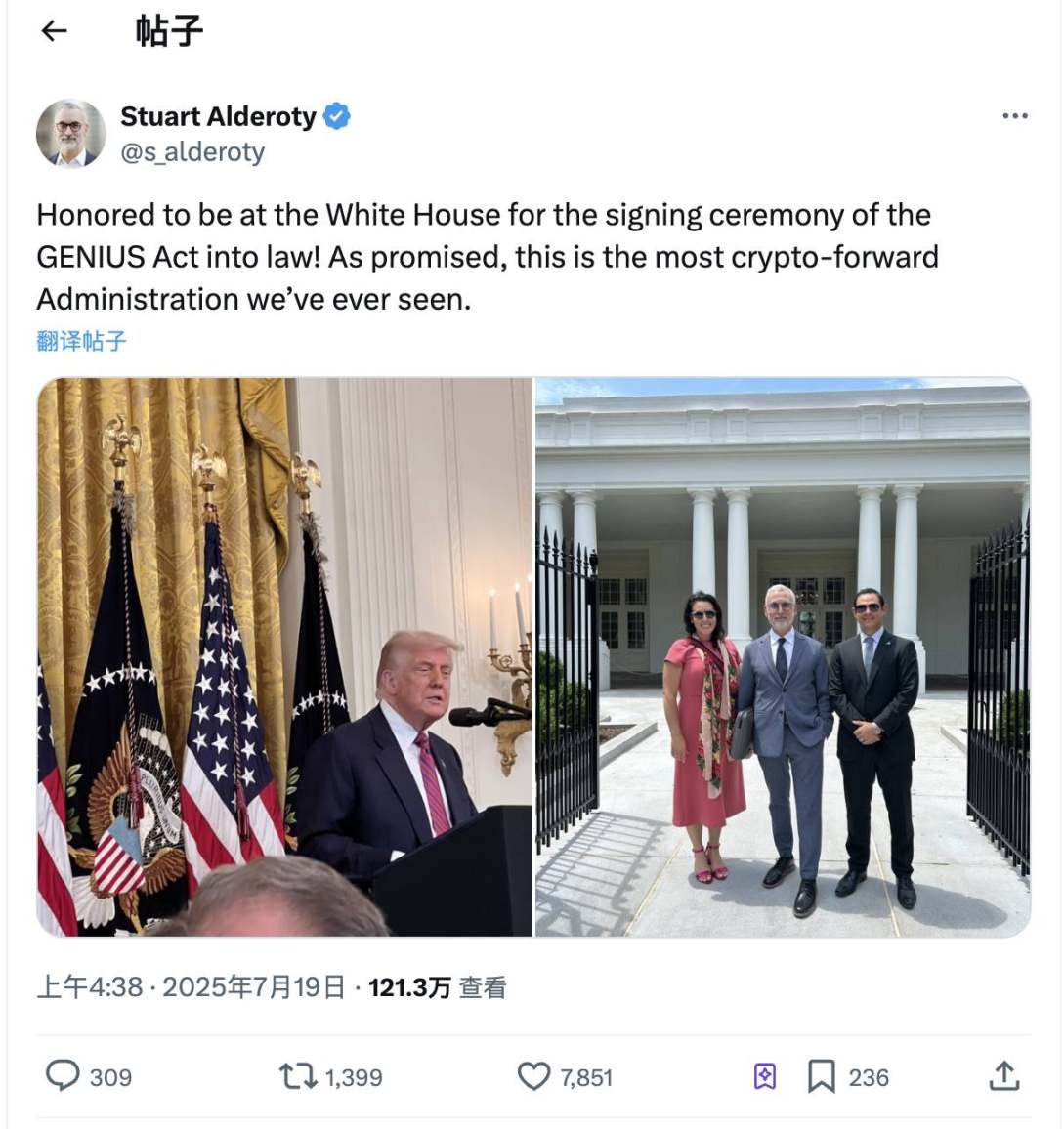
7 月 19 日,特朗普在白宫正式签署《天才法案》,Ripple 首席法务官 Stuart Alderoty 被邀请至现场,是少数几个加密货币行业见证者之一。
在 SEC 对 Ripple 的长期诉讼案中,Ripple 不仅没有被打垮,反而获得了有利结果,进一步巩固了其在「合规加密资产」讨论中的政治地位。

不仅如此,Ripple 多年来与全球上百家金融机构合作,其中包括 Santander、PNC、渣打银行、SBI Holdings 等传统金融巨头,这层广泛的商业网络,成为 XRP 市场信心的重要支撑。

Cardano 在埃塞俄比亚、卢旺达等国政府推动区块链教育与数字身份项目,对接当地国家政策与治理。

Hedera 的治理委员会由波音、Google、IBM、德勤等全球知名企业组成,曾多次参与美国本土的数字资产与分布式账本政策讨论。Hedera 董事会成员 Brian Brooks 是前美国货币监理署代理署长,也是现任美国 SEC 主席 Paul Atkins 的亲密伙伴。

这些项目并不仅仅在加密圈内部运作,而是在政治体制、合规咨询与商业合作的多维空间里构筑稳固底盘。它们有能力影响政策、争取监管妥协,并通过政治与资本网络获取「被选中」的地位。

因此,当人们以技术与叙事角度质疑这些老币时,往往忽视了它们早已在政策与资本层面建立的护城河。

在这样的框架下,这些老币所体现的并不是技术落后,而是另一种「活得久、活得稳」的策略——真正的底牌在于资本、商业资源与政治护盾。

所以,当你下次在行情榜单上再次看到 XRP、XLM、ADA 、HBAR 等出现,不必惊讶,也不必急着用技术和叙事去解释。

它们不需要被认可,只需要活着,就够了。

有时候,光是「活得够久」,就已经是一种被低估的竞争力。

Trending Cryptos

Related Reads

Why Is the World Nervous About Japan Raising Interest Rates?

In June 2026, the Bank of Japan raised its policy rate to 1%, marking its first hike to this level since 1995. While this rate remains low compared to global peers like the US and Europe, the move signals a profound shift for a nation that has been a global source of ultra-cheap funding for decades. Japan's long-standing near-zero or negative interest rates had facilitated massive "yen carry trades," where international investors borrowed low-cost yen to invest in higher-yielding assets worldwide, such as US tech stocks and emerging market bonds. This made Japan a critical, often overlooked, source of global liquidity. Japan's ultra-loose policy stemmed from structural challenges post-1990s asset bubble: aging demographics, chronic low inflation/deflation, and high public debt. Recent shifts, including sustained wage growth (exceeding 5% in recent years) and inflation consistently above the 2% target, have created a "wage-price spiral" possibility, prompting the policy normalization. The global market's concern lies not in the absolute rate but in the potential unwinding of the yen carry trade. As Japanese borrowing costs rise, the economics of these leveraged global investments change, potentially triggering deleveraging and capital outflows from risk assets. Market anxiety focuses on the end of a thirty-year consensus that Japan would perpetually provide cheap funding. Ultimately, the global impact will depend on the interplay with US monetary policy. While Japan is tightening, the significant interest rate differential with the US remains. The key future dynamic is whether simultaneous Japanese hikes and eventual US rate cuts will narrow this gap, forcing a major recalibration of global capital flows and asset pricing built on an era of abundant, cheap yen liquidity.

marsbit44m ago

Why Is the World Nervous About Japan Raising Interest Rates?

marsbit44m ago

Research Report Analysis: MRVL's Optical AI Booming, Why High Valuation Keeps Morgan Stanley's Star Analyst Sidelined?

Report Recap: MRVL Optical AI Boom - Why High Valuation Led Morgan Stanley's Star Analyst to Stay Neutral? Morgan Stanley analyst Joseph Moore maintained an "Equal-weight" (Neutral) rating on Marvell Technology (MRVL) on May 28, raising the price target from $172 to $195, below the trading price. This stance comes despite Marvell reporting a record quarter and significantly raising its full-year outlook (FY27 revenue ~$11.5B, up ~40%). Moore's neutral view is based on valuation. The $195 target implies ~40x CY2027 P/E. He contrasts MRVL with NVDA: both trade near ~$200, but Nvidia's forward EPS is more than double Marvell's. For MRVL's valuation to hold, it needs consistent earnings upgrades, proof of networking market share gains, or certainty on large-scale custom AI chip shipments—none of which are confirmed yet. Growth is driven by two pillars: **1) Optical Interconnect** (the faster runner): Moore raised FY27 growth expectations to >70%, with the optical module product line nearing a $1B annualized run rate. **2) Custom AI Chips** (the climber): Confidence in FY28 is growing, but a major new customer project only ramps in FY28, with no current revenue visibility. Key risks are the underperforming Storage, Enterprise, and legacy Networking segments. Moore acknowledges the real AI opportunity but believes the current price already reflects it. For the stock to work from here, investors need to see the optical business hit its targets, custom chips ramp as planned, and a recovery in the weaker business units.

marsbit1h ago

Research Report Analysis: MRVL's Optical AI Booming, Why High Valuation Keeps Morgan Stanley's Star Analyst Sidelined?

marsbit1h ago

qinbaFrank: Review and Outlook of the AI Computing Power Wave — From the Three Debates on NVIDIA to Optical Interconnect and SpaceX IPO, How is Capital Rotating?

**Summary: Retrospective and Outlook on the AI Computing Wave - A Framework for Capital Rotation** Based on a presentation by investor qinbaFrank, this analysis reviews the AI computing market trajectory since 2023 and outlines a forward-looking framework. **Key Phases and Market Debates:** The AI bull market progressed through three major debates: 1) The necessity of massive capital expenditure (late 2023). 2) The sustainability of tech giants' spending (early 2024-early 2025). 3) Potential overestimation of compute needs (early 2025). Consensus solidified in late 2025 as model capabilities and utility demonstrably improved. **Core Thesis: Penetration Rate Drives Commercialization.** Unlike the 2000 dot-com bubble, the current AI wave benefits from mature digital infrastructure, enabling faster adoption. The critical threshold is 10% penetration; surpassing it (with recent enterprise intent surveys showing ~18%) indicates entry into a rapid growth "golden period" where user scale and willingness to pay increase simultaneously. **AI vs. Internet: A Fundamental Difference.** While the internet enhanced connection efficiency, AI directly substitutes human cognition and labor. Once AI performance exceeds the "societal average" human level, its commercial value scales exponentially as payment shifts from human labor costs to AI service fees. **Investment Logic Evolution in the Compute Chain.** The focus has expanded from GPUs to a systemic re-rating of the entire hardware stack: storage/HBM, CPUs, interconnects, power, and advanced packaging. The framework is: **short-term "scarcity pricing," mid-term "upgrade pricing" (e.g., optical interconnects, power networks), and long-term "Physical AI" pricing** (edge computing, robotics). **Market Focus Shift and Adjustment Framework.** The market is transitioning from "hardware scarcity" to "commercialization validation." The ultimate anchor for the narrative is sustained high growth in model providers' Annual Recurring Revenue (ARR) and cloud business revenue, which justifies continued capital expenditure. Adjustments are categorized into three levels: * **L1 (Minor):** Driven by valuation compression or macro noise (e.g., single CPI print). Fundamentals intact. * **L2 (Moderate):** Triggered by significant macro events requiring risk repricing. Requires new data for confidence restoration. * **L3 (Major):** Involves a reset of the core industrial narrative or macro regime (e.g., AI commercialization growth stalling). The **crucial dividing line** is whether AI commercialization growth slows. Without a slowdown, pullbacks are likely L1/L2 "repricing" events. A genuine growth deceleration would signal an L2/L3 narrative reset. **Conclusion: A Foundational Civilizational Leap.** AI represents a foundational upgrade to "intelligence" itself—akin to humanity mastering fire—rather than a single-point industrial revolution. This底层能力跃迁 (underlying capability leap) will spawn successive waves of innovation (Agent, robotics, industry workflow重构). The journey will be波浪式的 (wavelike), driven by cycles of scarcity, technological upgrades, and远期兑现 (long-term realization).

marsbit1h ago

qinbaFrank: Review and Outlook of the AI Computing Power Wave — From the Three Debates on NVIDIA to Optical Interconnect and SpaceX IPO, How is Capital Rotating?

marsbit1h ago

A Country That Mined Bitcoin for 8 Years Has Built Its Own Dedicated Crypto Bank

A country that has been mining Bitcoin for eight years has established its own dedicated crypto bank. DK Bank, located in Bhutan's newly developed GMC special administrative zone, aims to fill the significant banking service gap for the cryptocurrency industry. Its CEO, Zheng YD, explained that most banks avoid crypto businesses due to a lack of risk management frameworks for decentralized and anonymous protocols. Operating under a unique "one country, two systems" governance model separate from mainland Bhutan, GMC aspires to become a financial hub for South Asia. DK Bank differentiates itself by offering integrated multi-currency accounts where users can manage both fiat currencies and stablecoins like USDT and USDC in one place, alongside services like Bitcoin-backed loans. The bank faces technical challenges in merging traditional banking systems with 24/7 crypto markets and implements rigorous on-chain and off-chain transaction monitoring for risk control. GMC's regulatory framework draws from Singaporean common law and Abu Dhabi's ADGM rules, offering a fast-track licensing process for already licensed firms while maintaining high standards. The initiative is part of Bhutan's longer-term crypto strategy, which includes Bitcoin mining since 2018. The focus, however, is on building a diversified institutional-grade crypto ecosystem—including custody and asset management—rather than retail speculative tokens. Proponents argue such sovereign crypto infrastructure is necessary, and Bhutan's early, measured approach exemplifies the thoughtful integration needed in global finance.

Foresight News2h ago

A Country That Mined Bitcoin for 8 Years Has Built Its Own Dedicated Crypto Bank

Foresight News2h ago

Trading

Spot
Futures

Hot Articles

What is XRP 2.0

XRP 2.0: A New Frontier in the Cryptocurrency Landscape Introduction to XRP 2.0 In the ever-evolving realm of cryptocurrency, new projects continuously emerge, vying for attention and adoption. One such promising initiative is XRP 2.0, a novel cryptocurrency project designed to leverage advanced blockchain technology and robust encryption methodologies. While the name draws parallels with Ripple’s XRP, it’s crucial to note that XRP 2.0 operates independently, focusing on enhancing transaction security, privacy, and scalability. As the digital financial landscape increasingly embraces decentralized solutions, XRP 2.0 aims to contribute meaningfully to web3 and the overall expansion of crypto projects. What is XRP 2.0? At its core, XRP 2.0 is a cryptocurrency project that aims to create a secure and decentralized digital currency ecosystem. Its foundational technology integrates sophisticated blockchain principles with cutting-edge encryption techniques. The overarching goal of XRP 2.0 is to establish itself as a reliable and efficient platform enabling swift transaction execution while prioritizing enhanced privacy protections for its users. The project is promoted as a solution to many limitations faced by existing cryptocurrencies, proposing a system that can handle a higher volume of transactions with improved speed and privacy. This versatility positions XRP 2.0 as a significant contender in a marketplace riddled with various digital currencies. Who is the Creator of XRP 2.0? The identity of the creator behind XRP 2.0 has been flagged as ‘Wilbur.’ However, comprehensive details regarding Wilbur or their associated entity remain elusive. The anonymity of many cryptocurrency creators is not an uncommon phenomenon in the industry, often designed to maintain a degree of privacy and security. Who are the Investors of XRP 2.0? As of now, specific information related to the investment foundations or organizations supporting XRP 2.0 is not publicly available. In the cryptocurrency sector, the backing by reputed investors can significantly influence a project's credibility and success, yet the transparency regarding the financial supporters of XRP 2.0 has not been established. How Does XRP 2.0 Work? XRP 2.0 stands out by employing a combination of blockchain technology and advanced encryption algorithms that ensures secure and decentralized transactions. Its innovative structure includes unique features designed to foster user engagement and broaden functionalities beyond conventional cryptocurrency transactions. Among these features, XRP 2.0 incorporates AI-powered capabilities, such as text-to-image and text-to-speech functionalities. These additions are designed to enhance the interactive experience for users, promoting broader applicability across various sectors. By bridging technological advancements with user-centered design, XRP 2.0 aims to capture the attention of a diverse range of individuals and enterprises looking to integrate cryptocurrency solutions into their operational frameworks. Timeline of XRP 2.0 Understanding XRP 2.0 requires examining the milestones that have defined its journey thus far: July 23, 2023: XRP 2.0 is introduced as a novel cryptocurrency project, aiming to revolutionize secure and decentralized transaction capabilities in the blockchain domain. September 8, 2023: The launching of another project, XRP20, occurs, marking the emergence of an ERC-20 token on the Ethereum blockchain that remains unrelated to XRP 2.0. November 13, 2023: The XRP Ledger undergoes a significant update with the release of rippled server software version 2.0.0. It is essential to note that this development is disconnected from the XRP 2.0 cryptocurrency project. Key Points About XRP 2.0 To distill the essence of XRP 2.0, several critical factors emerge: Unique Features: The inclusion of features like AI-powered text-to-image and text-to-speech further diversifies the potential applications of XRP 2.0. Blockchain Technology: The framework utilizes advanced blockchain mechanisms and encryption protocols, ensuring a secure and decentralized environment for transactions. Scalability and Privacy: XRP 2.0 prioritizes enhanced privacy protections in transaction processes and the scalability necessary to accommodate a growing user base. No Affiliation with Ripple: Importantly, despite its name, XRP 2.0 does not have any allegiance or collaboration with Ripple’s XRP, distinguishing its operational framework and objectives within the cryptocurrency ecosystem. Conclusion XRP 2.0 represents an ambitious venture into the cryptocurrency sphere, aiming to offer a combination of security, privacy, and efficiency in digital transactions. By integrating sophisticated technologies and user-friendly features, the project sets out to broaden the horizons of what cryptocurrency can achieve in today's digital economy. While the anonymity of its creator and lack of disclosed investors might raise questions for some, XRP 2.0's focus on advanced functionalities and decentralisation enhances its appeal amidst an increasingly crowded crypto market. As the cryptocurrency landscape continues to evolve, XRP 2.0 may yet emerge as a pivotal player in the expansion of secure and scalable blockchain solutions.

958 Total ViewsPublished 2024.04.01Updated 2024.12.03

What is XRP 2.0

Discussions

Welcome to the HTX Community. Here, you can stay informed about the latest platform developments and gain access to professional market insights. Users' opinions on the price of XRP (XRP) are presented below.

活动图片