Zora Launches Solana-Based Attention Markets to Revolutionize Trend Trading

TheNewsCrypto發佈於 2026-02-18更新於 2026-02-18

文章摘要

On February 17, Zora launched "attention markets" on the Solana blockchain, marking a significant shift from its previous Ethereum and Base-based operations. This new product enables users to trade tokens based on internet trends and social media topics, allowing them to buy or sell based on whether they believe a trend will grow or fade. Anyone can create a new market by paying a 1 SOL fee. Initial trading activity was limited, with tokens like bitcoin, cats, and dogs among the first trends. The main token reached a market value of around $70,000. The crypto community had mixed reactions, with some supporting the move to Solana and others questioning the departure from Ethereum. While experts warn of high risk due to low liquidity and potential volatility, supporters see it as an innovative way to measure public interest by blending social media trends with on-chain trading.

On February 17, Zora launched a new product called “attention markets” on the Solana blockchain, and the launch was announced by both Zora and Solana. This move from Zora marked a major shift from NFTs and Ethereum-based tools to Solana, which is known for its faster transactions and lower fees.

What is the attention market?

Attention markets basically allow users to trade based on internet trends. Instead of betting on the financial markets, users can now bet on the topics or memes that they believe will become popular on social media and can buy the token of it. If they think it will fade, then they can sell it. Anyone can create a new market trend by paying a 1 SOL fee. Once they are created, users can trade in the market and close the positions at any time.
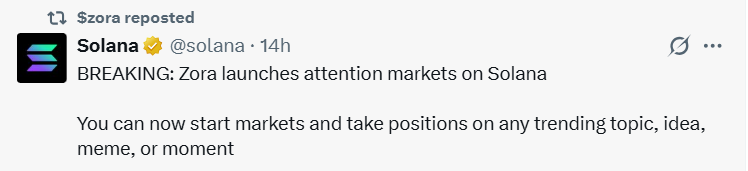
Image Source: https://x.com/solana/status/2023799108545503709

Once after the launch, the initial trading activity has been limited. Some of the feisty trending markets included bitcoin, cats, dogs, and attention markets. The main attention market’s token reached the market value of around $70,000 with a trading volume of $200,000 after the launch. Analysts noted that some of the tokens showed sharp gains, and the liquidity remained limited.

Mixed reactions to this Launch

This launch received mixed comments from the crypto community. Some users have supported Zora’s move to Solana, but others questioned the shift from Ethereum and Base, where Zora originally built its ecosystem. Following this launch, Zora’s native token rose more than 5% and is trading near $0.022.

Right now, Zora is entering the competitive market, and experts describe attention markets as high risk when trading volume is low because the low liquidity can lead to sharp price swings and volatility. However, supporters believe this model could be a new way to measure the public interest. This move from Zora aims to blend the social media interest with in-chain trading.

Highlighted Crypto News:

‌World Liberty Financial (WLFI) Posts 18% Surge: Are Buyers Taking the Driver’s Seat?

TagsSolanaZora

相關問答

QWhat is the main purpose of Zora's newly launched 'attention markets' on Solana?

AAttention markets allow users to trade based on internet trends, enabling them to buy tokens representing topics or memes they believe will gain popularity on social media or sell them if they think they will fade.

QWhy did Zora's move to launch on Solana attract mixed reactions from the crypto community?

ASome users supported the shift to Solana for its faster transactions and lower fees, while others questioned Zora's departure from Ethereum and Base, where it originally built its ecosystem.

QWhat was the initial trading activity and market performance like for attention markets after launch?

AInitial trading activity was limited. The main attention market's token reached a market value of around $70,000 with a trading volume of $200,000, with some tokens showing sharp gains but liquidity remained low.

QWhat is the risk associated with trading on these attention markets according to experts?

AExperts describe attention markets as high risk when trading volume is low because the low liquidity can lead to sharp price swings and high volatility.

QHow can a user create a new market trend on Zora's attention markets platform?

AAnyone can create a new market trend by paying a fee of 1 SOL.

你可能也喜歡

大摩2026半导体报告:买封装、买测试、买中国芯,避开传统赛道

**大摩2026年半导体报告核心摘要** 报告指出,全球AI资本开支超预期扩张,算力供给正从“NVIDIA主导”转向“GPU + ASIC + 中国芯”三轨并行。核心投资逻辑是抓住AI供应链红利,回避被边缘化的传统赛道。 **核心结论(按重要性排序):** 1. **买封装**:先进封装(CoWoS/SoIC)是确定性最强主线。AI服务器需求直接拉动产能,台积电(TSMC)因其不可替代性成为核心受益者。 2. **买测试设备**:测试设备(Handler/Socket/探针卡)是估值最低、成长最确定的细分方向。AI芯片复杂度导致测试时长结构性翻倍增长,市场重估严重滞后。重点公司:鸿精密、颖崴科技(WinWay)、MPI。 3. **买中国AI芯片**:出口管制倒逼国产替代,中国云厂商加速切换。国产芯片在推理场景已具备总拥有成本(TCO)优势。市场呈分化格局,华为占据主导(62%),寒武纪(14%)因客户锁定和盈利确定性成为首选标的。 4. **避开传统赛道**:非AI半导体(消费/汽车/工控)被AI系统性虹吸供应链资源,复苏弱于预期,建议回避纯传统敞口。存储内部分化,坚定看多HBM(海力士最受益),对传统DRAM/NAND持谨慎态度。 5. **宏观与结构变量**:地缘政治(出口管制)强化中国芯替代逻辑;AI需求对非AI供应链的“蚕食效应”是传统半导体疲软的核心原因;科技通胀(晶圆/封测/存储成本上涨)挤压非AI芯片设计公司利润。 **一句话总结**:聚焦AI基础设施核心环节(封装、测试)及中国替代龙头(寒武纪),规避传统半导体复苏幻想,时间窗口在2026-2027年。

marsbit39 分鐘前

大摩2026半导体报告:买封装、买测试、买中国芯,避开传统赛道

marsbit39 分鐘前

Michael Saylor:我确实说要卖比特币,但我是为了买更多

微策略公司执行主席迈克尔·塞勒在近期播客访谈中,澄清了公司关于可能出售比特币以支付STRC优先股股息的决定。他强调,此举并非“净卖出”,公司始终是比特币的净累积者。微策略通过发行STRC等数字信用工具筹集资金,转而购买更多比特币,利用比特币作为“数字资本”的高增值属性(预期年升值约30-40%)来覆盖股息支付(约11%),从而实现持仓规模的持续净增长。例如,公司在一个月内融资30亿美元购买比特币,仅需支付约8000万至9000万美元股息,本质是“买入30个,卖出1个”。 塞勒解释,该商业模式类似于房地产开发公司:发行信用工具投资资产,资产增值后变现部分收益。他强调,只要公司持续增长且比特币年度增值超过2.3%,就能永久支付股息并保持净买入。他重申,个人投资者也应成为比特币的“净累积者”,每年持仓应增加。 访谈还提及,比特币作为表现最佳的资本资产,其杀手级应用之一是作为数字信用的抵押品。STRC因此成为市场上夏普比率最高、流动性最强的优先股之一,推动了数字信用生态发展。塞勒认为,比特币市场流动性极强,单一实体无法显著影响其价格,主要驱动力在于全球宏观因素。尽管存在地缘政治等逆风,比特币仍会因持续的资金流入和有限供应而缓慢上涨。

marsbit1 小時前

Michael Saylor:我确实说要卖比特币,但我是为了买更多

marsbit1 小時前

交易

現貨
合約
活动图片