Tokenization will disrupt finance faster than digital disrupted media: Crypto exec

cointelegraph發佈於 2025-12-21更新於 2025-12-21

文章摘要

Tokenization will transform finance faster than digital technology disrupted media, according to MoonPay president Keith Grossman. He argues that real-world asset (RWA) tokenization will force traditional financial firms to adapt, citing examples like BlackRock and Franklin Templeton already offering tokenized funds. Major banks are also exploring onchain settlements. Grossman believes institutions that embrace this shift will succeed, while those resisting will fall behind. Benefits include 24/7 market access, global scalability, lower costs, and near-instant settlements. Regulatory progress, such as the SEC and CFTC working on round-the-clock market frameworks and the DTCC’s approval to launch tokenized U.S. Treasuries by 2026, signals accelerating adoption.

Tokenization will transform the financial industry faster than digital technology disrupted legacy media, such as print newspapers, physical copies of music and other analog formats, according to Keith Grossman, president of crypto payments company MoonPay.

“While many feared digitization would destroy media, what it actually did was force its evolution,” Grossman said, adding that real-world asset (RWA) tokenization, the process of representing traditional assets onchain, will force traditional institutions to adapt. He added:

“This is no longer hypothetical. BlackRock is offering tokenized funds. Franklin Templeton is running tokenized money market funds on public blockchains. Major global banks are piloting onchain settlement, tokenized deposits and real-time asset movement.”
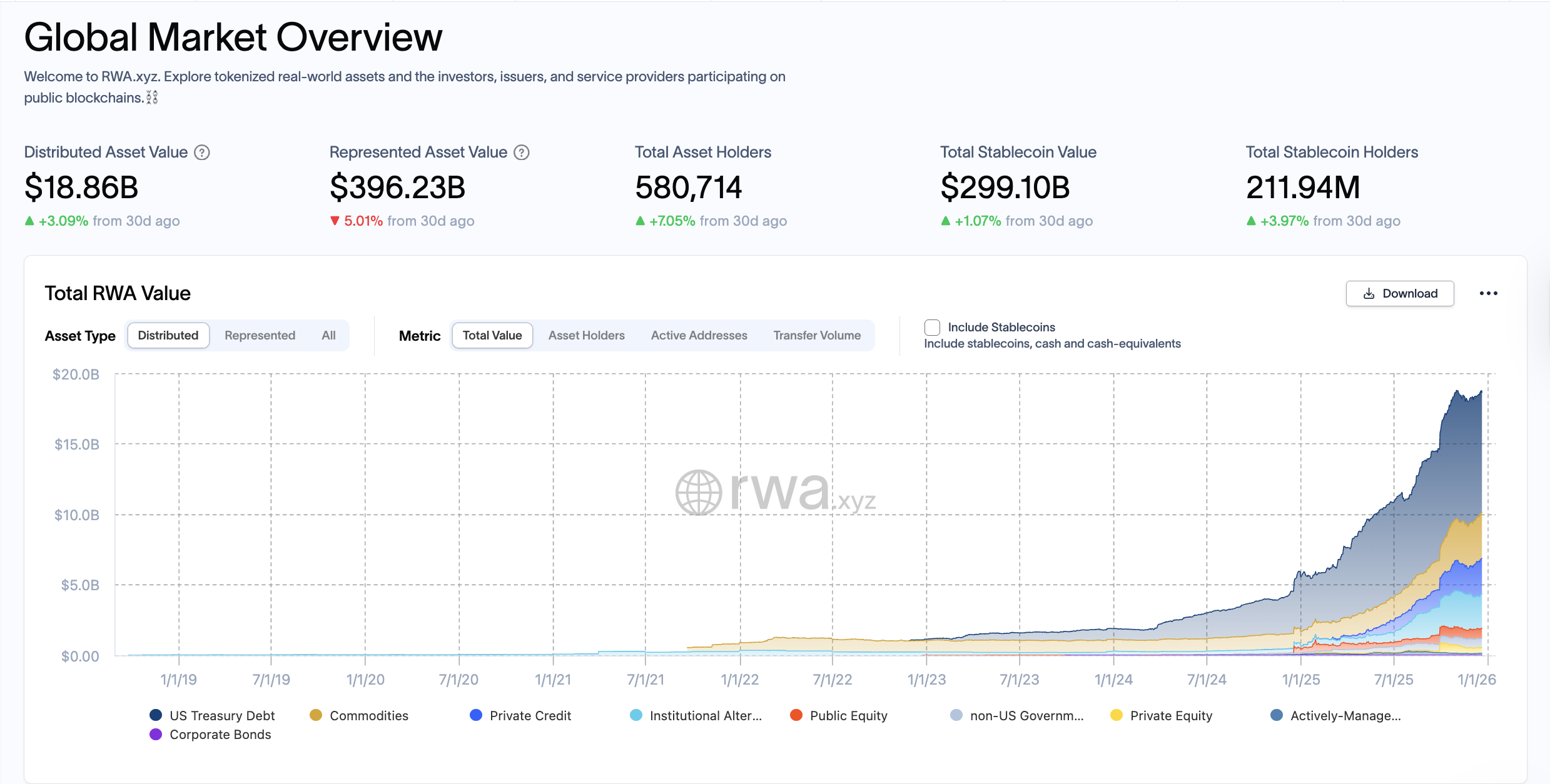
The market capitalization of the RWA sector, excluding stablecoins, is nearly $19 billion at the time of this writing. Source: RWA.XYZ

Financial incumbents like Citi, Bank of America, JPMorgan Chase and others will continue to exist in a different form, Grossman said, much like media companies continued to exist after the shift to digital distribution in the late 1990s and early 2000s, which disrupted business models that worked for decades.

Ultimately, the survivors and winners of the ongoing shift toward tokenized finance will be those companies that get ahead of the change and not those that attempt to stop the inevitable shift to a global financial system powered through blockchain rails, he said.

Related: Wall Street’s $4 quadrillion backbone to roll out tokenized US Treasurys

Why tokenized assets can change the game

Tokenizing real-world assets carries several benefits, including enabling 24/7 access to markets, making asset classes global in scale, cheaper transaction costs through disintermediation, and lowering settlement times to minutes, instead of days.

In September, the United States Securities and Exchange Commission (SEC) and the Commodity Futures Trading Commission (CFTC) issued a joint statement on creating a regulatory framework to enable 24/7 capital markets.
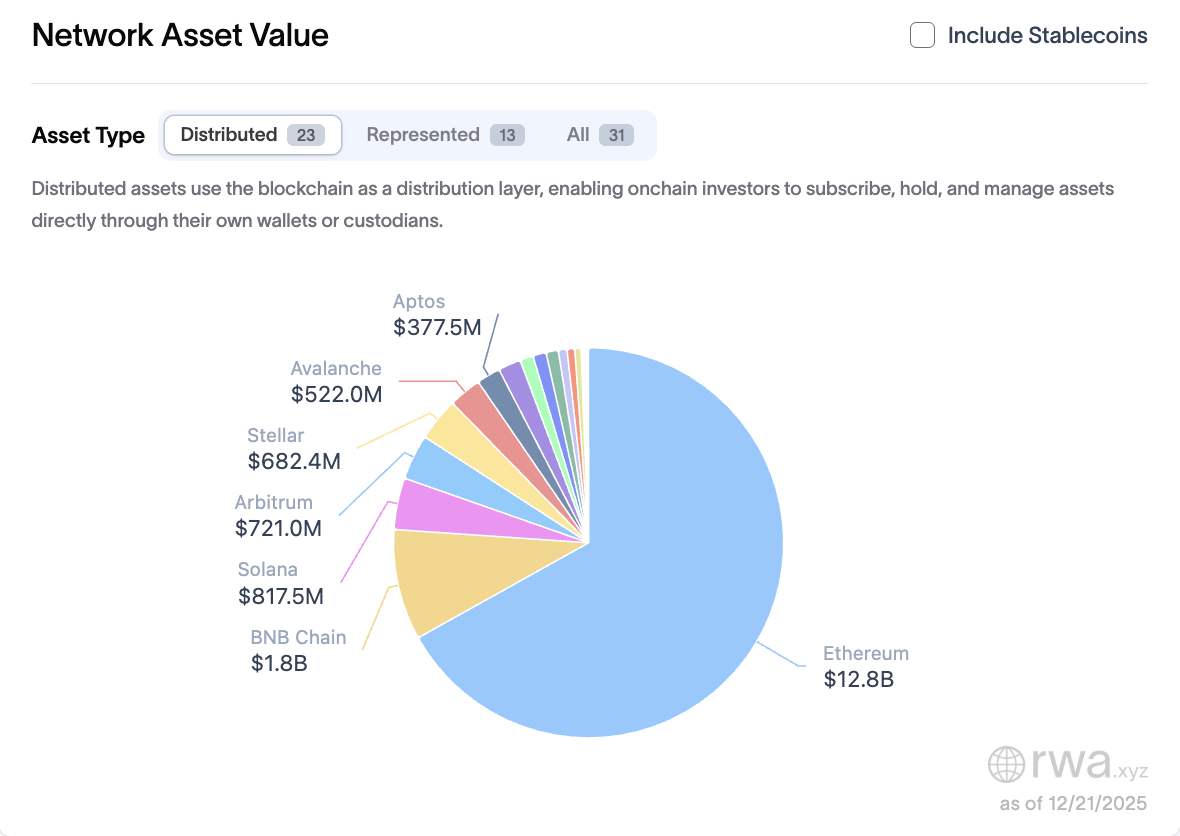
The overwhelming majority of tokenized RWA value has found its home on the Ethereum network. Source: RWA.XYZ

The financial system shifting to 24/7 trading represents a major departure from how traditional markets, which close on nights, weekends and holidays, currently operate.

In December, the Depository Trust and Clearing Corporation (DTCC), a settlement and clearing company that processed about $3.7 quadrillion in settlement volume in 2024, received approval from the SEC to start offering tokenized financial instruments.

The DTCC plans to roll out tokenized assets in the second half of 2026, starting with US Treasuries and stock indexes.

Magazine: Unstablecoins: Depegging, bank runs and other risks loom

相關問答

QAccording to Keith Grossman, how will tokenization impact the financial industry compared to digital technology's effect on media?

AKeith Grossman believes that tokenization will transform the financial industry faster than digital technology disrupted legacy media, such as print newspapers and physical music copies.

QWhat are some examples of major financial institutions already involved in tokenization, as mentioned in the article?

ABlackRock is offering tokenized funds, Franklin Templeton is running tokenized money market funds on public blockchains, and major global banks are piloting onchain settlement, tokenized deposits, and real-time asset movement.

QWhat key benefits does tokenizing real-world assets provide, according to the article?

ATokenizing real-world assets enables 24/7 access to markets, makes asset classes global, reduces transaction costs through disintermediation, and lowers settlement times to minutes instead of days.

QWhich organization, responsible for processing about $3.7 quadrillion in settlement volume in 2024, received SEC approval to offer tokenized financial instruments?

AThe Depository Trust and Clearing Corporation (DTCC) received approval from the SEC to start offering tokenized financial instruments.

QOn which blockchain network is the overwhelming majority of tokenized RWA value located, as per the article?

AThe overwhelming majority of tokenized RWA value is on the Ethereum network.

你可能也喜歡

a16z:区块链为 AI 代理基础设施提供帮助的 5 种方式

人工智能代理正迅速从“副驾驶”转变为经济参与者,但其发展速度超过了现有基础设施的支持能力。当前代理缺乏标准化的方法证明身份、权限和跨环境报酬机制,身份无法跨平台共享,支付方式尚未实现可编程,协调工作也各自独立。 区块链技术为代理基础设施提供了关键支持,主要体现在五个方面: 1. **非人类身份**:代理经济当前的瓶颈是身份而非智能。区块链提供可移植的身份层、可编程钱包和可验证证明,帮助代理建立跨平台的可信身份(KYA,了解你的代理),解决权限证明和跨平台独立运作问题。 2. **AI运行系统治理**:当代理操作关键系统时,治理成为核心问题。区块链通过链上记录和自动执行决策,确保代理行为符合用户利益,防止模型供应商单方面控制结果,实现真正的去中心化治理。 3. **支付系统空白填补**:代理开始进行无头交易(如数据购买、API调用),稳定币成为默认支付方式。加密支付支持无许可编程和低风险承保,推动代理对代理的商业发展,如x402和MPP协议已处理大量代理驱动支付。 4. **重新定价信任**:当智能成本趋近于零时,验证成为稀缺资源。区块链提供可审计的历史记录和加密收据,确保代理行为的透明度和可追溯性,从而降低规模化风险,将信任硬编码到系统架构中。 5. **保留用户控制权**:随着用户将更多任务委托给代理,加密技术通过智能合约和基于意图的架构(如NEAR Intents)设定代理的行为边界,确保用户保持最终控制权,减少盲目信任。 人工智能降低了规模化门槛,但信任建立仍需依赖加密货币和区块链技术,以确保透明度、问责制和用户控制。互联网基础设施的设计需适应非人类行为者,以实现真正的代理经济。

marsbit1 小時前

a16z:区块链为 AI 代理基础设施提供帮助的 5 种方式

marsbit1 小時前

交易

現貨
合約
活动图片