# tech stocks的所有文章

在 HTX 新聞中心流覽與「tech stocks」相關的最新資訊與深度分析。潘蓋市場趨勢、專案動態、技術進展及監管政策,提供權威的加密行業洞察。

UBS Interpretation: Public Funds' Tech Holdings Hit Record High, Electronics Becomes Core Increase in Q2

According to UBS's latest China equity strategy report, in Q2 2026, mutual funds' allocations to A-share "hard tech" reached a historical high. The electronics and telecommunications sectors, along with the STAR and ChiNext boards, were the primary focus of increased holdings. The standout figure is the mutual fund allocation to the major technology sector (encompassing electronics, telecom, computers, and defense), which rose to 57.3%, with an overweight position of 18.5%—both setting new records. UBS calculations show the electronics sector alone saw a 20.2 percentage point increase in allocation for the quarter, making it the strongest area of buying. Telecom and machinery allocations also rose. This trend was reinforced by foreign capital inflows. Estimates from major securities firms indicate northbound capital turned to a net inflow of over 2.1 trillion yuan in Q2, a sharp reversal from Q1 outflows. According to UBS's sector classification, industrials and IT were the main destinations for these inflows. The shift wasn't broad-based but concentrated in specific tech areas. Concurrently, holdings in traditional sectors like consumer staples and certain cyclicals declined. The allocation to the STAR and ChiNext boards also hit record highs, indicating a broader exposure to high-growth tech assets beyond just leading industries. Furthermore, the expansion of actively managed technology-themed funds—now constituting 27.5% of total active mutual fund AUM—suggests this is a structural shift in fund focus, not merely short-term portfolio rotation. While this concentration of institutional capital can provide valuation support and liquidity for the hard tech sector, the report cautions that historically high positioning also increases susceptibility to short-term volatility, profit-taking, and external market shocks. The sustainability of the trend will depend on the concurrent realization of upward earnings revisions, stabilization of leverage, and continued foreign capital inflows, all against a backdrop of supportive policies for AI, semiconductors, and advanced manufacturing.

marsbit07/24 07:20

UBS Interpretation: Public Funds' Tech Holdings Hit Record High, Electronics Becomes Core Increase in Q2

marsbit07/24 07:20

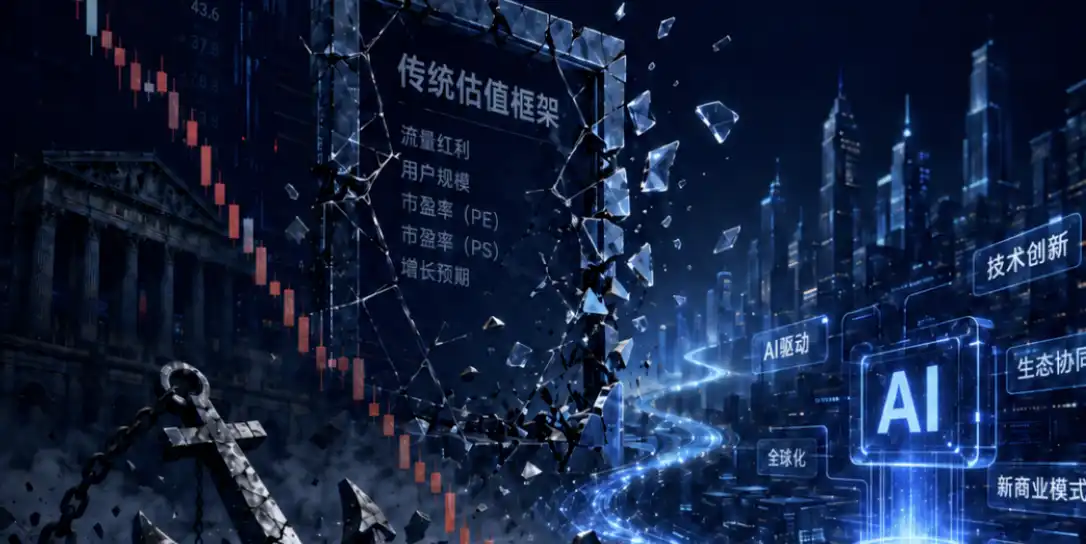
Valuation Rout of Old Titans: The Demise of a Generation's Asset Valuation Framework

"The Old Titans' Valuation Collapse: The Death of an Era's Valuation Framework" Between Alibaba's 2014 NYSE debut at $93.89 and its 2026 price of ~$95, twelve years have passed with zero price appreciation. This stagnation symbolizes a wholesale valuation reset for an entire generation of Chinese internet assets. Companies like Tencent, Pinduoduo, Meituan, Bilibili, and Kuaishou have seen catastrophic declines of 80-98% from their peaks. The core question arises: what framework now prices these companies, or has the framework itself expired? The valuation logic for Chinese internet stocks followed a clear "anchor-setting and anchor-removing" process. From 2014-2017, the dominant narrative was "US comparable discounting" – applying a growth premium and governance discount to US peers' multiples. This anchor loosened with the 2018 US-China trade war and the VIE structure risk, then was violently uprooted by the 2020-2021 regulatory crackdowns (Ant Group, Didi, anti-monopoly fines). The 2022 delisting panic and subsequent 2025-2026 geopolitical shocks (US military lists, AI espionage accusations) completed the demolition. The old "US对标打折" model is dead. However, this is not solely a China story. A structural mirror exists in US "old titan" stocks ("老登股"). In 2026, even Microsoft – with robust fundamentals – saw its PE compress from a 34x median to 22x, its worst performer status among the "Magnificent Seven" driven by a $190 billion annual AI capex crushing free cash flow. The core dilemma is universal: legacy platform giants, whether Alibaba or Microsoft, are spending colossal sums to chase an AI paradigm that may颠覆 their own high-margin, user/subscription-based business models. They have shifted from "companies defining the future" to "companies needing to prove they won't be淘汰ed by the future." This phenomenon of a dying valuation坐标系 has a historical precedent: post-1989 Japan. After its bubble burst, the "Japan premium" narrative ("most efficient manufacturing + perpetual growth") collapsed. A 25-year valuation vacuum ensued until Warren Buffett provided a new language in the 2010s: "low valuation + high dividend + governance reform." China's internet sector is now in a similar vacuum six years into its reset. While different from Japan's deflationary context, the parallel is clear: the old macro assumption of "deep integration with global capital" is falsified, but a new pricing framework is absent. Potential "new languages" for Chinese internet valuations are contradictory. AI transformation requires gutting profitable core businesses (e.g., Alibaba's ad-driven e-commerce) for an unproven consumption-based model, risking a Microsoft-like cash flow crunch. Alternatively, shareholder returns (buybacks/dividends) could build a floor, following Buffett's Japanese playbook, but current scales are insufficient to form a standalone anchor. The current state mirrors mid-1990s Japan: the old framework is dead, the new one unborn. The market waits in a vacuum for a重新定义ing force – a person, event, or proven business model shift – to answer "why buy." This may only be the middle phase of a prolonged re-rating.

marsbit06/26 09:06

Valuation Rout of Old Titans: The Demise of a Generation's Asset Valuation Framework

marsbit06/26 09:06

Why Are the Most Believers in AGI Buying NVIDIA Put Options?

The article analyzes the significant, market-moving 13F filing for Q1 2026 by Situational Awareness LP (SALP), a fund managed by former OpenAI researcher Leopold Aschenbrenner. While Aschenbrenner is a prominent believer in the accelerated arrival of AGI and has built the fund as a focused bet on AI infrastructure, the filing revealed large new put option positions (totaling billions in notional value) on key AI/semiconductor names like Nvidia, SMH ETF, Broadcom, and AMD. The article argues this is not a bearish turn on AI but a sophisticated hedging strategy. Given the macro backdrop in late March (rising oil prices, inflation concerns, higher-for-longer interest rates), the fund is managing volatility in its high-beta, high-valuation portfolio of AI infrastructure plays (like Bloom Energy, CoreWeave, Core Scientific). The puts act as "insurance" against a potential systemic pullback in the AI trade. Simultaneously, SALP maintained or added to core long positions in companies tied to power, data centers, compute, and storage—the "bottlenecks" expected to capture AI capital spending. It trimmed or exited some Q1 winners (e.g., Lumentum) and reduced leverage (e.g., selling CoreWeave calls), suggesting a rotation from crowded, high-momentum trades towards assets with clearer long-term fundamental pathways. The key takeaway is an evolution in the AI investment theme: from a broad, linear rally to a more discerning, "show-me-the-money" phase. The focus shifts from simply buying the AI narrative to identifying companies that can convert capex into tangible revenue, while actively managing portfolio risk in a volatile macro environment. The strategy reflects a move from unilateral bullishness to "offense with defense."

marsbit05/20 12:23

Why Are the Most Believers in AGI Buying NVIDIA Put Options?

marsbit05/20 12:23

活动图片