From May 10 to June 6, 2026, the "Pop-up City" experiment hosted by muShanghai kicked off in Shanghai. The experiment was initiated by the international open-source community The Mu and co-hosted by Hongqiao Alibaba Center. Whether you are a code-writing geek, a research-driven academic achiever, or an aspiring disruptor looking to make a big impact, you will find your place here. The organizers hope to co-build a "parallel city" belonging to global geeks with participants.
This 28-day experiment will gather developers, researchers, and entrepreneurs from over fifty countries worldwide to jointly explore new possibilities for human-technology collaboration in the AI era.
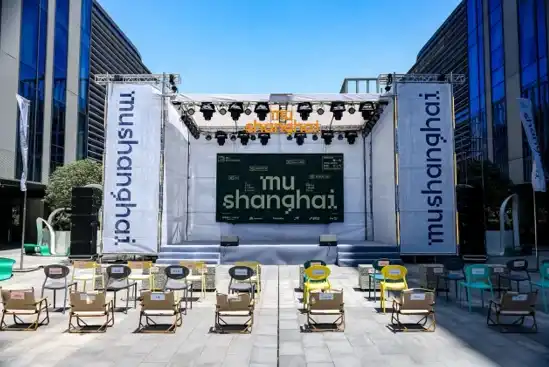
Global Tech Innovation Forces Resonate Together in Shanghai
"When my foreign friend first came to China, he said, 'China is different from what I imagined. You must host a The Mu event here, to let the world see the real China,'" recalled Sun, the initiator of muShanghai.
Since its launch, this experiment has attracted over 2000 applications globally, with more than 800 people passing the muShanghai review. They are evenly distributed across over fifty countries, including the United States, Argentina, Canada, Japan, France, South Africa, the United Kingdom, and China. The lineup of participants is impressive, ranging from former OpenAI engineers and founders of startups that have raised tens of millions in funding, to core contributors of OpenClaw like Vincent Koc and Dave Morin. Top technical talent from around the world will collide and collaborate across disciplines here.
"Domestic talents go global, and international talents come to China—letting the world see China ultimately means letting the world see you," Sun stated. "We've built the stage, now it's your turn to co-create."
Four Thematic Weeks Build an Immersive Innovation Ecosystem
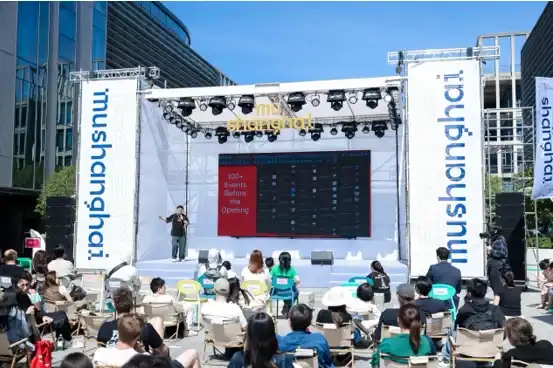
This 28-day "Tech Burning Man" will revolve around four thematic weeks, hosting nearly 100 events cumulatively. As a grand opening, ClawCon 2026 Shanghai will gather core global contributors of OpenClaw to deeply discuss AI development trends and open-source ecosystem building.
- AI Week (May 11-15): Big Model Day will invite guests from kimi, Zhipu AI, Ant Bailing, StepFun, and others to share hardcore insights; the AI Safety session convenes global safety researchers and cryptographers; the Consumer App session invites teams behind multimodal large models like MiniMax and ZPilot, along with other Chinese AI consumer product teams, to deconstruct product iteration logic on-site.
- Biotech Week (May 18-22): Topics progress layer by layer, from using technology to combat aging, to equipping labs with AI brains and robotic arms, to rewriting the underlying code of the material world. There's even a month-long longevity experiment led by a Yale PhD, where researchers will use themselves as subjects to explore the boundaries of life sciences.
- Robotics Week (May 25-29): Robot combat competitions, cyber fashion shows, hardware supply chain pop-ups, and other events will take turns, offering a visually striking tech feast showcasing cutting-edge achievements in robotics.
- Culture Week (June 1-6): Stepping beyond a purely technological perspective, it explores future social forms, cyberpunk culture, independent game creation, and other topics, allowing technology and humanities to collide and integrate here.
Notably, every Friday during the first three weeks, a large outdoor "Innovator's Market" will be held, and in the final week, there will be exhibitions related to technology and humanities. All participants can bring their own projects for on-site display, testing, and exchange, promoting rapid implementation of ideas and facilitating efficient collaboration. muShanghai will implement a Build in Public content mechanism throughout. We have designed a complete set of methods to encourage everyone to publicly share their projects, processes, problems, progress, and interim results, continuing iteration based on real feedback.
Hongqiao Alibaba Center Empowers "The First Stop for Starting a Business in China"
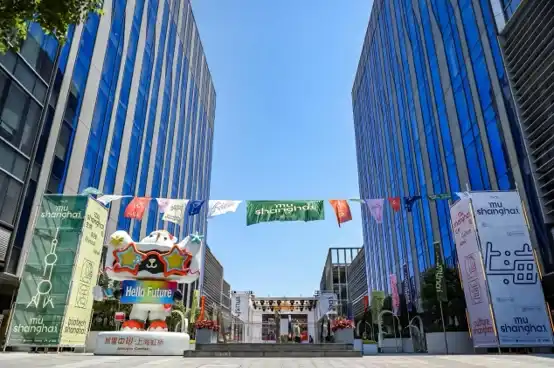
This one-month event is expected to reach over 100,000 people. As the co-organizer, Hongqiao Alibaba Center positions itself as an international innovation community and an ecological development hub. Relying on its five-dimensional one-stop capabilities in space, commerce, culture, ecosystem, and government services, it provides solid support for overseas talents to land and develop.
The "Tech Burning Man" initiator, The Mu, is the first international entrepreneur community to settle in Hongqiao Alibaba Center and is also one of the first international open-source partner communities of the HongCheng OPC community. The park director stated that HongCheng OPC is committed to providing one-stop services for global entrepreneurs coming to China. Collaborating with The Mu this time is a key layout for Hongqiao Alibaba Center in building an international tech innovation ecosystem.
This event is not only a frontier tech gathering but also an important window for China's tech innovation ecosystem to integrate with the world.
The Mu: An Open-Source Community That "Builds Cities from Scratch" Globally
Behind muShanghai is The Mu community, which has been successfully implemented in places like Argentina and San Francisco.
In Argentina, the Crecimiento project gathered 2,500 developers, incubated over 1,200 projects, with total funding exceeding $20 million. In San Francisco, The Mu helped transform the 16-story Frontier Tower into a tech innovation landmark, hosting OpenClaw's first offline developer gathering. It was also the sole startup community at the 2025 Osaka World Expo.
From preparation to project establishment, the muShanghai team overcame multiple challenges over seven months, including compliance filings for foreign events and rebuilding resource networks. On the opening day, attendees included Kong Fuan, Party Secretary and Executive Deputy Director of the Shanghai Hongqiao International Central Business District Administrative Committee; Lou Yongqi, President of Shanghai University of Engineering Science; Ke Xiaolin and Wang Ximei, Deputy District Heads of Minhang District, among others. The muShanghai core creative team and domestic and international co-creation partners introduced the thematic content and exciting activities for the upcoming four weeks.
AI may be changing the world, but it cannot replace the infinite possibilities that arise when we meet and collide.
About The Mu
The Mu is a global community organization that promotes open-source collaboration and innovation. It is committed to providing immersive co-creation spaces for developers, researchers, and entrepreneurs through the "Pop-up City" model, facilitating cross-cultural, interdisciplinary knowledge sharing and technological breakthroughs.
About Hongqiao Alibaba Center
Located in the core area of the Hongqiao International Open Hub, Hongqiao Alibaba Center is an important industrial office carrier for Alibaba Group in Shanghai. It is dedicated to creating a benchmark for space services targeting global tech talent, providing first-stop support for international developers, entrepreneurs, and companies coming to China. It offers not just office space, but an ecosystem-based development solution for international talent.







