Barclays Backs Crypto Company Ubyx Amid Growing Stablecoin Clearing Race

bitcoinist發佈於 2026-01-08更新於 2026-01-08

文章摘要

Barclays has made its first direct investment in the stablecoin sector by acquiring an equity stake in Ubyx, a startup that provides a clearing and settlement layer for stablecoins. This move reflects a broader trend of traditional banks exploring digital currency infrastructure within regulatory boundaries. Ubyx aims to reduce market fragmentation by enabling standardized redemption and settlement of stablecoins across different issuers and blockchains. The investment aligns with Barclays' ongoing initiatives in digital money, including participation in a consortium exploring a G7-backed stablecoin and tokenized deposit pilots. While stablecoins like Tether dominate crypto liquidity, regulators remain cautious about systemic risks. Barclays' backing signals growing institutional interest in compliant stablecoin infrastructure.

Barclays has made its first direct move into the stablecoin sector, taking an equity stake in Ubyx, as global banks quietly position themselves for a future where digital settlement becomes more common.

While the investment is modest in disclosed detail, it signals how traditional lenders are approaching stablecoins not as speculative assets, but as infrastructure that could reshape payments and treasury operations if regulation allows.

Ubyx, founded in 2025, operates a clearing and settlement layer for stablecoins, digital tokens typically pegged one-to-one with fiat currencies such as the U.S. dollar. Its goal is to reduce market fragmentation by allowing stablecoins from different issuers and blockchains to be settled and redeemed in a more standardized manner.
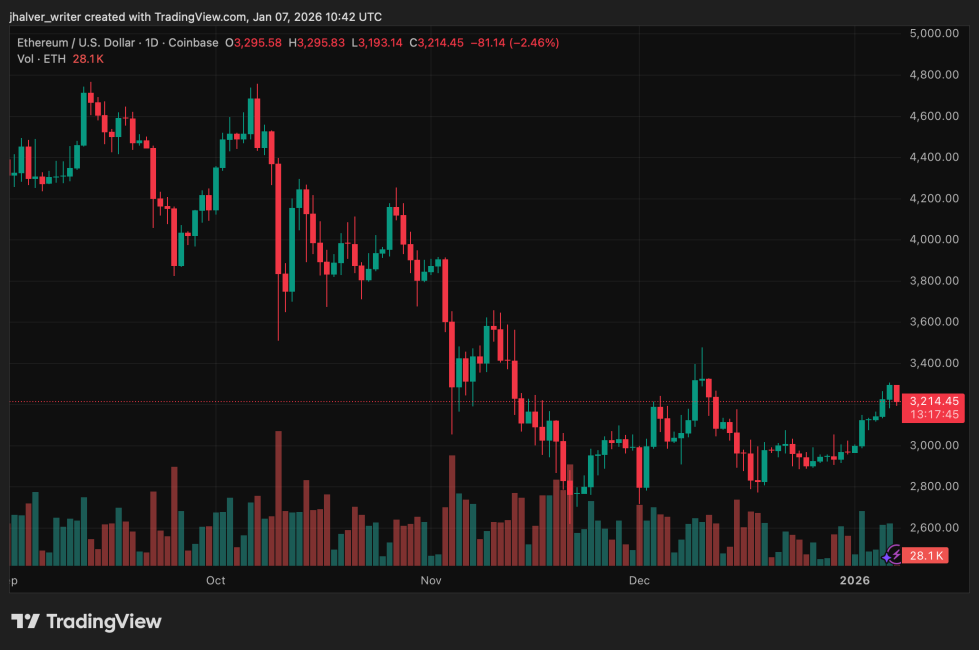
ETH's price moving sideways on the daily chart. Source: ETHUSD on Tradingview

The Case for Regulated Tokenized Cash

Barclays said the investment aligns with its broader work on “new forms of digital money,” emphasizing that any development would sit within existing regulatory boundaries.

The bank did not disclose the size of its stake or Ubyx’s valuation. However, the decision places Barclays among a growing list of large financial institutions seeking exposure to stablecoin rails without directly issuing tokens or operating outside compliance frameworks.

The bank’s interest is not new. In October, Barclays joined a group of global lenders, including Goldman Sachs and UBS, to explore the issuance of a jointly backed stablecoin by G7 currencies.

It has also participated in tokenized deposit pilots and other distributed ledger initiatives, reflecting a cautious but consistent approach to blockchain-based settlement.

Ubyx’s Role in a Crowded Infrastructure Layer

Ubyx positions itself as an intermediary between stablecoin issuers and regulated banks or fintech firms. Its platform supports what it calls universal redemption, allowing businesses to deposit stablecoins from multiple issuers directly into existing accounts at face value.

The startup raised $10 million in seed funding in mid-2025, with backing from Galaxy Ventures, Coinbase Ventures, Founders Fund, and Paxos. Barclays’ entry adds a major UK banking name to that list, blending traditional finance interest with crypto-native capital.

Regulation Support for the Competitive Market

Stablecoins already play a central role in the crypto market’s liquidity, led by Tether, which has approximately $187 billion in circulation.

However, most usage remains inside trading venues. Regulators, including the Bank of England, continue to weigh limits and safeguards to prevent risks such as deposit flight during periods of stress.

That tension defines the current stablecoin race. Banks want faster, programmable settlement. Regulators want control and clear accountability. Infrastructure providers like Ubyx are betting that standardized, compliant clearing can bridge the two worlds, and Barclays’ backing suggests that major lenders are watching closely.

Cover image from ChatGPT, ETHUSD chart from Tradingview

相關問答

QWhat is the significance of Barclays' investment in Ubyx?

ABarclays' investment in Ubyx marks its first direct move into the stablecoin sector and signals how traditional lenders are approaching stablecoins not as speculative assets, but as infrastructure that could reshape payments and treasury operations if regulation allows.

QWhat does Ubyx do in the stablecoin ecosystem?

AUbyx operates a clearing and settlement layer for stablecoins, aiming to reduce market fragmentation by allowing stablecoins from different issuers and blockchains to be settled and redeemed in a more standardized manner.

QWhich other major financial institutions has Barclays collaborated with regarding stablecoins?

AIn October, Barclays joined a group of global lenders, including Goldman Sachs and UBS, to explore the issuance of a jointly backed stablecoin by G7 currencies.

QWho were the initial backers of Ubyx in its seed funding round?

AUbyx raised $10 million in seed funding in mid-2025 with backing from Galaxy Ventures, Coinbase Ventures, Founders Fund, and Paxos.

QWhat is the main tension in the current stablecoin market according to the article?

AThe main tension is between banks, which want faster, programmable settlement, and regulators, who want control and clear accountability to prevent risks such as deposit flight during periods of stress.

你可能也喜歡

Ripple获得重要助推力,推动大宗经纪业务增长:宣布获得2亿美元信贷额度

瑞波公司(Ripple)宣布从Neuberger Specialty Finance获得2亿美元债务融资,旨在支持其多资产主经纪商平台Ripple Prime的持续扩张,以满足机构客户对主经纪服务和保证金融资解决方案日益增长的需求。该平台由瑞波去年以约12亿美元收购Hidden Road后创立,专注于交易所交易衍生品清算与中介及相关融资活动,其收入已实现同比三倍增长。 这笔融资将增强Ripple Prime的贷款能力,为传统和数字市场的客户提供资金支持,从而巩固现有机构客户关系并拓展新合作。平台总裁Noel Kimmel强调,在波动市场中,融资渠道和资产负债表实力对机构参与者至关重要,此次融资将帮助提升保证金容量、响应速度和资本效率。 Neuberger Specialty Finance负责人Peter Sterling表示,此次合作基于该平台在传统与新兴市场交汇点的领先地位,结合了金融科技级的技术灵活性与银行级的合规运营。此外,今年4月,评级机构Kroll授予Ripple Prime首次投资级发行人评级“BBB”,认可其处于规模扩张阶段,包括2024年推出的衍生品平台及已形成规模的固定收益回购活动。 消息发布时,瑞波关联加密货币XRP价格报1.47美元,过去30天内上涨8%,伴随比特币突破82,000美元带动整体加密市场上涨。

bitcoinist10 分鐘前

Ripple获得重要助推力,推动大宗经纪业务增长:宣布获得2亿美元信贷额度

bitcoinist10 分鐘前

当grant花光之后,以太坊开发者工具怎么办?

以太坊基金会近期启动了Project Odin计划,旨在帮助已获得大额资助的开发者工具团队建立可持续的资金模式,降低对单一grant的长期依赖。该计划并非直接提供新资金,而是通过为期约12个月的驻场战略顾问陪跑,协助团队提升非技术能力,如筹款、沟通与组织设计,探索多元收入来源,如企业支持合约、服务采购等。 文章指出,以太坊生态中许多关键开发者工具(如编译器、网络栈、安全工具)虽被广泛依赖,却因公共属性强、商业化难而面临资金困境。传统模式如大公司开源、商业SaaS等在此场景下均有局限。Odin计划通过梳理现实选项、验证路径与执行支持三个阶段,帮助团队将“项目有价值”转化为可持续的运营能力。 案例方面,Vyper智能合约语言成为Odin首个试点,其背后新成立的基金会正探索形式化验证等专业服务变现。而libp2p和L2BEAT则分别展示了底层基础设施的资金压力与多元资金组合的可能性。 文章强调,公共品支持应从“捐赠”视角转向“供应链依赖”视角——真正受益的协议与项目应更早参与其依赖工具的可持续设计。Odin计划标志着以太坊公共品讨论进入新阶段:重点从“谁该获资助”转向“重要团队如何摆脱grant周期依赖”。

marsbit21 分鐘前

当grant花光之后,以太坊开发者工具怎么办?

marsbit21 分鐘前

AI投资版图正在重塑:除了“七巨头”,半导体供应链还有哪些机会?

自ChatGPT引爆AI浪潮以来,市场投资焦点长期集中于“七巨头”。然而,随着2025年初DeepSeek的出现及对AI资本开支有效性的辩论,投资逻辑正悄然转变。投资者开始意识到,真正的机会可能在于为巨头提供“铲子”的半导体产业链。 尽管市场曾担忧AI投资的回报,但超大规模企业最新财报显示云计算需求强劲,验证了资本开支的价值。更确定的逻辑是:无论AI应用赢家是谁,巨额资本开支都必然转化为对半导体及相关组件的强劲需求,这推动半导体ETF在近期创下新高,体现了“卖水人”逻辑。 在半导体供应链中,多个环节表现突出: 1. 存储芯片(如美光、SK海力士、三星)是AI训练的瓶颈,尤其是高带宽存储器(HBM)需求旺盛。 2. 光子学公司因光互连技术关键作用而受关注。 3. 代工与光刻(台积电、ASML)、逻辑与定制芯片(AMD、博通等)以及企业级存储(如SanDisk)均直接受益于AI基础设施开支。 每一美元AI资本开支都需流经这条完整供应链,这解释了高科技板块占美国企业资本开支比例创纪录的原因。 虽然“七巨头”在市值和盈利方面仍占主导,但其与标普500其余公司(“标普493”)的盈利增长率差距正在收窄,显示增长动力正在扩散。市场对巨头的统治力已充分定价,边际资金开始向更广泛的AI供应链转移。 总之,AI投资逻辑正从“押注最终赢家”转向“投资于确定性环节”——即受益于确定性资本开支的半导体供应链。理解这一从需求侧到供给侧的转变,是把握未来AI投资机会的关键。

marsbit51 分鐘前

AI投资版图正在重塑:除了“七巨头”,半导体供应链还有哪些机会?

marsbit51 分鐘前

交易

現貨
合約
活动图片





