Alexander Shokhin: Business Needs an Interest Rate Below 10% and the Dollar at 90-95 Rubles

cryptonews.ru發佈於 2026-08-21更新於 2026-08-21

文章摘要

Alexander Shokhin, head of the Russian Union of Industrialists and Entrepreneurs (RSPP), has advocated for potentially using "non-market" tools to keep the ruble within a target exchange rate corridor. This, he argues on August 21, would help avoid excessive volatility, though he called the topic a separate discussion. Shokhin had previously raised the idea of a currency corridor in late May, noting the ruble's current exchange rate is not fully market-driven due to a limited currency segment and reduced foreign currency demand. He stated that many business community colleagues propose fixing a corridor, even through non-market methods, to ensure predictability. The business community's key targets, as outlined by Shokhin in late December 2025, are a Central Bank key rate of 12%, inflation of 4–5%, and a US dollar exchange rate of 90–95 rubles by the end of 2026. A turning point for investment, he said, would be lowering the rate to 12% with 6% inflation, though truly comfortable business conditions would require a rate below 10%. He stressed the critical importance of currency predictability for corporate investment decisions. From a data analysis perspective, the idea of a ruble corridor is not new. A similar mechanism was used in Russia from 1995 to 1998, where the central bank held the dollar within fixed boundaries through regular interventions. This regime lasted three years before ending abruptly during the 1998 default, illustrating the fragility of rigid targets u...

The head of the Russian Union of Industrialists and Entrepreneurs, Alexander Shokhin, has acknowledged the possible use of "non-market" tools to keep the ruble exchange rate within a set corridor. As Shokhin stated on August 21, such an approach would help avoid excessive volatility of the national currency, although he called the topic itself a separate conversation.

The Idea of a Currency Corridor Is Not New

Shokhin has voiced the idea of introducing a corridor for the ruble before. In late May, in an interview with RIA Novosti, he pointed out that the ruble exchange rate under current conditions could hardly be called fully market-based — due to the limited volume of the currency segment and reduced demand for foreign currency. According to him, many colleagues in the business community propose fixing a corridor and maintaining it using not entirely market methods, but for the sake of predictability.

How Business Wants to See the Ruble by the End of 2026

Back at the end of December 2025, Shokhin outlined the benchmarks that businesses expect to see by the end of 2026: the Bank of Russia's key rate at 12%, inflation in the range of 4–5%, and the dollar exchange rate around 90–95 rubles. He then explained that a turning point for the return of investments would be a rate reduction to 12% with 6% inflation, although truly comfortable parameters for doing business are slightly lower than these values. "But how to, so to speak, turn dreams into reality, I think few people know. So we'll move forward by touch, as they say," acknowledged the head of the RUIE.

In the same conversation, Shokhin clarified that it would be comfortable for businesses to see a single-digit key rate — below 10%. Separately, he emphasized the importance of predictability of the national currency for companies' investment decisions.

The position of the RUIE head forms a consistent picture: from specific numerical benchmarks for the rate, inflation, and exchange rate to the idea of administratively holding the ruble in a corridor for the sake of stability. Shokhin directly links all three topics — the rate, inflation, and the exchange rate — with the readiness of business to invest in new projects.

AI Opinion

From the perspective of data analysis, the idea of a currency corridor for the ruble is not new: a similar mechanism was already used in Russia in 1995–1998, when the Central Bank kept the dollar exchange rate within fixed boundaries through regular interventions. The regime lasted for three years and ended with a sharp widening of the corridor against the backdrop of the August default — an episode still described as an example of the fragility of rigid benchmarks during external shocks.

The macroeconomic link here is obvious: the stricter the corridor is maintained, the more reserves are required to defend it during periods of pressure on the currency. The technical aspect that remains outside the scope of the conversation is the specific sources and volume of such interventions under conditions of limited currency market liquidity. Whether the current discussion will remain theoretical or translate into specific corridor parameters will be seen in the coming months.

end-content

相關問答

QWhat specific exchange rate and key interest rate does Russian business, according to Alexander Shokhin, hope to see by the end of 2026?

AAlexander Shokhin stated that Russian business hopes to see a key interest rate of 12% and a US dollar exchange rate in the range of 90–95 rubles by the end of 2026.

QWhy does Alexander Shokhin suggest that some 'non-market' tools might be needed to manage the ruble's exchange rate?

AHe suggests that 'non-market' tools might be necessary to keep the ruble within a target corridor to avoid excessive volatility and provide predictability for businesses, given the limited volume of the foreign exchange segment and reduced demand for foreign currency.

QAccording to the AI analysis in the article, what historical precedent exists in Russia for a currency corridor mechanism?

AThe AI analysis points out that a similar currency corridor mechanism was used in Russia from 1995 to 1998, when the Central Bank kept the dollar exchange rate within fixed boundaries through regular interventions. This regime collapsed during the August 1998 default.

QWhat does Alexander Shokhin identify as the ultimate key interest rate level that would be truly comfortable for businesses?

AShokhin clarifies that a truly comfortable level for businesses would be a single-digit key interest rate—specifically, below 10%.

QHow does the article connect the themes of interest rates, inflation, and the ruble's exchange rate to business investment?

AThe article states that Alexander Shokhin directly links all three topics—the key interest rate, inflation, and the exchange rate—to businesses' willingness to invest in new projects, as they all contribute to the overall economic stability and predictability needed for investment decisions.

你可能也喜歡

Hyperliquid旗下HYPE在熊市中表现优于市场,随着AQAv2即将上线

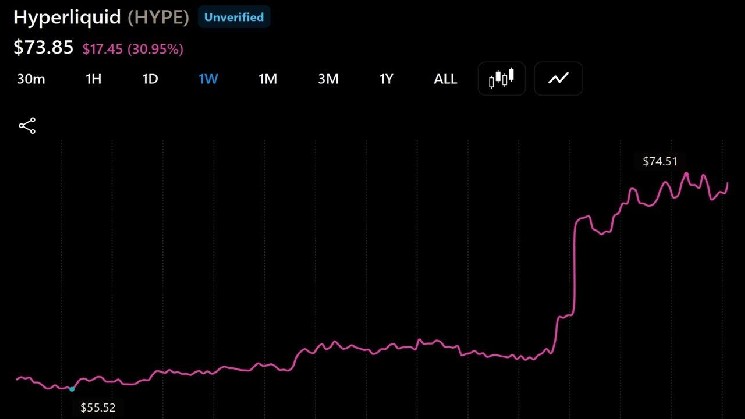
加密货币交易员Pentosh1指出,去中心化衍生品交易所Hyperliquid的原生代币$HYPE是“熊市中表现最好的资产”,其代币经济模型可能使其在下一个牛市周期中继续取得成功。该观点基于Hyperliquid的收入分配结构:平台永续合约和现货市场产生的几乎所有交易费用都用于在公开市场回购并销毁$HYPE代币,而非留存于国库。 自2024年11月以来,Hyperliquid已销毁约4.62亿枚$HYPE,价值约12.7亿美元,约99%的协议费用用于资助代币回购。该销毁计划的规模直接取决于Hyperliquid处理的交易量,该交易所估计处理了全行业40%-70%的去中心化永续合约交易量,累计交易量已达数万亿美元。 另一个关键催化剂是即将在6天后(8月26日)激活的AQAv2机制。该机制将把平台上超过50亿美元USDC储备所产生收益的大约90%,注入用于回购的代币基金。分析师估计,这可能在现有机制基础上,每年额外增加1.35亿至1.6亿美元的回购资金。 近期,$HYPE价格因美国前总统特朗普关于监管机构正努力使Hyperliquid“完全合规”进入美国的言论而出现20-25%的短期上涨,推动其市值达到约180亿美元。交易员认为,代币销毁机制已证明其能随交易活动规模有效运作,而不依赖于市场炒作周期。

cryptonews.ru3 小時前

Hyperliquid旗下HYPE在熊市中表现优于市场,随着AQAv2即将上线

cryptonews.ru3 小時前

交易

現貨
活动图片