Can Ethereum’s $150B stablecoin liquidity help ETH bulls reclaim control?

ambcrypto發佈於 2026-07-07更新於 2026-07-07

文章摘要

Ethereum has established itself as a leading infrastructure for digital dollars, now holding over $150 billion in on-chain stablecoin liquidity, a sign of real economic activity. Despite trading at $1,748.47 with an 11% weekly gain, it faces a key resistance zone between $1,750 and $1,800, where selling pressure has historically capped rallies. However, recent inflows into ETH ETFs and a potential technical "double bottom" pattern suggest buyers may be regaining momentum. Analysts link long-term bullish prospects, with price targets as high as $8,500 by mid-2027, to the growth of stablecoins and real-world asset (RWA) tokenization on Ethereum. The ongoing "Lean Ethereum" protocol redesign further underscores the network's evolving utility beyond speculation.

According to a recent update, Ethereum has already taken the lead in the financial infrastructure for digital dollars and tokenized assets, and this is not just hype.

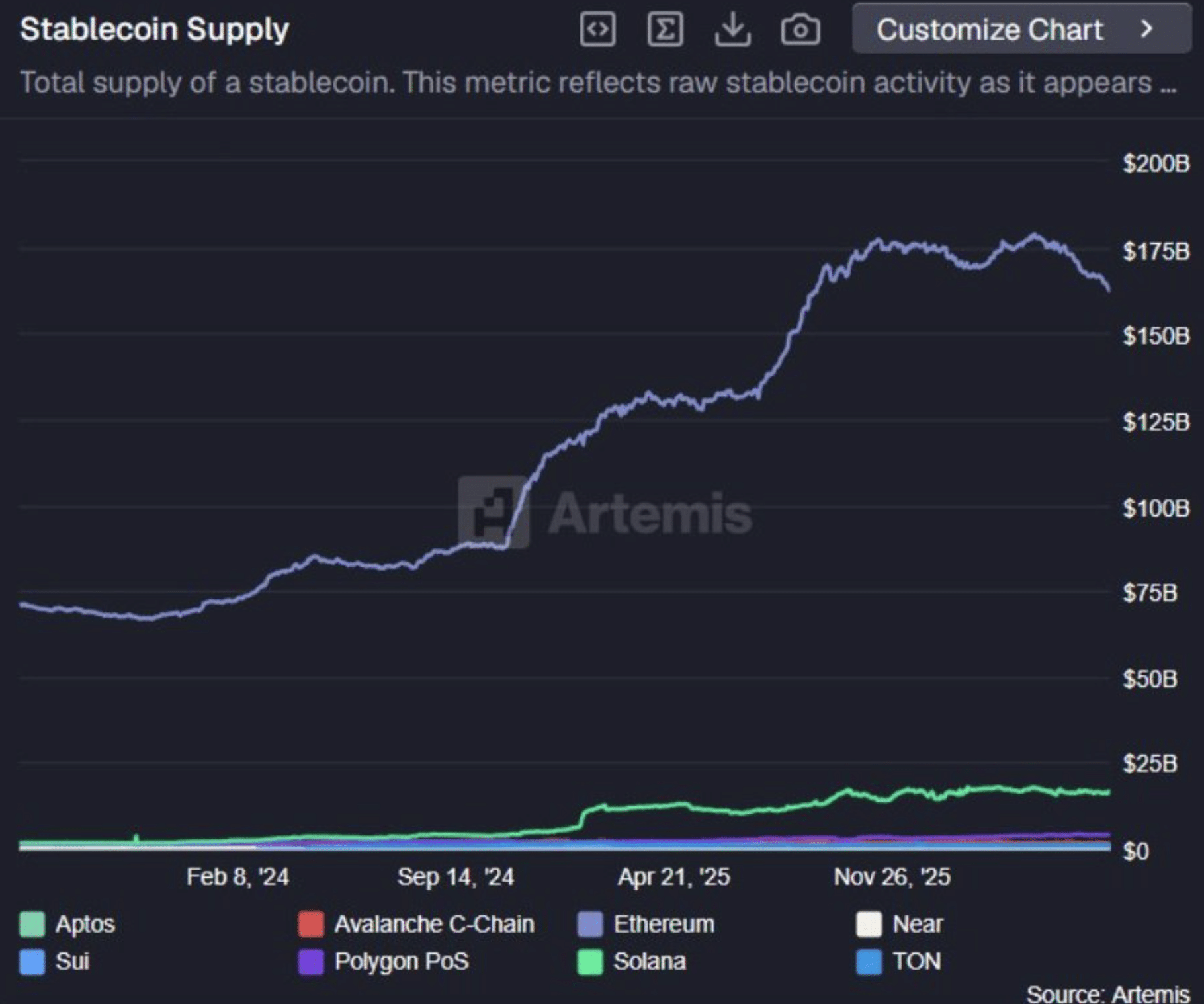
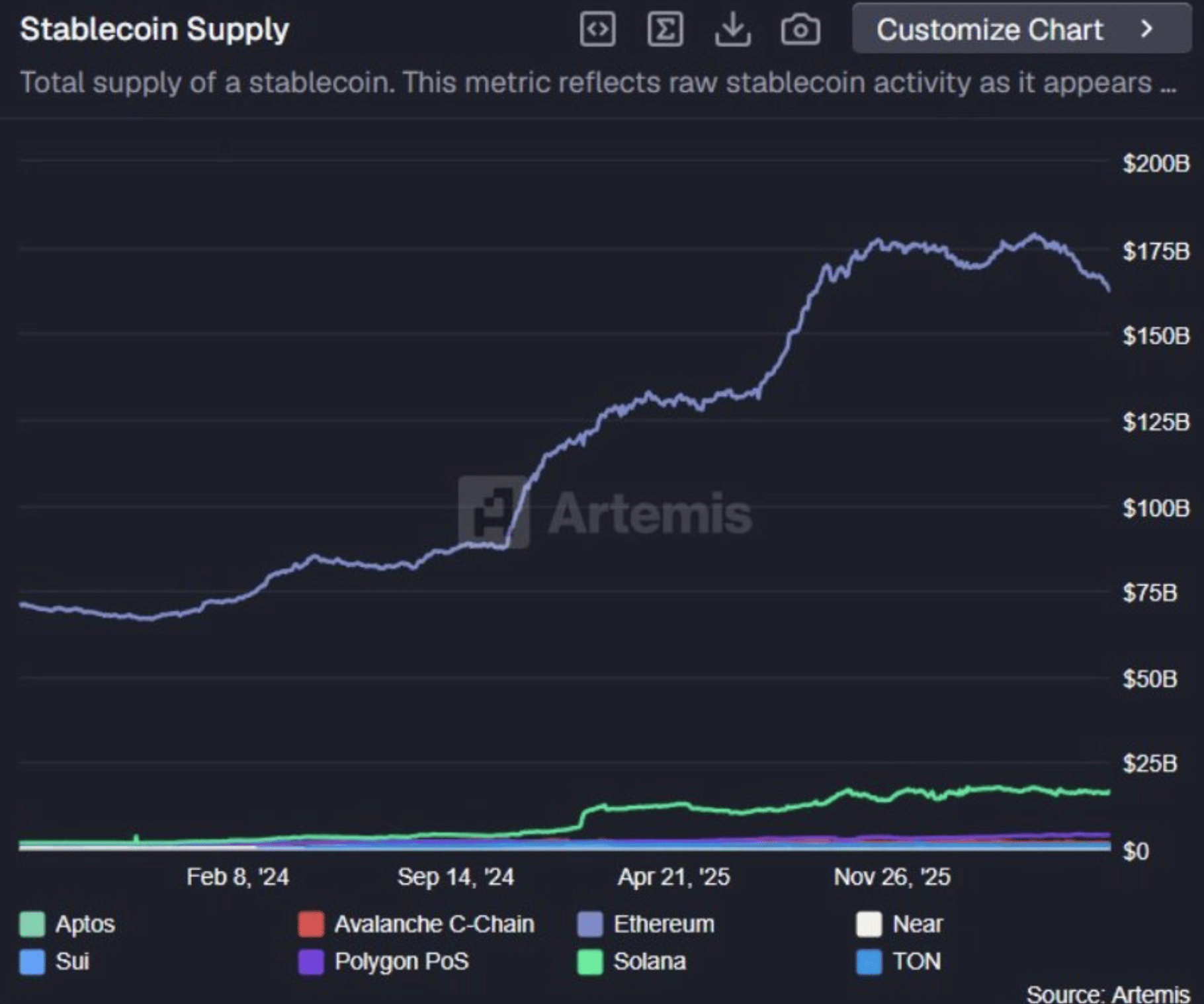
Artemis reported that Ethereum has more than $150 billion in on-chain stablecoin liquidity. This is noteworthy because stablecoins represent actual economic activity rather than speculative activity.
Source: Whale Factor/X

Ethereum’s market dynamics

This occurred at a time when the price of Ethereum [ETH] was trading at $1,748.47 at press time, following an 11% increase over the previous week.
Source: SoSo Value

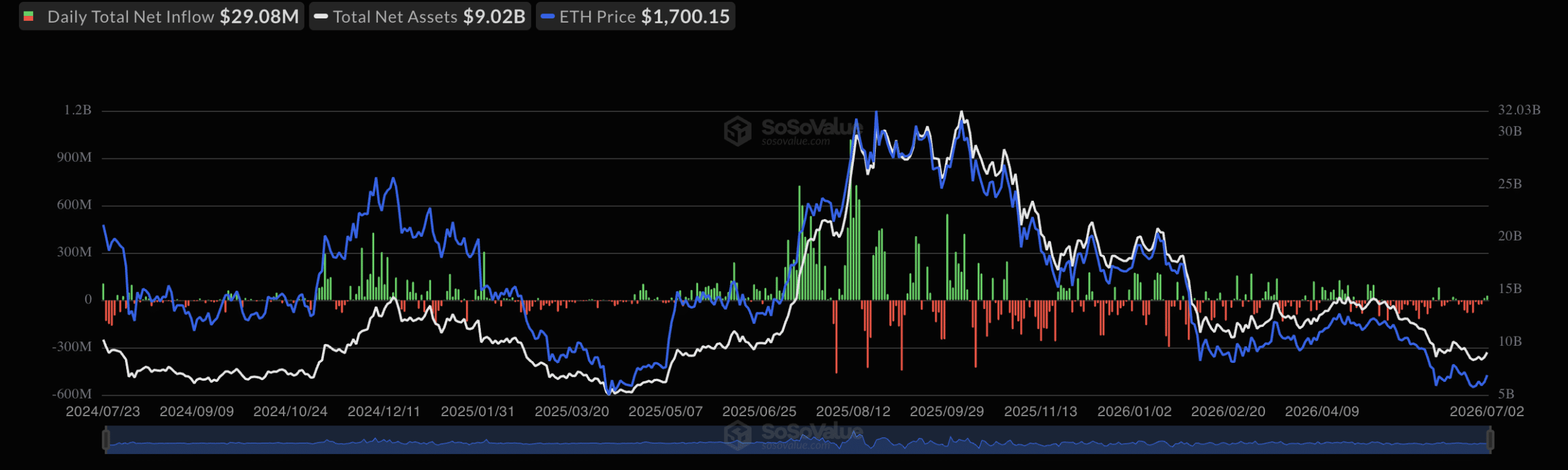
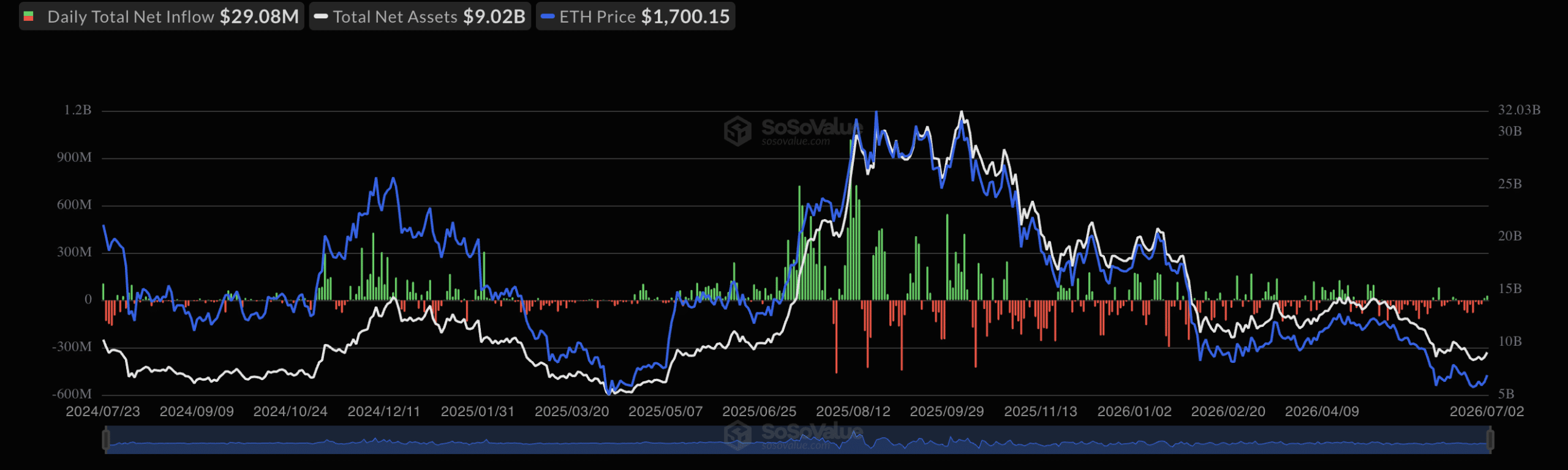
The ETH ETF, on the other hand, has been experiencing a prolonged period of outflows with a few exceptions.

However, on the 1st and 2nd of July, ETH ETFs recorded inflows worth $14.8 million and $29 million, respectively, highlighting renewed momentum.

Is buying momentum slowly rearing or ETH?

At the same time, many analysts are eyeing the $1,750–$1,800 range as a critical level because it has frequently served as a barrier where sellers have intervened to stop additional gains.


Ethereum has retreated in price every time it has approached this zone lately due to increased selling pressure from traders aiming to short the asset or take profits.

This shows that at those levels, supply has outpaced demand. However, Ethereum has the potential to indicate that buyers have absorbed the available selling pressure, provided it were to hold above $1,750–$1,800 with strong trading volume.

Community sentiments echo bullish notions for the altcoin

Interestingly, echoing somewhat similar sentiment, another analyst added,

ETH just double bottomed.

In other words, a double bottom occurs when the price of Ethereum hits a support level, bounces back, falls back to about the same level without breaking lower, and then rises once more. It is often seen as an indication that buyers are starting to regain control despite the selling pressure trying to barge in.

Therefore, the analyst predicted it best when he added,

~8,500 for ETH by mid 2027, thanks to stablecoins and RWA moving onchain.

What’s more?

Meanwhile, Ethereum has also entered a new stage of development with Lean Ethereum, a multi-year plan to completely redesign the network’s core protocol over the course of the next three to four years.

Ergo, as the gap between speculative capital inflow and network utility becomes more pronounced, it may result in further price appreciation.


Final Summary

  • Ethereum’s on-chain stablecoin liquidity skyrockets with its price trading at $1,748.47, and ETH ETF, experiencing a prolonged period of outflows.
  • Analysts consider the $1,750–$1,800 range as a critical price zone because it has frequently served as a barrier where sellers have intervened to stop additional gains.

相關問答

QAccording to the article, what is the significance of Ethereum's $150 billion on-chain stablecoin liquidity?

AThe significance is that stablecoins represent actual economic activity rather than just speculative activity, highlighting Ethereum's role in the financial infrastructure for digital dollars and tokenized assets.

QWhat was the price of Ethereum (ETH) at the time of writing, and what was its recent weekly performance?

AAt press time, Ethereum's price was $1,748.47, following an 11% increase over the previous week.

QWhy do analysts consider the $1,750–$1,800 price range as a critical level for Ethereum?

AAnalysts consider the $1,750–$1,800 range as critical because it has frequently acted as a barrier where sellers have intervened to stop additional gains, indicating supply has outpaced demand at those levels.

QWhat is a 'double bottom' pattern in technical analysis, and what does the analyst suggest it indicates for ETH?

AA 'double bottom' occurs when an asset's price hits a support level, bounces back, falls back to a similar level without breaking lower, and then rises again. The analyst suggests it indicates that buyers are starting to regain control despite selling pressure.

QWhat future development plan for Ethereum, mentioned in the article, aims to redesign its core protocol?

AThe future development plan is called 'Lean Ethereum,' which is a multi-year initiative aiming to completely redesign the network's core protocol over the next three to four years.

你可能也喜歡

深究 Open USD 合伙人阵容:看谁入局,就能看清资金流向何方

《富布斯》文章分析,Open USD在推出时已汇聚超过150家合作伙伴,其阵容本身比稳定币技术更值得关注。创始伙伴包括Stripe、Coinbase、万事达卡、Visa和贝莱德等巨头,更广泛的名单涵盖纽约梅隆银行、Shopify、谷歌、IBM、Ripple、Aave等来自金融、科技、加密和商业各领域的关键企业。 文章指出,如此广泛的联盟绝非偶然。每个参与方都看到了稳定币成为未来金融基础设施的潜力,并希望抢占位置而非被排除在外。资产管理公司如贝莱德看中管理巨额储备的收益;商户如Shopify希望降低支付成本并从余额中获得收益;银行则出于防御心态,参与以保住存款和结算业务;科技公司如谷歌、IBM着眼于未来机器间可编程支付的需求;加密企业则借此寻求主流化路径。 值得注意的是,许多直接竞争对手(如Visa与万事达卡、Coinbase与Ripple)罕见地加入了同一联盟。这反映出它们共同的恐惧:被排除在稳定币体系之外的代价,已超过与对手合作的不适。卡网络虽然面临稳定币可能削弱其传统刷卡业务的威胁,但仍选择加入,旨在未来继续通过提供结算等服务留在资金流中。 这种由竞争对手构成的治理联盟也可能导致决策缓慢。然而,名单本身传递出清晰信号:稳定币正从单一公司的产品,转变为行业共享的基础设施。这对现有主要稳定币发行方如Circle和Tether构成了直接威胁,因为其潜在客户集体转向了共建的替代方案。缺席者(如Circle、Tether及美国大型零售银行)同样说明了市场格局的分化。最终,Open USD的成功与否尚待观察,但其合作伙伴名单已揭示了资金流向和行业战略重心的演变趋势。

Foresight News1 小時前

深究 Open USD 合伙人阵容:看谁入局,就能看清资金流向何方

Foresight News1 小時前

交易

現貨
活动图片