Author: Nancy, PANews
On the eve of its Q2 earnings release, Robinhood made a bombshell announcement: the mainnet launch of its Layer-2 chain, Robinhood Chain, alongside a slew of crypto products like tokenized stocks, on-chain lending, and AI trading, while accelerating its global expansion. Following the news, the market reacted positively, with Robinhood's stock price rising 8.35% to $108.6, hitting a nearly six-month high.
In the highly monopolistic L2 landscape, backed by Robinhood's massive user base and mature financial services, Robinhood Chain has quickly rallied a group of leading crypto protocols, sparking unexpected community controversy.
Self-built L2 Goes Mainnet, Multi-product Suite Builds On-Chain Financial Gateway
After several teaser tweets, Robinhood held a "The World is Flat" launch event in London in the early hours of July 2nd, unveiling its latest strategic layout centered on on-chain finance, AI trading, and global expansion, further demonstrating its ambition to build global financial infrastructure.
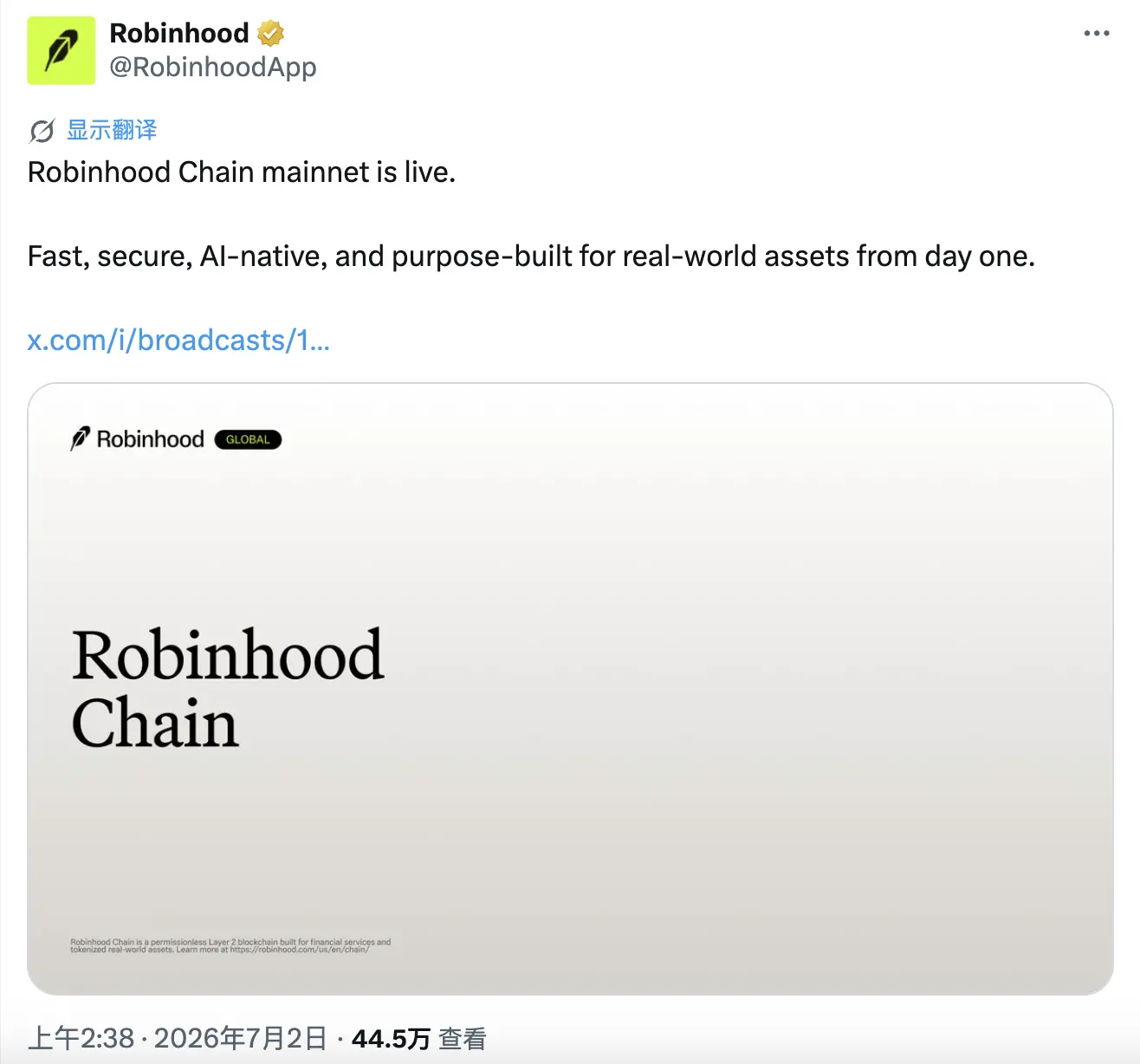
The most anticipated part of the event was its Layer-2 chain, Robinhood Chain. Built on Arbitrum Orbit, the chain officially launched its public mainnet after months of testing. It will directly connect Robinhood's on-chain users and provide developers with a plug-and-play DeFi development environment. According to the official description, Robinhood Chain is positioned as blockchain infrastructure for institutional-grade applications, AI-native architecture, and specifically optimized for real-world assets (RWA).
Around this chain, Robinhood simultaneously expanded its on-chain product matrix, covering trading and yield scenarios.
Regarding tokenized stocks, Robinhood Wallet added related features, available in over 120 countries and regions worldwide. Users can trade via DEXs like Uniswap, Rialto, Lighter, 1inch, and Arcus on Robinhood Chain, and further use the assets as collateral in DeFi lending or provide liquidity to earn yields. This feature was previously only available in Europe. Its expansion globally reflects rapidly growing demand for tokenized assets and ongoing competition between traditional and crypto trading platforms.
In the on-chain perpetuals space, Robinhood Wallet also launched related features, providing investors a new channel to trade stocks, commodities, and other assets outside traditional market hours. To boost user participation, Robinhood initially offers 90 days of zero fees, gas subsidies, and reward points.
Regarding yield products, Robinhood Earn, targeting US users, is being rolled out gradually. This is the first decentralized lending product within its main app. Users can deposit the USD stablecoin USDG into a self-custody wallet and expect to earn around 7% annual yield. The product is built on Morpho's underlying lending infrastructure, supported by multiple DeFi protocols like Steakhouse, Ethena, Spark, Maple, and includes insurance mechanisms to mitigate risk exposure.
Meanwhile, Robinhood is extending its AI trading capabilities to on-chain trading with the crypto version of Agentic Accounts. Eligible US users can connect to AI models, set risk parameters and capital boundaries, letting the AI autonomously execute market scans and trading strategies. Previously, Robinhood had introduced similar tools in its stock and options business.
This series of expansion moves comes against the backdrop of continued pressure on Robinhood's crypto business. In Q1, its crypto revenue fell 47% year-over-year to $134 million, and crypto notional trading volume dropped 48% YoY to $24 billion. Facing slowing crypto growth, Robinhood urgently needs new growth engines.
Regarding globalization, the company already serves about 28 million users and continues to advance its overseas market layout, including officially launching in Canada, its Singapore subsidiary obtaining a MAS Capital Markets Services license, plans to launch commodity, ETF, and FX perpetuals in Europe, and imminent availability of crypto trading services in the UK.
Rallying Crypto Protocols, dYdX's "Starting Anew" Sparks Doubts
Leveraging its massive user base, leading crypto protocols like Uniswap, 1inch, Lighter, Morpho, Chainlink, BitGo, Ethena, and EtherFi announced their integration with Robinhood Chain, covering core areas like trading, liquidity, lending, oracles, custody, and cross-chain.
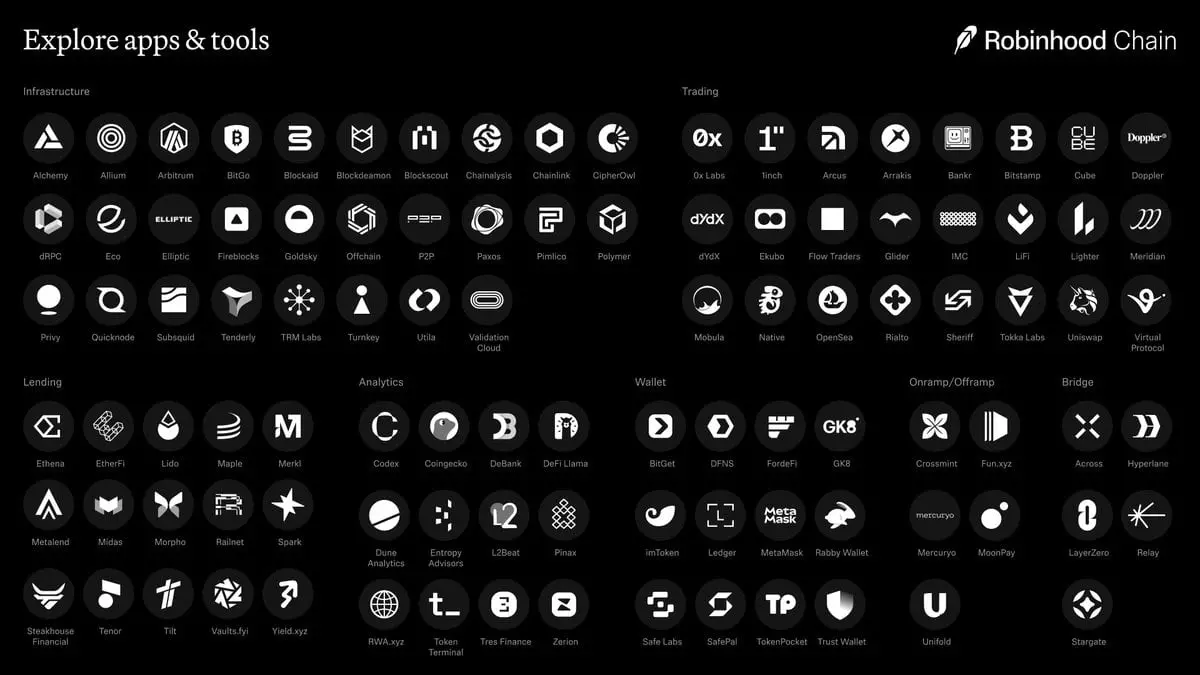
However, within this ecosystem integration, the new DEX Arcus launched by dYdX has stirred controversy.
On July 2nd, the dYdX Foundation announced a partnership with Robinhood to launch the decentralized trading platform Arcus on Robinhood Chain. The platform will support 95 tokenized stocks, perpetual contracts, and major crypto asset trading, with plans to further support using tokenized stocks and crypto assets as collateral for perpetuals, and open Pre-IPO equity trading for popular private companies like OpenAI. Currently, Arcus has launched a Bea test version and is expected to officially go live later in 2026.
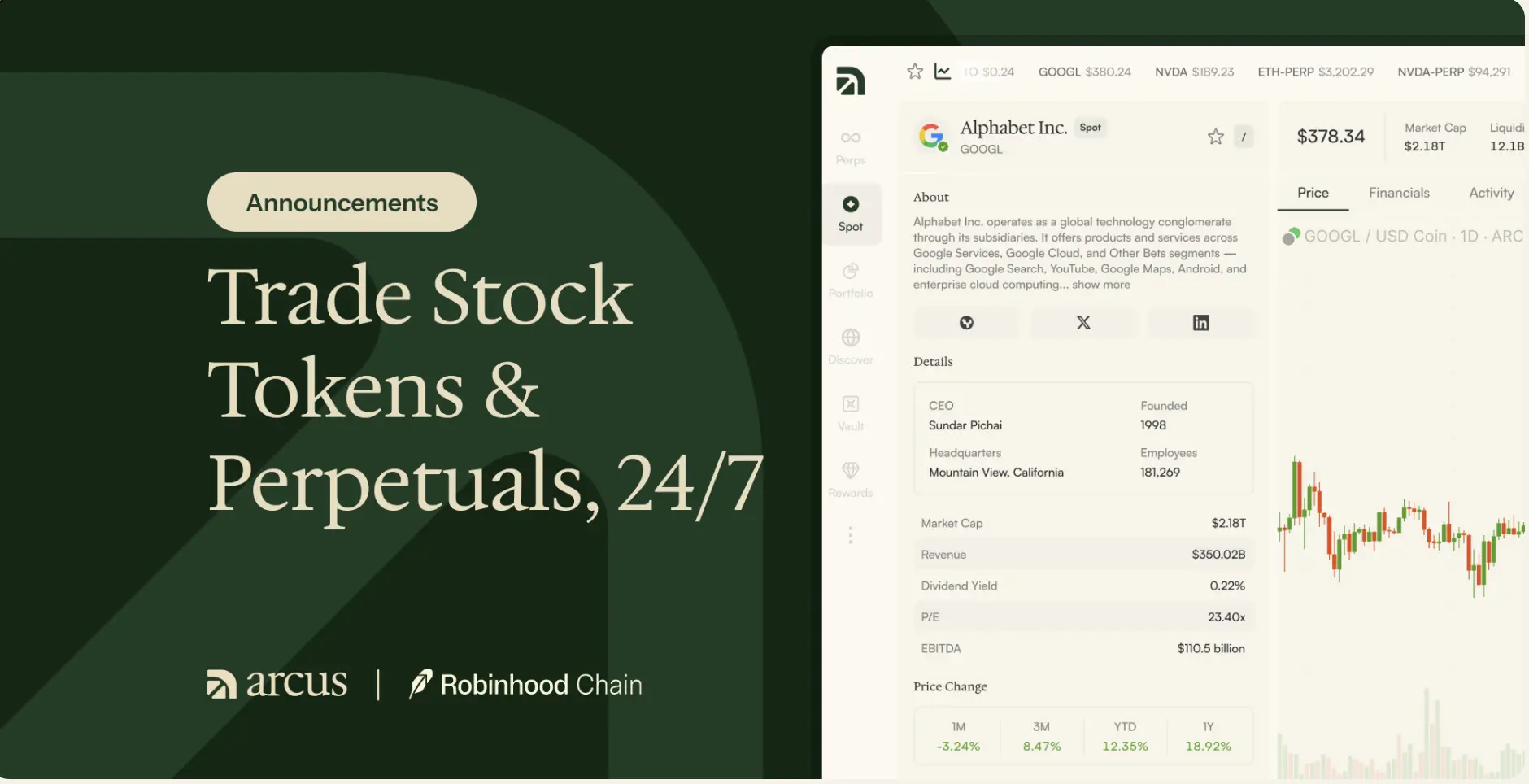
What sparked community discussion is that, as a new product launched by the dYdX team, Arcus is not built on dYdX Chain, but instead chose to deploy on Robinhood Chain, operating as an independent product and infrastructure suite.
In response, dYdX founder Antonio explained in an open letter that while running dYdX Chain, the team gradually realized that building a decentralized public chain from scratch meant constantly trading off between performance, user experience, and decentralization, while competitors kept capturing market share with faster execution, simpler product experiences, and more abundant liquidity. Combining lessons from past generations of dYdX products, months of user feedback, and current DEX pain points, the team ultimately decided to launch Arcus.
Antonio disclosed that choosing Robinhood Chain was largely due to considerations of users and liquidity, as Robinhood has approximately 27.7 million funded accounts, providing Arcus with a ready-made user base and liquidity. Furthermore, Arcus also received strategic investment from Robinhood Crypto, deepening the partnership.
However, this news quickly drew dissatisfaction from the dYdX community. Many community members believe that the core dYdX team starting a new brand from scratch implies development resources, product focus, and market attention might shift towards Arcus, even posing a risk of cannibalizing or replacing the dYdX brand value. Moreover, given dYdX's history of conducting one of the industry's largest airdrops and the potential token launch expectation for Arcus, this could attract traders and liquidity to migrate to the new platform, leading to a decline in dYdX Chain trading volume and activity, further diluting the value of the DYDX token.
In response, the dYdX Foundation emphasized that its duty to support the dYdX protocol and community governance remains unchanged. dYdX Chain is unaffected; trading, deposits, withdrawals, staking, and governance functions all operate normally. The governance and staking mechanisms of the DYDX token remain the same, with staking rewards continuing to be distributed in USDC. Community treasury, reward treasury, and other assets remain fully controlled by DYDX holders through governance.
Antonio also stated that, as the founder of dYdX and the largest holder of DYDX tokens, his interests are deeply aligned with the dYdX community. "My interests are more deeply tied to dYdX than anyone else's." He promised that if Arcus issues a token in the future, a portion of the tokens will be pre-allocated to the dYdX community; additionally, Arcus will also prioritize granting access to dYdX traders.
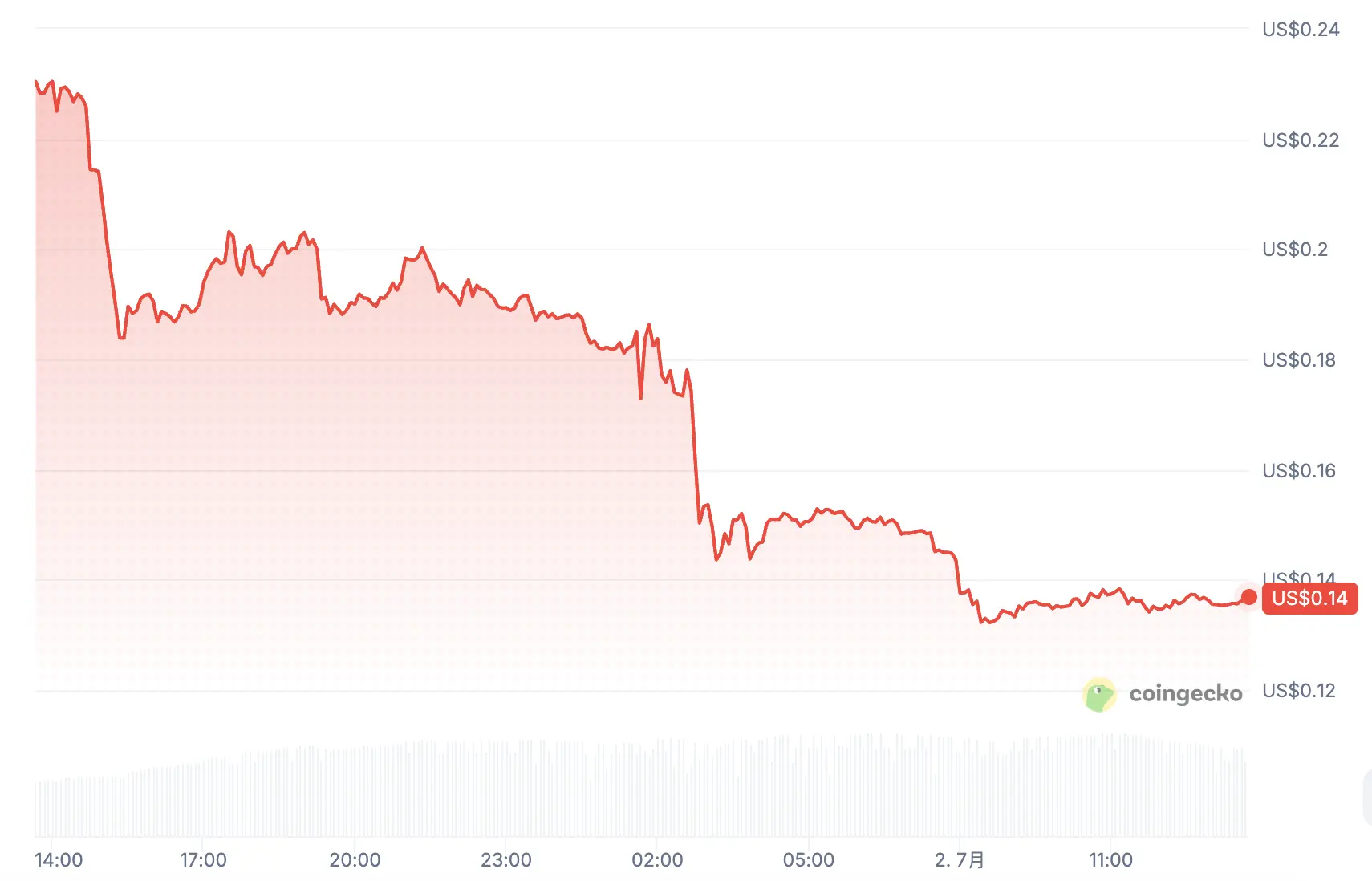
However, these responses do not seem to have fully alleviated market concerns. Following the new product announcement, the DYDX token fell approximately 40.7% intraday.
Overall, Robinhood's ambition extends far beyond providing on-chain infrastructure. Leveraging its massive user traffic, mature brokerage business, and global compliance layout, Robinhood is attempting to use Robinhood Chain to expand its business boundaries, accelerating its transformation from an internet brokerage to the next-generation global financial gateway. Whether this ambition becomes reality remains to be tested by the market.