Written by: Joe Zhou, Foresight News
In its seventeen-year history, Crypto has already experienced four bull markets and four bear markets.
Every bear market reshapes the industry. Some leave disappointed, some choose to stay; some are eliminated by the cycle, while others undergo transformation in the depths. This is precisely what makes Crypto both the cruelest and most fascinating place.
For those hoping to navigate the cycles, a bear market is never just about waiting for the market to recover; it's also a time to re-accumulate knowledge and hone skills. How you spend the bear market determines your position when the next bull market arrives.
Recently, a friend recommended an article to me—"Sharing 10 Must-Read Good Books for the AI Era." It suddenly made me wonder: if AI practitioners have their must-read list, what about Web3 practitioners?
Crypto's history is only seventeen years, but it has experienced four complete bull-bear cycles. What truly helps us navigate the cycles is never just whitepapers, technical papers, or industry reports, but also those classic works about history, civilization, technology, business, and human nature.
So, I've compiled this list of ten books for the Web3 bear market. They don't discuss candlesticks or reveal wealth codes; they concern something more fundamental.
"2049: The Possibilities of the Next 10,000 Days"

Reason for Recommendation: The greatest pain in a bear market is not paper losses, but "uncertainty about the future." When short-term charts lose meaning, we need a top tech thinker's "long-term telescope."
In the winter of a bear market, short-term speculation is often mentally and physically exhausting. At this time, without a detailed vision of the future, we cannot make truly sound long-term decisions. Similarly, without a firmer belief in the future of cryptocurrency and Web3, it's hard to endure the darkest moments.
Kevin Kelly is hailed as the "Godfather of Silicon Valley Spirit." This is because 30 years ago (in 1994), he accurately predicted the explosion of the internet, cloud computing, IoT, and AI in his book "Out of Control." Now (in 2024), this 75-year-old sage is again looking to the future with his book "2049: The Possibilities of the Next 10,000 Days."
In this book, KK outlines in detail the technological ecosystem expected to see large-scale adoption in 25 years, covering brain-computer interfaces, VR, the space economy, the mirror world, and, of course, what we care most about—cryptocurrencies. Regarding the position of crypto assets in the future world, KK offers an extremely rational and imaginative judgment:
"I don't think virtual cryptocurrencies can replace national currencies within 25 years, but they could become a second currency, even a global common currency—just as English became a global common language. For most people, having a second currency beyond their local one, using it for global payments, would be quite interesting."
Furthermore, he emphasizes the combination of AI and crypto, believing crypto and smart contracts are crucial to AI operating systems, an indispensable cornerstone of the future "mirror world" (MR mixed reality) operating system.
Even more valuable, KK not only gives the "fish" (predictions) but also the "fishing rod" (prediction methods). He shares three underlying models for observing the future, highly instructive for judging crypto sectors:
- Observe the Rich: The first prediction model is to observe what rich people are doing now; their actions will be emulated by the masses. Consider what aspects of their lives could be mastered by the majority due to technological change.
- Observe Edge Geeks: The second prediction model is to observe what fringe groups are focusing on. Many innovations gradually move from the fringe to the mainstream. To see what might happen in the future, look for clues among fringe groups. What geeks are playing with now might become popular in a few years.
- Observe New Vocabulary: The third prediction model is to find signals of change from newly created words. Many new words, upon their invention, signal change. Kevin Kelly says in the book: The emergence of cryptocurrencies and blockchain spawned a series of new terms, like DAO, metaverse, smart contracts, NFT (non-fungible tokens). The constant emergence of new words indicates this is a rapidly expanding field because we must invent a whole bunch of terms to understand it.
KK admits that almost all specific predictions will be wrong. But I always believe this era still needs such "tech thinkers."
We cannot persevere in sailing across a sea without lighthouses. Without imagination for the future, our current persistence is rootless. Reading this book during a crypto bear market is not about seeking short-term secrets to get rich tomorrow, but about identifying, within the long cycle of the next 10,000 days, the definitive coordinates worth betting on and holding onto. When more and more people's gazes converge, consensus ignites into a blaze, and those who see the distant horizon will ultimately stand side by side, rewriting the era's script with clear will.
"Human Action"
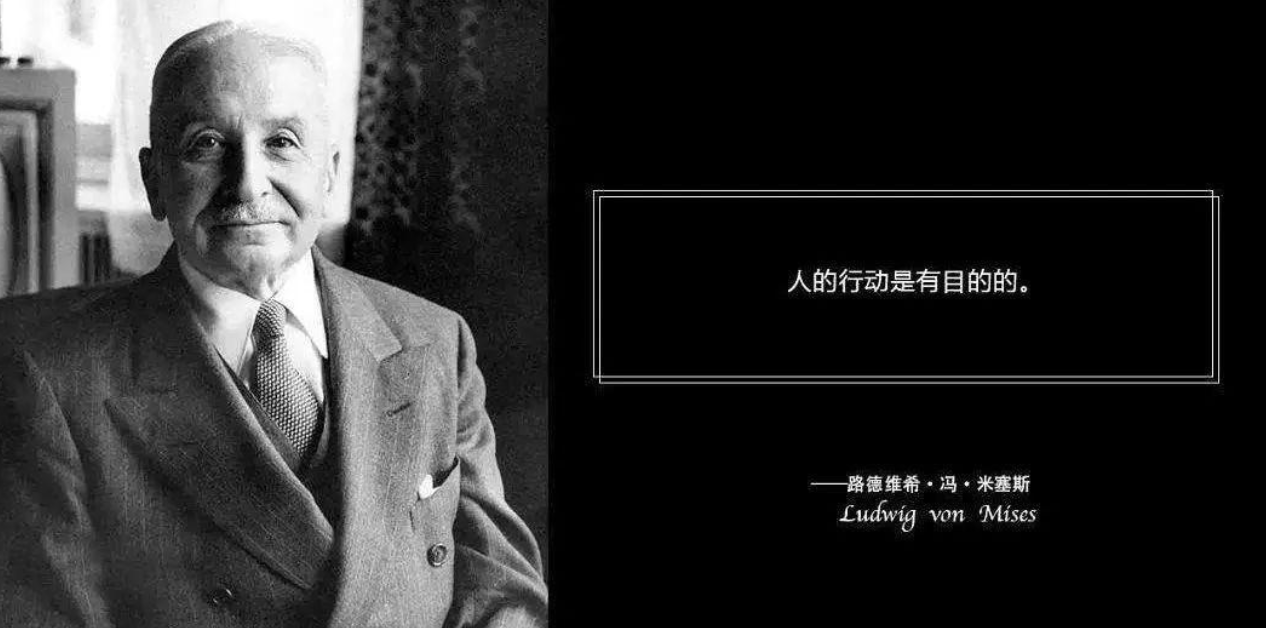
Reason for Recommendation: When the market tells you with continuous declines that "nothing works," Mises will tell you: the essence of action, the relationship between action and money, and the relationship between praxeology and economics, upgrading your entire underlying mental framework.
Mises, Hayek's mentor, is widely recognized as the third-generation leader of the Austrian School of Economics.
Many who believe in Bitcoin see Hayek's ideas as the most direct theoretical prophecy for Bitcoin—the denationalization of money, a freely competitive system of currency issuance, seem like footnotes tailor-made for Bitcoin. But Hayek's teacher—Ludwig von Mises—is the one who dug the foundation deeper. If Hayek gave Bitcoin "institutional legitimacy," then Mises gave it "philosophical inevitability."
Mises says the sole purpose of action is to make future conditions more satisfactory than present ones. What prompts action is always some "uneasiness." A perfectly satisfied person would have no desires, no actions. But such a person does not exist; as long as one lives, there is an unsatisfied state. However, uneasiness alone is not enough. To truly act, a third condition is needed: the belief that one's own behavior has the capacity to remove or at least alleviate this uneasiness.
This condition seems simple but is extremely cruel in a bear market—when you feel "the market is hopeless" or "nothing works," action stops. You change from an "actor" into what Mises calls a "resigner"—one can only submit to what cannot be changed. What makes a bear market terrifying is not just paper losses, but that it strips you of your "belief in action."
Mises has a sobering sentence:
"The outcome of action is always uncertain. Action is always speculation."
In the crypto industry, the word "speculation" is often stigmatized. But Mises imbues it with the simplest yet profound connotation: any action oriented toward the future involves a judgment about uncertain outcomes. Buying Bitcoin is speculation; holding stablecoins is speculation; holding fiat currency is speculation—you are betting on "which asset will better preserve value in the future." Choosing to read this book instead of watching short videos is also speculation—you are judging "which way of spending time yields a higher return." So, don't be ashamed of speculation. As long as you are acting, you are already speculating. The key is, what kind of cognitive framework underlies your speculation—blindly following the crowd, or built upon what Mises calls "understanding of causal connections"?
In a society with division of labor, Mises says, monetary calculation is the "North Star" of action, the compass for producers. This is especially profound for the crypto industry. We often debate "Is Bitcoin money?" or "Are stablecoins money?" Mises's perspective is: money is a tool of calculation—it allows you to measure the costs and benefits of different actions, to make choices among countless possibilities. If fiat is the compass of the old world, then crypto assets are becoming another set of coordinates for the new world. The reason Mises would appreciate the crypto world is: it provides humanity with more diverse scales for calculation.
He writes:
"What distinguishes man from animals is the insight into the advantages which can be derived from cooperation under the division of labor." (Paraphrased for conciseness from the original text's intent)
"In a pure market economy, to become rich, one must successfully satisfy consumer demand. A rich man can retain his wealth only by constantly serving consumers in the most efficient manner." (Paraphrased)
In a bear market, price crashes shake your "belief in action." You doubt: Is everything I'm doing still meaningful? Is long-termism just self-comfort? Mises would pat your shoulder and say: The meaning of action never depends on short-term results, but on whether you are consciously and purposefully working to improve future conditions.
Reading "Human Action," you won't find the answer to "when will the bull market come," but you will find something more fundamental: the confidence to persist in action amid uncertainty. Because economics is not engineering; it has no constant parameters; economics is the logic of human action—and logic is something a bear market cannot destroy. Action is change, and change is continuous over time. As long as time flows, action does not stop. And every conscious choice you make is casting a real vote for that more satisfactory state in the future.
Finally, sharing a quote from Mises: Man acts because he has the ability to discover the causal connections that determine the changes and formations of the universe. Action requires and must presuppose the category of causality. Only he who can change the world with the aid of causality is fit for action.
"The Nature of Technology"
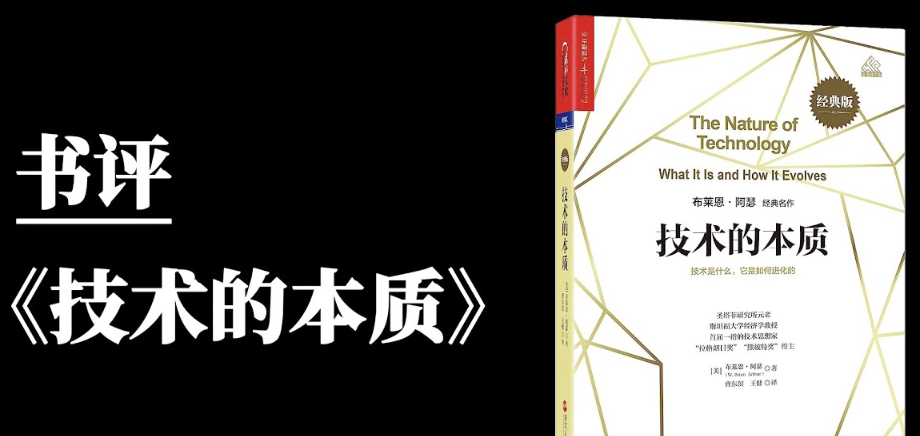
Reason for Recommendation: Many people don't understand Crypto and Web3, perhaps because it is itself a complex discipline spanning cryptography, computer science, monetary theory, blockchain, finance, the internet, payments, the metaverse, AI, and many other fields. The barrier to understanding this industry is not on any single line of knowledge, but in seeing the intersections and connections between these disciplines. Brian Arthur's "The Nature of Technology" precisely provides an underlying lens to see these intersections—only by understanding the nature of technology can we truly understand that blockchain's development was not achieved overnight, but formed gradually through constant combination and evolution.
Many misunderstandings about Crypto stem from a subconscious assumption—they think technology is "invented out of thin air."
Some genius has a flash of insight one day, writes a whitepaper, and then a new technology is born. But real technological history is never like that. Every new technology comes from the recombination of existing technologies. So it is with blockchain, with Bitcoin, with Ethereum, DeFi, NFT, DAO—without exception.
Brian Arthur, founder of complexity economics, in his book "The Nature of Technology," clearly reveals this truth. Arthur gives three definitions of technology:
"Technology is a means to fulfill a human purpose."
"Technology is an assemblage of practices and components."
"Technology is the collection of devices and engineering practices available to a culture."
But the most important insight is this: Technology is not achieved in one fell swoop; it is a process of continuous combination and integration.
Arthur calls this mechanism "combinatorial evolution." The evolution of technology is the constant recombination, assembly, and grafting of existing technologies to generate new ones. Every new technology is essentially a "new combination."
Looking back at the crypto industry, this pattern is clearly visible:
What is Bitcoin? A combination of cryptography (hash functions, asymmetric encryption) + distributed systems (P2P networks) + economics (scarcity design, game theory) + monetary theory. Satoshi Nakamoto didn't invent any underlying technology; he combined them.
Everything since has been the product of further combinations:
- Technology combined with computer hardware gave birth to the mining industry;
- Technology combined with finance gave birth to DeFi;
- Technology combined with the metaverse/NFT gave birth to digital collectibles and on-chain identity;
- Technology combined with the US dollar gave birth to dollar stablecoins; combined with the Hong Kong dollar gave birth to HKD stablecoins;
- Technology combined with AI is making AI agents capable of autonomous payments a reality;
- Technology combined with compliance has finally allowed the nearly decade-dormant prediction market sector to take off, with valuations for Polymarket and Kalshi soaring;
- When the retreat of Hong Kong brokers like Futu and Tiger met with a loosening US regulatory environment, coupled with Web3 technological support, the wave of US stock tokenization also began to rise.
Every Web3 revolution is a recombination of technologies—some new, some existing, simply redeployed in a new context.
Arthur also proposes a view highly enlightening for the crypto industry:
"A solution, if used often enough, becomes a module and becomes adoptable as a module for standard uses; it itself becomes a technology."
What does this mean? It means blockchain technology itself is undergoing a "modularization" process. Smart contracts become modules, zero-knowledge proofs become modules, account abstraction becomes modules, various Layer2 solutions are becoming modules. When these modules are repeatedly used and validated, they become more stable, standard, and "invisible"—like the TCP/IP protocol today, you don't feel it, but it's everywhere.
And when an industry's technology becomes increasingly modular, something more profound happens—technology begins to create an "economy."
"Assemblages of technologies beget further technologies; they create what we call an economy."
The formation of the crypto economy is exactly like this. It is not a "designed" system but an organic entity grown from countless technological combinations, human actions, and market博弈.
Reading "The Nature of Technology," you won't find the answer to "where is the next 100x sector," but you will gain a more fundamental perspective: to identify which technologies are being combined, which combinations are forming new modules, and which modules are creating new economic forms.
In a bear market, price declines can lead to the misconception that "technology has stagnated." But Arthur tells you: Technology is never driven by bull markets. Technological evolution is continuous and cumulative; bull markets are just concentrated displays of its achievements. The truly important technological combinations often happen when no one is paying attention.
And right now, is the moment when combination is happening.
"The Distant Savior"

Reason for Recommendation: This is considered a strange book. It lets people at the bottom of a well peek over the rim, then fall back down—that落差 is enough to sober anyone up. Crypto is, to some extent, an industry that "lets people peek over the rim." Some cross classes because of it; others fall deeper. What's the difference? This book offers an extremely冷酷 answer: cultural attributes.
Many read "The Distant Savior" as a business war novel, but what keeps it discussed twenty years after publication are the series of intellectual daggers thrown by the protagonist, Ding Yuanying.
The sharpest among them is called "cultural attributes."
"To透视 society, there are three successive levels: technology, institutions, and culture. From an individual to a nation or ethnicity, any fate is ultimately the product of that cultural attribute. Strong cultures create the strong; weak cultures create the weak. This is规律, can be understood as the Tao of Heaven, not转移 by human will."
This sentence deserves to be read three times by every Crypto practitioner.
Because this industry never lacks technical geniuses or ambitious institutional innovators; what it lacks are those who truly understand "cultural attributes."
What is a strong culture? A culture that follows the laws of things. It doesn't rely on anyone's favor, doesn't wait for anyone's salvation, figures out the laws itself, solves problems with its own hands. What is a weak culture? A culture that depends on the moral expectations of the strong to破格 acquire, expecting a savior. The core is one word: 靠 (rely on).
"The死结 of traditional观念 lies in the word 'rely'—rely on parents at home, rely on friends outside, rely on God, rely on Bodhisattva, rely on imperial grace... in short, rely on anything but oneself, thus can only kneel spiritually."
Written twenty years ago, this passage fits today's Crypto industry with chilling precision. If you仔细观察 people in this industry, you'll find a strange分化:
There is one group who, during bear markets,研究 protocols, write code, participate in governance, evangelize, build. They believe the industry's problems must be solved with their own hands—whether scaling, privacy, compliance, or user experience, someone is always working on it.
And another group who wait. Wait for the bull market, wait for institutional entry, wait for the Fed to print money, wait for some KOL to shill, wait for Ethereum's founders to invent the next "holy grail," wait for the founders of top crypto exchanges to lead them to the next wealth code.
The former are practitioners of strong culture; the latter are patients of weak culture.
"The survival rule is simple: endure what others cannot endure, achieve what others cannot achieve. Endurance is one line, capability is another line; the space between them is the survival opportunity."
Endure what? Endure paper losses in a bear market, endure long days without positive feedback, endure质疑 from friends and family in traditional industries, endure self-doubt when the AI wave hits.
Achieve what? Write code others can't understand, post quality thinking on Twitter, do community运营 others are unwilling to do, build infrastructure others find回报 too slow.
The greater the space between capability and endurance, the greater the opportunity.
The most残忍 aspect of this book is that, through a "kill the rich to aid the poor" business war策划 by Ding Yuanying, it tears open a truth: The essence of weak culture is not poverty, but "poverty in the bones." Even if opportunity is handed to them, without the corresponding cultural attribute to bear it, they will ultimately lose it.
"Don't touch the interests of the上层; don't touch the观念 of the下层. Touching upper层 interests is like taking their lives; touching lower层观念 is like digging up their ancestral graves. And the lower层观念 is precisely the source of upper层 interests."
Crypto has always been touching upper层 interests—traditional finance, intermediaries, power centers. But what truly hinders its large-scale adoption is the观念 of the下层.
</p
People are accustomed to "relying." Relying on banks to保管 money, relying on government backing for fiat, relying on big Vs to recommend assets, relying on projects to pump prices. When Crypto tells them "you must保管 your own private keys," "you must研究 protocols yourself," "you are fully responsible for your own assets," many instinctively retreat. They'd rather store coins on exchanges, believe shilling KOLs, than spend an afternoon figuring out how to use a wallet.
This is the inertia of cultural attributes. It does not转移 by human will.
Ding Yuanying also says: "Those who act according to规律 are gods." Strong culture isn't玄学; it's four words: act according to规律.
Not according to rules, but according to规律. Crypto itself is an industry seeking to break existing world rules, but it also needs to follow规律.
What's an idea that doesn't follow规律? "Complaining about Ethereum every day but not building yourself—does that turn it into a civilization-level innovation?"
What's an idea that follows规律? In the long run, protocols solving real problems accrue value; projects制造 noise will归零; builders who gain real users and solve real pain points will navigate the cycles.
After reading this book, you'll understand one thing: Web3 has no savior, Ethereum has no savior, Satoshi Nakamoto won't come back to save anyone. What can save this industry are only those who strive tirelessly, achieve what others cannot, solve problems others cannot solve.
Many who peek over the rim and fall back down exist; many entering the Crypto circle are like this. But few climb back over the rim, not because they aren't smart enough, but because they are always waiting for a savior—waiting for that "distant savior" to change their fate.
"The Sovereign Individual"
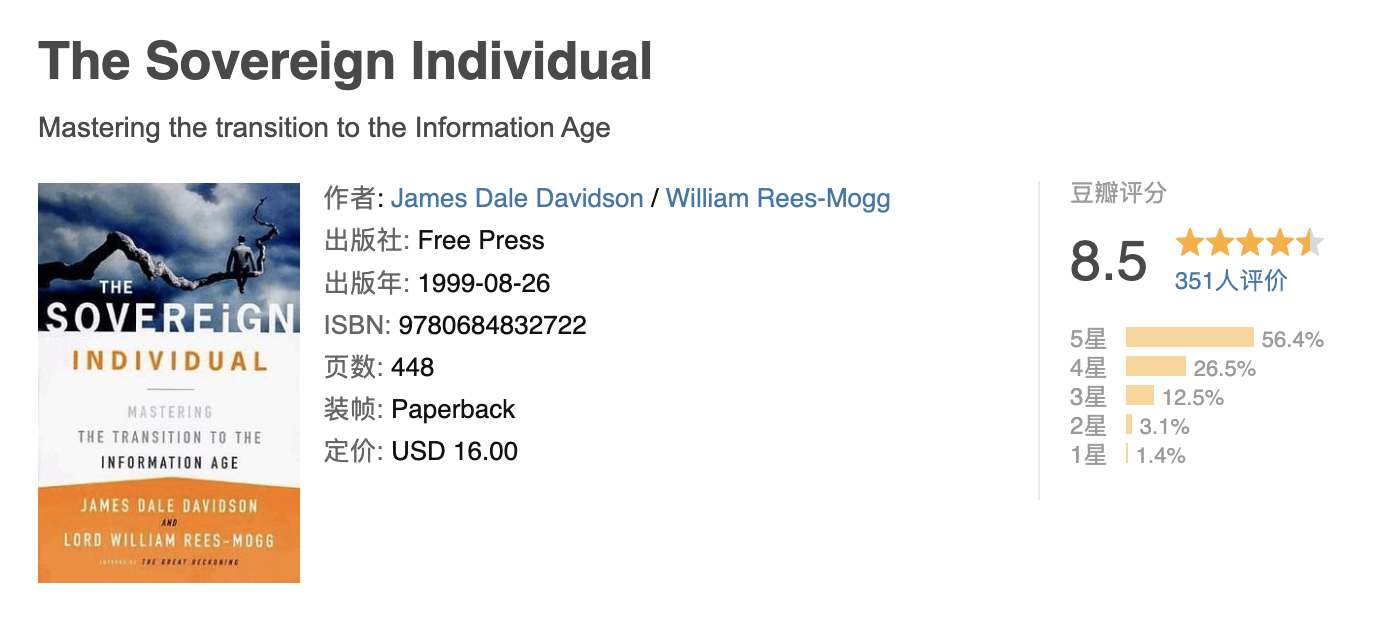
Reason for Recommendation: The most神奇 thing about this book is—it was published in 1997, yet accurately predicted the birth of Bitcoin, foresaw the rise of cyber warfare, saw earlier how the internet and digital currencies would shake the power foundations of nation-states, gradually devolving power from institutions and collectives to individuals. This book is not history; it's a manual for the future.
If "The Distant Savior" tells you "don't rely"—don't rely on a savior, don't rely on others, rely on yourself—then "The Sovereign Individual" tells you: the world is truly evolving from sovereign states to sovereign individuals.
This is also what crypto culture and internet culture advocate—people can freely hold currencies of various countries, freely exchange global information, freely buy and sell global assets. This is a historical process that will inevitably be resisted yet cannot be stopped.
Two books, one指向 "cultural attribute" awareness, the other指向 "sovereign individual" awakening. The former teaches you to look inward, see whether you belong to strong or weak culture; the latter teaches you to look outward, see the structural changes happening in the world. One cultivates internally, the other observes externally; together, they form the core命题 every individual in this era must face: With what cultural attributes do you welcome a world of sovereign individuals?
In 1997, James Dale Davidson and William Rees-Mogg published "The Sovereign Individual." It didn't cause much轰动 then, until Bitcoin's explosion in recent years brought it重新发现. Peter Thiel says this book influenced him more than any other. Some also believe Satoshi Nakamoto likely drew inspiration from it.
In the information age, capital流动的速度 exceeds government管控 capabilities; information传播难度 is lower than领土 patrol difficulty. Individuals—especially high-value individuals—can leave jurisdictions faster than states can adjust enforcement mechanisms.
What does this mean?
The fiat currency system won't collapse through dramatic hyperinflation or political崩溃, but asymmetrically—the most productive, most liquid, best-informed people exit first. They adopt more advanced monetary technologies,脱离 the state's fiscal base.
This creates a feedback loop: tax base萎缩 → state raises taxes,加强监管 → more people加速 exit. The state becomes increasingly predatory, reliant on监控, and fragile.
In a world of sovereign individuals, currency is no longer a monopoly but multiple competing currency systems. Individuals choose currencies like software: based on reliability, security, portability, and resistance to manipulation. Trust no longer relies on politics but shifts to cryptography and protocol design.
In 1997, this book envisioned a digital currency composed of cryptographic sequences, unique, anonymous, verifiable, enabling one-click transactions in a borderless global market. Later, this currency actually appeared—Bitcoin.
The book's prophecies go far beyond this. It predicted the rise of cryptocurrencies, the threat of cyber warfare, the disruptive power of social media. It argues nation-states will not survive the information revolution, just as the medieval church could not survive the industrial revolution five hundred years ago.
From the ruins of nation-states, sovereign individuals will rise.
You might ask: What does this have to do with me?
A great deal. Today you can open a crypto exchange app, buy Bitcoin with US dollars, use stablecoins for one-to-one cross-border transfers and trades with people globally—this set of operations was unimaginable twenty years ago. All this points in the same direction: individuals are gaining unprecedented sovereignty.
After reading this book, you'll understand why Crypto is not a speculative bubble but a底层重构 of power structures. It promises not equality for all but a残酷 yet real分化—those with knowledge, skills, and流动性, able to operate自如 in sovereign monetary systems, will gain unprecedented autonomy; those unable to cross this threshold will remain in the declining offline commerce and fiat currency systems, waiting for the next "savior."
"Japan as a Mirror: A Survival Guide for an Era of Recession"
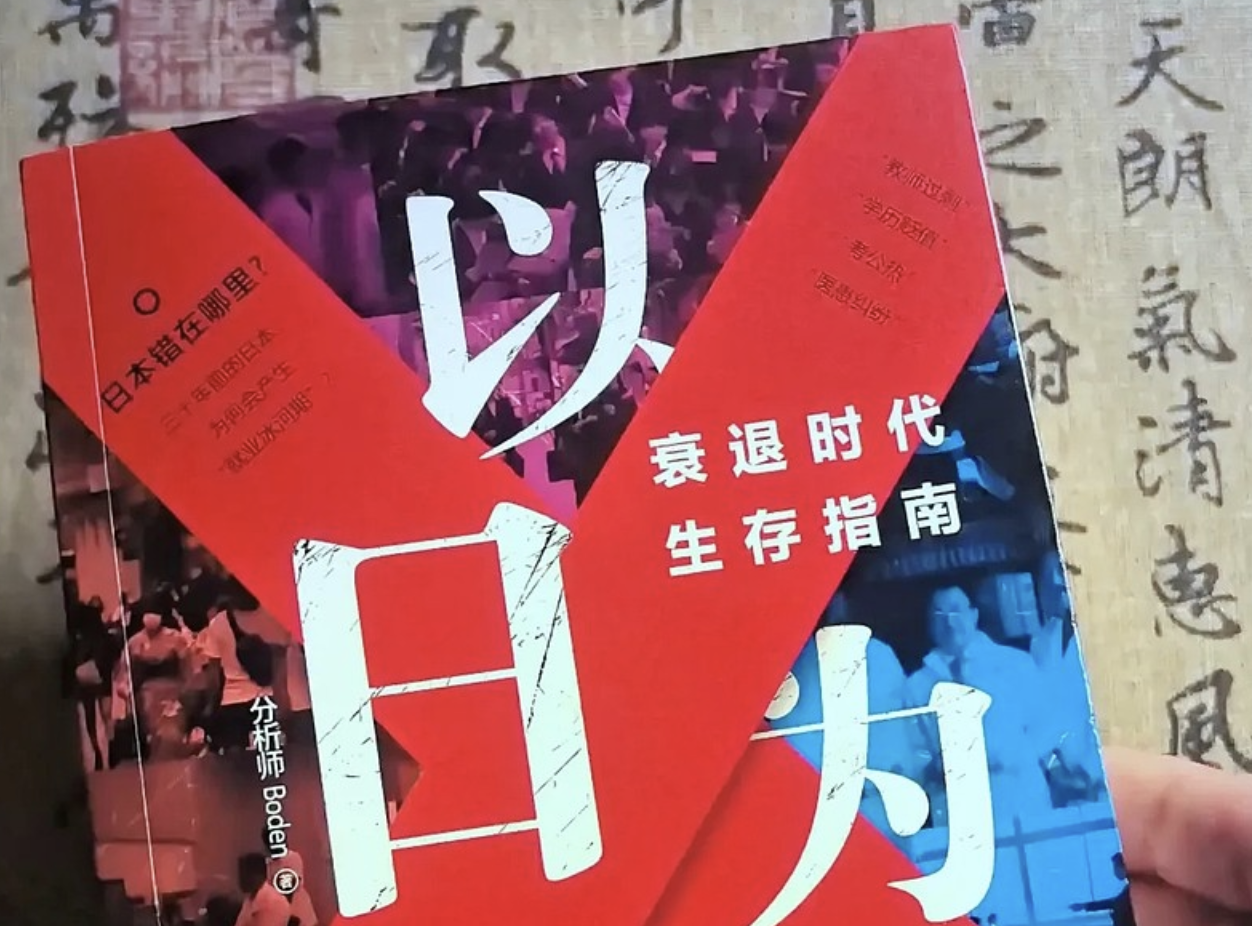
Reason for Recommendation: Everyone's development must consider the historical process. This holds true for nations and industries alike. As the first East Asian economy to slide from an incremental society into a存量 society, the path Japan has taken, the pitfalls it has stepped into, provide极其真实的参照 for understanding the current economic downturn and the crypto industry's situation in a bear market. Few will tell you: where are the opportunities in a bear market? This book, from a事后 perspective, clearly points out—even in an era of recession, structural opportunities still exist.
Many feel that discussing cycles and recession is far removed from themselves.
But if you仔细看 Japan's last thirty years, you'll find—the inertia of history is immense, not转移 by anyone's will.
The "never倒闭" banking industry became "Japan's industry with the highest裁员 proportion" in the late 1990s.
Who said banks are iron rice bowls? Who said civil service is an iron rice bowl? Whether in Japan or China, when the economy下行, fiscal压力巨大, "iron rice bowls" can be broken. First, the financial system: Japan's financial体系 began崩溃; during the financial Big Bang, 153 banks倒闭 in total, with cumulative losses of 11 trillion yen for surviving banks. As for civil servants: by 2001, Japan basically completed the reform target of裁减 25% of civil servants within 10 years; Japan's national基层公务员 decreased from over 800,000 in 1994 to 290,000 today.
At the time, no one expected Japan's one衰退 would last thirty years.
But even in recession, within a large ecosystem, there are still sectors growing unabated. After Japan's bubble economy ended in the 1990s, a全民出海潮 lasting twenty years emerged—becoming one of the few黄金赛道 in the失落 economy. Whole industry chain出海 essentially extends production capacity and触角 overseas to share growth红利 of other economies. High-end manufacturing was the biggest winner; anime, tourism, and other文旅 products also became important forces in cultural出海.
This offers significant借鉴意义 for both ordinary Chinese citizens and crypto practitioners.
During a national economic下行 cycle, some industries still flourish, like AI,出海, high-end manufacturing; during a crypto industry bear market, some sectors still develop rapidly, like stablecoins, US stock tokenization, prediction markets.
Regardless of bull or bear, the crypto industry is always focused on global markets. There are always countries and economies in recession, and always relatively better-developed ones. No matter the overall environment, there's always somewhere "bullish."
Reading this book isn't for pessimism, but to清醒地 know—what is happening in this era, and where you should focus your efforts.
"Denationalisation of Money"
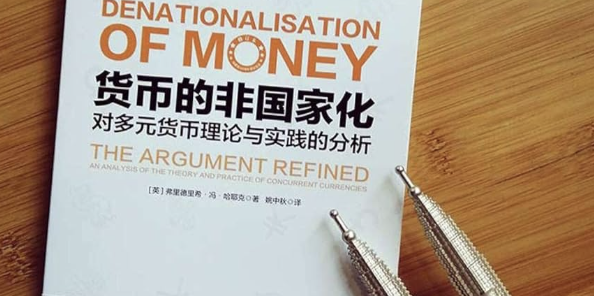
Reason for Recommendation: When central banks are diluting your wealth by printing money, Hayek prescribed the remedy half a century ago—return money to competition. This book is the spiritual纲领 for Bitcoin, a must-read classic for everyone who believes "money should not be monopolized." Reading it in a bear market, you'll understand what you hold is not a speculative note but an experiment in monetary institutions.
Who is Hayek? If you've been in crypto long enough, this name is certainly not陌生.
He is: 1974 Nobel Laureate in Economics, the fourth-generation standard-bearer of the Austrian School, the most staunch defender of free markets. "The Road to Serfdom" made him famous, while "Denationalisation of Money" made him the spiritual教父 of the Bitcoin community.
This book was written in 1976. What kind of era was that? The Bretton Woods system had just collapsed, the global monetary system was in chaos, central banks were摸索 new玩法 of "anchorless fiat." While everyone was thinking "how to better manage money," Hayek posed an almost疯狂 question: Why must the issuance of money be a state monopoly? Why not let private entities issue currencies and let the market choose the best money?
The杀伤力 of this question is no less than asking "why must God be unique" in the 16th century.
Hayek's argument is清晰而致命:
First, monopoly never produces good things. The state's monopoly on货币发行 gives governments the ability to "deprive people of wealth through inflation." This isn't conspiracy theory but the inevitable result of institutional design—when an institution can print money to solve its fiscal problems, it will certainly do so.
Second, competition produces优胜劣汰. If private institutions are allowed to issue currencies, the market will choose the most stable, credible, value-preserving money. Poorly issued currencies will be淘汰; well-issued ones will gain more users. This process is no different from the free competition of phones, cars, or software.
Third, money is not an extension of state sovereignty but a medium for market exchange. Its value comes from people's trust and use, not from government强制. If a currency is widely accepted in the market, whether it's "legal tender" or not is根本不重要.
These three points sound like Bitcoin's "common sense" today. But in 1976, this thinking was石破天惊.
Hayek writes in the book:
"I believe that monetary competition—allowing private agencies to issue different kinds of currencies, with the market deciding which is most popular—will be the most effective means of preventing inflation and ensuring economic stability."
He even设想 basic features of a "private currency": scarcity, verifiability, portability. Reading these descriptions, it's hard not to think of Bitcoin's whitepaper. No wonder some say Satoshi Nakamoto simply turned Hayek's theory into code.
Of course, Hayek isn't完美. His envisioned private currency still needed锚定 to a basket of goods to maintain purchasing power stability, and he didn't fully foresee the decentralized networks of the digital age. But precisely these "imperfections" made Bitcoin an upgraded version of Hayek's idea—not private institutions issuing money, but code and consensus issuing money; not锚定 to a商品 basket, but锚定 to mathematical absolute scarcity.
What's the greatest value of this book for crypto practitioners?
It provides a complete economic narrative to answer the反复追问 question: "凭什么 you can issue money yourselves?"
The answer: Money should never have been the product of state monopoly; it should be the product of market competition. Fiat's垄断 position isn't natural but暴力. Crypto assets aren't "creating a new kind of money" but "returning money to what it should have been"—a freely chosen medium of exchange.
After reading this book, you'll更清晰地 understand several core concepts:
- Why Bitcoin's 21 million cap is so important—scarcity is the foundation of trust;
- Why stablecoins爆发 even in a bear market—the market is choosing the most "usable" money in its own way;
- Why countless currencies will coexist in the future—just as there are countless languages, software, and operating systems today.
Hayek concludes: "We can only hope that people will eventually realize that the monopoly of money is yet another milestone on the road to serfdom." Half a century later, Bitcoin gave him an answer beyond expectations.
Reading this book in a bear market, the greatest收获 isn't technical analysis or investment策略, but a solidification of faith—when you understand the historical inevitability of monetary competition, you won't动摇 due to market波动. Because you know you're participating not in a speculative game but in a half-century-long institutional experiment.
"Duan Yongping's Investment Q&A Record"

Reason for Recommendation: In a bear market, what we need most isn't new strategies, but confirmation that we are still doing the right things.
Duan Yongping repeatedly讲 an extremely朴素但极少人真正践行的道理: Do the right things, do things right.
What are the right things? Simply put, doing things that are profitable, can be done long-term, and feel踏实 in one's heart. Doing things that return to the本源—since Apple is the world's best company, why buy second-tier ones? Since you believe Bitcoin and Ethereum are this industry's most底层 assets, why spend大量精力 chasing things you can't even clearly explain?
Another极其重要 thing: Don't do the wrong things.
Good companies,优秀 people, all have a "Stop doing list"—constantly adding things to it. Buffett has said类似的话: We only do the simplest, least费力 types of things; we stay far away from things requiring constant decisions.
Duan Yongping also said: Find the most本质 thing—that which users一直喜欢 but others cannot provide.
Whether a company or a person, find that point where it differs most from others, and you've found its soul. Good projects are those you can clearly state their merits in one glance;烂 projects are those you're still糊涂 about after an hour-long pitch. The same goes for people.
Duan Yongping打磨 this system for fifteen years until it ran like a精密 machine. Buffett? Eighty years.
The biggest advantage of a bear market is it gives you ample time to quiet down and do things you根本来不及 do in a bull market—打磨 your own system,加固 your堤坝, turn yourself into someone whose "actions don't变形 regardless of market折腾."
"The Balaji Prophecies: A Guide to Technology, Truth, and Building the Future"
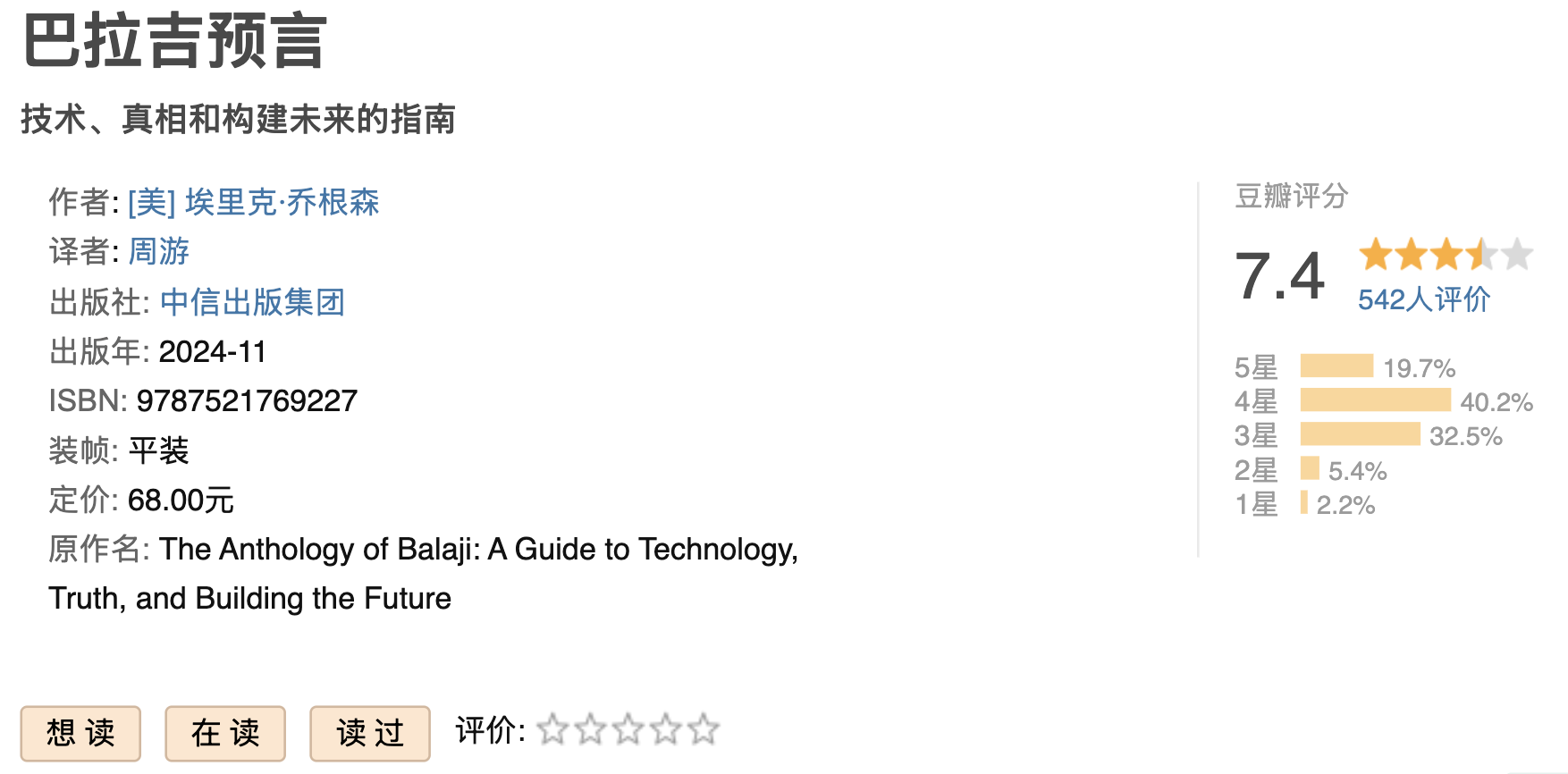
Reason for Recommendation: This book comes from a疯狂 crypto believer who is also a successful serial entrepreneur. So where does his faith truly come from? Will the大量预言 he proposes in the book come true?
Balaji's履历 alone is足以让人信服: At 28, founded clinical genomics company Counsyl; sold it at 38 for $375 million. His前瞻性 is毋庸置疑—as an天使投资人, he invested in Ethereum, Solana, Opensea, Avalanche, and many other projects. As early as 2013, he taught one of Stanford's first online Bitcoin courses. In 2018, as Coinbase's first CTO, he led the team launching the USD stablecoin USDC.
Published in 2024, some of its预言 have already materialized—like prediction markets. More await realization: decentralized social networks, decentralized media, personal dashboards,链上 Harvard, brain-computer interfaces, super soldier serum, bionics. Now, he摊开大量创业点子 directly for readers—hoping insightful people gain灵感 and realize them.
Balaji's judgment on cryptocurrency is the boldest and clearest I've read in any book.
"The emergence of cryptocurrency is, for the tech industry, a major变革 akin to a spinal cord transplant surgery."
Meaning? On disk → on the internet → on the blockchain—this is the evolution of三层部署. Your private files stay本地磁盘; files important to others go on the internet; files "especially" important to everyone go on the blockchain. This isn't a gradual upgrade but a底层架构彻底替换.
His judgment on Bitcoin is equally宏大:
"When Bitcoin's market cap reaches $100 billion, it's an industry; at $1 trillion, it's a world-class force; at $10 trillion, it will become the global government many predicted,只是 in a form截然不同 from current governments."
Today Bitcoin's market cap fluctuates around $1 trillion—it's already a "world-class force." Next stop, $10 trillion.届时, it will become, like gold, part of global reserve assets. Balaji even断言: By 2040, people under 30 will find a world without Bitcoin陌生.
Regarding blockchain's status, he says an极其震撼 line:
"Throughout history, blockchain is the most important development since the advent of writing."
He argues: Writing allowed information to spread across time; the internet allowed it across space; blockchain allows value to spread across both time and space—without trusting第三方.
Balaji's critique of media is equally犀利. He says a new media company isn't the answer we want; we need a better "truth machine"—a new media community with截然不同前提条件. This community is global, primarily实行多人兼职模式, where scientific depth outweighs narrative. Such media can represent the people because it *is* the people.
His设想 is very具体: Prediction markets as media.设想 a全新 media channel where each post is accompanied by a market prediction bet, the author's切身利益 tightly linked to the game. Prediction markets might not predict the future精准, but they确实 hold experts accountable and record their言行.
In Balaji's构想, media's future is decentralized—decentralized reporting, sources, hosting, distribution, payments, tipping, prediction, reputation, verification, consensus, and truth. These ten dimensions each represent a创业方向.
Reading this book in a bear market, you'll understand why someone like Balaji values加密技术 so much—because he sees not what to炒 in the next bull market, but what the next world will look like.
"Selected Works of Mao Zedong"

Reason for Recommendation: Every technological变革 is a revolution. Blockchain's development faces countless低谷 and对抗—from nations, traditional industries, and public认知. Some加密人 seek to use blockchain to "革" fiat currency's命, "革" banks'命, "革" NASDAQ's命, "革" internet giants'命...本质上, that's it. During bear market低谷, how to judge形势,分清敌友,抓住主要矛盾,积蓄力量—the answers aren't in any investment宝典 but in "Selected Works of Mao Zedong."
This collection is essentially a comprehensive方法论 on how to survive, develop, and ultimately triumph under极端劣势. It writes about革命, but what is the essence of革命? Using a弱小力量 to对抗 a强大旧体系 and ultimately replace it.
Doesn't that sound like early Bitcoin? Like today's Ethereum, Web3?
Mao said: "Surround the cities from the countryside."
This is a classic战略 written into world革命史. Applied to crypto, what does it mean? Don't正面硬碰硬 where监管 is strictest and interests most concentrated. Go to countries and regions with economic崩溃, fiat失灵, people losing faith in traditional finance—Argentina, Turkey, Nigeria, Venezuela.
There, Bitcoin isn't a speculative asset but a救命稻草. Infiltrate from the边缘 to the中心, surround强势 economies from弱势 ones, start from those most in need of decentralized technology, gradually扩散 globally. This战略 is being验证 today.
Mao said: "A revolution is not a dinner party, not writing an essay, not painting or embroidery... A revolution is an insurrection, an act of violence by which one class overthrows another."
Today's革命 rarely appears as武力暴动 but更多 as技术革命. But whether AI or Web3,本质上, it's still an action of one class overthrowing another or others. The internet appeared, certain industries必然消失; AI and Web3 appeared,必然意味着 certain industries are overthrown, disproven,淘汰. This isn't温和 evolution but残酷 replacement.
Mao said: "Who are our enemies? Who are our friends? This is a question of the first importance for the revolution." This is the opening line.
So, in the crypto industry, who are the enemies? Who are the friends?
If after reading this book, you only conclude "traditional finance is the enemy, crypto industry is the friend," you might have白读. The most精华 part of Mao's works isn't telling you who the enemy is but teaching you how to analyze敌友—based on利益, trends, the main aspect of矛盾.
There are friends within traditional finance—institutions看清 trends, actively embracing变革, like Robinhood, Futu, BlackRock.
There are enemies within the crypto industry—like scams and Ponzi schemes using decentralized narratives to收割散户.
Traditional financial institutions aren't necessarily enemies;币圈 projects收割散户 aren't necessarily friends.敌友 aren't labels but results of动态分析.
The real enemy is those阻碍生产力发展的旧秩序; real friends are those willing to solve real problems with technology. The only standard distinguishing敌友: Who promotes technological进步? Who维护落后利益?
What Mao's works teach us isn't answers but an分析框架. It tells you that in any long-term struggle, don't be intimidated by表面力量对比, don't be迷惑 by temporary低谷, don't be困住 by simple二元对立.
Reading "Selected Works of Mao Zedong," you won't find the answer to "when will the bull market come," but you'll understand: why some forces seemingly弱小 can ultimately胜出; why some势力 seemingly强大 are注定衰亡.
Conclusion
Ten books, ten dimensions.
They don't teach you to buy dips or sell peaks, analyze candlestick patterns, or predict the next 100x coin. But they共同指向 one thing: how to remain清醒,坚定,动作不变形 in a bear market.
Bear markets淘汰 not the least technically skilled, but the least信念坚定. Those who ultimately navigate the cycles rely not on运气 but on认知厚度 and心性坚韧.
May this book list accompany you on this journey.