Restoring Crypto Privacy: ZCASH (ZEC) Makes A Move After 50% Crash

bitcoinist發佈於 2026-06-11更新於 2026-06-11

文章摘要

Following a severe price crash of over 50% triggered by the discovery of a critical counterfeiting vulnerability in its Orchard privacy pool, Zcash (ZEC) is taking steps to restore confidence. The bug, found by a security researcher using AI, could have allowed undetected creation of fake ZEC tokens. Developers from the Zcash Open Development Lab (ZODL) and others quickly patched the flaw, helping the price rebound over 70%. However, Orchard's privacy features make it impossible to verify if any counterfeit tokens were actually created before the fix. To address this, key ecosystem groups including Shielded Labs and The Zcash Foundation have proposed a new system called Ironwood. Its primary goal is to restore users' ability to independently verify Zcash's total circulating supply. Once activated, node operators could confirm the supply hasn't been tampered with. The Ironwood proposal would also block any new coin minting in the Orchard pool and restrict fund movement through a controlled mechanism. This system could provide evidence on whether the vulnerability was ever exploited. If no excess ZEC attempts to leave the pool, it suggests no counterfeiting occurred. Any attempted exit of fake coins would be blocked and destroyed, publicly revealing any attack while protecting the legitimate supply.

Zcash (ZEC) is making a push to restore confidence in its privacy-focused network after a major exploit scare triggered a sharp market selloff. Following a more than 50% price crash in ZEC, developers moved quickly to patch the network vulnerability. They are now proposing a new system designed to help users independently verify the cryptocurrency’s circulating supply and solidify the network’s security protocols.

Zcash Price Rebounds After Exploit Scare and Iron Wood Proposal

Last week, Zcash suffered a steep decline of more than 50%, falling to $250 after reports of a dangerous counterfeiting bug in its Orchard zero-knowledge proof circuit spread across the market. The incident rattled investors and contributed to $116 million in liquidations across the market.

Notably, the flaw was discovered by Taylor Hornby, a security researcher, using an AI auditing framework powered by Claude Opus 4.8. Developers said the vulnerability could have allowed an attacker to create fake ZEC tokens within the Orchard pool without detection.

Despite the sharp selloff and price crash that followed the news, ZEC’s price recovered some of its losses after developers released an emergency fix. CoinMarketCap data shows that the cryptocurrency rebounded by more than 70% to $433 after the Orchard vulnerability was quickly patched through a coordinated effort involving the Zcash Open Development Lab (ZODL) and other ecosystem participants.
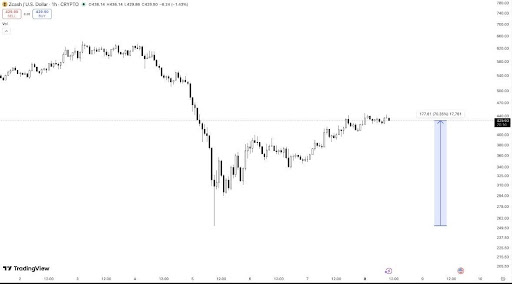
Source: Chart from Simon Dedic on X

While the team successfully fixed the flaw, it remains unclear whether counterfeit ZEC was created before the patch. This concern is more unsettling because the bug had existed within the Zcash network without being detected until recently. Although developers believe exploitation was unlikely, they also noted that Orchard’s privacy features make it impossible for users to verify whether any fake tokens were minted.

To address that issue, Shielded Labs, a non-profit supporting Zcash, is working alongside The Zcash Foundation, Tachyon Group, Valar Group, and the ZODL on a proposal known as Ironwood. The initiative aims to restore users’ ability to verify the soundness of Zcash’s circulating supply without relying on assumptions about other participants or waiting for funds to migrate out of the Orchard pool.

Ironwood Proposal To Restore Zcash Supply Verification

The new proposal was announced in an X post on June 6, in a report authored by the founder and former CEO of Zcash, Jason McGee, founder of Shielded Labs, and Hornby.

The primary goal of Ironwood is to give each user the ability to independently verify Zcash’s supply. Developers said that once activated, users running a node would be able to confirm that the circulating supply has not been tampered with.

The proposal also blocks any transaction that tries to mint a new coin in the Orchard pool. As a result, ZEC would no longer freely circulate within that pool, and funds would only move out through a turnstile mechanism.

The report said Ironwood could also provide evidence about whether the vulnerability was ever exploited during last week’s incident. As users move funds into a new pool, any potential counterfeiter would face a difficult choice: either try to transfer fake coins, risking exposure, or leave the coins behind.

If no extra ZEC tries to leave the Orchard pool, the report noted that it would strongly suggest the flaw was never exploited. If excess funds actually try to exit, they would be blocked and effectively destroyed, preserving the current circulating supply while publicly showing that counterfeiting had occurred.

ZEC trading at $426 on the 1D chart | Source: ZECUSDT on Tradingview.com

相關問答

QWhat caused Zcash (ZEC) to experience a sharp price crash of over 50% last week?

AThe price crash was triggered by reports of a dangerous counterfeiting bug in its Orchard zero-knowledge proof circuit, which could have allowed an attacker to create fake ZEC tokens without detection.

QWho discovered the vulnerability in Zcash's Orchard circuit and how was it found?

AThe flaw was discovered by security researcher Taylor Hornby using an AI auditing framework powered by Claude Opus 4.8.

QWhat is the main purpose of the proposed Ironwood system for Zcash?

AThe primary goal of the Ironwood proposal is to give each user the ability to independently verify Zcash's circulating supply, confirming it has not been tampered with, without relying on assumptions about other participants.

QHow would the Ironwood proposal potentially reveal if the Orchard vulnerability was ever exploited?

AAs users move funds out of the Orchard pool through a new turnstile mechanism, any attempt to transfer counterfeit coins would be blocked and exposed. If no extra ZEC tries to leave, it suggests the flaw was never used. If excess funds try to exit, they are blocked and destroyed, publicly showing counterfeiting occurred.

QWhich organizations are collaborating on the Ironwood proposal for Zcash?

AThe organizations involved are Shielded Labs, The Zcash Foundation, Tachyon Group, Valar Group, and the Zcash Open Development Lab (ZODL).

你可能也喜歡

XRP Ledger 发布 3.2.0 版本升级并启用 XRPLd 新品牌名

XRP Ledger发布了3.2.0版本,这是对其底层区块链基础设施的一次重要升级。本次更新的核心是将运行网络的软件名称从“rippled”更名为“xrpld”,以更好地反映整个项目生态。 与此前侧重于前端功能的版本不同,3.2.0版本优先进行了后端升级和效率提升,旨在增强网络性能并为未来的扩展做准备。关键改进包括内存优化措施,预计可节省高达40%的服务器内存使用。 此次升级引入了名为“fixCleanup3_2_0”的修改,为单资产金库、借贷协议、权限系统、去中心化交易所、多用途代币和权限域等多个模块带来了安全性增强。开发团队还新增了不变性检查,以确保已删除账户不会在账本上留下不一致的数据,从而加强整个网络的完整性和可靠性。 对于开发者而言,新版本增加了一项重要功能:应用程序无需连接服务器即可检索XRP Ledger协议和服务器定义信息,这将极大便利钱包、区块链浏览器和API等的开发工作。 在可扩展性和稳定性方面,更新包括可配置的区块大小、通过nuDB实现的高效数据库存储,以及将gRPC服务器的TLS/双向TLS支持改为可选,以提升企业用户的性能和连接性。此外,默认对等端口从51235更改为2459,并修复了涉及自动做市商、支付、代币托管、多用途代币、订单簿和RPC等多个方面的问题。出于性能考虑,3.2.0版本暂时禁用了交易不变性检查,但开发团队表示这不会构成安全威胁。

TheNewsCrypto8 小時前

XRP Ledger 发布 3.2.0 版本升级并启用 XRPLd 新品牌名

TheNewsCrypto8 小時前

交易

現貨
合約

熱門文章

如何購買ZEC

歡迎來到HTX.com!在這裡,購買Zcash (ZEC)變得簡單而便捷。跟隨我們的逐步指南,放心開始您的加密貨幣之旅。第一步:創建您的HTX帳戶使用您的 Email、手機號碼在HTX註冊一個免費帳戶。體驗無憂的註冊過程並解鎖所有平台功能。立即註冊第二步:前往買幣頁面,選擇您的支付方式信用卡/金融卡購買:使用您的Visa或Mastercard即時購買Zcash (ZEC)。餘額購買:使用您HTX帳戶餘額中的資金進行無縫交易。第三方購買:探索諸如Google Pay或Apple Pay等流行支付方式以增加便利性。C2C購買:在HTX平台上直接與其他用戶交易。HTX 場外交易 (OTC) 購買:為大量交易者提供個性化服務和競爭性匯率。第三步:存儲您的Zcash (ZEC)購買Zcash (ZEC)後,將其存儲在您的HTX帳戶中。您也可以透過區塊鏈轉帳將其發送到其他地址或者用於交易其他加密貨幣。第四步:交易Zcash (ZEC)在HTX的現貨市場輕鬆交易Zcash (ZEC)。前往您的帳戶,選擇交易對,執行交易,並即時監控。HTX為初學者和經驗豐富的交易者提供了友好的用戶體驗。

544 人學過發佈於 2024.12.12更新於 2026.06.02

如何購買ZEC

相關討論

歡迎來到 HTX 社群。在這裡,您可以了解最新的平台發展動態並獲得專業的市場意見。 以下是用戶對 ZEC (ZEC)幣價的意見。

活动图片