Tether's "Favorite Son" STABLE Crashes? Plunges 60% on First Day, Whale Jumping the Queue + No CEX Listing Sparks Trust Panic

marsbit發佈於 2025-12-09更新於 2025-12-09

文章摘要

Stable, a new Layer 1 blockchain heavily backed by Tether and Bitfinex, launched its mainnet and STABLE token on December 8. Despite significant pre-launch deposits totalling over $1.3 billion and strong market interest, the token’s first-day performance was highly disappointing. It opened around $0.036, briefly rose to nearly $0.046, then plummeted over 60% to a low of $0.015. Its fully diluted valuation (FDV) fell to $1.7 billion amid thin liquidity. The token’s not yet listed on major centralized exchanges like Binance or Coinbase, limiting its accessibility. The launch wass marred by controversy after a whale deposited hundreds of millions of USDT before the official start time, raising concerns about fairness and possible insider trading. This damaged trust in a project whose core narrative is transparency and reliability. Stable is designed as a stablecoin-focused chain with USDT as the native gas fee, aiming for a near gas-less user experience. It uses a custom DPoS consensus mechanism and is EVM-compatible. However, its tokenomics have raised concerns: STABLE tokens are used only for governance and staking, not fee payment, and 50% of the total 100 billion supply is allocated to the team, investors, and advisors with a one-year cliff. The project faces intense competition from established chains like Polygon, Tron, and Solana, as well as emerging stablecoin-specific L1s like Circle’s Arc and Paradigm-backed Tempo. Its success hinges on rapid execution, ecosystem de...

Another stablecoin wearing the crown of "Tether's Favorite Son" has officially launched, but the market doesn't seem to be buying it.

On the evening of December 8th, the highly anticipated stablecoin-dedicated public chain Stable officially launched its mainnet and STABLE token. As a Layer 1 deeply incubated by the core teams of Bitfinex and Tether, the "Tether's Favorite Son" narrative attracted widespread market attention for Stable from the moment it was announced.

However, against a backdrop of tightening market liquidity, Stable did not have a strong opening like its competitor Plasma, suffering from both low prices and a trust crisis involving insider trading. Is Stable's script aiming for a low start before a high finish, or is it set for a continuous decline?

STABLE Plunges 60% from Highs After Launch, Mired in Insider Trading Trust Crisis

Before Stable's launch, market sentiment was quite optimistic. The project's two-phase pre-deposit program totaled over $1.3 billion, with approximately 25,000 participating addresses and an average deposit size of about $52,000 per address, showing strong user interest. This was particularly valuable during a period of low market sentiment and indicated strong recognition of the "Tether-affiliated" endorsement, with expectations that STABLE's debut would replay Plasma's wealth-creating story.

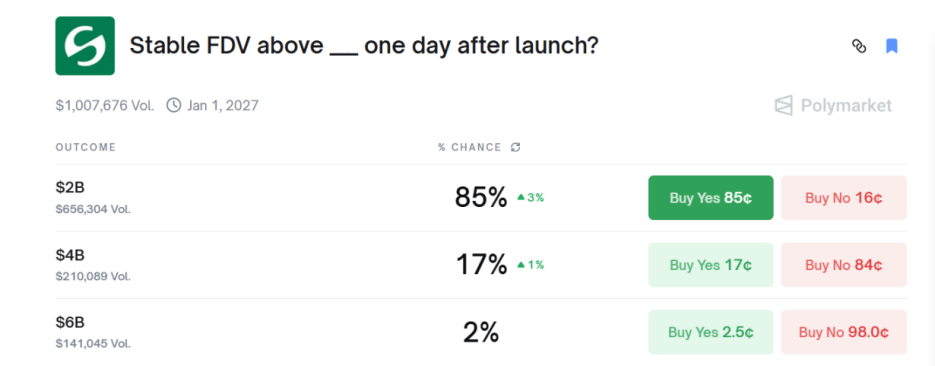
Data from the prediction market Polymarket showed that the market once estimated an 85% probability that STABLE token's FDV (Fully Diluted Valuation) would exceed $2 billion.
However, the law of "Great heat foreshadows death" (a Chinese idiom meaning extreme popularity can lead to a downfall) struck again.

STABLE token's performance on its TGE (Token Generation Event) debut day was disappointing. The STABLE token opened at around $0.036, reached a high near $0.046 after listing, and then continued to fall over 60%, hitting a low of $0.015. As of 21:00 on December 9th, STABLE token's FDV had shrunk to $1.7 billion. In a state of thin liquidity, no one in the market was willing to buy.
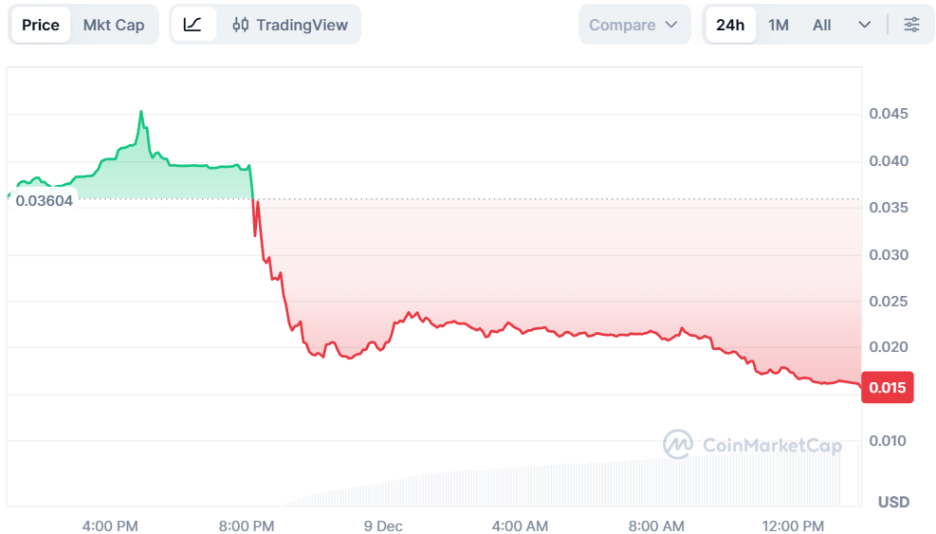
Notably, spot markets on top CEXs (Centralized Exchanges) like Binance, Coinbase, and Upbit have still not listed the STABLE token. Their absence limits the STABLE token's reach to a larger retail investor base, further contributing to its limited liquidity.

STABLE token's暴跌 (plunge) performance has also sparked heated discussion within the community.

DeFi researcher @cmdefi stated: Expectations for Stable were relatively low; various amateurish operations occurred during the early project launch, raising concerns about their seriousness.

Crypto KOL @cryptocishanjia pointed out: The crowd is more willing to pay for new narratives. When the market already has a clear leader (Plasma), the consensus for the second player (Stable) will be significantly weaker, leading to reduced profit margins.

Former VC professional @Michael_Liu93 said bluntly: Stable's pre-listing valuation of 3 billion plus an inflated FDV makes it a good target for long-term shorting. Tight control of holdings (no airdrop, no pre-sale, no KOL round) does not equal price pumping, but precisely because it's not listed on top CEXs, it might see a reversal.

Additionally, many users mentioned the pre-deposit controversy before the Stable mainnet launch. During the first round of pre-deposit activities, a whale wallet deposited hundreds of millions of USDT *before* the official start time, sparking strong community质疑 (doubts) about the project's fairness and potential insider trading. The project team did not directly respond and simply opened the second round of pre-deposits.

This event creates a paradox for Stable's narrative, whose value proposition is to provide transparent, reliable, and compliant infrastructure. The project疑似 (suspected) insider trading right from the start creates a trust deficit that will hinder active community participation and negatively impact its long-term narrative.

USDT as Gas Fee Optimizes Payment Experience, Token Economic Model Hides Concerns

Stable's architecture is designed to achieve maximum transaction efficiency and user-friendliness.

Stable is the first L1 to use USDT as the native Gas fee, providing a near Gas-less user experience. The importance of this design lies in minimizing user friction. Users can pay transaction fees using the medium of exchange itself (USDT), without needing to manage and hold a highly volatile governance token. This feature enables sub-second settlement and minimal fees, making it particularly suitable for daily transactions and institutional payment scenarios that require strict price stability and predictability.

Stable uses the StableBFT consensus mechanism, a DPoS (Delegated Proof-of-Stake) model customized based on CometBFT (formerly Tendermint) and fully compatible with the EVM (Ethereum Virtual Machine). StableBFT ensures transaction finality through a Byzantine Fault Tolerant mechanism, meaning transactions are irreversible once confirmed, which is crucial for payment and settlement scenarios. Additionally, StableBFT supports parallel processing of proposals by nodes, ensuring the network can achieve both high throughput and low latency performance to meet the stringent requirements of payment networks.

Stable received strong capital backing from the start. The project raised $28 million in a seed round led by Bitfinex and Hack VC. Tether/Bitfinex CEO Paolo Ardoino serves as an advisor, leading the market to speculate on a close strategic synergy between Stable and the leading stablecoin issuer Tether.

Stable CEO Brian Mehler previously served as VP of Venture Capital at Block.one (EOS development company), managing a $1 billion crypto fund and investing in industry giants like Galaxy Digital and Securitize.

The CTO is Sam Kazemian, founder of the hybrid algorithmic stablecoin project Frax, who has deep experience in the DeFi field and has provided advice on US stablecoin legislation.

However, Stable's initial CEO was former Block.one investment lead Joshua Harding. The project changed leadership just before launch without any announcement or explanation, casting another shadow over Stable's transparency.

Stable's token economic model employs a strategy of separating network utility and governance value. The sole purpose of the STABLE token is governance and staking. It is not used to pay for any network fees; all transactions are settled in USDT.

Token holders can stake STABLE to become validators and help secure the network. They can also participate in key decisions like network upgrades, fee adjustments, or introducing new stablecoins through community voting. Since it does not share in the network's revenue, this weakens the token's potential value (imagination). Before the ecosystem matures, its token lacks utility (empowerment).

Notably, 50% of the total token supply (100 billion tokens) will be allocated to the team, investors, and advisors. Although these tokens are subject to a one-year lock-up period (cliff), followed by linear vesting, the明显侧重 (clearly skewed) allocation ratio will create long-term potential selling pressure on the token price.
Fierce Competition in the Stablecoin Public Chain Arena, Execution Will Be Key to Victory

Stable faces extremely fierce market competition. In the current multi-chain landscape, Polygon and Tron have a large retail user base for low-cost remittances in Southeast Asia, South America, the Middle East, and Africa. Solana also holds a place in the payments field凭借 (relying on) its high-throughput performance advantages.

More importantly, Stable also faces competition from emerging vertical L1s同样致力于 (also dedicated to) stablecoin payments. For example, Circle's Arc focuses on becoming infrastructure for institutional-grade on-chain treasuries, global settlement, and tokenized assets. Additionally, Tempo, backed by Stripe and Paradigm, is also positioned as a payment-oriented public chain, a strong competitor瞄准 (aiming at) the same vertical field.

In the field of payments and settlement, network effects will be the core winning factor. Whether Stable succeeds will depend on its ability to quickly leverage the USDT ecosystem, attract developers and institutional users, and establish a first-mover advantage in large-scale settlement. If execution strength and market penetration are insufficient, it could be overtaken by同类 (similar) L1s with stronger integration capabilities or deeper compliance backgrounds.
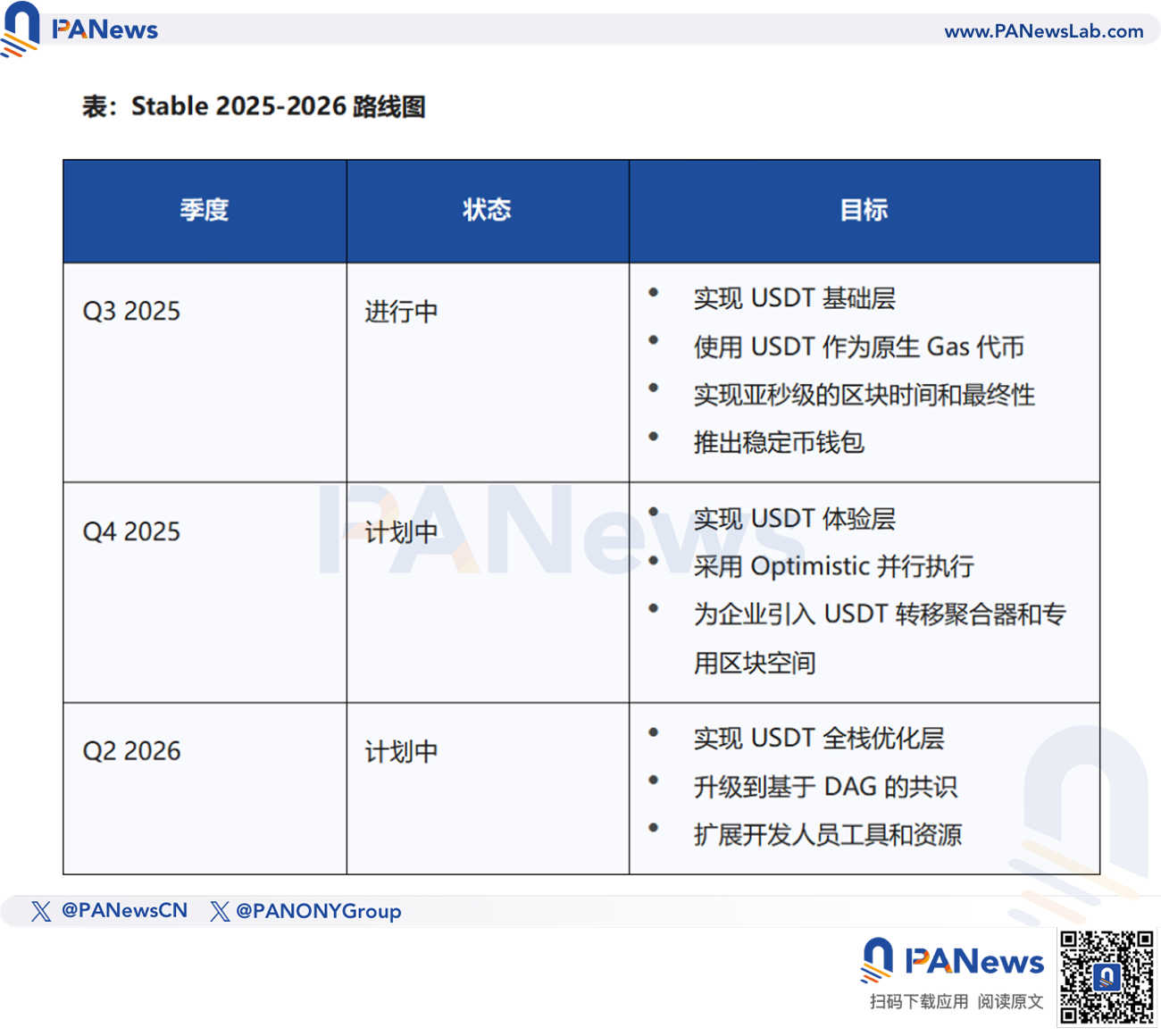
According to its roadmap, the most important timeline is enterprise integration and developer ecosystem building in 2025 Q4 - 2026 Q2. Achieving these goals will be key to validating Stable's value proposition and the feasibility of a vertical L1. But from mainnet launch to pilot implementation, with only about six months, Stable must quickly overcome multiple challenges including technical optimization, institutional integration, and ecosystem cultivation. Any misstep in execution could further erode market confidence in its long-term potential.

The launch of Stable's mainnet marks the entry of the stablecoin赛道 (race track) competition into a new infrastructure-focused stage. Whether it can achieve its goal of reshaping payment networks will ultimately depend on execution, not narrative.


熱門幣種推薦

相關問答

QWhat was the market performance of the STABLE token on its first day of trading, and why did it considered a failure?

AThe STABLE token opened at approximately $0.036, reached a high near $0.046, and then plummeted over 60% to a low of $0.015. This was considered a failure due to the massive price drop, lack of liquidity, and absence of listings on major centralized exchanges (CEXs) like Binance, Coinbase, and Upbit.

QWhat major controversy surrounded the pre-deposit phase of the STABLE project, damaging community trust?

AA major controversy occurred when a 'whale' wallet deposited hundreds of millions of USDT *before* the official start time of the first pre-deposit round. This sparked strong community accusations of unfairness and insider trading, which the project team did not directly address, leading to a significant trust deficit.

QWhat is the key technological innovation of the Stable chain regarding transaction fees?

AThe key innovation is that Stable is the first Layer 1 blockchain to use USDT as its native gas fee. This allows users to pay transaction costs with the stablecoin itself, providing a near gas-less user experience and eliminating the need to manage a volatile native token for fees.

QAccording to the article, what is a major weakness in the STABLE token's economic model?

AA major weakness is that the STABLE token's only utility is for governance and staking; it is not used to pay for network fees (which are paid in USDT) and does not share in the network's revenue. Furthermore, 50% of the total token supply is allocated to the team, investors, and advisors, creating long-term selling pressure.

QWho are some of the main competitors to Stable in the stablecoin-focused blockchain sector?

AMain competitors include other established chains with strong payment use cases like Polygon, Tron, and Solana, as well as new vertical L1s like Circle's Arc (focused on institutional on-chain treasury and settlement) and Tempo (backed by Stripe and Paradigm and also targeting payments).

你可能也喜歡

当加密资产成为按揭抵押物:监管、成本与代币化权益的三角难题

Better公司联合Coinbase推出创新按揭方案,允许购房者以比特币或USDC等加密资产作为抵押来获取购房贷款,解决资产充裕但流动资金不足的购房者难题。该方案包含两笔贷款:一笔标准的一级留置权按揭贷款和一笔以加密资产担保、附带房屋二次留置权的私人贷款用于支付首付。其中比特币抵押率要求高达250%,USDC为125%,且无追加保证金机制。 然而,该模式面临监管挑战。七名美国参议员致信联邦住房金融局,以加密资产风险高、融资成本可能增加为由要求叫停此类业务。消费者权益组织也警告其可能引发类似2008年的金融风险。 Better公司CEO Vishal Garg视其为将数字资产接入传统银行体系的重要一步,并计划未来支持更多主流代币化资产(如企业股权代币),甚至探索利用退休账户资产帮助子女购房。长远构想是借助AI简化流程,并实现房产份额化持有与交易。 但代币化权益在法律上的不明确性,特别是持有代币是否等同于拥有底层资产所有权,仍是业务发展的核心争议点。为降低成本,Better正通过代币化融资等方式优化资金渠道,旨在降低客户利率。尽管公司持续亏损且面临质疑,Garg对基于加密资产和代币化的房产金融创新前景仍持坚定态度。

marsbit15 分鐘前

当加密资产成为按揭抵押物:监管、成本与代币化权益的三角难题

marsbit15 分鐘前

刚刚,Claude Fable 5,又拿第一了

刚刚,Claude Fable 5在最新的MirrorCode AI编程能力排行榜上,以64%的绝对成功率断层式登顶。排名第二的GPT-5.6 Sol成绩仅为它的三分之一。更引人注目的是,Fable 5在处理Go等热门语言与Ada等冷门语言时,解出率分别为64%和61%,相差仅3个百分点,尽管网络上的Python语料量大约是Ada的230倍。这表明顶尖模型可能已不再依赖对特定语言语料的记忆,而是掌握了从零构建完整软件项目的核心能力。 MirrorCode评测环境严苛,模型需在隔离网络且无法查看源码的情况下,通过反复调用和观察原程序来推理并复现其全部功能。评测要求可见与隐藏测试完成率必须达到100%,并允许模型消耗高达100亿Token、连续运行数天以完成任务。例如,在复现一个约1.6万行的生物信息学工具时,Claude Opus 4.7在14小时内通过了2000项测试(完成度99.95%),而人类工程师完成同等任务估计需2到17周。 当前,AI正从编写单段代码转向承担整个项目级任务。例如,已有数百个AI Agent协作编写超百万行浏览器代码,或搭建能编译Linux内核的C编译器。数据显示,大量用户已开始委托AI完成预计超过数小时甚至数日的开发工作。MirrorCode的64%通过率量化了这种“项目级委托”的可行性:只要目标明确且能自动验收,前沿模型已能独立完成部分中大型软件。 这意味着,未来开发者的角色可能从逐行监工转变为在关键节点进行方向和结果的把控。代码的生产成本将越来越低,而清晰定义问题与准确验收结果的能力将愈发珍贵。

marsbit20 分鐘前

刚刚,Claude Fable 5,又拿第一了

marsbit20 分鐘前

BlockDAG超级应用九月将至,引爆2100倍回报率讨论,Arbitrum与Optimism表现平平

Layer 2网络本应是推动以太坊下一波增长的引擎,但今年8月,两大主要网络Arbitrum和Optimism的表现似乎陷入停滞。 Arbitrum技术持续获得整合,例如MetaMask集成了基于其Orbit技术栈的Robinhood Chain。然而,其代币ARB价格仍徘徊在0.09美元附近的数月低点,且面临新的代币解锁带来的供应压力。网络发展并未有效提振币价。 Optimism的OP Stack持续获得Kraken等机构的采用,并启动了新一季治理。尽管如此,其代币OP价格仍接近历史最低位,约0.09美元,尽管技术分析显示潜在的双底形态,但反转尚未确认。 与此形成对比的是,BlockDAG为其“超级应用”设定了明确的发布时间:2026年9月。该应用旨在整合挖矿、钱包、质押、交易、娱乐场和支付卡功能,形成一个闭环生态系统。其主网已基于GHOSTDAG共识运行,拥有超过100亿枚BDAG被质押,X1手机应用用户超400万。分析师基于其预售价格与未来回购价格的对比,提出了高达2100倍回报的猜测(此数据仅为推测,并非保证)。 **总结**:尽管Arbitrum和Optimism在技术和生态上取得实际进展,但其代币价格尚未作出反应。BlockDAG则提供了一个不同主张:一个具有明确发布日期、庞大质押量和已铺开全球挖矿业务的“超级应用”。对于寻求短期确定性而非等待市场突破的投资者而言,BlockDAG的明确时间表成为了热议焦点。

TheNewsCrypto40 分鐘前

BlockDAG超级应用九月将至,引爆2100倍回报率讨论,Arbitrum与Optimism表现平平

TheNewsCrypto40 分鐘前

交易

現貨

熱門文章

什麼是 $S$

理解 SPERO:全面概述 SPERO 簡介 隨著創新領域的不斷演變,web3 技術和加密貨幣項目的出現在塑造數字未來中扮演著關鍵角色。在這個動態領域中,SPERO(標記為 SPERO,$$s$)是一個引起關注的項目。本文旨在收集並呈現有關 SPERO 的詳細信息,以幫助愛好者和投資者理解其基礎、目標和在 web3 和加密領域內的創新。 SPERO,$$s$ 是什麼? SPERO,$$s$ 是加密空間中的一個獨特項目,旨在利用去中心化和區塊鏈技術的原則,創建一個促進參與、實用性和金融包容性的生態系統。該項目旨在以新的方式促進點對點互動,為用戶提供創新的金融解決方案和服務。 SPERO,$$s$ 的核心目標是通過提供增強用戶體驗的工具和平台來賦能個人。這包括使交易方式更加靈活、促進社區驅動的倡議,以及通過去中心化應用程序(dApps)創造金融機會的途徑。SPERO,$$s$ 的基本願景圍繞包容性展開,旨在彌合傳統金融中的差距,同時利用區塊鏈技術的優勢。 誰是 SPERO,$$s$ 的創建者? SPERO,$$s$ 的創建者身份仍然有些模糊,因為公開可用的資源對其創始人提供的詳細背景信息有限。這種缺乏透明度可能源於該項目對去中心化的承諾——這是一種許多 web3 項目所共享的精神,優先考慮集體貢獻而非個人認可。 通過將討論重心放在社區及其共同目標上,SPERO,$$s$ 體現了賦能的本質,而不特別突出某些個體。因此,理解 SPERO 的精神和使命比識別單一創建者更為重要。 誰是 SPERO,$$s$ 的投資者? SPERO,$$s$ 得到了來自風險投資家到天使投資者的多樣化投資者的支持,他們致力於促進加密領域的創新。這些投資者的關注點通常與 SPERO 的使命一致——優先考慮那些承諾社會技術進步、金融包容性和去中心化治理的項目。 這些投資者通常對不僅提供創新產品,還對區塊鏈社區及其生態系統做出積極貢獻的項目感興趣。這些投資者的支持強化了 SPERO,$$s$ 作為快速發展的加密項目領域中的一個重要競爭者。 SPERO,$$s$ 如何運作? SPERO,$$s$ 採用多面向的框架,使其與傳統的加密貨幣項目區別開來。以下是一些突顯其獨特性和創新的關鍵特徵: 去中心化治理:SPERO,$$s$ 整合了去中心化治理模型,賦予用戶積極參與決策過程的權力,關於項目的未來。這種方法促進了社區成員之間的擁有感和責任感。 代幣實用性:SPERO,$$s$ 使用其自己的加密貨幣代幣,旨在在生態系統內部提供多種功能。這些代幣使交易、獎勵和平台上提供的服務得以促進,增強了整體參與度和實用性。 分層架構:SPERO,$$s$ 的技術架構支持模塊化和可擴展性,允許在項目發展過程中無縫整合額外的功能和應用。這種適應性對於在不斷變化的加密環境中保持相關性至關重要。 社區參與:該項目強調社區驅動的倡議,採用激勵合作和反饋的機制。通過培養強大的社區,SPERO,$$s$ 能夠更好地滿足用戶需求並適應市場趨勢。 專注於包容性:通過提供低交易費用和用戶友好的界面,SPERO,$$s$ 旨在吸引多樣化的用戶群體,包括那些以前可能未曾參與加密領域的個體。這種對包容性的承諾與其通過可及性賦能的總體使命相一致。 SPERO,$$s$ 的時間線 理解一個項目的歷史提供了對其發展軌跡和里程碑的關鍵見解。以下是建議的時間線,映射 SPERO,$$s$ 演變中的重要事件: 概念化和構思階段:形成 SPERO,$$s$ 基礎的初步想法被提出,與區塊鏈行業內的去中心化和社區聚焦原則密切相關。 項目白皮書的發布:在概念階段之後,發布了一份全面的白皮書,詳細說明了 SPERO,$$s$ 的願景、目標和技術基礎設施,以吸引社區的興趣和反饋。 社區建設和早期參與:積極進行外展工作,建立早期採用者和潛在投資者的社區,促進圍繞項目目標的討論並獲得支持。 代幣生成事件:SPERO,$$s$ 進行了一次代幣生成事件(TGE),向早期支持者分發其原生代幣,並在生態系統內建立初步流動性。 首次 dApp 上線:與 SPERO,$$s$ 相關的第一個去中心化應用程序(dApp)上線,允許用戶參與平台的核心功能。 持續發展和夥伴關係:對項目產品的持續更新和增強,包括與區塊鏈領域其他參與者的戰略夥伴關係,使 SPERO,$$s$ 成為加密市場中一個具有競爭力和不斷演變的參與者。 結論 SPERO,$$s$ 是 web3 和加密貨幣潛力的見證,能夠徹底改變金融系統並賦能個人。憑藉對去中心化治理、社區參與和創新設計功能的承諾,它為更具包容性的金融環境鋪平了道路。 與任何在快速發展的加密領域中的投資一樣,潛在的投資者和用戶都被鼓勵進行徹底研究,並對 SPERO,$$s$ 的持續發展進行深思熟慮的參與。該項目展示了加密行業的創新精神,邀請人們進一步探索其無數可能性。儘管 SPERO,$$s$ 的旅程仍在展開,但其基礎原則確實可能影響我們在互聯網數字生態系統中如何與技術、金融和彼此互動的未來。

459 人學過發佈於 2024.12.17更新於 2024.12.17

什麼是 $S$

什麼是 AGENT S

Agent S:Web3中自主互動的未來 介紹 在不斷演變的Web3和加密貨幣領域,創新不斷重新定義個人如何與數字平台互動。Agent S是一個開創性的項目,承諾通過其開放的代理框架徹底改變人機互動。Agent S旨在簡化複雜任務,為人工智能(AI)提供變革性的應用,鋪平自主互動的道路。本詳細探索將深入研究該項目的複雜性、其獨特特徵以及對加密貨幣領域的影響。 什麼是Agent S? Agent S是一個突破性的開放代理框架,專門設計用來解決計算機任務自動化中的三個基本挑戰: 獲取特定領域知識:該框架智能地從各種外部知識來源和內部經驗中學習。這種雙重方法使其能夠建立豐富的特定領域知識庫,提升其在任務執行中的表現。 長期任務規劃:Agent S採用經驗增強的分層規劃,這是一種戰略方法,可以有效地分解和執行複雜任務。此特徵顯著提升了其高效和有效地管理多個子任務的能力。 處理動態、不均勻的界面:該項目引入了代理-計算機界面(ACI),這是一種創新的解決方案,增強了代理和用戶之間的互動。利用多模態大型語言模型(MLLMs),Agent S能夠無縫導航和操作各種圖形用戶界面。 通過這些開創性特徵,Agent S提供了一個強大的框架,解決了自動化人機互動中涉及的複雜性,為AI及其他領域的無數應用奠定了基礎。 誰是Agent S的創建者? 儘管Agent S的概念根本上是創新的,但有關其創建者的具體信息仍然難以捉摸。創建者目前尚不清楚,這突顯了該項目的初期階段或戰略選擇將創始成員保密。無論是否匿名,重點仍然在於框架的能力和潛力。 誰是Agent S的投資者? 由於Agent S在加密生態系統中相對較新,關於其投資者和財務支持者的詳細信息並未明確記錄。缺乏對支持該項目的投資基礎或組織的公開見解,引發了對其資金結構和發展路線圖的質疑。了解其支持背景對於評估該項目的可持續性和潛在市場影響至關重要。 Agent S如何運作? Agent S的核心是尖端技術,使其能夠在多種環境中有效運作。其運營模型圍繞幾個關鍵特徵構建: 類人計算機互動:該框架提供先進的AI規劃,力求使與計算機的互動更加直觀。通過模仿人類在任務執行中的行為,承諾提升用戶體驗。 敘事記憶:用於利用高級經驗,Agent S利用敘事記憶來跟蹤任務歷史,從而增強其決策過程。 情節記憶:此特徵為用戶提供逐步指導,使框架能夠在任務展開時提供上下文支持。 支持OpenACI:Agent S能夠在本地運行,使用戶能夠控制其互動和工作流程,與Web3的去中心化理念相一致。 與外部API的輕鬆集成:其多功能性和與各種AI平台的兼容性確保了Agent S能夠無縫融入現有技術生態系統,成為開發者和組織的理想選擇。 這些功能共同促成了Agent S在加密領域的獨特地位,因為它以最小的人類干預自動化複雜的多步任務。隨著項目的發展,其在Web3中的潛在應用可能重新定義數字互動的展開方式。 Agent S的時間線 Agent S的發展和里程碑可以用一個時間線來概括,突顯其重要事件: 2024年9月27日:Agent S的概念在一篇名為《一個像人類一樣使用計算機的開放代理框架》的綜合研究論文中推出,展示了該項目的基礎工作。 2024年10月10日:該研究論文在arXiv上公開,提供了對框架及其基於OSWorld基準的性能評估的深入探索。 2024年10月12日:發布了一個視頻演示,提供了對Agent S能力和特徵的視覺洞察,進一步吸引潛在用戶和投資者。 這些時間線上的標記不僅展示了Agent S的進展,還表明了其對透明度和社區參與的承諾。 有關Agent S的要點 隨著Agent S框架的持續演變,幾個關鍵特徵脫穎而出,強調其創新性和潛力: 創新框架:旨在提供類似人類互動的直觀計算機使用,Agent S為任務自動化帶來了新穎的方法。 自主互動:通過GUI自主與計算機互動的能力標誌著向更智能和高效的計算解決方案邁進了一步。 複雜任務自動化:憑藉其強大的方法論,能夠自動化複雜的多步任務,使過程更快且更少出錯。 持續改進:學習機制使Agent S能夠從過去的經驗中改進,不斷提升其性能和效率。 多功能性:其在OSWorld和WindowsAgentArena等不同操作環境中的適應性確保了它能夠服務於廣泛的應用。 隨著Agent S在Web3和加密領域中的定位,其增強互動能力和自動化過程的潛力標誌著AI技術的一次重大進步。通過其創新框架,Agent S展現了數字互動的未來,為各行各業的用戶承諾提供更無縫和高效的體驗。 結論 Agent S代表了AI與Web3結合的一次大膽飛躍,具有重新定義我們與技術互動方式的能力。儘管仍處於早期階段,但其應用的可能性廣泛且引人入勝。通過其全面的框架解決關鍵挑戰,Agent S旨在將自主互動帶到數字體驗的最前沿。隨著我們深入加密貨幣和去中心化的領域,像Agent S這樣的項目無疑將在塑造技術和人機協作的未來中發揮關鍵作用。

1.2k 人學過發佈於 2025.01.14更新於 2025.01.14

什麼是 AGENT S

如何購買S

歡迎來到HTX.com!在這裡,購買Sonic (S)變得簡單而便捷。跟隨我們的逐步指南,放心開始您的加密貨幣之旅。第一步:創建您的HTX帳戶使用您的 Email、手機號碼在HTX註冊一個免費帳戶。體驗無憂的註冊過程並解鎖所有平台功能。立即註冊第二步:前往買幣頁面,選擇您的支付方式信用卡/金融卡購買:使用您的Visa或Mastercard即時購買Sonic (S)。餘額購買:使用您HTX帳戶餘額中的資金進行無縫交易。第三方購買:探索諸如Google Pay或Apple Pay等流行支付方式以增加便利性。C2C購買:在HTX平台上直接與其他用戶交易。HTX 場外交易 (OTC) 購買:為大量交易者提供個性化服務和競爭性匯率。第三步:存儲您的Sonic (S)購買Sonic (S)後,將其存儲在您的HTX帳戶中。您也可以透過區塊鏈轉帳將其發送到其他地址或者用於交易其他加密貨幣。第四步:交易Sonic (S)在HTX的現貨市場輕鬆交易Sonic (S)。前往您的帳戶,選擇交易對,執行交易,並即時監控。HTX為初學者和經驗豐富的交易者提供了友好的用戶體驗。

2.7k 人學過發佈於 2025.01.15更新於 2026.06.02

如何購買S

相關討論

歡迎來到 HTX 社群。在這裡,您可以了解最新的平台發展動態並獲得專業的市場意見。 以下是用戶對 S (S)幣價的意見。

活动图片