Gas Fees Still Hinder Blockchain Adoption — D’CENT Wallet Launches GasPass to Remove the Barrier

bitcoinist發佈於 2025-09-23更新於 2025-09-23

文章摘要

One of the most persistent barriers to wider blockchain adoption may finally have a fix. For years, crypto users have...

Trusted Editorial content, reviewed by leading industry experts and seasoned editors. Ad Disclosure

One of the most persistent barriers to wider blockchain adoption may finally have a fix.

For years, crypto users have struggled with gas fees – the mandatory payments to blockchain validators who confirm transactions. Just like banks charge for wire transfers, blockchains require users to pay a fee every time they send tokens, swap assets, or mint NFTs.

But blockchain gas fees work somewhat differently, adding steps that users might not expect. The end result is that many first-time users get confused – and might be turned off crypto altogether.

Gas Fees: Crypto’s Adoption Stumblingblock

Unlike bank transfers, crypto gas fees must be paid in each network’s native token: Ethereum transactions require $ETH, Solana requires $SOL, and so on. This creates three common frustrations:

  • Failed transactions when users have assets but not the right gas token.
  • Unpredictable costs when network congestion pushes fees to unsustainable levels.
  • Complex preparation as multi-chain users must constantly stock different gas tokens just to transact.

These hurdles discourage newcomers and slow Web3 adoption, not to mention adding a constant consideration for even experienced traders, who need to always be aware of current gas fees.
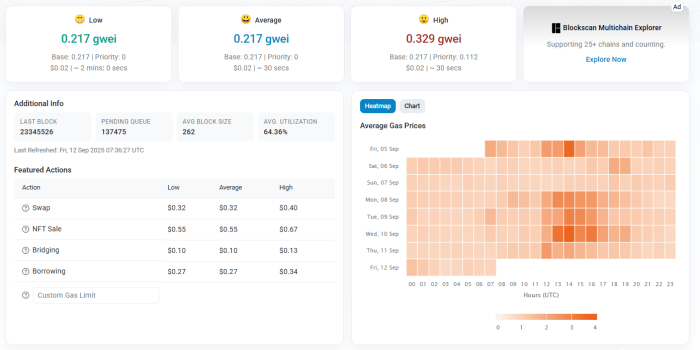
Overview of gas fees on Ethereum.

And the solution isn’t easy; not only do users need native tokens for each blockchain, but they might also need other tokens that aren’t immediately apparent.

Transacting Tether’s $USDT stablecoin on Tron, for instance, requires $TRON. Using $USDT on Ethereum requires $ETH; the two aren’t interchangeable.

How can projects overcome the problem? D’CENT suggests a new, radical solution: drop gas fees for users entirely.

D’CENT’s Answer: GasPass

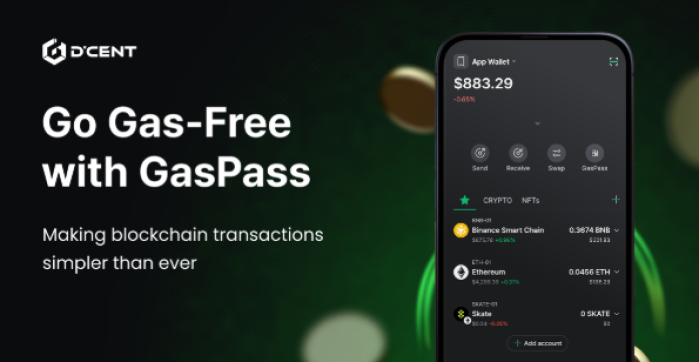
Crypto wallet provider D’CENT offers a breakthrough solution. The company recently announced GasPass, a feature that allows users to send, swap, or purchase NFTs without holding native gas tokens.

GasPass works behind the scenes by sponsoring the required network fees, so transactions execute smoothly without interruption. Users experience gas-free blockchain activity.
D'CENT homepage information.

At launch, GasPass supports Ethereum, Base, and – three of the most dynamic blockchain ecosystems – with plans to expand across more networks.

With gas fees as one of the biggest barriers to broader adoption, D’CENT’s move tackles the problem directly. According to Sangsu Baek, CEO of IoTrust, the developer of D’CENT Wallet, the GasPass launch is ‘addressing that challenge head-on, making Web3 services as intuitive and accessible as Web2.’

Toward a Frictionless Web3

GasPass represents D’CENT’s broader push to build a user-friendly, mainstream-ready crypto wallet. Recent updates to the D’CENT app include a redesigned dashboard, improved transaction history, and Smart Swap functionality, all aimed at creating an experience that newcomers can navigate while advanced users retain powerful tools.

With GasPass, D’CENT joins a growing movement towards a new default experience – gas abstraction – making blockchain transactions feel seamless, predictable, and more like traditional fintech apps.

Making crypto payments as easy as your average bank transfer could go a long way towards making crypto the new financial standard – not a niche market.

Check out D’CENT’s advanced biometric wallet, available for download at the website.

Editorial Process for bitcoinist is centered on delivering thoroughly researched, accurate, and unbiased content. We uphold strict sourcing standards, and each page undergoes diligent review by our team of top technology experts and seasoned editors. This process ensures the integrity, relevance, and value of our content for our readers.

Ben is a freelance writer specializing in crypto developments (mainly altcoins) and the intricate ways global economics shape the digital asset space. His B.Ed. in Education provides a unique foundation for his writing, enabling him to distill complex crypto concepts and market shifts into clear, digestible insights. This skill is key to helping readers adapt and apply their understanding to the ever-evolving world of crypto investment. Passionate about making crypto accessible, Ben crafts content designed to educate a broad audience, from current market events to the essential foundational knowledge that underpins them. His goal is to empower readers through understanding. When he’s not immersed in crypto analysis and breaking down complex topics, Ben is an avid Pokémon fan and enjoys all things Disney.

熱門幣種推薦

你可能也喜歡

Chainalysis挑战TRM Labs交易,法院确定九月对决日期

区块链分析公司Chainalysis近日向美国联邦索赔法院提起诉讼,指控美国国土安全部(DHS)及移民和海关执法局(ICE)在授予一份采购合同时,绕过了标准的竞争性招标程序,直接将其独家授予了其主要竞争对手TRM Labs。此案的公开记录显示,政府机构未进行竞标便将合同直接给予了TRM Labs。 由于涉及专有信息,Chainalysis的起诉书目前处于密封状态。该公司已向法院申请并获准完全中止该合同安排。TRM Labs则迅速作为介入被告方加入诉讼,为合同辩护,此举暗示该合同涉及金额重大、意义非凡。 法院已设定紧凑的审理时间表。Chainalysis需在8月11日前提交基于行政记录的判决动议,各方后续答辩将密集进行至8月底。口头辩论定于9月2日在华盛顿特区进行,政府方要求法院在9月10日前作出最终裁决,整个过程仅约六周,对于联邦采购诉讼而言异常迅速。 Chainalysis与TRM Labs是区块链情报领域的两大主导者。本案的核心在于政府机构如何选择供应商。若Chainalysis胜诉,TRM的合同将被判无效并启动重新竞标,可能影响依赖该服务的联邦调查。若政府方胜诉,则TRM合同得以维持,但将开创此类独家采购合同可经受法律挑战的先例。预计9月中旬前作出的裁决,必将受到整个区块链情报行业的密切关注。

TheNewsCrypto4 分鐘前

Chainalysis挑战TRM Labs交易,法院确定九月对决日期

TheNewsCrypto4 分鐘前

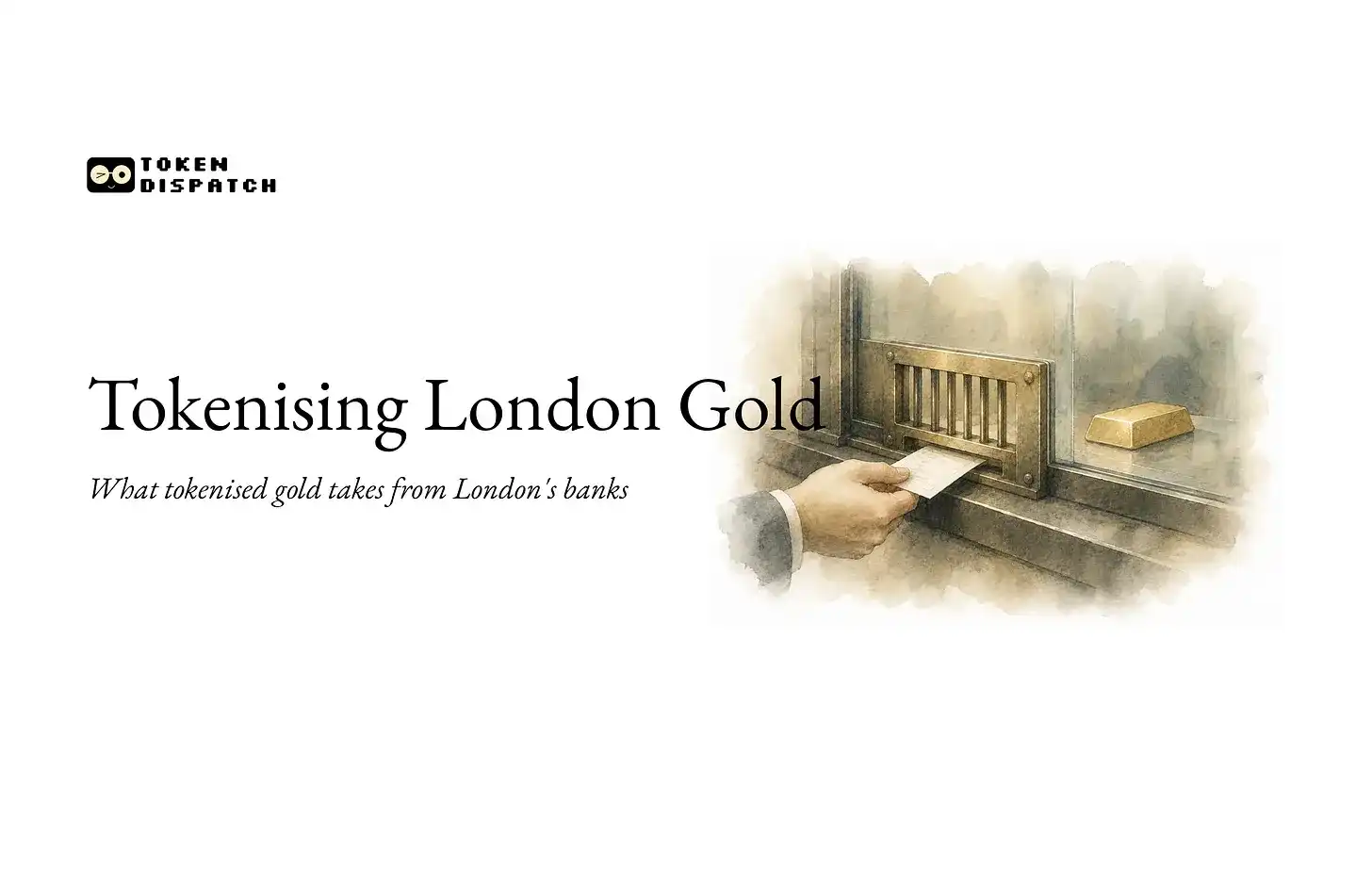
黄金代币化,一场监管倒逼的金融革命

文章探讨了英国金融行为监管局(FCA)为代币化黄金制定监管规则的背景与影响。伦敦作为全球黄金交易中心,其市场长期依赖以未分配账户模式进行的纸质化交易,虽然高效但使投资者承担银行信用风险,且实物黄金因提取和流转成本高,难以作为快速反应的抵押品。 监管变革的动力部分源于巴塞尔协议III等规则对银行持有未分配黄金施加了高流动性成本,倒逼银行寻求技术解决方案。代币化黄金通过区块链技术,能将特定实物金条的所有权数字化,实现即时、低成本的精准划转,同时消除银行中介的信用风险,使库存黄金成为优质的即时抵押品。 FCA目前监管重点在于将代币化黄金纳入抵押品框架,而非直接取代现有交易体系。这一变革由汇丰等传统清算银行主导,而非外部初创公司,旨在控制转型节奏。关键监管决策在于是否允许银行发行的黄金代币在自家体系外自由流通,这将决定市场是被革新还是旧模式换壳延续。 最终,代币化并未改变金库、安保等实体基础设施的核心价值,反而可能提升其重要性,因为每一份数字凭证都需实体黄金支撑。真正的普及将体现在伦敦金银市场协会的数据中:当总交易量稳定而传统中央账本清算量下降时,标志着代币化正在实质性地改变市场结构。

marsbit8 分鐘前

黄金代币化,一场监管倒逼的金融革命

marsbit8 分鐘前

收益杠杆和流动性杠杆,STONKBROKER这套机制,非常适合RWA场景

STONKBROKER的机制非常适合RWA(真实世界资产)场景,因为它提供了收益杠杆和流动性杠杆两大优势。 在收益杠杆方面,传统的RWA资产包仅仅锚定现实世界收益,吸引力有限。而STONKBROKER的玩法让NFT持有者不仅能获得底层现实资产带来的现金流,还能额外获取由项目自身系统运转(如交易磨损等)所产生的链上收益,形成双重收益叠加,更具吸引力。 在流动性杠杆方面,传统RWA资产发行后往往缺乏流动性。STONKBROKER机制允许NFT与平台代币按固定比例自由兑换,而代币本身易于建立深度流动性池。这使得每一份对应的“RWA资产”都获得了实时市场定价和灵活的退出通道,将NFT流动性与ERC-20代币流动性统一,显著提升了资金效率和资产流动性。 进一步推演,可将此机制应用于更广泛的RWA资产(如房地产、债券、碳信用等)。通过将资产包与带ERC-6551钱包的NFT对应,并利用AMM实现NFT与代币互换,系统产生的各类交易磨损收益可用来购买更多底层资产或直接分红给持有者。再结合借贷、期权等模块,能形成强大的增长飞轮。最终结果是项目更具可玩性,为持有者创造更大收益和更好流动性,吸引更广泛的参与者。 这一构想由@TheCardWall项目(一个将实体高分交易卡牌做成链上金库的项目)引发,展示了该机制在RWA领域的潜在应用前景。

marsbit29 分鐘前

收益杠杆和流动性杠杆,STONKBROKER这套机制,非常适合RWA场景

marsbit29 分鐘前

交易

現貨

熱門文章

如何購買GAS

歡迎來到HTX.com!在這裡,購買GAS (GAS)變得簡單而便捷。跟隨我們的逐步指南,放心開始您的加密貨幣之旅。第一步:創建您的HTX帳戶使用您的 Email、手機號碼在HTX註冊一個免費帳戶。體驗無憂的註冊過程並解鎖所有平台功能。立即註冊第二步:前往買幣頁面,選擇您的支付方式信用卡/金融卡購買:使用您的Visa或Mastercard即時購買GAS (GAS)。餘額購買:使用您HTX帳戶餘額中的資金進行無縫交易。第三方購買:探索諸如Google Pay或Apple Pay等流行支付方式以增加便利性。C2C購買:在HTX平台上直接與其他用戶交易。HTX 場外交易 (OTC) 購買:為大量交易者提供個性化服務和競爭性匯率。第三步:存儲您的GAS (GAS)購買GAS (GAS)後,將其存儲在您的HTX帳戶中。您也可以透過區塊鏈轉帳將其發送到其他地址或者用於交易其他加密貨幣。第四步:交易GAS (GAS)在HTX的現貨市場輕鬆交易GAS (GAS)。前往您的帳戶,選擇交易對,執行交易,並即時監控。HTX為初學者和經驗豐富的交易者提供了友好的用戶體驗。

767 人學過發佈於 2024.12.12更新於 2026.06.02

如何購買GAS

相關討論

歡迎來到 HTX 社群。在這裡,您可以了解最新的平台發展動態並獲得專業的市場意見。 以下是用戶對 GAS (GAS)幣價的意見。

活动图片