With its inherent volatility , the crypto market is bracing for a new challenge: the potential impact of a recession.
The complex interplay between global economic trends, monetary policy, and digital asset markets is seen as a pivotal force in the crypto ecosystem.
The Federal Reserve, the central banking system of the United States, plays an important role in the current economic landscape . Its monetary policies, especially those related to interest rates, have a huge impact on the economy , including the cryptocurrency market.
Before a recession, the Federal Reserve often chooses to lower interest rates to stimulate economic activity by encouraging borrowing and investment. However, the indefinite onset and duration of recessions often pose challenges to such policies.
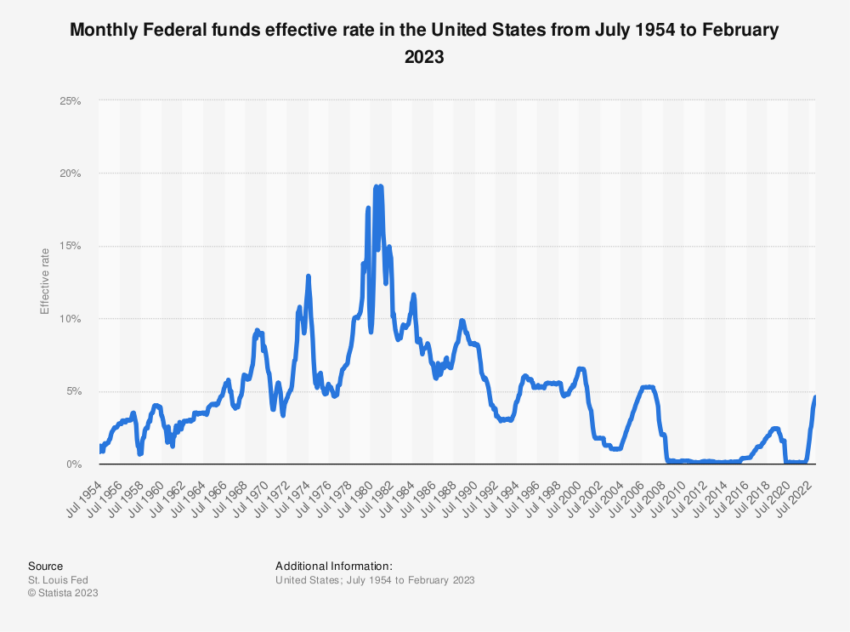
Effective Interest Rate. Source: Statista
During the Great Recession, the mortgage crisis severely affected the US economy. The Federal Reserve took immediate action by lowering interest rates, easing mortgage difficulties and stimulating the economy. Now the question arises: how can such strategies impact the crypto market?
Often PR as “digital gold,” Bitcoin has portrayed itself as a potential “hedge” against the volatility of traditional financial markets. Therefore, the impact of the economic downturn on the crypto market is a topic of intense interest and speculation.
Recessions often lead to a decline in asset prices, as was evident during the Great Recession. However, the cryptocurrency market's response to such a downturn may vary due to its decentralized nature and independence from traditional financial systems.
In contrast to traditional assets, cryptocurrencies like Bitcoin can provide an alternative investment during a downturn. Bitcoin's decentralized, borderless, and non-government nature could make it attractive as a store of value when traditional markets struggle.
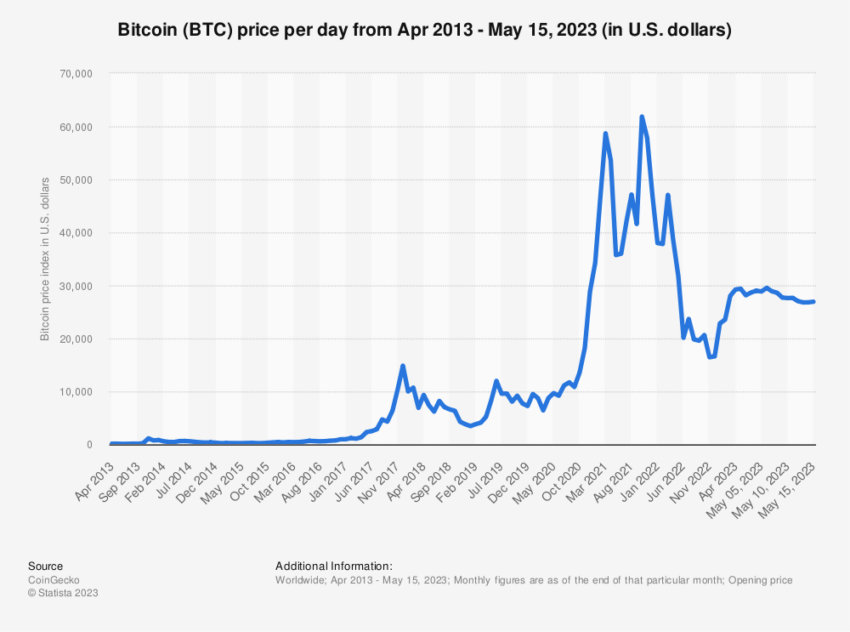
BTC/USD. Source: Statista
Bitcoin, for instance, has previously shown a negative correlation with traditional markets, suggesting that it can provide some degree of diversification during market downturns. However, it is important to note that the safe-haven status of cryptocurrencies remains a controversial topic among experts.
During the early stages of the COVID-19 pandemic, Bitcoin and other cryptocurrencies experienced significant price drops alongside traditional markets. This event raises questions about the reliability of cryptocurrencies as a safe-haven asset in times of crisis.
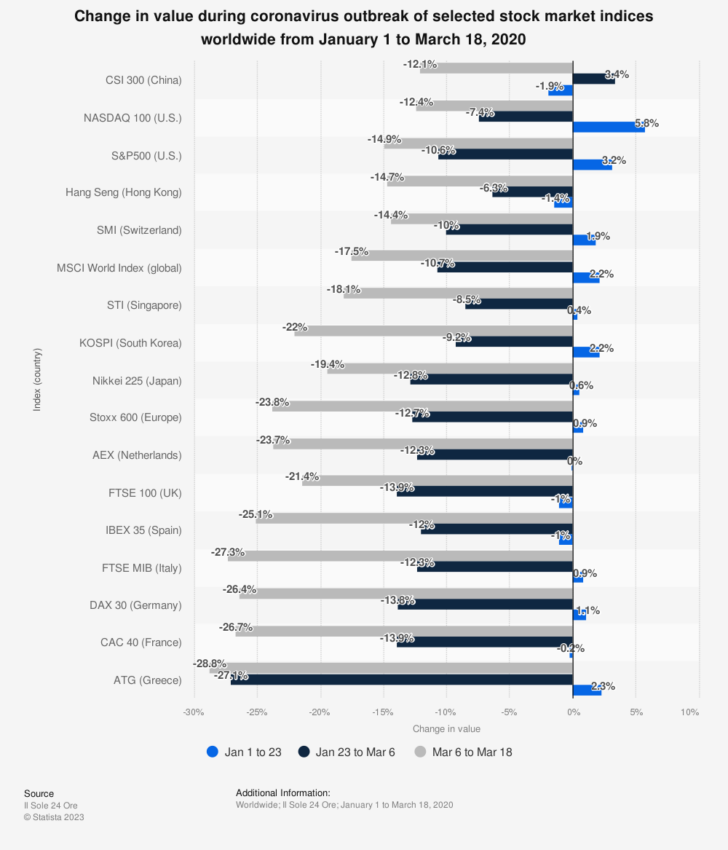
The stock market's response to COVID-19. Source: Statista
Stablecoin, cryptocurrencies pegged to traditional assets like the US dollar, can also play an important role during recessions. These digital assets are designed to maintain a stable value. This can make them an attractive option for investors looking to preserve their capital during uncertain economic times.
For instance, Tether (USDT) and USD Coin (USDC) are two popular Stablecoin backed by the US dollar. These Stablecoin provide a means for investors to escape the volatility of traditional cryptocurrencies while maintaining access to digital asset markets.
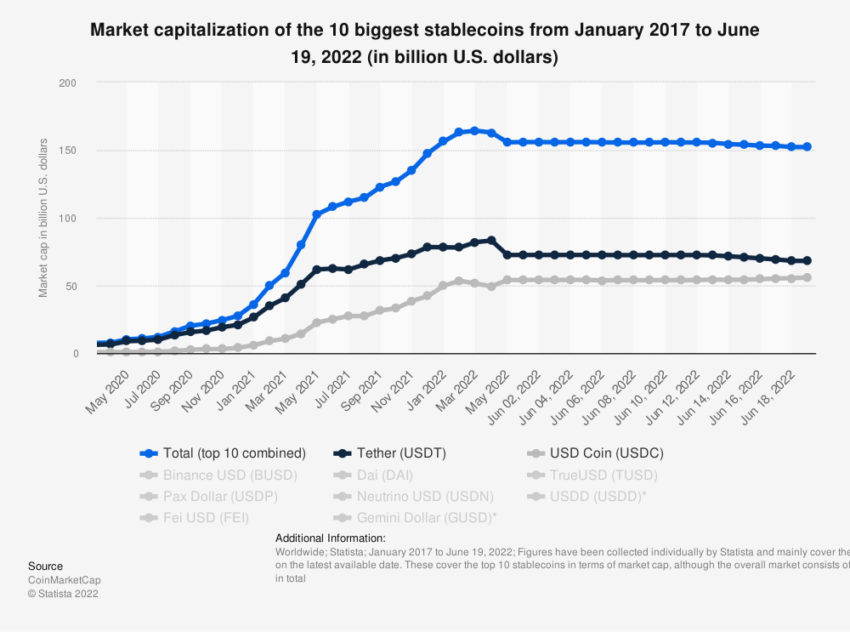
Stablecoin Market Cap. Source: Statista
During a recession, demand for Stablecoin could increase as investors seek to mitigate risk while still wanting to participate in the digital economy.
Interest rates can affect the cryptocurrency market in many ways. Traditional investments like bonds can offer lower yields in low-interest-rate environments, such as during a recession, making riskier assets like cryptocurrencies more attractive.
On the other hand, higher interest rates can increase borrowing costs, potentially leading to reduced Liquidity in the cryptocurrency market. Investors can take less risk when investing in cryptocurrencies when safer, higher-yielding investments are available.
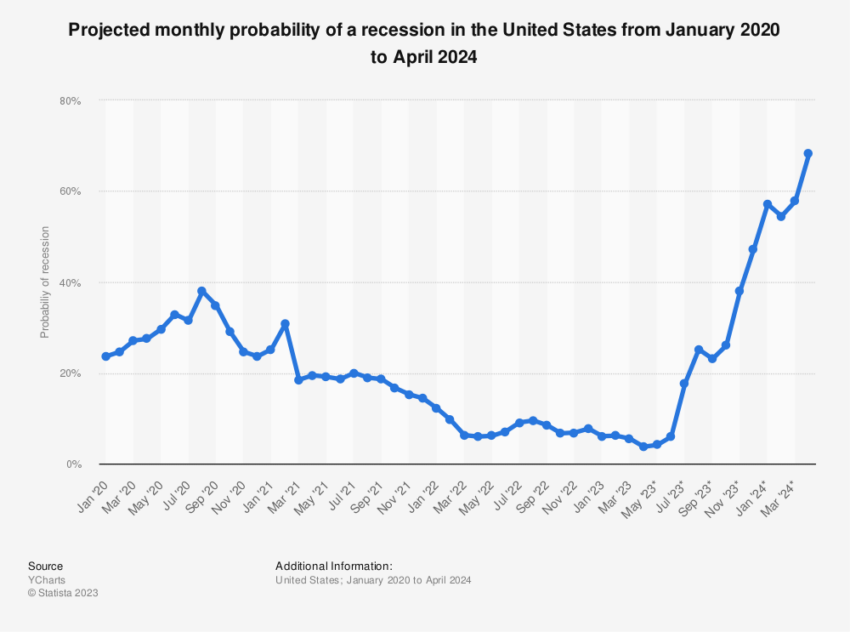
Probability of a recession. Source: Statista
The cryptocurrency market closely follows the Federal Reserve's decisions on interest rates . Together with other factors, these decisions shape the direction of the market.
The inverse relationship between interest rates and investment in risky assets can be seen in the traditional markets and extends to the crypto market. In a low interest rate environment, borrowing costs fall, making it less expensive for investors to finance the purchase of riskier assets like cryptocurrencies.
In contrast, safer assets like bonds become more attractive when interest rates are high. This is mainly due to their guaranteed returns, potentially reducing investment in riskier assets like cryptocurrencies.

Investments defy inflation . Source: Statista
In the cryptocurrency market, borrowing and lending platforms can also be affected by changes in interest rates. These platforms allow users to profit from their cryptocurrencies or borrow money from this balance.
The interest rates offered on these platforms can become more attractive than traditional investments in a low interest rate environment.
Current economic indicators suggest potential changes in the Federal Reserve's monetary policy. US Treasury Secretary Janet Yellen has warned that time is running out for remedial financial measures ahead of key meetings.
These changes are likely to signal the beginning of a recession, which will have implications for the crypto market.
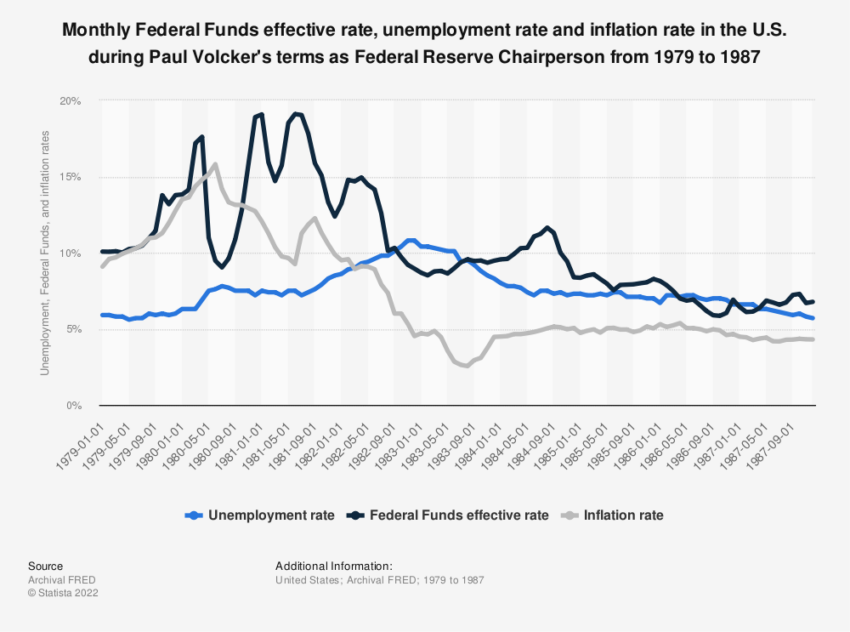
The main economic indicators of the United States. Source: Statista
CME Group's FedWatch tool analyzes the probability of interest rate moves by the Federal Reserve, providing valuable insights for crypto investors.
It helps market participants gauge the likelihood of interest rate changes, which may affect the relative attractiveness of crypto investments.
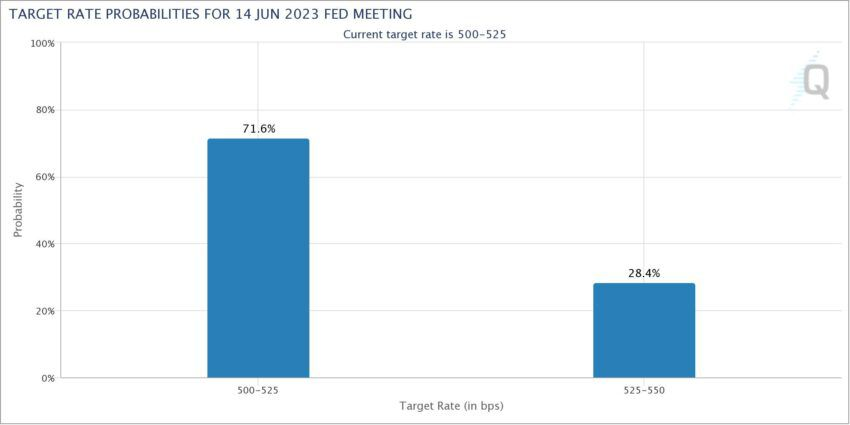
Interest rate probabilities. Source: CME Group
Institutional investors can be crucial in how the crypto market responds to a recession. These investors, including hedge funds, pension funds, and endowments, have shown a growing interest in the cryptocurrency market.
Their participation can help stabilize a downturn, as these investors often have a longer-term investment perspective than retail investors. However, the risk-averse nature of institutional investors can also lead them to retreat from the crypto market during downturns, potentially exacerbating market volatility.
The potential impact of a recession on cryptocurrencies presents a new frontier for investors. Despite the uncertainty surrounding how exactly a recession might affect cryptocurrencies, it is clear that such a period can present both challenges and opportunities.
The resilience of the crypto market will be tested in the face of an economic downturn, as will theories that suggest cryptocurrencies as a hedge against traditional market instability.
Investors, regulators and market participants must keep a close eye on economic indicators and policy decisions to navigate this uncertain landscape. The complex interplay between Federal Reserve policies, the broader economic environment, and the cryptocurrency market is set to shape the future of digital assets in the face of economic uncertainty. economic.
Understanding the dynamics and potential strategies for mitigating risks and seizing opportunities is extremely important. These insights will be key to navigating the impact of the recession on cryptocurrencies and beyond.