Treasury’s GENIUS Act Report Backs Mixers, But Wants a New ‘Hold Law’ For Crypto

bitcoinist发布于2026-03-09更新于2026-03-09

文章摘要

The U.S. Treasury's GENIUS Act report acknowledges the legitimate privacy benefits of cryptocurrency mixers for lawful users, such as protecting personal or business transactions. However, it highlights the misuse of these tools by illicit actors like North Korean cyber units and ransomware groups to launder funds. To address this, the report proposes a new "digital-asset-specific hold law" that would allow regulated platforms to temporarily freeze suspicious transactions, giving law enforcement time to act without disrupting legitimate privacy-focused usage. The report is part of a broader effort to balance financial innovation and security under the GENIUS Act framework.

Treasury sent Congress its GENIUS‐Act‐mandated report on “innovative tools” to fight crypto‐enabled illicit finance.

A Crypto’s “Hold Law” And A Privacy Paradox

In a 32-page report submitted to the US Congress this March, the U.S. Treasury Department has endorsed lawful uses of crypto mixers (a service that takes in cryptocurrency from many different users, mixes all those coins together, and then sends each user back an equivalent amount from the pool, but from different addresses than the ones they used to deposit) in favor of privacy.

However, it has also urged lawmakers to create a new “digital‐asset‐specific hold law” so platforms can freeze suspicious funds.

Mixers, Privacy And DPRK

The report notes favorably that mixing and similar tools “can be used by lawful users seeking to enhance financial privacy on public blockchains,” including for “protecting sensitive information about personal wealth, business transactions, or charitable donations from public view. It adds that Treasury “recognizes that privacy‐enhancing technologies, including mixers and other obfuscation tools, may serve legitimate purposes when used by compliant actors in line with applicable AML/CFT requirements.”

On the other side, the same report also stresses that North Korea’s cyber units and major ransomware crews rely on mixers, cross‐chain bridges, and rapid swaps as core infrastructure to launder massive hauls from hacks and fraud. The report cites billions of dollars in stolen digital assets tied to DPRK actors and details how those funds are pushed through mixers and into stablecoins before being bridged and cashed out, using the same tools that ordinary users might pick for privacy.

What The “Hold Law” Would Do

Therefore, to tackle this paradox, the report proposes a “hold law” that would ensure that legitimate, clean, users keep their privacy while unlawful or suspicious activity can be addressed. Under the proposal, crypto exchanges and other regulated platforms would gain a clear and legal “pause button” for suspicious funds. The report recommends that “Congress establish a digital‐asset‐specific statutory ‘hold’ authority” that would allow platforms “to temporarily retain or delay the movement of digital assets associated with suspected illicit activity while appropriate legal process is pursued.” Firms could temporarily hold or delay those assets when strong red flags appear, with statutory cover for doing so.

The idea would be to give law enforcement time to act against ransomware crews, large fraud schemes, or state‐sponsored hackers, while limiting the tool to narrowly defined, high‐risk cases so routine customer flows are not frozen by default.

TradFi and Legacy media have often linked mixers to money laundering, with Tornado Cash as the obvious cautionary tale. Ethereum co‐founder Vitalik Buterin has repeatedly argued that mixers are neutral tools, even saying he used Tornado Cash to make a private donation to Ukraine, and is now backing ‘compliant’ designs like Privacy Pools that aim to protect on‐chain privacy without commingling with known dirty funds.

Another Piece On The GENIUS Act Puzzle

The report is part of the broader GENIUS Act framework, the law Trump signed to create a federal regime for payment stablecoins and push “innovative” tools against illicit finance. It fulfills a mandate for Treasury to spell out how AI, digital identity, and blockchain analytics should be used under a risk‐based AML approach.

The report also proposes a preferred tech stack (AI, digital ID, blockchain analytics, APIs) that regulated platforms should deploy under a risk‐based AML approach.
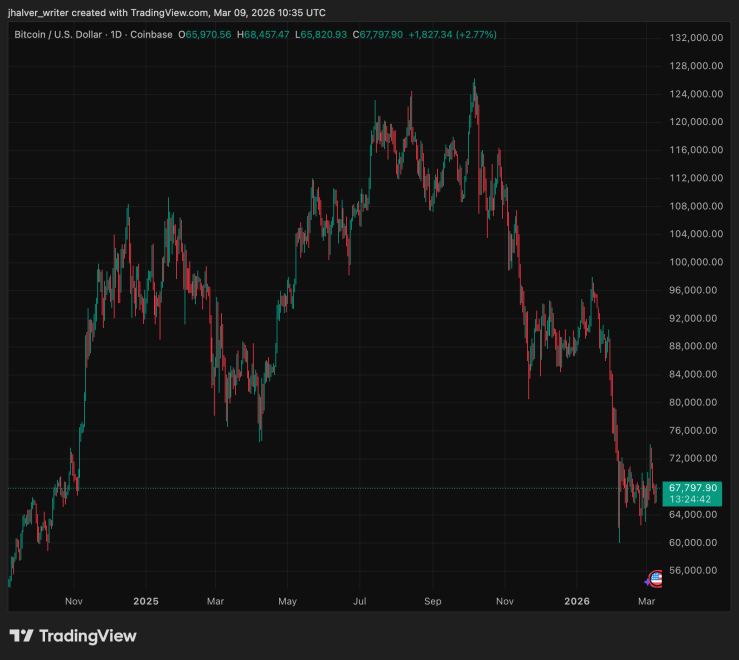
BTC's price trends to the downside on the daily chart. Source: BTCUSD on Tradingview

Cover image from ChatGPT, BTCUSD chart from Tradingview

相关问答

QWhat is the main purpose of the GENIUS Act report submitted by the U.S. Treasury Department?

AThe GENIUS Act report outlines 'innovative tools' to fight crypto-enabled illicit finance, endorsing lawful uses of crypto mixers for privacy while proposing a new 'hold law' to freeze suspicious funds.

QHow does the report view the use of crypto mixers by lawful users?

AThe report recognizes that mixers and other privacy-enhancing technologies can serve legitimate purposes for lawful users seeking financial privacy, such as protecting sensitive information about personal wealth or business transactions, when used in compliance with AML/CFT requirements.

QWhat specific legislative measure does the Treasury Department recommend to address suspicious crypto transactions?

AThe Treasury Department recommends that Congress establish a digital-asset-specific statutory 'hold' authority, allowing platforms to temporarily retain or delay the movement of digital assets associated with suspected illicit activity while legal process is pursued.

QAccording to the report, how do malicious actors like North Korea's cyber units utilize crypto mixers?

ANorth Korea's cyber units and ransomware crews use mixers, cross-chain bridges, and rapid swaps as core infrastructure to launder massive amounts of stolen digital assets, often pushing funds through mixers into stablecoins before cashing out.

QWhat broader framework is this report a part of, and what additional tools does it propose for regulated platforms?

AThe report is part of the GENIUS Act framework, which aims to create a federal regime for payment stablecoins and combat illicit finance. It proposes a tech stack including AI, digital identity, blockchain analytics, and APIs for regulated platforms under a risk-based AML approach.

你可能也喜欢

CPU杀回牌桌,一场1700亿美元的“上位”大戏开启

英伟达在2026年台北电脑展上首次发布独立CPU产品线Vera CPU,标志着其业务重心从GPU向更广阔的计算领域扩展。CEO黄仁勋指出,在AI智能体时代,CPU已成为数据中心性能的关键瓶颈。与此同时,AMD将服务器CPU市场规模预测大幅上调至1200亿美元以上,行业预测其潜在市场规模将在2030年达到约1700亿美元。 市场格局正在发生变化。2026年一季度,AMD在服务器CPU收入份额上逼近英特尔,显示出高核数产品的强大溢价能力。分析指出,AI发展正从训练转向推理和智能体阶段,后者需要频繁进行复杂控制流、工具调用和数据处理,这些任务严重依赖CPU而非GPU。在智能体任务中,GPU利用率可能低于50%,而CPU工作量占比可达七成以上。这导致CPU与GPU的配比从过去的1:8显著收敛至1:4甚至1:1。 需求变化直接推动了十多年来首次大规模涨价,英特尔和AMD服务器CPU价格普遍上涨10%-15%,且出现产能紧张。市场分化为配合GPU的高核数CPU和用于智能体任务编排的中核数批量CPU两类需求。 英伟达基于ARM架构的Vera CPU入局,进一步凸显了CPU的战略地位。这对中国CPU产业链既是机遇也是挑战。国产CPU厂商如海光信息、华为鲲鹏等,既受益于全球AI需求增长,也面临信创政策带来的国产替代窗口期。行业共识是,AI大规模落地的关键已从单芯片性能转向CPU与GPU的协同能力。

marsbit4小时前

CPU杀回牌桌,一场1700亿美元的“上位”大戏开启

marsbit4小时前

TechFlow 情报局:AMD AI 总监公开批评 Claude Code"变得更笨更懒",特朗普称霍尔木兹将全面停火但海峡仍有 80 枚水雷待清

**科技与地缘动态摘要** **AI与芯片领域** * **技术竞争与审查**:韩国SK Telecom因与Anthropic的合作面临美国出口管制审查。与此同时,中国Z.AI发布了不依赖英伟达芯片、性能对标Claude Opus的GLM-5.2大模型,引发关于技术围堵效果的讨论。 * **安全与伦理问题**:Google Gemini被曝在诈骗场景中提供误导建议,引发AI安全担忧。GitHub上发现上万个分发木马的仓库,开源供应链安全敲响警钟。 * **行业动态**:亚马逊正洽谈对外出售其自研AI芯片,意图进军市场。苹果据悉将为特殊版iPhone独享台积电最新制程工艺。0G Labs宣布其链上AI推理总量突破重要里程碑。 * **争议与监管**:AMD AI总监公开批评Claude Code性能下降。多名亚马逊工程师因批评公司AI数据中心扩张的环境影响遭内部调查。微软、亚马逊云服务或面临欧盟严厉反垄断审查。 **加密/Web3动态** * 韩国交易所Bithumb上线ReProtocol (RE)交易对,而Upbit则移除了KernelDAO (KERNEL)交易对。 **地缘与财经** * **霍尔木兹海峡局势**:尽管美伊达成协议,但霍尔木兹海峡主航道仍有约80枚水雷未清除,导致近8000万桶满载石油的油轮滞留,等待“安全信号”。伊朗取消了赴瑞士外交行程,和谈前景不明。特朗普称协议是伊朗“无条件投降”,并宣称总统拥有无限权力。 * **美股表现**:美股半导体板块大涨,英特尔因与苹果合作传闻暴涨10.6%,而SpaceX股价下跌3.5%。 **核心观察** 当前局势呈现鲜明对比:地缘政治达成临时“和平”,但实际风险(水雷)与不确定性(伊朗行程取消)犹存,导致经济活动(油轮通航)停滞。与此同时,科技领域的竞争与重构却在加速进行,从芯片自主研发、AI模型突破到供应链安全,科技公司正以另一种方式重塑全球格局。

marsbit4小时前

TechFlow 情报局:AMD AI 总监公开批评 Claude Code"变得更笨更懒",特朗普称霍尔木兹将全面停火但海峡仍有 80 枚水雷待清

marsbit4小时前

交易

现货
合约
活动图片