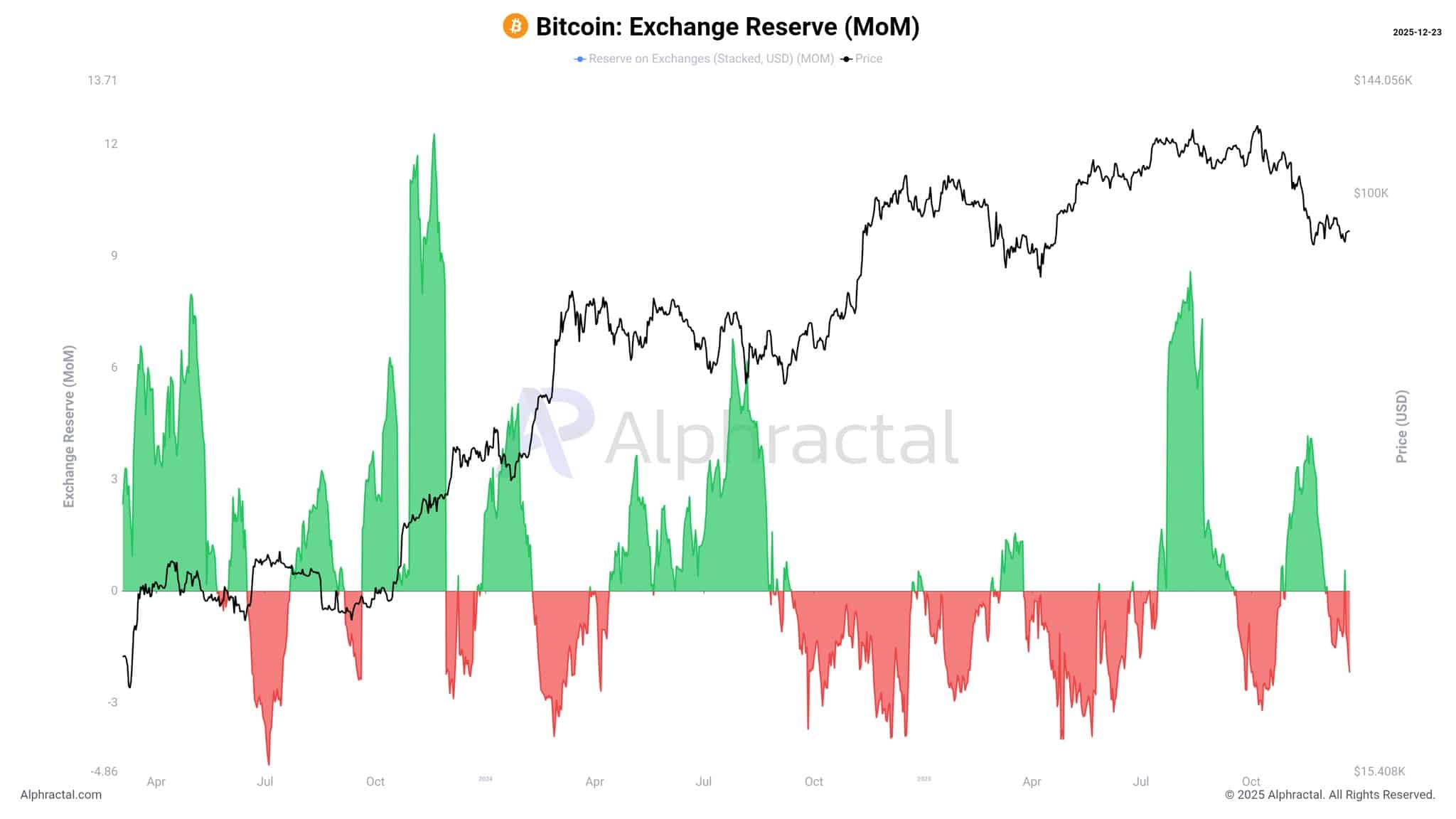
QWhy are Bitcoin exchange reserves turning negative, and what does this indicate?
AMonthly changes in Bitcoin exchange reserves have turned negative, meaning more BTC is being withdrawn than deposited. This indicates that investors are choosing to hold Bitcoin for the long term rather than trade it in the short term, signaling confidence in its future value.
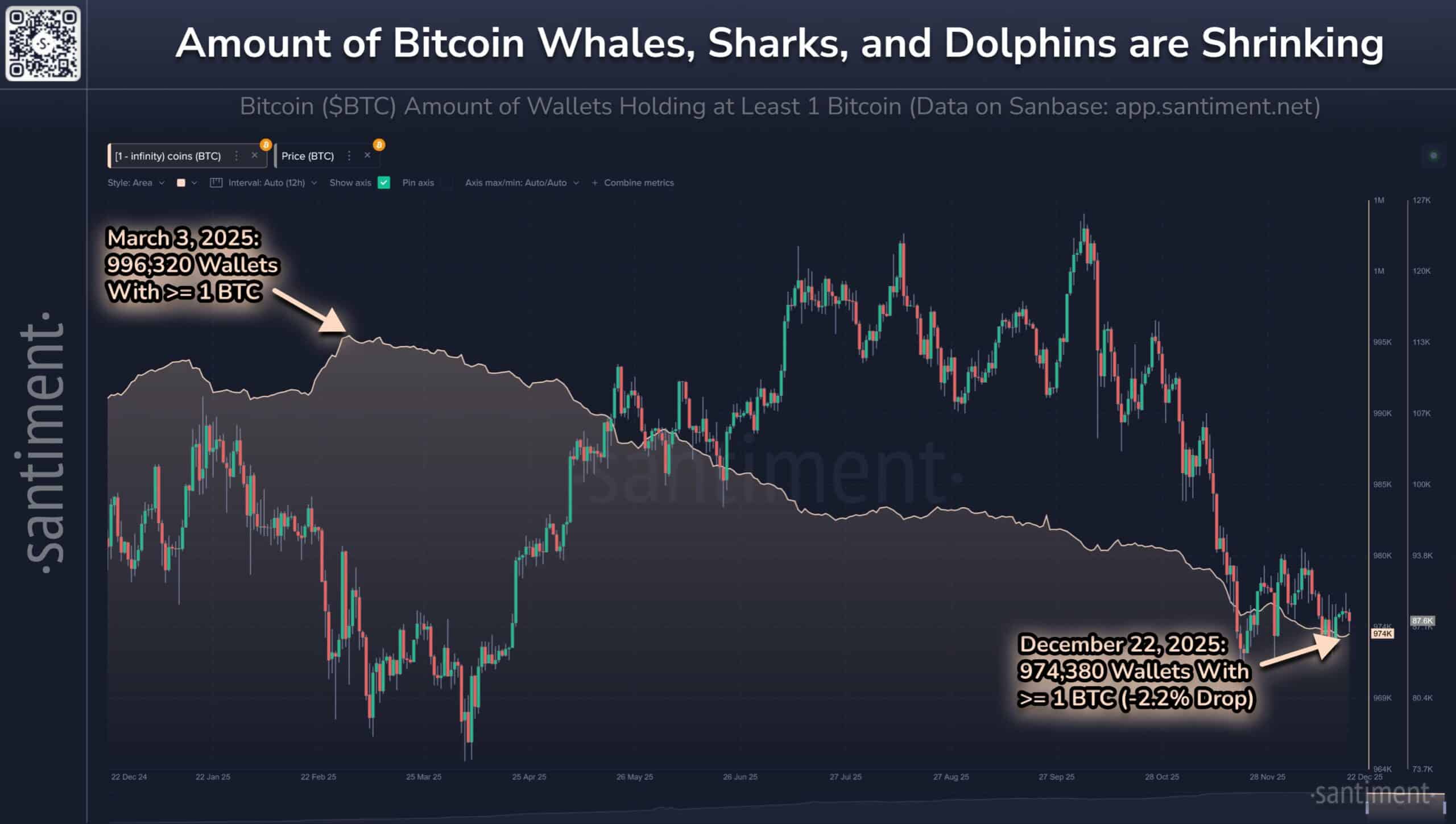
QWhat trend is observed among smaller Bitcoin wallets, and how does it contrast with whale activity?
AThe number of wallets holding at least 1 BTC has decreased by 2.2% since March, indicating that smaller investors are stepping away. In contrast, larger holders (whales) have been buying, adding over 136,000 BTC in the same period, showing strong long-term confidence.
QHow has Bitcoin's performance compared to equities like the Nasdaq 100 this year?
AAccording to David Schassler of VanEck, Bitcoin has lagged the Nasdaq 100 by nearly 50% this year. This underperformance is attributed to softer risk appetite and temporary liquidity pressures rather than a fundamental issue with Bitcoin's value proposition.
QWhat could potentially drive Bitcoin to outperform stocks in 2026?
AIf liquidity conditions in the market improve, Bitcoin could respond better than stocks in 2026. The current weakness is seen as temporary, and a recovery in liquidity might lead to significant gains for Bitcoin.
QWhat are the key takeaways regarding Bitcoin's supply and investor sentiment from the article?
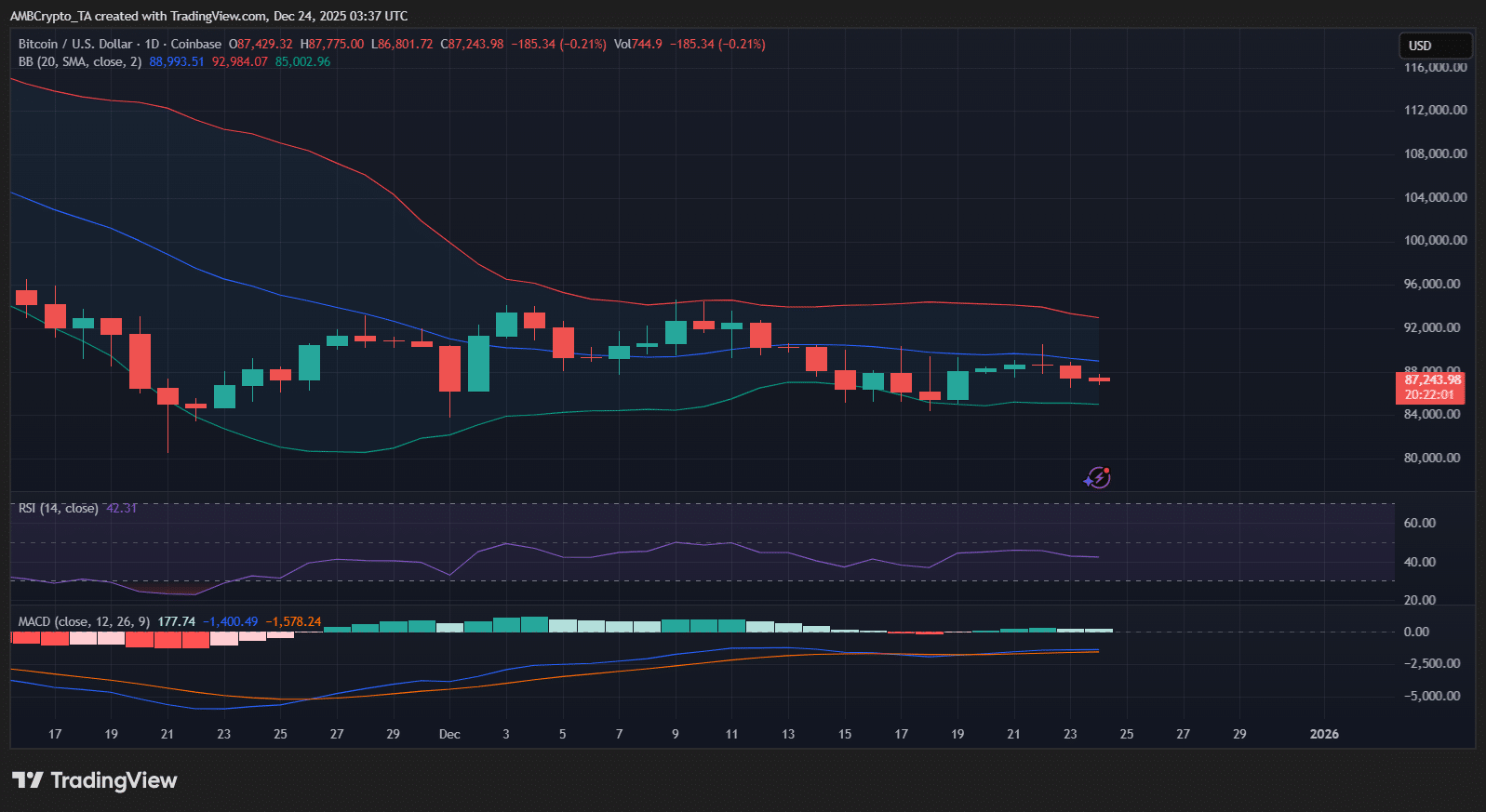
AThe key takeaways are: 1) Bitcoin supply is tightening as exchange balances fall, reducing liquid supply. 2) Whales have added a significant amount of BTC (136,000), demonstrating long-term confidence despite the current period of price stagnation and market boredom.