Original | Odaily Planet Daily (@OdailyChina)
Author | Golem (@web 3_golem)
Recently, narratives like AI and robotics continue to surge ahead, while the crypto industry remains restrained and introverted. Beyond the noise, the market might be waiting for new structural variables.
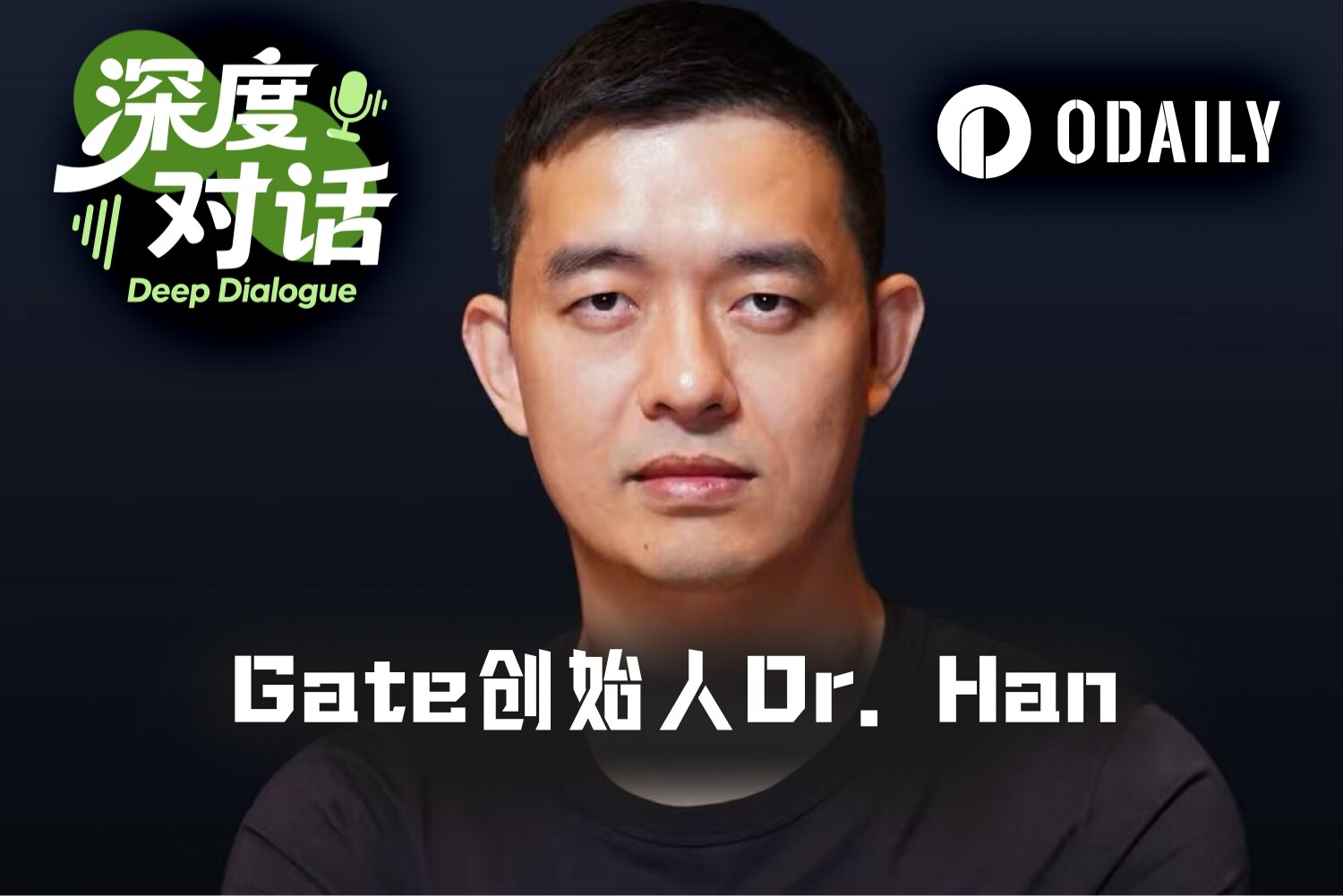
Odaily Planet Daily had the privilege of interviewing Dr. Han, Founder and CEO of Gate. A systematic dialogue unfolded around topics including the current state of the crypto market, stock tokenization and RWA, Gate's compliance landscape, and future development. As a front-line entrepreneur deeply involved in the industry since 2013, Dr. Han provided unique insights ranging from cycle analysis and product evolution to global compliance strategy.
For clarity, Odaily Planet Daily has summarized the Q&A from the interview as follows, enjoy~
All in Web3 and Intelligent Web3
Odaily Planet Daily: In 2025, Bitcoin's annual gains lagged behind大宗assets like gold and silver; simultaneously, the tech industry, including AI and robotics, is being fervently pursued by capital and the market, with new developments happening daily. In contrast, the crypto industry seems to be experiencing a slowdown in innovation. How do you view this phenomenon of "external excitement versus internal quietness" in the crypto space?
Dr. Han: Gold has been in a bull cycle over the past year, repeatedly hitting new highs. During this period, the crypto space has been relatively in a bear cycle. But every industry has its own cyclicality, and I think this is normal. The crypto space need not be overly discouraged by this.
The excitement in the tech field is still centered around AI. The popularity of AI has driven many industries, such as energy, chips, software, and even infrastructure construction like communication bandwidth. On the surface, it seems like everyone is chasing AI, and the crypto industry has become quiet, but actually, the development of AI is not bad for the crypto industry; on the contrary, it will be very helpful.
Odaily Planet Daily: So, how does Gate integrate its business areas with AI?
Dr. Han: For us, there are mainly two levels. One level is that AI can help us provide services to the outside world faster, including front-end development, design, and other work, most of which are now assisted or replaced by AI, significantly improving the company's efficiency. Although many core back-end logics still require human input, I think they will soon be replaced as well.
This is from the perspective of helping our company. Another level is helping users. For example, in the customer service system, where AI first made an impact, because users have all kinds of questions, it's difficult for human customer service to know everything due to limited knowledge, but AI is very strong in this regard. It can provide excellent answers to users and even help them calculate positions, with very, very high efficiency.
Now, AI is playing a role beyond just customer service; its影子can also be seen at the product level. The next step might be that in the future, we might not even need a product interface, just an AI dialog box, and let AI solve all problems for the user.
Odaily Planet Daily: Gate proposed the strategic development framework of "All in Web3" in 2025. What results have been achieved based on this strategy?
Dr. Han: We proposed the "All in Web3" strategy last year, mainly based on observations of user behavior trends: more and more users are migrating from centralized trading platforms to the Web3领域.
But actually, we started布局Web3-related businesses as early as 2020. However, when promoting Web3 businesses at that time, we found that users still had difficulty truly integrating into and using decentralized platforms. Many users left quickly after participating in mining, making it hard to form genuine user retention, and the underdeveloped underlying infrastructure also limited the improvement of the user experience.
It wasn't until last year that we reassessed the market environment and believed that Web3 infrastructure had become relatively mature. Web3 wallets had significantly improved in terms of asset protection, mnemonic phrase backup mechanisms, and other aspects of the experience. On-chain liquidity had also become richer, with more diverse types of assets within the ecosystem. Therefore, we believed it was the right time to重新promote the Web3 platform.
The biggest achievement Gate has made in the past year is building a user-friendly and easy-to-use Web3 infrastructure for users, with Gate Wallet being an important manifestation of this result.
Odaily Planet Daily: Can you tell us more about the concept of Intelligent Web3 previously proposed by Gate? How can ordinary users understand Intelligent Web3?
Dr. Han: We proposed the concept of "Intelligent Web3" mainly based on a significant change in the current industry.
Now the entire crypto industry is in a stage of information explosion, with a large number of new Tokens and new products emerging every day. It's difficult for new users to understand each project, and even资深users can feel overwhelmed by the massive amount of information. For example, when trading Memecoin in Web3, tens of thousands of new Tokens might be born every day, and one also needs to track Twitter discussions, analyze热度, observe holding data, etc. It's basically impossible to complete this manually.
So after thinking, we believe that AI can help users solve this problem. Intelligent Web3 is about letting AI Agents handle complex transactions on the blockchain for users—users tell the AI what they want to do in natural language, and the AI will understand and execute the user's various strategies and intentions.
Although it sounds simple, actual implementation is far more complex than imagined. The most difficult part is trust authorization. The AI acts as the user's agent, but there is no inherent trust relationship between it and the user. How to ensure that the user's assets are not unduly damaged when handed over to the AI for operation requires a complete set of protocols to support this.
The core logic of Intelligent Web3 is that the user's stated intention to the AI needs to be confirmed through signatures, but authorization must have clear scope limitations. After the AI completes the task, there also needs to be a verification mechanism to ensure the execution result is trustworthy.
Observations on the Crypto Industry in 2026
Odaily Planet Daily: Prediction markets are one of the few sectors in the crypto industry from 2025 to 2026 that are "favored by capital + breaking out of the circle." How do you view the popularity of prediction markets?
Dr. Han: Prediction markets have developed with great momentum in the past two years. Firstly, they can price a large number of uncertain events, predicting the probability of a certain outcome occurring in the future. Secondly, their settlement efficiency is very high, which in turn incentivizes more people to participate. I believe prediction markets are not a zero-sum game; they cannot be equated with the gambling industry. They still have great positive value for society. For example, for future uncertain events, when we know the probability of various outcomes in advance through prediction markets, we can make many targeted preparations ahead of time.
Odaily Planet Daily: So, what other细分sectors and directions in the crypto领域do you think are worth watching in 2026?
Dr. Han: The first is payments. This sector has also grown rapidly in the past year because blockchain can indeed solve the pain points of the traditional payment industry, such as transfer costs and time. Based on these advantages, the scale of crypto payments will become larger and larger in the future. The second is RWA. Currently, traditional assets like gold, crude oil, US stocks, etc., are entering the crypto industry through tokenization. The crypto circle does not排斥high-quality assets. After RWA打通trading channels, many investors will come to participate in trading. The third is DEX. We found from data that compared to centralized exchanges, more and more users now prefer to use DEX for trading. Therefore, for Gate, we will also focus on promoting this direction in the future.
Building a "Two-Way Integration" Ecosystem of TradFi and Crypto Business
Odaily Planet Daily: Traditional exchanges like the NYSE and Nasdaq have announced that they will launch stock tokenization and crypto token trading. Will they eventually蚕食the business of crypto exchanges in the future? How will Gate respond to such competitive impact?
Dr. Han: I don't think there is any impact; on the contrary, this is the best promotion for the crypto industry. When they bridge traditional finance and the crypto industry, it will also bring us more users. For example, when the Bitcoin spot ETF was approved, the market also thought that users would buy ETFs instead of buying real Bitcoin on exchanges, but obviously this did not happen. The trading volume of exchanges has still been growing in recent years.
As for stock tokenization, it won't bring many incremental users to traditional exchanges like the NYSE and Nasdaq. But when this channel is打通, we also have the opportunity to add this trading variety, allowing crypto users to better trade traditional assets, which is a very big positive for us.
We also hope to introduce tokenized stocks to the crypto market because, in the current crypto market, Bitcoin drives the altcoin market to rise and fall together. So when the market is not doing well, everyone loses trading enthusiasm and has no choice. But when tokenized gold, stocks, etc., enter the crypto market, it provides users with more asset allocation options.
Odaily Planet Daily: Gate itself is also developing TradFi business. How does Gate position this business? Is it intended to form synergy with the core crypto business, building a "two-way integration" ecosystem, and transform it into a more comprehensive moat? How has its performance been after launch?
Dr. Han: When doing TradFi, our idea is simple: not to compete with traditional finance for饭碗, but to hope to combine it with our crypto business to form a mutually supportive ecosystem. The TradFi business is an extension and supplement for us. It can help us better establish connections with traditional finance, while also allowing crypto users to use more traditional financial tools. We hope that through this two-way integration, the barriers between traditional and crypto will gradually disappear.
We officially launched the TradFi business in mid-January this year, and it has been just over a month now, with total trading volume already exceeding 95 billion US dollars. The platform currently supports 144 trading categories, covering assets such as metals, stocks, indices, foreign exchange, and大宗commodities. This growth rate honestly exceeds our expectations and also shows that users indeed have a demand for more diverse investment portfolios.
Challenges Faced by Gate
Odaily Planet Daily: Gate experienced rapid growth in spot and合约in 2025, and its user base also exceeded 50 million. Under such fast-paced growth, what challenges have you and the team encountered?
Dr. Han: In my opinion, the biggest challenge we currently face lies in the transformation and adaptation of employees' working methods. Gate has always adopted a completely online office model. This method brings significant flexibility advantages: talent recruitment is not limited by region, management is no longer constrained by fixed time and space, and employees can arrange work according to their personal rhythm.
But online office also places new demands on the organization and individuals. One reality is that not everyone can quickly adapt to this highly autonomous way of working. When new employees join, it often takes some time for them to integrate into collaboration and complete the transition from the traditional office model to the concept of remote collaboration. Correspondingly, the company also needs to explore a management system adapted to this new type of organization.
In the current social context, enterprises都需要more independent and self-managing individuals. This trend exists not only in the blockchain industry but also significantly in the AI field. With the development of AI technology, many repetitive and procedural tasks are gradually being replaced. Human value will be更多地reflected in active thinking and independent planning.
We are in such a critical stage of organizational transformation. How to help the team adapt to this change and build a more efficient remote collaboration culture is a challenge we will need to continue to face in the future.
Odaily Planet Daily: Last year, Gate sparked widespread discussion due to personnel adjustment issues. What are your thoughts and ideas on internal management?
Dr. Han: From our perspective, this was actually a very normal internal adjustment, but because there was an information gap, some over-interpretation occurred.
The number of Gate employees has been increasing in recent years, thanks to the overall good market conditions and Gate's rapid business development. Platform users have increased, and demands have also increased. Therefore, whether it is product experience or service response, we must accelerate the pace to meet these user needs. So teams like market, BD, and brand are basically maintaining efficient operation.
Such a fast pace is not uncommon in the financial industry for crypto exchanges like ours; the work节奏on Wall Street and in major securities firms around the world is similar. The blockchain industry is essentially still part of the financial industry; it is difficult to achieve the slow pace of some实体industries.
Moreover, AI is重构the entire enterprise's production function, improving overall efficiency. From Block to Musk's companies, to traditional tech giants, the essence of the layoff wave is: one person + AI is replacing the work efficiency of 5-10 people in the past. This is an irreversible industrial upgrade, not a cyclical fluctuation.
Odaily Planet Daily: Gate spot listed 447 tokens in 2025, of which 318 were first listed on the entire network. Is the number of listings too many and too frequent?
Dr. Han: Gate has been proactive about listings since 2013. At that time, we not only had Bitcoin, but we also first listed Litecoin and DOGE. DOGE's trading volume on Gate accounted for 90% of the global volume at that time. Later, during the Ethereum ICO period, the discussion about which coins exchanges should list became more numerous and serious, but Gate always remained open. Looking back today, judging from the actions of all exchanges, the trend of openness is unstoppable. Gate just realized it earlier than them by decades.
Centralized exchanges are essentially just a tool for users to trade, no different in function from decentralized exchanges. DEXs are very open; some don't even have any listing standards. Centralized exchanges should also adapt to this trend. What we need to do is provide protection and tools for users, such as using data analysis and contract checks to identify if a token is a貔貅币(pump-and-dump token) or a risky token. But we cannot decide which tokens users want to trade; we respect DYOR (Do Your Own Research).
Odaily Planet Daily: In 2025, Gate vigorously developed its Content Square. Other exchanges are also making efforts in the social sector, such as Binance Square and OKX Planet. Why are exchanges starting to develop social functions? Will this be the next main battlefield for exchange competition?
Dr. Han: Gate started doing social very early. In 2013, we launched a chat function, which I developed myself. Because trading generates a desire to share, whether you make money or lose money, you want to communicate with other investors. So to help users better exchange ideas and information, we launched the Content Square and Gate Live. In recent years, many peers have indeed been doing this. Social is indeed a very important板块, but for exchanges, it is not a core business, just a channel for investors to synchronize information and communicate.
Gate's Compliance Progress and Future Plans
Odaily Planet Daily: Compliance has always been a top priority for exchange development. What achievements did Gate make in compliance construction in 2025? What are the plans for 2026?
Dr. Han: Gate began promoting the compliance process in 2018. In 2018, we submitted a compliance license application in Malta. In 2022, Gate obtained a compliant custody license and trading license in Malta. Since then, we have been promoting the compliance process globally. 2025 was indeed the year we obtained the most compliance licenses. In the United States, we have already obtained compliance licenses in 35 states, and our compliant business covers 46 US jurisdictions, allowing us to provide legal services in most parts of the US. In Europe, we can now operate compliantly and legally in more than 20 countries; we have also obtained compliance licenses in other countries and regions such as Australia and Japan.
After seven or eight years of effort, Gate can now operate businesses in most compliant regions globally. Next, we are also paying attention to some emerging regions. If there are new opportunities, we will actively争取. Additionally, we are exploring new areas. Besides blockchain custody, trading, and other licenses, we will also strive to obtain more compliance licenses in payments, derivatives, etc.
Odaily Planet Daily: Previously, in a (Wu说) interview in December, you revealed Gate's "vision" for going public. How is this specifically planned?
Dr. Han: Going public is something Gate has been planning for the long term. The compliance process promoted around the world in recent years is also conducive to realizing this plan. On the one hand, compliance can deepen users' trust in the platform; on the other hand, it also plays a positive role in enhancing Gate's valuation. Our overall布局consideration is to establish relatively independent entities around the world and then gradually achieve listing in various regions.
Conclusion
Recently, "raising lobsters" has become a hot word sweeping through the tech circle. It refers to the process of users deploying and training the open-source AI agent OpenClaw—because its icon resembles a red lobster.
Just two weeks after the interview ended, Gate launched the AI Agent platform GateClaw (Gate Blue Lobster). This AI assistant customized for Crypto scenarios is built based on the OpenClaw framework but doesn't require users to buy hardware or deploy and maintain it themselves; it's ready to use upon opening. It can be used to check quotes, find functions, and integrate information. It is currently open for free.
Looking back at our interview with Gate CEO Dr. Han two weeks ago, he said: "In the future, maybe we won't even need a product interface, just an AI dialog box, and let AI solve all problems for the user." The落地of GateClaw (Gate Blue Lobster) is the first step in this direction. It saves users the cost of "raising shrimp" (deploying AI) and truly opens up the imagination space of AI+Web3 to everyone.