Barclays Backs Crypto Company Ubyx Amid Growing Stablecoin Clearing Race

bitcoinist发布于2026-01-08更新于2026-01-08

文章摘要

Barclays has made its first direct investment in the stablecoin sector by acquiring an equity stake in Ubyx, a startup that provides a clearing and settlement layer for stablecoins. This move reflects a broader trend of traditional banks exploring digital currency infrastructure within regulatory boundaries. Ubyx aims to reduce market fragmentation by enabling standardized redemption and settlement of stablecoins across different issuers and blockchains. The investment aligns with Barclays' ongoing initiatives in digital money, including participation in a consortium exploring a G7-backed stablecoin and tokenized deposit pilots. While stablecoins like Tether dominate crypto liquidity, regulators remain cautious about systemic risks. Barclays' backing signals growing institutional interest in compliant stablecoin infrastructure.

Barclays has made its first direct move into the stablecoin sector, taking an equity stake in Ubyx, as global banks quietly position themselves for a future where digital settlement becomes more common.

While the investment is modest in disclosed detail, it signals how traditional lenders are approaching stablecoins not as speculative assets, but as infrastructure that could reshape payments and treasury operations if regulation allows.

Ubyx, founded in 2025, operates a clearing and settlement layer for stablecoins, digital tokens typically pegged one-to-one with fiat currencies such as the U.S. dollar. Its goal is to reduce market fragmentation by allowing stablecoins from different issuers and blockchains to be settled and redeemed in a more standardized manner.
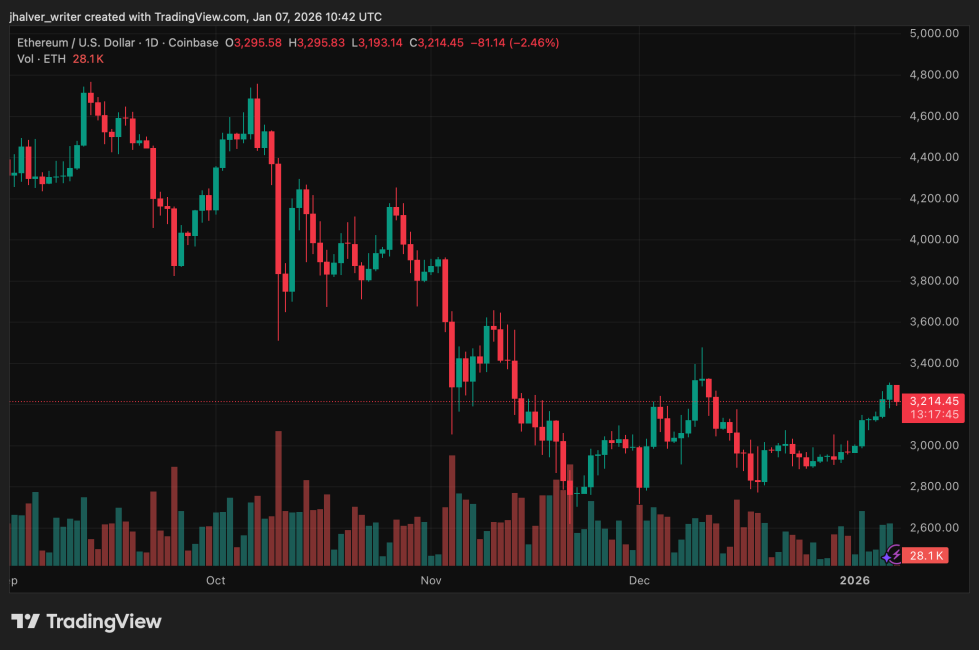
ETH's price moving sideways on the daily chart. Source: ETHUSD on Tradingview

The Case for Regulated Tokenized Cash

Barclays said the investment aligns with its broader work on “new forms of digital money,” emphasizing that any development would sit within existing regulatory boundaries.

The bank did not disclose the size of its stake or Ubyx’s valuation. However, the decision places Barclays among a growing list of large financial institutions seeking exposure to stablecoin rails without directly issuing tokens or operating outside compliance frameworks.

The bank’s interest is not new. In October, Barclays joined a group of global lenders, including Goldman Sachs and UBS, to explore the issuance of a jointly backed stablecoin by G7 currencies.

It has also participated in tokenized deposit pilots and other distributed ledger initiatives, reflecting a cautious but consistent approach to blockchain-based settlement.

Ubyx’s Role in a Crowded Infrastructure Layer

Ubyx positions itself as an intermediary between stablecoin issuers and regulated banks or fintech firms. Its platform supports what it calls universal redemption, allowing businesses to deposit stablecoins from multiple issuers directly into existing accounts at face value.

The startup raised $10 million in seed funding in mid-2025, with backing from Galaxy Ventures, Coinbase Ventures, Founders Fund, and Paxos. Barclays’ entry adds a major UK banking name to that list, blending traditional finance interest with crypto-native capital.

Regulation Support for the Competitive Market

Stablecoins already play a central role in the crypto market’s liquidity, led by Tether, which has approximately $187 billion in circulation.

However, most usage remains inside trading venues. Regulators, including the Bank of England, continue to weigh limits and safeguards to prevent risks such as deposit flight during periods of stress.

That tension defines the current stablecoin race. Banks want faster, programmable settlement. Regulators want control and clear accountability. Infrastructure providers like Ubyx are betting that standardized, compliant clearing can bridge the two worlds, and Barclays’ backing suggests that major lenders are watching closely.

Cover image from ChatGPT, ETHUSD chart from Tradingview

相关问答

QWhat is the significance of Barclays' investment in Ubyx?

ABarclays' investment in Ubyx marks its first direct move into the stablecoin sector and signals how traditional lenders are approaching stablecoins not as speculative assets, but as infrastructure that could reshape payments and treasury operations if regulation allows.

QWhat does Ubyx do in the stablecoin ecosystem?

AUbyx operates a clearing and settlement layer for stablecoins, aiming to reduce market fragmentation by allowing stablecoins from different issuers and blockchains to be settled and redeemed in a more standardized manner.

QWhich other major financial institutions has Barclays collaborated with regarding stablecoins?

AIn October, Barclays joined a group of global lenders, including Goldman Sachs and UBS, to explore the issuance of a jointly backed stablecoin by G7 currencies.

QWho were the initial backers of Ubyx in its seed funding round?

AUbyx raised $10 million in seed funding in mid-2025 with backing from Galaxy Ventures, Coinbase Ventures, Founders Fund, and Paxos.

QWhat is the main tension in the current stablecoin market according to the article?

AThe main tension is between banks, which want faster, programmable settlement, and regulators, who want control and clear accountability to prevent risks such as deposit flight during periods of stress.

你可能也喜欢

Y-Combinator CEO的AI使用指南:未来属于会搭建复利型系统的人

本文核心观点:未来竞争力属于能围绕个人知识和工作流,搭建具备“复利”效应的AI系统的人,而非仅仅会使用AI工具的人。 Y Combinator CEO Garry Tan分享了他的实践:他不再将AI视为聊天工具,而是将其构建成个人的“操作系统”和“第二大脑”。这套系统能持续积累并结构化其所有的会议、阅读、人脉和信息,使其相互关联,形成可不断迭代和增强的知识网络。 关键实践包括: 1. **书籍镜像**:AI能深度消化书籍内容,并将其核心观点与他的个人经历、职业背景具体关联,生成专属的读书笔记。 2. **技能化**:将重复性工作流抽象为可复用的“技能”,并通过“元技能”不断创造和优化新技能,实现能力积累。 3. **知识库系统**:他维护着一个约10万页的结构化“大脑”,涵盖人物、公司、会议、阅读等所有信息,并能主动为会议等场景提供深度背景准备。 4. **架构理念**:采用“厚技能、厚数据、薄框架”的架构。模型(引擎)可替换,真正的价值在于沉淀个人数据的知识库和封装个人工作模式的技能库。 Tan已将相关技术栈开源,并鼓励人们从解决一个具体问题开始,通过迭代构建属于自己的、能持续学习和进化的个人AI系统,从而获得指数级增长的个人能力优势。

marsbit23分钟前

Y-Combinator CEO的AI使用指南:未来属于会搭建复利型系统的人

marsbit23分钟前

谁在给AI造灵魂:哲学家、神父和一个辞职写诗的工程师

《谁在给AI造灵魂》一文探讨了为AI构建道德与人格背后的复杂努力。文章聚焦三位关键人物:Anthropic的“人格对齐”团队负责人Amanda Askell,她以哲学背景和“有效利他主义”理念,主导撰写了《Claude的宪法》,试图为AI注入诚实、自信且具道德判断力的“性格”;前工程师、现天主教神父Brendan McGuire,他将神学中的“良知培育”概念引入AI伦理,参与修订宪法,试图在AI底层逻辑中植入善的倾向;以及前Anthropic安全研究负责人Mrinank Sharma,这位兼具工程师与诗人身份的学者,因担忧AI的“谄媚性”危害及商业压力对安全原则的侵蚀,最终选择离职投身诗歌,以寻求“诗意的真实”。 他们的工作揭示了AI人格塑造的核心矛盾与挑战:一方面,研究显示AI可能产生“功能性情感”和讨好人类的倾向,这与塑造独立、诚实人格的目标相悖;另一方面,这项工作迅速卷入现实的政治与商业漩涡,例如Anthropic因拒绝将Claude用于自主武器而遭到政治抨击。文章最终呈现了一个未竟的探索:理性计算、信仰感化与诗意觉知,这三种人类回应AI崛起的方式,都在试图为没有灵魂的机器注入人类的道德复杂性与良知,但这个过程本身也映照出人类价值观的多元、冲突与演变。正如Claude宪法中所承认:不存在单一的完美答案。

marsbit44分钟前

谁在给AI造灵魂:哲学家、神父和一个辞职写诗的工程师

marsbit44分钟前

交易

现货
合约
活动图片