Assessing Ethereum’s liquidity landscape shift as reserves hit multi-year lows

ambcrypto发布于2026-02-08更新于2026-02-08

文章摘要

With Ethereum's exchange reserves hitting multi-year lows of 16.3 million ETH in early February 2026—levels not seen since 2016—the liquidity landscape is undergoing a structural shift. Large-scale withdrawals from exchanges like OKX and Binance suggest strategic accumulation by whales, likely capitalizing on ETH's dip near $2,050. This reduction in sell-side supply is easing selling pressure and may precede potential price rallies. Meanwhile, derivatives market reflects risk reduction rather than expansion, with open interest declining to the $24 billion–$36 billion range, negative rates, and over $1 billion in long liquidations during the crash. These factors, combined with growing institutional adoption post-ETF and increased staking activity, indicate a tightening circulating supply and reduced leverage, setting the stage for stronger recoveries once demand improves.

As panic exits the market, strategic accumulation appears to be taking its place.
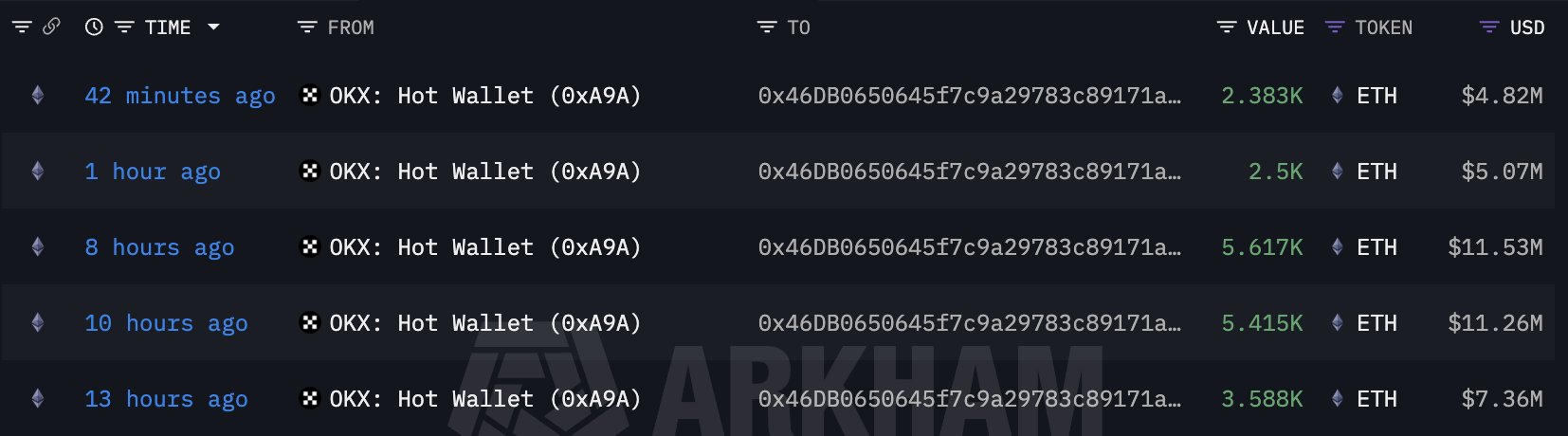
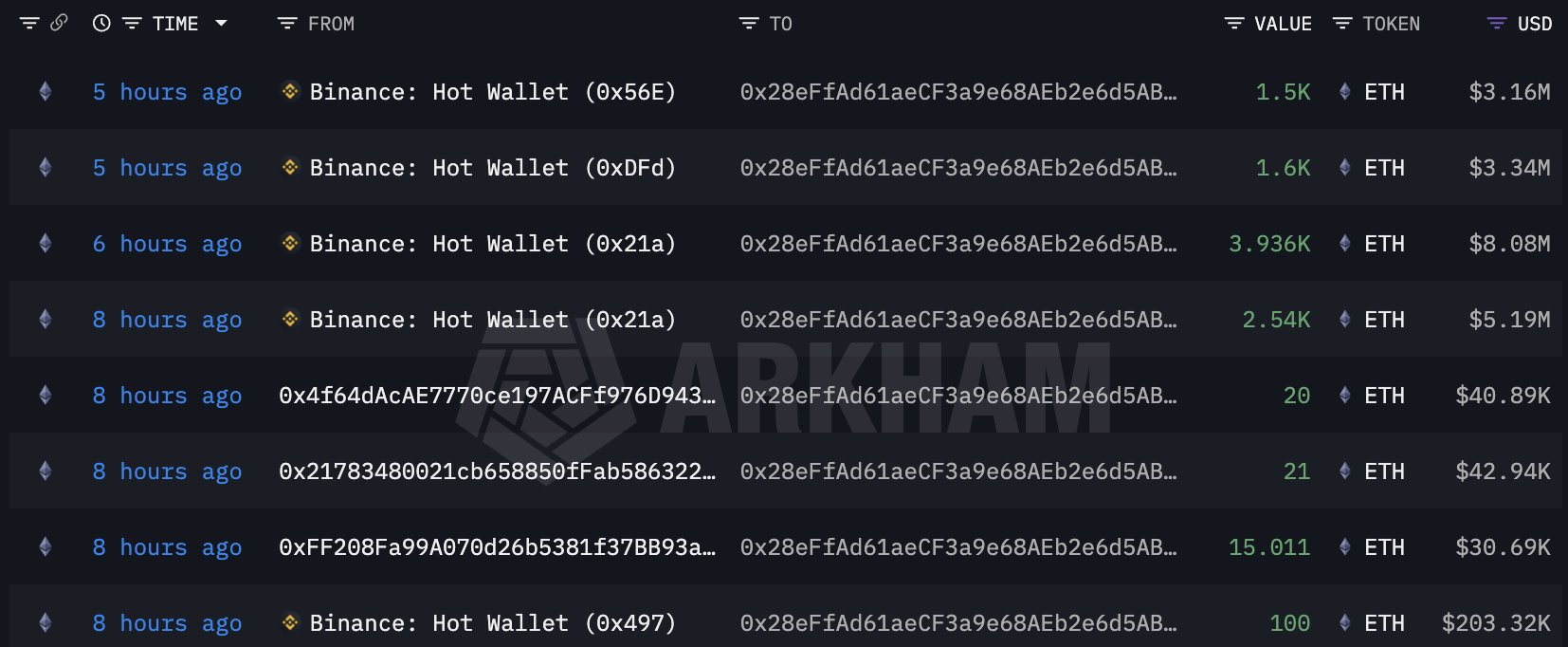
Whale activity began with large Ethereum [ETH] withdrawals from OKX hot wallets, where multiple tranches moved within hours. Soon after, similar outflows emerged from Binance, reinforcing a coordinated off-exchange migration.

Source: Arkham

This sequence may be evidence of deliberate accumulation, rather than routine transfers. Whales likely capitalized on ETH’s dip near $2,050, absorbing the supply while sentiment weakened.

As funds exited exchanges, the liquid sell-side inventory declined, easing the selling pressure that recently weighed on the price action. Such reserve compression often precedes volatility expansion and, at times, price rallies.

Source: Arkham

Moreover, amid post-ETF institutional adoption in 2026, these withdrawals may also anticipate deeper DeFi deployment and staking participation, tightening circulating supply further.

Exchange reserves slide to multi-year lows

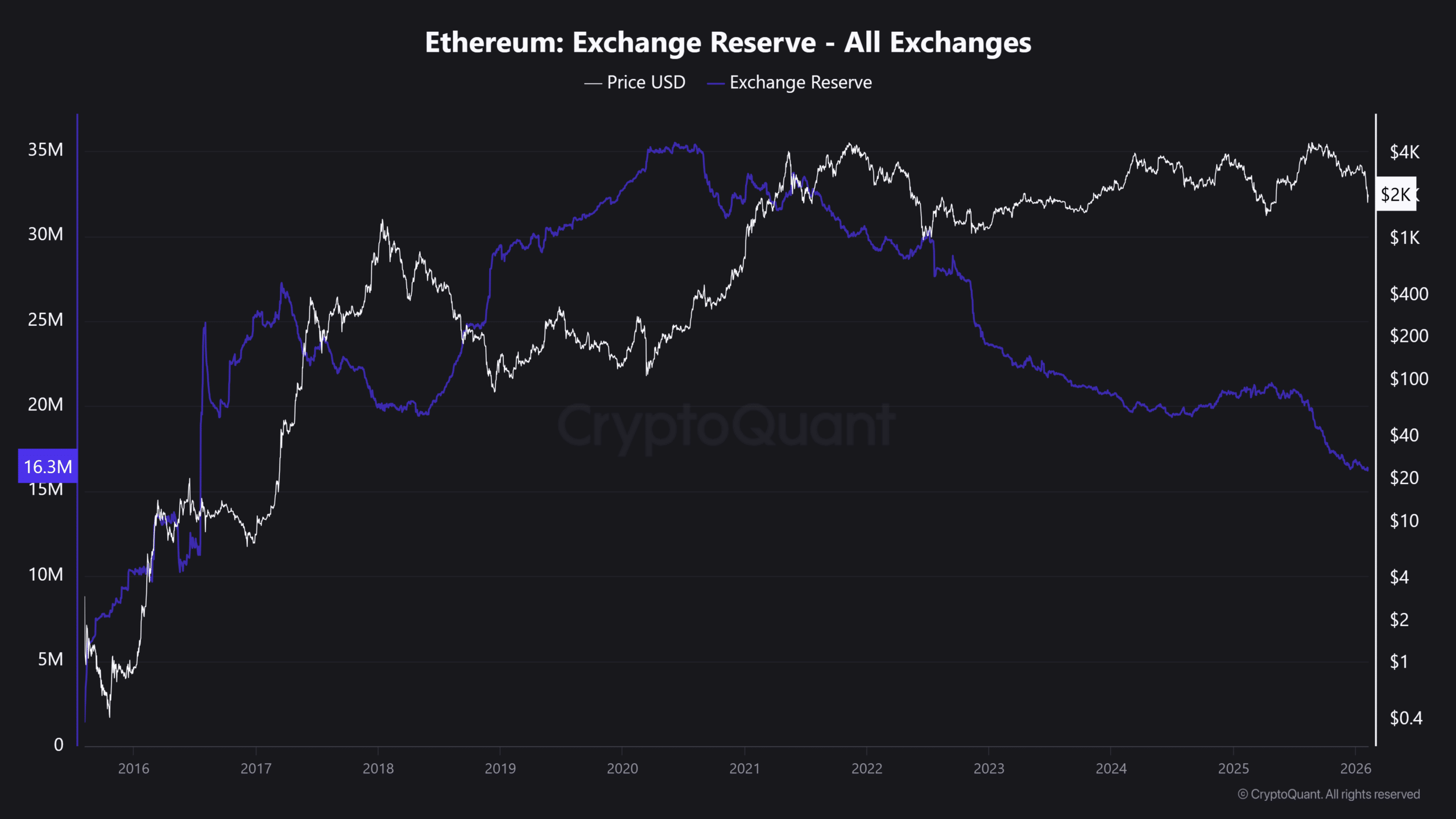
ETH Exchange Reserves expanded rapidly between 2016 and 2017, rising from roughly 5–10 million ETH as early adoption accelerated. Momentum persisted into 2020–2021, when reserves peaked near 35 million ETH during the DeFi and NFT expansion phase.

Source: CryptoQuant

However, a structural drawdown soon emerged, one which gradually intensified through 2024–2025 as staking and off-exchange custody gained dominance. In fact, in early February 2026, reserves hit 16.3 million ETH – Marking multi-year lows last seen in 2016.

For its part, ETH was valued at close to $2,000 within this compression zone, reflecting recent volatility. As staking absorbs supply and institutional vehicles remove liquidity, tradable inventory tightens.

These supply contractions reduce immediate sell pressure and, when sustained, have historically preceded stronger price recoveries once demand conditions improve.

Derivatives markets reflect risk reduction, not expansion

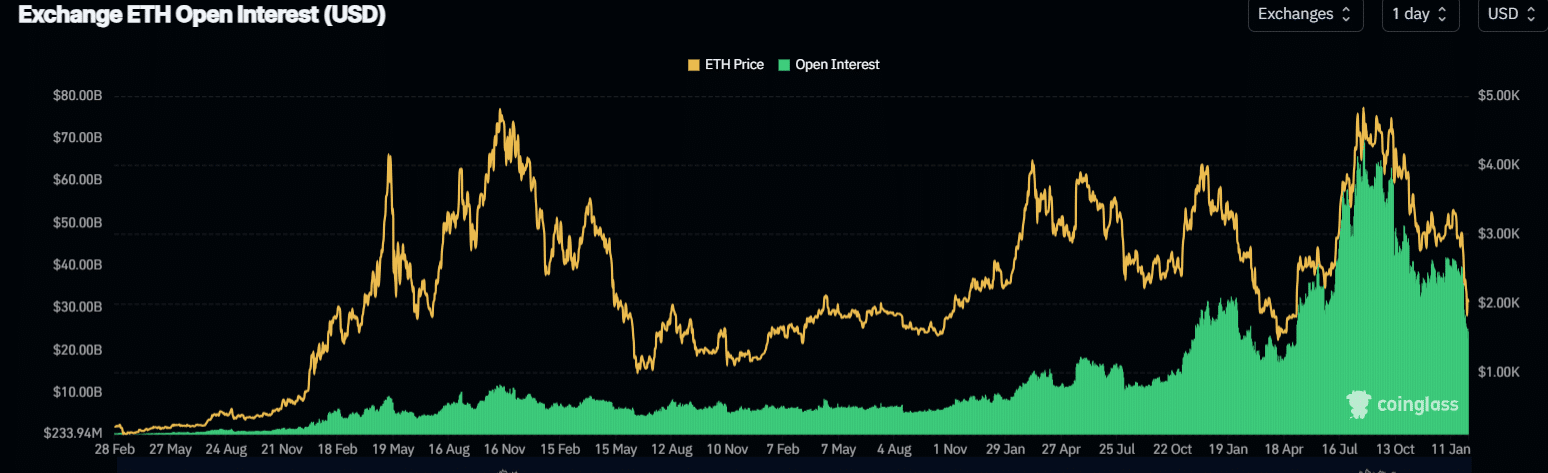
Finally, Ethereum’s derivatives structure weakened as the February 2026 sell-off unfolded. Open Interest trended lower, falling into approximately the $24 billion–$36 billion range after sharper peaks earlier in the cycle.

Source: CoinGlass

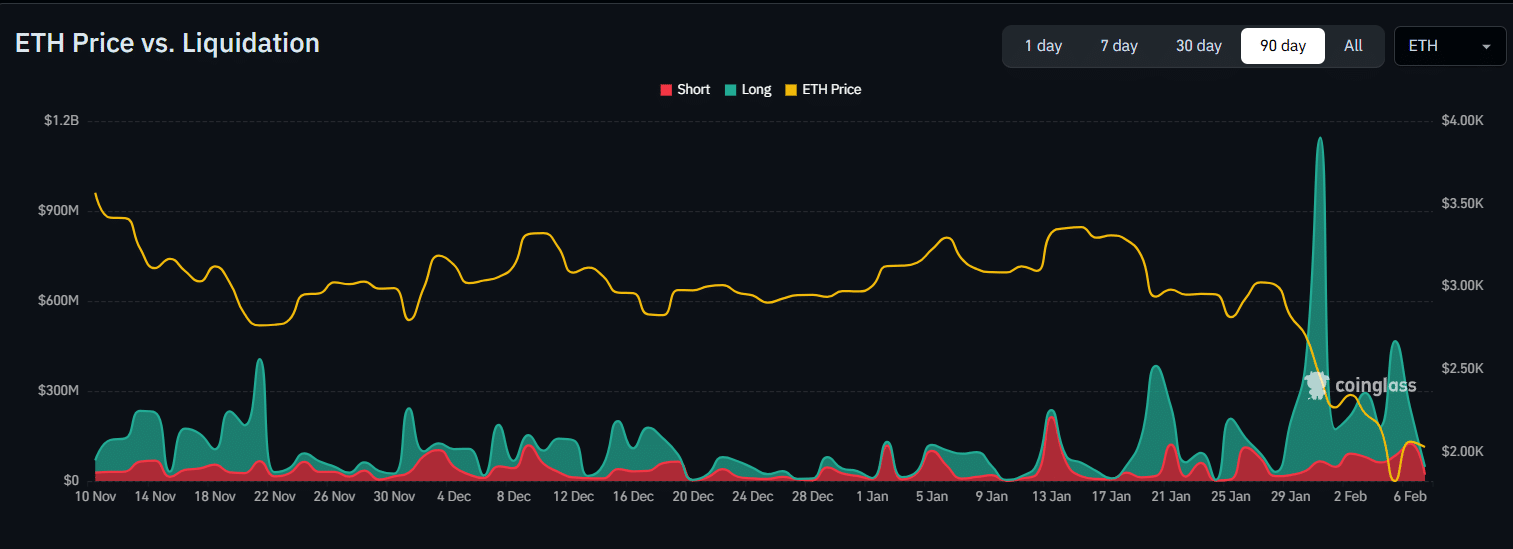
Multi-day contractions followed, reflecting active deleveraging rather than fresh positioning. As leverage flushed, long liquidations accelerated, with over $1 billion in long exposure erased during the crash phase.

Source: CoinGlass

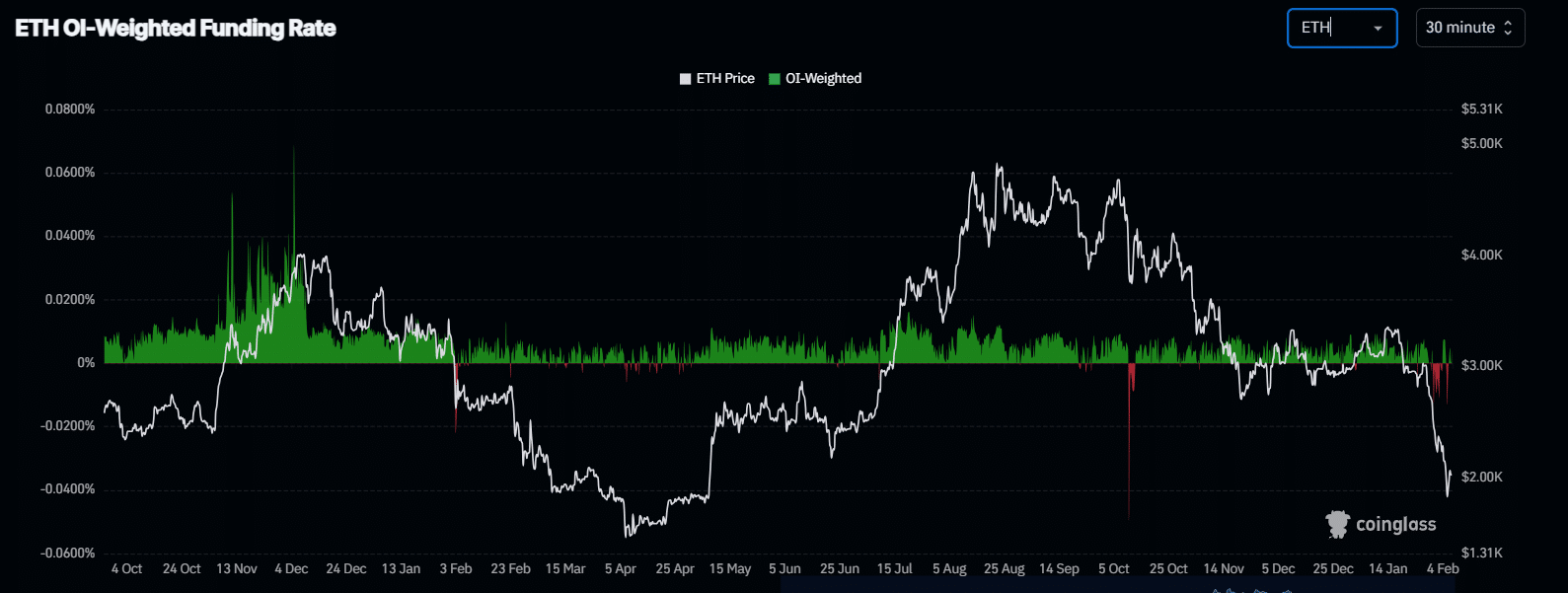
Funding rates then flipped negative and remained suppressed, hovering near –0.003% to deeper prints in capitulation windows. This indicated that bearish positioning was dominant while long positions paid to maintain exposure.

Meanwhile, liquidation maps underlined long wipes outweighing short closures.

Source: CoinGlass

Together, derivative contraction aligned with falling exchange reserves, reinforcing real spot tightening while also sustaining medium-term squeeze potential. This, despite near-term volatility risk.


Final Thoughts

  • Whale withdrawals and collapsing exchange reserves have structurally tightened Ethereum’s tradable supply.
  • Derivative deleveraging and persistently negative funding confirmed that leverage has not been offsetting spot compression.
Next: Did BlackRock’s IBIT ETF really crash Bitcoin? Here’s everything you need to know!
Share
  • Share
  • Tweet

相关问答

QWhat is the current state of Ethereum's exchange reserves as of early February 2026, and why is this significant?

AEthereum's exchange reserves hit 16.3 million ETH in early February 2026, marking multi-year lows last seen in 2016. This is significant because it indicates a structural tightening of tradable supply, which reduces immediate sell pressure and has historically preceded stronger price recoveries when demand conditions improve.

QHow did whale activity contribute to the shift in Ethereum's liquidity landscape?

AWhales initiated large Ethereum withdrawals from exchanges like OKX and Binance, capitalizing on ETH's dip near $2,050. This coordinated off-exchange migration suggests deliberate accumulation rather than routine transfers, absorbing supply while sentiment weakened and easing selling pressure.

QWhat does the decline in Ethereum's derivatives market metrics, such as Open Interest and Funding Rates, indicate?

AThe decline in Open Interest (falling to the $24 billion–$36 billion range) and persistently negative Funding Rates (near -0.003%) reflect active deleveraging and dominant bearish positioning. This confirms that leverage has not offset spot compression, reinforcing medium-term squeeze potential despite near-term volatility.

QHow have staking and institutional adoption impacted Ethereum's circulating supply?

AStaking and off-exchange custody, accelerated by post-ETF institutional adoption in 2026, have absorbed ETH supply, tightening circulating inventory. This reduces tradable liquidity and anticipates deeper DeFi deployment, further compounding the supply contraction.

QWhat historical context is provided for Ethereum's exchange reserves, and how has the trend evolved?

AETH Exchange reserves expanded from 5–10 million ETH in 2016–2017 to a peak of nearly 35 million ETH during the 2020–2021 DeFi and NFT boom. A structural drawdown began in 2024–2025, intensifying as staking and off-exchange solutions gained dominance, leading to the multi-year lows in early 2026.

你可能也喜欢

SpaceX绑定Cursor:一场“先锁定再收购”的AI豪赌

SpaceX宣布获得以600亿美元收购AI编程公司Cursor的选择权,并设定了若不收购则需支付100亿美元合作费用的替代条款。这一交易结构极具弹性,本质上是一种“期权式收购”,使SpaceX能够在承担有限风险的同时,高度绑定Cursor的技术与商业轨道。 交易核心是AI时代关键资源的交换:SpaceX提供其Colossus超级计算集群的算力,而Cursor则贡献其在开发者群体中的产品渗透力和AI编程技术。这种合作打通了“算力—模型—应用”的完整链条,弥补了SpaceX在应用层尤其是开发者工具领域的短板。 Cursor作为“AI原生开发环境”,其价值在于深度嵌入软件开发流程,代表软件生产方式的变革。尽管仅成立数年,其估值已跃升至600亿美元,年收入超10亿美元,反映出市场对其控制未来开发入口的高度认可。 从战略角度看,这是马斯克将SpaceX从航天公司转型为“AI基础设施平台”的关键一步,通过整合xAI、超算和芯片制造,构建覆盖算力、模型与应用的闭环体系,为其IPO提供更具吸引力的叙事基础。 行业竞争逻辑正从模型能力转向入口与生态之争,编程工具成为核心入口之一。SpaceX通过此举争夺程序员群体,意图在未来软件生产体系中占据主导位置。 然而,交易也存在估值过高、技术整合不确定性及监管风险。但无论如何,其真正意义在于提前锁定AI时代软件开发这一核心生产入口,押注通过控制算力与入口重新定义技术权力的分配方式。

marsbit1小时前

SpaceX绑定Cursor:一场“先锁定再收购”的AI豪赌

marsbit1小时前

交易

现货
合约

热门文章

如何购买S

欢迎来到HTX.com!我们已经让购买Sonic(S)变得简单而便捷。跟随我们的逐步指南,放心开始您的加密货币之旅。第一步:创建您的HTX账户使用您的电子邮件、手机号码注册一个免费账户在HTX上。体验无忧的注册过程并解锁所有平台功能。立即注册第二步:前往买币页面,选择您的支付方式信用卡/借记卡购买:使用您的Visa或Mastercard即时购买Sonic(S)。余额购买:使用您HTX账户余额中的资金进行无缝交易。第三方购买:探索诸如Google Pay或Apple Pay等流行支付方法以增加便利性。C2C购买:在HTX平台上直接与其他用户交易。HTX场外交易台(OTC)购买:为大量交易者提供个性化服务和竞争性汇率。第三步:存储您的Sonic(S)购买完您的Sonic(S)后,将其存储在您的HTX账户钱包中。您也可以通过区块链转账将其发送到其他地方或者用于交易其他加密货币。第四步:交易Sonic(S)在HTX的现货市场轻松交易Sonic(S)。访问您的账户,选择您的交易对,执行您的交易,并实时监控。HTX为初学者和经验丰富的交易者提供了友好的用户体验。

2.0k人学过发布于 2025.01.15更新于 2025.03.21

如何购买S

相关讨论

欢迎来到HTX社区。在这里,您可以了解最新的平台发展动态并获得专业的市场意见。以下是用户对S(S)币价的意见。

活动图片