Good morning. Here’s what’s happening:
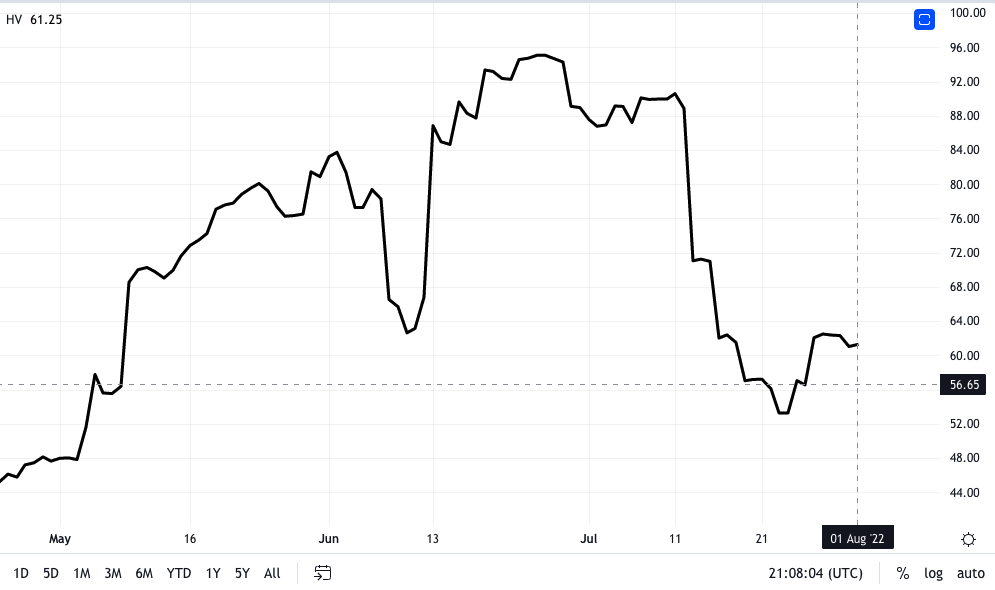
Prices: Bitcoin falls for fourth straight day as traditional markets struggle. Declining volatility in the cryptocurrency's price shows how far digital-asset markets have come since the nervy days of mid-June. (Wells Fargo's still a long-term believer, for what it's worth.)
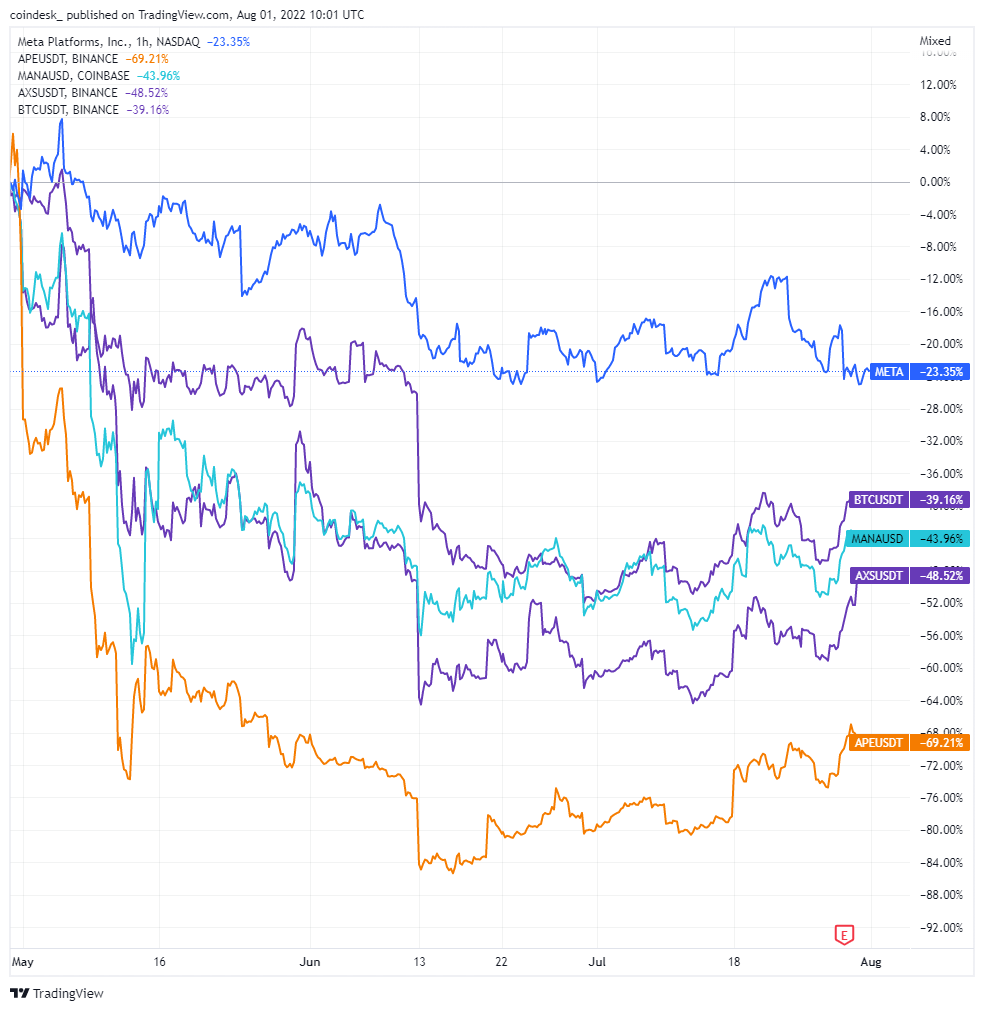
Insights: Meta's Mark Zuckerberg acknowledges that the metaverse could be a long time in the making. Metaverse-related cryptocurrencies are undergoing their own reality check, having lost $10.9 billion of their market capitalization in the second quarter.
Prices
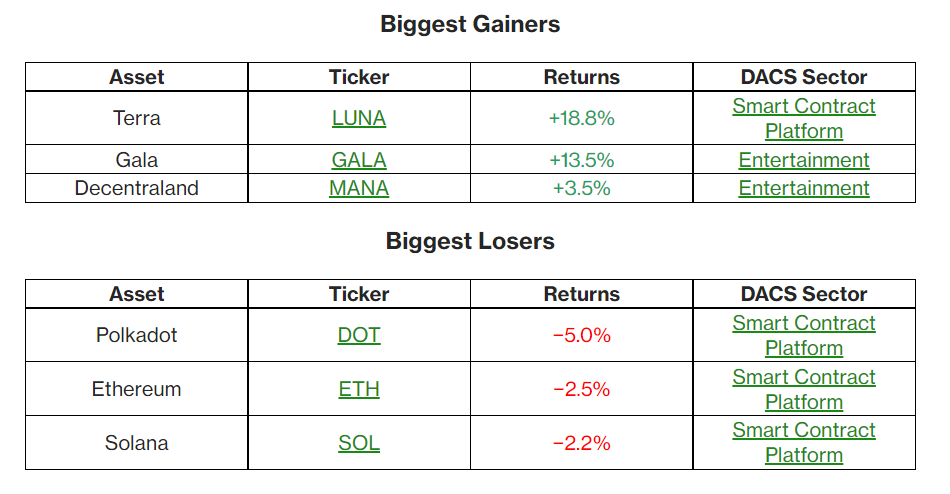
●Bitcoin (BTC): $23,179 −0.8% ●Ether (ETH): $1,630 −2.8% ●S&P 500 daily close: 4,118.63 −0.3% ●Gold: $1,770 per troy ounce +0.4% ●Ten-year Treasury yield daily close: 2.61% −0.04
Bitcoin has fallen for four straight days. But as market volatility ebbs, the price slide doesn't look like much to worry about.
By Bradley Keoun
Bitcoin (BTC) was lower for a fourth straight day, but there wasn't much to panic about because the price drops have been pretty modest by the standards of usually-volatile cryptocurrency markets: Over the four-day slide, the cumulative price drop is less than 4%.
That's pretty harmless for an asset whose price has been known to fall 16% in a single day.
The listlessness might be a sign that the Northern Hemisphere is entering the dog days of summer, during a (largely) post-pandemic stretch when many people really are taking vacations for the first time in years.
Or it might be a sign of just how little there is in the way of any firm direction in markets, torn between the angst of wondering if the U.S. economy meets the definition of a recession and if the Federal Reserve must still keep ratcheting monetary policy tighter to wring out inflation trending at its fastest in four decades.
Trading volume is light.
One sign of hope for the bulls: Despite this year's crash in crypto markets, traditional financial firms are still keenly interested in the long-term prospects: "We believe digital assets are a transformative innovation on par with the internet, cars and electricity," analysts for the U.S. bank Wells Fargo wrote on Monday. They were quick to add: "At such an early stage of investment development, many investment risks remain."
There's less carnage in the news these days and what appears to be a return to development: The crypto exchange Huobi says it's now able to operate in Australia, and July marked the strongest month of digital-asset fund inflows this year. Coinbase Prime added Ethereum staking for U.S. institutional clients.
Insights
Tens of Billions of Investor Dollars Are Flowing Away From the Metaverse
By Sam Reynolds
Investors are souring on the dream of the metaverse, regardless whether its Meta's superset of virtual reality, augmented reality and the internet – or crypto's cocktail of virtual reality, augmented reality and blockchain.
“We hope to basically get to around a billion people in the metaverse, each doing hundreds of dollars of commerce buying digital goods, digital content, different things to express themselves, so whether that’s clothing for their avatar or different digital goods for their virtual home or things to decorate their virtual conference room, utilities to be able to be more productive in virtual and augmented reality and across the metaverse overall,” is how Mark Zuckerberg described the dream on CNBC’s Mad Money with Jim Cramer.
But this vision isn’t at odds with reality. In recent earnings, Meta reported a $2.8 billion loss on its Facebook Reality Labs (FRL) division, home to the augmented and virtual reality operations.
According to 13F filings (a form institutional investors must file quarterly with the Securities and Exchange Commission) aggregated by Whale Wisdom, $21.5 billion in institutional capital flowed out of Meta during the last quarter.
The crypto metaverse isn’t doing much better. Facing a user base that seems to refuse to materialize, and intense market headwinds because of the broader crypto decline, most of the major metaverse tokens saw their market caps dip by over a third as valuations of cryptocurrencies dropped.
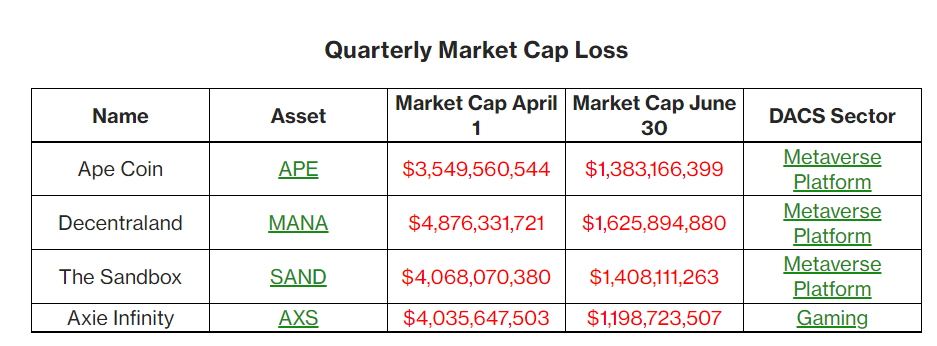
All in all, $10.9 billion departed from the metaverse majors as their market cap deflated. As of late afternoon Asia time on Aug. 1, Decentraland had 803 total online users whereas Steam, an online gaming community, had just under 20 million.
Mark Zuckerberg, Meta’s founder, admits that the current engagement ratio to profitability is a problem. Meta’s virtual world, Horizon Worlds, is said to have 300,000 sign-ups but there’s no publicly available count on active players.
“This is obviously a very expensive undertaking over the next several years,” Zuckerberg said during a recent analysts call. “But as the metaverse becomes more important in every part of how we live, I’m confident that we’re going to be glad we played an important role in building this.”
For a point of comparison, Facebook gained its first million users in less than a year at a per-user acquisition cost that’s infinitely smaller than the company’s pivot to the metaverse. Eight years later, it hit its billionth user.
Zuckerberg’s Meta, and the crypto metaverse majors are nowhere near to following this trajectory. Is this really the future of virtual interaction?