Whoever Defines Token Holds the Minting Power in the AI Era

比推Xuất bản vào 2026-03-23Cập nhật gần nhất vào 2026-03-23

Tóm tắt

The article discusses the intense debate in China over the Chinese translation of "Token," a fundamental unit in AI and computing. Previously an obscure technical term, Token has become economically significant as it is now used in cloud service billing, AI model revenue metrics, and national AI industry statistics. With China's daily Token consumption soaring, the naming contest has attracted various stakeholders. Proposals include "智元" (intelligence unit), promoted by an AI media company for brand alignment; "模元" (model unit), emphasizing model ownership; and "符元" (symbol unit), a technically accurate but less popular term. The academic translation "词元" (word unit), established in 2021, is now overlooked due to Token's newfound economic value. The author argues that naming Token is not merely a linguistic issue but a struggle for narrative control and economic influence, akin to minting currency in the AI era. The piece highlights that whoever defines Token shapes the industry's future direction and financial flows.

Author: Kuli, Shenchao TechFlow

Original Title: Token Doesn't Need a Chinese Name, But the Business Behind It Does


Recently, you may have noticed something: people have started discussing what Token should be called.

Professor Yang Bin from Tsinghua University published an article titled "It's Already Urgent to Determine the Chinese Translation for Token"; on Zhihu, related translation questions have garnered 250,000 views, with comment sections buzzing with ideas.

Over the past two to three years, the domestic AI circle has been using the term Token directly without any issue. Why the sudden need for a Chinese name?

The immediate reason might be that, after this year's Spring Festival, the general public learned for the first time that Tokens cost money.

OpenClaw turned AI from chatting to working, with tasks burning through hundreds of thousands of Tokens, and bills skyrocketing; various cloud providers have also announced price increases, with Token as the billing unit.

At the same time, Token has begun appearing in places it never did before.

At the GTC conference, NVIDIA CEO Jensen Huang mentioned that in Silicon Valley, people are already asking in interviews, "How many Tokens does this job offer?" He suggested incorporating Tokens into engineers' compensation;

OpenAI founder Sam Altman took it even further, suggesting that Tokens will replace universal basic income, with everyone receiving computing power instead of money.

Data from the National Data Bureau shows that China's daily Token consumption surged from 100 billion in early 2024 to over 40 trillion by September 2025, reaching 180 trillion this February. At the beginning of the year, the People's Daily published an article titled "A Casual Talk on Ciyuan (词元)" to explain the term to readers.
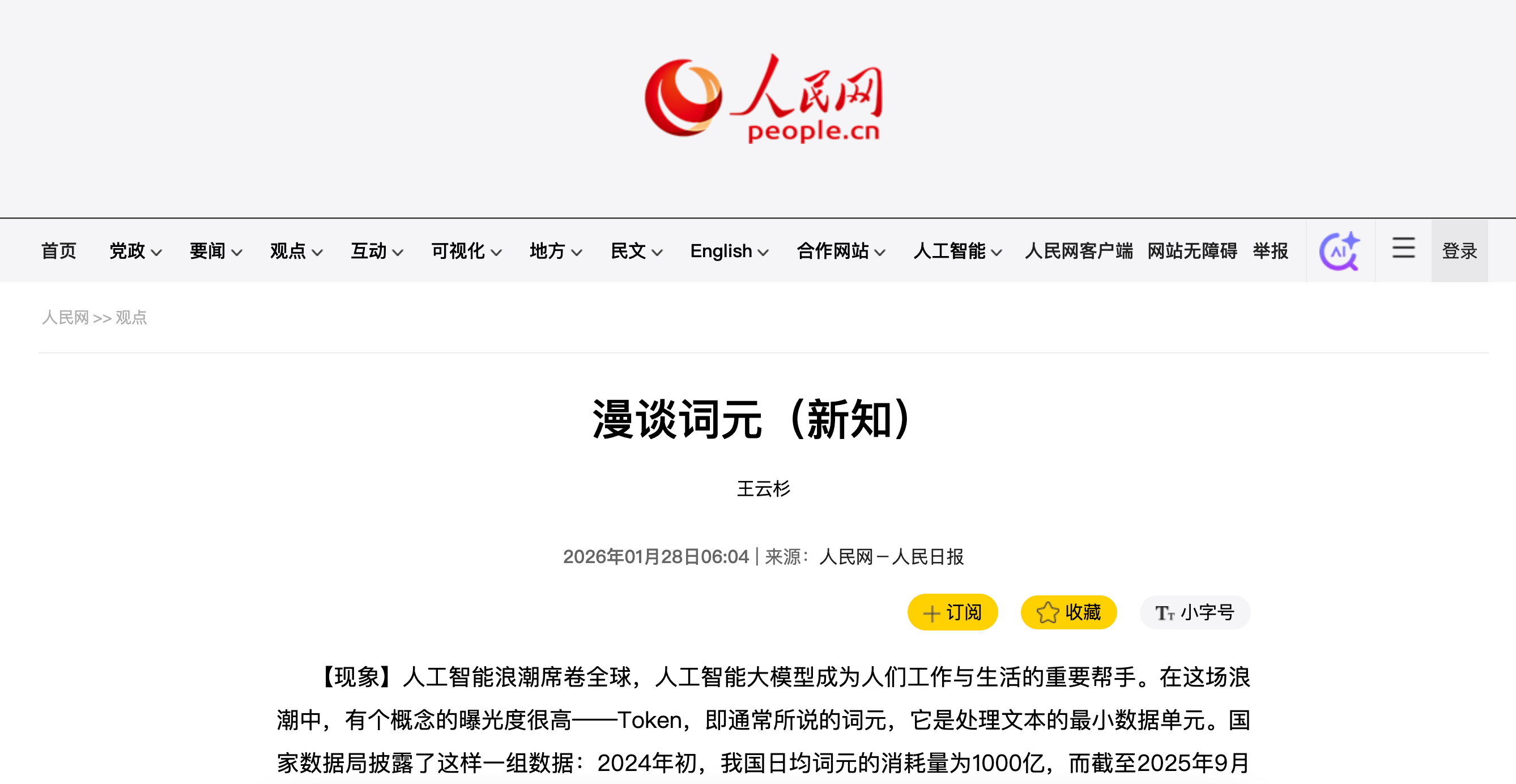
Once a technical term enters cloud service bills, compensation packages, and official statistics, it can no longer remain in English.

The question is, what to call it?

If this were merely a translation issue, there would already be an answer. In 2021, the domestic academic community settled on a name for Token: 词元 (Ciyuan).

But no one paid attention because, back then, Token was just an internal term within technical circles.

Now, it's different.

The word Token itself is a universal container. People in the crypto world call it 代币 (daibi, token), those in security call it 令牌 (lingpai, token), and those in AI call it 词元 (ciyuan, lexeme). The same English word, depending on which direction the Chinese translation leans, determines whose territory it belongs to.

Thus, a battle over naming Token has begun.

Business Needs Discourse Power

How a word is translated is usually a matter for linguists. But this time, almost no linguists are involved in the naming.

The most prominent name currently is "智元" (Zhiyuan).

It's being pushed most vigorously by an AI media outlet called "新智元" (Xin Zhiyuan). If Token's Chinese name becomes "智元", this company's brand name would coincide with the industry's fundamental term, meaning every article discussing Token would provide free advertising for them.

Their own promotional article ends candidly: "We suggest translating Token as the industry's new consensus: 智元 (Zhiyuan), leaving the '新' (Xin, new) for us."

According to the same article, Baichuan Intelligent founder Wang Xiaochuan commented: "Calling it 智元 is quite good."

As a maker of large models, it's certainly good for him if Token is called 智元. Each operation of the model would then produce not just a billing unit, but a "basic unit of intelligence."

Selling Token is selling traffic; selling 智元 is selling intelligence—a completely different valuation story.

Professor Yang Bin from Tsinghua University proposed "模元" (Moyuan), with "模" (mo) corresponding to model. Whoever owns the large model holds the production rights to "模元". Leaning the term towards models directs pricing power to the model companies.

Some advocate for "符元" (Fuyuan), returning to the most fundamental definition in computer science—Token is simply a symbol processing unit, unrelated to intelligence or models.

Technically the purest, but the proposer is an independent technical writer without corporate backing or capital push, rendering this proposal almost inaudible in the discussion.

Which direction the name leans, the industry narrative moves in that direction, and money flows accordingly.

A distant example: the day Facebook renamed itself Meta, "metaverse" transformed from a sci-fi concept into a valuation story for a company. A recent example: China consumes 180 trillion Tokens daily, ranking first globally, but what to call this term, how to define it, and who defines it remain undecided...

The world's largest consumer of Tokens hasn't even decided what to call what it consumes.

However, this term actually already had a Chinese name.

In 2021, Professor Qiu Xipeng from Fudan University's School of Computer Science translated Token as "词元" (Ciyuan). The academic community accepted it and wrote it into textbooks. No one discussed it then because Token wasn't valuable at the time.

Now, Token is valuable.

It's the billing unit for cloud services, the revenue source for large model companies, and a core metric for measuring the scale of the AI industry at the national level. So the media arrived, the big shots arrived, the professors arrived, each bringing their preferred name and the rationale behind it.

Translation was never the issue. The issue is when this term started becoming valuable.
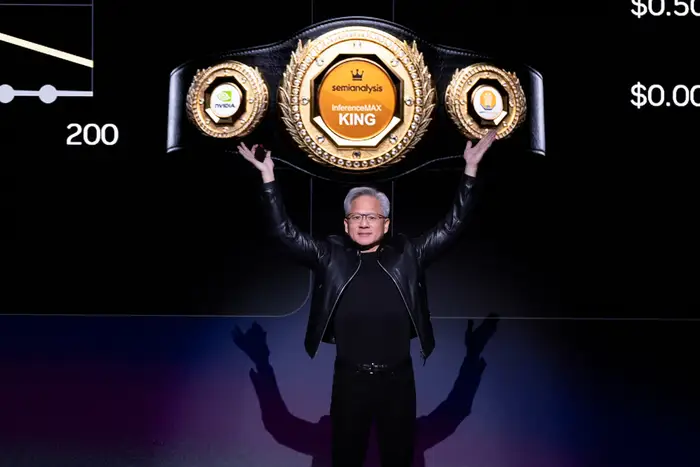
Jensen Huang didn't participate in the Chinese naming discussion at GTC. He did something simpler: held up a championship belt inscribed with "Token King" and declared that data centers are Token factories.

Whoever produces Tokens defines Tokens. He doesn't care about the name.

Token, Land Grabbing, and Minting

Therefore, the part truly worth serious thought isn't which translation is better.

After the term "calorie" was established, the entire food industry's pricing, labeling, and regulatory systems were built around it. After the definition of "流量" (liuliang, data traffic) was established in China's telecom industry, operators billed, competed, and designed packages based on it—the entire business model revolved around these two words for over a decade.

Token is now on the same path.

It's already the billing unit for cloud services, the revenue metric for large model companies, and a core indicator for measuring the AI industry at the national level. The VC circle is even discussing whether investment funds can be disbursed directly in Tokens.

Once a word becomes a measure of money, naming it is no longer translation—it's minting currency.

Call it "智元" (Zhiyuan), and the minting power goes to the AI narrative; whoever tells the story of intelligence benefits. Call it "模元" (Moyuan), and the minting power goes to the model companies; whoever has large models prints money. Call it "符元" (Fuyuan), and the minting power returns to the technology itself, but technology doesn't speak for itself.

The academic community's 2021 term "词元" (Ciyuan) was ignored not because the translation was poor, but because this "currency" wasn't valuable then.

Now it's valuable, and everyone wants to carve their name on it.


Twitter:https://twitter.com/BitpushNewsCN

Bitpush TG Discussion Group:https://t.me/BitPushCommunity

Bitpush TG Subscription: https://t.me/bitpush

Original link:https://www.bitpush.news/articles/7622494

Tiền kỹ thuật số thịnh hành

Câu hỏi Liên quan

QWhy has there been a recent push to give Token a Chinese name, according to the article?

ABecause Token has become a unit of billing for cloud services, part of compensation packages, and a core metric for national AI industry statistics, making it necessary to have a standardized Chinese term as it enters everyday economic and official use.

QWhat are some of the proposed Chinese translations for 'Token' mentioned in the article, and who supports them?

A'智元' (Zhi Yuan) is promoted by the AI media '新智元' and supported by Wang Xiaochuan of Baichuan AI; '模元' (Mo Yuan) was proposed by Professor Yang Bin of Tsinghua University; '符元' (Fu Yuan) was suggested by an independent technical writer but has little traction.

QHow does the article compare the naming of 'Token' to historical examples like 'calories' or '流量' (data流量)?

AThe article compares it to how 'calories' defined the food industry's pricing and labeling system, and how '流量' (data流量) became the central unit for telecom billing and business models, indicating that naming Token is like establishing a new monetary standard for the AI economy.

QWhat does the article suggest is the real significance behind the debate over Token's Chinese name?

AThe debate is not about translation accuracy but about 'minting currency'—whoever defines the term gains narrative control and economic influence, shaping where money flows in the AI industry, whether toward AI intelligence stories, model companies, or pure technology.

QWhat was the academic translation for Token proposed in 2021, and why did it gain little attention at the time?

AIn 2021, Professor Qiu Xipeng of Fudan University translated Token as '词元' (Ci Yuan), which was accepted in academia and textbooks. It gained little attention because Token was not yet valuable as an economic unit at that time.

Nội dung Liên quan

Với giá 100.000 đô la mỗi tháng: Truth Social bán quyền truy cập bài đăng của Trump cho các công ty đầu tư

Trump Media and Technology Group (TMTG) đã ra mắt dịch vụ Truth API từ ngày 1/8/2026. Đây là kênh dữ liệu có phí cung cấp cho các khách hàng tổ chức, chủ yếu là các công ty đầu tư và giao dịch tần suất cao, quyền truy cập thời gian thực đến các bài đăng từ những tài khoản có ảnh hưởng nhất trên nền tảng Truth Social, bao gồm cả cựu Tổng thống Donald Trump. Theo các nguồn tin, gói dịch vụ này có giá lên tới 100.000 USD một tháng, với mức giảm giá xuống 60.000 USD/tháng cho hợp đồng ba năm. TMTG tuyên bố đây là một phần trong chiến lược tạo ra nguồn thu ổn định và lợi nhuận cao từ tài sản của công ty. Tuy nhiên, sáng kiến này đã vấp phải chỉ trích từ các nhà lập pháp cả hai đảng. Các Thượng nghị sĩ Dân chủ Elizabeth Warren và Adam Schiff đã yêu cầu Ủy ban Chứng khoán Mỹ (SEC) điều tra xem liệu việc bán quyền truy cập ưu tiên đến các bài đăng của tổng thống có vi phạm luật hay không. Thượng nghị sĩ Cộng hòa Bill Cassidy cũng chỉ trích đây là hành vi bán quyền truy cập đặc quyền không thể chấp nhận được. Phân tích AI trong bài báo cảnh báo về rủi ro tiềm ẩn, so sánh với sự kiện năm 2013 khi thị trường chứng khoán sụt giảm nhanh chóng do tin tức giả mạo. Việc biến tài khoản tổng thống thành một nút tín hiệu thị trường với độ trễ mili giây có thể tạo ra mục tiêu cho tin tặc hoặc thao túng, và đặt ra câu hỏi về trách nhiệm nếu thông tin sai lệch được phát tán qua kênh này.

cryptonews.ru10 phút trước

Với giá 100.000 đô la mỗi tháng: Truth Social bán quyền truy cập bài đăng của Trump cho các công ty đầu tư

cryptonews.ru10 phút trước

Các giao dịch rút Bitcoin tiếp tục: 8 năm lưu trữ trong ví lạnh Coldcard kết thúc bằng số không

Ví phần cứng Coldcard bị xâm phạm, dẫn đến làn sóng rút tiền mới từ các thiết bị dễ bị tấn công. Theo Galaxy Research, tổng số tiền bị đánh cắp đã lên tới 1.367,05 BTC (khoảng 88,6 triệu USD). Vấn đề không nằm ở phần mềm cập nhật, mà ở seed phrase (cụm từ khôi phục) được tạo từ tháng 3/2021 do lỗi lập trình, khiến chúng dễ bị dò tìm. Lỗi này xảy ra khi thiết bị chuyển từ bộ tạo số ngẫu nhiên phần cứng sang bộ tạo phần mềm Yasmarang, được khởi tạo bằng dữ liệu có thể dự đoán được. Người dùng các model Mk2-Mk5 và Q với phiên bản phần mềm nhất định cần tạo seed phrase mới trên bản cập nhật đã sửa và chuyển tài sản sang đó để bảo vệ. Câu chuyện đau lòng của một nhà đầu tư 39 tuổi đã mất 2 BTC (130.000 USD) tích góp suốt 8 năm trong vài phút, dù áp dụng chiến lược "mua và giữ trong ví lạnh" thận trọng. Anh mua Bitcoin như một lá chắn chống siêu lạm phát và kế hoạch nghỉ hưu sớm, nhưng lỗ hổng đã phá hỏng mọi thứ. Sự việc nhấn mạnh rằng lưu trữ offline không tự động đảm bảo an toàn, và cộng đồng hy vọng nhà sản xuất có thể tìm cách khắc phục, hoàn trả tài sản cho người dùng.

cryptonews.ru1 giờ trước

Các giao dịch rút Bitcoin tiếp tục: 8 năm lưu trữ trong ví lạnh Coldcard kết thúc bằng số không

cryptonews.ru1 giờ trước

Giao dịch

Giao ngay

Bài viết Nổi bật

Làm thế nào để Mua ERA

Chào mừng bạn đến với HTX.com! Chúng tôi đã làm cho mua Caldera (ERA) trở nên đơn giản và thuận tiện. Làm theo hướng dẫn từng bước của chúng tôi để bắt đầu hành trình tiền kỹ thuật số của bạn.Bước 1: Tạo Tài khoản HTX của BạnSử dụng email hoặc số điện thoại của bạn để đăng ký tài khoản miễn phí trên HTX. Trải nghiệm hành trình đăng ký không rắc rối và mở khóa tất cả tính năng. Nhận Tài khoản của tôiBước 2: Truy cập Mua Crypto và Chọn Phương thức Thanh toán của BạnThẻ Tín dụng/Ghi nợ: Sử dụng Visa hoặc Mastercard của bạn để mua Caldera (ERA) ngay lập tức.Số dư: Sử dụng tiền từ số dư tài khoản HTX của bạn để giao dịch liền mạch.Bên thứ ba: Chúng tôi đã thêm những phương thức thanh toán phổ biến như Google Pay và Apple Pay để nâng cao sự tiện lợi.P2P: Giao dịch trực tiếp với người dùng khác trên HTX.Thị trường mua bán phi tập trung (OTC): Chúng tôi cung cấp những dịch vụ được thiết kế riêng và tỷ giá hối đoái cạnh tranh cho nhà giao dịch.Bước 3: Lưu trữ Caldera (ERA) của BạnSau khi mua Caldera (ERA), lưu trữ trong tài khoản HTX của bạn. Ngoài ra, bạn có thể gửi đi nơi khác qua chuyển khoản blockchain hoặc sử dụng để giao dịch những tiền kỹ thuật số khác.Bước 4: Giao dịch Caldera (ERA)Giao dịch Caldera (ERA) dễ dàng trên thị trường giao ngay của HTX. Chỉ cần truy cập vào tài khoản của bạn, chọn cặp giao dịch, thực hiện giao dịch và theo dõi trong thời gian thực. Chúng tôi cung cấp trải nghiệm thân thiện với người dùng cho cả người mới bắt đầu và người giao dịch dày dạn kinh nghiệm.

Tổng lượt xem 1.0kXuất bản vào 2025.07.17Cập nhật vào 2026.06.02

Làm thế nào để Mua ERA

Thảo luận

Chào mừng đến với Cộng đồng HTX. Tại đây, bạn có thể được thông báo về những phát triển nền tảng mới nhất và có quyền truy cập vào thông tin chuyên sâu về thị trường. Ý kiến ​​của người dùng về giá của ERA (ERA) được trình bày dưới đây.

活动图片













