Last week, the core feature of the U.S. macroeconomic environment was the landing of inflation data and the market recalibrating interest rate cut expectations. The inflation-related data released during the week was generally moderate, showing no significant rebound, but service components and wage-related sub-items still exhibited some stickiness, making the path of inflation decline "slow and uneven."
Looking ahead, the market's focus will shift further from "whether to cut rates" to whether the pace of rate cuts will be pushed back. Against the backdrop of inflation not yet quickly returning to target and employment only cooling moderately, the Federal Reserve is highly likely to maintain a wait-and-see approach in the short term, awaiting more data to confirm whether the economic slowdown is sustainable.
2. Crypto Industry Market Movements and Warnings
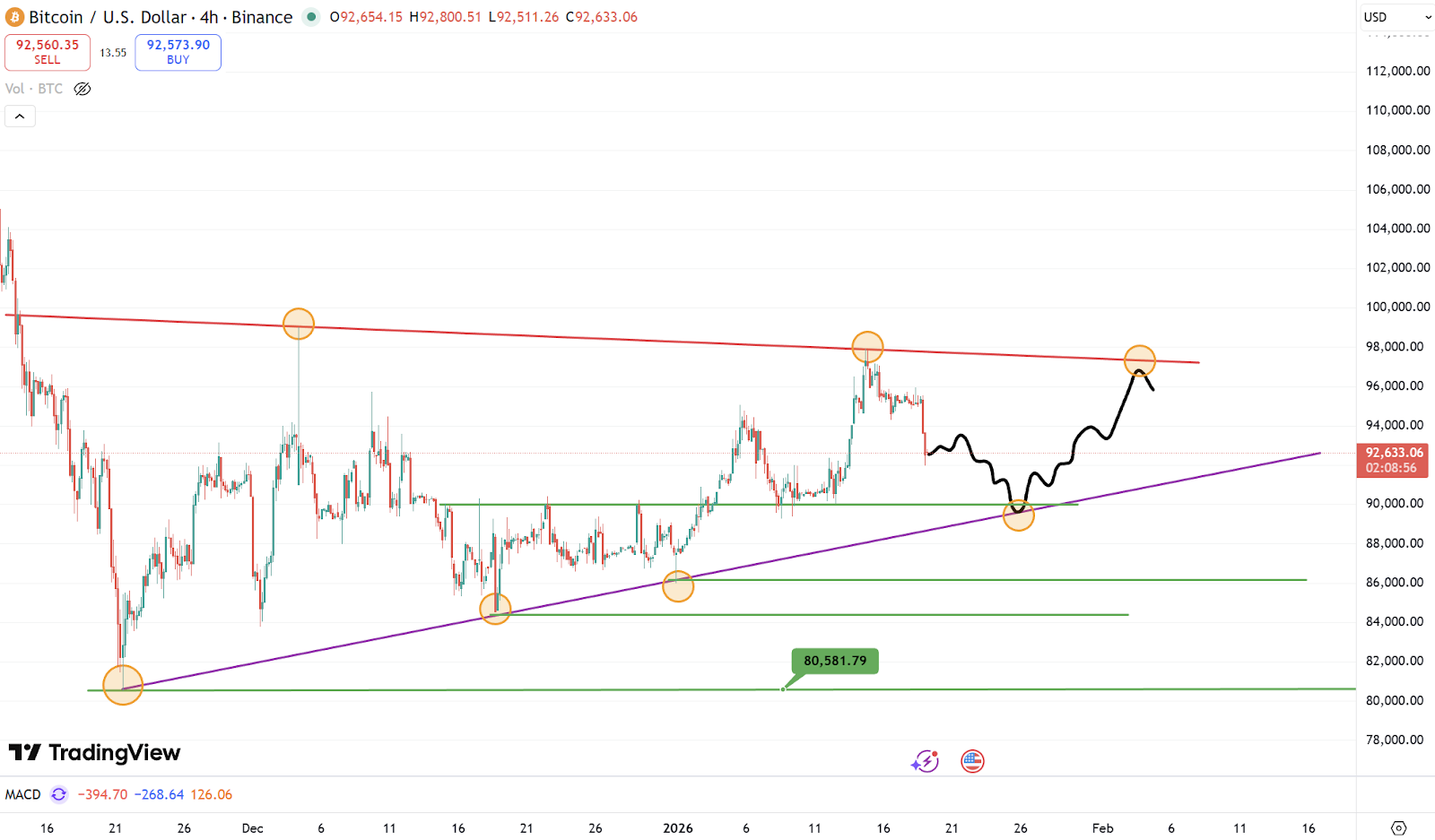
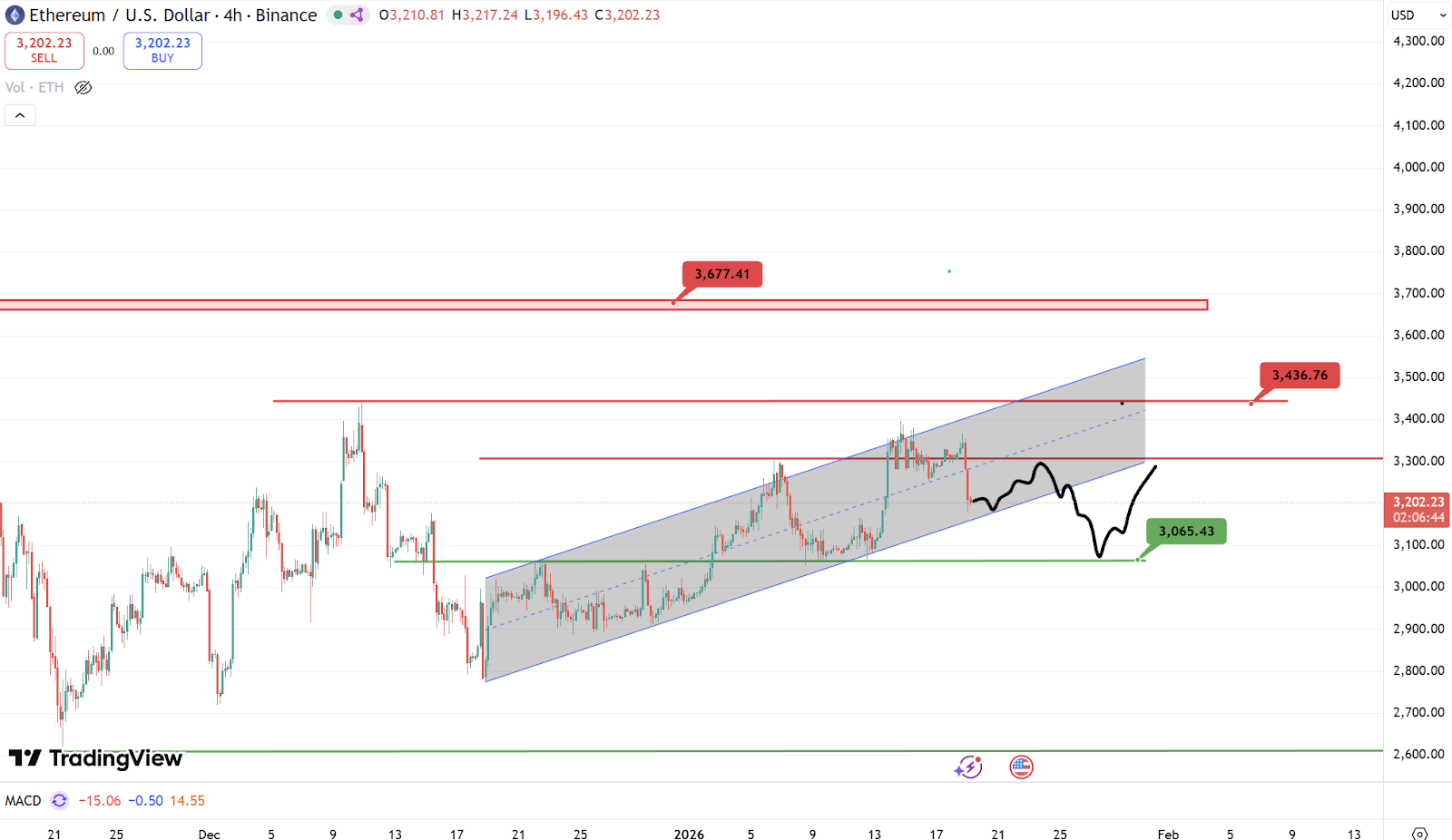
Last week, the core feature of the cryptocurrency market was a noticeable weakening after repeated failures at key resistance levels. Bitcoin attempted to break through multiple times but consistently failed to effectively surpass and hold above these levels. Sustained concentrated selling pressure above eventually triggered a price pullback, pushing it back into the previous consolidation range. The decline was accompanied by increased trading volume, indicating not just a simple low-volume retracement but active position reduction by funds at resistance levels. Major altcoins were under pressure overall, with more pronounced declines in smaller altcoins, especially previously high-flying MEME coins and high-volatility sectors, which were the first to retreat after failing at resistance, leading to a rapid cooling of market risk appetite.
From a risk perspective, this failure at resistance levels reinforces the judgment of a "rebound rather than a reversal." As long as Bitcoin cannot effectively break through and consolidate above the key $100,000 level, the market may maintain a weak, oscillating structure, or even continue to test lower support ranges. Coupled with the ongoing macroeconomic data verification period, if liquidity expectations turn unfavorable, further attempts near resistance levels could again become triggers for selling. Overall, the crypto market remains in a defensive phase below resistance levels in the short term, and caution is needed against the dual consumption of sentiment and price caused by repeated failures.
3. Industry and Sector Highlights
Total funding of $159.3 million, led by A16z and Paradigm, with Hashkey participating — Aztec, an Ethereum programmable privacy Layer 2 based on zero-knowledge proofs, is an Ethereum Layer 2 network focused on privacy; Total funding of $2.2 million, led by Robot Ventures, with Solana participating — Asgard, which uses on-chain credit to unlock DeFi capital efficiency, aims to become the "Credit Layer" for Solana DeFi.
II. Hot Market Sectors and Promising Projects of the Week
1. Promising Project Overview
1.1 Analysis of Aztec: Total Funding $159.3M, Led by A16z and Paradigm, Hashkey Participating — Ethereum Programmable Privacy Layer 2 Based on Zero-Knowledge Proofs
IntroductionAztec is an Ethereum Layer 2 network with privacy at its core, combining zero-knowledge Rollups with programmable privacy to enable encrypted smart contracts. It allows developers to build applications that are private by default, keeping data — including balances, transactions, and business logic — private while still inheriting Ethereum's security.
Aztec employs a hybrid execution model, supporting both public and private functions within the same contract, unlocking numerous use cases such as private DeFi, confidential payments, secure identity processes, and compliance-friendly private applications. Its innovative zk architecture enables end-to-end encryption while significantly reducing Gas costs, providing infrastructure-level support for the scalable adoption of privacy applications.
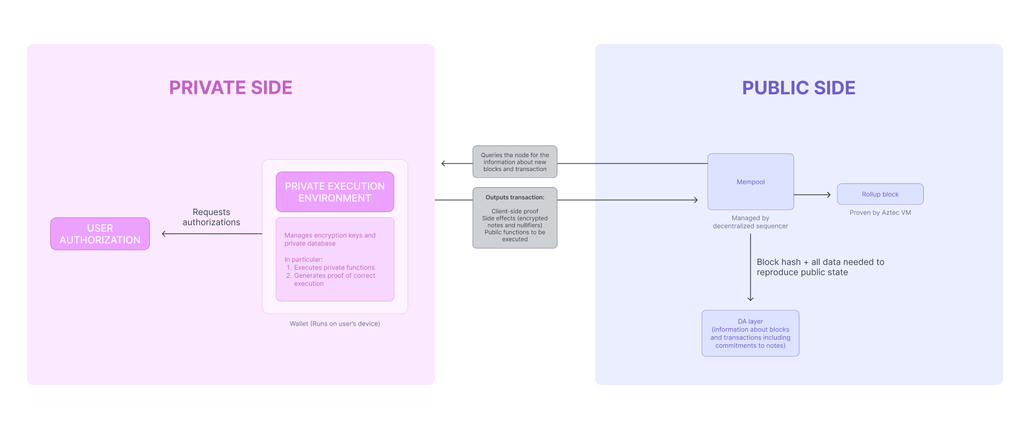
Core Mechanism Overview
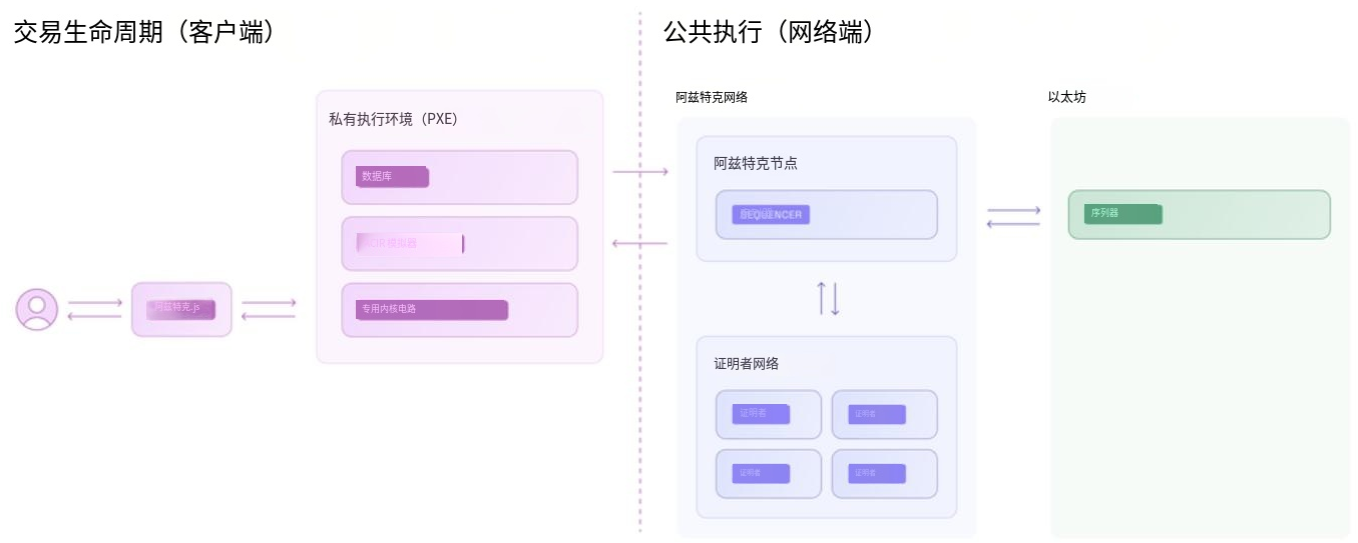
Aztec adopts a "private first, public finalization" dual-execution environment architecture: private computation is completed locally on the user's device generating zero-knowledge proofs, public computation is executed by network nodes, and everything is finally batched and verified on Ethereum.
1. Aztec Transaction Flow (From User to Ethereum)
- User initiates transaction via aztec.jsSimilar to web3.js/ethers.js, but supports both private and public logic.
- Private function executed locally (PXE)
- Completed on the user's device
- Local generation of zero-knowledge proofs
- Private data never leaves the device
- Does not expose private data
- Only verifies "you computed correctly"
- Handles public state
- Can execute DeFi, settlement, bridging, etc.
- Includes state changes
- Includes zk proofs
- Ethereum only verifies, doesn't see private content
- Execution Location: User device (browser / local node)
- Execution Content:
- Private functions
- Private state updates
- Zero-knowledge proof generation
- Managed Content:
- User keys
- Private assets (Notes)
- Nullifier (prevents double-spending)
- Private data is never uploaded
- No issue of "nodes snooping on transactions"
- True end-to-end encrypted execution
- Poorly written private logic can be "expensive to prove"
- High demands on developers (Noir optimization is crucial)
- Execution Location: Aztec node network
- Similar to: EVM
- Execution Content: Public functions
- Public state changes
- Rollup packaging
- Private function → Can call public function
- Public function → Cannot call private function
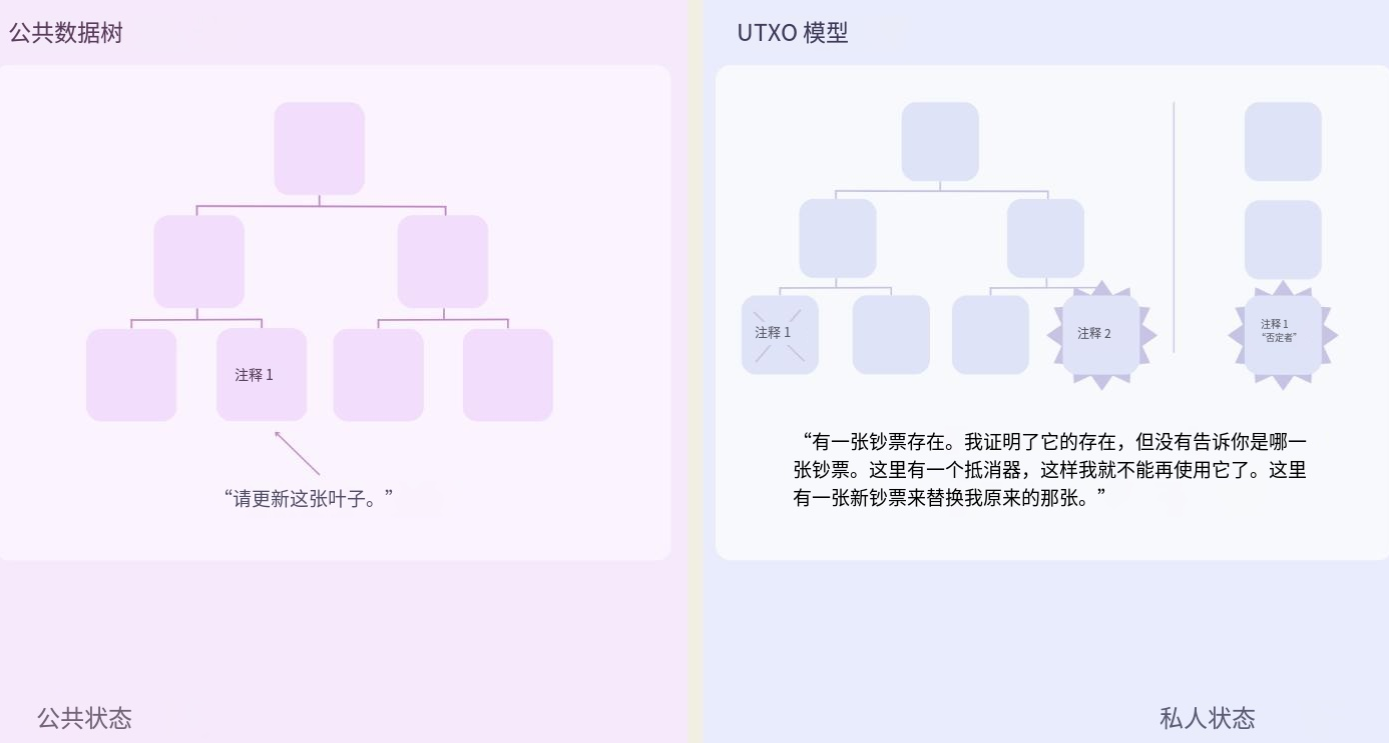
- Data Form: Notes (similar to UTXO)
- Storage Structure:
- Note Tree (append-only)
- Nullifier Tree (spent标记)
- Operation Method:
- Create commitment
- Generate nullifier when spent
- Characteristics: Strong privacy, not directly queryable, more like "encrypted asset凭证"
- Similar to Ethereum: Direct read/write, stored in Public Data Tree
- Characteristics: High composability, easy DeFi integration, no privacy protection
- Every account is a smart contract
- Customizable: Signature logic, Nonce management, Gas payment methods, Multi-sig / social recovery
- No "default EOA private key"
- Each account has 3 sets of keys: Nullifier Key (prevents double-spending), Incoming Viewing Key (for receiving assets), Outgoing Viewing Key (user can view outgoing records)
- Implementation: Others can't see you, you can still keep accounts, compliance allows selective disclosure
- Zero-knowledge specific DSL
- Used to write: Private contracts, zk circuits
- Characteristics: Provable by default, strongly typed, designed for privacy
- Recursive Deposits (Looping): Collateralize asset → Borrow another asset → Swap back to original collateral asset → Collateralize again and repeat; Problem: Cumbersome operation, high slippage, large fees, extremely inefficient manual execution.
- Flash Loans: Borrow precisely calculated temporary funds in one go → Complete collateralization, borrowing, re-collateralization in a single atomic transaction → Use borrowed funds to instantly repay the flash loan; Advantage: One-click completion, efficient, low slippage, low friction.
- Appears as low-collateral / quasi-uncollateralized
- Technically always remains over-collateralized
- Ultimate control of assets remains with the protocol
- Provides leverage and financing to clients
- Executes trades on behalf of clients
- Strictly限制资金用途 and risk exposure
- The protocol doesn't directly send money to the user's wallet
- Instead, it places it into a restricted on-chain account
- All operations are executed within clear rule boundaries.
- Security through code, not trust: Cannot maliciously run away (code doesn't allow it)
- Cannot arbitrarily transfer funds out
- Can only execute permitted operations
- The protocol始终可控
- Users still have high strategic freedom
- Risks are limited to calculable, manageable ranges.
- Credit Accounts (Credit Accounts): Restricted smart contract wallets, hold both user collateral and borrowed funds, prohibit arbitrary withdrawals or transfers to external wallets.
- Whitelisted Protocols (Whitelisted Protocols): Only allow interaction with精选 DeFi protocols and assets, balance yield opportunities with risk control.
- Risk Assessment Engine (Risk Assessment Engine): Real-time assessment of asset risk and strategy risk, dynamically adjust available leverage and position boundaries.
- Liquidation Mechanisms (Liquidation Mechanisms): Automated liquidation process, ensure the protocol perspective is always "over-collateralized," even if users experience "quasi-uncollateralized"体验.
- Nativizes TradFi's Prime Brokerage
- Safely releases higher leverage in DeFi
- Lays the foundation for a true on-chain credit market
- Initiates quote and path requests to the LI.FI API
- After user confirmation, the dApp initiates the on-chain transaction
- Requests quotes from multiple Bridges, DEXs, Solvers
- Compares price, fees, security
- Returns the optimal transaction path to the dApp
- Receives transactions submitted by dApps
- Distributes transactions to corresponding modules (Facets) based on the path
- Uses Diamond structure for easy extensibility and upgrades
- Bridge Facet: Interfaces with cross-chain bridges
- DEX Facet: Interfaces with single-chain DEXs
- Solver Facet: Interfaces with market makers / advanced liquidity
- User initiates request: Requests a cross-chain or single-chain swap in the dApp
- Path calculation: LI.FI API aggregates quotes from multiple sources and selects the optimal path
- Submit transaction: After user confirmation, the transaction is sent to the Diamond contract
- On-chain execution: Diamond → Corresponding Facet → Actual liquidity protocol
- Assets received: Transaction completed, assets returned to the user
- Single entry, multi-module execution: All user interactions enter the LI.FI Diamond contract
- Modular business logic (Facet): Different functions (cross-chain, DEX, Solver) are split into independent Facet contracts
- Delegatecall execution: The Diamond contract calls the logic in the Facet via DELEGATECALL
- Extensible, upgradeable: Adding or replacing Facets does not require migrating the main contract or user assets
- User calls the LI.FI Diamond contract
- Diamond identifies the target Facet based on the function selector
- Calls the StargateV2Facet
- StargateV2Facet further calls the official Stargate contract
- Completes cross-chain asset transfer
- All core business logic is written in src/Facets
- Different Facets correspond to different liquidity sources or functions: Bridge Facet, DEX Facet, Solver Facet
- Adding / upgrading / removing Facets
- Managing method-to-Facet mapping
- Contract ownership and permission control
- Asset and fee extraction
- Core Progress: A legislative draft titled the "Digital Asset Market Clarity Act" was released on January 12th and is scheduled for debate and amendment by the Senate Banking Committee on January 15th.
- Bill Highlights: The bill aims to clarify regulatory responsibilities, define when cryptocurrencies should be classified as securities or commodities, and plans to authorize the U.S. Commodity Futures Trading Commission (CFTC) to regulate the spot cryptocurrency market. The bill also涉及稳定币监管, proposing to prohibit companies from paying interest solely because customers hold stablecoins, but allowing rewards tied to specific activities like payments and staking.
- Market Impact: This move is seen by the industry as a key step towards seeking long-term regulatory certainty. However, due to changes in the political agenda of Congress, whether the bill will ultimately pass remains uncertain.
- Regulatory Dynamics: As part of the EU's Markets in Crypto-Assets (MiCA) regulation, French regulators are intensifying efforts to implement licensing requirements.
- Specific Progress: Among the approximately 90 cryptocurrency companies registered in France, 40% of unlicensed firms did not apply for a MiCA license, and another 30% did not respond to regulatory inquiries. Regulators have warned that these non-compliant companies may be required to shut down by July 2026. This reflects that the MiCA regulation, after unifying the EU market, is entering a strict enforcement phase.
- Policy动向: The President signed the "Banking and Banking Activities Law" and the "Financial Market Regulation and Development Amendments" on January 16th.
- Key Points: The new bill aims to relax cryptocurrency trading rules and formally defines digital financial assets as a new asset category including stablecoins, tokenized physical assets, etc. In the future, the National Bank of Kazakhstan will be responsible for issuing exchange licenses and compiling a list of compliant tokens.
- Regulatory Plan: According to reports, Thailand plans to strengthen cryptocurrency reporting requirements, implement the FATF's "Travel Rule," and establish a national-level data center to track illicit funds flowing between traditional finance and digital assets.
- Tax Reform: Nigeria has initiated tax reforms, incorporating cryptocurrency exchanges into an identity-based tax reporting system. This move aims to reshape the integration of digital assets with the traditional economy and strengthen tax supervision.
3.Proof + State update submitted to Public Execution Layer (AVM)
4.Public functions executed in the AVM
5.AVM packages block and submits to Ethereum
Final Effect: Ethereum guarantees security, Aztec guarantees privacy.
2. Dual Execution Environment: Why Split into 'Private + Public'
a. Private Execution Environment (PXE, Client-side)
Core Role: Privacy + Local Computation
Benefits
Costs
b. Public Execution Environment (AVM, Network)
Core Role: Consensus + Composability
Key Rule (Very Important)
Reason
Prevents reverse inference of private data
3. Private State vs Public State (Fundamental Differences)
a. Private State (UTXO / Notes Model)
b. Public State (Account Model)
4. Accounts and Key System a. Native Account Abstraction (AA)
b. Three Sets of Keys (Serving Privacy)
5. Noir: Aztec's "Privacy Solidity"
Tron Commentary
Aztec's core advantage lies in its "privacy-native" architecture: by placing private computation on the user's local device, public execution on the network, and connecting the two with zero-knowledge proofs, it achieves default-encrypted smart contracts, end-to-end privacy protection, and compliance-ready optional disclosure, while still inheriting Ethereum's security and significantly reducing Gas costs in privacy scenarios; however, its disadvantages are also evident — high technical complexity, steep development门槛 (Noir and provable programming require全新思维), client-side execution places higher demands on user devices and toolchains, ecosystem maturity and general composability are currently weaker than mainstream EVM L2s, making it more suitable for advanced DeFi and institutional-grade applications with extremely high demands for privacy, security, and compliance, rather than current low-barrier mass-market application scenarios.
1.2解读总融资 220 万美元,Robot Ventures 领投,Solana 参投 —— 用链上信用释放 DeFi 资本效率的 Solana 信用层基础设施 Asgard
IntroductionAsgard is a DeFi protocol built on Solana, aiming to become the "Credit Layer" for Solana DeFi, introducing composable credit mechanisms to enhance the capital efficiency of the entire Solana ecosystem.
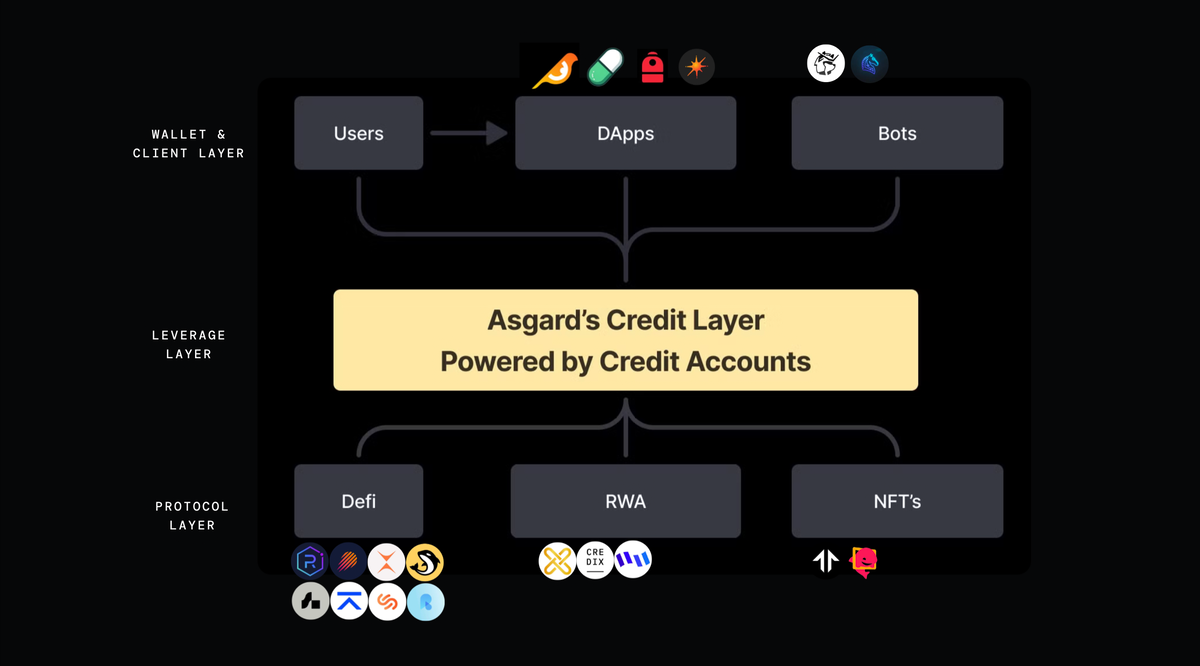
Credit Layer Architecture Overview
1. Credit Synthesizer (Credit Synthesizer)Synthesizes higher capital efficiency "quasi-credit" positions without changing the security premise of existing over-collateralized lending protocols, allowing users to gain greater exposure with the same principal.
Core Idea
Traditional lending protocols follow an invariant: deposit X, can only withdraw value ≤ X. Asgard "superimposes" leverage on top of this rule through structured operations, transforming X into a position with value > X.
Two Key Paths
Key Breakthrough
Flash loans not only improve capital efficiency but also expand the design space for lending.
Not just "leveraged token buying," but also: Collateralized NFT purchases (e.g., Mad Lads), future support for tokenized real-world assets (e.g., real estate).
Reason: NFTs are indivisible, while flash loans allow "lump-sum mortgage-style purchases" in one transaction, which recursive deposits cannot achieve.
Phase SignificanceCredit Synthesizer lays the foundation for Asgard to build the Solana DeFi Credit Layer, the first step from "over-collateralization" towards "structured credit".
2. Prime Brokerage (On-chain Prime Broker)
Building on Phase 1, further expanding the ceiling of decentralized "quasi-uncollateralized" credit, providing users with higher leverage and higher capital efficiency without sacrificing protocol security.
Core Concept: Borrowing in a Bubble
Asgard's core idea is to create a controlled lending environment:
It's like borrowing money inside a "bubble":
You can operate freely inside the bubble, but funds cannot escape the bubble.
TradFi对标: Prime BrokerageIn traditional finance, a Prime Broker:
Asgard natively移植 this model on-chain:
Algorithmic Security
The final effect is:
Result: Higher LTV → Higher leverage → Higher capital efficiency.
Key Components
Phase Significance
Phase 2 upgrades Asgard from a "Leverage Synthesizer" to a credit infrastructure on Solana:
This is the key transition phase for Asgard to become the Solana Credit Layer.
Tron Commentary
Asgard's core advantage lies in its credit-centric design philosophy. Through flash loans, recursive synthesis, and the "Controlled Account (Credit Account) + Algorithmic Security" Prime Brokerage model, it provides users with a near-uncollateralized experience of high leverage and high capital efficiency without breaking the over-collateralization constraint technically, significantly expanding the design space of Solana DeFi, especially suitable for advanced scenarios like complex strategies, "mortgage-style" use of NFTs / non-standard assets;
However, its disadvantages are also apparent — complex system structure, reliance on精细的风险评估 and whitelist governance. If parameter design or protocol integration deviates, it may amplify systemic risks in extreme market conditions.同时, the "controlled environment" also limits full DeFi composability to some extent, posing a higher understanding and usage threshold for ordinary users.
2. Key Project Details of the Week
2.1. Detailed Analysis of LI.FI: Total Funding $52M, Led by Multicoin and CoinFund — One-Stop Cross-Chain Liquidity Routing and Asset Exchange Infrastructure
Introduction
LI.FI is a cross-chain liquidity aggregation protocol that connects developers and users to various cross-chain bridges, DEXs, and decentralized liquidity sources through a unified API, SDK, or widget. It supports the exchange and transfer of any asset to any asset across 30+ blockchains, finding the optimal path with the best price, lowest cost, and highest security among different bridges and exchanges through intelligent routing. LI.FI completely abstracts away the complexity of the underlying cross-chain bridges and DEXs, enabling applications to provide users with a seamless, one-stop cross-chain swap and asset transfer experience with extremely low integration costs.
Architecture Overview
LI.FI is a multi-chain liquidity aggregation and intelligent routing layer that helps dApps and users complete optimal asset exchanges and cross-chain transfers between multiple chains through off-chain routing + on-chain modular execution.

Core Component Breakdown
1. dApp Interface (Integrator)
The frontend with which users directly interact.
2. LI.FI API (Off-Chain Aggregation & Routing Layer)
The brain of the system, responsible for "calculating the route."
3. LI.FI Diamond Contract (On-Chain Entry Point)
The unified entry point for on-chain execution.
4. Facet Contracts (Functional Modules)
Adaptation layer for different types of liquidity:
5. Underlying Liquidity Protocols
The bridge, DEX, or Solver contracts that ultimately execute the交易.
Complete Transaction Flow (End-to-End)
Smart Contract Architecture
LI.FI's on-chain contracts are built using the EIP-2535 (Diamond / Multi-Facet Proxy) standard, employing a unified entry point contract to modularly execute different business logic.
Core Design Philosophy
Contract Execution Flow
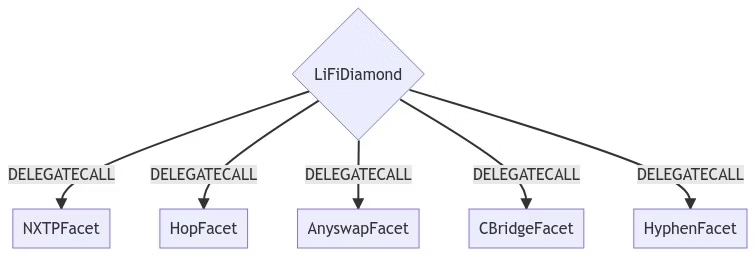
Example using Stargate for cross-chain:
The user only ever interacts with the Diamond contract; the underlying complexity is completely abstracted.
Facet Contracts (Business Modules)
Diamond Helper Contracts (Helper Contracts)

Deployed alongside the Diamond contract, used for:
These mechanisms are all designed following the EIP-2535 standard.
Tron CommentaryLI.FI's core advantage lies in its极强的跨链抽象 and engineering capabilities: through a unified API and Diamond contract architecture, it aggregates numerous bridges, DEXs, and Solvers, providing applications and users with optimal routing for any chain, any asset, significantly reducing the integration and usage costs of cross-chain and multi-step transactions,兼具高扩展性与可维护性;
However, its disadvantages are also clear — the system highly relies on off-chain routing and quoting layers, the architecture is complex, posing higher understanding and operational demands on developers, and cross-chain itself still inherits the security risks of the underlying bridges and external protocols. If any integrated component encounters issues, the overall experience and risk exposure could be affected.
III. Industry Data Analysis
1. Overall Market Performance
1.1 Spot BTC vs ETH Price Trends
BTC
ETH
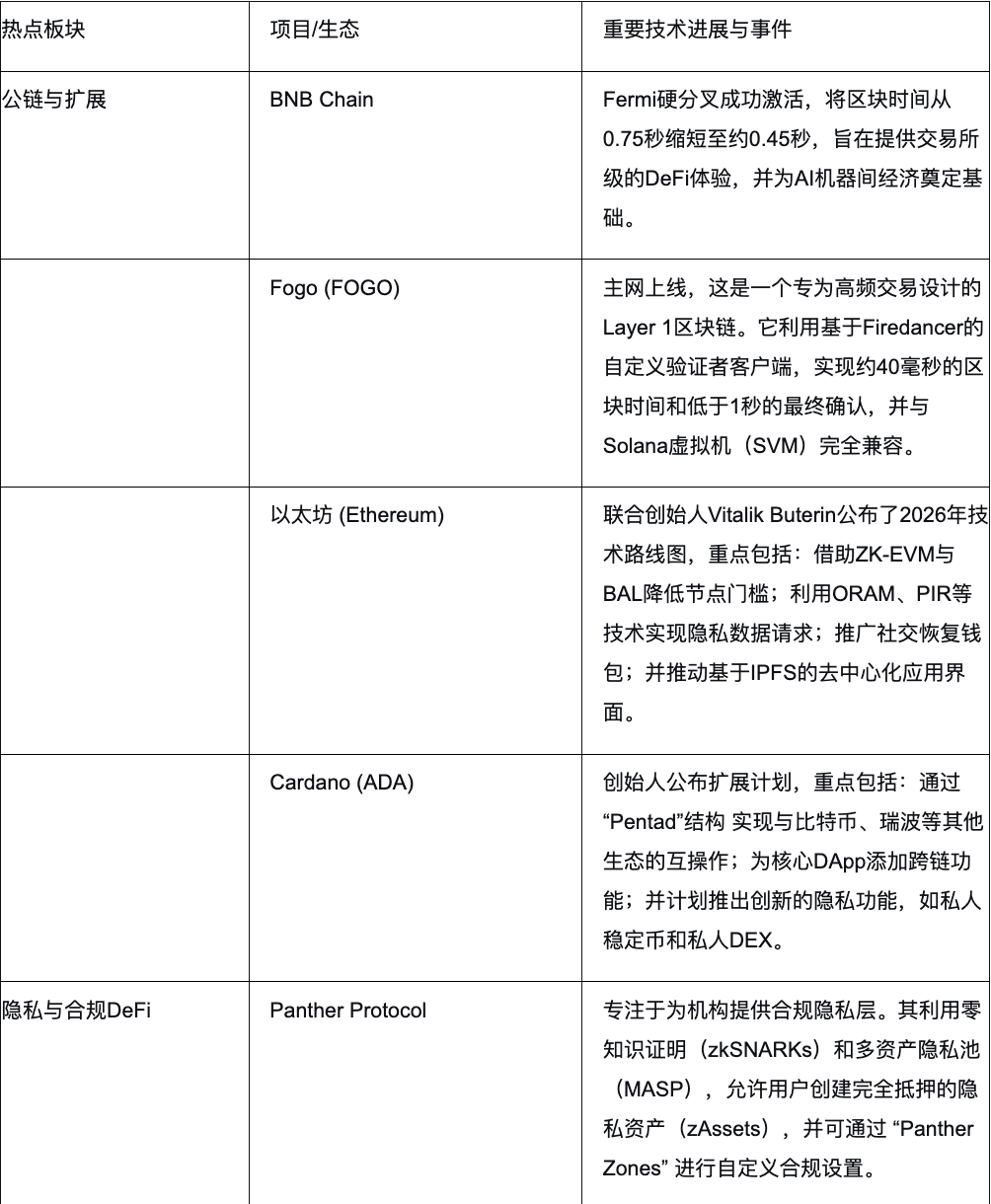
2. Hot Sector Summary
IV. Macro Data Review and Key Data Release Schedule for Next Week
The US December unadjusted CPI year-on-year rate released last week showed that inflation continues to decline moderately but not rapidly. The overall CPI year-on-year rate fell further from the previous month, mainly dragged down by falling energy prices and持续走弱的商品通胀, indicating that the transmission effect of previous high inflation on the real economy is weakening; but at the same time, housing and some service prices remain relatively resilient, making the path of inflation decline appear slow and uneven.
This outcome reinforces the market's judgment of "inflation trending downward but still sticky," and also provides a basis for the Federal Reserve to maintain a wait-and-see approach, awaiting more confirming signals — it is not enough to force rapid rate cuts, nor does it necessitate renewed policy tightening.