The 'Final Battle' of Crypto Treasuries: The Myth of Buying the Dip Is Collapsing

比推Xuất bản vào 2025-12-08Cập nhật gần nhất vào 2025-12-08

Tóm tắt

Amid a recent crypto market downturn, crypto treasury companies—previously major buyers that fueled market rallies—have significantly slowed or halted their purchases, despite prices reaching potential bottom. This inaction is not due to depleted funds or panic but stems from a structural paralysis in their funding mechanisms, which rely heavily on stock premiums. These companies, exemplified by industry leader Strategy, primarily fund crypto acquisitions through convertible notes and At-The-Market (ATM) equity offerings. The ATM mechanism allows issuing new shares at a premium to net asset value (NAV) to raise capital for buying more crypto. However, when their stock price falls below the NAV per share (mNAV < 1), selling shares becomes dilutive and economically unfeasible, effectively locking their "ammunition." Strategy, for instance, still has over $30 billion in ATM capacity but cannot utilize it while trading at a discount. Other crypto treasury firms face similar constraints. Many have mNAV ratios below 1, rendering their ATM plans unusable. While some, like BitMine (a major Ethereum holder), continue buying using cash reserves, overall effective purchasing power is limited. The sector is shifting focus from leveraged accumulation to earning yield through staking (e.g., Ethereum staking yields ~8%) to cover interest costs and ensure survival. This reflects a broader move away from "infinite bullet" theories dependent on perpetual premiums, underscoring that these com...

During the brief uptrend that began in April, crypto treasury companies, as the main force of market accumulation, provided a continuous stream of ammunition for the market. However, when both the crypto market and stock prices fell simultaneously, these crypto treasury companies seemed to collectively fall silent.

When prices hit a阶段性 bottom, it should theoretically be the perfect time for these treasury companies to buy the dip. But the reality is that buying activity has slowed or even stalled. The reason behind this collective silence is not simply because "ammunition" was exhausted at high points or due to panic, but rather because the highly premium-dependent financing mechanism has become mechanically paralyzed during the downturn, leading to a situation where "funds are available but unusable."

Hundreds of Billions in "Ammunition" Locked Up

To understand why these DAT companies are facing the dilemma of "having money but being unable to use it," we need to conduct an in-depth analysis of the sources of ammunition for crypto treasury companies.

Taking Strategy, the first listed crypto treasury company, as an example, its funding has primarily come from two sources: "convertible notes," which involve borrowing money at very low interest rates to buy cryptocurrencies, and the At-The-Market (ATM) issuance mechanism, where Strategy can sell additional shares when its stock price trades at a premium to the value of its held crypto assets, using the proceeds to buy more Bitcoin.

Before 2025, Strategy's main funding source was "convertible notes." As of February 2025, Strategy had raised $8.2 billion through convertible notes to purchase additional Bitcoin. Starting in 2024, Strategy began large-scale use of its At-The-Market (ATM) equity program. This issuance method is more flexible: when the stock price is higher than the market value of the held crypto assets, the company can issue additional shares at market price to raise funds for purchasing more crypto assets. In Q3 2024, Strategy announced a $21 billion ATM equity offering program, and in May 2025, it established a second $21 billion ATM program. To date, the total remaining capacity of these programs is still $30.2 billion.
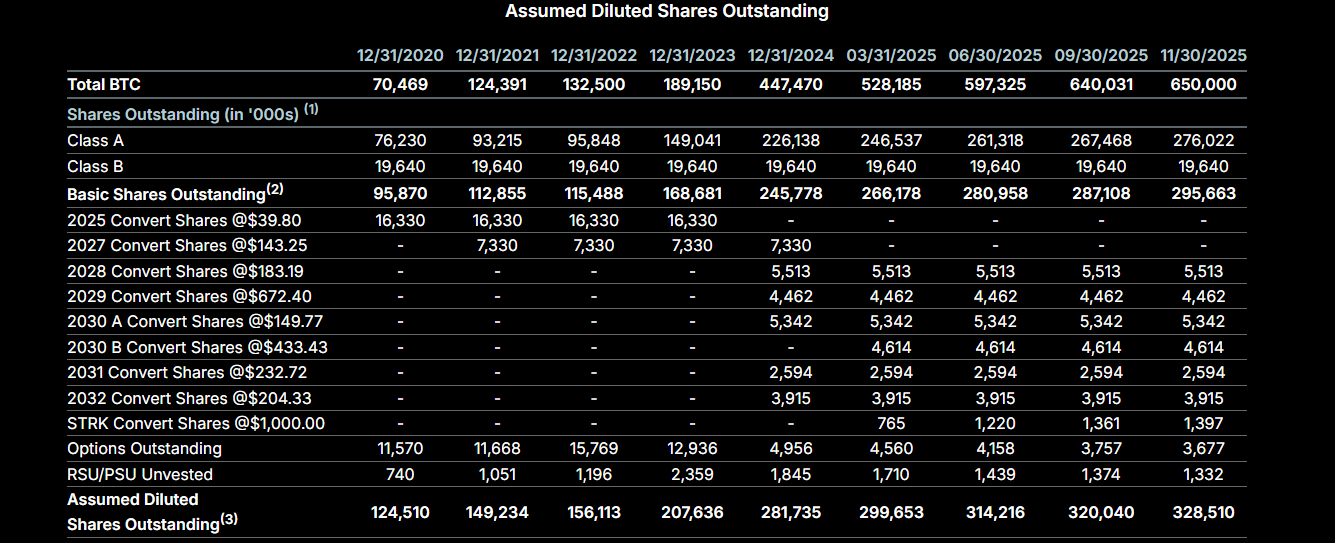
However, these capacities are not cash; they are quotas for the sale of Class A preferred shares and common shares. For Strategy to convert these quotas into cash, it needs to sell these shares on the market. When the stock price is at a premium (e.g., the stock price is $200, and each share represents $100 worth of Bitcoin), selling shares allows Strategy to exchange the newly issued shares for $200 in cash, which can then be used to buy $200 worth of Bitcoin, thereby increasing the Bitcoin backing per share. This was the logic behind Strategy's "perpetual motion machine" of seemingly infinite ammunition. However, when Strategy's mNAV (mNAV = market capitalization / value of held coins) falls below 1, the situation reverses. Selling shares now means selling at a discount. Since November, Strategy's mNAV has remained below 1 for an extended period. This is why, despite having a large number of shares available for sale recently, Strategy has been unable to use them to purchase Bitcoin.

Furthermore, not only has Strategy been unable to raise funds to buy the dip recently, but it also chose to raise $1.44 billion by selling shares at a discount to establish a dividend reserve pool to support preferred share dividend payments and existing debt interest payments.

As the standard template for crypto treasuries, Strategy's mechanism has been adopted by most treasury companies. Therefore, we can see that when crypto assets fall, the reason these treasury companies fail to enter the market to buy the dip is not unwillingness but rather because their stock prices have fallen too much, effectively "locking" their ammunition depots.

Nominal Firepower Ample, Actually "Guns Without Bullets"

So, besides Strategy, how much purchasing power do other companies have? After all, there are now hundreds of crypto treasury companies in the market.

From the current market perspective, although there are many crypto treasury companies, their potential for future purchases is not very large. There are mainly two situations. One type consists of companies that were originally crypto asset holding enterprises. Their crypto asset holdings mainly come from their existing holdings rather than new purchases financed by debt issuance. Their ability and motivation to raise funds through debt are not strong. For example, Cantor Equity Partners (CEP), ranked third in Bitcoin holdings, has an mNAV of 1.28. Its Bitcoin holdings primarily resulted from a merger with Twenty One Capital, and it has had no purchase records since July.

The other type consists of strategy companies similar to Strategy. However, due to the recent severe decline in stock prices, their mNAV ratios have generally fallen below 1. The ATM capacities of these companies are also effectively locked and cannot be utilized until their stock prices recover above 1.

Beyond issuing debt and selling stock, there is another, more direct "ammunition depot": cash reserves. Taking BitMine, the largest DAT company for Ethereum, as an example, although its mNAV is also below 1, the company has maintained its purchase plan recently. According to data from December 1st, BitMine stated it still has $882 million in unencumbered cash on its books. BitMine Chairman Tom Lee recently stated, "We believe Ethereum's price has bottomed. BitMine has resumed accumulating, purchasing nearly 100,000 ETH last week, double the amount of the previous two weeks." BitMine's ATM capacity is also substantial. In July 2025, the total capacity of its program was increased to $24.5 billion, and it currently has nearly $20 billion remaining.
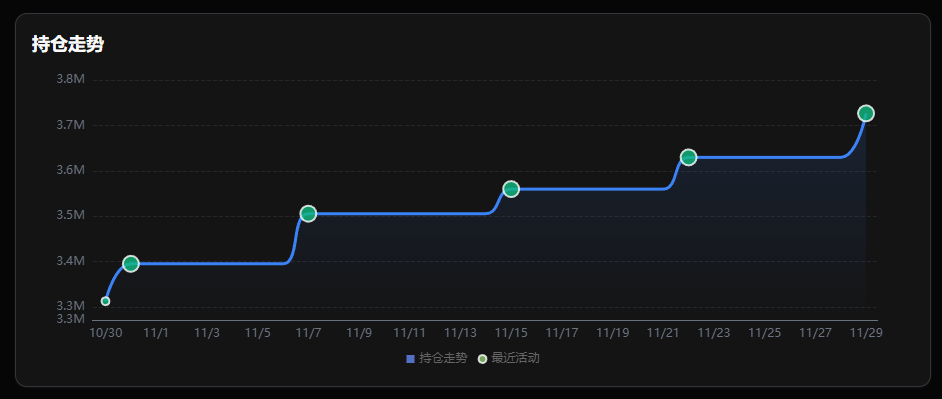
BitMine Holdings Change

Additionally, CleanSpark proposed issuing $1.15 billion in convertible bonds before the end of the year to purchase Bitcoin. The Japanese listed company Metaplanet has been a relatively active Bitcoin treasury company recently, raising over $400 million through Bitcoin-collateralized loans or share issuance since November to purchase Bitcoin.

In terms of total volume, the "nominal ammunition" (cash + ATM capacity) on the books of various companies amounts to tens of billions of dollars, far exceeding the previous bull market. However, in terms of "effective firepower," the actual number of bullets that can be fired has decreased.

Shifting from "Leveraged Expansion" to "Yield Generation for Survival"

Besides having their ammunition locked, these crypto treasury companies are also exploring new investment strategies. During the market uptrend, most companies' strategy was straightforward: buy relentlessly, obtain more financing as the price of coins and stocks rose, and then continue buying. As the situation reversed, many companies not only found it harder to raise funds but also faced the challenge of paying interest on previously issued bonds and covering operational costs.

Consequently, many companies are turning their attention to "crypto yield"—participating in crypto asset network staking activities to obtain relatively stable staking rewards. These rewards can then be used to pay the interest on their financing and operational costs.

For instance, BitMine plans to launch MAVAN (a US-based validator network) in Q1 2026 to initiate ETH staking. This is expected to generate approximately $340 million in annualized revenue for BitMine. Similar approaches are seen with Upexi, Sol Strategies, and other Solana network treasury companies, which can achieve around 8% annualized yield.

It is foreseeable that as long as mNAV cannot return above 1.0, hoarding cash to meet debt maturities will become the main theme for treasury companies. This trend also directly influences asset selection. Since Bitcoin lacks native high yield, the accumulation by pure Bitcoin treasuries is slowing down. In contrast, Ethereum treasuries, which can generate cash flow through staking to cover interest costs, have maintained more resilient accumulation speeds.

This shift in asset preference is essentially a compromise by treasury companies in the face of liquidity difficulties. When the channel for obtaining cheap funds through stock price premiums is closed, finding yield-generating assets becomes their only lifeline for maintaining a healthy balance sheet.

Ultimately, the "infinite ammunition" was merely an illusion built on stock price premiums during a positive cycle. When the flywheel locks up due to trading at a discount, the market must face a stark reality: these treasury companies have always been amplifiers of trends, not saviors against them. Only when the market sentiment recovers first can the funding valves be reopened.


Twitter:https://twitter.com/BitpushNewsCN

Bitpush TG Discussion Group:https://t.me/BitPushCommunity

Bitpush TG Subscription: https://t.me/bitpush

Original link:https://www.bitpush.news/articles/7593906

Câu hỏi Liên quan

QWhy have crypto treasury companies like Strategy slowed down or stopped buying cryptocurrencies during the recent market downturn, despite having large available funds?

AThey have slowed or stopped buying because their funding mechanism relies heavily on stock issuance at a premium to their net asset value (mNAV > 1). When their stock price falls below the value of their crypto holdings (mNAV < 1), selling stock to raise cash becomes dilutive and economically unfeasible, effectively locking their 'ammunition'.

QWhat are the two primary funding sources for Strategy, the leading crypto treasury company, and which one became less effective in the downturn?

AStrategy's two primary funding sources are 'convertible notes' (low-interest debt) and 'At-The-Market' (ATM) equity offerings. The ATM mechanism became less effective during the downturn because it requires the stock to trade at a premium to the net asset value (mNAV > 1) to work profitably, which was not the case.

QWhat is mNAV and why is it a critical metric for crypto treasury companies?

AmNAV (market NAV) is the ratio of a company's market capitalization to the value of its cryptocurrency holdings. It is critical because a value above 1 indicates the stock is trading at a premium, allowing the company to profitably issue new shares via ATM offerings to fund more crypto purchases. A value below 1 makes such issuance dilutive and impractical.

QHow are some crypto treasury companies adapting their strategy from pure accumulation to generating yield?

ACompanies are shifting towards generating crypto-native yield, such as through staking cryptocurrencies like Ethereum or Solana. This provides a steady income stream to help cover interest payments on their debt and operational costs, especially when their primary funding mechanism (ATM offerings) is impaired.

QWhich crypto treasury company was cited as an example of one that continued buying during the downturn, and what was its advantage?

ABitMine, the largest Ethereum treasury company, continued buying. Its advantage was a significant reserve of unencumbered cash ($882 million), which allowed it to purchase assets independently of the impaired ATM equity issuance mechanism that other companies relied on.

Nội dung Liên quan

Vitalik: Điều Chúng Ta Cần Làm Không Phải Chống Lại AI, Mà Là Tạo Ra Những Nơi Ẩn Nấu

Trong podcast với a16z, Vitalik Buterin - nhà sáng lập Ethereum - chia sẻ quan điểm then chốt về thời đại AI: mối đe dọa lớn không phải là AI quá thông minh, mà là con người trở nên thụ động, trao hết quyền quyết định và sự an toàn của mình cho các hệ thống tập trung hay AI siêu cấp, từ đó đánh mất quyền tự chủ (agency) và quyền riêng tư. Ông đề xuất khái niệm "công nghệ nơi trú ẩn" (sanctuary technologies) - như Ethereum - không tìm cách thống trị hay sửa chữa toàn bộ hệ thống cũ, mà tạo ra những lựa chọn song song, an toàn, tôn trọng quyền riêng tư và cho phép mọi người tự do ra vào. Điều này ngày càng quan trọng khi quyền lực AI tập trung. Vitalik kể lại hành trình từ "lái tự động" thời trẻ đến việc chủ động "tự cầm lái" hiện nay. Ông nhấn mạnh thế giới thay đổi cứ 5-10 năm, và chúng ta phải chủ động thích ứng. Trong kỷ nguyên AI, việc duy trì "chế độ thủ công" là then chốt: đôi khi tự làm mọi thứ, học tập chủ động (hiệu quả gấp 10 lần học thụ động), không để não bộ teo đi vì ỷ lại hoàn toàn vào AI. Ông đưa ra lời khuyên thiết thực: tự buộc mình làm việc thủ công, học chủ động, xây dựng các công nghệ tôn trọng quyền tự chủ, không thuê ngoài toàn bộ tư duy chiến lược, và giữ lại những cơ hội ngẫu nhiên trong đời thực. Tóm lại, thời đại AI không phải để con người nằm yên, mà là lúc cần chủ động "cầm lái" hơn bao giờ hết. Giá trị thực sự nằm ở những con người chủ động suy nghĩ và giữ vững quyền tự chủ của mình.

marsbit54 phút trước

Vitalik: Điều Chúng Ta Cần Làm Không Phải Chống Lại AI, Mà Là Tạo Ra Những Nơi Ẩn Nấu

marsbit54 phút trước

Đối thoại với nhà sáng lập Patagon: Tiết lộ những góc khuất trong thị trường cấp hai của Anthropic

**Tóm tắt: Thị trường cấp hai Anthropic - Lợi nhuận khổng lồ, rủi ro và sự lộn xộn trước khi IPO** Trong podcast này, Dio Casares, nhà sáng lập Patagon, đã tiết lộ những góc khuất của thị trường giao dịch thứ cấp (secondary market) xoay quanh Anthropic - một "con kỳ lân" trong làng AI. **Quy mô và cơ cấu thị trường** Thị trường thứ cấp cho cổ phần Anthropic rất lớn, với hàng trăm tỷ USD giao dịch. Đây là thị trường dựa trên quan hệ nội bộ. Phí trung gian có thể lên tới 10% cho mỗi giao dịch, tạo ra một "mỏ vàng" cho các nhà môi giới. Thậm chí, nhiều người trong quỹ đầu tư kiếm được nhiều tiền hơn từ việc môi giới này so với công việc đầu tư chính. **Phân loại giao dịch & Thái độ của công ty** - **Giao dịch được công ty chấp thuận:** Anthropic ủng hộ các giao dịch trực tiếp thông qua các SPV (phương tiện mục đích đặc biệt) hoặc cho phép nhân viên bán cổ phần. Điều này giúp công ty huy động vốn và giảm áp lực bán trước khi IPO. - **Giao dịch "xám"/không được chấp thuận:** Các nền tảng như Hive, Forge bị Anthropic phản đối vì tạo ra chênh lệch giá và cản trở việc huy động vốn chính thức. Họ thường chào bán cổ phần "chiết khấu" cho một lượng lớn nhà đầu tư chưa được xác minh. **Lừa đảo và rủi ro** Khoảng 10-20% các thỏa thuận giao dịch có thể liên quan đến gian lận, như chứng chỉ cổ phần giả. Một rủi ro phổ biến hơn là việc nhà môi giới nhận tiền trước rồi mới đi tìm nguồn cổ phần để giao, và đôi khi thất bại. **Cấu trúc SPV chồng chéo & "Địa ngục" thanh toán sau IPO** Các SPV nhiều tầng phát sinh do khó khớp lệnh mua-bán trực tiếp. Khi Anthropic IPO, việc phân phối cổ phần thực tế qua nhiều tầng SPV sẽ rất phức tạp và chậm trễ, phụ thuộc vào quy tắc của mỗi quỹ và hệ thống DTCC. Bất kỳ tầng GP nào giữ cổ phần lại đều có thể chặn dòng phân phối cho các nhà đầu tư ở tầng dưới, dẫn đến tranh chấp và kiện tụng kéo dài hàng năm. Sau IPO, Anthropic có ít động lực can thiệp vào các vấn đề của thị trường thứ cấp tư nhân này. **Lời khuyên cho nhà đầu tư nhỏ lẻ** Đối với các nhà đầu tư nhỏ (ví dụ: thông qua các sản phẩm cổ phần "token hóa" của Anthropic), rất khó để kiểm tra tính xác thực của tài sản cơ sở. Lời khuyên là nên thận trọng, không tăng thêm vị thế, và nếu có cảm giác không tốt, nên rút lui. **Tầm nhìn của Patagon** Patagon hoạt động như một đối tác chuyên nghiệp, tự mình tìm kiếm cơ hội, thực hiện due diligence kỹ lưỡng, đảm bảo cổ phần là thật và cấu trúc tuân thủ, nhằm cung cấp trải nghiệm đầu tư minh bạch và đáng tin cậy hơn so với các nền tảng môi giới truyền thống.

marsbit2 giờ trước

Đối thoại với nhà sáng lập Patagon: Tiết lộ những góc khuất trong thị trường cấp hai của Anthropic

marsbit2 giờ trước

Tại sao XRP của Ripple là lựa chọn tốt hơn cho giao dịch so với SWIFT

Chuyên gia CharuSan giải thích lý do Ripple's XRP vượt trội hơn SWIFT trong giao dịch xuyên biên giới. Ông chỉ ra SWIFT hoạt động chậm và phức tạp, trong khi công nghệ ODL của XRP có thể giải phóng hàng nghìn tỷ USD cho ngân hàng chỉ trong vài giây. XRP giải quyết các vấn đề về tốc độ và chi phí, khiến ngân hàng cân nhắc lại việc sử dụng SWIFT. CharuSan dự đoán XRP sẽ tiếp quản thị trường một cách nhanh chóng, vì phần mềm chính của ngân hàng đã tích hợp sẵn với Ripple. Ông nhấn mạnh SWIFT phải thêm XRP như một lớp thanh khoản để tồn tại, nếu không sẽ mất dần vị thế và đóng cửa. Dù SWIFT đang phát triển sổ cái phân tán trên Ethereum layer-2 Linea với ConsenSys và nhiều ngân hàng, CharuSan cho rằng điều này không thể so sánh với XRP. Linea chỉ thử nghiệm chuyển tin nhắn và tài sản, không phải công cụ thanh khoản, vẫn cần Ethereum xác minh và phát sinh chi phí, không phù hợp cho thanh toán xuyên biên giới. Ông kết luận nếu SWIFT không đạt thỏa thuận với Ripple và tích hợp XRP, họ sẽ bị đào thải. Giá XRP tại thời điểm viết bài là khoảng 1,41 USD, giảm hơn 4% trong 24 giờ.

bitcoinist4 giờ trước

Tại sao XRP của Ripple là lựa chọn tốt hơn cho giao dịch so với SWIFT

bitcoinist4 giờ trước

Tether Bị Yêu Cầu Chuyển 344 Triệu Đôla USDT Đã Bị Đóng Băng Cho Các Nạn Nhân Khủng Bố

Một gia đình ở Jerusalem, có người thân thiệt mạng trong vụ đánh bom tự sát của Hamas năm 1997, cùng các nguyên đơn khác đang yêu cầu tòa án liên bang Mỹ buộc Tether chuyển giao hàng trăm triệu đô la tiền điện tử bị đóng băng. Vụ kiện được nộp tại Manhattan có thể tạo ra tiền lệ pháp lý quan trọng về cách xử lý các tổ chức phát hành stablecoin tập trung. Các nguyên đơn là nạn nhân và gia đình của các vụ tấn công khủng bố có liên quan đến Iran. Họ đã có phán quyết của tòa án chống lại Iran từ nhiều năm trước nhưng chưa được bồi thường. Giờ đây, họ nhắm đến số tiền điện tử bị đóng băng để thu hồi khoản nợ. Luật sư Charles Gerstein cho rằng, khác với Bitcoin hay Ethereum, USDT do một công ty tập trung kiểm soát, có thể đóng băng ví và chuyển tiền khi có lệnh. Vì Bộ Tài chính Mỹ (OFAC) đã xác định hai địa chỉ ví trên mạng Tron chứa khoảng 344 triệu USDT này có liên quan đến Lực lượng Vệ binh Cách mạng Hồi giáo Iran (IRGC) và đã đóng băng chúng, nên Tether có thể bị buộc phải chuyển số tiền tương đương cho bên nguyên đơn. Vụ kiện này là một phần trong chiến dịch pháp lý rộng hơn nhằm thử nghiệm việc liệu tòa án có thể buộc các nền tảng tiền điện tử có kiểm soát tập trung phải xử lý tài sản bị đóng băng trong các ví bị trừng phạt hay không.

bitcoinist6 giờ trước

Tether Bị Yêu Cầu Chuyển 344 Triệu Đôla USDT Đã Bị Đóng Băng Cho Các Nạn Nhân Khủng Bố

bitcoinist6 giờ trước

Giao dịch

Giao ngay
Hợp đồng Tương lai
活动图片