On January 7, the Cambodian Ministry of Interior posted a brief announcement on its official website: At China's request, three Chinese citizens, Chen Zhi, Xu Jiliang, and Shao Jihui, were arrested and extradited back to China. A month earlier, the King of Cambodia had issued a decree revoking Chen Zhi's Cambodian citizenship.
It is believed that in recent days, "Chen Zhi" and his flagship "Prince Group" have appeared frequently on everyone's timelines. In different reports, they often point to the same description: behind the bustling buildings in Phnom Penh, Cambodia, lurks a staggeringly large gray and black industry network.

On the surface, Prince Group has good relations with the local government, publicly claiming to operate over 100 commercial entities in more than 30 countries, with its industrial footprint covering real estate, banking, aviation, supermarkets, and other sectors.

Under the table, Prince Group's business involves money laundering, telecom fraud, online casinos, and more, operating a massive criminal empire worldwide.
A more dramatic footnote comes from the other side of the Pacific. In October 2025, the U.S. Department of Justice, in public documents, sought the forfeiture of 127,271 Bitcoin under Chen Zhi's name, valued at a staggering $15 billion at that day's market rate, setting a record for the largest forfeiture in U.S. judicial history.
And this is just the tip of the iceberg of Chen Zhi's wealth. According to public documents, one of his co-conspirators stated in 2018 that through "pig-butchering" scams and related criminal activities, Prince Group's daily profits exceeded $30 million. These huge sums were used by Chen Zhi to purchase yachts, private jets, top-tier mansions, and rare artworks including paintings by Picasso.

As the founder of this black industry empire, Chen Zhi's origins seem rather ordinary. Born in 1987 in a Fujian fishing village, he had a high school education, worked as an internet cafe administrator in Guangdong, Jiangsu, and elsewhere, later engaged in data trading and operated a gaming social website, claiming to have once run an internet cafe.
How did a fishing village youth become the core figure of a transnational criminal network in just over a decade? When tracing his rise, almost all clues clearly point to a game familiar to vast numbers of Chinese players:
"Legend."
The Knight Who Slipped Through the Net
In 2018, Chen Zhi's company, Amiga Entertainment, applied to open an account with Cayman National Bank. According to subsequently leaked bank records, when faced with the bank's compliance review regarding the source of startup capital, the young tycoon explained:
He had received a personal loan of $2 million from an "uncle," which was used to establish Hengxin Real Estate Company in Cambodia.
When the bank requested further details about this uncle's personal assets, the leaked documents provided no follow-up. Compared to this mysterious uncle, the more widely circulated story is that Chen Zhi's startup capital came from the then-popular "Legend."
In 2001, the South Korean online game "Legend" entered the Chinese market and quickly became a milestone product in the early development of the Chinese internet. However, just a year later, the server source code for the Italian version of "Legend" was accidentally leaked. Coupled with the fact that official licensing could not meet the huge player demand, a large number of unauthorized "private servers" began to emerge online.
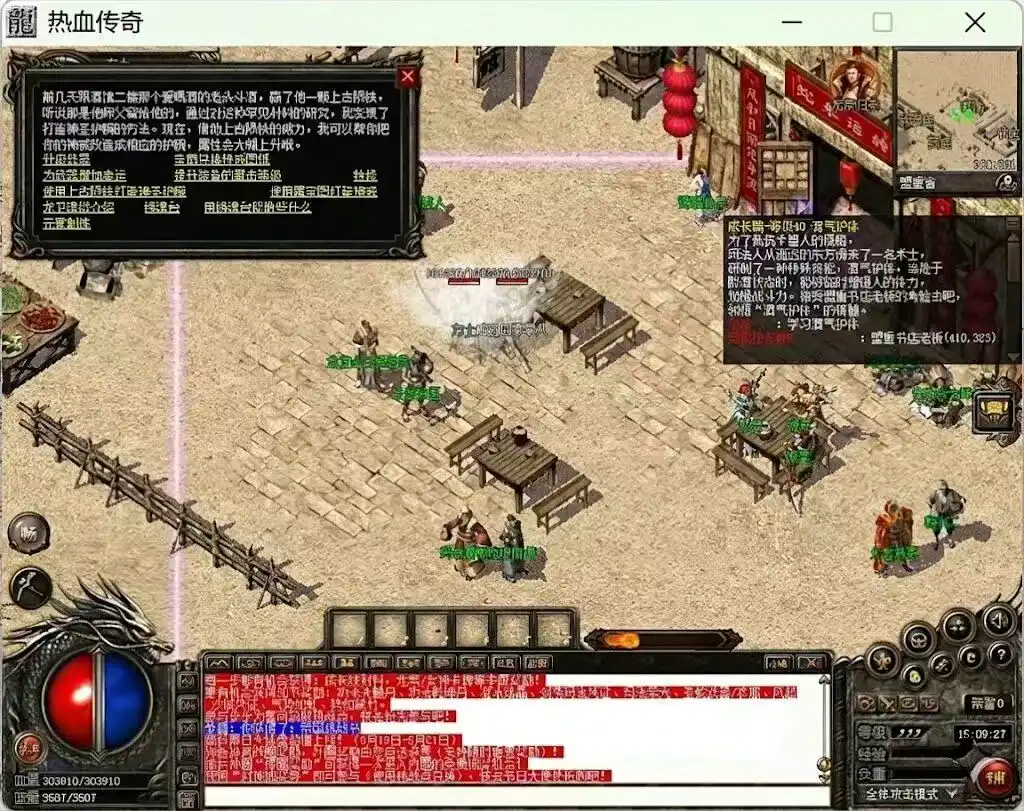
According to industry estimates, at its peak, nearly a thousand "Legend" private servers were operating simultaneously nationwide, with an annual market output value exceeding 2 billion RMB. Including associated chains like servers and payment settlements, the industry scale surpassed 4 billion RMB.
In the era of rampant private servers, the core competitiveness for attracting players was "traffic." Private server operators needed to post server opening information on specialized advertising websites to attract players. Meanwhile, the large number of both server operators and advertising websites gave rise to a highly profitable advertising agency business between them.
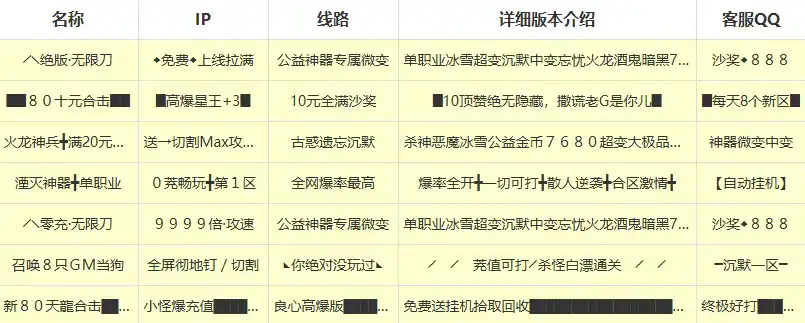
Driven by huge profits, and within a vast, poorly regulated traffic distribution chain, this naturally evolved into criminal organizations that operated under the guise of advertising agencies but engaged in hacker attacks.
According to Caixin reports, multiple hackers and private server insiders confirmed that Chen Zhi was initially a member of the "Knight Attack Squad."
The "Knight Attack Squad" was quite famous within the "Legend" private server circle. Its founder, Cai Wen, initially made his start through private server advertising agencies. To monopolize advertising rights and压低 agency prices, the squad used DDoS attacks and other methods to paralyze private server advertising sites that refused to cooperate.
Under sustained cyber attacks, 13 of China's largest private server advertising sites, including "SF123," were forced to submit, and their advertising rights fell into the hands of the "Knight Attack Squad."
At the end of 2008, after monopolizing the agency rights and profiting 10 million RMB, Cai Wen was investigated by the Hubei Xiantao police for suspected illegal business operations. However, after paying a 5 million RMB "bail," he fled to Chongqing to join his friend Hu Xiaowei, planning to make a comeback.
In Chongqing, the "Knight Attack Squad's" tactics escalated further. When technical attacks were ineffective, they resorted to physical means by bribing the server hosting providers of private server advertising sites to directly "pull the plug" and paralyze the target websites.
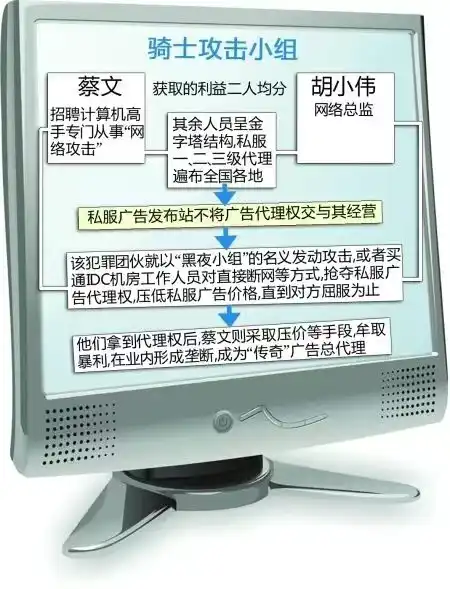
Image source: Chongqing Business Daily
Relying on these violent methods, the "Knight Attack Squad" became even more unstoppable. By the time of the crackdown in 2011, the squad had profited nearly 100 million RMB and built 4 advertising sites itself. During this time, they were twice investigated by the police but were released after handing over 10 million RMB in "security deposits" each time.
In 2011, under the supervision of the Ministry of Public Security, the Chongqing police officially cracked this illegal computer information system intrusion case. Nineteen suspects from the squad were arrested, one principal suspect "Hu Xiaowei" fled abroad, and Chen Zhi was not among those captured at the time.

In the same year, Chen Zhi, already in Southeast Asia, with startup capital of mysterious origin, began to enter Cambodia's real estate industry.
The two "knights" who quietly withdrew from the eye of the storm did not go their separate ways. Instead, they achieved closer cooperation in a foreign land, even transferring this默契 built on black industry genes to broader international waters.
Hu Xiaowei was born in 1982, five years older than Chen Zhi. Chen Zhi has mentioned in multiple occasions that Hu Xiaowei is his "big brother." According to a report by the US NGO Organized Crime and Corruption Reporting Project (OCCRP), this "big brother" figure used the identity "Chen Xiao'er" overseas and obtained a passport from the Federation of St. Kitts and Nevis in 2018.
Subsequently, in the Western Pacific island nation of Palau, Chen Zhi and "Chen Xiao'er," holding that passport, co-founded the "Grand Legend International Asset Management Group."
Although this company's business primarily involved developing luxury resorts, one can appreciate the founders' subtle affection for "Grand Legend" (Shengda Chuanqi, echoing Shanda's Legend) through the company name.
As Prince Group continued to expand, Hu Xiaowei began frequently appearing under aliases like "Chen Xiao'er" and "Hu Shi" in Prince Group's equity changes and lists of overseas entities.
In Singapore and Cyprus, shares of multiple entities associated with Prince Group were frequently transferred and shuffled between Chen Zhi and Hu Xiaowei over the years; In Taiwan, China, Hu Xiaowei was described by local media as the "second-in-command" of Prince Group, responsible for assisting Chen Zhi in managing the group's fund operations in Taiwan, with substantial amounts of money flowing into accounts under his actual control weekly.
According to a former head of Prince Group's Taiwan operations, Chen Zhi repeatedly stated that Hu Xiaowei was "the guide who brought him into online games," and the relationship between the two was very close.
And Chen Zhi never let go of this "path taken" through "Legend."
Legend Casino
A 2020 criminal verdict from the Luojiang District People's Court in Sichuan Deyang City revealed the specific operational model of Chen Zhi's Prince Group using "Legend" private servers to engage in gambling business.
The verdict shows that in early 2019, a "73 Network Company" with offices in the Prince Tower in Phnom Penh, Cambodia, began building Legend private server game websites, successively operating multiple private servers like "Cangjiang Heji," "Qilin Heji," and "Guangyao Huolong."
Unlike traditional game operations, the core logic of these private servers was not to profit from point cards or virtual equipment but to embed a gambling plugin named "Fat Girl" (Pang Niu) into the game interface. The gambling game rules were extremely simple, with each round settling in just 45 seconds, running 24/7 non-stop, and the maximum win or loss per round could reach tens of thousands of RMB.
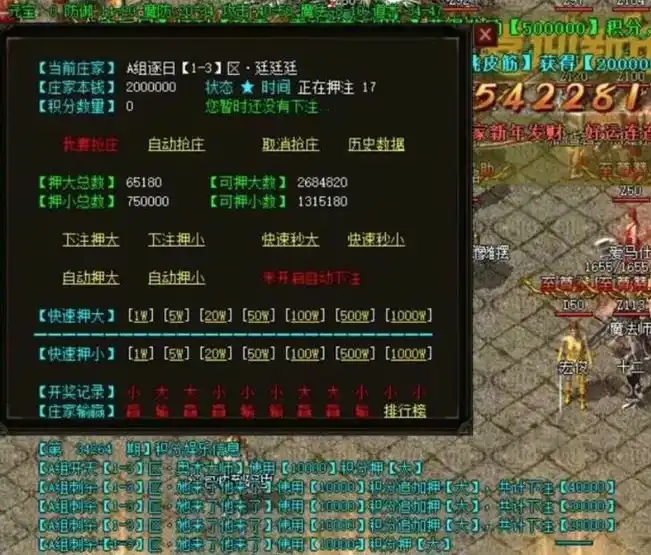
Technical staff of the website testified that under the Phnom Penh Prince Group, there were several companies specifically set up to run Legend private servers with the embedded "Fat Girl" software to open casinos. "73 Network" was one of them. Each company had its own boss, but these companies actually belonged to one alliance, all part of Prince Group.
To lure players into participating, these private servers established a "entertainment value" threshold mechanism. In servers like "Qilin Heji," the drop rates in high-level maps were much higher than in ordinary maps, but the prerequisite for players to access high-level maps was to have sufficient "entertainment value"; items and equipment dropped from monsters could be exchanged for RMB, but同样必须有足够的“entertainment value”才能兑换.
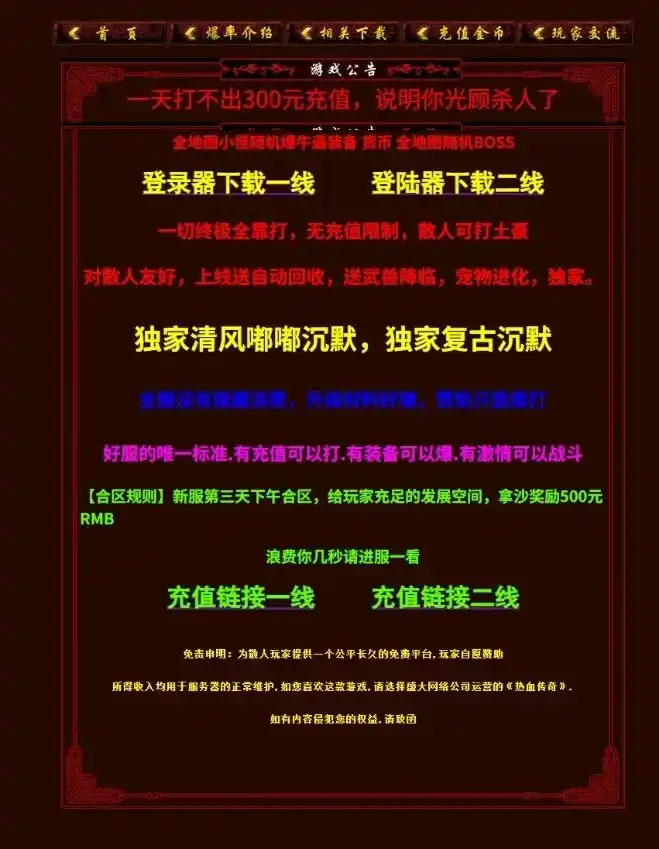
Some products from the verdict can still be found through channels today
Regardless of winning or losing, players would receive entertainment value as long as they placed bets using the "Fat Girl" plugin. This mechanism forced the vast majority of players pursuing high-level equipment or intending to earn money by dropping equipment to participate in gambling, thus completing the transformation from game player to gambler.

Some private servers are directly named "Fat Girl Big Small Stable Win Server"
In the fund settlement环节, these private servers built an agency system called "Trading House" (Shang Hang). Players paid Trading Houses via WeChat, Alipay, or bank cards to purchase in-game currency (Yuanbao). The Trading Houses then reaped huge profits from the差价 of buying and selling Yuanbao and a 5% "handling fee" deducted within the game.
Audit reports show that just this branch, "73 Network Company," used 137 bank cards and 26 Alipay accounts for fund transactions. Between 2015 and 2020, the total amount of转入转出 (transfers in and out) involved in this criminal network reached a staggering 4.515 billion RMB. Furthermore, this business also achieved data interoperability between the web page and mobile ends through a mobile APP, further expanding its money-making scope.
Searching China Judgments Online with the terms "Legend" and "Fat Girl" reveals that the casino business packaged as Legend private servers was indeed bustling. However, Prince Group's appetite seemed not limited to this.

Chen Zhi's core subordinate, Wei Qianjiang, who once served as an independent non-executive director of the Hong Kong-listed company Zhihaoda Holdings, began布局 in Beijing, Shenzhen, Hong Kong, and other places since 2017. The key core was a mobile internet enterprise in Chongqing — Chongqing Longxun Technology Co., Ltd. (hereinafter referred to as "Longxun Technology").
Longxun Technology was packaged externally as a comprehensive interactive entertainment enterprise focused on global mobile game distribution,联运, and mobile game R&D, claiming to possess self-developed game engines and game development platforms. It reportedly completed a Series A financing round of $50 million in 2017.
According to Chongqing Evening News, the overseas distribution rights for a 3D mobile game developed by "Longxun Technology" sold for 20 million RMB in Singapore alone. In 2018, the company's total revenue exceeded 250 million RMB.

The interface for its product "Super God Awakening" is still visible on TapTap, still showing affection for the word "Legend"
Under Wei Qianjiang's management, Longxun Technology originally planned to launch an IPO in Hong Kong by the end of 2020, becoming the fourth Hong Kong-listed company controlled by Chen Zhi.
However, in July 2020, a突击行动 by the Xiangcheng County Public Security Bureau in Henan interrupted its path to listing. Police investigation found that Longxun Technology's profit support did not come from normal mobile game联运 but from signing false "Information Release/Promotion Service Agreements" with 19 shell companies to provide comprehensive advertising release and online promotion services for highly gambling-like mobile games like "850 Chess & Card's" "Golden Toad Fishing" and "Hundreds of Happy Cannon Fishing."
One player claimed to have lost over 1.4 million RMB unknowingly, "The specific gameplay of these games was that players transferred money into designated bank accounts, and middlemen bought and sold points, but I almost never won, until I lost all the money I could lose."
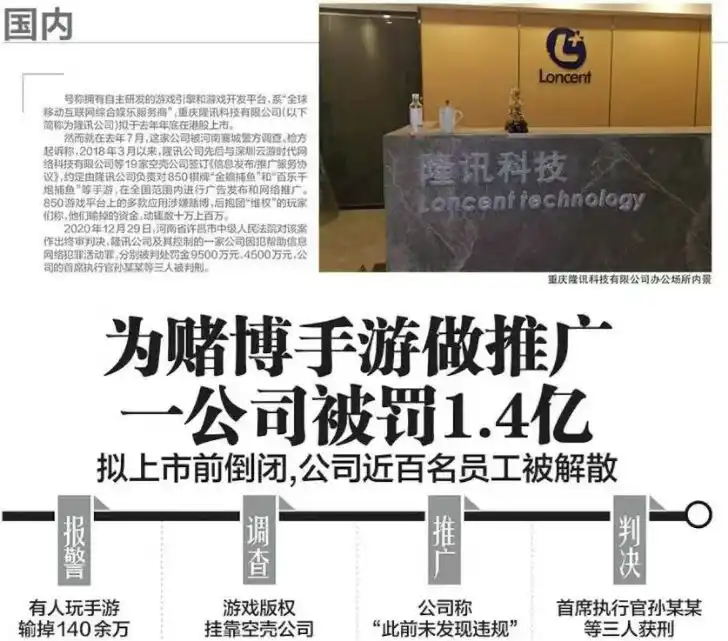
The verdict showed that Longxun Technology had transferred and laundered money illegally through multiple shell companies, involving amounts up to 430 million RMB. In December 2020, the Xuchang Intermediate People's Court in Henan Province sentenced Longxun Technology and related companies in the first instance for the crime of "aiding information network criminal activities," imposing fines of 95 million RMB and 45 million RMB respectively. Its CEO and other senior executives were sentenced, while Wei Qianjiang fled. Affected by this, Longxun Technology, once valued at hundreds of millions of USD, quickly went bankrupt.
And the "Chongqing Quwu Wuxian Equity Investment Fund," established around the same time as Longxun Technology,对外宣称 was a high-tech venture capital fund investing in the internet, mobile internet, mobile gaming industry, and related industries. Wei Qianjiang, as the "founder," still holds 30% of the shares, while the other shareholder, holding 70%, is Chen Zhi.
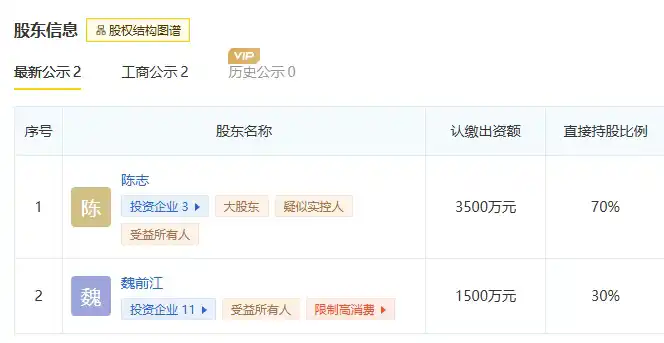
Within the capital shells of these 'game companies,' what was repeatedly refined was never the product, but how to more efficiently prey on human nature.
The Game of Human Nature
In a 2007 interview, former Chinese richest man and founder of Shanda Interactive Entertainment Limited, Chen Tianqiao, stated: "Games are things that truly strike at the heart. From a dialectical perspective, the more varied the form, the more it can strike at the heart. Conversely, the more one wants to strike at the heart, the less one can be拘泥于形式. Changes in business models are the same; we can abandon anything, but we cannot give up mastering human nature."
Today's achievements of "Legend" also benefit from the developers' precise insight into human nature. In 2001, Shanda Network acquired the mainland agency rights for "The Legend of Mir 2" for $300,000. Facing火爆游戏 and point card shortages in multiple locations, he developed the online sales system "E-sales," initiating a point card distribution model cooperating with internet cafes.
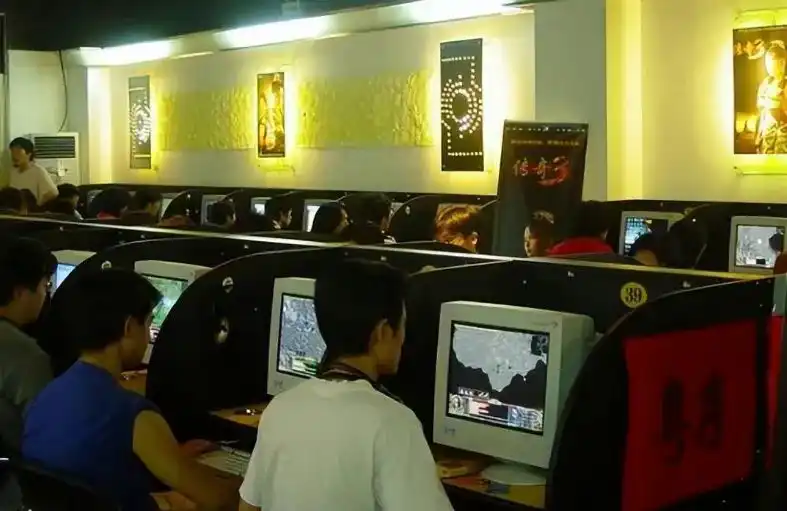
The profits from sales shares turned internet cafe owners into a community of interest. Driven by profit-seeking psychology, internet cafes across the country spontaneously promoted the game, ultimately pushing "The Legend of Mir 2" to become the first online game in Chinese history to exceed 500,000 concurrent online users. Shanda Network also rode the wind of "Legend" to start up and listed on NASDAQ in 2004.
From the perspective of game mechanics, "Legend's" design indeed struck deep into human nature. Due to features like small monsters dropping极品装备, open PK (Player Killing), and item drop upon death settings, when rewards are random and extremely scarce, the brain naturally produces a stronger dopamine impulse. Words like "Dragon Slaying Saber" and "Paralysis Ring" have also transcended the game industry's life cycle, remaining in today's players' vocabulary.
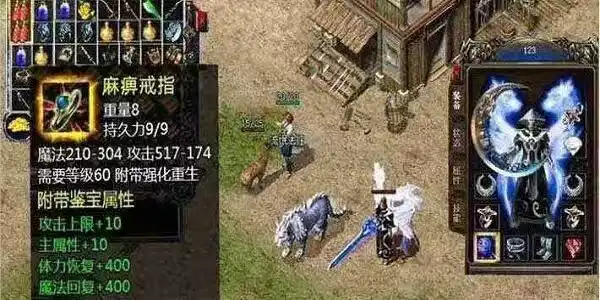
For early game players, "Legend's" gameplay almost perfectly placed "gain" and "loss" on the table simultaneously, constructing a unique closed loop based on "greed and fear" through relatively low learning costs and extremely high emotional premiums—this was a gaming experience difficult to find substitutes for at the time.
But, can we say that the gameplay of "Legend" itself has "original sin"?
In the "wild west" era of the internet, where copyright awareness was weak, and regulatory and law enforcement methods were immature, the fame of a phenomenal product itself was easily targeted by gray and black industries.
The prevalence of Legend private servers was also because they accelerated this stimulation of human nature—faster leveling, higher drop rates, more direct numerical trading. Borrowing the brand recognition and user base of "Legend," every link in the private server industry chain was essentially putting the pleasure points of human nature more bluntly on the scale for transaction.

It wasn't until the appearance of people like Chen Zhi that more radical practices emerged—online gambling and other illegal content were directly embedded into the game's玩法. Although still "games," "Legend" was merely packaged into a more easily diffused, harder-to-detect traffic entry point.
For most ordinary players today, "Legend private servers" sound like old news from a previous internet generation, seemingly far from daily life. But judging from公开数据 on the governance side, it has not completely disappeared.
According to the "2024 IP Rights Protection Report" released by Shanda Games, Shanda reported 138 cases of private servers and plug-ins to public security organs in one year, took down over 1,400 infringing online games, and shut down more than 160 private server servers.
Ongoing crackdowns have somewhat compressed the gray industry space, but they also indicate that infringement and derivative black and gray industries surrounding game IPs remain a practical problem requiring long-term governance. Below the surface, we still don't know how many products exist in the name of games but engage in illegal activities.
Conclusion
Since its birth, "Legend" has been a game that fully exploits human nature. But in the news related to Chen Zhi, it seems more like a fable of "clear good and evil."
Chen Tianqiao, who also completed his initial accumulation during the "Legend" era, gradually faded out of the domestic game industry later. After resigning as chairman of Shanda Games and gradually disposing of related equity, he invested a considerable portion of his personal wealth into scientific research:
In 2016, Chen Tianqiao announced the establishment of the Tianqiao and Chrissy Chen Institute (TCCI) to support basic research like brain science and participate in promoting the construction of related research platforms in China. In external narratives, this path is often linked to his own health experiences—after extracting himself from the extremely high-pressure life of an entrepreneur, he began to treat "understanding the brain" as a longer-term课题.


Brain science research institutions founded by Chen Tianqiao in China and the US
For criminals, however, amassing wealth seems to be an endless pursuit. After earning his first pot of gold through private servers, Chen Zhi quickly directed his understanding of rules, human nature, and traffic towards a more隐蔽, more profitable, and more destructive cross-border criminal network.
As the 'industry' snowballed, the various people gathered around it to profit constantly coalesced, divided labor, and iterated, creating black玩法依附在这个庞大产业上. There was always a next set of new "game rules," hunting people who were full of greed like themselves.
Do rules automatically lead to sin? I think not. It's the same game. In the eyes of developers, no matter how successful, it's just a product and business; for those who treat games as hunting grounds, it's a useful net—they did hunt what they wanted, but what finally awaited them was not the next settlement, but legal清算 and accountability.
Humans and ghosts take different paths. In the end, no "game rules" could save them.

CCTV footage: Major cross-border gambling fraud crime group leader Chen Zhi being escorted back to China from Cambodia
References:
"Prince Group Founder Chen Zhi Extradited to China; Penetrating the Inside Story of the Rise of His Hundred-Billion Black Industry Empire," Caixin网, 2026
"Investigation into Prince Group's Chen Zhi," Hong Kong 01, 2025
"A Company Fined 140 Million for Promoting Gambling Mobile Games," Chengdu Business Daily, 2021
"Hackers Establish Online 'Underworld' for Profit of 70 Million Arrested," Chongqing Business Daily, 2011
"The Secret江湖 of Hackers and Game Private Servers," Chu Yunfan, 2013
"First Instance Criminal Judgment of Defendants Jin, Zheng, Chen1, etc. for the Crime of Operating a Casino," Deyang Luojiang District People's Court (2020) Chuan 0626 Xing Chu No. 70