The Boston Story: How Did America's Former Tech Hub Decline?

marsbitXuất bản vào 2026-01-08Cập nhật gần nhất vào 2026-01-08

Tóm tắt

In the early 2000s, Boston was a leading tech hub alongside San Francisco, but over the past two decades, it has dramatically declined, generating only $100 billion in enterprise value compared to San Francisco's $14 trillion. Despite advantages like top universities (Harvard and MIT) and a history of pioneering companies like DEC and Lotus, Boston’s due to three key factors: 1. A progressive regulatory environment that taxed innovation heavily, including non-compliance with QSBS rules and imposing sales tax on SaaS. 2. A culture of elitism and lack of accountability within venture capital, leading to exploitative practices and a "trust tax." 3. An overemphasis on inputs (talent, labs) rather than outcomes, ignoring ecosystem fragility. The author warns that similar dynamics—regulatory greed, cultural corruption, and input-focused arrogance—now threaten San Francisco and the broader U.S. tech industry. Without a compelling moral narrative for innovation, tech may face public backlash, taxation, and decline, mirroring Boston’s irreversible collapse.

Author:Will Manidis

Compiled by: Deep Tide TechFlow

In 2004, if you asked a tech investor where the world's best software companies were located, they would give two answers: Boston and San Francisco.

Clearly, things are very different now. Over the past two decades, San Francisco has created $14 trillion in enterprise value, while Boston has contributed only $100 billion.

If you had told that investor back then that New York, once known for its "cocaine and pinstripe-suited financial glory," would replace Boston as a regional tech hub, they would have thought you were crazy.

So, why did Boston lose its status? This question is worth exploring in depth.

From an input perspective, the city seems to have all the advantages. Two of the world's top universities are located here (referring to Harvard University and MIT). The renowned startup incubator Y Combinator was also founded here. Without a doubt, it is one of the most beautiful cities in the United States. Mark Zuckerberg attended college here. The founders of Stripe, Cursor, and Dropbox also studied here. So, what went wrong?

To understand the scale of Boston's decline, we must remember that for decades, Boston's "Route 128" was the center of the software world. Digital Equipment Corporation (DEC) was once the world's second-largest computer company, employing 140,000 people at its peak. Lotus developed applications that were key to bringing businesses into the PC era. Akamai built the foundation of the modern internet. So, where did Boston go wrong?

This is a question worth discussing. However, anyone trying to answer it usually gives one of two answers:

  • "Boston's decline began when Zuckerberg couldn't raise funds here and had to go to the West Coast."
  • "Who says Boston is failing? We just led a Series F investment in TurboLogs at a $15 million valuation."

Of course, neither of these answers fully tells the story. Understanding Boston's real problem is not just a matter of survival for Boston but a key issue for the entire U.S. tech ecosystem.

My answer is simple: Boston's story shows what happens when negative cultural and regulatory feedback loops interact. As a tech ecosystem, the city's decline stems from three simple forces:

1. A progressive regulatory system that treats businesses as assets for property owners to exploit

For decades, Massachusetts refused to comply with the federal Qualified Small Business Stock (QSBS) exemption rules. The state only began complying in 2022. However, that same year, they passed the "Millionaire's Tax." In Massachusetts, a founder selling a company for $10 million would pay $860,000 in taxes, while a founder in Austin would pay nothing. Additionally, Massachusetts imposes a 6.25% sales tax on SaaS (Software as a Service) revenue, while most states do not tax software at all.

2. A Puritan culture entrenched in elite institutions, making self-regulation difficult

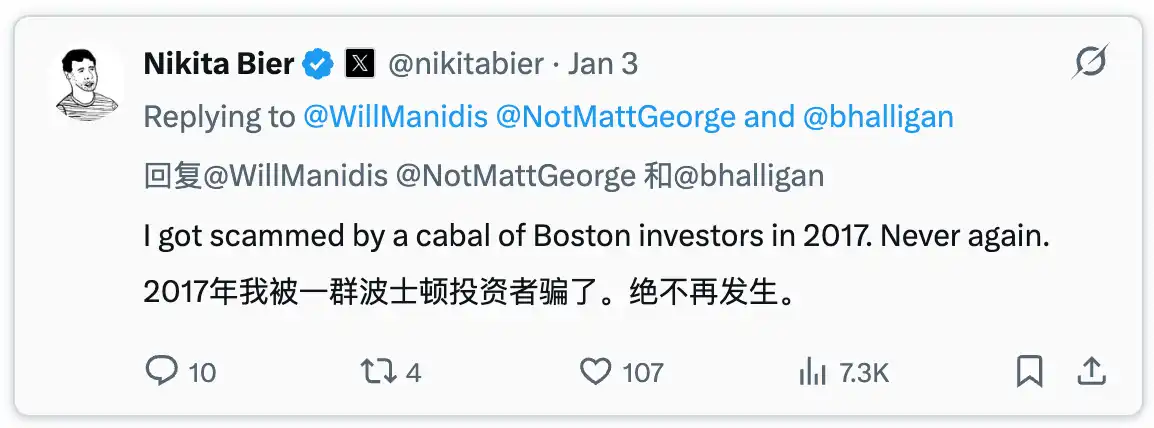
After 2010, the main activity of Boston's venture capital was no longer helping businesses grow but rather squeezing founders, almost like running an organized crime syndicate. The culture that should have overseen this behavior—including foundation donors, large limited partners (LPs), and the celebrities attending charity galas—was too closely tied to these perpetrators and their networks, so no one dared to speak out. This phenomenon has led to an invisible "trust tax" in Boston's business environment.
3. An "input-first" perspective on technological progress

We have the world's top universities, we've built vast laboratory spaces (though 40% are now vacant), and we've gathered the world's best talent. So, why isn't this working? Can't we build another innovation hub? Is our soil just not "magic"?

If these three explanations sound too simple or even familiar, it's because they are. This is a common problem facing the entire U.S. tech industry, and I suspect it could have equally fatal consequences.

Tech ecosystems are inherently fragile networks that generate trillions of dollars in tax revenue for their regions, but the parasitic host (referring to the government) cannot resist killing the "golden goose" every few decades.

Let's imagine what happens when the host rejects the ecosystem:

First, the talent network begins to disintegrate. Need to hire a VP of Engineering who has scaled a company from 25 to 500 people? In San Francisco, there are 600 candidates; in Boston, there are only 5, and soon those 5 will also leave for San Francisco, where they can demand higher salaries and have a higher chance of success. As for junior talent, new graduates no longer stay local; they take the first flight out every summer.

As the network dissipates, the state government "tightens its grip," trying to extract the same amount of revenue from those who remain. And as the ecosystem collapses, some bad actors start profiting through various means: for example, through preferential pricing ("Who would fly to Boston for a seed round? Fine, we'll accept a $10 million valuation") or through more unscrupulous methods, such as extorting founders through non-market or even illegal means (refer to some legally shareable stories shared by Nikita and others on Twitter). Even some companies that started in Boston and moved to the West Coast retained a degree of "organized crime" behavior (except for Matrix, they're good people).

These issues are complex, involving human nature and reality. They not only destroy cities and people's lives but also lead to the loss of trillions of dollars in enterprise value, all due to the state government's short-sighted actions.

The worst part: this loss is irreversible.

Although I deeply sympathize with those calling for Boston to revive as a great tech ecosystem—I myself would love to move back and avoid New York's chaos—I find it hard to imagine that the remaining ecosystem won't collapse completely.
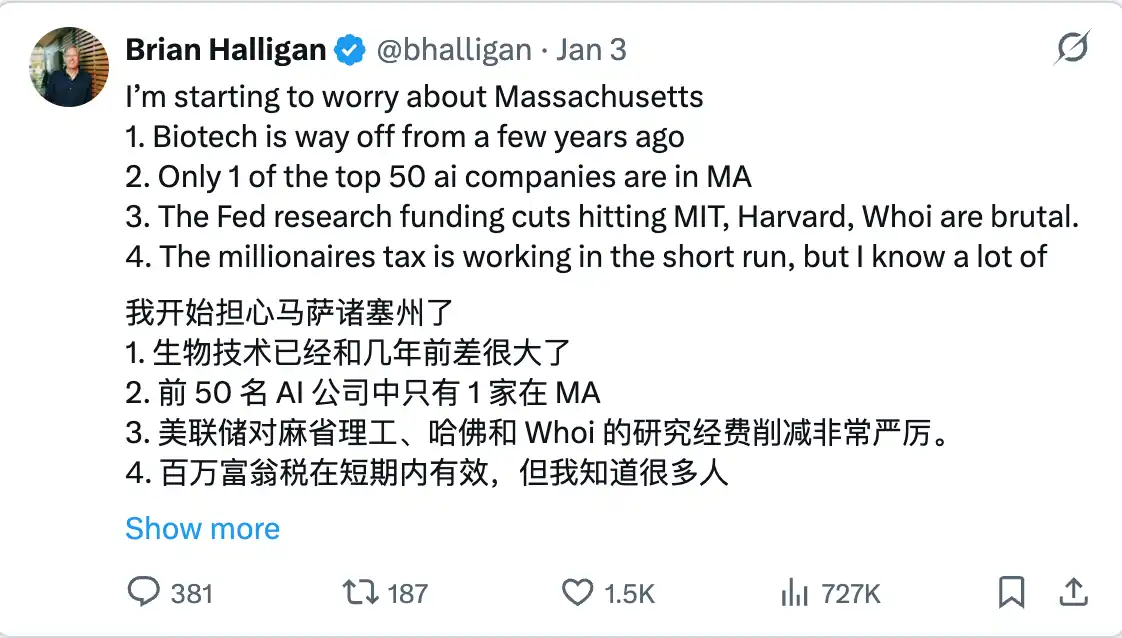
You cannot legislate your way out of a collapsing network, nor can you reboot a network that has already imploded.

However, both San Francisco and the entire U.S. tech ecosystem seem to be heading toward the same fate: a regulatory system that treats tech as a "cash cow." Examples include Proposition M (a bill limiting commercial real estate development) and office vacancy taxes.

Meanwhile, a culture deeply embedded in elite networks struggles to self-regulate. Artificial intelligence (AI) has attracted many bad actors into the ecosystem, and the kind of rigidity that Boston once found difficult to clean up is now taking root here as well.

Add to that the "input-first" progressive notion: We have the best AI labs, we have the most GPUs (graphics processing units), even the president bought us some GPUs. We have the most advanced models. So, what could go wrong?

The difference lies in the cost. Boston's collapse cost the U.S. hundreds of billions of dollars in enterprise value, while San Francisco's decline would erase one-third of the U.S.'s GDP growth over the past decade.

But the problem isn't just economic failure. It's a failure of survival.

Our tech industry has failed to provide a clear rationale for its existence at the national level. If this issue isn't addressed, 2028 will become a referendum on "imprisoning, destroying, and plundering the tech industry," with the trigger being accusations about water and energy usage.

Right now, the AI boom's public perception is not ambiguous. Recent polls show that the average American believes AI is something that wastes water, drives up energy costs, and in return delivers tools that deceive the elderly, expose children to inappropriate sexual content, promote sports gambling, and commit various other evils.

If our best answer to "why shouldn't we imprison tech executives, burn down data centers, and destroy the U.S. tech industry" is: "so we can build better chatbots for your sports betting," then voters will not hesitate to vote in favor of those actions.

In a zero-sum world, voters won't consider long-term benefits; they will first feel envy, then start plundering. We don't plunder sewage systems or power grids because we know they are defenses against chaos. We accept their costs because they hold back chaos. So, does the average voter also see tech as playing a similar role?

Technology is our only way out of the Malthusian trap. However, because we are too cowardly to articulate this clearly, because we have replaced a clear theory of progress with "rationalism" and "Artificial General Intelligence (AGI)," the nation sees the tech industry as a parasite to be squeezed dry.

If we cannot clearly express why innovation is a moral necessity, we can only watch the entire tech industry follow in Boston's footsteps: first taxed, then plundered, and finally drained. And we will be left wondering: Where did it all go?

In a zero-sum world, voters won't look to the long term; they will first feel envy, then start plundering. We don't plunder sewage systems or power grids because we understand they are barriers against chaos. We accept their costs because they hold chaos at bay. So, does the average voter also believe that tech serves a similar role for society?

Technology is our only escape from the Malthusian trap. However, because we are too timid to state this clearly, because we have replaced a coherent idea of "progress" with "rationalism" and "AGI," the nation sees the tech industry as a parasite that can be milked dry.

If we cannot articulate why innovation is a moral imperative, we can only watch the entire tech industry retrace Boston's path: first taxed, then plundered, and finally exhausted. And we will be left puzzled, asking: Where did it all go?


Câu hỏi Liên quan

QWhat were the two main answers tech investors would have given in 2004 about the location of the world's best software companies?

ABoston and San Francisco.

QAccording to the author, what are the three main forces that led to the decline of Boston's tech ecosystem?

A1. A progressive regulatory system that treats companies as assets for property owners to extract value from. 2. A Puritan culture entrenched in elite institutions that is incapable of policing itself. 3. An 'input-first' view of technological progress.

QWhat specific tax disadvantage did a founder face when selling a company for $10 million in Massachusetts compared to Austin?

AA founder in Massachusetts would have to pay $860,000 in taxes, while a founder in Austin would pay nothing.

QWhat does the author suggest is the ultimate consequence for the entire tech industry if it fails to justify its existence on a national level?

AThe entire tech industry will follow Boston's path: first taxed, then plundered, and finally drained.

QWhat does the author identify as the public's perception of the AI boom, based on recent polling?

AThe average American believes AI is something that wastes water, drives up energy costs, and is a tool for scamming the elderly, exposing children to bad sexual content, promoting sports gambling, and other vices.

Nội dung Liên quan

Gần 3 triệu fan hâm mộ, "nữ thần thiện nguyện" đều do AI tổng hợp, làm giả trại mồ côi xuyên biên giới, sự nghiệp "làm từ thiện giả" sụp đổ chỉ sau một đêm

Cô gái người Úc có tên Lily Jay (tên thật Lily Jay Hinson) đã gây chấn động mạng xã hội khi bị phát hiện sử dụng AI để tạo ra một vụ lừa đảo từ thiện quy mô lớn. Với gần 3 triệu người theo dõi trên Instagram, cô xây dựng hình ảnh một tín đồ Hồi giáo ngoan đạo và tích cực thông qua "Quỹ Lily Jay", tuyên bố xây dựng nhà thờ Hồi giáo, cứu trợ trẻ mồ côi ở Uganda, Sudan, Nepal và phân phát bánh mì cho người tị nạn ở Gaza. Tuy nhiên, điều tra từ ABC News Verify đã vạch trần hàng loạt bằng chứng giả mạo: video khánh thành trại trẻ mồ côi ở Uganda với những đứa trẻ cầm kẹo, biểu ngữ và chính người phụ nữ trong video đều do AI tạo ra, kể cả chi tiết lỗi chính tả trên áo phông. Hình ảnh nhận giải thưởng nhân đạo cũng chứa watermark của ChatGPT. Quỹ này thậm chí không đăng ký hoạt động hợp pháp tại Uganda và không có tên trong sổ đăng ký từ thiện ở Úc, đồng thời đã giấu một dòng tuyên bố "không phải là tổ chức từ thiện" trên website. Hoạt động của quỹ đầy nghi vấn: trụ sở đặt ở Kosovo, cá nhân Lily Jay sống ở Cyprus và không phải là giám đốc quỹ. Sau khi bị ABC chất vấn, trang web đã gỡ video giả và nút quyên góp đối với truy cập từ Úc, nhưng vẫn để mở cho người dùng quốc tế. Chuyên gia cảnh báo đây là kiểu lừa đảo nguy hiểm, lợi dụng lòng trắc ẩn và sự tin tưởng. Vụ việc gióng lên hồi chuông cảnh tỉnh về việc AI có thể bị lạm dụng để tạo ra những câu chuyện giả tưởng hoàn hảo, đánh cắp sự thiện nguyện của công chúng trong thời đại số.

marsbit35 phút trước

Gần 3 triệu fan hâm mộ, "nữ thần thiện nguyện" đều do AI tổng hợp, làm giả trại mồ côi xuyên biên giới, sự nghiệp "làm từ thiện giả" sụp đổ chỉ sau một đêm

marsbit35 phút trước

L2 'Tái hiệu chuẩn': Khi L1 Trở Thành Rollup Của Chính Mình, Cục Diện Cuối Cùng Của Ethereum Là Gì?

"L2 Hiệu chỉnh lại": Khi L1 trở thành Rollup của chính nó, tương lai cuối cùng của Ethereum là gì? Cộng đồng Ethereum từng lo lắng về việc L2 làm xói mòn giá trị của L1 và phá vỡ khả năng kết hợp toàn cầu. Bài viết phân tích sự điều chỉnh mối quan hệ giữa L1 và L2 trong bối cảnh mở rộng quy mô của Ethereum. Định vị mới của L2: Với việc L1 tự nâng cao khả năng xử lý (tăng Gas Limit, zkEVM...), vai trò chính của L2 không còn đơn thuần là cung cấp không gian giao dịch rẻ hơn. Thay vào đó, L2 sẽ chuyển sang cung cấp các chức năng khác biệt mà L1 khó đáp ứng thống nhất, như tối ưu hóa ứng dụng cụ thể, tính riêng tư và mô hình quản trị linh hoạt. L2 sẽ trở thành một dải phổ liên tục từ các Rollup kế thừa bảo mật tối đa của Ethereum đến các môi trường thực thi độc lập hơn. Tương tác & Kết hợp lại: Sự phân mảnh giữa các L2 gây ra vấn đề về thanh khoản và trải nghiệm người dùng. Giải pháp nằm ở việc cải thiện khả năng tương tác, không chỉ là "một nút chuyển chuỗi", mà là làm cho các trạng thái giữa các môi trường thực thi có thể tin cậy lẫn nhau nhanh hơn, thông qua các khung công việc Intent, Lớp Tương tác Ethereum (EIL) và việc rút ngắn đáng kể thời gian xác nhận cuối cùng (finality). L1 như "Rollup của chính nó": Với sự phát triển của hệ thống chứng minh (như zkEVM), trong tương lai, các trình xác thực L1 có thể xác minh trạng thái thông qua bằng chứng mật mã thay vì thực thi lại mọi giao dịch. Điều này chia sẻ kiến trúc "thực thi-tách biệt-xác minh" với Rollup, làm mờ ranh giới truyền thống giữa L1 và L2. Các L2 tiên tiến (Native Rollup) có thể kế thừa trực tiếp hơn khả năng xác minh từ giao thức L1. Tóm lại, tương lai của Ethereum không phải là L1 thay thế L2 hay ngược lại, mà là một hệ sinh thái gồm nhiều môi trường thực thi (L2) đa dạng về chức năng và hiệu suất, nhưng có thể chia sẻ nền tảng bảo mật, thanh khoản và quan hệ trạng thái, từ đó tái tạo lại trải nghiệm "một chuỗi" thống nhất cho người dùng.

marsbit37 phút trước

L2 'Tái hiệu chuẩn': Khi L1 Trở Thành Rollup Của Chính Mình, Cục Diện Cuối Cùng Của Ethereum Là Gì?

marsbit37 phút trước

Grayscale Nộp Đơn Đăng Ký ETF Worldcoin Đầu Tiên Lên SEC Dưới Mã Ticker GWLD

Công ty Grayscale Investments đã nộp hồ sơ đăng ký Biểu mẫu S-1 lên Ủy ban Chứng khoán và Giao dịch Hoa Kỳ (SEC) để ra mắt một quỹ ETF tiền mã hóa mới, dự kiến niêm yết trên sàn Nasdaq với mã GWLD. Quỹ này nhằm cung cấp cho nhà đầu tư Mỹ cách tiếp cận được quy định đối với Worldcoin (WLD), đặc biệt khi công dân Mỹ không đủ điều kiện nhận tài trợ người dùng trực tiếp từ Worldcoin. Thông báo này đã giúp giá WLD tăng hơn 8%, dù token trước đó đã chạm mức thấp kỷ lục. Hồ sơ cũng nêu bật các vấn đề về tokenomics, chẳng hạn như 100 địa chỉ ví hàng đầu nắm giữ ~90% nguồn cung lưu hành và việc mở khóa token liên tục cho đến năm 2028 có thể gây áp lực bán. Ngoài ra, hệ sinh thái Worldcoin với công nghệ quét mống mắt (Orbs) đối mặt với những thách thức pháp lý về thu thập dữ liệu sinh trắc học ở nhiều khu vực pháp lý. Dù việc niêm yết có thể bị trì hoãn đến cuối năm 2026, Grayscale vẫn đang mở rộng danh mục sản phẩm đầu tư tiền mã hóa có quy định, cho thấy nỗ lực thiết lập vị thế trên thị trường ETF non trẻ trước khi các tổ chức khác tham gia.

TheNewsCrypto51 phút trước

Grayscale Nộp Đơn Đăng Ký ETF Worldcoin Đầu Tiên Lên SEC Dưới Mã Ticker GWLD

TheNewsCrypto51 phút trước

Những mảnh vỡ vĩnh cửu của tiền bạc: Thanh toán bên thứ ba không có tính nguyên tắc đầu tiên

**Tóm tắt: Mảnh vỡ vĩnh cửu của tiền tệ: Ngành thanh toán bên thứ ba không có 'tính nguyên lý đầu tiên'** Ngành thanh toán đang ở một thời điểm then chốt. Stripe, sau khi bỏ lỡ cơ hội IPO trong đại dịch, đang cố gắng mua lại PayPal để bổ sung năng lực thị trường C2C, trong một nỗ lực nhằm kích thích định giá và kể một câu chuyện mới trước khi lên sàn. Tuy nhiên, cuộc chiến trong ngành thanh toán bên thứ ba giống như một trận chiến tiêu hao vĩnh viễn, khó có thể loại bỏ các công ty nhỏ hơn do hai đặc điểm cốt lõi: sự phân mảnh theo quốc gia, ngành và khách hàng; và bản chất là sản phẩm phụ của hệ thống ngân hàng. Stripe đã thử mở rộng từ thị trường nhà phát triển (D) sang doanh nghiệp (B) và người tiêu dùng (C), đồng thời đặt cược vào tương lai thông qua ổn định tiền (stablecoin) và thanh toán tự động (Agentic Payment). Nhưng stablecoin chưa phải là xu hướng thanh toán phổ biến, và các Agent vẫn cần một lối vào hệ thống truyền thống. Giá trị của Stripe giống như một sản phẩm quyền chọn, phụ thuộc vào mức độ thành công của những câu chuyện này. Cơ hội thực sự trong làn sóng stablecoin và Agent có lẽ không nằm ở việc phát hành stablecoin, mà nằm ở hệ thống thanh toán bù trừ (clearing network) hiệu quả cao. Các công ty như Stripe (với Tempo) và Circle (với Arc) đang xây dựng các blockchain và stablecoin của riêng họ, với mục tiêu cuối cùng là thiết lập các mạng lưới thanh toán bù trừ có thể thu hút dòng tiền và giữ lại lợi nhuận, phần nào thoát khỏi sự phụ thuộc hoàn toàn vào hệ thống ngân hàng thương mại truyền thống. Đây có thể là con đường để vượt qua cấu trúc phân mảnh và phụ thuộc vốn có của ngành thanh toán.

marsbit1 giờ trước

Những mảnh vỡ vĩnh cửu của tiền bạc: Thanh toán bên thứ ba không có tính nguyên tắc đầu tiên

marsbit1 giờ trước

Giao dịch

Giao ngay
活动图片