OpenAI Launches Workflow Agent, GPTs Begin Countdown

marsbitXuất bản vào 2026-04-24Cập nhật gần nhất vào 2026-04-24

Tóm tắt

OpenAI has launched Workspace Agents, an evolution of GPTs designed for teams. This new feature allows users to create reusable, shareable agents that automate repetitive workflows. Driven by Codex, these agents operate within their own workspace, can access files, call tools, and run continuously in the background. Users describe a workflow—such as collecting information, making judgments, generating results, and sending outputs—to ChatGPT, which then builds the agent. The entire team can use and refine the agent via ChatGPT or Slack. Once set up, the agent runs autonomously. Workspace Agents are team-shared, code-free, and manageable with predefined permissions and controls. They are suitable for structured, repeatable tasks involving multiple tools and continuous operation, such as software review, feedback整理, report generation, sales follow-up, and risk assessment. The system operates within clear rules, with sensitive actions requiring human confirmation. It aims to transform workflows from being person-dependent to being documented, executable, and reusable—akin to scientific management principles. Competing solutions from Microsoft and Google are also emerging in this space.

OpenAI released Workspace Agents in the early hours, marking the beginning of the countdown for GPTs.
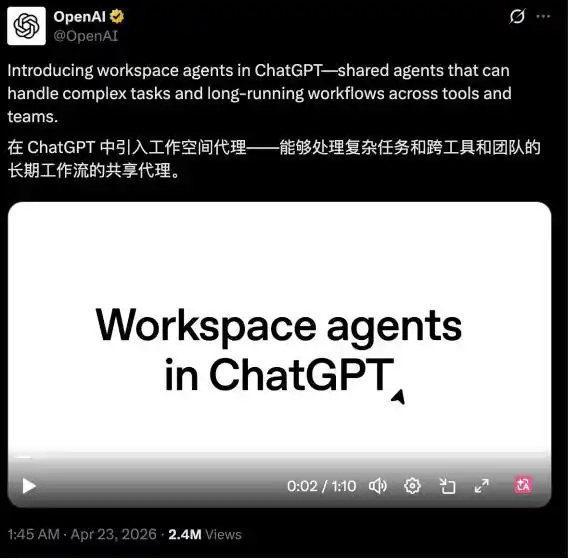
This new product is introduced as an evolved form of GPTs, with a clear positioning: team-oriented, turning a repeatable workflow into a shareable, executable agent.

It is powered by Codex, has its own workspace, can access files, call tools, and execute tasks continuously in the background.

You describe a repetitive workflow to ChatGPT, such as collecting information, making judgments, generating results, and then sending the results out. ChatGPT will then build this process into an Agent, which your entire team can use in ChatGPT or Slack, making adjustments while using it.

Once set up, it will continue running in the background, even when people are away.

It sounds familiar, like OpenClaw · Team Edition.
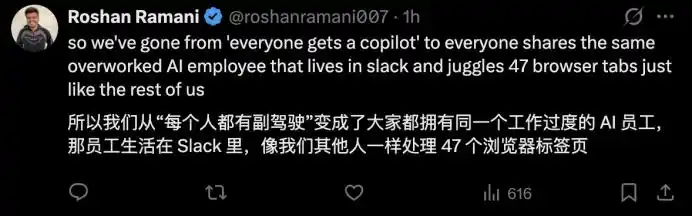
01 Team-Shared Agent

As the name suggests, Workspace Agents are for work teams.

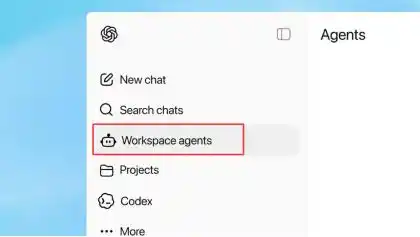
This new feature is placed in the sidebar of ChatGPT as a separate entry. Clicking on it reveals a space to build workflows.
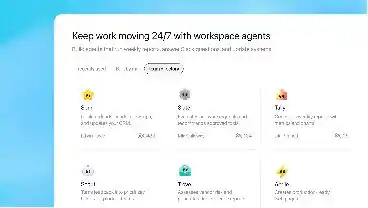
You can create an agent from scratch or modify it based on official templates. The entire process requires no coding; simply describe the workflow in plain language, and the system will break it down step by step: what steps are needed, what tools are used, and what results are output.

The created agent will appear in the team directory, where other members can directly call the same agent or adjust and supplement the workflow during use.
In other words, the workflow becomes a reusable tool for the team. Moreover, it is not fixed; it can be continuously refined during use.

Additionally, Workspace Agents have their own workspace, allowing them to read and save files, call connected tools such as email, calendars, document systems, or other business systems, and execute code when needed.

They can also run continuously, either manually triggered or scheduled. Once the process starts, it will execute step by step without requiring human intervention at each step. As long as the entire process is feasible, you can let it run on its own.

The execution process is controllable. Workspace Agents follow pre-set permissions and control rules.

Each agent's accessible tools and data can be set in advance; operations involving content modification or sending information can require prior approval; administrators can monitor its usage and pause or adjust it when necessary.

Looking back at previous generations of products, this change becomes clearer.

The earliest GPTs were essentially prompt + knowledge base + Actions, configured once for single-user use, without true long-process execution capabilities.

Later, ChatGPT Agent could execute tasks but was more like a one-time call. It ended after completion, with no continuous operation or stable identity.

With Workspace Agents, this type of product has stabilized: it is team-shared, can run long-term, has its own context and memory, executes continuously according to preset processes, and includes permission and management mechanisms.

Based on the official description, this product is suitable for structured, repeatable tasks that rely on multiple tools and require continuous operation. For one-time conversations or temporary tasks, such complexity is likely unnecessary.

Workspace Agents are now available in research preview for ChatGPT Business, Enterprise, Education, and Teacher plans. For Enterprise and Education plans, administrators can manage these agents through role permissions.

02 Simplifying Processes Under Clear Rules

OpenAI provided five typical scenarios covering IT, product, operations, sales, and risk control functions.

None of these scenarios require coding. They share a commonality: the tasks themselves are not complex, but the information is scattered across different places, requiring people to search and organize repeatedly.

The first is software review: after an employee submits a software use or procurement request, the agent checks it against the company's existing tool list and security rules to determine whether the request can be approved, how to proceed, and, if necessary, directly submits the ticket.

The second is product feedback organization: the agent simultaneously checks Slack, customer service channels, and public forums to collect scattered user feedback, categorizes it briefly, identifies which are more important, organizes it into tickets, and outputs a阶段性 summary.

The third is weekly report generation: the agent pulls business data at fixed times, creates charts, writes a summary, and compiles a complete report for the team.

The fourth is sales lead follow-up: the agent checks new customer information, judges whether the customer is worth following up based on team rules, drafts a follow-up email, and syncs relevant content back to the CRM system.

The fifth is third-party risk assessment: the agent checks various information about suppliers, such as whether they are sanctioned, their financial status, and any negative news, then compiles a report according to the company's standards.

These five scenarios point to the same type of task, which is the primary use of Workspace Agents: if a process already exists but requires constant switching between different tools during execution, with results pieced together at the end, Workspace Agents can connect these steps and let them run sequentially.

The question then arises: while it's fine to let it collect information and organize processes, is it appropriate to leave judgment to it?

According to the official design, this issue has not been overlooked.

The "judgment" in Workspace Agents is not free rein; it operates within a set of rules.

For example, in the software review scenario, it checks against the company's existing list and security rules to decide whether to use a certain tool; in the sales lead scenario, it doesn't randomly pick customers but scores them based on pre-set team standards.

For more sensitive actions, such as modifying data, sending external messages, or creating schedules, the system can add a confirmation step by default. The process can run automatically, but critical nodes can still pause for human final decisions.

This actually defines a boundary.

Workspace Agents are more suitable for tasks where the rules are clear and the judgment criteria are already written.

If a task itself requires extensive ad-hoc judgment and constant adjustment based on context, it still needs human leadership.

03 Management Lessons from OpenClaw

From a management perspective, Workspace Agents solve not an efficiency problem but the organizational method of the process itself.

In many teams, workflows exist but are not fully documented.

They are scattered in different places: part in documents, part in systems, and part in the minds of those executing them.

The same task handled by different people may follow different sequences and judgment standards.

This is why many tasks seem simple but are difficult to stabilize.

In the late 19th century, Taylor proposed scientific management, whose core was transforming work from "relying on personal experience" to "steps that can be split, recorded, and repeatedly executed."

First, break down a task: how each step should be done, what standards to judge by, then fix these steps so different people can execute them in the same way.

What Workspace Agents do is very similar to this logic. A process must first be clearly written: when it starts, what data is used, what steps are involved, and what results are produced.

This content directly becomes an executable process. During execution, it no longer relies on someone remembering the next step but follows the defined sequence.

The change is that the process can be separated from people.

In the past, the "most familiar person" in a team often determined whether the process could run smoothly; now, this experience can be written into the process, and other team members can directly use the same approach.

Another important point is that the process must have boundaries: which parts can be automated, which must stop for confirmation, which data can be used, and which cannot—all must be set from the beginning.

From this perspective, Workspace Agents do not change the content of work; they change how the process exists.

The process is no longer just described; it can be run, reused, and continuously adjusted.

Tools like OpenClaw initially followed this direction: they attempted to let systems take over entire operational processes, turning actions that required step-by-step human completion at a computer into automatically executable workflows.

The difference is that Workspace Agents place this in a team environment and add layers of permissions, approvals, and management, making work more controllable.

Similar attempts are not unique to OpenAI.

Microsoft is advancing its Copilot Agents, embedding this capability into Microsoft 365, covering environments employees use daily, from email and documents to collaboration tools.

Google also launched an enterprise-side Agent platform today, focusing on how to manage and schedule large numbers of agents, allowing them to collaborate across different systems.

However, for enterprises, the difference is not just in functionality. The real cost lies in usage: whether employees need to learn new tools and whether processes need to be rebuilt determines whether these systems can truly operate.

The competition continues, but the direction is clear.

This article is from the WeChat public account "Letter AI", author: Yuan Xinyue

Câu hỏi Liên quan

QWhat is the main purpose of OpenAI's newly released Workspace Agents?

AWorkspace Agents are designed for teams to create shareable, executable agents that automate repetitive workflows, allowing them to run continuously in the background with access to files, tools, and predefined rules.

QHow do Workspace Agents differ from previous GPTs and ChatGPT Agents?

AUnlike earlier GPTs (prompt + knowledge base + Actions for single users) and ChatGPT Agents (one-time execution without persistence), Workspace Agents are team-shared, have long-running capabilities, stable identities, context memory, and built-in permission management.

QWhat are some typical use cases for Workspace Agents mentioned in the article?

ATypical use cases include software compliance checks, product feedback aggregation, weekly report generation, sales lead follow-ups, and third-party risk assessments—all involving structured, repeatable tasks across multiple tools.

QHow does Workspace Agents handle decision-making and ensure control?

ADecision-making is rule-based, relying on predefined company standards (e.g., security rules or sales criteria). Sensitive actions like data modification or external communications can require human confirmation, and administrators can monitor, pause, or adjust agents.

QWhat management philosophy does Workspace Agents align with, according to the article?

AIt aligns with Taylor's scientific management principles, breaking down workflows into documented, repeatable steps that are detached from individual experience, making processes executable, shareable, and adjustable within teams.

Nội dung Liên quan

Cổ Phiếu Công Nghệ Có Động Lực Mạnh Tại Mỹ Ghi Nhận Phiên Tăng Mạnh Nhất Lịch Sử, Nhưng Đợt Sụt Giảm Đã Kết Thúc?

Bài viết phân tích đợt bật tăng mạnh mẽ của cổ phiếu công nghệ theo đà tăng trưởng (momentum) trên thị trường chứng khoán Mỹ vào ngày 21/7. Dù các chỉ số như yếu tố động lượng TMT của Morgan Stanley và chỉ số động lượng beta cao của Goldman Sachs ghi nhận mức tăng mạnh kỷ lục, đặc biệt là ở lĩnh vực bán dẫn với sự đóng góp của các mã như Micron và Intel, bối cảnh tổng thể vẫn tiềm ẩn nhiều rủi ro. Đợt phục hồi này được cho là xuất phát từ việc các nhà đầu tư bán khống bị buộc phải mua lại cổ phiếu (short squeeze) sau khi nhóm cổ phiếu này đã lao dốc tới 33%. Tuy nhiên, nhiều chuyên gia tỏ ra thận trọng. BTIG cảnh báo đây có thể chỉ là đợt bật tăng kỹ thuật trong bối cảnh thị trường có độ rộng yếu (số cổ phiếu giảm giá nhiều hơn tăng giá) và khối lượng giao dịch thấp, khuyến nghị nhà đầu tư nên bán ra khi giá lên cao. Trong khi đó, Goldman Sachs và UBS lạc quan hơn, cho rằng đợt bán tháo đã gần kết thúc và đây là cơ hội để mua vào từng bước, đặc biệt là các cổ phiếu AI, mặc dù khuyến cáo nên sử dụng các công cụ phòng ngừa rủi ro. Triển vọng tiếp theo của thị trường phụ thuộc lớn vào mùa báo cáo tài chính, với trọng tâm là kết quả của Alphabet và định hướng chi tiêu vốn cho AI. Đồng thời, thị trường trái phiếu cũng đang cảnh báo khi lợi suất trái phiếu dài hạn tăng lên, cùng với giá dầu leo thang do căng thẳng địa chính trị, có thể gây áp lực lên cổ phiếu trong thời gian tới.

marsbit1 phút trước

Cổ Phiếu Công Nghệ Có Động Lực Mạnh Tại Mỹ Ghi Nhận Phiên Tăng Mạnh Nhất Lịch Sử, Nhưng Đợt Sụt Giảm Đã Kết Thúc?

marsbit1 phút trước

Cổ phiếu 'Động lượng Công nghệ' Mỹ ghi nhận mức tăng trong ngày lớn nhất lịch sử, nhưng đã kết thúc đợt sụt giảm mạnh chưa?

Cổ phiếu động lực công nghệ Mỹ đã bật tăng mạnh nhất trong lịch sử vào ngày 21/7, với chỉ số yếu tố động lượng TMT của Morgan Stanley tăng hơn 12%. Đợt phục hồi này diễn ra sau ba phiên giảm liên tiếp và mức sụt giảm tích lũy 33% từ mức đỉnh, được thúc đẩy chủ yếu bởi lĩnh vực bán dẫn và hiện tượng "bán tháo ép" (short squeeze) khi các nhà đầu tư bán khống phải đóng vị thế. Tuy nhiên, sức mạnh của đợt bật tăng bị nghi ngờ do khối lượng giao dịch thấp hơn mức trung bình và sự phân hóa rộng rãi trên thị trường - chỉ số chính tăng nhưng số cổ phiếu giảm giá lại nhiều hơn số tăng giá. Các quan điểm chiến lược trái ngược nhau: BTIG khuyến nghị "bán ra khi giá lên" vì lực cản kỹ thuật mạnh, trong khi Goldman Sachs và UBS cho rằng đợt bán tháo đã gần kết thúc và đề xuất mua vào từng phần. Mùa báo cáo kết quả kinh doanh, đặc biệt là từ Alphabet, cùng với diễn biến lợi suất trái phiếu kho bạc tăng cao và giá dầu leo thang do căng thẳng địa chính trị, sẽ là những yếu tố then chốt quyết định tính bền vững của đợt phục hồi này.

链捕手4 phút trước

Cổ phiếu 'Động lượng Công nghệ' Mỹ ghi nhận mức tăng trong ngày lớn nhất lịch sử, nhưng đã kết thúc đợt sụt giảm mạnh chưa?

链捕手4 phút trước

Bitcoin xuất hiện 3 tín hiệu đáy vĩ mô – Nhưng liệu BTC có thể đạt 70.000 USD?

Thị trường đang dần chuyển hướng nhận định từ "đáy cục bộ" sang "đáy vĩ mô" đối với Bitcoin. Từ góc độ kỹ thuật, việc BTC vượt ngưỡng 66.000 USD đã thổi bùng tâm lý lạc quan. Nhà phân tích Ali Martinez chỉ ra rằng Bitcoin một lần nữa xuất hiện ba tín hiệu kỹ thuật trùng khớp với các đáy chu kỳ vĩ mô trong lịch sử: RSI hàng tháng giảm xuống ~43.65, Chande Momentum Oscillator (CMO) đạt ~-71 và giá giao dịch quanh đường trung bình động 50 tháng. Mô hình tương tự từng xuất hiện vào các năm 2015, 2019 và 2022, thường báo hiệu giai đoạn tích lũy mạnh trước những đợt tăng giá lớn. Tuy nhiên, tính bền vững của đà tăng vẫn phụ thuộc vào thanh khoản. Dữ liệu on-chain cho thấy một nghịch lý: giá phá vỡ nhưng dòng tiền không theo kịp. Vốn hóa thị trường stablecoin đã giảm hơn 10 tỷ USD trong tháng qua, và stablecoin tiếp tục rời khỏi các sàn giao dịch trong 35 ngày liên tiếp, trong khi hoạt động tích lũy Bitcoin trên thị trường giao ngay chưa có dấu hiệu tăng mạnh. Do đó, dù tín hiệu kỹ thuật lạc quan, việc chuyển dịch sang đáy vĩ mô và một đợt bứt phá quyết định lên vùng 70.000 USD vẫn cần được xác nhận thêm bởi dòng thanh khoản mới.

ambcrypto8 phút trước

Bitcoin xuất hiện 3 tín hiệu đáy vĩ mô – Nhưng liệu BTC có thể đạt 70.000 USD?

ambcrypto8 phút trước

Hợp lâu tất phân, phân lâu tất hợp: Khi L1 trở thành Rollup của chính nó, cục diện cuối cùng của Ethereum là gì?

Từ lâu, cộng đồng Ethereum đã lo lắng về việc L2 làm suy yếu giá trị và tính kết hợp toàn cầu của L1. Bài viết thảo luận về sự tiến hóa trong mối quan hệ giữa L1 và L2, nhấn mạnh rằng lộ trình mở rộng quy mô của Ethereum đang thay đổi. Trọng tâm trước đây của L2 là cung cấp không gian giao dịch rẻ hơn, nhưng khi L1 tự nâng cao khả năng xử lý thông qua tăng Gas Limit, statelessness và zkEVM, vai trò của L2 đang được định vị lại. Trong tương lai, L2 sẽ cần cung cấp các giá trị khác biệt như tối ưu hóa ứng dụng cụ thể, tính riêng tư và mô hình quản trị linh hoạt, thay vì chỉ là không gian thực thi chi phí thấp. L1 sẽ đóng vai trò là trung tâm toàn cầu mạnh mẽ cho việc giải quyết, trạng thái chia sẻ và thanh khoản. Một thách thức lớn là sự phân mảnh do nhiều L2 gây ra, cắt nhỏ tính thanh khoản và trải nghiệm người dùng. Giải pháp nằm ở việc cải thiện khả năng tương tác, chẳng hạn thông qua các khung Intent mở (như Open Intents Framework) và Lớp Tương tác Ethereum (EIL), nhằm tạo trải nghiệm xuyên chuỗi liền mạch. Rút ngắn thời gian xác nhận cuối cùng (finality) của L1 từ cấp phút xuống cấp giây cũng rất quan trọng để tăng tốc các tương tác xuyên chuỗi. Một quan điểm thú vị được đưa ra bởi nhà nghiên cứu Barnabé Monnot: với sự phát triển của hệ thống chứng minh (như zkEVM), bản thân L1 cuối cùng có thể trở thành một dạng "Rollup của chính nó". Điều này không có nghĩa là L1 bị "hạ cấp", mà mô tả một kiến trúc nơi việc xác thực bằng chứng mật mã có thể thay thế việc thực thi lại toàn bộ giao dịch bởi mọi node, từ đó làm mờ ranh giới truyền thống giữa L1 và L2. Các Native Rollup trong tương lai có thể kế thừa khả năng xác minh một cách nguyên bản hơn từ L1. Tóm lại, tương lai của Ethereum không phải là L1 thay thế L2 hay ngược lại, mà là sự hình thành của một hệ sinh thái gồm nhiều môi trường thực thi đa dạng (L2) với các chức năng và mô hình khác nhau, nhưng cùng chia sẻ nền tảng bảo mật, thanh khoản và trạng thái từ một L1 vững chắc. Thách thức lớn nhất là kết nối lại những thứ đã bị phân mảnh do mở rộng quy mô, để Ethereum một lần nữa cảm thận như một chuỗi thống nhất cho người dùng.

链捕手18 phút trước

Hợp lâu tất phân, phân lâu tất hợp: Khi L1 trở thành Rollup của chính nó, cục diện cuối cùng của Ethereum là gì?

链捕手18 phút trước

Agent Đua Ngựa Kết Thúc, Siêu Bàn Làm Việc Lên Ngôi

Trong tháng qua, các đại gia công nghệ Trung Quốc như Tencent, Alibaba và ByteDance đồng loạt có động thái tương tự: không ra mắt Agent mới mà bắt đầu hợp nhất và cắt giảm số lượng Agent riêng lẻ. Tencent sáp nhập QClaw vào WorkBuddy, Alibaba tích hợp ba sản phẩm thành "Qianwen Office", còn ByteDance đổi tên Trae Solo thành Trae Work. Điều này đánh dấu một sự đồng thuận mới: thời kỳ "đua ngựa" Agent phân tán đã kết thúc, thay vào đó là xu hướng tập trung vào "Siêu bàn làm việc" (Super Workbench). Nguyên nhân sâu xa nằm ở sự thay đổi trong cạnh tranh. Giai đoạn đầu, nhiều Agent được tạo ra cho các tác vụ đơn lẻ, dẫn đến trùng lặp, tốn kém tài nguyên tính toán và gây khó hiểu cho người dùng. Khi rào cản kỹ thuật bị xóa nhòa, cuộc chiến chuyển sang hiệu quả chi phí và khả năng tích hợp. Các công ty nhận ra thị trường thực sự không chỉ là lập trình viên mà là toàn bộ người lao động văn phòng, với quy mô lớn hơn hàng trăm lần. Hành động thu gọn này cho thấy một chuyển dịch chiến lược: từ việc coi Agent như một sản phẩm độc lập sang xem nó như một "cổng vào" thống nhất cho công việc, và cuối cùng sẽ trở thành một "năng lực" vô hình. Các nền tảng như WorkBuddy, Qianwen Office hay Trae Work đang cạnh tranh để trở thành điểm khởi đầu AI duy nhất cho nhân viên, qua đó kiểm soát quyền điều phối dữ liệu và API doanh nghiệp. Điều này sẽ định hình lại ngành phần mềm doanh nghiệp. Giao diện người dùng (UI) truyền thống có thể mất dần tầm quan trọng, thay vào đó, các hệ thống backend (như ERP, CRM) sẽ cung cấp "Skills" (khả năng) tiêu chuẩn hóa để Siêu bàn làm việc gọi và thực thi. Phần mềm trở thành hạ tầng ngầm, còn AI trở thành giao diện chính. Tương lai, Agent tốt nhất sẽ là thứ không thể nhìn thấy, giống như điện hay giao thức mạng, trở thành nền tảng thiết yếu nhưng vô hình cho mọi hoạt động.

marsbit48 phút trước

Agent Đua Ngựa Kết Thúc, Siêu Bàn Làm Việc Lên Ngôi

marsbit48 phút trước

Giao dịch

Giao ngay
活动图片





