Hyperliquid with Trillions in Trading Volume: How to Break the Thin Profit Curse

比推Xuất bản vào 2025-12-18Cập nhật gần nhất vào 2025-12-18

Tóm tắt

Hyperliquid, a decentralized exchange, processes massive trading volumes (annualized $617B in perps) but captures minimal fees—only ~3.9 bps—compared to retail-centric platforms like Coinbase (35.5 bps) and Robinhood (33.5 bps). This reflects a structural divide: Hyperliquid operates at the "market layer" (like Nasdaq), offering low-margin execution, while brokers profit from higher-margin services like custody, lending, and subscriptions. Hyperliquid’s open architecture—via Builder Codes (third-party frontends) and HIP-3 (external product deployment)—fuels growth but risks commoditizing its core exchange, as third parties capture user relationships and routing leverage. Recent strategic shifts aim to defend its position: halting subsidies for external frontends, launching USDH (a native stablecoin) to capture reserve yields, and introducing portfolio margin to earn interest on lending. The protocol is evolving toward a hybrid model—balancing open infrastructure with broker-like revenue streams (e.g., balance-based earnings)—to avoid being trapped in low-margin wholesale execution. The key challenge for 2026 is achieving this shift without undermining its ecosystem-friendly approach.

Source: BlockRearch

Original Title: Hyperliquid crossroads: Robinhood or Nasdaq economics

Compiled and Edited by: BitpushNews


Hyperliquid is currently in the phase of clearing Nasdaq-level perpetual contract (Perp) trading volume, but earning only thin profits. Over the past 30 days, it cleared $205.6 billion in notional value of perpetual contracts (annualized quarterly rate of $617 billion), yet generated only $80.3 million in fees, with a monetization rate of just about 3.9 basis points.

Its monetization model resembles more of a wholesale execution venue.
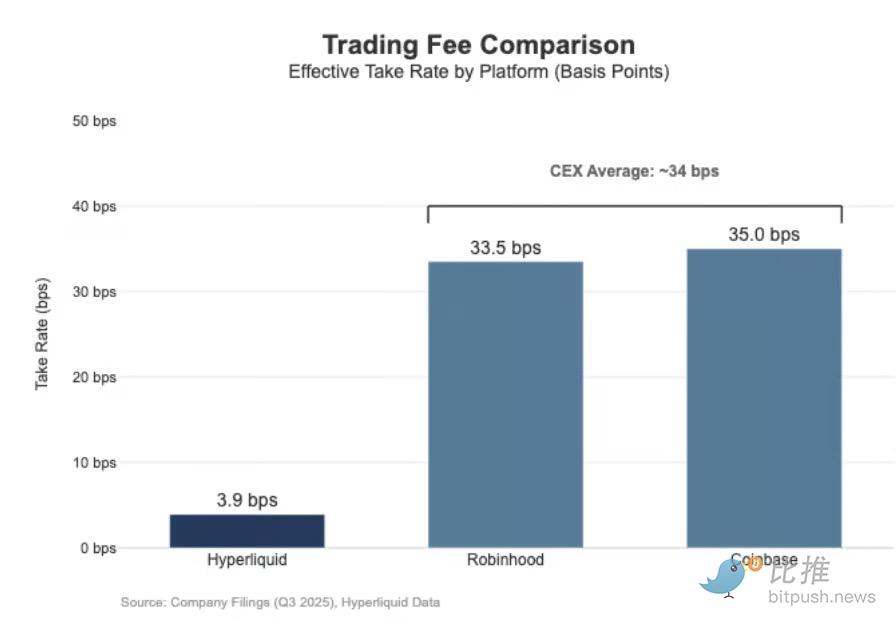
In comparison, Coinbase reported its Q3 2025 trading volume as $295 billion, with trading revenue of $1.046 billion, implying a Take Rate of 35.5 basis points.

Robinhood exhibits similar retail monetization characteristics in the cryptocurrency space: its $80 billion in cryptocurrency notional trading volume brought in $268 million in trading revenue, implying a monetization rate of 33.5 basis points; meanwhile, its stock trading notional value for Q3 2025 was $647 billion.

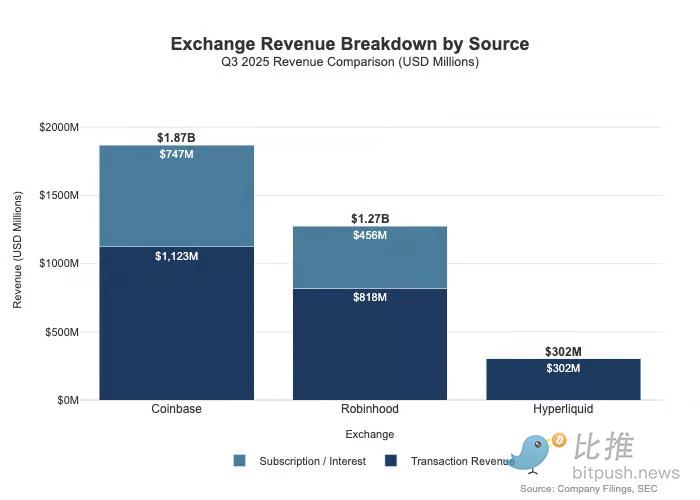
The gap is even larger than what the fee rates suggest, as retail platforms possess multi-dimensional monetization paths. In Q3 2025, Robinhood generated $730 million in transaction-based revenue, plus $456 million in net interest income and $88 million in other revenue (primarily driven by Gold subscription services).

In contrast, Hyperliquid currently relies heavily on trading fees, and these fees are structurally constrained at the protocol level to single-digit basis points.
The Difference in Positioning: Distributor vs. Market Layer

This difference is best explained by positioning: Coinbase and Robinhood belong to the broker/distribution business, monetizing through balance sheets and subscription services; whereas Hyperliquid is closer to the exchange layer (market layer). In traditional market structure, the profit pool is divided between these two layers.

The core divide in traditional finance (TradFi) is "Distribution" vs. "Market":

  • Distribution Layer (e.g., Robinhood and Coinbase): They own the customer relationship and occupy the high-margin环节.

  • Market Layer (e.g., Nasdaq): They exist as exchanges, with pricing power structurally constrained, and execution businesses tend towards "commoditized" economics due to competition.

1. Broker-Dealer = Distribution + Customer Balance Sheet

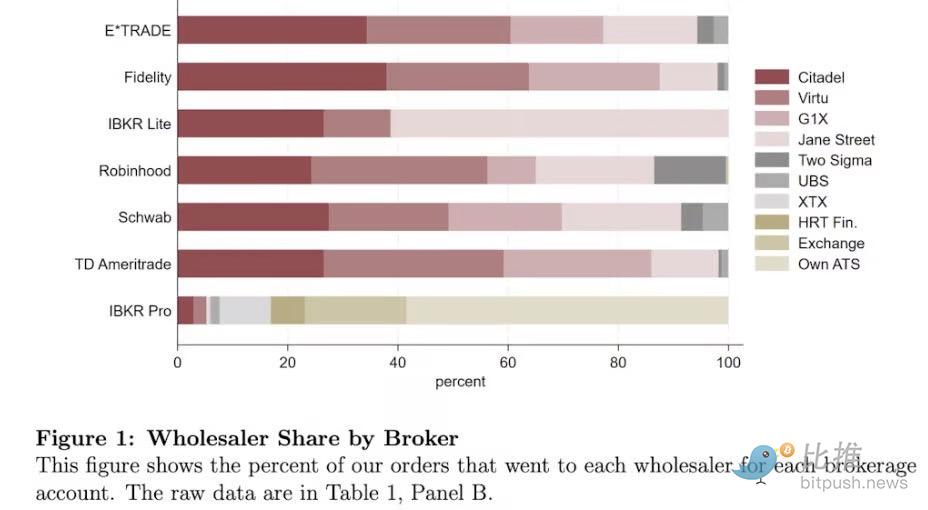
Brokers own the customer relationship. Most users do not access Nasdaq directly but enter the market through brokers. Brokers handle deposits, custody, margin/risk management, customer service, and tax documents, then route orders to various trading venues. This ownership of the relationship creates monetization capabilities beyond trading:

  • Balances: Cash sweep spreads, margin lending, securities lending.

  • Packaging: Subscription services, bundles, co-branded cards/advisory services.

  • Routing Economics: Brokers control the flow and can embed payments or revenue-sharing mechanisms in the routing chain.

    This is why brokers' profitability often surpasses that of trading venues: the profit pool is concentrated where distribution and balances reside.

2. Exchange = Matching + Rulebook + Infrastructure (Constrained Take Rate)

Exchanges operate the venue: matching, setting market rules, deterministic execution, and connectivity. Their monetization methods include:

  • Trading Fees: Compressed by competition in high-liquidity products.

  • Rebates/Liquidity Programs: Often forced to return most nominal fees to makers to attract liquidity.

  • Market Data, Connectivity/Co-location Services.

  • Listing Fees and Index Licensing.

Robinhood's routing logic clearly demonstrates this architecture: the broker (Robinhood Securities) owns the users and routes orders to third-party market centers, with routing revenue shared throughout the chain. Distribution is the high-margin layer: it controls customer acquisition and the monetization domains around execution (payment for order flow, margin, securities lending, subscriptions).

Nasdaq is the thin-margin layer. Its product is commoditized execution capability and queue access, and its pricing power is mechanically suppressed because venues need to pay maker rebates to win liquidity, regulation caps access fees, and routing is extremely flexible. In Nasdaq's disclosures, this is reflected in net cash equity capture per share of just fractions of a cent.
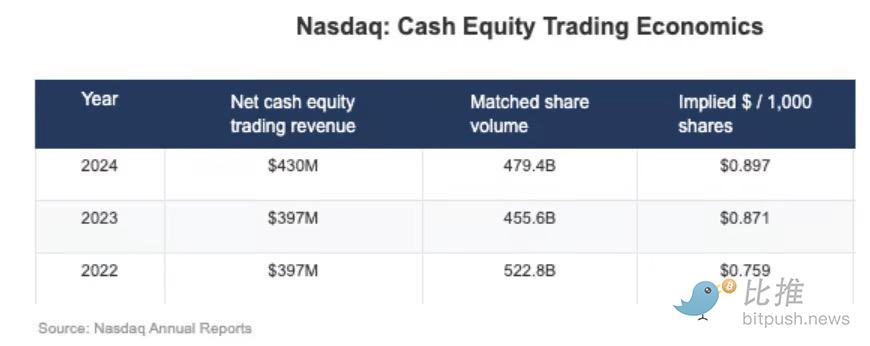
The strategic consequence of these low margins is evident in Nasdaq's revenue mix. In 2024, its Market Services revenue was $1.02 billion, accounting for only 22% of total revenue of $4.649 billion; this proportion was 39.4% in 2014 and 35% in 2019. This aligns with its strategy of shifting from market-sensitive execution business to more sustainable software/data businesses.

Hyperliquid's "Nasdaq Path"

Hyperliquid's effective take rate of about 4 basis points aligns with its deep focus on the "market layer." It is building an on-chain Nasdaq simulator: an architecture with high throughput, margin management, and a clearing stack (HyperCore), employing maker/taker pricing and maker rebates, aimed at optimizing execution quality and shared liquidity, rather than单纯的 retail monetization.

This is reflected in two design separations, similar to TradFi, that most crypto venues lack:
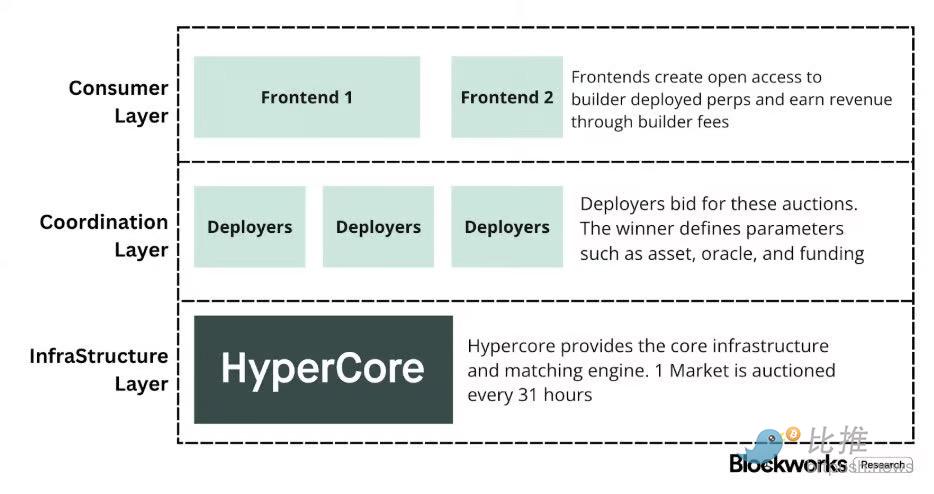
A) Permissioned Distribution/Layer (Builder Codes)

"Builder Codes" allow third-party interfaces to be deployed on top of the core trading venue and charge their own economic fees. Builder fees are capped at 0.1% (10 bps) for perps and 1% for spot, and can be set per order. This creates a competitive market for distribution, rather than a single-app monopoly.

B) Permissioned Listing/Product Layer (HIP-3)

In TradFi, exchanges control listings and product creation. The HIP-3 protocol externalizes this function: builders can deploy perpetual contracts that inherit the HyperCore stack and API, with the deployer responsible for defining and operating the market. Economically, HIP-3 formalizes revenue sharing between the venue and the product: spot and HIP-3 perp deployers can retain up to 50% of the trading fees from the deployed assets.

Builder Codes have already won on distribution; by mid-December, about one-third of users were trading through third-party frontends rather than the native UI.

Structural Pressure and Defense
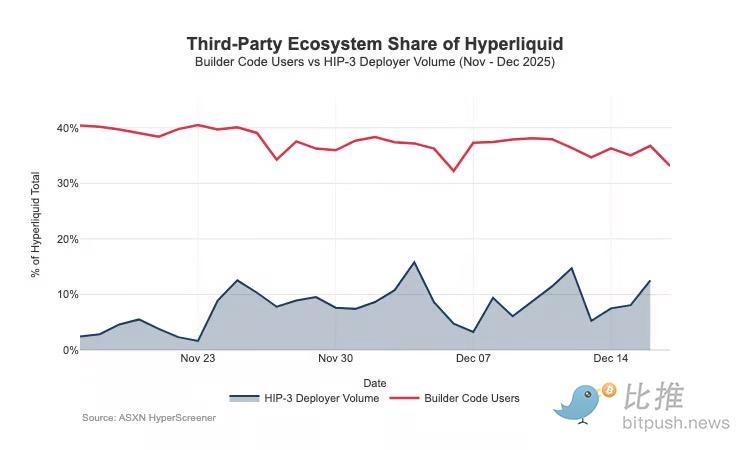
The problem is: this structure that fosters distribution growth will also predictably depress the venue's earnings:

  • Price Compression: Multiple frontends selling the same backend liquidity will push competition towards the lowest total cost; Builder fees can be adjusted per order, pushing pricing towards the bottom line.

  • Monetization Domain Drain: Frontends own deposits, bundling, subscriptions, and workflows; they capture the broker-layer profits, while Hyperliquid can only retain the thin venue earnings.

  • Strategic Routing Risk: If frontends become true cross-platform routers, Hyperliquid will be forced into a race for wholesale execution, retaining流量 only by cutting fees or increasing rebates.

Hyperliquid deliberately chose the thin-margin market layer (via HIP-3 and Builder Codes), while allowing a thick-margin broker layer to emerge on top of it. If third-party frontends continue to expand, they will increasingly dictate user-facing economics, control retention domains, and gain routing leverage, thereby structurally depressing Hyperliquid's take rate in the long term.

Commoditization is clearly the biggest risk. If third-party frontends can consistently underprice the native UI and eventually achieve cross-platform routing, Hyperliquid could be reduced to an extremely thin-margin wholesale clearing channel.

Strategic Pivot: Defending Distribution & Broadening Revenue

Recent design choices indicate that Hyperliquid is attempting to prevent the above outcome while broadening its revenue sources.
  1. Distribution Defense: Maintaining Native UI Economic Competitiveness

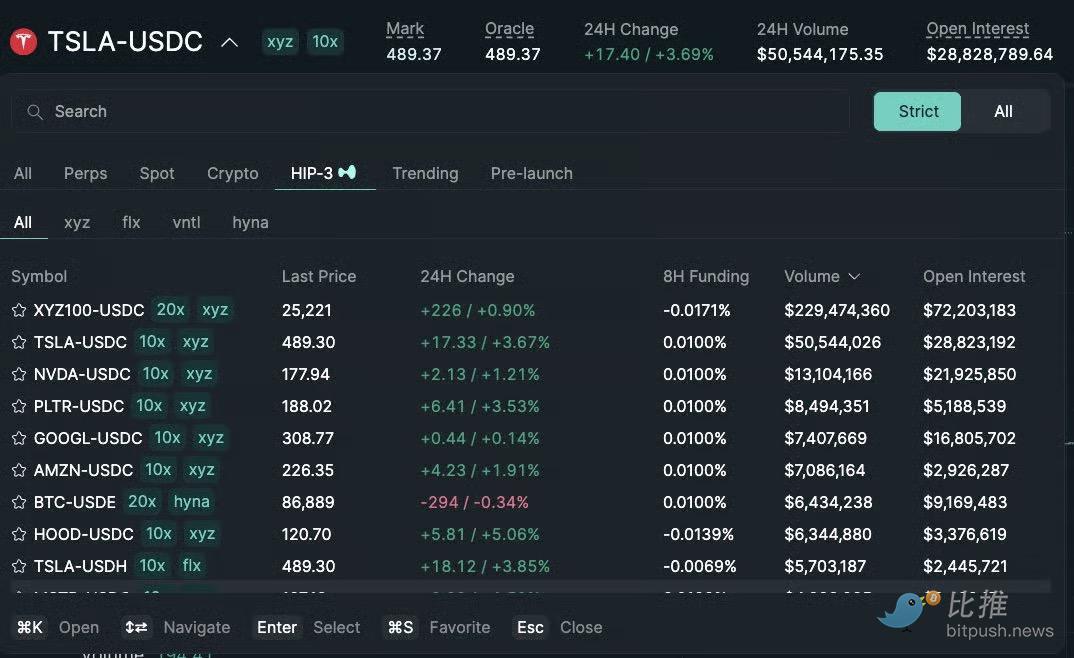
    A previously proposed staking discount would have allowed builders to receive up to a 40% discount by staking HYPE, which would have made third-party frontends structurally cheaper than Hyperliquid's own interface. Withdrawing this proposal removed direct price subsidies for external frontends. Meanwhile, HIP-3 markets, initially positioned for distribution by builders, are now being included in Hyperliquid's native frontend's "strict list." The signal is clear: Hyperliquid remains open at the builder level but is unwilling to compromise on core distribution rights.

  2. USDH: Shifting from Trading Monetization to Float Monetization

    The launch of USDH aims to recapture stablecoin reserve收益 that would otherwise flow externally. Its structure is a 50/50 split of reserve收益: 50% to Hyperliquid, 50% for USDH ecosystem growth. Fee discounts for USDH trading pairs further confirm this: Hyperliquid is willing to compress per-trade收益 for a larger, stickier profit pool from asset balances. Effectively, it adds an annuity-like revenue stream that scales with the monetary base (not just trading volume).

  3. Portfolio Margin: Introducing Prime Broker-like Financing Economics

    Portfolio margin unifies spot and perp margin, allowing risk offsetting, and introduces native borrowing loops. Hyperliquid retains 10% of the interest paid by borrowers. This makes the protocol's economics increasingly dependent on leverage utilization and interest rates, moving closer to a broker/prime broker economic model rather than a pure exchange model.

Conclusion: Moving into 2026

Hyperliquid has reached top-tier venue levels in terms of throughput scale, but its monetization still resembles a market layer: massive trading value paired with single-digit basis point effective take rates. Its gap with Coinbase or Robinhood is structural. Retail platforms occupy the broker layer, own user relationships and asset balances, and profit from multiple profit pools (financing, idle cash, subscriptions). Pure trading venues sell "execution," and execution is inherently commoditized due to liquidity and routing competition. Nasdaq is the epitome of this constraint in TradFi.

Hyperliquid initially leaned towards the "pure trading venue" prototype. By separating distribution and product creation, it accelerated ecosystem growth. The cost is that this architecture can lead to profit spillover.

However, recent moves can be interpreted as a deliberate pivot to defend distribution and enrich the revenue mix beyond trading fees. The protocol has become less willing to subsidize external frontends to be cheaper than the native UI, has started showcasing HIP-3 more natively, and has added balance-sheet-driven profit pools. USDH is a prime example of pulling back reserve收益, and portfolio margin introduces financing economics through a 10% cut of borrowing interest.

Hyperliquid is evolving towards a hybrid model: an execution轨道 as the underlying layer, overlaid with distribution defense and balance-driven profit pools. This reduces the risk of being trapped in the thin-margin wholesale环节, allowing it to move closer to a broker-like revenue组合 without abandoning its core advantages of unified execution and clearing.

Looking ahead to 2026, the core suspense is: Can Hyperliquid successfully pivot towards a broker-like profit model without破坏 its "outsourcing-friendly" model?

USDH (Hyperliquid's native stablecoin) is the clearest litmus test: the current supply of about $100 million indicates that the growth rate of this outsourced issuance is slow when a protocol does not directly control the distribution channels. An obvious alternative could have been setting defaults at the UI level, for example, automatically converting the protocol's ~$4 billion in USDC reserves into the native stablecoin (similar to Binance's当年 auto-conversion of user assets to BUSD).

If Hyperliquid wants to access broker-level profit pools, it might have to act more like a broker: stronger control, tighter native product integration, and drawing clearer boundaries with ecosystem teams that compete at the same distribution and asset balance layer.


Twitter:https://twitter.com/BitpushNewsCN

Bitpush TG Discussion Group:https://t.me/BitPushCommunity

Bitpush TG Subscription: https://t.me/bitpush

Original article link:https://www.bitpush.news/articles/7596866

Câu hỏi Liên quan

QWhat is Hyperliquid's current effective take rate on its massive perp trading volume, and how does it compare to retail platforms like Coinbase and Robinhood?

AHyperliquid's effective take rate is approximately 3.9 basis points (0.039%) on its perp trading volume. This is significantly lower than retail platforms; Coinbase reported a take rate of 35.5 basis points, while Robinhood Crypto's implied take rate was 33.5 basis points.

QAccording to the article, what is the fundamental structural difference in profit pools between the 'distribution layer' (like brokers) and the 'market layer' (like exchanges)?

AThe distribution layer (brokers like Robinhood and Coinbase) owns the customer relationship, which allows for high-margin monetization through multiple avenues beyond trading fees, such as balance sheet activities (cash sweep spreads, margin lending), subscriptions, and routing economics. The market layer (exchanges like Nasdaq) provides execution and infrastructure, but its pricing power is structurally constrained by competition, leading to commoditized, low-margin economics primarily from transaction fees, rebates, and data services.

QWhat two TradFi-like separation designs does Hyperliquid employ that most crypto venues do not?

AHyperliquid employs two key separation designs: 1) A permissioned distribution layer via Builder Codes, which allow third-party frontends to deploy on top of the core exchange and charge their own fees. 2) A permissioned listing/product layer via HIP-3, which externalizes market deployment and allows deployers to share up to 50% of the trading fees from their deployed assets.

QWhat are the three recent strategic shifts Hyperliquid has made to defend its economics and broaden its revenue, as mentioned in the article?

AThe three recent shifts are: 1) Distributive Defense: Withdrawing a proposed staking discount that would have made third-party frontends cheaper than its native UI and more natively featuring HIP-3 markets. 2) USDH: Launching a native stablecoin to recapture reserve yields that would otherwise flow externally, sharing the收益 50/50 between the protocol and ecosystem growth. 3) Portfolio Margin: Introducing a unified margin system that allows for risk netting and includes a native borrowing loop, with the protocol taking a 10% cut of the interest paid by borrowers.

QWhat does the article identify as the core悬念 (suspense) for Hyperliquid heading into 2026 regarding its business model evolution?

AThe core suspense is whether Hyperliquid can successfully shift towards a broker-like profit model with higher margins without破坏 (disrupting) its 'outsourcing-friendly' architecture that relies on third-party frontends and product deployers. The success of its native stablecoin, USDH, is cited as a key test case for this challenge.

Nội dung Liên quan

Sau ba quý liên tiếp suy giảm, thị trường tiền điện tử có thể đón cửa sổ ổn định trong quý III?

Thị trường tiền mã hóa vừa trải qua quý tồi tệ nhất kể từ năm 2022, với vốn hóa giảm 12.6% xuống 2.1 nghìn tỷ USD, khối lượng giao dịch sụt giảm và dòng tiền rút mạnh khỏi các quỹ ETF Bitcoin. Bitcoin và Ethereum lần lượt giảm 14.2% và 25.4% trong quý, đánh dấu sự đảo ngược so với mối tương quan trước đây với các tài sản rủi ro như Nasdaq. Dòng vốn ETF chứng khoán Mỹ ghi nhận dòng ròng rút khoảng 46.7 tỷ USD trong quý II, báo hiệu áp lực bán. Tuy nhiên, dấu hiệu tích cực ban đầu xuất hiện khi các nhà đầu tư dài hạn bắt đầu tích lũy trở lại và dòng ETF có đợt thu hút ngắn hạn. Toàn bộ thị trường hiện tập trung vào cuộc họp của Cục Dự trữ Liên bang Mỹ (FOMC) vào cuối tháng 7. Các tín hiệu chính sách tiền tệ sẽ quyết định xu hướng: tín hiệu ôn hòa có thể đẩy Bitcoin lên vùng 68,000-84,000 USD, trong khi lập trường cứng rắn có thể kéo giá về vùng 50,000-56,000 USD. Tiến trình pháp lý của Đạo luật CLARITY gần như đình trệ, làm giảm kỳ vọng và gia tăng phí rủi ro cho toàn ngành. Trong bối cảnh ảm đạm, hai lĩnh vực nổi bật là thị trường dự đoán (tăng trưởng 48.7%) và bộ sưu tập kỹ thuật số được mã hóa (tăng ~143%), cho thấy sự chuyển dịch nhu cầu thực tế. Nhìn chung, thị trường thiếu động lực cho một đợt tăng trưởng mạnh dựa trên tâm lý. Các quyết định giao dịch trong quý III sẽ chủ yếu xoay quanh diễn biến giá, lựa chọn chính sách và kỳ vọng lãi suất.

marsbit2 giờ trước

Sau ba quý liên tiếp suy giảm, thị trường tiền điện tử có thể đón cửa sổ ổn định trong quý III?

marsbit2 giờ trước

Giao Dịch SpaceX, Đã Mở Khóa: SPCXON Được Giao Dịch Trên WEEX

SpaceX đã thực hiện đợt IPO lớn nhất lịch sử vào tháng 6/2026, nhưng nhiều nhà giao dịch không thể tiếp cận do các rào cản như hạn chế môi giới và khu vực. Sàn giao dịch tiền điện tử WEEX đã giới thiệu SPCXON/USDT, một công cụ token hóa cho phép tiếp cận biến động giá của SpaceX thông qua tài khoản crypto được quyết toán bằng USDT, mà không cần môi giới Mỹ hay tài khoản ngân hàng. Sản phẩm này, xây dựng trên nền tảng cổ phiếu token hóa của Ondo, dành cho các nhà giao dịch bên ngoài Hoa Kỳ. Trường hợp đầu tư dựa trên đà tăng doanh thu Starlink và các cột mốc Starship, trong khi các yếu tố cần thận trọng bao gồm định giá cao, lượng cổ phiếu lưu hành công chúng ít và sự kiện mở khóa cổ phiếu nội bộ sắp tới. Lưu ý quan trọng: SPCXON cung cấp mức tiếp xúc với hiệu quả kinh tế, không phải quyền sở hữu cổ phiếu trực tiếp, và có thể giao dịch ở mức cao hơn hoặc thấp hơn giá trị tài sản ròng. WEEX tích hợp SPCXON cùng các sản phẩm TradFi token hóa khác như MicroStrategy (MSTRON) và Micron (MUON) vào một tài khoản thống nhất, cho phép luân chuyển giữa crypto và cổ phiếu dễ dàng. Sàn cũng đang chạy chiến dịch TradFi Trading Challenge với quỹ thưởng $50,000.

TheNewsCrypto2 giờ trước

Giao Dịch SpaceX, Đã Mở Khóa: SPCXON Được Giao Dịch Trên WEEX

TheNewsCrypto2 giờ trước

BIT Trading Hours: BTC Vẫn Chịu Áp Lực Từ Đường MA 200 Tuần, Bị Từ Chối Có Thể Tái Khởi Động Đợt Giảm, Ngành Lưu Trữ và Bán Dẫn Tăng Mạnh Đêm Qua Bắt Đầu Giảm Trong Khung Giờ Giao Dịch Ban Đêm

Bitcoin (BTC) hiện giao dịch quanh mức $66,000, đối mặt với vùng kháng cự mạnh gần $68,000 - nơi tập trung nhiều lệnh mua trước đó có thể chốt lời. Về mặt kỹ thuật, BTC đang nằm giữa đường trung bình động 200 tuần (MA ~$63,333) và đường trung bình động hàm mũ 200 tuần (EMA ~$68,328). Việc không thể vượt qua mức $68,000 có thể kéo giá về kiểm tra lại vùng hỗ trợ $63,000. Thị trường hiện có tính thanh khoản thấp và được xem là đang trong đợt phục hồi nhẹ. Trên thị trường chứng khoán Mỹ, các chỉ số tương lai giảm nhẹ. Nhóm cổ phiếu bán dẫn và lưu trữ, vốn tăng mạnh vào đêm trước, đã điều chỉnh giảm trong phiên giao dịch ngoài giờ. Tuy nhiên, Super Micro Computer (SMCI) tăng mạnh sau báo cáo doanh thu và đơn đặt hàng tích cực. Dầu thô tăng (trên $91) và lợi suất trái phiếu kho bạc Mỹ tăng cao tiếp tục gây áp lực lên thị trường cổ phiếu và làm dấy lên lo ngại lạm phát. Tại châu Á, thị trường Hàn Quốc phục hồi nhẹ cùng với cổ phiếu công nghệ, trong khi Nhật Bản thận trọng do đồng Yên yếu kỷ lục. Các sự kiện quan trọng sắp tới bao gồm báo cáo thu nhập từ các gã khổng lồ công nghệ như Alphabet, Tesla, IBM; sự kiện AI của AMD; và cuộc họp chính sách tiền tệ của Ngân hàng Trung ương châu Âu.

marsbit3 giờ trước

BIT Trading Hours: BTC Vẫn Chịu Áp Lực Từ Đường MA 200 Tuần, Bị Từ Chối Có Thể Tái Khởi Động Đợt Giảm, Ngành Lưu Trữ và Bán Dẫn Tăng Mạnh Đêm Qua Bắt Đầu Giảm Trong Khung Giờ Giao Dịch Ban Đêm

marsbit3 giờ trước

Chủ tịch CFTC cũ, Chủ tịch Circle Tarbert: Một mặt khuyên bạn chủ nghĩa dài hạn, mặt kia tự mình thoái vốn 30 triệu USD

Tác giả: Zen, PANews Trước tình cảnh cổ phiếu Circle (CRCL) giảm 70% so với đỉnh và bị hạ xếp hạng, Chủ tịch Heath Tarbert - cựu Chủ tịch CFTC - trong một cuộc phỏng vấn ngày 14/7 đã kêu gọi các nhà đầu tư kiên nhẫn và tập trung vào tầm nhìn dài hạn của công ty. Tuy nhiên, hành động của ông lại trái ngược hoàn toàn. Kể từ khi Circle IPO, Tarbert đã không ngừng bán cổ phiếu CRCL thông qua kế hoạch giao dịch 10b5-1 được lập trước, thu về tổng cộng khoảng 30 triệu USD. Ông chưa từng mua lại cổ phiếu trên thị trường mở, ngay cả khi giá cổ phiếu lao dốc. Bài viết nêu bật sự mâu thuẫn giữa lời nói "chủ nghĩa dài hạn" và hành động "thoái vốn" mạnh tay của Tarbert. Sự nghiệp của ông được mô tả là điển hình của "cánh cửa xoay" chính trị-thương mại Mỹ: từ các vị trí cấp cao tại Bộ Tài chính và CFTC, ông nghỉ hưu chỉ 27 ngày trước khi gia nhập Citadel Securities - một nhà tạo lập thị trường lớn - vào thời điểm công ty này đang đối mặt với cuộc điều tra của Quốc hội sau sự kiện GameStop. Sau đó, ông chuyển sang Circle, nơi ông được cho là đã sử dụng kinh nghiệm và quan hệ quản lý để giúp công ty vượt qua các rào cản pháp lý và niêm yết thành công. Bài báo đặt câu hỏi liệu Tarbert có thực sự tin vào tương lai dài hạn của Circle hay không, khi mà ông liên tục chốt lời trong khi lại khuyên các cổ đông nhỏ lẻ giữ vị thế. Nó gợi ý rằng mô hình của ông là tận dụng tối đa kiến thức về chu kỳ chính sách và cơ hội thị trường để biến các nguồn lực và uy tín tích lũy được thành lợi thế nghề nghiệp và tài chính cá nhân, trong khi rủi ro dài hạn được chuyển sang cho các nhà đầu tư tin tưởng vào những tường thuật công khai của ông.

marsbit3 giờ trước

Chủ tịch CFTC cũ, Chủ tịch Circle Tarbert: Một mặt khuyên bạn chủ nghĩa dài hạn, mặt kia tự mình thoái vốn 30 triệu USD

marsbit3 giờ trước

Gate Research: Làn sóng "phố Wall hóa" trong các sản phẩm tài chính tiền điện tử - Cạnh tranh hay Hội tụ?

Gate Research Institute: Sự hòa hợp hay cạnh tranh trong làn sóng "phố Wall hóa" các sản phẩm tài chính tiền mã hóa? Từ tầm nhìn ban đầu về một hệ thống tài chính phi tập trung, loại bỏ trung gian của Bitcoin, thị trường tiền mã hóa đang chứng kiến sự hội tụ mạnh mẽ với tài chính truyền thống (TradFi). Các quỹ ETF Bitcoin, tài sản thế giới thực được mã hóa (RWA) và trái phiếu chính phủ trên chuỗi cho thấy các tổ chức như BlackRock, Fidelity đang đưa tài sản mã hóa vào hệ thống phát hành, định giá, lưu ký và phân phối truyền thống. Tuy nhiên, đây không phải là một trò chơi tổng bằng không. Xu hướng này thể hiện sự bổ sung lẫn nhau: TradFi cung cấp khung pháp lý, mạng lưới phân phối rộng và sự tin cậy, trong khi Crypto mang lại tính mở, thanh khoản toàn cầu 24/7 và khả năng thanh toán lập trình được. Hai hướng đi tiêu biểu minh chứng cho sự hội tụ hai chiều: các sàn giao dịch tiền mã hóa (CEX) như Gate mở rộng sang giao dịch cổ phiếu thực, ETF thông qua cơ sở hạ tầng môi giới truyền thống; trong khi các công ty môi giới truyền thống như Robinhood tích hợp tài sản mã hóa và phát triển tài sản mã hóa (như cổ phiếu mã hóa) để thu hút người dùng. Mục tiêu chung của cả hai hướng là tranh giành "tài khoản tài chính tổng hợp" thế hệ tiếp theo - một điểm vào duy nhất nơi người dùng có thể giao dịch đa dạng tài sản từ cổ phiếu, tiền mã hóa đến RWA. Sự tăng trưởng mạnh mẽ của thị trường RWA, đặc biệt là cổ phiếu mã hóa, bất chấp xu hướng thị trường giảm, cho thấy đây là một xu hướng cấu trúc thực sự. Kết luận, "phố Wall hóa" không có nghĩa là thị trường tiền mã hóa bị TradFi thôn tính. Thay vào đó, đây là một sự chuyển đổi hai chiều, nơi cả hai hệ thống đang cùng nhau định hình lại thị trường vốn thành một cấu trúc hỗn hợp hiệu quả và toàn cầu hơn, với trải nghiệm người dùng liền mạch cho nhiều loại tài sản khác nhau.

marsbit3 giờ trước

Gate Research: Làn sóng "phố Wall hóa" trong các sản phẩm tài chính tiền điện tử - Cạnh tranh hay Hội tụ?

marsbit3 giờ trước

Giao dịch

Giao ngay
活动图片