Full Recap: US-Israel Joint Airstrike on Iran, Retaliatory Actions Impact the Entire Middle East, Prediction Markets Surge Again

Odaily星球日报Xuất bản vào 2026-03-01Cập nhật gần nhất vào 2026-03-01

Tóm tắt

On February 28, 2026, the US and Israel launched a large-scale joint military strike, named "Operation Roaring Lion" and "Operation Epic Fury," targeting Iran's nuclear facilities, missile systems, and leadership, with the stated aim of overthrowing the regime. The attack hit multiple locations, including Tehran and Isfahan, reportedly killing at least 200 people. Iranian state media confirmed Supreme Leader Khamenei was killed, though Israeli and Iranian sources gave conflicting reports. Iran retaliated immediately with missile and drone strikes against Israel and US bases in seven Arab nations, including Bahrain and the UAE. It also announced a blockade of the Strait of Hormuz. Dubai's Palm Jumeirah was hit by missile debris, causing a fire at the Fairmont Hotel, and the Burj Khalifa was evacuated. Multiple Middle Eastern countries closed their airspace. The conflict follows months of escalating tensions, including massive anti-government demonstrations in Iran since late 2025 and a breakdown in nuclear negotiations. Prediction markets on Polymarket reacted sharply, with the probability of Khamenei leaving power by March 31 surging to 95%.

Original | Odaily Planet Daily (@OdailyChina)

Author|jk

February 28, 2026, the United States and Israel jointly launched a large-scale military strike against Iran. The operation aimed to destroy Iran's nuclear facilities, ballistic missile systems, and military leadership, and publicly declared the intention to overthrow the current Iranian regime. The airstrikes covered multiple cities including Tehran and Isfahan. According to Israeli claims, the Supreme Leader Khamenei has died, and at least 200 people have been killed within Iran.

Iran immediately launched large-scale retaliation, firing missiles and drones at Israel and seven Arab countries hosting US military bases, including Bahrain, Kuwait, Qatar, and the UAE, and announced a blockade of the Strait of Hormuz. The iconic Fairmont hotel on Palm Jumeirah in Dubai caught fire due to missile interception debris, the Burj Khalifa was urgently evacuated, and airspace was closed in multiple Middle Eastern countries. It is reported that both Khamenei and the Iranian President have been relocated to secure locations. The EU, Oman, and other countries have called for restraint, and the international community widely fears this conflict will escalate into a full-scale regional war.

Background: Long-Standing Grievances Reach a Boiling Point

Since late December 2025, Iran has witnessed the largest nationwide protest wave since the 1979 Islamic Revolution. The trigger was the continuous collapse of the Iranian Rial and the worsening economic crisis. The demonstrations quickly spread to over a hundred cities, with some citizens openly calling for the regime's overthrow. The Iranian government responded with violent suppression, with death toll estimates ranging widely between 3,000 and 32,000.

Simultaneously, diplomatic tensions between the US and Iran continued to escalate. In January 2026, US President Trump publicly expressed support for the Iranian protesters and announced the deployment of a large naval force to the Middle East, including two aircraft carriers. On February 6, indirect nuclear talks between the US and Iran were held in Muscat, Oman. However, just hours before the attack, the Omani Foreign Minister still stated that the talks had made "significant progress."

On February 24, Trump, in a State of the Union address, accused Iran of "restarting its nuclear weapons program" and claimed Iran was developing long-range missiles capable of threatening the US mainland, warning that the US would act if necessary. It is reported that Israel had been secretly planning this operation for months, with the specific launch date decided weeks in advance, and did not notify the Iranian negotiating party before the attack.

US-Israel Alliance Launches Large-Scale Airstrikes

On the morning of Saturday, February 28, 2026 (local time), Israel and the United States jointly launched a large-scale military strike against Iran. Israel named the operation "Operation Roaring Lion," while the US Department of Defense named it "Operation Epic Fury." The attack commenced on the first day of the Iranian work week, with millions of Iranians caught in the airstrikes while commuting to work or taking their children to school.

Airstrike targets covered multiple cities including Tehran, Isfahan, Qom, Karaj, and Kermanshah. The US focus was on Iranian ballistic missile facilities and nuclear program-related targets, while Israel targeted the Iranian military and political leadership. It was reported that the official residence of Supreme Leader Ali Khamenei in Tehran was directly hit by seven missiles, with satellite imagery showing severe damage to the complex. Israeli military officials stated that several senior Iranian officials were killed in the initial strikes, though this has not been definitively confirmed.

Iranian Foreign Minister Alaghchi stated that both Khamenei and President Pezeshkian had been safely relocated to a secret location and were unharmed. However, according to a senior Israeli official, "Iran's Supreme Leader Khamenei died in the Israeli airstrike on Iran," while Reuters reported that Khamenei's body had been found.

Latest news update at 9 AM today: Iranian state media has confirmed that Supreme Leader Khamenei has been killed.

In an eight-minute video posted on Truth Social, Trump announced that the US had initiated a "major combat operation" against Iran, aiming to "eliminate the direct threat the Iranian regime poses to the American people," "destroy Iran's missile industry," and stated the intent to "completely eliminate" the Iranian navy. He also addressed members of the Iranian Revolutionary Guard, urging them to lay down their arms in exchange for "full immunity." Trump further addressed the Iranian people, saying: "Your moment of freedom has arrived...... When we are finished, take over your government, it will belong to you. This may be your only chance in generations."

Israeli Prime Minister Netanyahu stated that the joint strike operation would continue for "as long as necessary." Unlike the limited strike in June 2025, this operation is expected to last for several days. Iranian official media, citing Red Cross data, reported that as of the time of reporting, at least 201 people have been killed in the attacks across 24 provinces within Iran.

Iran Launches Comprehensive Retaliation, Multiple Middle Eastern Countries Affected

Iran immediately launched报复, firing a large number of ballistic missiles and drones at Israel and multiple Arab countries hosting US military bases. The Iranian Islamic Revolutionary Guard Corps declared that "all Israeli and US military targets in the Middle East have been strongly struck by Iranian missiles" and stated that "the operation will continue non-stop until the enemy is completely defeated."

In Israel, air raid sirens sounded in multiple locations, with explosions reported in northern regions. Israel's "Iron Dome" defense system intensively intercepted incoming missiles over Jerusalem and Tel Aviv.

In the Persian Gulf region, Bahrain, Kuwait, and the UAE confirmed missile impacts; Saudi Arabia, Iraq, Jordan, and Qatar stated they had successfully intercepted incoming missiles. The Bahraini government confirmed that Manama, the location of the US Navy's Fifth Fleet headquarters, was hit by a missile and condemned this as a "blatant violation of Bahrain's sovereignty." An Iranian drone hit a civilian residential building near the capital of Bahrain, with footage showing the building engulfed in flames.
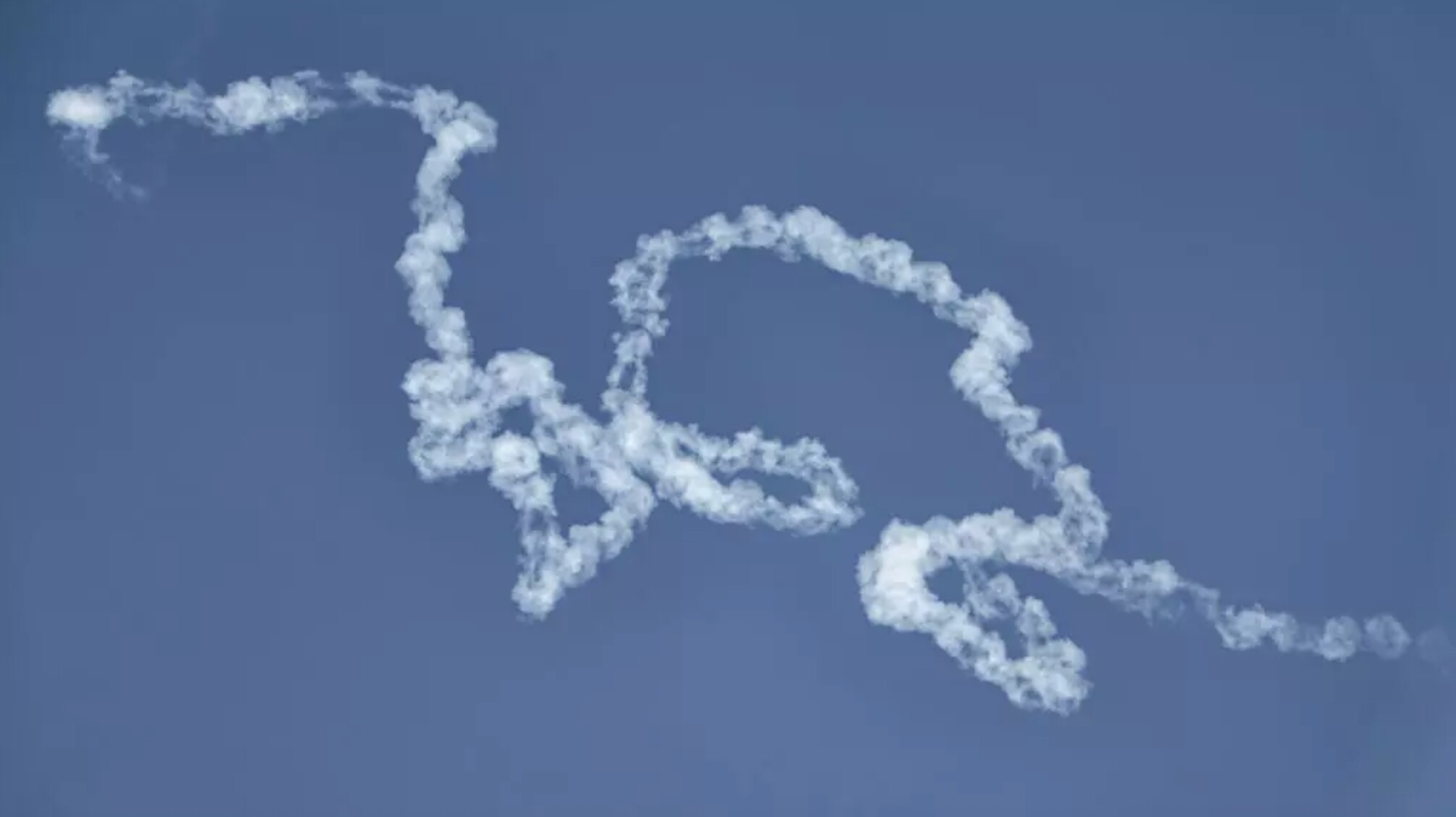
Traces left by air defense systems and penetrating missiles in the skies over Israel. Source: AFP

The Iranian Revolutionary Guard also fired missiles at the Al Udeid Air Base in Qatar. Simultaneously, Yemen's Houthi rebels announced they would resume attack operations in the Red Sea. Iran blockaded the Strait of Hormuz, with the Revolutionary Guard announcing via radio broadcast a ban on all vessel traffic. The airspace over the Middle East region subsequently became paralyzed, with Iran, Israel, Iraq, the UAE, Jordan, Qatar, and other countries closing their airspace, leading to the cancellation of about 24% of flights to and from the Middle East.

Dubai's Palm Jumeirah Hit by Missile Debris, Burj Khalifa Urgently Evacuated

In Iran's comprehensive retaliatory action, Dubai's iconic landmark, Palm Jumeirah, became a shocking global focus. Although Palm Jumeirah was not directly hit by an Iranian missile, after the UAE's air defense system successfully intercepted an Iranian missile in the waters near the Palm, debris from the destroyed missile scattered onto the Palm area, igniting a fire in a building at the five-star Fairmont The Palm hotel.

Eyewitnesses described the scene as extremely chaotic, with thick black smoke billowing from the direction of the hotel and multiple ambulances rushing to the scene with sirens blaring. Several Chinese individuals captured the scene on Xiaohongshu.
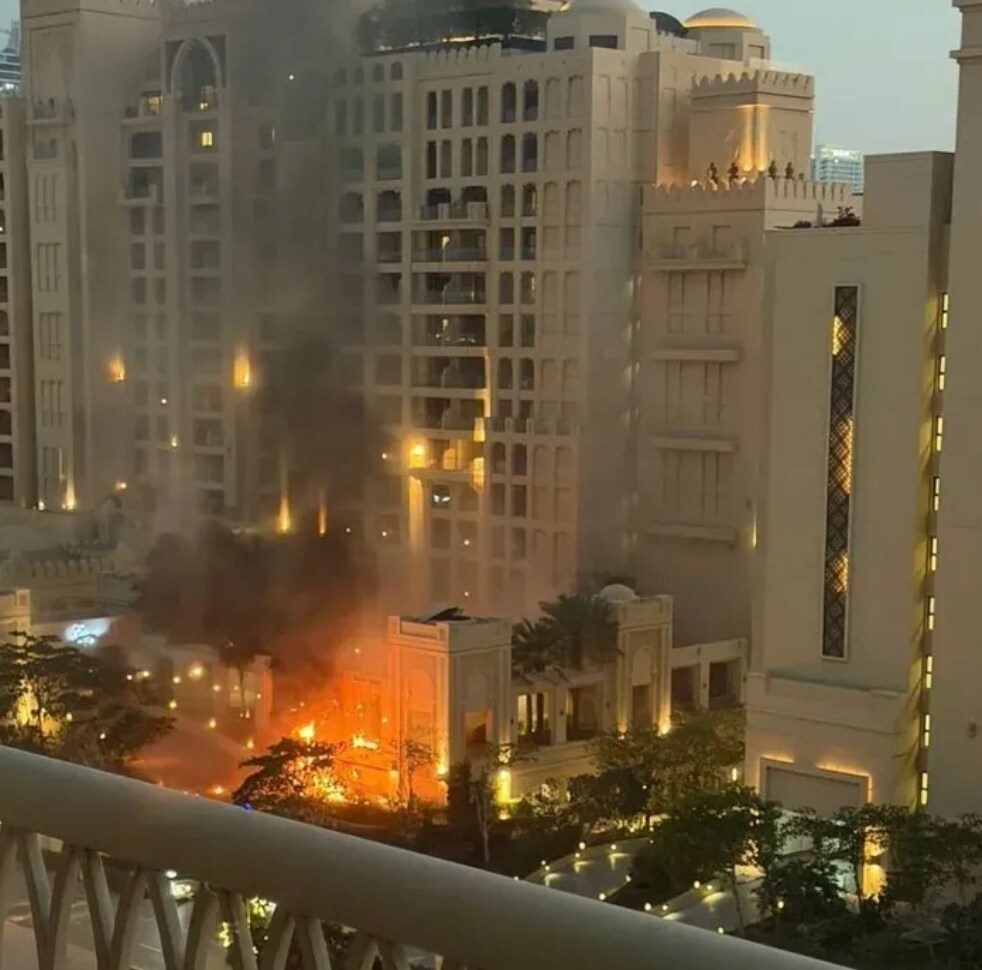
The hotel after the strike. Source: X

Earlier that day, the world's tallest building, the Burj Khalifa, was urgently evacuated due to security concerns. Residents in Abu Dhabi received emergency alerts on their phones instructing them to stay away from windows and immediately take shelter in a safe place, citing the presence of the US Al Dhafra Air Base within the emirate, making it a key target for Iranian strikes. The UAE Ministry of Defense announced that its air defense systems had intercepted "with high efficiency" multiple Iranian missiles and drones and condemned such attacks as "a blatant violation of national sovereignty and international law."

Polymarket Probabilities Skyrocket, Bets Exceed Thirty Million Dollars

The outbreak of this military action left an extremely rare historical trajectory on prediction markets. Multiple related markets on Polymarket saw an instant vertical surge following today's airstrike, with price curves nearly shooting straight to the top.

In the market for "Will Khamenei step down as Supreme Leader by March 31?", the probability, which had long hovered around 20% to 30%, suddenly soared to 95% following today's airstrike, a single-day increase of 87 percentage points. The total trading volume reached $29.31 million, indicating a massive influx of funds betting on regime change after the airstrike news broke.

Another longer-term market, "Will the Iranian regime fall by June 30?", also experienced剧烈波动, with the probability jumping from about 16% to 55%, a single-day increase of 39 percentage points, with a trading volume of $2.37 million.
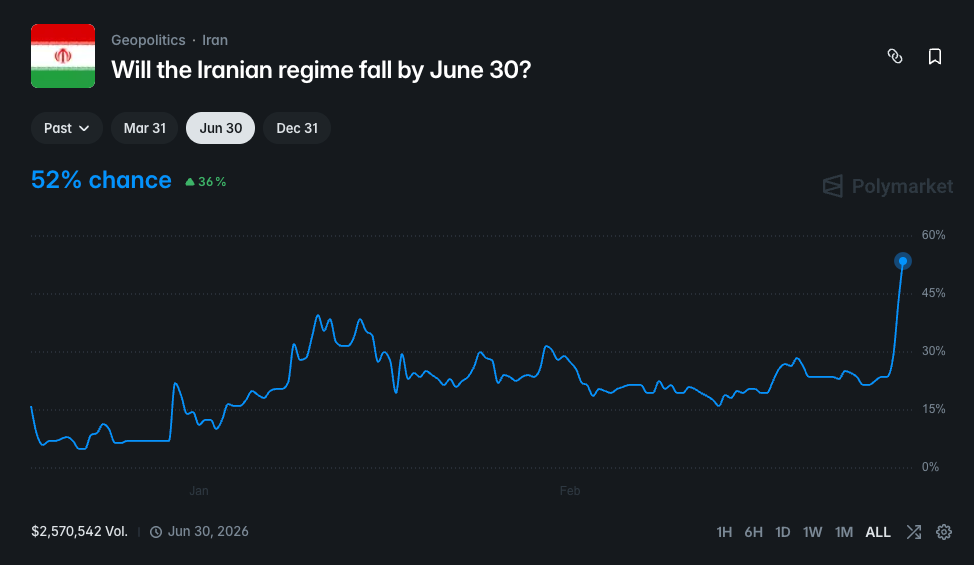
Polymarket market screenshot. Source: Polymarket

Meanwhile, the probability in the "Will the US strike Iran?" related market has risen to 100% and entered the settlement process, causing short positions betting against a strike to be completely liquidated.

Odaily Planet Daily will continue to track the latest developments and bring you reports as they happen.


Câu hỏi Liên quan

QWhat was the stated goal of the joint US-Israel military strike on Iran on February 28, 2026?

AThe stated goal was to destroy Iran's nuclear facilities, ballistic missile systems, and military leadership, with the public declaration of an intent to overthrow the current regime.

QHow did Iran immediately retaliate against the US-Israel strike?

AIran retaliated by launching missiles and drones at Israel and seven Arab nations hosting US military bases (Bahrain, Kuwait, Qatar, UAE, etc.), and announced a blockade of the Strait of Hormuz.

QWhat significant event in late 2025 is cited as a key background factor leading to the escalation?

AIn late December 2025, Iran experienced its largest nationwide protest wave since the 1979 Islamic Revolution, triggered by a collapsing currency and economic crisis, which was met with government crackdowns.

QWhat was the impact of the events on the prediction market Polymarket?

AThe probability on the market 'Will Khamenei step down as Supreme Leader by March 31?' surged from ~20-30% to 95%, with over $29 million in bets, indicating heavy betting on regime change following the strike.

QWhich iconic Dubai landmark was damaged by falling debris from an intercepted missile?

AThe Fairmont The Palm hotel on the Palm Jumeirah was set on fire by falling debris after the UAE's defense system intercepted an Iranian missile nearby.

Nội dung Liên quan

Ngân hàng Ý không nhìn thấy lợi thế hệ thống của stablecoin trong chuyển tiền

Một nghiên cứu của Ngân hàng Ý kết luận rằng stablecoin không mang lại lợi thế hệ thống bền vững về chi phí và tốc độ trong chuyển tiền quốc tế so với các dịch vụ tiêu chuẩn. Các ưu điểm tiềm năng bị mất đi bởi phí chuyển đổi sang/và từ tiền pháp định và hiệu quả của cơ sở hạ tầng thanh toán địa phương. Nghiên cứu so sánh việc chuyển 200 USDC qua 10 hành lang giữa Ý và các nước như Brazil, Argentina, Nhật Bản, UAE và Nam Phi. Tổng chi phí chuyển stablecoin dao động từ 0,3% đến gần 9%, tùy tuyến. Thời gian giải quyết giao dịch dưới 20 phút ở những nơi có hệ thống thanh toán tức thời, nhưng có thể kéo dài 1-2 ngày làm việc ở khu vực không có. Chi phí và độ trễ chủ yếu đến từ việc trao đổi, chuyển đổi tiền tệ và chất lượng hạ tầng địa phương, không phải từ phí blockchain. Dù stablecoin rẻ hơn mức trung bình toàn cầu là 6,65%, chúng chỉ rẻ hơn dịch vụ Wise ở 3/7 tuyến so sánh được. Các tác giả cho rằng lợi ích sẽ rõ ràng hơn nếu stablecoin có thể được chi tiêu trực tiếp mà không cần đổi sang tiền địa phương. Họ cũng lưu ý rằng các quy định cấm đoán không làm giảm nhu cầu với stablecoin, trong khi quy định quá chặt chẽ lại gây khó khăn cho người dùng phổ thông.

cryptonews.ru2 phút trước

Ngân hàng Ý không nhìn thấy lợi thế hệ thống của stablecoin trong chuyển tiền

cryptonews.ru2 phút trước

Cơn sốt Bitcoin đang bùng nổ: Tuyên bố mới của Saylor gây nên những đồn đoán về việc mua vào

Giám đốc điều hành của Strategy Inc. (Nasdaq: MSTR), Michael Saylor, một lần nữa khơi dậy những đồn đoán về việc công ty sẽ thông báo mua Bitcoin mới vào thứ Hai, sau khi đăng thông điệp "Bitcoin Drive engaged" vào ngày 2 tháng 8. Thông báo này đi kèm với biểu đồ mua hàng quen thuộc của công ty, phù hợp với thói quen báo hiệu thay đổi kho bạc trước các báo cáo hàng tuần của Saylor. Báo cáo kèm theo cho thấy dự trữ Bitcoin của Strategy là 843.775 BTC, trị giá khoảng 53,25 tỷ USD. Giá mua trung bình được ghi nhận là 75.653 USD/BTC, với lỗ chưa thực hiện là 10,58 tỷ USD (-16,58%). Một tín hiệu tương tự vào Chủ nhật tuần trước đã dẫn đến thông báo vào ngày 27/7 về việc công ty gia tăng dự trữ tiền mặt. Sổ cái thời gian thực của Strategy hiển thị 116 giao dịch đã đăng ký với tổng số 843.775 BTC được mua, đồng thời ghi nhận hai đợt bán Bitcoin gần đây tổng cộng 3.588 BTC (giảm từ 847.363 BTC), nhằm mục đích tài trợ cho cổ tức ưu đãi và bổ sung dự trữ USD. Công ty được báo cáo là đã không mua BTC trong tuần kết thúc ngày 26/7, đồng thời tăng dự trữ USD lên khoảng 3,75 tỷ USD. Bối cảnh tài chính đầy thách thức khi Strategy báo lỗ hoạt động 8,33 tỷ USD trong quý II/2026, chủ yếu do lỗ chưa thực hiện trên tài sản kỹ thuật số. Ban lãnh đạo có thể bán thêm tới 1,25 tỷ USD Bitcoin để củng cố dự trữ USD. Thông báo cập nhật dự kiến vào thứ Hai sẽ cho thấy liệu "Bitcoin Drive" có đánh dấu việc tái tích lũy hay không, khi Strategy cân bằng giữa kho dự trữ Bitcoin khổng lồ và các nghĩa vụ tiền mặt ngày càng tăng.

cryptonews.ru3 phút trước

Cơn sốt Bitcoin đang bùng nổ: Tuyên bố mới của Saylor gây nên những đồn đoán về việc mua vào

cryptonews.ru3 phút trước

Cổ phiếu các công ty trí tuệ nhân tạo được giao dịch như 'meme coin', trong khi Bitcoin hầu như không thay đổi giá - Tổng quan tuần

**Tóm tắt:** Bài viết phân tích các diễn biến chính trên thị trường tài chính và tiền điện tử trong tuần, với trọng tâm là sự biến động mạnh ở lĩnh vực AI và sự trầm lặng tương đối của Bitcoin. **Thị trường chứng khoán & AI:** * Cổ phiếu AI được giao dịch như "meme coin" với biến động cực đoan. Thị trường Hàn Quốc lao dốc 8% trong một phiên, chịu ảnh hưởng từ đợt bán tháo chip toàn cầu. * Quỹ "Situational Awareness" của Leopold Aschenbrenner bị thua lỗ nặng, dẫn đến thanh lý tài sản lớn, góp phần gây ra biến động. Citadel được cho là đã mua lại phần lớn danh mục của quỹ này. * Các chuyên gia như Ram Ahluwalia và Flood khuyên nên kiên nhẫn, trong khi Jim Bianco lưu ý thị trường thường tìm đáy sau khi một sự kiện lớn (như sự sụp đổ của một quỹ) xảy ra. **Macro & Tiền tệ:** * Các phát biểu của Chủ tịch Fed Kevin Warsh được cho là đã góp phần gây ra biến động, với một số ý kiến cho rằng ông thiếu năng lực. * Bộ Tài chính Nhật Bản can thiệp để hỗ trợ đồng Yên, nhưng hiệu quả hạn chế. * Có dấu hiệu về việc giảm thanh khoản toàn cầu và đà tăng trưởng sản xuất Mỹ chậm hơn kỳ vọng. **Thị trường Tiền điện tử:** * Bitcoin ít biến động, dao động quanh mức 64,000 USD, trong khi sự chú ý đổ dồn sang thị trường truyền thống. * Nhiều công ty tiền điện tử gặp khó khăn: BitMart và Storj Labs tuyên bố đóng cửa/phá sản; Coinbase (COIN) lao dốc sau báo cáo tài chính yếu; Uphold và các sàn khác cắt giảm nhân sự. * MicroStrategy tiếp tục tích lũy Bitcoin và mua lại cổ phiếu của chính mình, một chiến lược bị chỉ trích là "vòng xoáy Ponzi". * Cảnh báo bảo mật nghiêm trọng về lỗ hổng trên ví phần cứng Coldcard có thể làm lộ khóa riêng tư, đòi hỏi người dùng hành động ngay. **Các chủ đề khác:** * **DeFi/Blockchain:** Trade.xyz trên Hyperliquid và Pump.fun trên Solana cực kỳ thành công, đặt ra câu hỏi liệu họ có tự khởi chạy blockchain riêng hay không. Nghi ngờ giao dịch nội gián trên Hyperliquid. * **AI & Crypto:** Jason Calacanis và Barry Silbert nhiệt tình ủng hộ dự án Bittensor (TAO), coi đó là mô hình AI phi tập trung. Tác giả cảnh báo nên thận trọng trước sự cổ xúy của các nhà đầu tư mạo hiểm. * Các tranh cãi trong ngành: Kyle Samani chỉ trích Multicoin Capital; Charles Hoskinson khó chịu vì câu hỏi về quá khứ đồng sáng lập Ethereum. **Thông điệp chính:** Thị trường đang trải qua giai đoạn biến động mạnh, đặc biệt ở mảng AI, trong khi tiền điện tử chịu áp lực. Tính kỷ luật, sự kiên nhẫn và cảnh giác cao độ (đặc biệt về bảo mật) là cần thiết trong bối cảnh hiện tại.

cryptonews.ru15 phút trước

Cổ phiếu các công ty trí tuệ nhân tạo được giao dịch như 'meme coin', trong khi Bitcoin hầu như không thay đổi giá - Tổng quan tuần

cryptonews.ru15 phút trước

Coinkite bị chỉ trích vì lưu trữ email khách hàng sau vụ hack Coldcard trị giá 88 triệu USD

Coinkite một lần nữa đối mặt với làn sóng chỉ trích từ khách hàng sau khi lỗi trong quá trình tạo cụm từ seed ngẫu nhiên cho ví phần cứng Coldcard dẫn đến việc hơn 1.000 BTC (trị giá hơn 88 triệu USD tính đến thời điểm đó) bị đánh cắp trong hai ngày. Để cảnh báo phần lớn khách hàng có thể bị ảnh hưởng, công ty đã gửi email thông báo đến các địa chỉ email liên quan đến giao dịch mua hàng từ năm 2019. Hành động này vấp phải chỉ trích khi khách hàng chất vấn việc công ty lưu trữ dữ liệu email lâu dài. Coinkite phản hồi bằng cách viện dẫn chính sách công khai, nói rằng email được lưu để khách hàng có thể đăng nhập và xác nhận các thông tin khác đã bị xóa, nhưng không nêu rõ thời hạn xóa các địa chỉ email này. Trong một tuyên bố dường như mâu thuẫn, CEO Rodolfo Novak nhấn mạnh rằng công ty không lưu trữ thông tin khách hàng và không có cách nào liên lạc trực tiếp với những người bị ảnh hưởng, đồng thời kêu gọi sự hỗ trợ để tiếp cận tất cả người dùng có nguy cơ. Ông cũng khẳng định Coinkite cung cấp tùy chọn mua hàng ẩn danh và xóa dữ liệu khách hàng sau 90 ngày, đồng thời nhấn mạnh công ty rất coi trọng vấn đề bảo mật.

cryptonews.ru16 phút trước

Coinkite bị chỉ trích vì lưu trữ email khách hàng sau vụ hack Coldcard trị giá 88 triệu USD

cryptonews.ru16 phút trước

Giao dịch

Giao ngay
活动图片




