From Exchanges to Hotels: USDT is Penetrating Real-World Consumption Scenes

比推Xuất bản vào 2025-12-26Cập nhật gần nhất vào 2025-12-26

Tóm tắt

Trip.com, the overseas version of Chinese travel giant Ctrip, has begun accepting stablecoin payments in USDT and USDC for global users. A real-world test in Vietnam confirmed the functionality, allowing a hotel booking to be completed in under 10 minutes using USDT. Notably, payments with USDT offered significant savings, with flight bookings being approximately 18% cheaper and hotel bookings around 2.35% cheaper compared to traditional payment methods. The service, powered by Singapore-based licensed payment gateway Triple-A, supports multiple blockchains including Ethereum, Tron, and Solana. A key privacy benefit was noted: booking a hotel with USDT required only a name and email, minimizing personal data collection. This development is particularly significant for the vast global population without access to international credit cards. The article contextualizes this move within a broader trend of major corporations, from PayPal and Ant Group to automakers like BYD and Toyota, adopting stablecoins. This shift is often driven by practical necessity in countries experiencing severe local currency devaluation, where stablecoins like USDT have become a critical tool for maintaining financial stability and facilitating cross-border commerce.

Original Author: Joe Zhou, Foresight News

Original Title: Save 18% on Hotel Bookings with USDT, Trip.com's Overseas Version Strongly Promotes Stablecoin Payments


Trip.com, the overseas version of Ctrip, is quietly entering the stablecoin payment track.

On December 25, 2025, Foresight News learned that Trip.com, the overseas version of Ctrip, has launched a stablecoin payment function for global users, currently supporting two USD stablecoins: USDT and USDC. Two sources close to Trip confirmed this information to Foresight News.

After downloading and logging into Trip.com in Vietnam, the author successfully completed a hotel reservation in Nha Trang, Vietnam, using USDT payment in less than 10 minutes.

More notably, after checking the prices of several local hotels, it was found that the price of some hotels on the Trip.com App when paying with USDT was even lower than using the Ctrip official website or traditional payment methods.

Trip.com Overseas Version Already Supports USDT/USDC

On December 24, 2025, the author booked a hotel in Nha Trang, Vietnam, using USDT on the Trip.com overseas version APP, and on December 25, purchased a plane ticket from Nha Trang to Ho Chi Minh City with USDT, both showing successful payment. The author has now successfully checked into the hotel.

The author found that the flight ticket purchased with USDT on Trip.com saved approximately 18% of the cost compared to the ticket purchased on Ctrip. The hotel booked with USDT saved 2.35% of the cost.
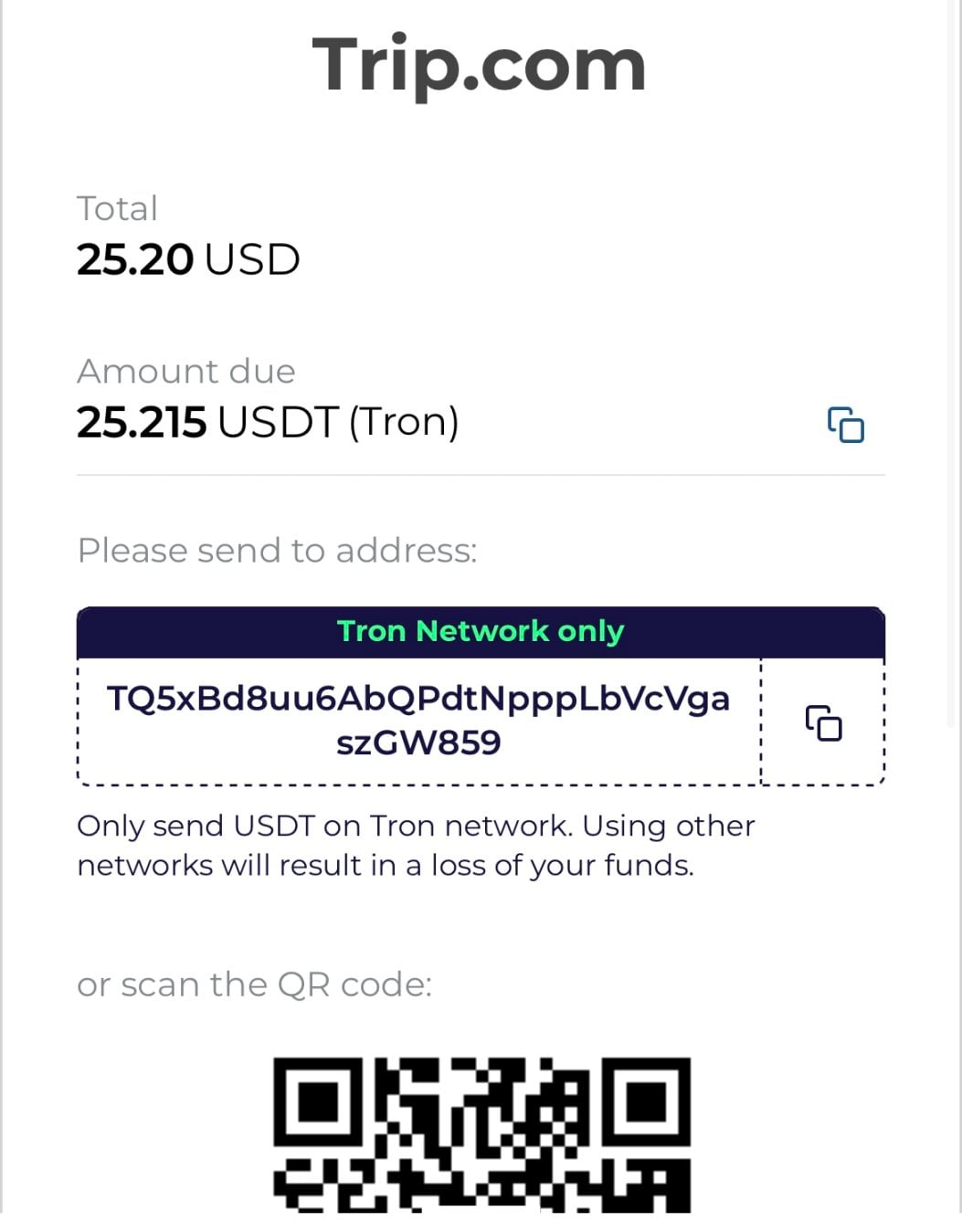
Trip has enabled USDT and USDC payments

Currently, Trip.com's crypto payments support multiple public chains including Ethereum, Tron, Polygon, Solana, Arbitrum One, and TON.

During the actual payment process, the author noticed the presence of another payment company, Triple-A. This company provides crypto payment-related services to Trip.com. Public information shows that Triple-A is a licensed crypto payment institution headquartered in Singapore, mainly providing payment gateway and settlement services for cryptocurrencies and stablecoins.

Furthermore, the author learned that Triple-A is also cooperating with Singapore's internet giant Grab as a technical partner for the crypto payment channel, enabling GrabPay users to directly use crypto assets to top up their wallet balance within the Grab app.

Additionally, the author noticed a detail:

When booking a hotel on Trip.com using USDT, there is no need to fill in detailed personal information; only a name and email are required to complete the order. This means that when using USDT for payment in hotel scenarios, the platform can hardly obtain the user's complete privacy information. Of course, if purchasing a flight ticket, information such as nationality, passport number, and phone number are still required—this is a compliance requirement of the aviation industry itself.

Privacy and data security have become major social issues.

Just this month, the Ctrip Group encountered a relatively significant "public trust incident." In December, Ctrip Group and the Cambodia National Tourism Administration signed a marketing cooperation agreement in Shanghai. After the news was announced, it sparked concerns among some users about local security, telecom fraud risks, and personal information security. A large number of screenshots of uninstalling the Ctrip App appeared on social media.

In many overseas regions, users are far more sensitive to privacy and information security than in the domestic market. This may also be an important practical background for Trip.com's promotion of stablecoin payments.

For travelers around the world without international credit cards, stablecoin payment is a new path. According to public information, the number of people globally who own credit cards is approximately 125 million to 130 million, and the number of people with international credit cards is even lower, which also means that over 80% of the global population cannot smoothly use the international credit card system.

Credit cards are not merely "payment tools" but an entry point to the credit system; however, most people globally are not within this system. In many countries and regions, such as Southeast Asia, Latin America, Africa, and India, many people cannot be incorporated into the credit system. This also prevents them from having credit cards.

Stablecoin payments are providing these people with a global payment path that bypasses the credit system.

Of course, the practical problems of stablecoins still exist: transaction fees remain relatively high and unstable.

During the actual payment process, the author found significant differences in fees between different wallets. When paying to Trip.com's USDT收款码 (receiving QR code) via Binance, a fee of 1 USDT was required, with a minimum transfer threshold of 10 USDT; whereas when using Bitget Wallet, the first transaction showed a fee of 0, the second showed a fee of 2.39 USDT, and no minimum transfer amount was set. The differences may be related to the public chain used (Tron) and its fee mechanism.

Why Are Giants Entering the Stablecoin Space One After Another?

Ctrip Group is not the first company to enter the stablecoin track.

Previously, several global internet and payment giants have clearly布局 (laid out plans for) stablecoins, including Ant Group, JD.com, Paypal, Stripe, Meta (Facebook), Grab, and TADA.

Several banking giants have also publicly stated their entry into the stablecoin field, for example, Bank of America and Morgan Stanley.

Some实体制造业企业 (physical manufacturing companies) are also接入 (integrating) stablecoin payments. Public reports show that some dealers of BYD (Build Your Dreams) in Bolivia already support USDT payments; manufacturing companies like Toyota and Yamaha also accept stablecoin settlements in overseas markets. Tether CEO Paolo Ardoino has publicly confirmed this.

Advertisement for cooperation between BYD dealers and USDT

Internet giants,实体制造业巨头 (physical manufacturing giants), banking giants are all布局 (laying out plans for) stablecoins... Their use cases for stablecoins vary.

An obvious trend is that payment giants like PayPal and Ant Group are no longer satisfied with仅仅作为 (merely being) the payment entry for stablecoins but hope to directly become the issuers of stablecoins. PayPal has already launched PYUSD; Ant Group is also promoting the application for a Hong Kong dollar stablecoin license. The boundary between payment institutions and currency issuance is being reshaped.

For实体制造业企业 (physical manufacturing enterprises) like BYD and Toyota, there is no ideological judgment about stablecoins or crypto payments, only one practical question: which method are users more willing to pay with.

Fiat Currency Continues to Depreciate, Stablecoins Become the "Practical Solution"

In Bolivia, the official fiat currency, the Boliviano (BOB), depreciated against the US dollar by 65%–137% from the end of 2024 to mid-2025. It can be said that Bolivia's fiat currency depreciates every day.

In this environment, any company expanding overseas cannot long bear the exchange losses brought by settlement in the local currency. USDT has gradually become the de facto payment tool locally.

And Bolivia is not an isolated case but a phenomenon simultaneously上演 (playing out) in multiple countries around the world.

The author visited Iran, Turkey, Egypt, and other countries this year and found that the cumulative depreciation of these economies' national currencies against the US dollar over the past three years generally exceeded 80%; stretched over a five-year周期 (cycle), the currencies of Iran, Turkey, and Egypt have all depreciated by more than 200% against the US dollar.

Currency depreciation is evolving from a "local risk" in a few countries to a broader, more structural global phenomenon.
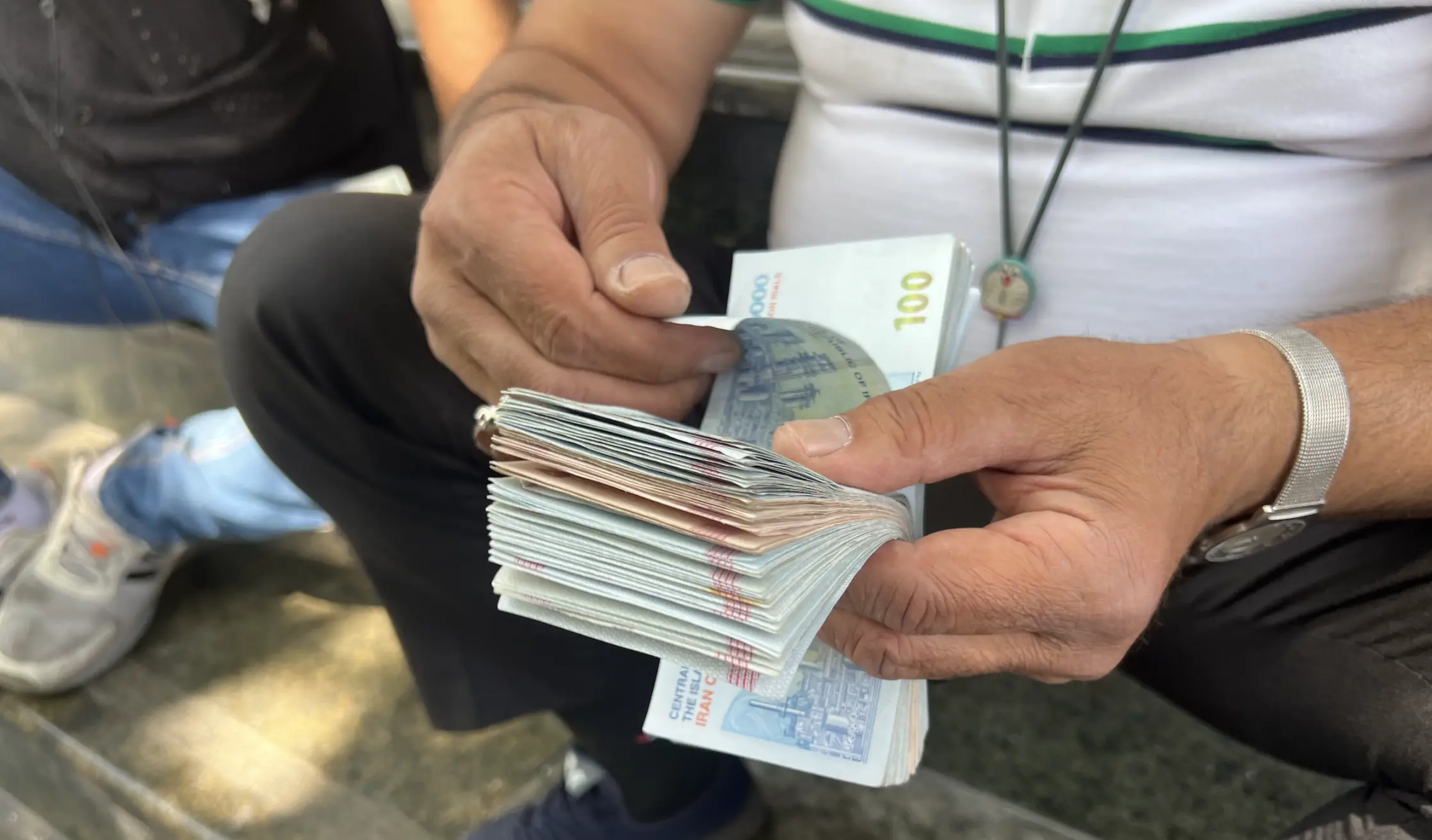
At the black market in Tehran, Iran's capital, the author is witnessing a currency transaction

More残酷的是 (cruelly), in the aforementioned countries (the countries mentioned above), the speed of local currency depreciation has long far exceeded the income growth rate of ordinary people. In real transactions, monetary disorder is directly changing people's payment methods.

This is precisely why consumer internet platforms like Trip.com Overseas Version and Grab; payment giants like PayPal and Ant Group; and physical manufacturing companies like BYD and Toyota have begun to尝试引入 (try to introduce) USDT and other stablecoins in different markets.

The world is partially collapsing, with some regions率先失衡 (becoming unbalanced first).

When the existing financial system can no longer perform the functions of stability, settlement, and trust, a new economic system is pushed to the forefront by reality.

The new economic system is not designed but is "forced" out by reality where the old system fails. The spread of stablecoins is not because they are ideal enough, but because in some places, they are already the least bad choice available.


Twitter:https://twitter.com/BitpushNewsCN

Bitpush TG Discussion Group:https://t.me/BitPushCommunity

Bitpush TG Subscription: https://t.me/bitpush

Original Article Link:https://www.bitpush.news/articles/7598412

Câu hỏi Liên quan

QWhat is the main development announced regarding Trip.com and stablecoins?

ATrip.com, the overseas version of Ctrip, has globally launched a stablecoin payment feature, supporting both USDT and USDC for hotel and flight purchases.

QWhich payment processing company is mentioned as providing crypto payment services for Trip.com?

ATriple-A, a licensed crypto payment institution based in Singapore, is the payment company providing crypto payment gateway and settlement services for Trip.com.

QWhat practical benefit did the author experience when using USDT to book a flight on Trip.com?

AThe author saved approximately 18% on a flight ticket purchased with USDT on Trip.com compared to the price when using traditional payment methods on the Ctrip website.

QAccording to the article, what is a major global issue that is driving the adoption of stablecoins like USDT?

ARapid and severe devaluation of national currencies in many countries (e.g., Bolivia, Iran, Turkey, Egypt) is making stablecoins a more reliable payment and store of value, as they are pegged to the US dollar.

QBesides Trip.com, name two other types of major companies that are adopting or exploring stablecoin payments.

APayment giants like PayPal and Ant Group, as well as manufacturing companies like BYD and Toyota, are adopting or exploring stablecoin payments in various markets.

Nội dung Liên quan

Ngành công nghiệp công nghệ Trung Quốc, đang vượt qua hàng loạt “đường nhìn thấy”

Gần đây, một số ngành công nghệ Trung Quốc như trí tuệ nhân tạo, robot và dược phẩm đổi mới liên tục thu hút sự chú ý của thị trường và truyền thông toàn cầu, đánh dấu việc vượt qua "ranh giới hiển thị" - ngưỡng mà năng lực công nghiệp bắt đầu tác động đến lựa chọn của khách hàng quốc tế. Sự phát triển này không phải ngẫu nhiên. Nó dựa trên nền tảng công nghiệp dày đặc và liên kết chặt chẽ của Trung Quốc, nơi các năng lực từ những ngành như ô tô điện (pin, cảm biến, sản xuất chính xác) đang được chuyển giao sang robot, và năng lực tính toán hỗ trợ cho cả AI lẫn nghiên cứu dược phẩm. Hệ thống công nghiệp đã chuyển từ "hoàn chỉnh" sang "dày đặc", cho phép chia sẻ công nghệ, nhân lực và chuỗi cung ứng giữa các ngành. Khác với các làn sóng công nghiệp trước (hàng dệt may, đồ gia dụng, rồi đến "ba mới" là ô tô điện, pin lithium, quang điện), thế hệ "ba mới mới" này (AI, robot, dược phẩm đổi mới) tham gia vào việc định hình sản phẩm, nhu cầu và cả thị trường ngay từ giai đoạn đầu, thay vì chỉ đáp ứng một thị trường đã chín muồi. Chu kỳ giữa các làn sóng công nghiệp vượt ngưỡng cũng được rút ngắn đáng kể. Việc vượt qua "ranh giới hiển thị" cho thấy năng lực đổi mới của Trung Quốc không chỉ dừng ở sản xuất mà đang mở rộng sang việc xây dựng hệ thống tri thức, tiêu chuẩn và hệ sinh thái bền vững đằng sau sản phẩm. Tuy nhiên, đây mới chỉ là bắt đầu của quá trình thị trường thử nghiệm. Thành công lâu dài sẽ phụ thuộc vào khả năng liên tục nhận được đơn hàng, lặp lại công nghệ và thu hút người tham gia vào hệ sinh thái. Sự xuất hiện liên tục của các ngành công nghiệp mới này cho thấy Trung Quốc đang hình thành năng lực tạo ra và đưa ra thị trường những ngành công nghiệp mới một cách bền vững.

marsbit19 phút trước

Ngành công nghiệp công nghệ Trung Quốc, đang vượt qua hàng loạt “đường nhìn thấy”

marsbit19 phút trước

Forbes: 7 triệu Bitcoin đối mặt với rủi ro máy tính lượng tử, BTC có cần phải thay 'ổ khóa'?

**Tóm tắt tiếng Việt:** Bài viết từ Forbes thảo luận về mối đe dọa tiềm tàng của máy tính lượng tử đối với Bitcoin. Khoảng 6-7 triệu BTC (trị giá ~4700 tỷ USD) được coi là "phơi nhiễm" rủi ro vì khóa công khai của chúng đã bị lộ trên blockchain, chủ yếu từ các địa chỉ thời kỳ Satoshi hoặc bị tái sử dụng. Tuy nhiên, "phơi nhiễm" không đồng nghĩa với "bị đánh cắp" ngay lập tức; việc này chỉ xảy ra khi một cỗ máy lượng tử đủ mạnh để phá vỡ mật mã đường cong elliptic (ECDSA) - thứ hiện chưa tồn tại. Các nghiên cứu từ Google và Ethereum Foundation ước tính khung thời gian cho mối đe dọa này có thể là trong vòng một thập kỷ tới, với xác suất đáng kể. Cộng đồng Bitcoin đang tranh luận về các giải pháp. Hai đề xuất BIP-360 và BIP-361 đưa ra cách tiếp cận trái ngược: một bên tạo địa chỉ chống lượng tử mới, bên kia đề xuất "đóng băng" dần các đồng coin chưa di chuyển để ngăn kẻ trộm trong tương lai. Nhiều công ty khởi nghiệp như BOLTS, American Fortress, hay các dự án như Quantum Resistant Ledger đang chạy đua cung cấp giải pháp. Đặc biệt, American Fortress tuyên bố có thể bảo vệ tất cả các địa chỉ hiện có mà không cần di chuyển, nhưng tuyên bố này cần thận trọng xem xét vì công nghệ của họ chưa được công bố hay kiểm toán công khai đầy đủ. Bài viết kết luận rằng, mặc dù mối đe dọa là có thật và cần được giải quyết, nhưng đây chưa phải là cuộc khủng hoảng sinh tồn ngay lập tức đối với Bitcoin. Cuộc đua để nâng cấp "ổ khóa" mật mã cho kỷ nguyên lượng tử đã chính thức bắt đầu.

marsbit25 phút trước

Forbes: 7 triệu Bitcoin đối mặt với rủi ro máy tính lượng tử, BTC có cần phải thay 'ổ khóa'?

marsbit25 phút trước

10 Tỷ USD Mua Lại Không Ngăn Được HYPE Giảm Sâu, Thành Viên Lõi Và Multicoin Đang Lặng Lẽ Bán Token?

Phân tích từ MLM cho thấy, từ tháng 12/2025 đến cuối tháng 7/2026, khoảng 4.93 triệu HYPE (0.493% tổng cung, trị giá ~270 triệu USD) đã được phân bổ cho ví thành viên nhóm. Trong đó, 1.19 triệu HYPE (~32.5 triệu USD) được bán trên thị trường mở, và 3.14 triệu HYPE (~132 triệu USD) chuyển đến các sàn OTC, tổng cộng ~1.65 tỷ USD. Tuy nhiên, Quỹ Hỗ trợ (Assistance Fund) của giao thức đã mua lại số lượng lớn hơn: khoảng 9.8 triệu HYPE với chi phí ~364 triệu USD trong cùng kỳ, tốc độ mua gấp hơn hai lần tốc độ bán của nhóm. Dù vậy, giá HYPE vẫn giảm khoảng 30% từ mức đỉnh ~76 USD vào giữa tháng 6/2026, xuống còn ~52.4 USD. Nguyên nhân được chỉ ra không chỉ do nhóm bán ra, mà còn từ hoạt động của các quỹ lớn và dòng tiền ETF. Cụ thể, trong tháng 7, các ví liên quan đến Multicoin Capital và a16z đã thực hiện giải staking và có giao dịch chuyển HYPE vào sàn giao dịch. Đồng thời, các quỹ ETF HYPE phái sinh đã chứng kiến dòng tiền ròng ra liên tục hàng ngày, trái ngược với dòng vào mạnh mẽ hồi tháng 5-6. Tóm lại, áp lực bán hạn chế từ nhóm cốt lõi phần lớn đã được cơ chế mua lại tự động của giao thức hấp thụ. Đợt điều chỉnh giá gần đây chủ yếu liên quan đến hành vi chốt lời của các tổ chức đầu tư lớn (VC) và tâm lý thị trường suy giảm, dẫn đến khối lượng giao dịch và doanh thu giao thức sụt giảm, làm chậm nhịp độ mua lại của quỹ.

marsbit44 phút trước

10 Tỷ USD Mua Lại Không Ngăn Được HYPE Giảm Sâu, Thành Viên Lõi Và Multicoin Đang Lặng Lẽ Bán Token?

marsbit44 phút trước

WEEX API Fast Connect: Biến Mỗi Lần Đăng Nhập Thành Nhà Giao Dịch Thực Tế Trong Vòng Chưa Đến 10 Giây

WEEX đã ra mắt API Fast Connect, một hệ thống ủy quyền OAuth một cú nhấp chuột, cho phép người dùng liên kết tài khoản WEEX mà không cần tự xử lý khóa API thủ công. Giải pháp mới này, được thiết kế cho các đối tác WEEX Broker, thay thế quy trình tích hợp kỹ thuật truyền thống bằng trải nghiệm liền mạch, nhằm mục đích tăng tốc chuyển đổi người dùng và cải thiện tỷ lệ giữ chân. **Điểm nổi bật:** * **Là gì:** Hệ thống ủy quyền một cú nhấp chuột – giống "Đăng nhập bằng Google" nhưng cho giao dịch tiền mã hóa – loại bỏ việc người dùng phải tự tạo hay quản lý khóa API. * **Giải quyết vấn đề:** Thiết lập khóa API thủ công là điểm mất mát người dùng lớn nhất. Fast Connect loại bỏ hoàn toàn bước này. * **Lợi ích:** Chuyển đổi liền mạch, giảm tỷ lệ rời bỏ, tăng khả năng giữ chân. Người dùng có thể bắt đầu giao dịch thực trong vòng chưa đầy 10 giây sau khi đăng nhập. * **Đối tượng:** Nền tảng tín hiệu AI, công cụ định lượng/chiến lược, bot giao dịch và mọi đối tác WEEX Broker. **Cách hoạt động:** 1. Người dùng nhấp "Đăng nhập với WEEX". 2. Hệ thống chuyển hướng đến trang ủy quyền chính thức của WEEX để xác minh. 3. Người dùng xác nhận phạm vi cấp phép (chỉ đọc và giao dịch, được chọn mặc định). 4. Hệ thống tự động tạo và liên kết khóa API qua kênh mã hóa vào nền tảng đối tác. Người dùng không bao giờ nhìn thấy hoặc xử lý khóa API thô. Fast Connect là một phần trong bộ công cụ dành cho Đối tác WEEX Broker, giúp biến người dùng quan tâm thành người giao dịch ngay lập tức, từ đó thúc đẩy tăng trưởng khối lượng giao dịch.

TheNewsCrypto50 phút trước

WEEX API Fast Connect: Biến Mỗi Lần Đăng Nhập Thành Nhà Giao Dịch Thực Tế Trong Vòng Chưa Đến 10 Giây

TheNewsCrypto50 phút trước

XRP Ledger v3.3.0 Mang Năm Bản Sửa Đổi Vào Tầm Ngắm

Bản phát hành xrpld v3.3.0 sắp tới sẽ tập trung vào năm bản sửa đổi của XRP Ledger, nhằm vào tài sản mã hóa, chi phí trừu tượng, ủy quyền, xử lý theo lô và chức năng MPT linh hoạt hơn. Năm tính năng bao gồm MPT Bảo mật, Xử lý theo lô, Ủy quyền Quyền, Phí & Dự trữ được Tài trợ và MPT Động. Tuy nhiên, việc kích hoạt chúng đòi hỏi phải có sự đồng thuận của 80% trình xác thực, vì vậy chúng không tự động có hiệu lực ngay khi mã được phát hành. Bản nâng cấp này rất quan trọng cho các trường hợp sử dụng nâng cao như tài sản mã hóa thể chế, cải thiện trải nghiệm người dùng và linh hoạt hoạt động. Cơ chế Phí được Tài trợ có thể giảm ma sát khi người dùng mới tham gia, trong khi các tính năng MPT Bảo mật và Động cung cấp cho nhà phát hành nhiều công cụ kiểm soát hơn. Tính năng Xử lý theo lô và Ủy quyền Quyền có thể đơn giản hóa các giao dịch phức tạp và luồng hoạt động. Tác động thực tế sẽ chỉ xảy ra sau khi các trình xác thực chấp thuận các bản sửa đổi. Bản phát hành này củng cố lộ trình phát triển của XRPL, nhưng thử thách tiếp theo là mức độ hỗ trợ từ trình xác thực và việc áp dụng từ các nhà phát triển.

bitcoinist1 giờ trước

XRP Ledger v3.3.0 Mang Năm Bản Sửa Đổi Vào Tầm Ngắm

bitcoinist1 giờ trước

Giao dịch

Giao ngay
活动图片