From 100,000 Losses to Tens of Red Envelopes: Why Are Crypto Enthusiasts Turning to 'Yuanbao Wool'?

比推Xuất bản vào 2026-02-04Cập nhật gần nhất vào 2026-02-04

Tóm tắt

Amidst a significant downturn in global financial markets and cryptocurrency prices in early February, many crypto traders, facing substantial losses, have turned to a seemingly more reliable source of small gains: the "Yuanbao Cash Redemption" event. This campaign by Yuanbao, backed by Tencent, offers cash红包 (red envelopes) typically ranging from a few to tens of RMB for simple tasks like referrals and product interactions, providing a psychological escape from market volatility. In contrast, the traditional crypto airdrop landscape has become increasingly fraught with risk and disappointment. The article highlights cases like Infinex, where users invested significant time and money (e.g., over $11,900 and 406 days of engagement) only to face heavy losses during token generation events, with some unable to even recoup costs. This has led to frustration, silent resignation, or even public维权 (rights protection) efforts. The core issue is framed as a shift in the purpose of airdrops: from rewarding early users to merely serving as a growth hack for project teams seeking exits or funding, often with unreliable token promises. Web2 companies like Tencent can offer cash rewards with certainty due to strong cash flow and legal frameworks, whereas Web3 airdrops often come with high costs (time, effort, capital), risks like sybil attacks, unlock periods, and rule changes, resulting in lower effective returns. Both Web2 and Web3 use airdrops for user acquisition, but long-term rete...

Author: Golem

Original Title: The Biggest Airdrop for Crypto Enthusiasts Comes from Yuanbao


"xxx has sent you a cash red envelope!"

After the Yuanbao cash red envelope activity began on February 1st, many long-dead project/research exchange groups have completely transformed into "Yuanbao wool-pulling" mutual aid groups.

For crypto enthusiasts, transitioning from esteemed crypto traders to Yuanbao red envelope wool-pullers is a move born out of necessity.

Starting January 31st, global financial markets plummeted. Precious metals, which had previously surged, crashed rapidly. Spot silver nearly erased its year-to-date gains, and spot gold once fell below $4500. The crypto market fared no better. On February 2nd, Bitcoin broke below the $75,000 support level, hitting a low of $74,604. ETH dropped to a low of $2157.14, and SOL even fell below $100, touching a low of $95.95.

According to Coinglass data, the crypto market saw a total liquidation of $2.5615 billion on January 31st, setting a record for the highest single-day liquidation since the "10/11 crash." Thus, "too devastated to speak" became the true psychological state of many crypto enthusiasts (like the silent Yi Lihua).

For those who just experienced a bloodbath, pulling Yuanbao red envelopes, though a drop in the bucket for recouping losses, offers some psychological comfort and a temporary escape from the harsh market reality.
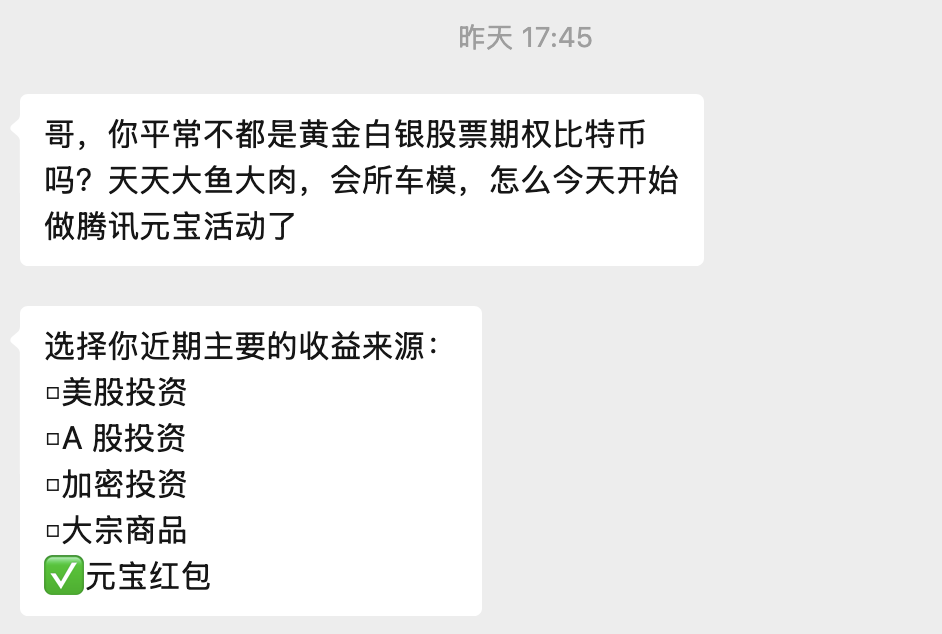
Jokes in group chats

Crypto Airdrops: From Swallowing Losses to Passionate Rights Defense

Calling Yuanbao's cash red envelopes the biggest airdrop for crypto enthusiasts today is not just a gimmick.

The cash red envelope amount Yuanbao distributes to each user isn't large, mostly ranging from a dozen to several tens of RMB. However, its value lies in its simplicity and truly zero cost. Users only need to spend a little time recruiting people and systematically experiencing product features to receive cash red envelopes. The task cycle is short, allowing for quick returns.

In contrast, airdrops from crypto projects are first distributed in the form of tokens. Profit is only realized after the tokens are sold. While the nominal amount received is often much larger than Yuanbao's, after deducting the costs of time, research, opportunity, friction, and potential losses from being stuck with unsellable tokens, how much remains?

A user who accompanied Infinex for 406 days deeply feels this. On January 31st, the decentralized perpetual contract trading platform Infinex announced its TGE and airdrop claims. The project team successfully reached shore, but the community was collectively "rug-pulled."

"Ten Million is a Cat" (X: @RXu107) is a typical example of being rug-pulled. On February 1st, they posted that they spent over $11,900 (approximately 82,000 RMB) participating in this project (4400 U for an NFT, 7500 U for the public sale), and as a community member, deeply accompanied it for 406 days. But on TGE day, not only did they not recoup their costs, but they also faced a paper loss of over 100,000 RMB (2900 U + 11,284 locked INX tokens).

Faced with the rug-pull, the blogger had no choice but to repeatedly express their distress to friends.
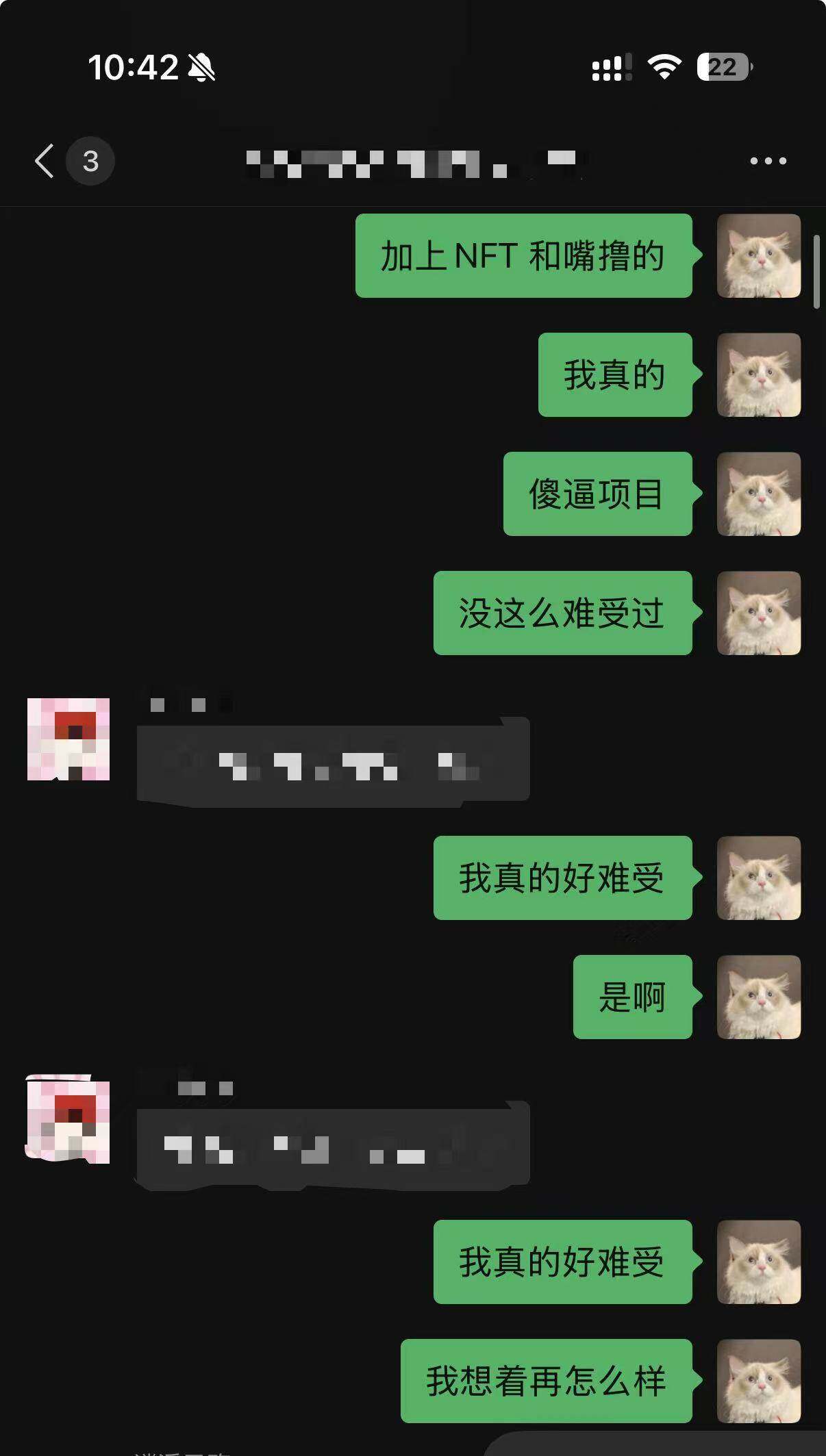
The rug-pulled blogger expresses distress to a friend

At its TGE, Infinex's fully diluted valuation was only $150 million. The total investment in Yuanbao's New Year red envelope activity is approximately $140 million USD. What does this mean? It's equivalent to Tencent directly buying Infinex at its maximum valuation and giving it away for free to the entire nation.

Faced with the pain of being rug-pulled and deceived, most people in the community choose the same approach as "Ten Million is a Cat"—swallowing the bitter pill. However, some choose to stand up and confront the project team.

Crypto blogger Ice Frog (X: @Ice_Frog666666) is a typical representative. He started by airdrop farming, but ironically, in 2025, Ice Frog was either defending airdrop rights or on his way to do so. He is currently still negotiating with the prediction market project Space (Odaily Note: Space raised $20 million in public sale, the team privately took $13 million) and has even taken legal measures.

Web2 Can Afford Airdrops, Web3 Can't Fulfill Promises

The most ironic point is that today's imbalance between "input and return" in crypto airdrops is not due to the "moral bankruptcy" of a single project, but rather the result of a整套 (entire set of) structural changes in the industry.

In 2020, Uniswap opened the era of crypto project airdrops. Since then, there have been constant major "drops" (large airdrops) in the crypto space. Stories of getting a car, buying a house, or reaching A8 (wealth level) from airdrops attracted batch after batch of people into the airdrop farming track, presenting an illusion of "the industry is on the rise."

But by 2025, this changed. Market narratives dried up, primary financing weakened, secondary buying power was insufficient. Airdrops were no longer about sharing the future with early users, but more like mortgaging the future for present data, creating an exit path for the project team itself or securing the next round of financing. Thus, major drops disappeared, small drops shrank, and "being rug-pulled" became the industry norm.

So-called airdrops are essentially just advertising budgets rewritten as reward pools, bypassing third parties to directly establish growth relationships with users. Whether it's the 1 billion RMB from Web2's Yuanbao or the fixed airdrop allocation in Web3 project tokenomics, the essence is the same logic.

But the difference is that Web2 giants use cash to buy user certainty, while Web3 offers token returns as a promise that might be fulfilled. This results in the same tactic leading to two different fates.

The certainty of Yuanbao's cash red envelopes comes from cash flow and constraint mechanisms. Tencent's strong cash flow determines that Yuanbao "can pay out," and the constraint mechanisms under mature law determine that Yuanbao "cannot renege." Coupled with the "simple and brainless" zero-threshold interaction, users naturally perceive it as a "welfare benefit."

In contrast, crypto enthusiasts not only incur costs several times higher than Web2羊毛党 (wool-pullers) (e.g., capital, time, energy) but also worry about being sybil attacked, token lock-up periods, and ever-changing airdrop rules. The most ironic part is that the returns from all this effort ultimately might not even match Yuanbao's.

Therefore, today's crypto airdrops have long degenerated from direct growth rewards into promises where the fulfillment of obligations is constantly postponed, or even unfulfilled. If this situation does not change in 2026, user retention will be sacrificed along with it.

From User Acquisition to Retention, Airdrop Utility Only Lasts the First Half

Using airdrops for user acquisition has always been one of the most common and direct tactics in the business world to compete against powerful rivals.

Tencent invested 1 billion RMB cash to support Yuanbao because its competitor Doubao is strong enough—by the end of 2025, Doubao was the first AI product in China to reach 100 million daily active users. The same goes for Web3. In the prediction market赛道 (track), Polymarket dominates. To compete for users, Opinion, predict.fun, and Limitless also use points airdrops for user acquisition, directly pulling users into their products.

In the short term, airdrops can indeed create a massive user influx. But in the long run, what determines user retention remains product-market fit, user experience, and ecological synergy, among other factors. In Web3's business history, there are no shortage of project cases that were bustling before the airdrop but deserted afterward. Therefore, both Web2 and Web3 face the same "post-airdrop problem": how to retain users.

Ten years ago, Tencent, a company adept at imitating and then surpassing, used "WeChat Red Envelopes" to push WeChat Pay into a national-level入口 (entry point), proving its familiarity with the "user acquisition → retention → habit" chain. Whether they can recreate Yuanbao's miracle in the same way is众说纷纭 (debatable), but they at least have ample experience in "how to convert airdrops into retention."

To this end, Odaily Planet Daily contacted an internal Yuanbao staff member and asked, from a product perspective, how Web3 project airdrops should be improved. The answer was pragmatic:

"As one of the internet companies with the largest market cap, Tencent's experience might not be directly applicable to Web3 projects. But the core of using airdrops for user acquisition is still improving retention. This requires a series of post-airdrop联动 (linkages/synergies). For example, PR and marketing need to think about how to further propagate the玩法 (gameplay/mechanisms), and the product side also needs to take more actions to achieve this."

From the perspective of Web3 practitioners, merely discussing traffic tactics feels superficial. What product features, beyond the token, can actually retain users is worth pondering more deeply.


Twitter:https://twitter.com/BitpushNewsCN

Bitpush TG Discussion Group:https://t.me/BitPushCommunity

Bitpush TG Subscription: https://t.me/bitpush

Original article link:https://www.bitpush.news/articles/7608686

Tiền kỹ thuật số thịnh hành

Câu hỏi Liên quan

QWhy are cryptocurrency investors turning to 'Yuanbao' cash red packets according to the article?

ADue to significant losses in the cryptocurrency market, with Bitcoin dropping below $75,000 and a record $2.56 billion in liquidations on January 31, investors are seeking psychological comfort and a temporary escape by participating in Yuanbao's simple, no-cost cash red packet activities.

QWhat is the key difference between Web2 projects like Yuanbao and Web3 projects in terms of airdrop rewards?

AWeb2 projects like Yuanbao use cash rewards backed by strong cash flow and legal constraints, ensuring certainty and reliability, while Web3 projects often offer token-based airdrops that are uncertain, subject to changes, and may not be honored, leading to potential losses for users.

QHow does the article describe the Infinex airdrop incident and its impact on users?

AThe Infinex airdrop incident resulted in users being 'reverse fleeced,' with one user spending over $11,900 (approximately 82,000 RMB) and suffering a loss of more than 100,000 RMB, highlighting the high costs and risks associated with Web3 airdrops compared to the minimal returns.

QWhat challenge do both Web2 and Web3 projects face after conducting airdrops?

ABoth face the challenge of user retention post-airdrop; while airdrops can drive initial user growth, long-term retention depends on product-market fit, user experience, and ecological integration, rather than just the airdrop incentives.

QWhat suggestion does the Yuanbao insider offer to Web3 projects for improving airdrops?

AThe insider suggests that Web3 projects should focus on improving user retention through post-airdrop initiatives, such as enhancing public relations and marketing efforts to spread awareness, and product-side actions to engage users beyond just token rewards.

Nội dung Liên quan

Sau ba quý liên tiếp suy giảm, thị trường tiền điện tử có thể đón cửa sổ ổn định trong quý III?

Thị trường tiền mã hóa vừa trải qua quý tồi tệ nhất kể từ năm 2022, với vốn hóa giảm 12.6% xuống 2.1 nghìn tỷ USD, khối lượng giao dịch sụt giảm và dòng tiền rút mạnh khỏi các quỹ ETF Bitcoin. Bitcoin và Ethereum lần lượt giảm 14.2% và 25.4% trong quý, đánh dấu sự đảo ngược so với mối tương quan trước đây với các tài sản rủi ro như Nasdaq. Dòng vốn ETF chứng khoán Mỹ ghi nhận dòng ròng rút khoảng 46.7 tỷ USD trong quý II, báo hiệu áp lực bán. Tuy nhiên, dấu hiệu tích cực ban đầu xuất hiện khi các nhà đầu tư dài hạn bắt đầu tích lũy trở lại và dòng ETF có đợt thu hút ngắn hạn. Toàn bộ thị trường hiện tập trung vào cuộc họp của Cục Dự trữ Liên bang Mỹ (FOMC) vào cuối tháng 7. Các tín hiệu chính sách tiền tệ sẽ quyết định xu hướng: tín hiệu ôn hòa có thể đẩy Bitcoin lên vùng 68,000-84,000 USD, trong khi lập trường cứng rắn có thể kéo giá về vùng 50,000-56,000 USD. Tiến trình pháp lý của Đạo luật CLARITY gần như đình trệ, làm giảm kỳ vọng và gia tăng phí rủi ro cho toàn ngành. Trong bối cảnh ảm đạm, hai lĩnh vực nổi bật là thị trường dự đoán (tăng trưởng 48.7%) và bộ sưu tập kỹ thuật số được mã hóa (tăng ~143%), cho thấy sự chuyển dịch nhu cầu thực tế. Nhìn chung, thị trường thiếu động lực cho một đợt tăng trưởng mạnh dựa trên tâm lý. Các quyết định giao dịch trong quý III sẽ chủ yếu xoay quanh diễn biến giá, lựa chọn chính sách và kỳ vọng lãi suất.

marsbit8 giờ trước

Sau ba quý liên tiếp suy giảm, thị trường tiền điện tử có thể đón cửa sổ ổn định trong quý III?

marsbit8 giờ trước

Giao Dịch SpaceX, Đã Mở Khóa: SPCXON Được Giao Dịch Trên WEEX

SpaceX đã thực hiện đợt IPO lớn nhất lịch sử vào tháng 6/2026, nhưng nhiều nhà giao dịch không thể tiếp cận do các rào cản như hạn chế môi giới và khu vực. Sàn giao dịch tiền điện tử WEEX đã giới thiệu SPCXON/USDT, một công cụ token hóa cho phép tiếp cận biến động giá của SpaceX thông qua tài khoản crypto được quyết toán bằng USDT, mà không cần môi giới Mỹ hay tài khoản ngân hàng. Sản phẩm này, xây dựng trên nền tảng cổ phiếu token hóa của Ondo, dành cho các nhà giao dịch bên ngoài Hoa Kỳ. Trường hợp đầu tư dựa trên đà tăng doanh thu Starlink và các cột mốc Starship, trong khi các yếu tố cần thận trọng bao gồm định giá cao, lượng cổ phiếu lưu hành công chúng ít và sự kiện mở khóa cổ phiếu nội bộ sắp tới. Lưu ý quan trọng: SPCXON cung cấp mức tiếp xúc với hiệu quả kinh tế, không phải quyền sở hữu cổ phiếu trực tiếp, và có thể giao dịch ở mức cao hơn hoặc thấp hơn giá trị tài sản ròng. WEEX tích hợp SPCXON cùng các sản phẩm TradFi token hóa khác như MicroStrategy (MSTRON) và Micron (MUON) vào một tài khoản thống nhất, cho phép luân chuyển giữa crypto và cổ phiếu dễ dàng. Sàn cũng đang chạy chiến dịch TradFi Trading Challenge với quỹ thưởng $50,000.

TheNewsCrypto8 giờ trước

Giao Dịch SpaceX, Đã Mở Khóa: SPCXON Được Giao Dịch Trên WEEX

TheNewsCrypto8 giờ trước

BIT Trading Hours: BTC Vẫn Chịu Áp Lực Từ Đường MA 200 Tuần, Bị Từ Chối Có Thể Tái Khởi Động Đợt Giảm, Ngành Lưu Trữ và Bán Dẫn Tăng Mạnh Đêm Qua Bắt Đầu Giảm Trong Khung Giờ Giao Dịch Ban Đêm

Bitcoin (BTC) hiện giao dịch quanh mức $66,000, đối mặt với vùng kháng cự mạnh gần $68,000 - nơi tập trung nhiều lệnh mua trước đó có thể chốt lời. Về mặt kỹ thuật, BTC đang nằm giữa đường trung bình động 200 tuần (MA ~$63,333) và đường trung bình động hàm mũ 200 tuần (EMA ~$68,328). Việc không thể vượt qua mức $68,000 có thể kéo giá về kiểm tra lại vùng hỗ trợ $63,000. Thị trường hiện có tính thanh khoản thấp và được xem là đang trong đợt phục hồi nhẹ. Trên thị trường chứng khoán Mỹ, các chỉ số tương lai giảm nhẹ. Nhóm cổ phiếu bán dẫn và lưu trữ, vốn tăng mạnh vào đêm trước, đã điều chỉnh giảm trong phiên giao dịch ngoài giờ. Tuy nhiên, Super Micro Computer (SMCI) tăng mạnh sau báo cáo doanh thu và đơn đặt hàng tích cực. Dầu thô tăng (trên $91) và lợi suất trái phiếu kho bạc Mỹ tăng cao tiếp tục gây áp lực lên thị trường cổ phiếu và làm dấy lên lo ngại lạm phát. Tại châu Á, thị trường Hàn Quốc phục hồi nhẹ cùng với cổ phiếu công nghệ, trong khi Nhật Bản thận trọng do đồng Yên yếu kỷ lục. Các sự kiện quan trọng sắp tới bao gồm báo cáo thu nhập từ các gã khổng lồ công nghệ như Alphabet, Tesla, IBM; sự kiện AI của AMD; và cuộc họp chính sách tiền tệ của Ngân hàng Trung ương châu Âu.

marsbit8 giờ trước

BIT Trading Hours: BTC Vẫn Chịu Áp Lực Từ Đường MA 200 Tuần, Bị Từ Chối Có Thể Tái Khởi Động Đợt Giảm, Ngành Lưu Trữ và Bán Dẫn Tăng Mạnh Đêm Qua Bắt Đầu Giảm Trong Khung Giờ Giao Dịch Ban Đêm

marsbit8 giờ trước

Chủ tịch CFTC cũ, Chủ tịch Circle Tarbert: Một mặt khuyên bạn chủ nghĩa dài hạn, mặt kia tự mình thoái vốn 30 triệu USD

Tác giả: Zen, PANews Trước tình cảnh cổ phiếu Circle (CRCL) giảm 70% so với đỉnh và bị hạ xếp hạng, Chủ tịch Heath Tarbert - cựu Chủ tịch CFTC - trong một cuộc phỏng vấn ngày 14/7 đã kêu gọi các nhà đầu tư kiên nhẫn và tập trung vào tầm nhìn dài hạn của công ty. Tuy nhiên, hành động của ông lại trái ngược hoàn toàn. Kể từ khi Circle IPO, Tarbert đã không ngừng bán cổ phiếu CRCL thông qua kế hoạch giao dịch 10b5-1 được lập trước, thu về tổng cộng khoảng 30 triệu USD. Ông chưa từng mua lại cổ phiếu trên thị trường mở, ngay cả khi giá cổ phiếu lao dốc. Bài viết nêu bật sự mâu thuẫn giữa lời nói "chủ nghĩa dài hạn" và hành động "thoái vốn" mạnh tay của Tarbert. Sự nghiệp của ông được mô tả là điển hình của "cánh cửa xoay" chính trị-thương mại Mỹ: từ các vị trí cấp cao tại Bộ Tài chính và CFTC, ông nghỉ hưu chỉ 27 ngày trước khi gia nhập Citadel Securities - một nhà tạo lập thị trường lớn - vào thời điểm công ty này đang đối mặt với cuộc điều tra của Quốc hội sau sự kiện GameStop. Sau đó, ông chuyển sang Circle, nơi ông được cho là đã sử dụng kinh nghiệm và quan hệ quản lý để giúp công ty vượt qua các rào cản pháp lý và niêm yết thành công. Bài báo đặt câu hỏi liệu Tarbert có thực sự tin vào tương lai dài hạn của Circle hay không, khi mà ông liên tục chốt lời trong khi lại khuyên các cổ đông nhỏ lẻ giữ vị thế. Nó gợi ý rằng mô hình của ông là tận dụng tối đa kiến thức về chu kỳ chính sách và cơ hội thị trường để biến các nguồn lực và uy tín tích lũy được thành lợi thế nghề nghiệp và tài chính cá nhân, trong khi rủi ro dài hạn được chuyển sang cho các nhà đầu tư tin tưởng vào những tường thuật công khai của ông.

marsbit8 giờ trước

Chủ tịch CFTC cũ, Chủ tịch Circle Tarbert: Một mặt khuyên bạn chủ nghĩa dài hạn, mặt kia tự mình thoái vốn 30 triệu USD

marsbit8 giờ trước

Gate Research: Làn sóng "phố Wall hóa" trong các sản phẩm tài chính tiền điện tử - Cạnh tranh hay Hội tụ?

Gate Research Institute: Sự hòa hợp hay cạnh tranh trong làn sóng "phố Wall hóa" các sản phẩm tài chính tiền mã hóa? Từ tầm nhìn ban đầu về một hệ thống tài chính phi tập trung, loại bỏ trung gian của Bitcoin, thị trường tiền mã hóa đang chứng kiến sự hội tụ mạnh mẽ với tài chính truyền thống (TradFi). Các quỹ ETF Bitcoin, tài sản thế giới thực được mã hóa (RWA) và trái phiếu chính phủ trên chuỗi cho thấy các tổ chức như BlackRock, Fidelity đang đưa tài sản mã hóa vào hệ thống phát hành, định giá, lưu ký và phân phối truyền thống. Tuy nhiên, đây không phải là một trò chơi tổng bằng không. Xu hướng này thể hiện sự bổ sung lẫn nhau: TradFi cung cấp khung pháp lý, mạng lưới phân phối rộng và sự tin cậy, trong khi Crypto mang lại tính mở, thanh khoản toàn cầu 24/7 và khả năng thanh toán lập trình được. Hai hướng đi tiêu biểu minh chứng cho sự hội tụ hai chiều: các sàn giao dịch tiền mã hóa (CEX) như Gate mở rộng sang giao dịch cổ phiếu thực, ETF thông qua cơ sở hạ tầng môi giới truyền thống; trong khi các công ty môi giới truyền thống như Robinhood tích hợp tài sản mã hóa và phát triển tài sản mã hóa (như cổ phiếu mã hóa) để thu hút người dùng. Mục tiêu chung của cả hai hướng là tranh giành "tài khoản tài chính tổng hợp" thế hệ tiếp theo - một điểm vào duy nhất nơi người dùng có thể giao dịch đa dạng tài sản từ cổ phiếu, tiền mã hóa đến RWA. Sự tăng trưởng mạnh mẽ của thị trường RWA, đặc biệt là cổ phiếu mã hóa, bất chấp xu hướng thị trường giảm, cho thấy đây là một xu hướng cấu trúc thực sự. Kết luận, "phố Wall hóa" không có nghĩa là thị trường tiền mã hóa bị TradFi thôn tính. Thay vào đó, đây là một sự chuyển đổi hai chiều, nơi cả hai hệ thống đang cùng nhau định hình lại thị trường vốn thành một cấu trúc hỗn hợp hiệu quả và toàn cầu hơn, với trải nghiệm người dùng liền mạch cho nhiều loại tài sản khác nhau.

marsbit8 giờ trước

Gate Research: Làn sóng "phố Wall hóa" trong các sản phẩm tài chính tiền điện tử - Cạnh tranh hay Hội tụ?

marsbit8 giờ trước

Giao dịch

Giao ngay

Bài viết Nổi bật

Làm thế nào để Mua F

Chào mừng bạn đến với HTX.com! Chúng tôi đã làm cho mua Synfutures (F) trở nên đơn giản và thuận tiện. Làm theo hướng dẫn từng bước của chúng tôi để bắt đầu hành trình tiền kỹ thuật số của bạn.Bước 1: Tạo Tài khoản HTX của BạnSử dụng email hoặc số điện thoại của bạn để đăng ký tài khoản miễn phí trên HTX. Trải nghiệm hành trình đăng ký không rắc rối và mở khóa tất cả tính năng. Nhận Tài khoản của tôiBước 2: Truy cập Mua Crypto và Chọn Phương thức Thanh toán của BạnThẻ Tín dụng/Ghi nợ: Sử dụng Visa hoặc Mastercard của bạn để mua Synfutures (F) ngay lập tức.Số dư: Sử dụng tiền từ số dư tài khoản HTX của bạn để giao dịch liền mạch.Bên thứ ba: Chúng tôi đã thêm những phương thức thanh toán phổ biến như Google Pay và Apple Pay để nâng cao sự tiện lợi.P2P: Giao dịch trực tiếp với người dùng khác trên HTX.Thị trường mua bán phi tập trung (OTC): Chúng tôi cung cấp những dịch vụ được thiết kế riêng và tỷ giá hối đoái cạnh tranh cho nhà giao dịch.Bước 3: Lưu trữ Synfutures (F) của BạnSau khi mua Synfutures (F), lưu trữ trong tài khoản HTX của bạn. Ngoài ra, bạn có thể gửi đi nơi khác qua chuyển khoản blockchain hoặc sử dụng để giao dịch những tiền kỹ thuật số khác.Bước 4: Giao dịch Synfutures (F)Giao dịch Synfutures (F) dễ dàng trên thị trường giao ngay của HTX. Chỉ cần truy cập vào tài khoản của bạn, chọn cặp giao dịch, thực hiện giao dịch và theo dõi trong thời gian thực. Chúng tôi cung cấp trải nghiệm thân thiện với người dùng cho cả người mới bắt đầu và người giao dịch dày dạn kinh nghiệm.

Tổng lượt xem 456Xuất bản vào 2024.12.21Cập nhật vào 2026.06.02

Làm thế nào để Mua F

Thảo luận

Chào mừng đến với Cộng đồng HTX. Tại đây, bạn có thể được thông báo về những phát triển nền tảng mới nhất và có quyền truy cập vào thông tin chuyên sâu về thị trường. Ý kiến ​​của người dùng về giá của F (F) được trình bày dưới đây.

活动图片













