Dialogue with Vitalik, Xiao Feng, Aya Miyaguchi, and Joseph Chalom: From the 'Subtraction Principle' to the Agent Economy

marsbitXuất bản vào 2026-05-12Cập nhật gần nhất vào 2026-05-12

Tóm tắt

Conversation with Vitalik Buterin, Xiao Feng, Aya Miyaguchi, and Joseph Chalom: Highlights from the Ethereum Application Summit on key future directions. Vitalik Buterin discussed the concept of "Full Stack Open Source Security," extending security from the protocol to hardware layers like wallets and chips. He predicted AI will simplify blockchain interaction, enabling natural language commands for complex operations. He emphasized that Ethereum's future focus should be on security, decentralization, and trustless infrastructure—the areas where it holds its core competitive edge. The fusion of AI, Fully Homomorphic Encryption (FHE), and blockchain is seen as crucial for real-world applications requiring privacy, such as healthcare. Xiao Feng underscored the importance of simplifying technology for mass adoption. He drew parallels to the evolution from command lines to GUIs and apps, suggesting that AI-driven natural language interfaces will be key to bringing more users into Web3. He stressed that while performance is important, Ethereum must continue to uphold its foundational principles of decentralization and user sovereignty. Aya Miyaguchi, Chair of the Ethereum Foundation, explained the evolving role of the Foundation through the "Principle of Subtraction." As the ecosystem matures, the EF is stepping back from areas where the community can take the lead, acting as one of many "gardeners" rather than a central driver. She highlighted that real applications are built ...

Dialogue with Vitalik, Xiao Feng, Aya Miyaguchi, and Joseph Chalom: From the 'Subtraction Principle' to the Agent Economy | Highlights from the Ethereum Application Summit

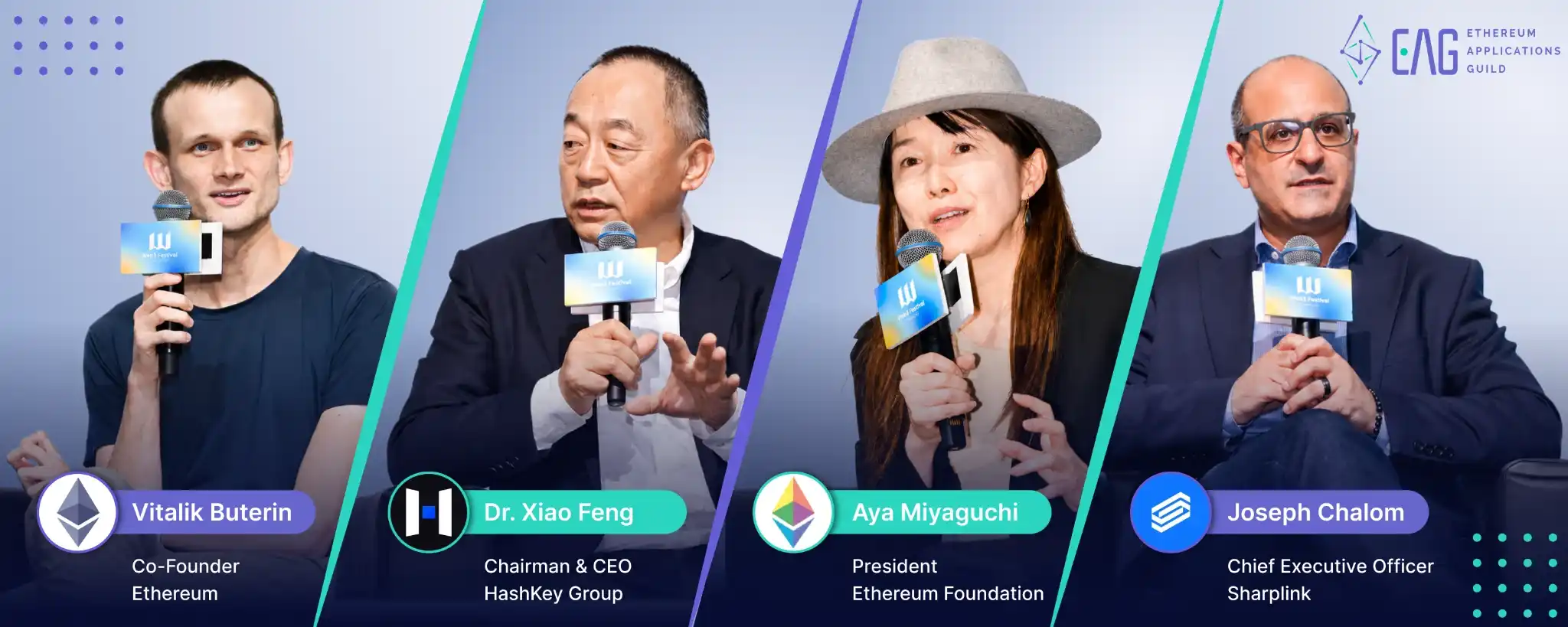
On April 22nd, the 'Ethereum Application Summit,' hosted by the Ethereum Applications Guild (EAG), was held on the main stage of the Hong Kong Web3 Festival. Builders, researchers, and application promoters from different levels of the Ethereum ecosystem gathered together to discuss 'What should be built in Ethereum's next stage,' jointly exploring the real directions and long-term opportunities taking shape at the application layer.
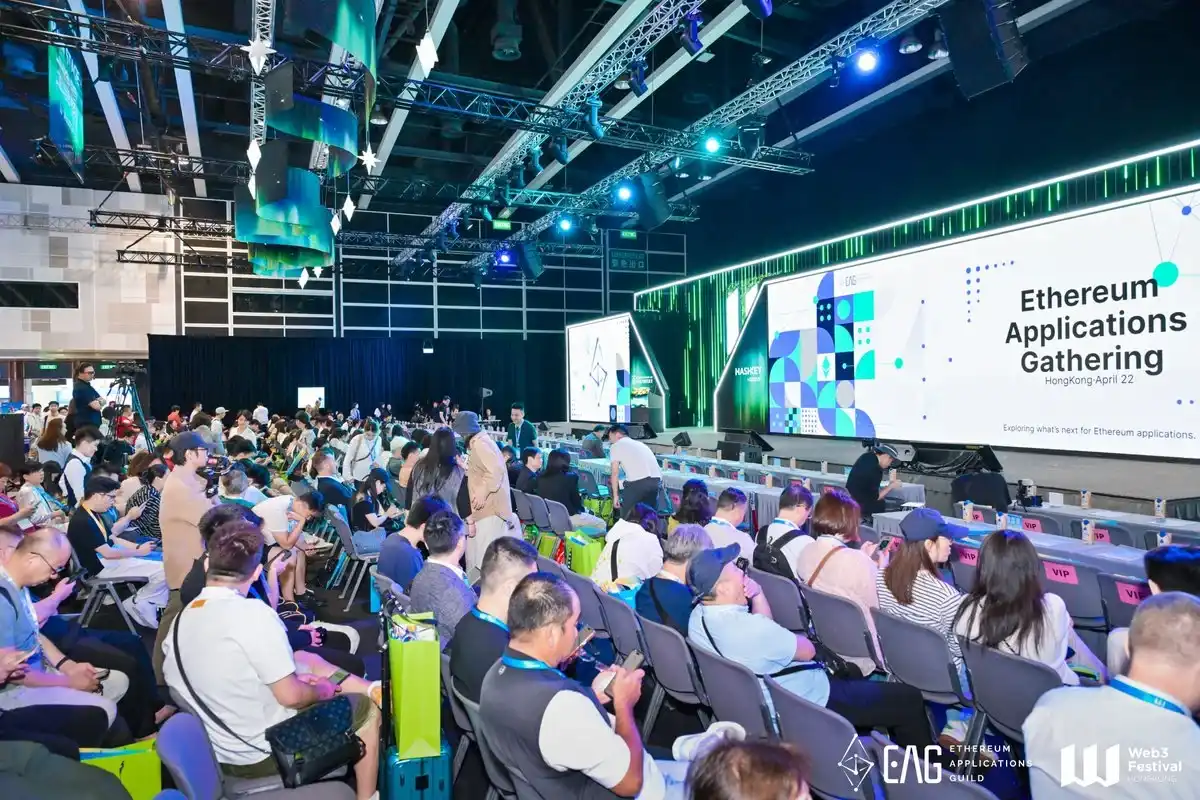
As Ethereum infrastructure matures, industry focus is gradually shifting from underlying capability building to the application layer. Against this backdrop, this event focused on real application progress and practical experience, engaging in discussions around the most crucial current questions: which directions are forming trends, what key challenges remain, and how applications can further move towards the real world.

The following are highlights from the Fireside Chat guests.

Vitalik Buterin: Towards a Full-Stack Open-Source Security and AI-Driven Era of 'Soft Sovereignty'
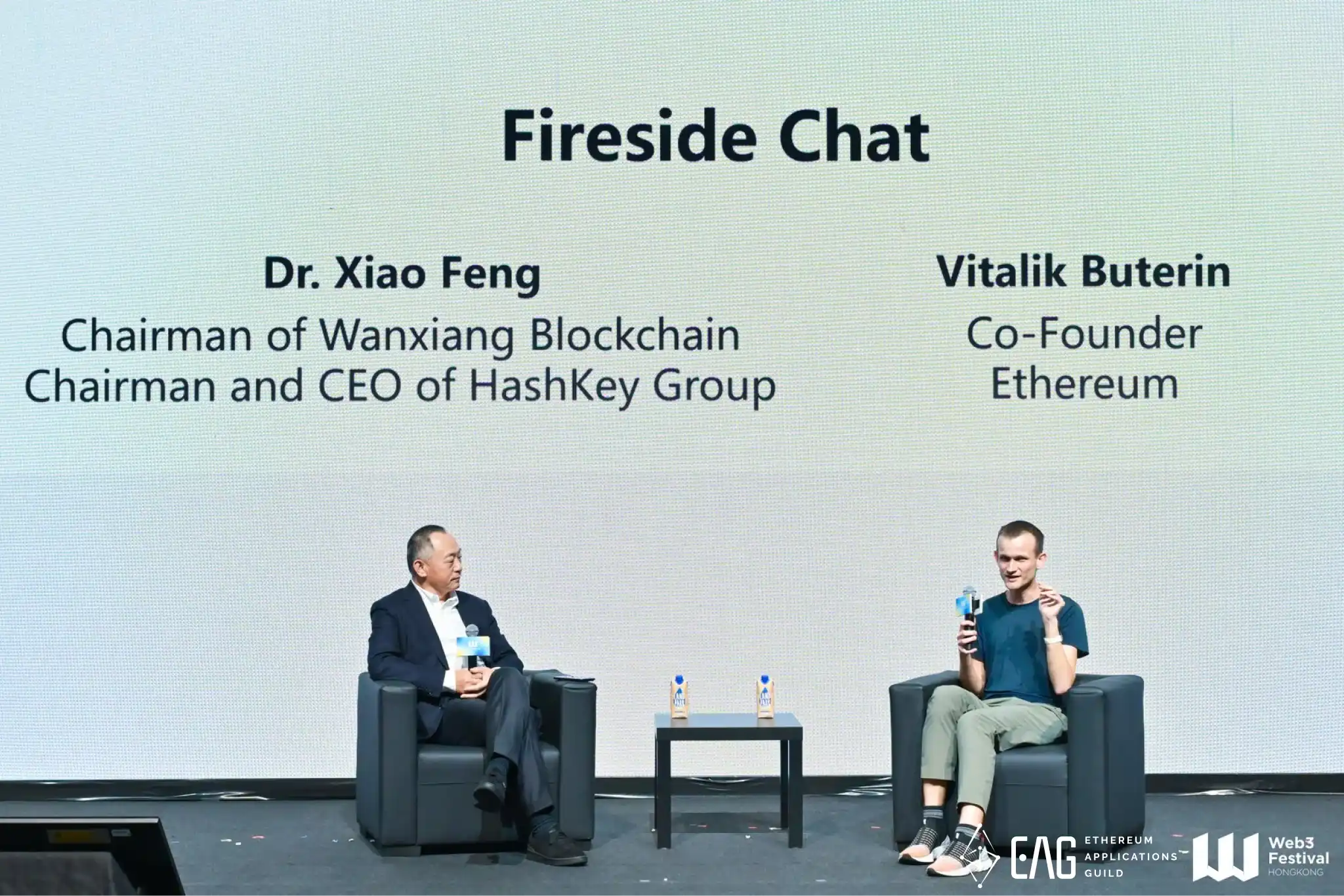
In his fireside chat with Dr. Xiao Feng, Vitalik Buterin focused on Ethereum's future development direction, as well as the significance of AI, hardware, security, and privacy computing for the blockchain ecosystem. He stated that Ethereum is rethinking the issue of 'Full Stack Open Source Security'—meaning security doesn't just exist at the blockchain protocol layer, but also extends to browsers, operating systems, hardware wallets, and even the chip layer. As blockchain applications increasingly enter the real world, hardware security and hardware acceleration will become indispensable infrastructure. Simultaneously, he believes Ethereum needs to continue 'simplifying' in the future, lowering the barrier to entry for ordinary users and developers. The internet evolved from the command line to the GUI, then to mobile internet apps, and the emergence of AI may bring about a 'command line for the natural language era'—where users only need to use natural language to invoke a vast array of programs and services built by different developers. He predicts that AI wallets, AI user interfaces, and natural language-based on-chain interactions will become new directions.

Regarding security and protocol, Vitalik believes AI is simultaneously enhancing the capabilities and risks of blockchain systems. On one hand, AI can aid in formal verification, smart contract audits, and core protocol development, making complex verifications that were nearly impossible a reality. On the other hand, AI will also significantly enhance vulnerability discovery and attack capabilities. Therefore, 'security' is not just a technical issue but also a question of whether developers are willing to choose secure architectures. He mentioned that important goals for Ethereum's next stage include faster finality, resistance to quantum computing, stronger decentralization, and higher protocol security, with significant work advancing in conjunction with AI and formal verification. Furthermore, he believes Ethereum's core competitiveness in the future will still be security and trustworthiness. Compared to other new chains emphasizing performance and efficiency, Ethereum should focus on doing 'only what Ethereum can do,' including decentralized, secure, privacy-protecting, and trustless infrastructure capabilities.

Regarding the integration of privacy computing and AI, Vitalik stated that Zero-Knowledge Proofs (ZK) have entered a relatively mature stage, while Fully Homomorphic Encryption (FHE), though slightly later, is developing very rapidly. He believes that in the future, with the combination of AI, FHE, and blockchain, real-world scenarios like healthcare, IoT, and data collaboration can be truly supported. For instance, medical data requires both AI's analytical capabilities and extremely high privacy protection, while blockchain can further provide permissionless, trustless data collaboration and value exchange mechanisms. He also emphasized that the core reason for the Ethereum Foundation's recent update of its mission and values is to continue adhering to principles like decentralization, privacy, self-sovereignty, and open-source collaboration in an era of rapid AI and digital development. He proposed the concept of 'Soft Sovereignty,' suggesting that future technology should not just improve efficiency but, more importantly, genuinely allow users to own and control their assets, data, and digital lives—a core value Ethereum has long upheld.

Regarding the establishment of the Ethereum Applications Guild (EAG), Vitalik stated that as the Ethereum ecosystem continues to expand, the ecosystem's long-term development requires the joint promotion of more independent organizations, developer communities, and application teams. He believes EAG can undertake much-needed work for ecosystem development that the Foundation isn't suited to directly promote, including driving application-layer innovation, connecting traditional industries with the blockchain world, supporting global developer collaboration, and promoting regional ecosystem building. He also expressed hope that more independent organizations similar to EAG would emerge in the Ethereum ecosystem in the future, promoting the ecosystem's long-term development and open collaboration in different directions.
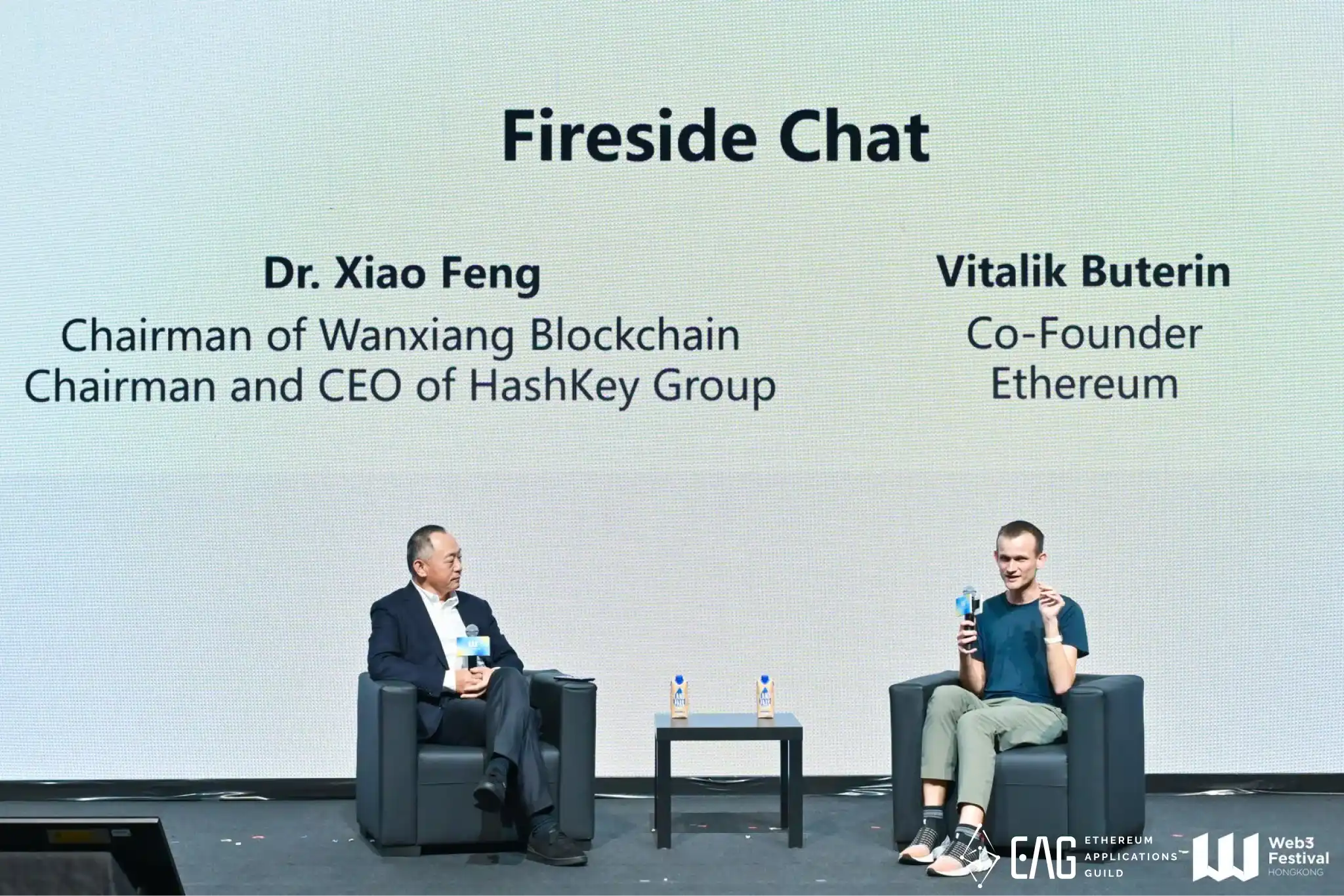
Dr. Xiao Feng believes Ethereum is entering a new stage moving from 'infrastructure construction' to 'real-world application adoption,' and the key to this process lies in continuously lowering the technical barrier and improving user experience. Citing the development history of the internet and operating systems, he pointed out that technology truly achieves mass adoption often relying on the simplification of interaction methods. From the command line to graphical interfaces, then to apps in the mobile internet era, complex systems were ultimately packaged into products ordinary users could easily use. In his view, Ethereum's future development also needs to further automate and intelligentize wallets, smart contracts, and on-chain interactions. With the development of AI and natural language interaction, future users might not need to understand the underlying technology; they could simply express their needs in natural language, and AI would automatically invoke on-chain protocols and applications to complete operations, thereby truly bringing more ordinary people into the Web3 world.

At the same time, Ethereum's development should not solely pursue efficiency but continue to adhere to core values like decentralization, security, and user sovereignty. He emphasized that the combination of AI, privacy computing, and blockchain will bring new possibilities to real-world scenarios like healthcare and data collaboration, while technologies like ZK proofs, FHE, and quantum-resistant cryptography are gradually becoming ready for practical application. In this process, L1 should continue focusing on security and decentralization, while L2 and the application layer are responsible for meeting different scenarios' demands for performance and functionality. He also noted that as blockchain applications scale, the importance of hardware, security, and cryptographic infrastructure will continue to rise, and the Ethereum ecosystem will need more organizations like EAG in the future to drive application innovation, industry collaboration, and global ecosystem building.

Aya Miyaguchi: Promoting the Long-Term Evolution of the Ethereum Ecosystem with the 'Subtraction Principle'
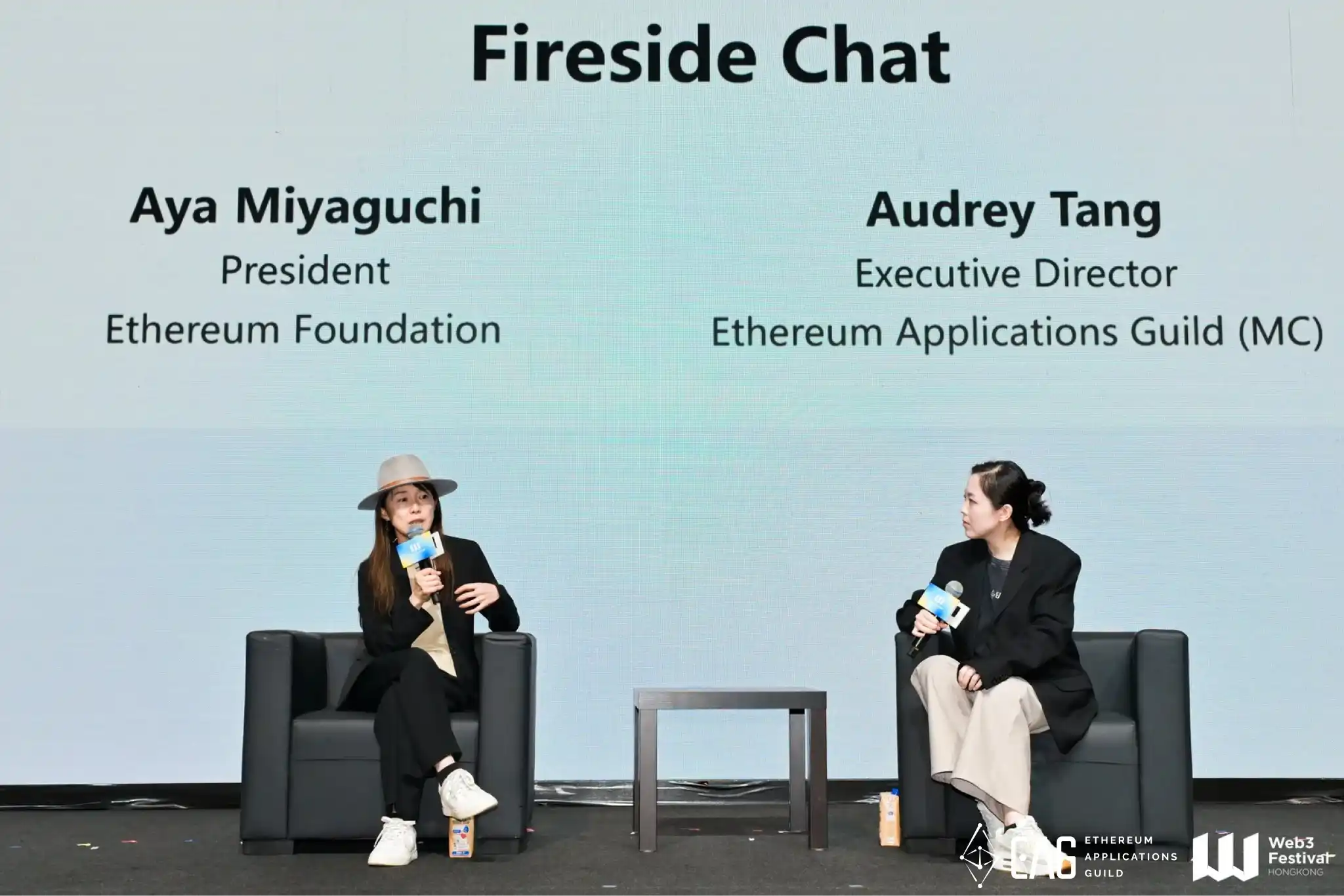
Ethereum Foundation Chairperson Aya Miyaguchi and Ethereum Applications Guild (EAG) Executive Director Audrey Tang held a fireside chat on the evolution of Ethereum ecosystem governance, application development, and the Foundation's role. Aya elaborated on the 'Principle of Subtraction' mentioned in the 'Ethereum Foundation Mission Statement' (EF Mandate). This means that in areas that are already relatively mature or where the community already has capabilities, the EF will increasingly shift to a supporting role. For example, the EF was initially involved in developing wallets and the Geth client itself, but as the ecosystem developed, its goal gradually shifted towards letting market competition naturally produce better tools. She described the EF's role as 'one of many gardeners' in the ecosystem, not its central driving force.

Simultaneously, Aya pointed out that 'real applications' are typically built on Ethereum's core values, including censorship resistance, open source, security, and privacy protection. She emphasized that Ethereum's security is the foundation for achieving meaningful widespread application; and that 'long-term resilience' is more important than 'short-term incentives'—its core idea is that Ethereum should be able to withstand a 'walkaway test' and possess the ability for self-sustainability over a decade or longer.

Additionally, she particularly emphasized the importance of a 'Local-first' strategy, believing that organizations like EAG can fully leverage deep regional ecosystem resources, generating global influence and an 'addition' effect through local knowledge and talent.

Joseph Chalom: Unleashing Ethereum's Productivity and the Paradigm Shift to the Agent Economy
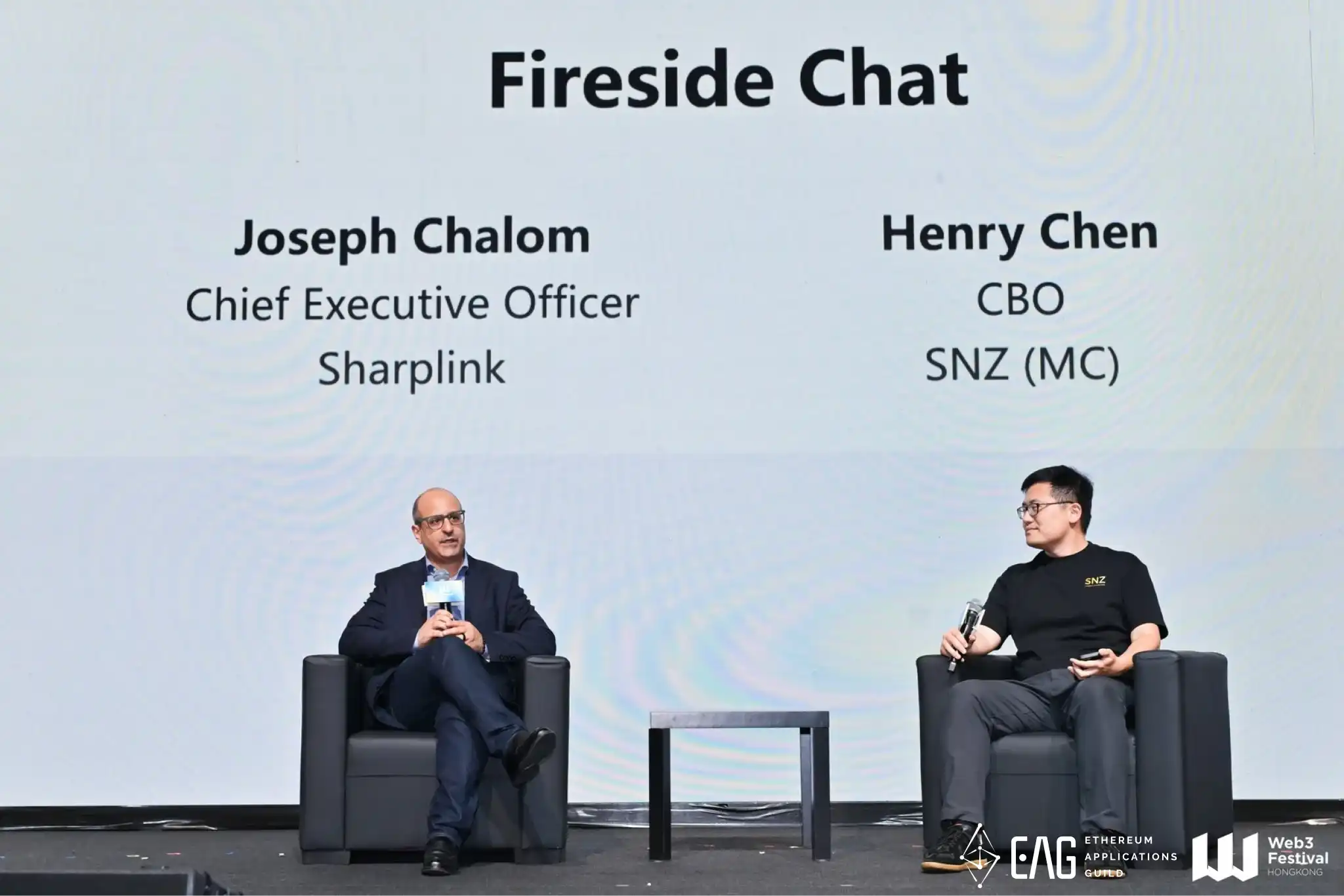
SNZ CBO Henry Chen spoke with SharpLink CEO Joseph Chalom, exploring the institutionalization path for Ethereum and the future of the 'Agent Economy' driven by AI Agents. Joseph firmly believes Ethereum represents the underlying architecture for the future global capital market and considers Hong Kong, with its capital, talent, and stable regulatory advantages, an ideal location for building a long-term digital economy. He pointed out the biggest difference between Ethereum and Bitcoin lies in 'productivity': Bitcoin is a store of value, while ETH has the unique attribute of generating yield through staking, which is highly attractive to institutions. SharpLink treats ETH as an institutional-grade reserve asset and achieves close to 100% staking, aiming to provide holders with transparent and sustainable on-chain yield.

Regarding the explosion of AI technology, Joseph depicted the coming era of the 'Agent Economy': by 2027, people will directly use Web3 wallet-enabled bank accounts and AI Agents, which will tirelessly execute instructions such as automatically capturing the highest yields, rebalancing investment portfolios, and purchasing RWAs. He encourages boldly transcending existing technical architectures while respecting security and decentralization principles to build the future of finance.
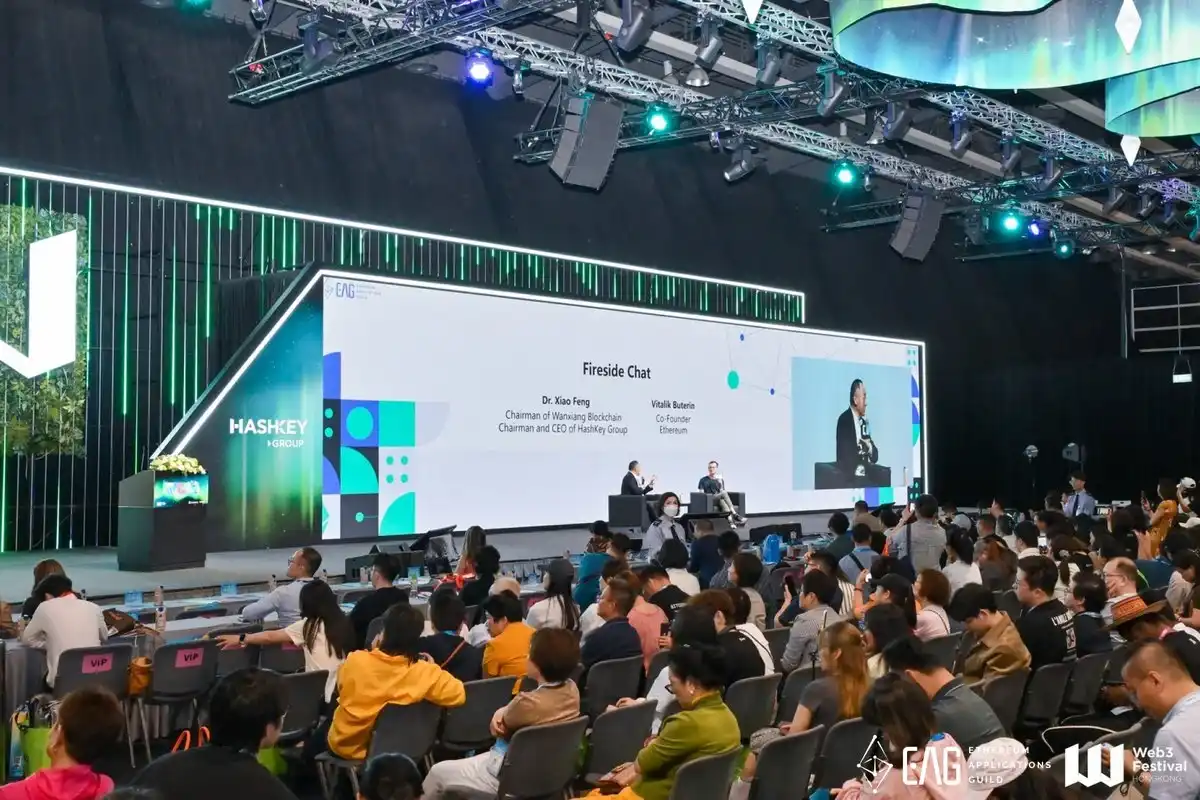
This Ethereum Application Summit concluded successfully in Hong Kong. As Ethereum infrastructure matures, the application layer is becoming the core driving force for the ecosystem's next stage of development. The official launch of the Ethereum Applications Guild (EAG) also marks the formation of an open collaboration network for global builders. In the future, with the adoption of more real-world applications and cross-domain integration, the Ethereum ecosystem will continue accelerating its move towards a broader real world.


Tiền kỹ thuật số thịnh hành

Câu hỏi Liên quan

QAccording to Vitalik Buterin, what is the concept of 'Full Stack Open Source Security' in the context of Ethereum's future development?

AIt refers to security that extends beyond the blockchain protocol layer to include browsers, operating systems, hardware wallets, and even the chip layer, as blockchain applications increasingly interact with the real world.

QWhat does Aya Miyaguchi mean by the 'Principle of Subtraction' in relation to the Ethereum Foundation's role?

AIt means that as certain areas mature or the community gains capability, the Ethereum Foundation will shift to a more supportive role, encouraging market competition to produce better tools, rather than being the central driving force.

QWhat key difference between Bitcoin and Ethereum does Joseph Chalom highlight regarding their value proposition to institutions?

AHe highlights the difference in 'productivity': Bitcoin is a store of value, while Ethereum (ETH) has the unique attribute of generating yield through staking, which is highly attractive to institutions.

QHow does Vitalik Buterin envision AI impacting user interaction with blockchain in the future?

AHe envisions AI enabling a 'command line for the natural language era,' where users can simply use natural language to invoke a wide range of programs and services built by different developers, leading to AI wallets, AI user interfaces, and natural language-based on-chain interactions.

QWhat future era does Joseph Chalom predict is coming by 2027, driven by AI and Web3?

AHe predicts the arrival of the 'Agent Economy' era, where people will use bank accounts and AI Agents supported by Web3 wallets. These AI Agents will autonomously execute tasks like capturing the highest yields, balancing portfolios, and buying Real World Assets (RWA).

Nội dung Liên quan

Hàn Quốc kiếm tiền, Mỹ lật mặt

Mỹ đã khởi kiện Samsung và SK Hynix của Hàn Quốc cùng với Micron của Mỹ ra tòa án liên bang California, cáo buộc ba công ty thông đồng thao túng giá DRAM, đẩy giá lên 700% trong bốn năm. Động thái này diễn ra trong bối cảnh Hàn Quốc đang thu lợi nhuận khổng lồ từ làn sóng AI, chủ yếu nhờ HBM (bộ nhớ băng thông cao) - linh kiện thiết yếu cho GPU của Nvidia. Phân tích cho thấy, đến năm 2026, Hàn Quốc dự kiến chiếm 35% tổng lợi nhuận toàn cầu từ AI, chủ yếu do SK Hynix (chiếm 57% thị phần HBM) và Samsung nắm giữ. Lợi nhuận hoạt động của SK Hynix lên tới 72%, thậm chí vượt cả Nvidia. Sự thịnh vượng này đã thúc đẩy thị trường chứng khoán và tài sản hộ gia đình Hàn Quốc. Vụ kiện của Mỹ, trên bề mặt là về chống độc quyền, nhưng thực chất phản ánh mối lo ngại sâu xa hơn: AI đang biến bộ nhớ thành một nguồn tài nguyên chiến lược mới, và Mỹ không muốn phụ thuộc vào Hàn Quốc ở hạ tầng then chốt này. Mỹ muốn thúc đẩy sản xuất bán dẫn hồi hương, với Micron là công ty then chốt được hỗ trợ bởi Đạo luật CHIPS. Để đáp trả, Hàn Quốc đã công bố kế hoạch đầu tư 800 nghìn tỷ Won vào ngành bán dẫn trong 15 năm tới, xây dựng các cụm siêu dẫn dẫn để củng cố vị thế dẫn đầu về HBM. Họ tin rằng nhu cầu AI sẽ tăng trưởng nhanh hơn tốc độ đuổi kịp của Mỹ. Vụ việc cho thấy sự phụ thuộc lẫn nhau giữa Nvidia (GPU) và các nhà sản xuất HBM Hàn Quốc, nhưng cũng hé lộ căng thẳng trong việc phân chia lợi nhuận khổng lồ từ AI. Đây không chỉ là tranh chấp thương mại mà còn là cuộc cạnh tranh về chủ quyền công nghiệp trong kỷ nguyên mới, nơi GPU, HBM và điện lực trở thành những nguồn tài nguyên sống còn như dầu mỏ hay thép trong quá khứ.

marsbit52 phút trước

Hàn Quốc kiếm tiền, Mỹ lật mặt

marsbit52 phút trước

Giá trị tăng 30% trong một tuần, Aave lại hồi sinh?

Trong tuần qua, giá AAVE đã tăng hơn 30%, từ khoảng 70 USD lên gần 100 USD. Mặc dù tổng giá trị bị khóa (TVL) của giao thức tiếp tục giảm sau sự kiện Kelp DAO bị tấn công, Aave vẫn thu hút sự quan tâm từ các tổ chức. Có thông tin cho rằng Kraken đang đàm phán mua cổ phần của Aave, nhưng người sáng lập Stani Kulechov đã phủ nhận chi tiết về mức chiết khấu lớn, đồng thời xác nhận có các cuộc thảo luận về việc mua lại token AAVE. Ông cũng tiết lộ các kế hoạch phát triển như cơ chế mua lại tự động trong Tokenomics 3.0 và mở rộng sang thị trường tài sản truyền thống. Các báo cáo từ Ngân hàng Standard Chartered và Grayscale đều lạc quan về triển vọng của Aave, đặc biệt trong lĩnh vực token hóa tài sản thực (RWA). Tuy nhiên, một số phân tích chỉ ra rằng đối thủ Morpho Blue có ưu điểm hơn về lãi suất, hiệu quả vốn và tính linh hoạt. Dù vậy, Aave vẫn giữ vị trí dẫn đầu về TVL trong lĩnh vực cho vay DeFi, gấp đôi Morpho và gần bằng tổng của ba đối thủ tiếp theo. Dù đối mặt với thách thức nội bộ và cạnh tranh, Aave vẫn duy trì lợi thế nhờ độ sâu thị trường, lượng người dùng lớn và danh tiếng lâu năm. Sự phát triển song song của Morpho và Aave có thể đại diện cho hai hướng đi khác nhau trong thị trường DeFi.

Foresight News1 giờ trước

Giá trị tăng 30% trong một tuần, Aave lại hồi sinh?

Foresight News1 giờ trước

Giao dịch

Giao ngay

Bài viết Nổi bật

AGENT S là gì

Agent S: Tương Lai của Tương Tác Tự Động trong Web3 Giới thiệu Trong bối cảnh không ngừng phát triển của Web3 và tiền điện tử, các đổi mới đang liên tục định nghĩa lại cách mà cá nhân tương tác với các nền tảng kỹ thuật số. Một dự án tiên phong như vậy, Agent S, hứa hẹn sẽ cách mạng hóa tương tác giữa con người và máy tính thông qua khung tác nhân mở của nó. Bằng cách mở đường cho các tương tác tự động, Agent S nhằm đơn giản hóa các nhiệm vụ phức tạp, cung cấp các ứng dụng chuyển đổi trong trí tuệ nhân tạo (AI). Cuộc khám phá chi tiết này sẽ đi sâu vào những phức tạp của dự án, các tính năng độc đáo của nó và những tác động đối với lĩnh vực tiền điện tử. Agent S là gì? Agent S đứng vững như một khung tác nhân mở đột phá, được thiết kế đặc biệt để giải quyết ba thách thức cơ bản trong việc tự động hóa các nhiệm vụ máy tính: Thu thập Kiến thức Cụ thể theo Miền: Khung này học một cách thông minh từ nhiều nguồn kiến thức bên ngoài và kinh nghiệm nội bộ. Cách tiếp cận kép này giúp nó xây dựng một kho lưu trữ phong phú về kiến thức cụ thể theo miền, nâng cao hiệu suất của nó trong việc thực hiện nhiệm vụ. Lập Kế Hoạch Qua Các Tầm Nhìn Nhiệm Vụ Dài Hạn: Agent S sử dụng lập kế hoạch phân cấp tăng cường kinh nghiệm, một cách tiếp cận chiến lược giúp phân chia và thực hiện các nhiệm vụ phức tạp một cách hiệu quả. Tính năng này nâng cao đáng kể khả năng quản lý nhiều nhiệm vụ con một cách hiệu quả và hiệu suất. Xử Lý Các Giao Diện Động, Không Đều: Dự án giới thiệu Giao Diện Tác Nhân-Máy Tính (ACI), một giải pháp đổi mới giúp nâng cao tương tác giữa các tác nhân và người dùng. Sử dụng các Mô Hình Ngôn Ngữ Lớn Đa Phương Thức (MLLMs), Agent S có thể điều hướng và thao tác các giao diện người dùng đồ họa đa dạng một cách liền mạch. Thông qua những tính năng tiên phong này, Agent S cung cấp một khung vững chắc giải quyết các phức tạp liên quan đến việc tự động hóa tương tác giữa con người với máy móc, mở ra nhiều ứng dụng trong AI và hơn thế nữa. Ai là Người Tạo ra Agent S? Mặc dù khái niệm về Agent S là hoàn toàn đổi mới, thông tin cụ thể về người sáng lập vẫn còn mơ hồ. Người sáng lập hiện vẫn chưa được biết đến, điều này làm nổi bật giai đoạn sơ khai của dự án hoặc sự lựa chọn chiến lược để giữ kín các thành viên sáng lập. Bất chấp sự ẩn danh, sự chú ý vẫn tập trung vào khả năng và tiềm năng của khung này. Ai là Các Nhà Đầu Tư của Agent S? Vì Agent S còn tương đối mới trong hệ sinh thái mã hóa, thông tin chi tiết về các nhà đầu tư và những người tài trợ tài chính của nó không được ghi chép rõ ràng. Sự thiếu vắng thông tin công khai về các nền tảng đầu tư hoặc tổ chức hỗ trợ dự án dấy lên câu hỏi về cấu trúc tài trợ và lộ trình phát triển của nó. Hiểu biết về sự hỗ trợ là rất quan trọng để đánh giá tính bền vững và tác động tiềm năng của dự án. Agent S Hoạt Động Như Thế Nào? Tại cốt lõi của Agent S là công nghệ tiên tiến cho phép nó hoạt động hiệu quả trong nhiều bối cảnh khác nhau. Mô hình hoạt động của nó được xây dựng xung quanh một số tính năng chính: Tương Tác Giống Như Con Người: Khung này cung cấp lập kế hoạch AI tiên tiến, cố gắng làm cho các tương tác với máy tính trở nên trực quan hơn. Bằng cách bắt chước hành vi của con người trong việc thực hiện nhiệm vụ, nó hứa hẹn nâng cao trải nghiệm người dùng. Ký Ức Tường Thuật: Được sử dụng để tận dụng các trải nghiệm cấp cao, Agent S sử dụng ký ức tường thuật để theo dõi lịch sử nhiệm vụ, từ đó nâng cao quy trình ra quyết định của nó. Ký Ức Tình Huống: Tính năng này cung cấp cho người dùng hướng dẫn từng bước, cho phép khung này cung cấp hỗ trợ theo ngữ cảnh khi các nhiệm vụ diễn ra. Hỗ Trợ OpenACI: Với khả năng chạy cục bộ, Agent S cho phép người dùng duy trì quyền kiểm soát đối với các tương tác và quy trình làm việc của họ, phù hợp với tinh thần phi tập trung của Web3. Tích Hợp Dễ Dàng với Các API Bên Ngoài: Tính linh hoạt và khả năng tương thích với nhiều nền tảng AI khác nhau đảm bảo rằng Agent S có thể hòa nhập liền mạch vào các hệ sinh thái công nghệ hiện có, làm cho nó trở thành lựa chọn hấp dẫn cho các nhà phát triển và tổ chức. Những chức năng này cùng nhau góp phần vào vị trí độc đáo của Agent S trong không gian tiền điện tử, khi nó tự động hóa các nhiệm vụ phức tạp, nhiều bước với sự can thiệp tối thiểu của con người. Khi dự án phát triển, các ứng dụng tiềm năng của nó trong Web3 có thể định nghĩa lại cách mà các tương tác kỹ thuật số diễn ra. Thời Gian Phát Triển của Agent S Sự phát triển và các cột mốc của Agent S có thể được tóm tắt trong một dòng thời gian nêu bật các sự kiện quan trọng của nó: 27 tháng 9, 2024: Khái niệm về Agent S được ra mắt trong một bài nghiên cứu toàn diện mang tên “Một Khung Tác Nhân Mở Sử Dụng Máy Tính Như Một Con Người,” trình bày nền tảng cho dự án. 10 tháng 10, 2024: Bài nghiên cứu được công bố công khai trên arXiv, cung cấp một cái nhìn sâu sắc về khung và đánh giá hiệu suất của nó dựa trên tiêu chuẩn OSWorld. 12 tháng 10, 2024: Một video trình bày được phát hành, cung cấp cái nhìn trực quan về khả năng và tính năng của Agent S, thu hút thêm sự quan tâm từ người dùng và nhà đầu tư tiềm năng. Những dấu mốc trong dòng thời gian không chỉ minh họa sự tiến bộ của Agent S mà còn chỉ ra cam kết của nó đối với sự minh bạch và sự tham gia của cộng đồng. Những Điểm Chính Về Agent S Khi khung Agent S tiếp tục phát triển, một số thuộc tính chính nổi bật, nhấn mạnh tính đổi mới và tiềm năng của nó: Khung Đổi Mới: Được thiết kế để cung cấp cách sử dụng máy tính trực quan giống như tương tác của con người, Agent S mang đến một cách tiếp cận mới cho việc tự động hóa nhiệm vụ. Tương Tác Tự Động: Khả năng tương tác tự động với máy tính thông qua GUI đánh dấu một bước tiến tới các giải pháp tính toán thông minh và hiệu quả hơn. Tự Động Hóa Nhiệm Vụ Phức Tạp: Với phương pháp mạnh mẽ của nó, nó có thể tự động hóa các nhiệm vụ phức tạp, nhiều bước, làm cho các quy trình nhanh hơn và ít sai sót hơn. Cải Tiến Liên Tục: Các cơ chế học tập cho phép Agent S cải thiện từ các trải nghiệm trước đó, liên tục nâng cao hiệu suất và hiệu quả của nó. Tính Linh Hoạt: Khả năng thích ứng của nó trên các môi trường hoạt động khác nhau như OSWorld và WindowsAgentArena đảm bảo rằng nó có thể phục vụ một loạt các ứng dụng rộng rãi. Khi Agent S định vị mình trong bối cảnh Web3 và tiền điện tử, tiềm năng của nó để nâng cao khả năng tương tác và tự động hóa quy trình đánh dấu một bước tiến quan trọng trong công nghệ AI. Thông qua khung đổi mới của mình, Agent S minh họa cho tương lai của các tương tác kỹ thuật số, hứa hẹn một trải nghiệm liền mạch và hiệu quả hơn cho người dùng trên nhiều ngành công nghiệp khác nhau. Kết luận Agent S đại diện cho một bước nhảy vọt táo bạo trong sự kết hợp giữa AI và Web3, với khả năng định nghĩa lại cách chúng ta tương tác với công nghệ. Mặc dù vẫn còn ở giai đoạn đầu, những khả năng cho ứng dụng của nó là rộng lớn và hấp dẫn. Thông qua khung toàn diện của mình giải quyết các thách thức quan trọng, Agent S nhằm đưa các tương tác tự động lên hàng đầu trong trải nghiệm kỹ thuật số. Khi chúng ta tiến sâu hơn vào các lĩnh vực tiền điện tử và phi tập trung, các dự án như Agent S chắc chắn sẽ đóng một vai trò quan trọng trong việc định hình tương lai của công nghệ và sự hợp tác giữa con người với máy tính.

Tổng lượt xem 901Xuất bản vào 2025.01.14Cập nhật vào 2025.01.14

AGENT S là gì

Làm thế nào để Mua S

Chào mừng bạn đến với HTX.com! Chúng tôi đã làm cho mua Sonic (S) trở nên đơn giản và thuận tiện. Làm theo hướng dẫn từng bước của chúng tôi để bắt đầu hành trình tiền kỹ thuật số của bạn.Bước 1: Tạo Tài khoản HTX của BạnSử dụng email hoặc số điện thoại của bạn để đăng ký tài khoản miễn phí trên HTX. Trải nghiệm hành trình đăng ký không rắc rối và mở khóa tất cả tính năng. Nhận Tài khoản của tôiBước 2: Truy cập Mua Crypto và Chọn Phương thức Thanh toán của BạnThẻ Tín dụng/Ghi nợ: Sử dụng Visa hoặc Mastercard của bạn để mua Sonic (S) ngay lập tức.Số dư: Sử dụng tiền từ số dư tài khoản HTX của bạn để giao dịch liền mạch.Bên thứ ba: Chúng tôi đã thêm những phương thức thanh toán phổ biến như Google Pay và Apple Pay để nâng cao sự tiện lợi.P2P: Giao dịch trực tiếp với người dùng khác trên HTX.Thị trường mua bán phi tập trung (OTC): Chúng tôi cung cấp những dịch vụ được thiết kế riêng và tỷ giá hối đoái cạnh tranh cho nhà giao dịch.Bước 3: Lưu trữ Sonic (S) của BạnSau khi mua Sonic (S), lưu trữ trong tài khoản HTX của bạn. Ngoài ra, bạn có thể gửi đi nơi khác qua chuyển khoản blockchain hoặc sử dụng để giao dịch những tiền kỹ thuật số khác.Bước 4: Giao dịch Sonic (S)Giao dịch Sonic (S) dễ dàng trên thị trường giao ngay của HTX. Chỉ cần truy cập vào tài khoản của bạn, chọn cặp giao dịch, thực hiện giao dịch và theo dõi trong thời gian thực. Chúng tôi cung cấp trải nghiệm thân thiện với người dùng cho cả người mới bắt đầu và người giao dịch dày dạn kinh nghiệm.

Tổng lượt xem 1.6kXuất bản vào 2025.01.15Cập nhật vào 2026.06.02

Làm thế nào để Mua S

Thảo luận

Chào mừng đến với Cộng đồng HTX. Tại đây, bạn có thể được thông báo về những phát triển nền tảng mới nhất và có quyền truy cập vào thông tin chuyên sâu về thị trường. Ý kiến ​​của người dùng về giá của S (S) được trình bày dưới đây.

活动图片