Chaos Labs Exits, Who Will Take Over Aave's Risk?

marsbitXuất bản vào 2026-04-07Cập nhật gần nhất vào 2026-04-07

Tóm tắt

Chaos Labs, the core risk management provider for Aave V2 and V3 markets, has announced its decision to terminate its partnership with Aave. Despite Aave Labs increasing the budget to $5 million to retain them, Chaos Labs chose to leave due to fundamental disagreements on how risk should be managed. Key reasons for the departure include: the loss of core Aave contributors increasing operational risk, the expanded scope and complexity introduced by Aave V4 (which requires rebuilding risk infrastructure from scratch), and the fact that Chaos Labs operated at a financial loss even with increased budgets. They estimate that proper risk management for both V3 and V4 should cost at least $8 million annually (≈5.6% of protocol revenue), closer to traditional banking standards, rather than the previous 2%. Chaos Labs emphasized that Aave’s reputation and institutional adoption rely heavily on its risk management track record. They also highlighted unquantified costs like legal liability and operational security risks. The exit occurs as Aave plans its V4 upgrade and expands into institutional markets. Chaos Labs warns that migrating to V4 while maintaining V3 will double, not halve, the workload, and that accumulated operational experience cannot be easily transferred. The decision reflects a principled stance: Chaos Labs only attaches its name to work that meets its high-risk standards, even at significant financial sacrifice.

Editor's Note: Chaos Labs has announced its decision to proactively end its risk management collaboration with Aave and is seeking early termination of this authorized relationship. As the core team that has provided risk pricing and management for all of Aave's V2 and V3 markets over the past three years, its departure comes at a critical juncture as Aave is advancing its V4 architectural restructuring and institutional expansion.

In the statement, Chaos Labs emphasized that this decision was not due to short-term budget disagreements but rather a fundamental divergence in the perception of "how risk should be managed." With the loss of core contributors, increasing system complexity, and the architectural rewrite brought by V4, the responsibilities and costs of risk management have significantly expanded, but resource allocation and priority setting have not been adjusted accordingly.

The article further points out that as DeFi gradually attracts institutional funds, the risk record itself has become the most critical "admission asset." When a protocol needs to simultaneously handle more complex system structures and higher compliance standards, risk is no longer just a technical issue but a foundational capability that determines its sustainable operation.

As DeFi enters its next phase, where should risk management be positioned, and is the industry willing to bear the corresponding costs?

Below is the original text:

Since November 2022, Chaos Labs has priced every loan initiated on Aave and managed the risks for all Aave V2 and V3 markets across various networks, during which no materially impactful bad debts occurred.

During this period, Aave's Total Value Locked (TVL) grew from $5.2 billion to over $26 billion, with cumulative deposits exceeding $2.5 trillion and over $2 billion in completed liquidations.
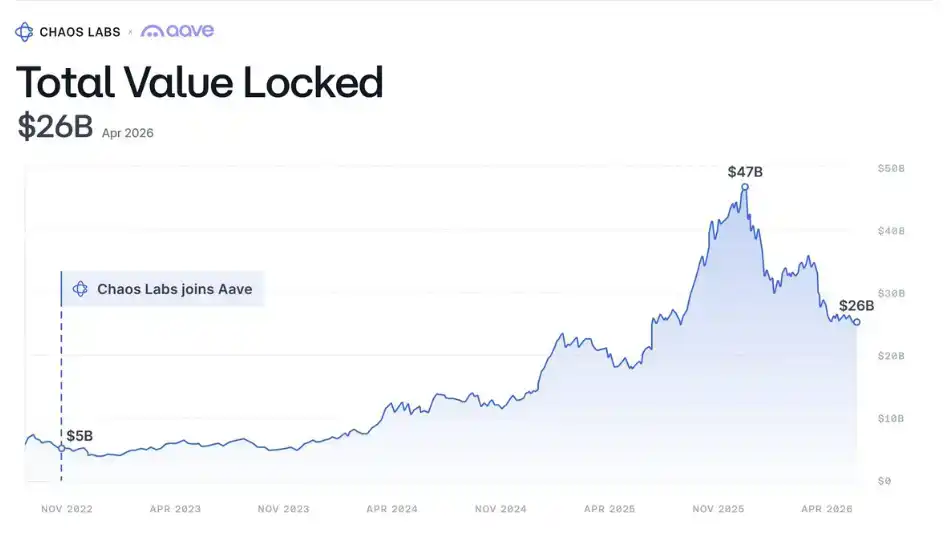
Today, we have decided to proactively end this authorized relationship and seek early termination of the collaboration.

This decision was not made hastily. We have always collaborated in good faith with DAO contributors, and Aave Labs has remained professional, even increasing the budget to $5 million to retain us. However, we chose to leave because this collaboration no longer aligns with our fundamental understanding of "how risk should be managed."

Although there are differences in future paths, I still believe Aave Labs is acting in what it perceives as the best interest of Aave.

Why We Chose to Leave

Over the past three years, we have stood with Aave through multiple market crises—moments that tested nearly every parameter we set and every machine learning model we built.

When we joined, the DAO's annualized net expenditure was negative $35 million; a few months ago, it peaked at $150 million. As one of the core contributors, we take pride in this journey.

People do not easily walk away from such an experience. Therefore, for the sake of transparency and as a reference for the DAO's future, we explain our reasons here.

Funding can solve many problems, but not all. The deeper issue lies in the structural divergence between the two parties on the fundamental question of "how to manage risk." As discussions about the future path continued, this divergence became increasingly clear.

Ultimately, the issue boils down to three points:

The departure of core Aave contributors has significantly increased the workload and operational risks;

The launch of V4 has expanded the scope of risk management functions, increasing operational and legal responsibilities, and its architecture was not designed by us, nor is it a design approach we would adopt;

Over the past three years, we have consistently operated Aave's risk management at a loss. Even with a $1 million budget increase, overall operations would still be in negative profit.

This leaves only two choices, neither of which we can accept:

Doing our best with insufficient resources but failing to meet the risk management standards expected of the "world's largest DeFi application";

Continuing to subsidize Aave's risk operations with our own funds, sustaining losses.

Even if the economic issues were resolved, the divergence in risk priorities and management approaches remains, and this cannot be solved simply by increasing the budget.

However, none of this changes our perspective on this work.

For Chaos Labs, contributing to Aave has always been an honor and a heavy responsibility. Our reputation is built on our track record. Every collaboration must be done to the standard it deserves, or not at all.

People, Technology, and Operational Experience

Aave is an excellent brand. Its leading position does not stem from the flashiest features or the most aggressive growth strategies.

What has long given Aave its advantage is its "reliability." Brand and market sentiment are essentially lagging reflections of its performance, security, and risk management capabilities—especially in extreme market conditions that have destroyed other participants. It is on this foundation that the consensus of "Just Use Aave" has gradually formed.

Competitors have launched more aggressive mechanisms and growth strategies, but they have collapsed one after another due to risk management failures or security vulnerabilities. In a market composed of the world's most volatile assets, "survivability" is the product itself. Those who can manage risk better and longer will prevail.

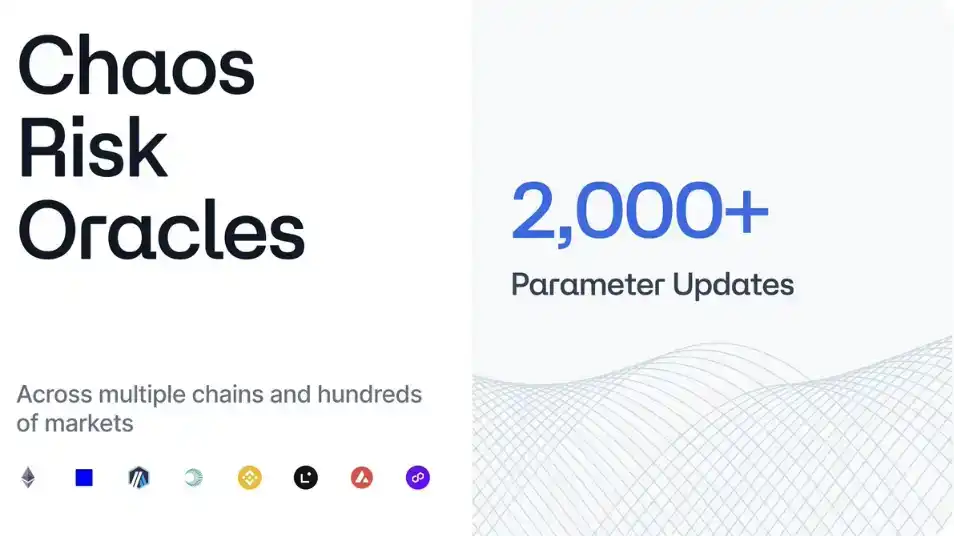
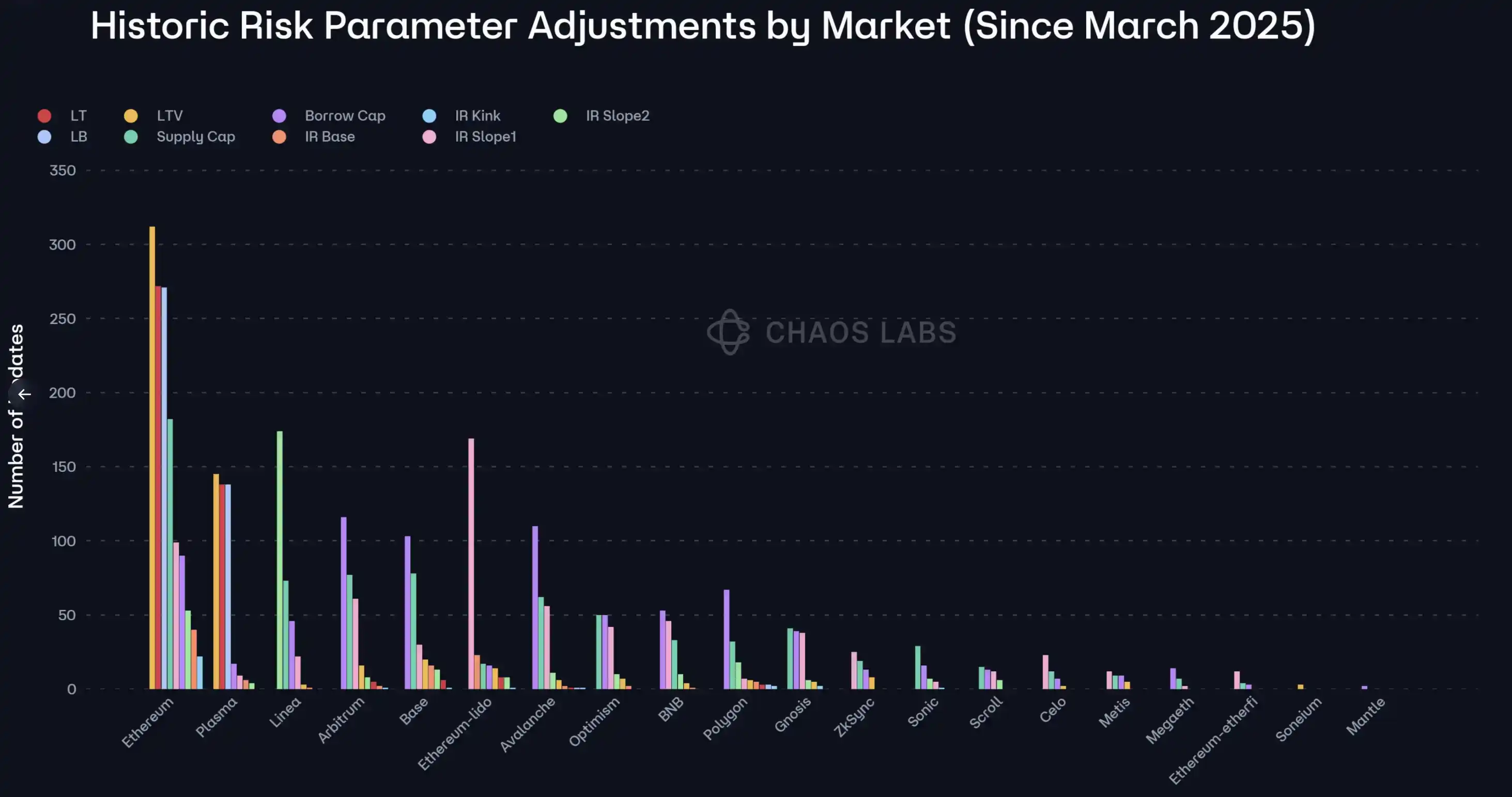
Aave's true innovation, however, lies in areas many protocols overlook: processes and infrastructure. The Risk Oracles we built and first launched on Aave enable the protocol to self-heal and update parameters in real-time based on dynamic and highly volatile market conditions. This infrastructure supports Aave's expansion to over 250 markets across 19 blockchains, handling hundreds of parameter updates monthly while maintaining rigorous operational standards, thus earning the trust it holds today.
This rigor stems from a specific collaboration system and execution stack: ACI handles growth and governance (@Marczeller), TokenLogic handles treasury management and growth (@Token_Logic), BGD handles protocol engineering (@bgdlabs), and Chaos Labs handles risk management.

The brand is what the outside world sees; what truly makes it worth seeing are the people, technology, and operational experience behind it.

GTM and Institutional Expansion

Our contributions extend far beyond risk management.

Over the past few years, the crypto industry has rapidly institutionalized. The world's largest financial institutions have begun accessing DeFi, but no matter how real the on-chain yields are, they are outweighed by one prerequisite: if institutions fear client funds could be at risk, none of this matters. For any regulated entity, all discussions begin and end with risk. A few extra basis points of yield are never worth risking principal. Institutions seek risk-adjusted returns, and they will not allocate funds to a protocol they cannot "clearly explain" to their compliance teams.

Precisely because of this, Aave's risk record has become its most important GTM asset. And we, as the builders of this record, have thus been able to directly engage with these institutions. At the request of Aave Labs, we took on this role, meeting with partners globally, producing research and due diligence materials, and personally participating in Aave's institutional expansion. We also hope the DAO will continue to benefit from these accumulated efforts in the coming months.

Ship of Theseus

If every plank of a ship is replaced, is it still the same ship? The name remains, the flag remains, but the foundation is already different.

Aave is now in such a state. The core contributors who built and operated V3 have left, and the operational experience that supported Aave through market cycles over the past three years has been lost with them.

We are the last remaining technical contributor from this group.

V3 remains the largest application in DeFi, requiring 7×24×365 risk management. Although Aave Labs is optimistic about a rapid migration to V4, history shows that such migrations often take months or even years. Until V4 fully assumes V3's markets and liquidity, both systems must run in parallel. The workload does not halve; it doubles.

More critical is operational experience. Even assuming different teams have equal capability, the experience accumulated over three years of continuous operation cannot be directly handed over.

How long will it take to bridge this gap? The answer is clearly not "zero." And until the gap is closed, someone must bear this cost—a responsibility that falls almost entirely on us, while the budget is already insufficient for the expanded scope.

The continuity of the brand is not equivalent to the continuity of the system.

Why V4 Is Different

V4 is a completely new lending protocol with entirely new smart contract code, system architecture, and design paradigms. Aside from the name, it bears little resemblance to Aave V3.

Architectural changes directly impact risk: more cross-market, cross-module interdependencies,全新的信用结构, and adjusted liquidation logic. And the "second-order risks" of any new protocol only gradually apparent after real funds enter the system.

Responsibly taking over this system means rebuilding infrastructure, toolchains, and simulation systems from the ground up and redoing the entire operational process on a codebase that has not yet been market-tested. This scope is far greater than V3, and this is at the core of our decision.

Risk is downstream of architecture. When the architecture undergoes fundamental changes, risk management itself must be重构. Unlike standardized services like price oracles or reserve proofs, the Risk Oracle and its supporting systems must be customized for the specific protocol architecture. Once the architecture is rewritten, the risk infrastructure must be rebuilt.

The problem is: the scope has significantly expanded, but resources have not increased accordingly. Aave Labs may be able to accept such a trade-off, but we cannot.

The Real Cost of This

We are walking away from a historically well-functioning, $5 million collaboration. For a startup, this is by no means a decision made lightly, and thus deserves fuller context.

Remuneration is only part of it; more importantly, it's a signal: how many resources an organization dedicates to risk reflects its priority on risk.

Simultaneously, I also believe that few truly understand the actual costs, real expenditures, and risks borne by such systems. Therefore, I hope to clarify this here.

It must be clear: the DAO has every right to decide what it values and how much it is willing to pay for it. I have no objection to that. My duty is merely to judge whether these conditions are suitable for us—and this time, they are not.

Comparing Aave to a Bank

Aave often compares itself to a bank, and we use this standard for perspective. Banks typically allocate 6%–10% of their revenue to compliance and risk infrastructure. In 2025, Aave's revenue was $142 million, and our budget was $3 million, accounting for about 2%.

We estimate that the minimum risk budget for V3 + V4 should be $8 million to cover the broader risk scope, additional infrastructure, and the GTM work we have already undertaken, accounting for about 5.6% of revenue, still below the lower bound for banks.

And this comparison might even be "generous." The openness of blockchain makes it more complex and asymmetric in terms of market risk and cybersecurity risk. The protocol's open-source transparency means the attack surface is equally visible to everyone. Recent series of attacks have proven this is not a theoretical risk. We believe DeFi should invest more in risk than traditional finance, not less.

Of course, Aave's scale has almost no comparable counterpart in DeFi; banks are just a reference point to understand how much institutions that "take risk seriously" typically invest. Whether a protocol "has the ability" to invest in risk and whether it "chooses to invest" are two different things.

For Aave, capability is not the issue: the DAO holds approximately $140 million in reserves, and Aave Labs just passed a $50 million self-funding proposal. But even if resources were scarce, the cost of risk management would not change. Budgets cannot reshape the threat structure—cost is cost.

Costs That Don't Appear in the Budget

Manpower and infrastructure are only explicit costs; there are also隐性成本 that are harder to quantify but must be borne.

First, legal and institutional risk. Engaging in risk management in DeFi (whether as a risk manager or treasury manager) faces undefined liability boundaries. There is no mature regulatory framework, no "safe harbor," and no clear legal definition of what responsibility risk managers should bear when a protocol fails. When the system functions normally, this work is "invisible"; once problems arise, the responsibility does not disappear.

Second, network and operational security. Providing risk services for a protocol managing tens of billions of dollars in assets itself becomes a target for attacks. The costs of audits, monitoring, infrastructure, and internal control systems rise in tandem with user deposit规模.

These costs are not unique to us. Any team taking on this role at this scale would face the same exposure. The question is whether the collaboration structure reflects this reality.

If the upside is limited and the downside risk is unlimited, then choosing to continue is not "having faith"; it is poor risk management.

Our Principles

At Chaos, we always adhere to a simple principle: we only put our name to work we fully stand behind.

When things go well, this principle is easy to uphold; what truly matters is when it comes at a cost. Today, that cost is $5 million.

I once wrote in "The Market Crypto Never Built" what institutional-grade risk management should look like. This decision is the embodiment of that belief in reality. If we advocate for higher standards in the industry, we must first hold ourselves to those standards.

I hope V4 will succeed. If it turns out our concerns were overestimated, that would be good for the entire industry.

To the Aave community: Thank you for the trust during this time; it has been our honor.

Tiền kỹ thuật số thịnh hành

Câu hỏi Liên quan

QWhy did Chaos Labs decide to end its risk management partnership with Aave?

AChaos Labs ended the partnership due to a fundamental disagreement with Aave on how risk should be managed, not because of short-term budget issues. The departure of core Aave contributors, increased operational risks, the expanded scope and legal responsibilities from V4's architecture (which they did not design), and operating at a financial loss for three years were key factors.

QWhat was Chaos Labs' role and contribution to Aave during their partnership?

AChaos Labs was responsible for pricing every loan and managing risk for all Aave V2 and V3 markets across multiple networks. They built risk infrastructure like Risk Oracles, handled parameter updates, and contributed to Aave's growth from $5.2B to over $26B TVL. They also supported Aave's institutional expansion by engaging with regulated entities and providing research and due diligence materials.

QHow does Chaos Labs view the importance of risk management in DeFi, especially for protocols like Aave?

AChaos Labs believes risk management is a foundational capability, not just a technical issue. In DeFi, where protocols handle volatile assets, survival and reliability are the product. A strong risk record is a critical GTM asset for attracting institutional funds, as institutions prioritize risk-adjusted returns and require clear risk explanations for compliance.

QWhat are the challenges and increased costs associated with managing risk for Aave V4 according to Chaos Labs?

AV4 is a completely new protocol with different architecture, credit structures, and liquidation logic, requiring rebuilding risk infrastructure, tools, and simulations from scratch. Managing both V3 and V4 in parallel would double the workload. Chaos Labs estimated a minimum risk budget of $8M (5.6% of revenue) for V3+V4, higher than the 2% they received, to cover expanded scope, infrastructure, and hidden costs like legal and operational security.

QWhat principle did Chaos Labs cite as the reason for their decision to leave, despite the financial impact?

AChaos Labs operates on the principle of only putting their name on work they fully stand behind. They believe that advocating for higher standards in DeFi risk management requires adhering to those standards themselves, even at a cost—in this case, foregoing a $5M partnership that no longer aligned with their risk management philosophy.

Nội dung Liên quan

Ngân hàng Ý không nhìn thấy lợi thế hệ thống của stablecoin trong chuyển tiền

Một nghiên cứu của Ngân hàng Ý kết luận rằng stablecoin không mang lại lợi thế hệ thống bền vững về chi phí và tốc độ trong chuyển tiền quốc tế so với các dịch vụ tiêu chuẩn. Các ưu điểm tiềm năng bị mất đi bởi phí chuyển đổi sang/và từ tiền pháp định và hiệu quả của cơ sở hạ tầng thanh toán địa phương. Nghiên cứu so sánh việc chuyển 200 USDC qua 10 hành lang giữa Ý và các nước như Brazil, Argentina, Nhật Bản, UAE và Nam Phi. Tổng chi phí chuyển stablecoin dao động từ 0,3% đến gần 9%, tùy tuyến. Thời gian giải quyết giao dịch dưới 20 phút ở những nơi có hệ thống thanh toán tức thời, nhưng có thể kéo dài 1-2 ngày làm việc ở khu vực không có. Chi phí và độ trễ chủ yếu đến từ việc trao đổi, chuyển đổi tiền tệ và chất lượng hạ tầng địa phương, không phải từ phí blockchain. Dù stablecoin rẻ hơn mức trung bình toàn cầu là 6,65%, chúng chỉ rẻ hơn dịch vụ Wise ở 3/7 tuyến so sánh được. Các tác giả cho rằng lợi ích sẽ rõ ràng hơn nếu stablecoin có thể được chi tiêu trực tiếp mà không cần đổi sang tiền địa phương. Họ cũng lưu ý rằng các quy định cấm đoán không làm giảm nhu cầu với stablecoin, trong khi quy định quá chặt chẽ lại gây khó khăn cho người dùng phổ thông.

cryptonews.ru1 giờ trước

Ngân hàng Ý không nhìn thấy lợi thế hệ thống của stablecoin trong chuyển tiền

cryptonews.ru1 giờ trước

Cơn sốt Bitcoin đang bùng nổ: Tuyên bố mới của Saylor gây nên những đồn đoán về việc mua vào

Giám đốc điều hành của Strategy Inc. (Nasdaq: MSTR), Michael Saylor, một lần nữa khơi dậy những đồn đoán về việc công ty sẽ thông báo mua Bitcoin mới vào thứ Hai, sau khi đăng thông điệp "Bitcoin Drive engaged" vào ngày 2 tháng 8. Thông báo này đi kèm với biểu đồ mua hàng quen thuộc của công ty, phù hợp với thói quen báo hiệu thay đổi kho bạc trước các báo cáo hàng tuần của Saylor. Báo cáo kèm theo cho thấy dự trữ Bitcoin của Strategy là 843.775 BTC, trị giá khoảng 53,25 tỷ USD. Giá mua trung bình được ghi nhận là 75.653 USD/BTC, với lỗ chưa thực hiện là 10,58 tỷ USD (-16,58%). Một tín hiệu tương tự vào Chủ nhật tuần trước đã dẫn đến thông báo vào ngày 27/7 về việc công ty gia tăng dự trữ tiền mặt. Sổ cái thời gian thực của Strategy hiển thị 116 giao dịch đã đăng ký với tổng số 843.775 BTC được mua, đồng thời ghi nhận hai đợt bán Bitcoin gần đây tổng cộng 3.588 BTC (giảm từ 847.363 BTC), nhằm mục đích tài trợ cho cổ tức ưu đãi và bổ sung dự trữ USD. Công ty được báo cáo là đã không mua BTC trong tuần kết thúc ngày 26/7, đồng thời tăng dự trữ USD lên khoảng 3,75 tỷ USD. Bối cảnh tài chính đầy thách thức khi Strategy báo lỗ hoạt động 8,33 tỷ USD trong quý II/2026, chủ yếu do lỗ chưa thực hiện trên tài sản kỹ thuật số. Ban lãnh đạo có thể bán thêm tới 1,25 tỷ USD Bitcoin để củng cố dự trữ USD. Thông báo cập nhật dự kiến vào thứ Hai sẽ cho thấy liệu "Bitcoin Drive" có đánh dấu việc tái tích lũy hay không, khi Strategy cân bằng giữa kho dự trữ Bitcoin khổng lồ và các nghĩa vụ tiền mặt ngày càng tăng.

cryptonews.ru1 giờ trước

Cơn sốt Bitcoin đang bùng nổ: Tuyên bố mới của Saylor gây nên những đồn đoán về việc mua vào

cryptonews.ru1 giờ trước

Cổ phiếu các công ty trí tuệ nhân tạo được giao dịch như 'meme coin', trong khi Bitcoin hầu như không thay đổi giá - Tổng quan tuần

**Tóm tắt:** Bài viết phân tích các diễn biến chính trên thị trường tài chính và tiền điện tử trong tuần, với trọng tâm là sự biến động mạnh ở lĩnh vực AI và sự trầm lặng tương đối của Bitcoin. **Thị trường chứng khoán & AI:** * Cổ phiếu AI được giao dịch như "meme coin" với biến động cực đoan. Thị trường Hàn Quốc lao dốc 8% trong một phiên, chịu ảnh hưởng từ đợt bán tháo chip toàn cầu. * Quỹ "Situational Awareness" của Leopold Aschenbrenner bị thua lỗ nặng, dẫn đến thanh lý tài sản lớn, góp phần gây ra biến động. Citadel được cho là đã mua lại phần lớn danh mục của quỹ này. * Các chuyên gia như Ram Ahluwalia và Flood khuyên nên kiên nhẫn, trong khi Jim Bianco lưu ý thị trường thường tìm đáy sau khi một sự kiện lớn (như sự sụp đổ của một quỹ) xảy ra. **Macro & Tiền tệ:** * Các phát biểu của Chủ tịch Fed Kevin Warsh được cho là đã góp phần gây ra biến động, với một số ý kiến cho rằng ông thiếu năng lực. * Bộ Tài chính Nhật Bản can thiệp để hỗ trợ đồng Yên, nhưng hiệu quả hạn chế. * Có dấu hiệu về việc giảm thanh khoản toàn cầu và đà tăng trưởng sản xuất Mỹ chậm hơn kỳ vọng. **Thị trường Tiền điện tử:** * Bitcoin ít biến động, dao động quanh mức 64,000 USD, trong khi sự chú ý đổ dồn sang thị trường truyền thống. * Nhiều công ty tiền điện tử gặp khó khăn: BitMart và Storj Labs tuyên bố đóng cửa/phá sản; Coinbase (COIN) lao dốc sau báo cáo tài chính yếu; Uphold và các sàn khác cắt giảm nhân sự. * MicroStrategy tiếp tục tích lũy Bitcoin và mua lại cổ phiếu của chính mình, một chiến lược bị chỉ trích là "vòng xoáy Ponzi". * Cảnh báo bảo mật nghiêm trọng về lỗ hổng trên ví phần cứng Coldcard có thể làm lộ khóa riêng tư, đòi hỏi người dùng hành động ngay. **Các chủ đề khác:** * **DeFi/Blockchain:** Trade.xyz trên Hyperliquid và Pump.fun trên Solana cực kỳ thành công, đặt ra câu hỏi liệu họ có tự khởi chạy blockchain riêng hay không. Nghi ngờ giao dịch nội gián trên Hyperliquid. * **AI & Crypto:** Jason Calacanis và Barry Silbert nhiệt tình ủng hộ dự án Bittensor (TAO), coi đó là mô hình AI phi tập trung. Tác giả cảnh báo nên thận trọng trước sự cổ xúy của các nhà đầu tư mạo hiểm. * Các tranh cãi trong ngành: Kyle Samani chỉ trích Multicoin Capital; Charles Hoskinson khó chịu vì câu hỏi về quá khứ đồng sáng lập Ethereum. **Thông điệp chính:** Thị trường đang trải qua giai đoạn biến động mạnh, đặc biệt ở mảng AI, trong khi tiền điện tử chịu áp lực. Tính kỷ luật, sự kiên nhẫn và cảnh giác cao độ (đặc biệt về bảo mật) là cần thiết trong bối cảnh hiện tại.

cryptonews.ru1 giờ trước

Cổ phiếu các công ty trí tuệ nhân tạo được giao dịch như 'meme coin', trong khi Bitcoin hầu như không thay đổi giá - Tổng quan tuần

cryptonews.ru1 giờ trước

Giao dịch

Giao ngay

Bài viết Nổi bật

AGENT S là gì

Agent S: Tương Lai của Tương Tác Tự Động trong Web3 Giới thiệu Trong bối cảnh không ngừng phát triển của Web3 và tiền điện tử, các đổi mới đang liên tục định nghĩa lại cách mà cá nhân tương tác với các nền tảng kỹ thuật số. Một dự án tiên phong như vậy, Agent S, hứa hẹn sẽ cách mạng hóa tương tác giữa con người và máy tính thông qua khung tác nhân mở của nó. Bằng cách mở đường cho các tương tác tự động, Agent S nhằm đơn giản hóa các nhiệm vụ phức tạp, cung cấp các ứng dụng chuyển đổi trong trí tuệ nhân tạo (AI). Cuộc khám phá chi tiết này sẽ đi sâu vào những phức tạp của dự án, các tính năng độc đáo của nó và những tác động đối với lĩnh vực tiền điện tử. Agent S là gì? Agent S đứng vững như một khung tác nhân mở đột phá, được thiết kế đặc biệt để giải quyết ba thách thức cơ bản trong việc tự động hóa các nhiệm vụ máy tính: Thu thập Kiến thức Cụ thể theo Miền: Khung này học một cách thông minh từ nhiều nguồn kiến thức bên ngoài và kinh nghiệm nội bộ. Cách tiếp cận kép này giúp nó xây dựng một kho lưu trữ phong phú về kiến thức cụ thể theo miền, nâng cao hiệu suất của nó trong việc thực hiện nhiệm vụ. Lập Kế Hoạch Qua Các Tầm Nhìn Nhiệm Vụ Dài Hạn: Agent S sử dụng lập kế hoạch phân cấp tăng cường kinh nghiệm, một cách tiếp cận chiến lược giúp phân chia và thực hiện các nhiệm vụ phức tạp một cách hiệu quả. Tính năng này nâng cao đáng kể khả năng quản lý nhiều nhiệm vụ con một cách hiệu quả và hiệu suất. Xử Lý Các Giao Diện Động, Không Đều: Dự án giới thiệu Giao Diện Tác Nhân-Máy Tính (ACI), một giải pháp đổi mới giúp nâng cao tương tác giữa các tác nhân và người dùng. Sử dụng các Mô Hình Ngôn Ngữ Lớn Đa Phương Thức (MLLMs), Agent S có thể điều hướng và thao tác các giao diện người dùng đồ họa đa dạng một cách liền mạch. Thông qua những tính năng tiên phong này, Agent S cung cấp một khung vững chắc giải quyết các phức tạp liên quan đến việc tự động hóa tương tác giữa con người với máy móc, mở ra nhiều ứng dụng trong AI và hơn thế nữa. Ai là Người Tạo ra Agent S? Mặc dù khái niệm về Agent S là hoàn toàn đổi mới, thông tin cụ thể về người sáng lập vẫn còn mơ hồ. Người sáng lập hiện vẫn chưa được biết đến, điều này làm nổi bật giai đoạn sơ khai của dự án hoặc sự lựa chọn chiến lược để giữ kín các thành viên sáng lập. Bất chấp sự ẩn danh, sự chú ý vẫn tập trung vào khả năng và tiềm năng của khung này. Ai là Các Nhà Đầu Tư của Agent S? Vì Agent S còn tương đối mới trong hệ sinh thái mã hóa, thông tin chi tiết về các nhà đầu tư và những người tài trợ tài chính của nó không được ghi chép rõ ràng. Sự thiếu vắng thông tin công khai về các nền tảng đầu tư hoặc tổ chức hỗ trợ dự án dấy lên câu hỏi về cấu trúc tài trợ và lộ trình phát triển của nó. Hiểu biết về sự hỗ trợ là rất quan trọng để đánh giá tính bền vững và tác động tiềm năng của dự án. Agent S Hoạt Động Như Thế Nào? Tại cốt lõi của Agent S là công nghệ tiên tiến cho phép nó hoạt động hiệu quả trong nhiều bối cảnh khác nhau. Mô hình hoạt động của nó được xây dựng xung quanh một số tính năng chính: Tương Tác Giống Như Con Người: Khung này cung cấp lập kế hoạch AI tiên tiến, cố gắng làm cho các tương tác với máy tính trở nên trực quan hơn. Bằng cách bắt chước hành vi của con người trong việc thực hiện nhiệm vụ, nó hứa hẹn nâng cao trải nghiệm người dùng. Ký Ức Tường Thuật: Được sử dụng để tận dụng các trải nghiệm cấp cao, Agent S sử dụng ký ức tường thuật để theo dõi lịch sử nhiệm vụ, từ đó nâng cao quy trình ra quyết định của nó. Ký Ức Tình Huống: Tính năng này cung cấp cho người dùng hướng dẫn từng bước, cho phép khung này cung cấp hỗ trợ theo ngữ cảnh khi các nhiệm vụ diễn ra. Hỗ Trợ OpenACI: Với khả năng chạy cục bộ, Agent S cho phép người dùng duy trì quyền kiểm soát đối với các tương tác và quy trình làm việc của họ, phù hợp với tinh thần phi tập trung của Web3. Tích Hợp Dễ Dàng với Các API Bên Ngoài: Tính linh hoạt và khả năng tương thích với nhiều nền tảng AI khác nhau đảm bảo rằng Agent S có thể hòa nhập liền mạch vào các hệ sinh thái công nghệ hiện có, làm cho nó trở thành lựa chọn hấp dẫn cho các nhà phát triển và tổ chức. Những chức năng này cùng nhau góp phần vào vị trí độc đáo của Agent S trong không gian tiền điện tử, khi nó tự động hóa các nhiệm vụ phức tạp, nhiều bước với sự can thiệp tối thiểu của con người. Khi dự án phát triển, các ứng dụng tiềm năng của nó trong Web3 có thể định nghĩa lại cách mà các tương tác kỹ thuật số diễn ra. Thời Gian Phát Triển của Agent S Sự phát triển và các cột mốc của Agent S có thể được tóm tắt trong một dòng thời gian nêu bật các sự kiện quan trọng của nó: 27 tháng 9, 2024: Khái niệm về Agent S được ra mắt trong một bài nghiên cứu toàn diện mang tên “Một Khung Tác Nhân Mở Sử Dụng Máy Tính Như Một Con Người,” trình bày nền tảng cho dự án. 10 tháng 10, 2024: Bài nghiên cứu được công bố công khai trên arXiv, cung cấp một cái nhìn sâu sắc về khung và đánh giá hiệu suất của nó dựa trên tiêu chuẩn OSWorld. 12 tháng 10, 2024: Một video trình bày được phát hành, cung cấp cái nhìn trực quan về khả năng và tính năng của Agent S, thu hút thêm sự quan tâm từ người dùng và nhà đầu tư tiềm năng. Những dấu mốc trong dòng thời gian không chỉ minh họa sự tiến bộ của Agent S mà còn chỉ ra cam kết của nó đối với sự minh bạch và sự tham gia của cộng đồng. Những Điểm Chính Về Agent S Khi khung Agent S tiếp tục phát triển, một số thuộc tính chính nổi bật, nhấn mạnh tính đổi mới và tiềm năng của nó: Khung Đổi Mới: Được thiết kế để cung cấp cách sử dụng máy tính trực quan giống như tương tác của con người, Agent S mang đến một cách tiếp cận mới cho việc tự động hóa nhiệm vụ. Tương Tác Tự Động: Khả năng tương tác tự động với máy tính thông qua GUI đánh dấu một bước tiến tới các giải pháp tính toán thông minh và hiệu quả hơn. Tự Động Hóa Nhiệm Vụ Phức Tạp: Với phương pháp mạnh mẽ của nó, nó có thể tự động hóa các nhiệm vụ phức tạp, nhiều bước, làm cho các quy trình nhanh hơn và ít sai sót hơn. Cải Tiến Liên Tục: Các cơ chế học tập cho phép Agent S cải thiện từ các trải nghiệm trước đó, liên tục nâng cao hiệu suất và hiệu quả của nó. Tính Linh Hoạt: Khả năng thích ứng của nó trên các môi trường hoạt động khác nhau như OSWorld và WindowsAgentArena đảm bảo rằng nó có thể phục vụ một loạt các ứng dụng rộng rãi. Khi Agent S định vị mình trong bối cảnh Web3 và tiền điện tử, tiềm năng của nó để nâng cao khả năng tương tác và tự động hóa quy trình đánh dấu một bước tiến quan trọng trong công nghệ AI. Thông qua khung đổi mới của mình, Agent S minh họa cho tương lai của các tương tác kỹ thuật số, hứa hẹn một trải nghiệm liền mạch và hiệu quả hơn cho người dùng trên nhiều ngành công nghiệp khác nhau. Kết luận Agent S đại diện cho một bước nhảy vọt táo bạo trong sự kết hợp giữa AI và Web3, với khả năng định nghĩa lại cách chúng ta tương tác với công nghệ. Mặc dù vẫn còn ở giai đoạn đầu, những khả năng cho ứng dụng của nó là rộng lớn và hấp dẫn. Thông qua khung toàn diện của mình giải quyết các thách thức quan trọng, Agent S nhằm đưa các tương tác tự động lên hàng đầu trong trải nghiệm kỹ thuật số. Khi chúng ta tiến sâu hơn vào các lĩnh vực tiền điện tử và phi tập trung, các dự án như Agent S chắc chắn sẽ đóng một vai trò quan trọng trong việc định hình tương lai của công nghệ và sự hợp tác giữa con người với máy tính.

Tổng lượt xem 1.1kXuất bản vào 2025.01.14Cập nhật vào 2025.01.14

AGENT S là gì

Làm thế nào để Mua S

Chào mừng bạn đến với HTX.com! Chúng tôi đã làm cho mua Sonic (S) trở nên đơn giản và thuận tiện. Làm theo hướng dẫn từng bước của chúng tôi để bắt đầu hành trình tiền kỹ thuật số của bạn.Bước 1: Tạo Tài khoản HTX của BạnSử dụng email hoặc số điện thoại của bạn để đăng ký tài khoản miễn phí trên HTX. Trải nghiệm hành trình đăng ký không rắc rối và mở khóa tất cả tính năng. Nhận Tài khoản của tôiBước 2: Truy cập Mua Crypto và Chọn Phương thức Thanh toán của BạnThẻ Tín dụng/Ghi nợ: Sử dụng Visa hoặc Mastercard của bạn để mua Sonic (S) ngay lập tức.Số dư: Sử dụng tiền từ số dư tài khoản HTX của bạn để giao dịch liền mạch.Bên thứ ba: Chúng tôi đã thêm những phương thức thanh toán phổ biến như Google Pay và Apple Pay để nâng cao sự tiện lợi.P2P: Giao dịch trực tiếp với người dùng khác trên HTX.Thị trường mua bán phi tập trung (OTC): Chúng tôi cung cấp những dịch vụ được thiết kế riêng và tỷ giá hối đoái cạnh tranh cho nhà giao dịch.Bước 3: Lưu trữ Sonic (S) của BạnSau khi mua Sonic (S), lưu trữ trong tài khoản HTX của bạn. Ngoài ra, bạn có thể gửi đi nơi khác qua chuyển khoản blockchain hoặc sử dụng để giao dịch những tiền kỹ thuật số khác.Bước 4: Giao dịch Sonic (S)Giao dịch Sonic (S) dễ dàng trên thị trường giao ngay của HTX. Chỉ cần truy cập vào tài khoản của bạn, chọn cặp giao dịch, thực hiện giao dịch và theo dõi trong thời gian thực. Chúng tôi cung cấp trải nghiệm thân thiện với người dùng cho cả người mới bắt đầu và người giao dịch dày dạn kinh nghiệm.

Tổng lượt xem 2.2kXuất bản vào 2025.01.15Cập nhật vào 2026.06.02

Làm thế nào để Mua S

Thảo luận

Chào mừng đến với Cộng đồng HTX. Tại đây, bạn có thể được thông báo về những phát triển nền tảng mới nhất và có quyền truy cập vào thông tin chuyên sâu về thị trường. Ý kiến ​​của người dùng về giá của S (S) được trình bày dưới đây.

活动图片