Can Pump.fun Crack the Creator Token Conundrum by 2026?

比推Xuất bản vào 2025-12-17Cập nhật gần nhất vào 2025-12-17

Tóm tắt

Based on Delphi's upcoming 2026 applications report, this analysis examines Pump.fun, a leading meme coin launchpad, and its challenges in realizing its vision for creator tokens. While Pump.fun dominates the launchpad space, its core challenge remains unresolved: creating a sustainable economic model for creator tokens. Most creator tokens fail to retain value, as the token itself becomes part of the product with unclear utility for holders. The notable exception was the viral @onlybagwork phenomenon, which demonstrated the potential of the model by generating over 2300 SOL in fees for its creators without them selling their holdings. However, such success has proven fleeting, and no subsequent creator token has achieved similar organic momentum or valuation. The platform's shift to using 100% of net revenue for $PUMP token buybacks has fueled a significant price increase, giving it a lower market-cap-to-revenue ratio than major competitors like Hyperliquid. Despite a sharp decline in daily launchpad revenue from its peak, Pump.fun maintains a structural advantage and dominant market share. Looking ahead to 2026, key questions remain: Can Pump.fun design a sustainable incentive structure for creator tokens? How will it manage upcoming token unlocks? The report suggests the team may need to focus its strategy, which currently spans streaming, Initial Community Offerings (ICM), and mobile. Potential strategic directions include expanding into iGaming—a natural fit for its u...

Author: Simon

Compiled by: Deep Tide TechFlow

Original title: Can Pump.fun Tell a New Story Next Year?


The following content is excerpted from Delphi's upcoming "2026 Application Outlook Report," focusing on Pump(.)fun — one of the consumer applications we are most interested in for the coming year.

Since we published the initial Pump report (before its funding round), many things have changed. Many of the dynamics we predicted have been validated, but some areas have fallen short of expectations, leaving users and investors disappointed. However, the core challenges facing Pump remain unchanged.

To realize Pump's grand vision, the team needs to strike a balance between the short-term profit-seeking nature of the crypto industry and its long-term vision for the platform. It is worth noting that once a project launches a token, its operational environment shifts; the token itself becomes an independent product with inherent reflexivity, continuously shaping user expectations. Pump is no exception.

Since completing its funding round, the Pump team has increased its investment in crypto-native streaming, but this area has not developed as smoothly as we anticipated, at least not yet reaching the ideal state.

Pump has not yet succeeded in attracting core creators from outside the crypto ecosystem, and the CCM meta (creator coin meta) that emerged on the Pump platform was short-lived. The most notable moment came from the "Bagwork" campaign, which not only demonstrated the potential of creator-driven tokens but also revealed the structural issues hindering the model's development.
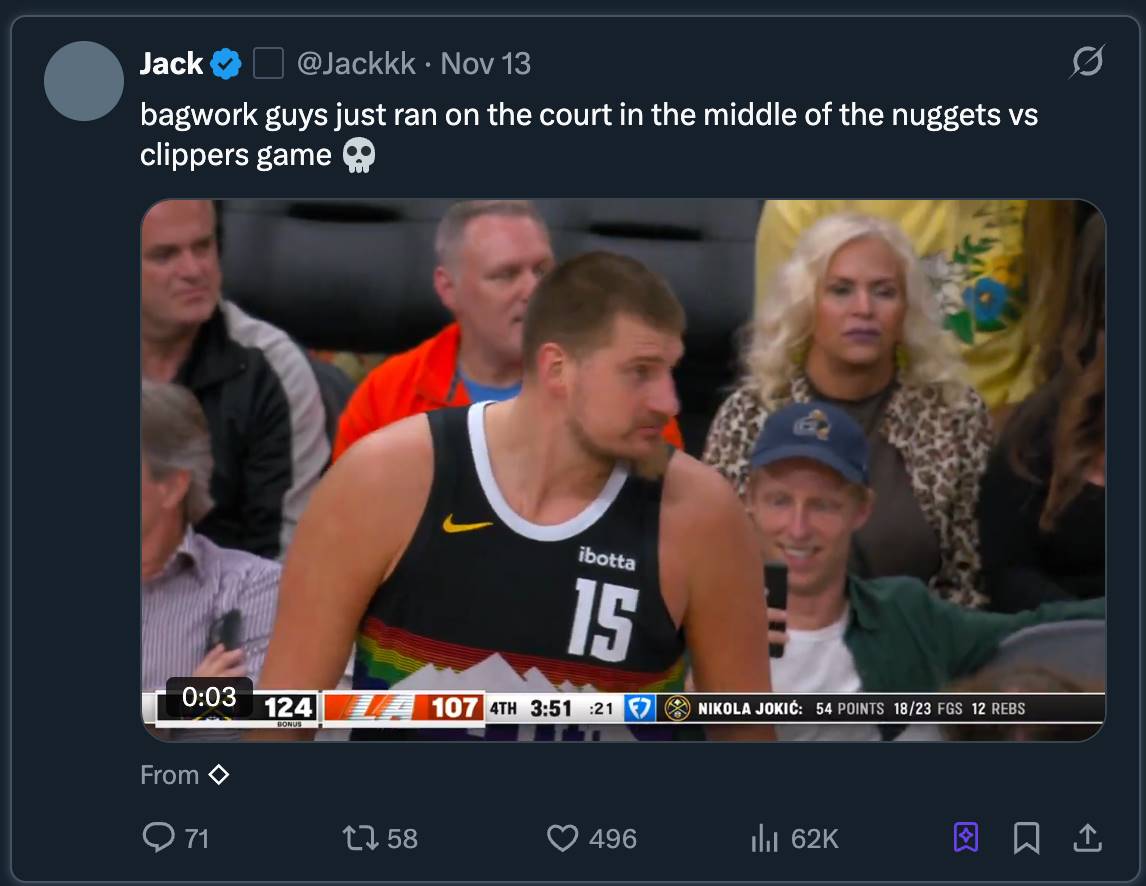
This viral explosion was led by a group of teenagers who, with some support from Pump, executed a series of sensational events: snatching Bradley Martyn's hat, storming the Dodgers' game field, rushing onto the Knicks' court, and even getting tattoos of Pumpfun and Bagwork.

The rise of @onlybagwork almost perfectly coincided with the peak of Pump.fun's frenzy in mid-September. At that time, the fully diluted valuation (FDV) of $PUMP reached approximately $8.5 billion, and Bagwork's market cap briefly exceeded $50 million.

However, since then, no creator token has come close to such organic momentum or reached similar valuation peaks.

The Knicks court incident occurred more recently, long after the initial hype, and now Bagwork's market cap is just over $2 million.
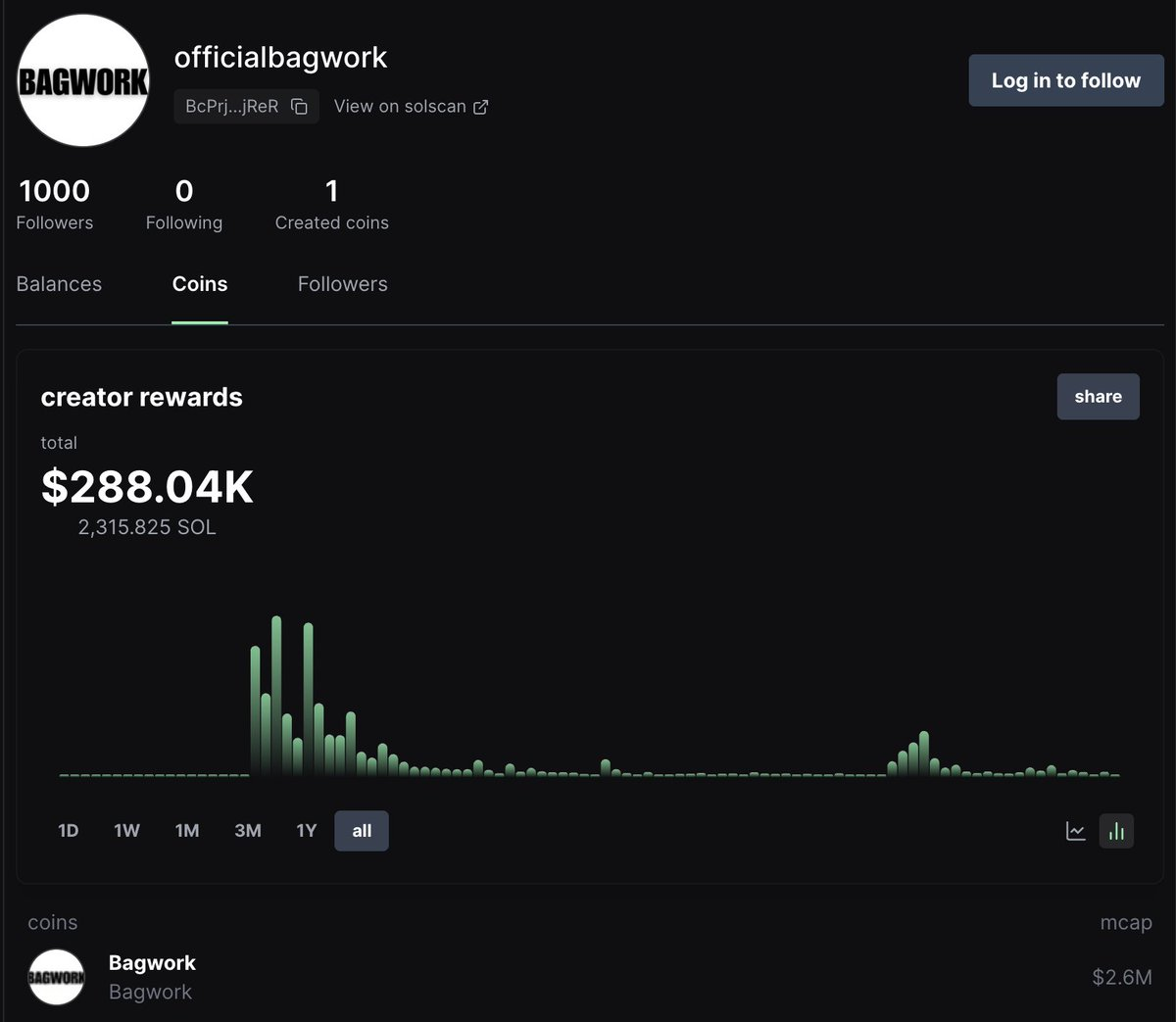
Bagwork is one of the few cases in Pump's streaming experiment that actually worked as intended. The Bagwork team earned over 2300 SOL in creator revenue from $BAGWORK trading fees (approximately $300,000 at current prices).

Notably, all of this was achieved without the team selling their holdings. Viral events directly translated into attention, trading volume, and fee revenue, creating the closest case to a true creator token flywheel effect for Pump to date.

However, beyond Bagwork, Pump has struggled to realize its streaming vision. Creator tokens have consistently failed to retain their value. This phenomenon can be traced back to a fundamental issue: the token itself is part of the product.

Currently, the economic rationale for owning or supporting a streamer's token remains unclear. Bagwork's early success quickly faded, and since then, every major streamer token has failed to gain similar traction, eventually trending toward zero.
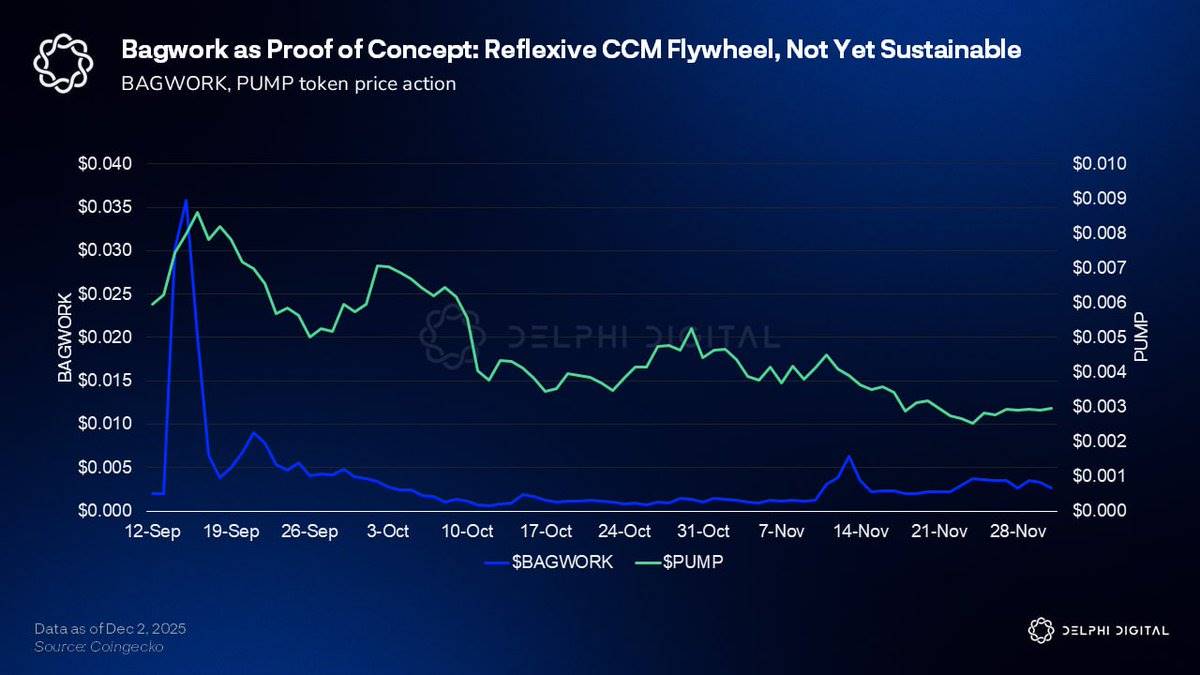
Creators can achieve short-term gains through the CCM fee structure, but the reputational risk associated with crashed tokens makes this model unattractive to larger, more established creators who could have helped the platform reach a broader audience. From a trader's perspective, these tokens remain a zero-sum game environment rather than genuine communities.

This is the most critical issue Pump needs to address as it moves into 2026.

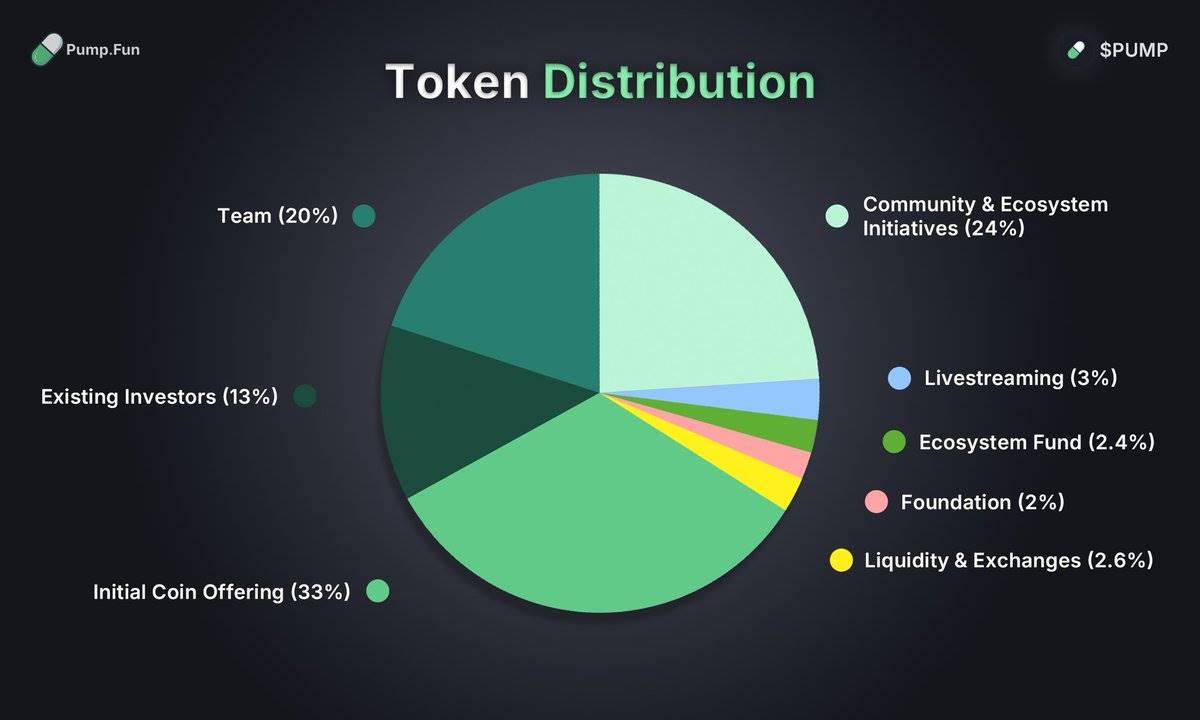
So far, the team has not made meaningful attempts at deeper creator incentive mechanisms, and airdrop allocations remain untouched. Apart from the informal support provided during the Bagwork frenzy, Pump has not taken any coordinated measures, such as targeted airdrops, creator rewards, or other incentive mechanisms that could have been used to kickstart early momentum, create more PvE (Player vs. Environment)-style incentives, and provide creators with a space to experiment without immediately damaging their communities.
The good news is that this provides Pump with significant flexibility.

The untouched "Community & Ecosystem Initiatives" treasury remains a powerful lever the team can utilize as the model matures. If Pump can design a sustainable incentive structure for creator tokens, it could open up a new economic category for creators looking to leverage crypto mechanisms for monetization and audience expansion.

Although this potential upside is substantial, until then, streaming will continue to manifest as a series of short-lived hype cycles rather than a durable and repeatable vertical.

On the token side, the primary catalyst that drove $PUMP from around $0.025 to $0.085 was the team's decision to use 100% of net revenue for buybacks.
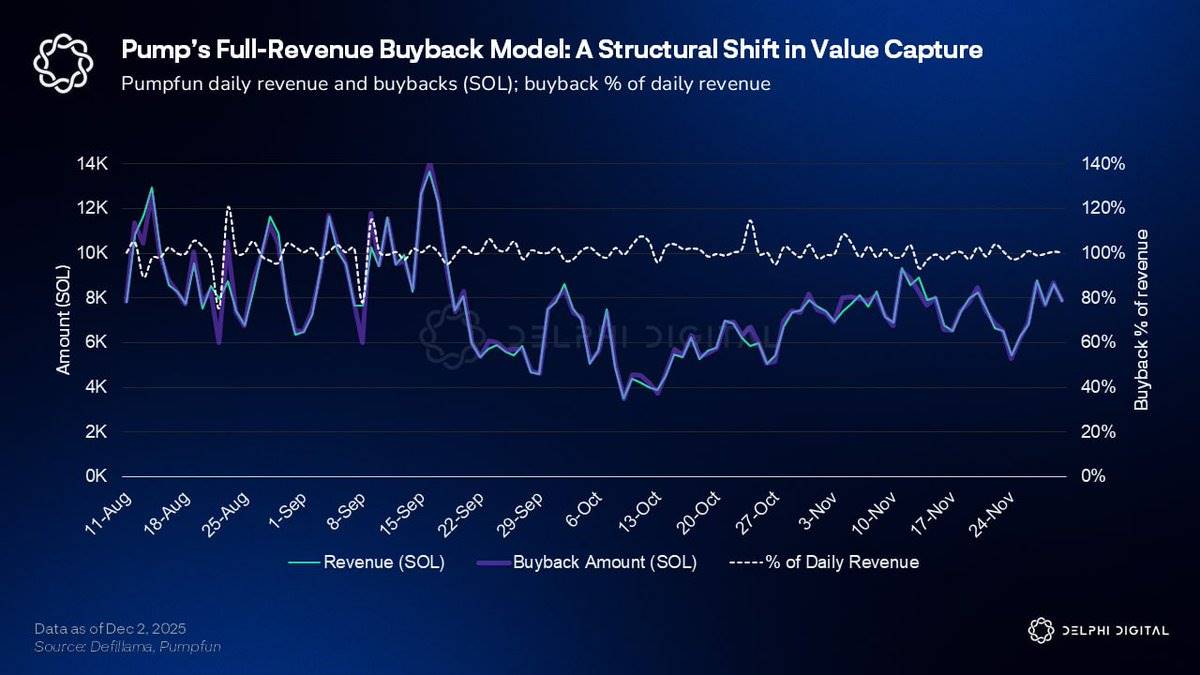
Pump shifted from initially planning to use about a quarter of its revenue for buybacks to almost fully adopting a Hyperliquid-style buyback model. This change was made after the market clearly indicated that a partial buyback model would not be well-received. This shift ignited one of the strongest large-cap token rallies this year in a liquidity-scarce and challenging altcoin market.

In terms of the buyback-to-market-cap ratio, no other major token currently trades at a lower multiple.
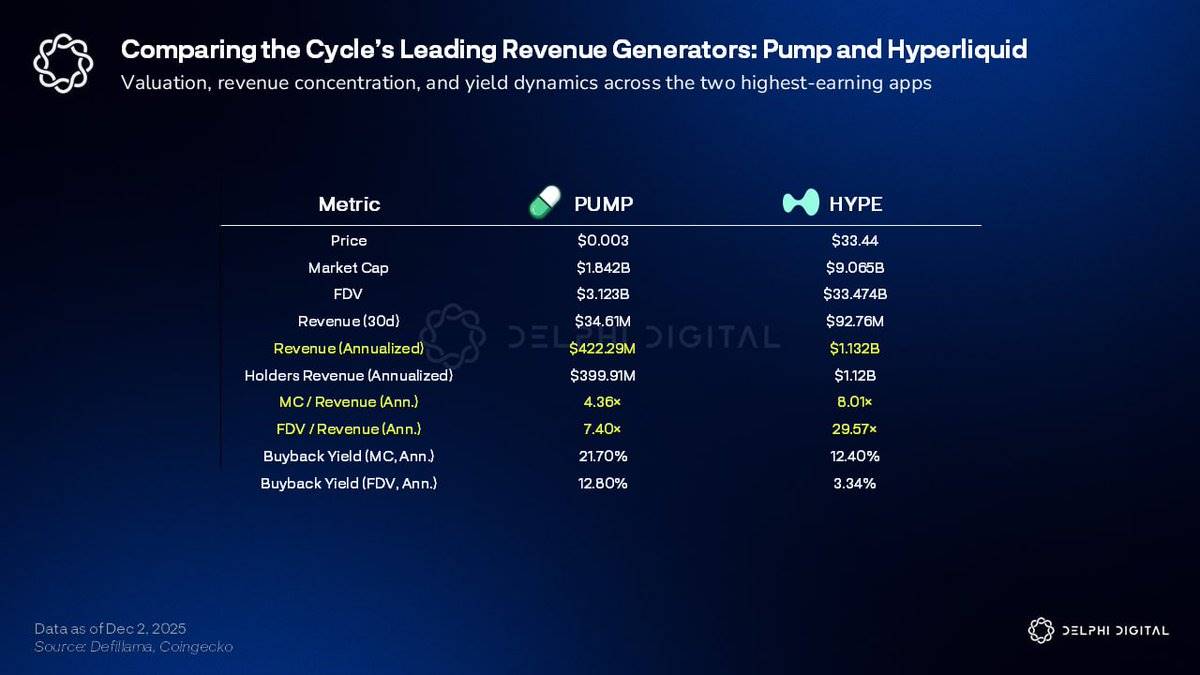
Based on current data, Pump's annualized revenue is $422 million, with a market cap of $1.84 billion, implying a market-cap-to-revenue ratio (MC/Rev) of 4.36x and an annualized buyback yield of approximately 12.8%. This is significantly lower than other large-cap tokens, including Hyperliquid's ~8.01x MC/Rev and ~3.34% yield.

Even so, the market remains skeptical about Pump's long-term business prospects.

Market concerns may include: whether the team can consistently deliver meaningful products; the impact of future unlocks on the market with approximately 40% of the token supply still locked; and the uncertainty surrounding the final allocation of airdrop and creator incentive distributions. Additionally, the overall contraction of Meme coin activity in the crypto market, reduced end-user activity, and questions about the sustainability of Pump's revenue base also raise doubts.

Despite these concerns, Pump still dominates the Meme coin launchpad space. Even in the current extremely tough market environment, Pump still earns (and buys back) about $1 million daily.
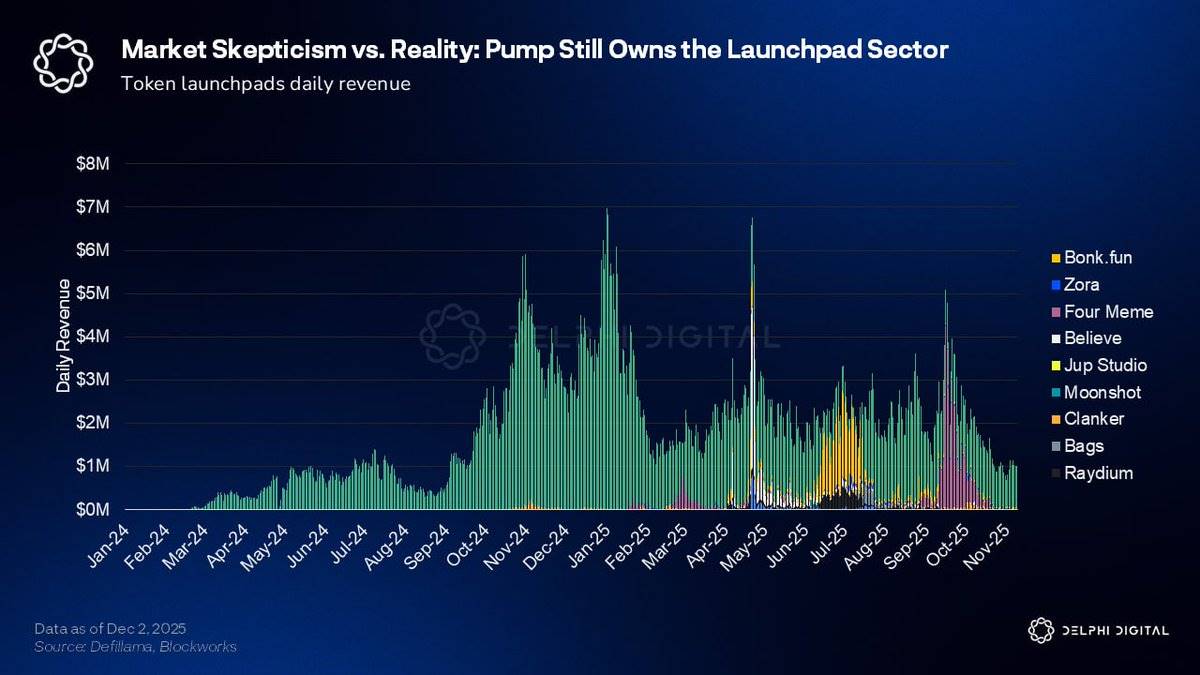
Pump's daily launchpad revenue has dropped nearly 85% from its peak of close to $14 million earlier this year to currently around $2 million. However, competitors have only posed a threat to Pump's position for brief periods, failing to bring substantial challenges. This aligns with our prediction in the initial report regarding the short-lived Bonk and Raydium challenge phases: even during cyclical trading volume contractions, Pump has maintained structural advantages and dominated the industry's activity share.

The acquisition of Padre supports the view that Pump intends to expand beyond Solana into a multi-chain ecosystem and has achieved support for BNB ecosystem assets through the Padre frontend. This also aligns with our earlier prediction that Pump would eventually acquire a terminal or terminal-related asset to strengthen user acquisition channels and integrate more of the user journey.
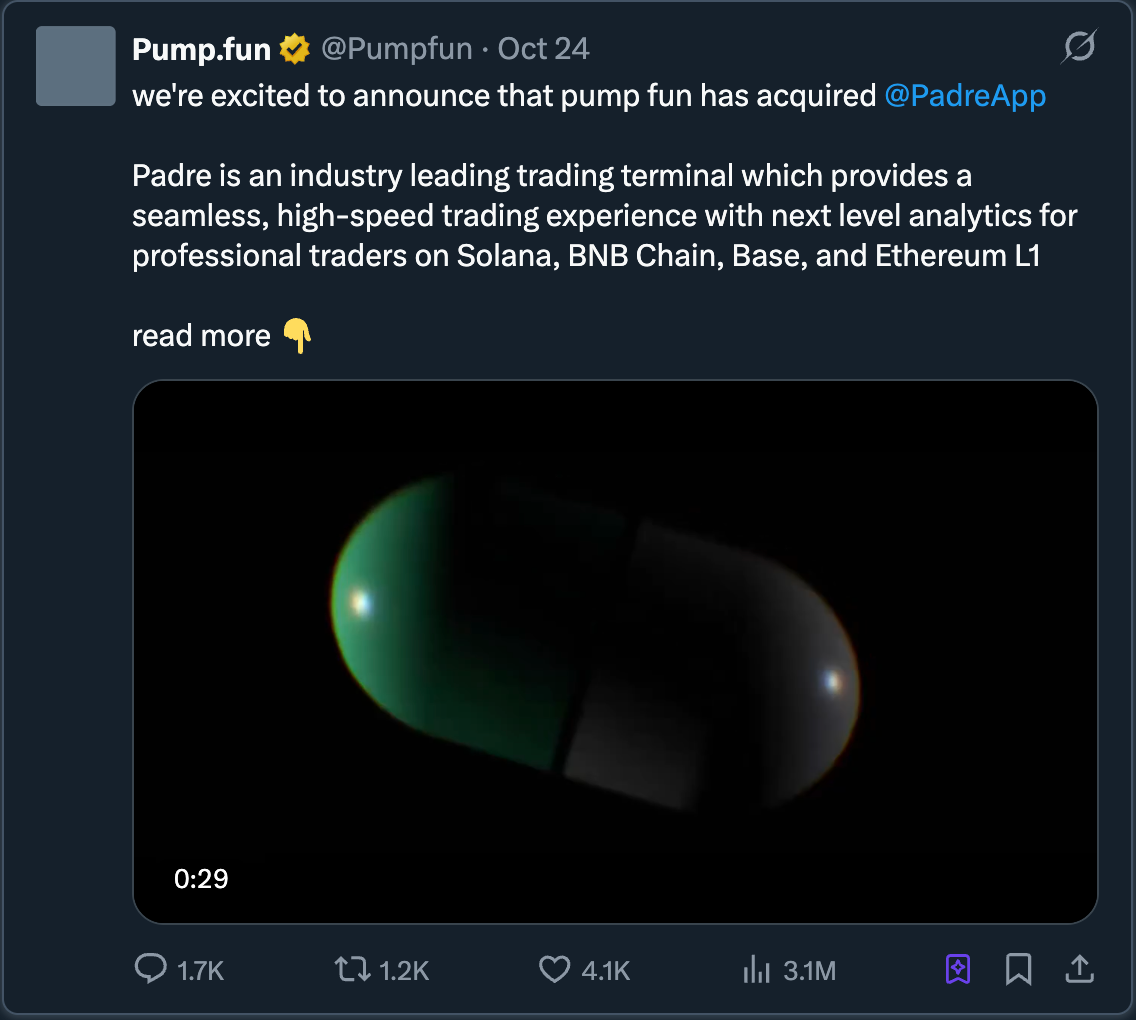
Beyond these moves, the team has recently maintained a low-profile strategy. An investor call is currently planned but had not been held at the time of writing, so more details may be disclosed later.
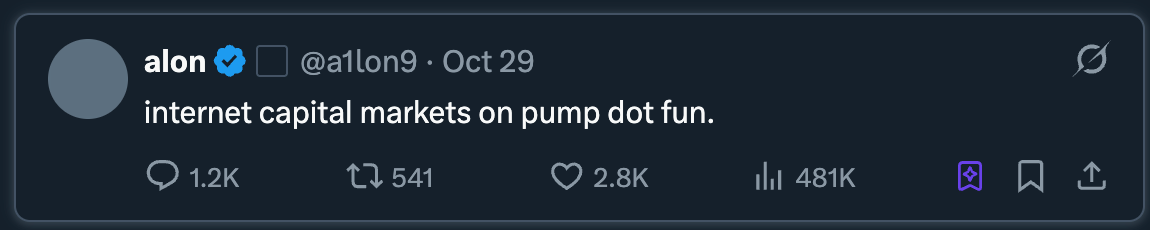
The leadership team has also expressed interest in the broader ICM (Initial Community Offering) category, although we believe this is not the core area of Pump's current brand positioning or product strengths. Pump initially experimented with the Believe model but failed to gain significant market attention. MetaDAO has become the dominant player in the "high-quality founder + community" fundraising space.

Furthermore, the culture and structure of ICM seem less aligned with Pump's brand positioning. Pump's brand core revolves around speculation, speed, and the Meme culture of creators, rather than long-term governance or Futarchy-based systems. For Pump to succeed in the ICM space, they would need to lean towards more governance-focused structures and attract non-crypto teams looking to operate on-chain. However, this does not fully align with the needs and positioning of Pump's current users and creators. Although theoretically, ICM could offer some potential upside if the team takes action, we see this more as a secondary or optional direction rather than a natural extension of Pump's existing flywheel into 2026.
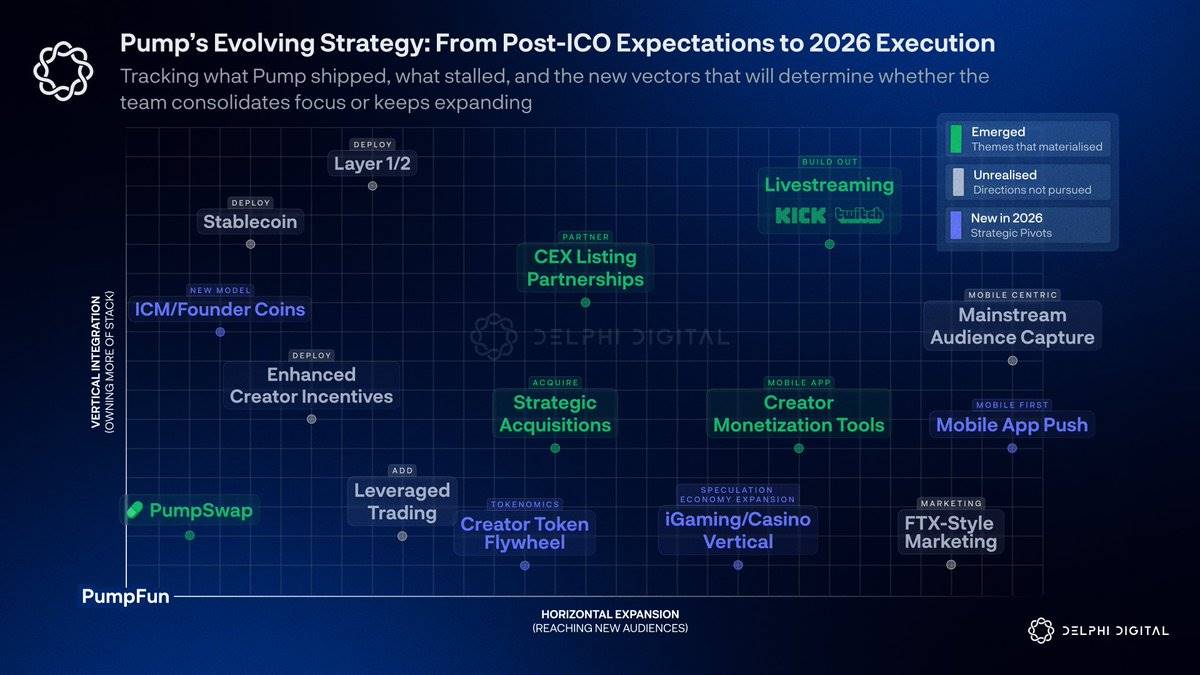
Looking ahead to 2026, Pump's main questions focus on: whether it can finally establish an incentive-compatible creator token model; whether it can achieve substantial multi-chain market expansion through Padre; how to manage the risks of token unlocks and declining revenue visibility; and which product vertical to prioritize as its main focus. Currently, Pump's strategy seems scattered across multiple directions, including streaming, ICM, and mobile.

At some point in the future, the team may need to clearly focus on one core breakthrough. For most of 2025, that breakthrough seemed to be streaming, but this is no longer clear now.

The bigger question is whether Pump can attract larger non-crypto creators. This might require redesigning the creator token flywheel mechanism, providing stronger, longer-term incentives to support viral growth beyond the crypto-native user base. Pump has the basic conditions to achieve this. The 2025 Bagwork frenzy briefly showcased the potential success of this model, a time when Pump seemed close to crossing the chasm.

Furthermore, Pump still has vast room to expand its product suite. One strategic direction the team should seriously evaluate is entering the iGaming or casino-related vertical. Adopting a model similar to Kick or Stake would naturally fit Pump's speculation-driven user base. This direction would deeply synergize with its Meme coin and streaming strategic goals, and the profit potential in this field is already proven.
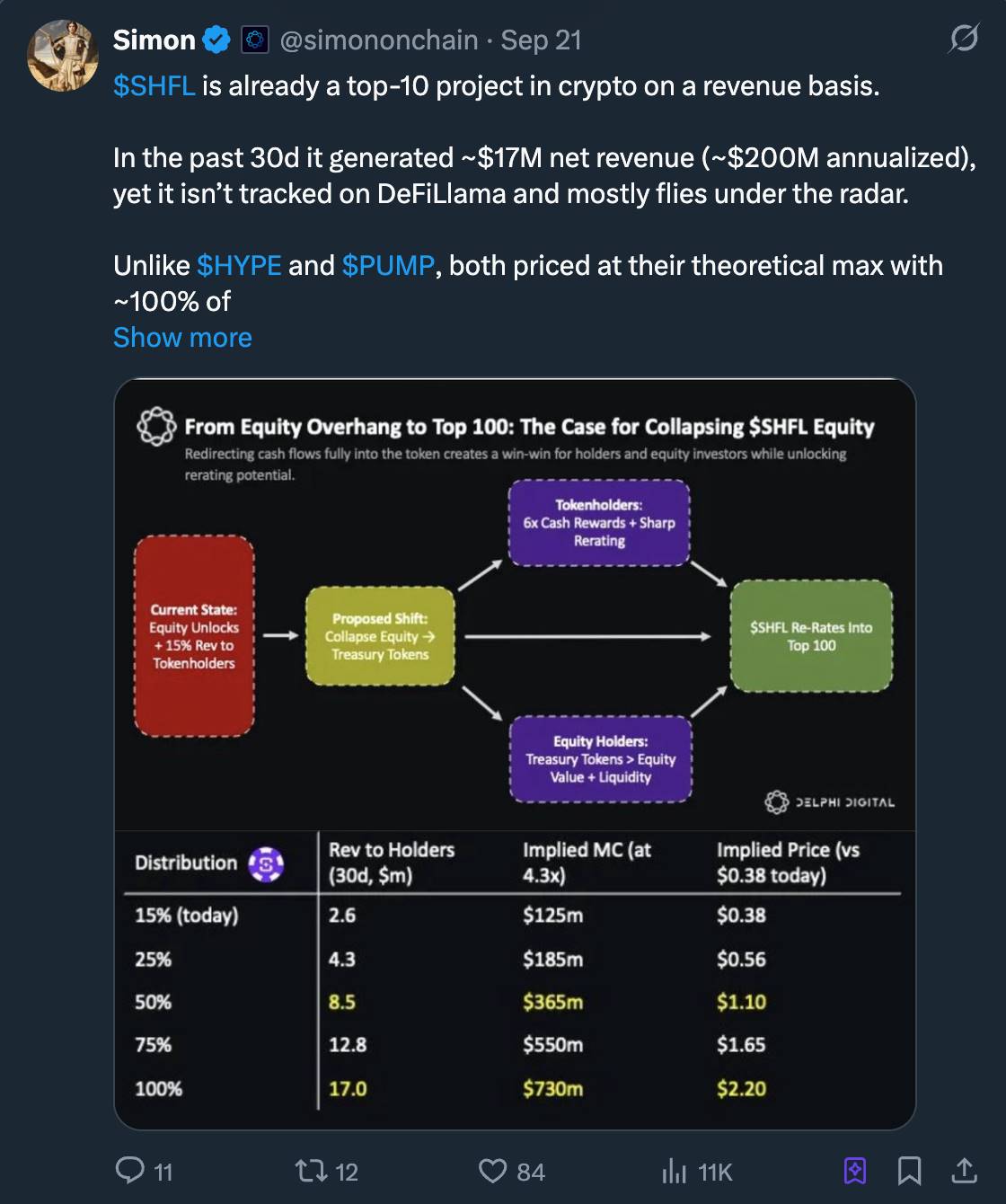
Shuffle's net gaming revenue and weekly lottery distribution demonstrate the huge potential of this area with successful execution.

Pump's mobile application is another underutilized advantage. Deeper expansion into mobile could broaden user acquisition channels, make the product more accessible to mainstream users, and provide creators with more monetization scenarios. If combined with iGaming, this could not only significantly expand Pump's potential audience but also strengthen the platform's existing successful elements.

Despite the uncertainties, Pump remains one of the most resilient consumer applications of this cycle, maintaining dominance even as the overall market landscape has shifted. Substantial progress in any key direction could trigger a significant shift in market sentiment and help Pump break through to attract a broader non-crypto-native user base.


Twitter:https://twitter.com/BitpushNewsCN

BitPush TG Group:https://t.me/BitPushCommunity

BitPush TG Channel: https://t.me/bitpush

Original link:https://www.bitpush.news/articles/7596421

Tiền kỹ thuật số thịnh hành

Câu hỏi Liên quan

QWhat is the core challenge that Pump.fun still faces in 2026 according to the article?

AThe core challenge is creating a sustainable and incentive-compatible creator token model. The fundamental problem is that the token itself is part of the product, and the economic rationale for holding or supporting a streamer's token remains unclear, causing most tokens to trend toward zero and making the model unattractive to larger, established creators.

QWhat was the Bagwork phenomenon, and why was it significant for Pump.fun?

ABagwork was a viral event led by a group of teenagers who engaged in attention-grabbing stunts, which coincided with the peak of Pump.fun's activity in mid-September. It was significant because it was one of the few cases where Pump.fun's streaming experiment worked as intended, generating over 2300 SOL in creator fees and briefly showcasing the potential flywheel effect of a true creator token without the team selling their holdings.

QHow does Pump.fun's current market cap to revenue (MC/Rev) ratio compare to other major tokens like Hyperliquid?

APump.fun's MC/Rev ratio is 4.36x with an annualized buyback yield of ~12.8%, which is significantly lower than other major tokens. For comparison, Hyperliquid has an MC/Rev ratio of ~8.01x and a yield of ~3.34%.

QWhat strategic direction does the article suggest could be a natural fit for Pump.fun's user base and existing strategy?

AThe article suggests that entering the iGaming or casino-related verticals would be a natural strategic fit. This approach, similar to models like Kick or Stake, aligns with Pump.fun's speculation-driven user base and could create deep synergies with its meme coin and streaming goals, leveraging proven monetization potential.

QDespite a significant drop in daily launchpad revenue, what advantage does Pump.fun maintain in the meme coin platform space?

APump.fun maintains a dominant structural advantage and continues to command the majority share of industry activity, even during cyclical trading volume contractions. It still earns and buys back approximately $1 million daily, and competitors have only posed a threat briefly without providing a substantial challenge.

Nội dung Liên quan

Gói phần mềm Injective bị tấn công chuỗi cung ứng độc hại – Chi tiết

Gói phần mềm Injective SDK đã trở thành mục tiêu của một cuộc tấn công chuỗi cung ứng độc hại. Kẻ tấn công đã chiếm quyền truy cập tài khoản GitHub của một cộng tác viên hợp pháp của Injective Labs, sau đó tải lên npm một phiên bản độc hại của gói TypeScript SDK, @injectivelabs/sdk-ts v1.20.21. Mã độc được ngụy trang dưới vỏ bọc tính năng đo lường, nhưng thực chất nó chỉ kích hoạt khi các nhà phát triển sử dụng các hàm tạo ví như `fromMnemonic` hoặc `fromHex` để đánh cắp khóa riêng tư và cụm từ hạt giống. Điều này cho phép kẻ tấn công tái tạo và chiếm đoạt ví tiền mã hóa của nạn nhân. Cuộc tấn công còn lan rộng thông qua các phụ thuộc chuyển tiếp trong 17 gói Injective bổ sung phụ thuộc vào SDK này, với khoảng 50.000 lượt tải xuống mỗi tuần. Mặc dù một phiên bản sạch (v1.20.23) đã được phát hành sau đó, phiên bản bị xâm phạm vẫn có sẵn trên npm dưới dạng gói không còn được khuyến nghị. Để bảo vệ bản thân, người dùng được khuyến cáo nên xoay vòng tất cả thông tin xác thực bị ảnh hưởng, tạo ví mới và chuyển tiền của họ. Sự cố này xảy ra cùng thời điểm với vụ việc BonkDAO thất thoát 20 triệu USD do một "đề xuất quản trị độc hại".

ambcrypto1 giờ trước

Gói phần mềm Injective bị tấn công chuỗi cung ứng độc hại – Chi tiết

ambcrypto1 giờ trước

Sau khi Aave rời đi và TVL biến động mạnh, điểm neo định giá của MegaETH nằm ở đâu?

Dựa trên dữ liệu từ DefiLlama, MegaETH đã trải qua biến động mạnh về TVL toàn chuỗi từ ngày 9-10/7, giảm gần 60% trong 24 giờ và giảm khoảng 70% so với đỉnh tháng 5. Giao thức hàng đầu Aave V3 đã rút khoảng 80% thanh khoản. Giá MEGA giảm xuống khoảng $0.048, vốn hóa thị trường chỉ còn khoảng 54 triệu USD với FDV khoảng 4.8 tỷ USD. Bài viết chỉ ra rằng TVL của MegaETH phụ thuộc cao vào một giao thức duy nhất (Aave chiếm tới 90% TVL đỉnh) và các chiến lược vòng lặp ổn định币, chủ yếu dựa vào chênh lệch lợi suất. Khi lợi nhuận từ các chiến lược này biến mất, dòng tiền nhanh chóng rút đi, để lại câu hỏi về giá trị cơ bản thực sự của chuỗi. Có ba sự không phù hợp chính được nêu bật: 1. **Định giá so với mức độ sử dụng thực tế:** FDV ~4.7 tỷ USD tương phản với doanh thu giao thức thực tế hàng năm chỉ khoảng 10 triệu USD và số địa chỉ hoạt động hàng ngày thấp. 2. **Truyện thuyết token so với chất lượng hệ sinh thái:** Phần lớn doanh thu thực tế đến từ một trò chơi thẻ bài (Monster), không phải từ các giao thức DeFi như kỳ vọng. Stablecoin gốc USDm có khối lượng giao dịch thấp. 3. **Kỳ vọng ngắn hạn so với khả năng thực hiện dài hạn:** Các dự án lớn như Uniswap và Aave có TVL sụt giảm nghiêm trọng, cho thấy dòng tiền chủ yếu là đầu cơ chứ không ổn định. Tình trạng tương tự cũng được quan sát thấy ở các chuỗi công khai mới nổi khác như Monad, cho thấy thị trường đang giảm bớt sự định giá cao dựa trên TVL và truyện thuyết, thay vào đó yêu cầu các hoạt động kinh tế thực tế rõ ràng hơn. Kết luận, khi sự thịnh vượng trên sổ sách do dòng tiền khuyến khích và đầu cơ biến mất, MegaETH thiếu một điểm tựa giá trị vững chắc. Mọi sự phục hồi trong tương lai có khả năng đến từ việc sửa chữa tâm lý thị trường ngắn hạn hơn là sự cải thiện cơ bản, trừ khi đội ngũ có thể chuyển đổi thanh khoản thành việc sử dụng thực tế và xây dựng hệ sinh thái bền vững.

链捕手1 giờ trước

Sau khi Aave rời đi và TVL biến động mạnh, điểm neo định giá của MegaETH nằm ở đâu?

链捕手1 giờ trước

Báo cáo chuyên sâu của Goldman Sachs: Ai sẽ là người chiến thắng dài hạn trong ngành công nghiệp mô hình AI lớn của Trung Quốc?

Trung Quốc đang ở bước ngoặt lịch sử trong lĩnh vực mô hình AI lớn, với hiệu suất của các mô hình mã nguồn mở/mở quyền tiếp cận mô hình độc quyền hàng đầu toàn cầu. Báo cáo của Goldman Sachs nhấn mạnh sự đột phá về hiệu quả chi phí và kiến trúc, cho phép các mô hình Trung Quốc (DeepSeek, GLM5.2 của Zhipu, M3 của MiniMax) đạt hiệu năng tương đương với quy mô tham số chỉ bằng 2-10%. Thị trường đang hình thành cấu trúc hai tầng: tầng cao cấp (ví dụ: GLM5.2, Qwen3.7 Max) định giá khoảng 1 USD/triệu token, và tầng giá rẻ phục vụ doanh nghiệp vừa và nhỏ toàn cầu. Doanh thu API/dịch vụ thuê bao dự kiến tăng mạnh từ 350 tỷ NDT (2026) lên 8.790 tỷ NDT (2030). Chiến lược mã nguồn mở giúp mở rộng nhanh nhưng hạn chế khả năng hiện thực hóa doanh thu. Xu hướng có thể chuyển sang mô hình "mở quyền + giấy phép cộng đồng" với chia sẻ doanh thu. Goldman Sachs xác định các công ty có vị thế cạnh tranh mạnh nhất dựa trên khung đánh giá 3 chiều: Khả năng định giá, Lợi thế chi phí và Năng lực tài chính. - **Mô hình văn bản cơ bản:** Zhipu AI và DeepSeek có vị thế mạnh nhất. - **Đa phương thức/Tạo video:** ByteDance (Seed) dẫn đầu, tiếp theo là Kuaishou (Kling) và MiniMax (Hailuo/H3). Báo cáo duy trì xếp hạng Mua cho MiniMax và Kuaishou.

marsbit1 giờ trước

Báo cáo chuyên sâu của Goldman Sachs: Ai sẽ là người chiến thắng dài hạn trong ngành công nghiệp mô hình AI lớn của Trung Quốc?

marsbit1 giờ trước

Báo cáo chuyên sâu của Goldman Sachs: Ai sẽ trở thành người chiến thắng lâu dài trong ngành mô hình AI lớn của Trung Quốc?

Báo cáo chuyên sâu của Goldman Sachs phân tích ngành mô hình AI lớn Trung Quốc tại thời điểm chuyển đổi lịch sử, cho rằng hiệu suất của các mô hình mã nguồn mở/mở quyền Trung Quốc đang tiệm cận các mô hình độc quyền hàng đầu thế giới nhờ đột phá về kiến trúc và hiệu quả tham số, giúp đạt hiệu năng tương đương với chi phí thấp hơn đáng kể. Báo cáo nêu bật cấu trúc thị trường hai tầng: phân khúc cao cấp (GLM5.2, Qwen3.7 Max) định giá ~1 USD/triệu token và phân khúc giá rẻ (~0.06-0.2 USD/triệu token) để mở rộng toàn cầu. Chiến lược mã nguồn mở thúc đẩy việc áp dụng rộng rãi nhưng hạn chế khả năng monetize. Ngành dự kiến chuyển sang mô hình "mở quyền + giấy phép cộng đồng" để chia sẻ doanh thu. Thị trường mục tiêu chính là mở rộng quốc tế, đặc biệt bên ngoài Mỹ, nơi các mô hình Trung Quốc được kỳ vọng tăng thị phần nhờ giá cả cạnh tranh và xu hướng doanh nghiệp chuyển trọng tâm từ tối đa hóa token sang ưu tiên ROI. Sử dụng khung đánh giá dựa trên khả năng định giá, lợi thế chi phí và sức mạnh tài chính, Goldman Sachs xác định Zhipu AI và DeepSeek là những công ty có vị thế mạnh nhất trong lĩnh vực mô hình văn bản cơ bản, trong khi ByteDance (với Seed) dẫn đầu về đa phương thức/tạo video. Báo cáo duy trì xếp hạng Mua cho MiniMax và Kuaishou. Doanh thu API/dịch vụ thuê bao từ các mô hình AI Trung Quốc dự báo tăng mạnh từ ước tính 35 tỷ NDT năm 2026 lên 879 tỷ NDT vào năm 2030.

链捕手1 giờ trước

Báo cáo chuyên sâu của Goldman Sachs: Ai sẽ trở thành người chiến thắng lâu dài trong ngành mô hình AI lớn của Trung Quốc?

链捕手1 giờ trước

Circle nhận được sự chấp thuận cuối cùng của OCC cho ngân hàng ủy thác quốc gia để củng cố cơ sở hạ tầng USDC

Circle đã nhận được sự chấp thuận cuối cùng từ Văn phòng Giám sát Tiền tệ Hoa Kỳ (OCC) để thành lập một ngân hàng ủy thác quốc gia có tên là Circle National Trust. Đây là một cột mốc quan trọng, đưa một phần then chốt trong cơ sở hạ tầng của stablecoin USDC trực tiếp dưới sự giám sát của liên bang. Ngân hàng ủy thác này, ban đầu sẽ cung cấp dịch vụ lưu ký tài sản số được quản lý cho Circle và các công ty liên kết, với lộ trình mở rộng cho một số lượng hạn chế khách hàng thể chế. Giấy phép cũng được thiết kế để hỗ trợ việc quản lý Dự trữ USDC trong tương lai dưới sự giám sát của OCC, nhằm tăng cường tính minh bạch và niềm tin. Circle là một trong những công ty tiên phong trong làn sóng mới nhất của OCC về việc tích hợp các doanh nghiệp tiền mã hóa vào khuôn khổ ngân hàng hiện hành. Sự chấp thuận này phản ánh xu hướng rộng hơn khi các nhà cung cấp hạ tầng crypto tìm kiếm giấy phép ngân hàng ủy thác để mở rộng dịch vụ lưu ký có quy định và củng cố sự tham gia của các tổ chức vào tài sản số.

ambcrypto1 giờ trước

Circle nhận được sự chấp thuận cuối cùng của OCC cho ngân hàng ủy thác quốc gia để củng cố cơ sở hạ tầng USDC

ambcrypto1 giờ trước

Giao dịch

Giao ngay

Bài viết Nổi bật

Làm thế nào để Mua PUMP

Chào mừng bạn đến với HTX.com! Chúng tôi đã làm cho mua Pump.fun (PUMP) trở nên đơn giản và thuận tiện. Làm theo hướng dẫn từng bước của chúng tôi để bắt đầu hành trình tiền kỹ thuật số của bạn.Bước 1: Tạo Tài khoản HTX của BạnSử dụng email hoặc số điện thoại của bạn để đăng ký tài khoản miễn phí trên HTX. Trải nghiệm hành trình đăng ký không rắc rối và mở khóa tất cả tính năng. Nhận Tài khoản của tôiBước 2: Truy cập Mua Crypto và Chọn Phương thức Thanh toán của BạnThẻ Tín dụng/Ghi nợ: Sử dụng Visa hoặc Mastercard của bạn để mua Pump.fun (PUMP) ngay lập tức.Số dư: Sử dụng tiền từ số dư tài khoản HTX của bạn để giao dịch liền mạch.Bên thứ ba: Chúng tôi đã thêm những phương thức thanh toán phổ biến như Google Pay và Apple Pay để nâng cao sự tiện lợi.P2P: Giao dịch trực tiếp với người dùng khác trên HTX.Thị trường mua bán phi tập trung (OTC): Chúng tôi cung cấp những dịch vụ được thiết kế riêng và tỷ giá hối đoái cạnh tranh cho nhà giao dịch.Bước 3: Lưu trữ Pump.fun (PUMP) của BạnSau khi mua Pump.fun (PUMP), lưu trữ trong tài khoản HTX của bạn. Ngoài ra, bạn có thể gửi đi nơi khác qua chuyển khoản blockchain hoặc sử dụng để giao dịch những tiền kỹ thuật số khác.Bước 4: Giao dịch Pump.fun (PUMP)Giao dịch Pump.fun (PUMP) dễ dàng trên thị trường giao ngay của HTX. Chỉ cần truy cập vào tài khoản của bạn, chọn cặp giao dịch, thực hiện giao dịch và theo dõi trong thời gian thực. Chúng tôi cung cấp trải nghiệm thân thiện với người dùng cho cả người mới bắt đầu và người giao dịch dày dạn kinh nghiệm.

Tổng lượt xem 512Xuất bản vào 2024.12.12Cập nhật vào 2026.07.09

Làm thế nào để Mua PUMP

Thảo luận

Chào mừng đến với Cộng đồng HTX. Tại đây, bạn có thể được thông báo về những phát triển nền tảng mới nhất và có quyền truy cập vào thông tin chuyên sâu về thị trường. Ý kiến ​​của người dùng về giá của PUMP (PUMP) được trình bày dưới đây.

活动图片