Brazil Moves To Ban Algorithmic Stablecoins While $SUBBD Disrupts Creator Economy

bitcoinistXuất bản vào 2026-02-05Cập nhật gần nhất vào 2026-02-05

Tóm tắt

Brazil's Central Bank is drafting regulations that would require stablecoins to be fully backed by reserves, effectively banning algorithmic models. This aligns with a global regulatory shift away from speculative financial instruments. Concurrently, capital is rotating towards utility-focused tokens with tangible revenue models. The SUBBD Token ($SUBBD) is highlighted as a project leveraging AI and Web3 to disrupt the $85 billion creator economy by reducing platform fees and decentralizing content monetization. It has raised over $1.4 million in its presale and offers staking rewards, positioning itself as a deflationary utility token amidst a market moving towards compliant, infrastructure-based crypto assets.

Trusted Editorial content, reviewed by leading industry experts and seasoned editors. Ad Disclosure

Quick Facts:

  • ➡️ Brazil’s Central Bank is drafting rules requiring stablecoins to be 100% backed by reserves, effectively banning algorithmic models.
  • ➡️ The regulation signals a global shift away from speculative financial engineering toward compliant, backed assets.
  • ➡️ SUBBD Token ($SUBBD) leverages AI and Web3 to reduce creator fees and decentralize the $85B content industry.
  • ➡️ Capital is rotating from regulatory-risk sectors into utility projects with tangible revenue models and infrastructure.

Brazil’s Central Bank (BCB) is drafting regulations that could wipe algorithmic stablecoins off the map in Latin America’s largest crypto market. Following Law 14,478 (the ‘Crypto Assets Law’), regulators have taken a rigid stance: asset-referenced tokens must be fully backed. No arbitrage tricks, no complex debt positions—just 1:1 reserves. This pivot threatens the very existence of decentralized stablecoins in the region.

It puts Brazil in lockstep with the EU’s MiCA framework, prioritizing safety over financial experiments. For issuers like Ethena ($USDe), or ghosts of cycles past like Terra’s $UST, the compliance window is shutting fast.

The BCB’s consultation papers suggest that without direct convertibility to the Real or a foreign currency, “stable’ assets face an outright ban. That’s huge for DeFi liquidity, considering Brazil is a global heavyweight in stablecoin adoption.

As regulatory walls close in on financial engineering, smart money is rotating toward sectors with actual cash flow. The speculative premium on ‘money games’ is vanishing. In its place? Infrastructure projects solving real headaches.

This rotation is starkest in the $250B creator economy, where platform risk is a daily reality, not a theory. Amidst this flight to quality, SUBBD Token ($SUBBD) has emerged, merging AI efficiency with blockchain transparency to dismantle the monopolistic fees of Web2.

AI Integration Solves The $85 Billion Creator Monetization Gap

While regulators squeeze complex derivatives, the content sector faces a different crisis: middlemen taking up to 70% of the cut. SUBBD Token ($SUBBD) tackles this by using Ethereum architecture to cut out the intermediary, but it goes beyond simple payments.

The platform aims to integrate proprietary AI tools, like an AI Personal Assistant and voice cloning tech, directly into the workflow. Suddenly, influencers can scale output without bloating their costs.

Here’s the difference. Most ‘creator coins’ are just speculative toys. SUBBD Token ($SUBBD) acts as the fuel for an entire ecosystem. By gating exclusive content and powering AI tools, the project creates deflationary pressure that algorithmic stablecoins often lack.
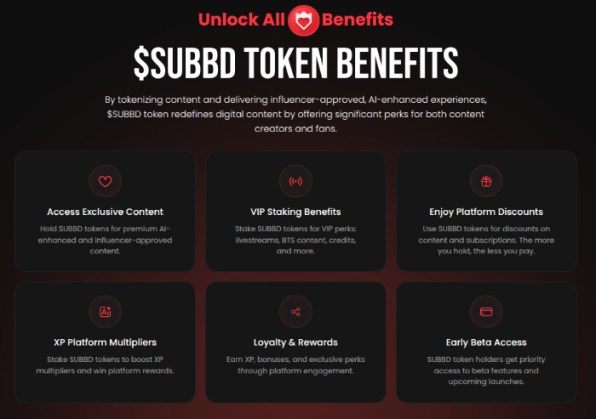
Creators aren’t just paid in crypto; they use the infrastructure to actually build their product.

The governance model flips the script. $SUBBD holders vote on features and onboarding, shifting power from opaque corporate algorithms back to the community. For investors tired of regulatory headaches in DeFi, this looks like a pivot to ‘revenue-based’ assets. It’s a hedge against the macro volatility rocking purely speculative markets.

FIND OUT MORE ABOUT SUBBD TOKEN ON ITS OFFICIAL PAGE

$SUBBD Presale Momentum Builds Amid Shift To Utility Tokens

The market’s hunger for utility is showing up in the numbers. SUBBD Token has already raised over $1.4M in its presale. With the token currently priced at $0.05749, early entrants see potential upside compared to legacy platforms lacking Web3 integration. However, a price increase is looming, so if you want in do so before the rise.

Not sure how to buy in? Check out our ‘How to Buy SUBBD Token‘ guide.

There’s a clear divergence in the market: DeFi TVL is stagnant, but AI-crypto hybrids are cooking.

It helps that the staking structure discourages ‘mercenary’ capital. $SUBBD offers a fixed 20% APY for the first year. Crucially, this yield comes from ecosystem growth, not the fragile arbitrage loops Brazilian regulators are hunting down.

Plus, stakers get XP multipliers and ‘Daily BTS drops,’ gamifying the experience (and aligning incentives).

Built on Ethereum, $SUBBD taps into deep liquidity while offering a specialized layer for content monetization. As Brazil forces the market to grow up, projects with clear revenue models are positioning themselves to capture capital fleeing regulatory grey zones.

CHECK OUT THE $SUBBD PRESALE ON ITS OFFICIAL PAGE

This article is not financial advice. Cryptocurrency markets are volatile and involve significant risk. Regulations regarding stablecoins and crypto assets vary by jurisdiction. Always conduct your own due diligence before investing.

Editorial Process for bitcoinist is centered on delivering thoroughly researched, accurate, and unbiased content. We uphold strict sourcing standards, and each page undergoes diligent review by our team of top technology experts and seasoned editors. This process ensures the integrity, relevance, and value of our content for our readers.

Ben Wallis

Follow

Ben is a freelance writer, and AI editor specializing in crypto developments (mainly altcoins) and the intricate ways global economics shape the digital asset space. His B.Ed. in Education provides a unique foundation for his writing, enabling him to distill complex crypto concepts and market shifts into clear, digestible insights. This skill is key to helping readers adapt and apply their understanding to the ever-evolving world of crypto investment. Passionate about making crypto accessible, Ben crafts content designed to educate a broad audience, from current market events to the essential foundational knowledge that underpins them. His goal is to empower readers through understanding. When he’s not immersed in crypto analysis and breaking down complex topics, Ben is an avid Pokémon fan and enjoys all things Disney.

Full Profile

Related Posts

DDC Extends Its Bitcoin Accumulation Streak: The $LIQUID Presale Brings Smoother Cross-Chain Actions

Bhutan Offloads $22M in Bitcoin as Mining Costs Surge: Institutional Eyes Shift to High-Yield L2s

Bullish Reports Massive Q4 Loss; Investors Pivot to $BMIC Presale

Nevada Fails To Stop Coinbase Prediction Markets: $LIQUID Brings Liquidity Together

Buterin Bites Back At ‘Copy-Paste’ $ETH Clones: $HYPER Presale The Solution That’s Needed?

Buterin Offloads $ETH As Prices Dip: Why Capital’s Rotating Into The $MAXI Presale

Câu hỏi Liên quan

QWhat is the main regulatory change Brazil's Central Bank is proposing for stablecoins?

ABrazil's Central Bank is drafting regulations that require stablecoins to be 100% backed by reserves, effectively banning algorithmic stablecoin models that lack direct convertibility to the Real or a foreign currency.

QHow does the SUBBD Token ($SUBBD) aim to disrupt the creator economy?

ASUBBD Token leverages AI and Web3 technology to reduce platform fees for creators, decentralize the content industry, and provide tools like AI Personal Assistants and voice cloning to help scale content creation efficiently.

QWhat is the current price of $SUBBD in its presale, and what incentive is offered to early stakers?

AThe token is currently priced at $0.05749 in its presale. Early stakers are offered a fixed 20% APY for the first year, along with XP multipliers and 'Daily BTS drops' to gamify and incentivize participation.

QWhy are algorithmic stablecoins facing increased regulatory scrutiny globally?

AAlgorithmic stablecoins are facing scrutiny because they often rely on complex financial engineering and arbitrage mechanisms instead of tangible reserves, posing higher risks of instability and loss for investors, as seen in the collapse of Terra's UST.

QWhat problem in the $250B creator economy does SUBBD Token specifically address?

ASUBBD Token addresses the problem of middlemen and platforms taking up to 70% of creators' earnings by using blockchain to cut out intermediaries and providing a decentralized monetization ecosystem with lower fees.

Nội dung Liên quan

Token nền tảng tăng 15 lần trong nửa tháng, Pons lên ngôi vương phát hành và giao dịch trên Robinhood Chain

Pons đã vươn lên trở thành nền tảng phát hành và giao dịch mã thông báo (token) hàng đầu trên Robinhood Chain chỉ trong nửa tháng, vượt mặt các đối thủ như Flap hay NOXA. Tính từ ngày 15/7, Pons luôn dẫn đầu về số lượng token tạo mới hàng ngày và từ ngày 18/7, nó cũng chiếm vị trí số một về khối lượng giao dịch, hiện chiếm tới 77.1% tổng khối lượng giao dịch trên các nền tảng phát hành của Robinhood Chain. Sự thành công của Pons đến từ cơ chế đơn giản và nhanh chóng. Nó cho phép người dùng tạo token với chi phí chỉ 0.0005 ETH và cung cấp thanh khoản ngay lập tức thông qua một giao dịch duy nhất, loại bỏ đường cong liên kết (bonding curve) phức tạp và bước di chuyển (migration) sau này. Token mới được giao dịch trực tiếp với WETH và có cơ chế bảo vệ trong hai khối đầu tiên. Token nền tảng PONS cũng là một động lực tăng trưởng quan trọng, từng tăng hơn 15 lần trong một giai đoạn ngắn. Cơ chế mua lại và tiêu hủy 80% phí giao dịch thu được bằng PONS đã tạo ra vòng xoáy tích cực, thu hút thêm sự chú ý và dòng tiền vào nền tảng. Hướng tới tương lai, Pons V2 đang nhắm mở rộng sang lĩnh vực tài sản thực (RWA) và ổn định, cho phép thanh toán phí bằng USDG hoặc RWA, phù hợp hơn với định hướng tài chính chuỗi của Robinhood Chain.

marsbit37 phút trước

Token nền tảng tăng 15 lần trong nửa tháng, Pons lên ngôi vương phát hành và giao dịch trên Robinhood Chain

marsbit37 phút trước

Đồng Token Nền Tảng Tăng 15 Lần Sau Nửa Tháng, Pons Đăng Quang Kép Về Phát Hành và Giao Dịch trên Robinhood Chain

Trong nửa tháng qua, Pons đã nổi lên như nền tảng phát hành và giao dịch token hàng đầu trên Robinhood Chain, vượt mặt các đối thủ như Flap và NOXA. Kể từ ngày 15/7, Pons liên tục dẫn đầu về số lượng token tạo mới mỗi ngày (trên 15.000 token) và khối lượng giao dịch, chiếm tới 77.1% tổng khối lượng giao dịch trên các nền tảng phát hành token của Robinhood Chain vào ngày 26/7. Điểm mạnh của Pons nằm ở quy trình đơn giản và nhanh chóng: người dùng chỉ cần một giao dịch để tạo token và nhóm thanh khoản Uniswap V3 ngay lập tức, với chi phí chỉ 0.0005 ETH, không cần đường cong liên kết (bonding curve) hay bước di chuyển (migration) phức tạp. Sự tăng trưởng bùng nổ của nền tảng được củng cố bởi mức tăng hơn 15 lần giá trị của token nền tảng PONS, từ dưới 500 triệu USD lên đỉnh cao 67 triệu USD. Cơ chế mua lại và đốt token (80% phí giao dịch dùng để mua lại PONS) đã tạo thành vòng tuần hoàn tích cực, thu hút thêm người dùng và thanh khoản. Hướng tới tương lai, Pons V2 đang mở rộng tầm nhìn vượt khỏi meme token, bằng cách tích hợp với các tài sản RWA và ổn định đô la (USDG) của Robinhood Chain, cho phép thanh toán phí giao dịch bằng các loại tài sản này, định vị lại nền tảng như một trung tâm cho nhiều loại tài sản số đa dạng.

Odaily星球日报41 phút trước

Đồng Token Nền Tảng Tăng 15 Lần Sau Nửa Tháng, Pons Đăng Quang Kép Về Phát Hành và Giao Dịch trên Robinhood Chain

Odaily星球日报41 phút trước

Chip Qualcomm tăng giá mạnh, điện thoại Android chịu thiệt nhiều nhất

Gã khổng lồ chip toàn cầu Qualcomm chính thức thông báo kế hoạch điều chỉnh giá sản phẩm mới, sẽ tăng giá toàn bộ dòng chip từ ngày 1/9 với mức tăng hai chữ số. Trong đó, chip flagship mới Snapdragon 8 Elite Gen 6 Pro có mức tăng cao nhất lên đến 18%. Động thái này diễn ra sau khi MediaTek tăng giá dòng chip Dimensity vào cuối tháng 6, gây thêm áp lực chi phí cho ngành công nghiệp điện thoại. Thông báo tăng giá đã được Qualcomm gửi đến khách hàng toàn cầu vào ngày 24/7, áp dụng cho tất cả sản phẩm chip xuất xưởng sau ngày 1/9. CEO Cristiano Amon xác nhận kế hoạch này nhằm đối phó với áp lực chi phí gia tăng trong toàn chuỗi cung ứng, cải thiện biên lợi nhuận đang suy giảm của công ty. Nguyên nhân sâu xa đến từ sự bùng nổ nhu cầu điện toán AI, khiến các nhà sản xuất bộ nhớ như Samsung, SK Hynix chuyển hướng sang sản xuất HBM, dẫn đến mất cân bằng cung-cầu chip nhớ thông thường. Giá hợp đồng DRAM thông dụng trong quý I/2026 tăng 93-98%, còn NAND Flash tăng 55-60%. Chi phí sản xuất chip cũng tăng cao do giá wafer công nghệ tiên tiến 2nm của TSMC tăng vọt. Áp lực chi phí này đã được chuyển xuống các nhà sản xuất điện thoại. Các thương hiệu như Xiaomi, OPPO, vivo đã phải cắt giảm đơn hàng cho dòng máy tầm trung và thấp, một số thậm chí sử dụng chip cũ để kiểm soát chi phí. Thị trường điện thoại Android tiếp tục trầm lắng, với sản lượng xuất xưởng tại Trung Quốc trong quý II/2026 giảm 4.3%. Trong khi đó, Huawei và Apple với lợi thế chip tự nghiên cứu đã tăng thị phần. Dù Qualcomm đang đa dạng hóa sang lĩnh vực ô tô và IoT, quy mô các mảng mới vẫn chưa đủ bù đắp khoảng trống từ mảng điện thoại. Dự báo, chi phí chip và bộ nhớ tăng sẽ khiến giá điện thoại flagship Android tăng mạnh trong nửa cuối năm, có thể làm trầm trọng thêm đà suy giảm của thị trường.

marsbit53 phút trước

Chip Qualcomm tăng giá mạnh, điện thoại Android chịu thiệt nhiều nhất

marsbit53 phút trước

“Bản năng cờ bạc” của người Hàn Quốc, thực ra là bị cuộc sống bức ép mà ra

Bài viết phân tích hiện tượng đầu tư và sử dụng đòn bẩy tài chính phổ biến trong xã hội Hàn Quốc, lý giải nguyên nhân sâu xa không chỉ từ "tính ham cờ bạc" cá nhân. Trong bối cảnh kinh tế, các mục tiêu sống cơ bản như nhà ở ổn định, công việc tốt và an sinh hưu trí ngày càng gắn chặt với thị trường tài sản. Cơ cấu kinh tế tập trung vào các chaebol (tập đoàn lớn) như Samsung hay SK Hynix khiến việc sở hữu cổ phiếu của họ trở thành một con đường đầu tư phổ biến. Các chính sách nhà ở lâu dài của chính phủ thường khuyến khích sử dụng vay vốn dài hạn (lên đến 50 năm) để mua nhà, biến đòn bẩy thành một phần được xã hội chấp nhận trong kế hoạch cuộc sống. Hệ thống cho thuê nhà "jeonse" (toàn bộ tiền cọc) cũng tạo ra một kênh đòn bẩy phức tạp liên quan đến cả chủ nhà và người thuê. Gần đây, sự cho phép của cơ quan quản lý đối với các sản phẩm ETF có đòn bẩy cho cổ phiếu đơn lẻ (như gấp đôi Samsung hoặc SK Hynix) và sự tiện lợi của các ứng dụng giao dịch trên điện thoại đã đưa các công cụ rủi ro cao đến với đại chúng. Thành công vang dội và các câu chuyện về tiền thưởng khổng lồ tại các công ty như SK Hynix càng thúc đẩy tâm lý đầu tư và sợ bỏ lỡ cơ hội. Tuy nhiên, bài viết chỉ ra rằng động lực cốt lõi xuất phát từ cảm giác bế tắc và thiếu tự do lựa chọn cuộc sống, như được phản ánh qua các chỉ số hạnh phúc, khi nhiều người cảm thấy thu nhập từ lương không đủ để đạt được các mục tiêu trên. Khi niềm tin vào việc làm công ăn lương để vươn lên suy yếu, thị trường tài sản và đòn bẩy trở thành công cụ được kỳ vọng cho sự thăng tiến xã hội. Do đó, văn hóa sử dụng đòn bẩy ở Hàn Quốc là kết quả của sự tương tác giữa cấu trúc thể chế, chính sách lịch sử và lựa chọn cá nhân trong một xã hội mà việc "không đặt cược" cũng có thể bị coi là một rủi ro.

marsbit1 giờ trước

“Bản năng cờ bạc” của người Hàn Quốc, thực ra là bị cuộc sống bức ép mà ra

marsbit1 giờ trước

Giao dịch

Giao ngay
活动图片