Bill Vote Imminent, Why Did Coinbase Back Down at the Last Minute?

marsbitXuất bản vào 2026-01-16Cập nhật gần nhất vào 2026-01-16

Tóm tắt

The "CLARITY Act," a key U.S. crypto regulation bill, was set for a Senate committee vote on January 14. However, Coinbase CEO Brian Armstrong withdrew the company’s support, declaring that "a bad bill is worse than no bill." This move isolated Coinbase from other major industry players, including a16z, Ripple, Kraken, and Coin Center, all of whom backed the bill for reasons tied to regulatory clarity, business strategy, or legal protection for developers. The core of Coinbase’s opposition lies in a provision that would prohibit paying yields on "static holdings" of stablecoins—a direct threat to its business model. In 2025, Coinbase generated approximately $1.4 billion in revenue from its stablecoin yield program. The bill’s restrictions could severely impact this critical revenue stream. While other companies saw the bill as a necessary step toward legitimacy and market stability, Armstrong adopted a principled stance against compromising on what he deemed flawed regulation. This divergence reflects a deeper philosophical split within the industry: idealistic resistance versus pragmatic negotiation. The resulting internal conflict has delayed the legislative process and weakened the industry’s collective lobbying power in Washington. It also underscores the ongoing tension between crypto’s decentralized ideals and its commercial realities.

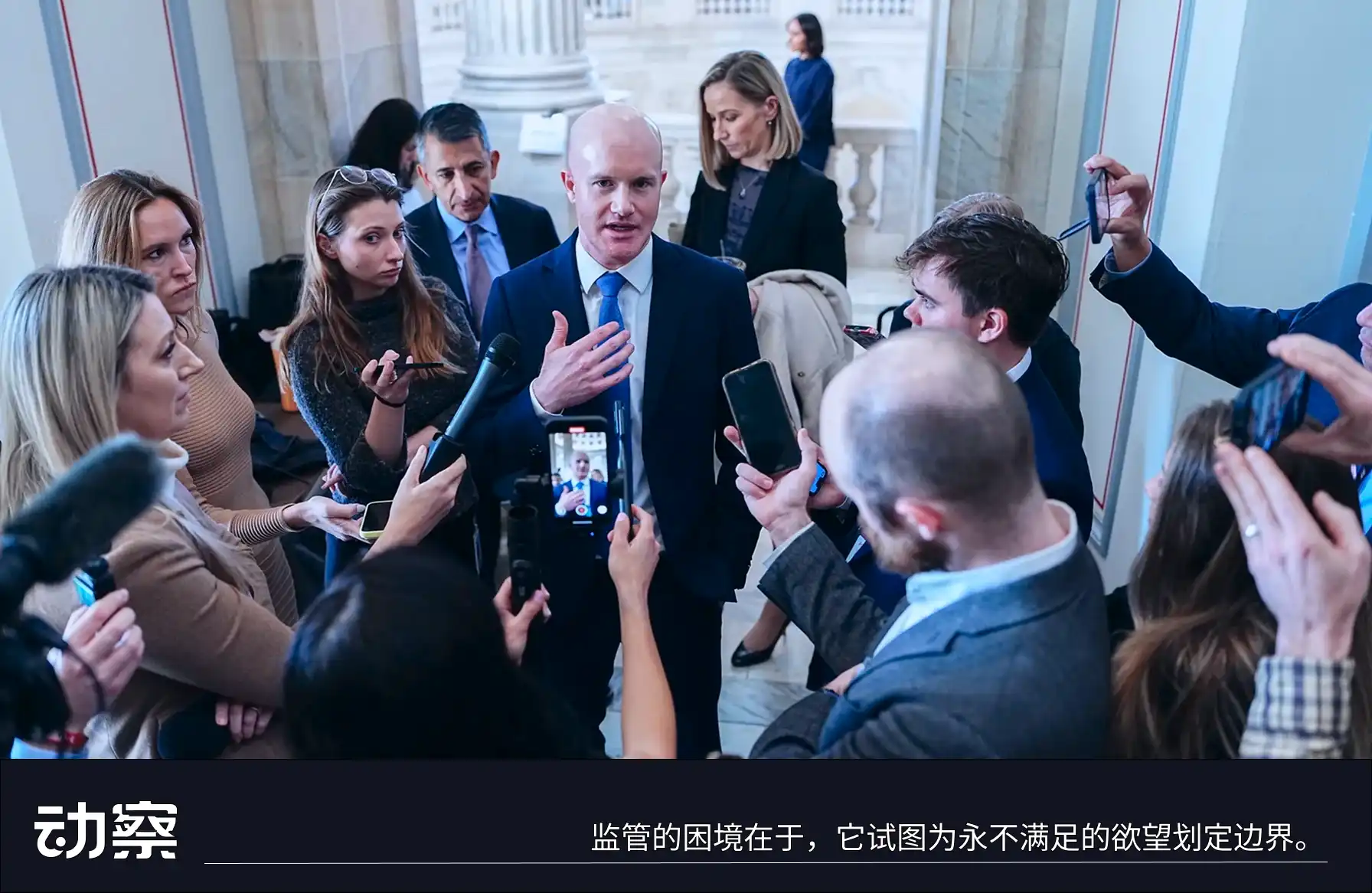
On January 14th, a bill aimed at establishing regulations for the U.S. crypto market—the CLARITY Act—is set for a crucial vote in the Senate Banking Committee. On the eve of this potential breakthrough for the industry, Brian Armstrong, founder and CEO of Coinbase, announced that the company would completely withdraw its support for the bill, stating that "a bad bill is worse than no bill."

The news immediately sent shockwaves through the industry. But what was truly surprising was that almost all other major players in the industry stood on the opposite side of Coinbase.

Chris Dixon, a partner at venture capital giant a16z, believed "now is the time to push forward"; Brad Garlinghouse, CEO of payments giant Ripple, stated that "clarity beats chaos"; Arjun Sethi, co-CEO of rival exchange Kraken, bluntly said "this is a test of political resolve"; even the non-profit organization Coin Center, known for its defense of decentralization principles, stated that the bill was "basically correct on developer protection."

On one side was the undisputed leader of the industry; on the other were the leader's former important allies. This was no longer the old story of the crypto industry fighting against Washington regulators, but a civil war erupting within the industry itself.

The Isolated Coinbase

Why was Coinbase isolated by the others?

The answer is simple: because almost all other major participants, based on their respective business interests and survival philosophies, judged this imperfect bill to be the best option at present.

First, a16z. As Silicon Valley's most prestigious crypto investment firm, a16z's portfolio spans almost all crypto sectors. For them, the most fatal issue is not the strictness of specific clauses, but the persistent regulatory uncertainty.

A clear legal framework, even with flaws, can provide fertile ground for the entire ecosystem they invest in. Chris Dixon's position represents the consensus among investors: regulatory certainty is more important than a perfect bill.

Second, the exchange Kraken. As one of Coinbase's most direct competitors, Kraken is actively preparing for an IPO.

Regulatory endorsement from Congress would significantly boost its valuation in the public market. In comparison, the bill's restrictions on stablecoin yields have a much smaller financial impact on Kraken than on Coinbase. Trading a controllable short-term business loss for the long-term huge benefits of going public is a no-brainer for Kraken.

Then there's payments giant Ripple. Its CEO, Brad Garlinghouse, summarized his stance in six words: "clarity beats chaos." Behind this lies Ripple's years-long legal battle with the SEC, costing hundreds of millions of dollars.

For a company exhausted by regulatory battles, any form of peace is a victory. Even an imperfect bill is far better than endless consumption in court.

Finally, the advocacy organization Coin Center. As a non-profit, their stance is the least driven by commercial interests. Their core demand for years has been to ensure software developers are not incorrectly classified as "money transmitters" and subjected to excessive regulation.

This bill fully incorporates their advocated Blockchain Regulatory Certainty Act (BRCA), legally protecting developers. With the core goal achieved, other details can be compromised. Their support represents the approval of the industry's "fundamentalists."

When VCs, exchanges, payment companies, and advocacy organizations all stand on the same side, Coinbase's position appears particularly glaring.

So the question is, if the entire industry sees a path forward, what does Coinbase see that makes it willing to cause an industry split to stop it?

Business Model Determines Stance

The answer lies in Coinbase's financial statements, in a $1.4 billion hole.

To understand Armstrong's move to overturn the table, one must first understand Coinbase's survival anxiety. For a long time, a significant portion of Coinbase's revenue has relied on cryptocurrency trading fees.

The fragility of this model was exposed during the crypto winter: profits were abundant during bull markets, but revenue plummeted during bear markets, even leading to quarterly losses. The company had to find new, more stable revenue sources.
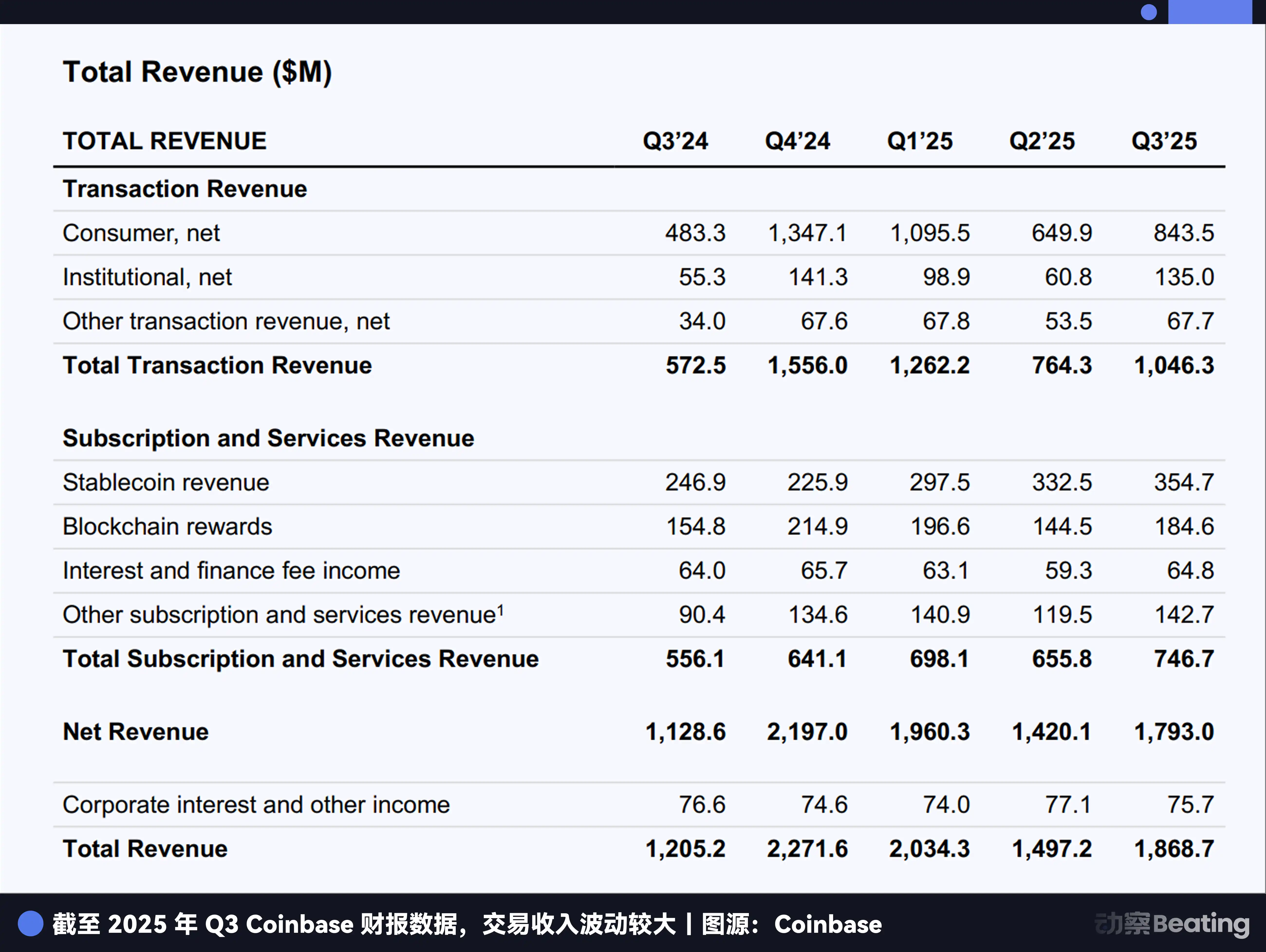
Stablecoin yield is the second growth curve Coinbase found.

Its business model is not complicated: users hold the USD-pegged stablecoin USDC on the Coinbase platform, and Coinbase lends these idle funds out through DeFi protocols (like Morpho) to earn interest, then returns part of the earnings to users as rewards. According to data on Coinbase's website, regular users can get a 3.5% annualized yield, while paid members can get up to 4.5%.

According to Coinbase's Q3 2025 earnings report, its "Interest and Financing Income" reached $355 million, most of which came from stablecoin business. Based on this, this business contributed approximately $1.4 billion in revenue to Coinbase in 2025, accounting for an increasingly large share of its total revenue. In a bear market with sluggish trading volume, this stable and substantial cash flow is Coinbase's lifeline.

And a newly added clause in the CLARITY Act precisely targets Coinbase's Achilles' heel. The clause stipulates that stablecoin issuers or affiliated parties cannot pay yields for users' "Static Holdings," but are allowed to pay yields for "Activities and Transactions."

This means that the practice of users simply holding USDC in their Coinbase accounts to earn interest will be prohibited. This is a fatal blow to Coinbase. If the bill passes, this $1.4 billion revenue could shrink significantly or even vanish.

Beyond this, the various issues Armstrong listed on social media seem more like a battle over market structure: the draft could effectively block the path for tokenized stocks/securities, set higher barriers for DeFi, make user financial data more accessible to regulators, and weaken the CFTC's role in the spot market.

The stablecoin yield ban is just the most直观 (intuitive) and immediately damaging blow to Coinbase.

Different interests lead to different choices.

Kraken's stablecoin business is much smaller than Coinbase's, allowing it to trade short-term loss for the long-term value of an IPO; Ripple's core is payments, where regulatory clarity trumps everything; a16z's chessboard is the entire ecosystem, and the得失 (gains and losses) of a single project don't affect the overall situation. Coinbase sees a cliff, while other companies see a bridge.

However, there is a third party in this game: traditional banking.

The American Bankers Association (ABA) and the Bank Policy Institute (BPI) argue that allowing stablecoin yields will lead to trillions of dollars in deposits flowing out of the traditional banking system, posing an existential threat to thousands of community banks.

Back in July 2025, the stablecoin genius bill had already passed, explicitly allowing "third parties and affiliated parties" of stablecoins to pay yields, leaving legal room for Coinbase's model. But in the 7 months since, the banking industry launched a powerful lobbying offensive, ultimately successfully adding the "Static Holdings" ban to the CLARITY Act.

Banks don't fear the 3.5% yield; they fear losing deposit pricing power. When users can freely choose to keep funds in banks or crypto platforms, the banks' decades-long low-interest monopoly ends. This is the essence of the conflict.

So, faced with such complex interest博弈 (game theory), why did only Armstrong choose the most drastic approach?

Two Survival Philosophies

This is not just a conflict of commercial interests, but a collision of two截然不同 (completely different) survival philosophies. One is Silicon Valley-style idealism and non-compromise, the other is Washington-style pragmatism and gradual reform.

Brian Armstrong represents the former. This is not the first time he has publicly clashed with regulators. As early as 2023, when the SEC sued Coinbase for illegally operating a securities exchange, Armstrong publicly criticized the SEC for its "inconsistent stance" and revealed that Coinbase had held over 30 meetings with regulators, repeatedly requesting clear rules but never getting a response.

His stance has been consistent: support regulation, but firmly oppose "bad regulation." In his view, accepting a bill with fundamental flaws is more dangerous than having no bill for now. Because once a law is made, it will be extremely difficult to change it in the future. Accepting a bill that strangles the core business model for short-term certainty is like drinking poison to quench thirst.

Armstrong's logic is: fight now at all costs; it's painful, but it preserves the possibility of争取 (fighting for) better rules in the future. Compromising now means permanently abandoning the stablecoin yield battlefield. In this war concerning the company's future, compromise is surrender.

Other leaders in the crypto industry, however, have shown a截然不同 (completely different) pragmatic philosophy. They understand the rules of the game in Washington: legislation is the art of compromise, and perfection is the enemy of good.

Kraken's CEO Sethi believes the important thing is to first establish a legal framework, giving the industry legitimate social status, and then gradually improve it through continuous lobbying and participation. Survival first, development later.

Ripple's CEO Garlinghouse places certainty above all else. Years of litigation have taught him that struggling in legal quagmires is a company's huge消耗 (drain). An imperfect peace is far better than a perfect war.

a16z's Dixon looks from the strategic height of global competition, believing that if the US delays legislation due to internal quarrels, it will only hand over its position as the center of global financial innovation to Singapore, Dubai, or Hong Kong.

Armstrong is still fighting a Washington battle the Silicon Valley way, while others have already learned the language of Washington.

One is the principled坚守 (adherence) of "rather be a shattered vessel of jade than an unbroken piece of pottery," the other is the realistic consideration of "where there is life, there is hope." Which is wiser? Until time gives us the answer, no one can say for sure. But one thing is certain: both choices come with heavy costs.

The Cost of Civil War

What is the real cost of this civil war ignited by Coinbase?

First, it causes political分裂 (division) within the crypto industry.

According to a Politico report, Senate Banking Committee Chairman Tim Scott's decision to delay the vote was made precisely when Coinbase defected at the last minute and support votes for the bill among bipartisan senators were still uncertain. Coinbase's move, while not the sole reason, was undoubtedly a key factor pushing the entire effort into chaos.

If the bill ultimately fails because of this, other companies might partly blame Coinbase, believing it acted for its own selfish interests, affecting the entire industry's progress.

More seriously, this public infighting greatly weakens the crypto industry's collective bargaining power in Washington.

When lawmakers see the industry cannot even form a unified voice, they become confused and frustrated. A divided industry will be no match for powerful traditional financial lobbying groups.

Second, it exposes the困境 (dilemma) of regulation in the digital age.

The CLARITY Act attempts to walk a tightrope between encouraging innovation and preventing risk, but this balance point can hardly satisfy everyone. For Coinbase, the bill regulates too tightly; for traditional banks, it is too loose; for other crypto companies, it might be just right.

The dilemma of regulation is that it tries to set boundaries for never-satisfied desires. Every time a rule lands, it's just the beginning of the next game.

But the most important cost is that this civil war shakes the foundation of the crypto industry.

What exactly is the crypto industry? A social experiment about decentralization and individual freedom, or a business about asset appreciation and wealth creation? A revolution against the existing financial system, or a supplement and improvement to it?

Armstrong's决绝 (resoluteness) and the compromise of others in the industry together outline the industry's current true face: a contradictory entity constantly oscillating between ideal and reality, revolution and commerce.

Câu hỏi Liên quan

QWhy did Coinbase withdraw its support for the CLARITY Act at the last minute?

ACoinbase withdrew its support because the bill included a provision that would prohibit paying yields on 'static holdings' of stablecoins, which directly threatens its $1.4 billion revenue stream from its stablecoin business. CEO Brian Armstrong believed a bad bill is worse than no bill at all.

QWhat were the positions of other major crypto players like a16z, Ripple, and Kraken regarding the CLARITY Act?

Aa16z supported the bill for regulatory certainty, Ripple favored clarity over ongoing legal chaos, Kraken saw it as beneficial for its IPO plans, and even Coin Center approved of its developer protections. They all viewed the bill as a necessary step forward despite its imperfections.

QHow does the CLARITY Act specifically impact Coinbase's business model?

AThe bill's provision banning yields on 'static holdings' of stablecoins would cripple Coinbase's significant revenue from its USDC-based yield-generating services, which contributed approximately $1.4 billion in 2025 and serves as a crucial income source, especially during market downturns.

QWhat broader philosophical conflict does this debate reveal within the crypto industry?

AThe debate highlights a clash between Silicon Valley idealism, represented by Armstrong's refusal to accept flawed regulation, and Washington pragmatism, embraced by others who prioritize incremental progress and regulatory certainty to ensure industry survival and growth.

QWhat are the potential consequences of this internal rift within the crypto industry?

AThe division could weaken the industry's collective lobbying power in Washington, delay crucial legislation, and expose vulnerabilities to traditional financial lobbying. It also reflects deeper tensions between the industry's revolutionary ideals and its commercial realities.

Nội dung Liên quan

Góc Bất Khả Thi Thực Ra Là Một Vấn Đề Giả

Tác giả Billy Gao cho rằng khái niệm "tam giác bất khả thi" (decentralization - scalability - security) trong blockchain thực chất là một vấn đề giả. Bài viết chỉ ra rằng, mặc dù ngành công nghiệp tiền mã hóa đã xây dựng được hệ thống mật mã hùng mạnh nhất lịch sử, nhưng nó lại thất bại trong việc bảo vệ quyền riêng tư tài chính cơ bản của người dùng. Mọi giao dịch và số dư đều bị công khai theo mặc định. Bản chất thực sự của blockchain là một máy tính chia sẻ, chậm và đắt đỏ, nhưng không ai sở hữu. Ưu điểm duy nhất của nó là tính không cần cấp phép và khả năng chống kiểm duyệt. Tuy nhiên, đây cũng là nguồn gốc của hai khiếm khuyết chính ngăn cản dòng vốn lớn: (1) Vấn đề pháp lý từ tính mở và (2) Sự thiếu hụt quyền riêng tư. Tính minh bạch trên chuỗi không phải là lợi ích mà là một loại "thuế". Nó cho phép các hành vi như MEV và front-running, khiến người dùng thông thường bị mất giá trị. Các tổ chức tài chính lớn sẽ không bao giờ để toàn bộ sổ sách của họ bị công khai như vậy. Tác giả lập luận rằng quyền riêng tư và tuân thủ không đối lập nhau. Bằng các kỹ thuật mật mã tiên tiến như zero-knowledge proof, người dùng có thể chứng minh tính hợp lệ của một giao dịch (như đã qua KYC, trong giới hạn rủi ro) mà không cần tiết lộ mọi chi tiết nhạy cảm. Điều này cho phép kiểm toán và giám sát trong khi vẫn bảo vệ dữ liệu cá nhân. Giải pháp "quyền riêng tư mặc định + có thể chứng minh sự tuân thủ" được xem như một bản nâng cấp thuần túy cho blockchain hiện tại. Nó khắc phục hai khiếm khuyết cốt lõi, mở ra cánh cửa cho hàng nghìn tỷ USD từ các tổ chức tài chính chính thống và người dùng phổ thông – những người đòi hỏi cả tính bảo mật lẫn quyền riêng tư. Chỉ khi blockchain học được cách "giữ bí mật", tiềm năng thực sự của nó mới được giải phóng.

链捕手3 giờ trước

Góc Bất Khả Thi Thực Ra Là Một Vấn Đề Giả

链捕手3 giờ trước

Tam Giác Bất Khả Thi Về Cơ Bản Là Một Vấn Đề Giả

Tác giả chỉ ra rằng ngành công nghiệp blockchain đã dành một thập kỷ tập trung giải quyết "tam nan" (khả năng mở rộng, phi tập trung, bảo mật), nhưng lại bỏ qua hai trở ngại thực sự ngăn dòng vốn lớn: tính hợp pháp và sự riêng tư. Blockchain, bản chất là một máy tính chung chậm và đắt đỏ, phù hợp nhất cho tài sản kỹ thuật số thuần túy như tiền. Tuy nhiên, tính minh bạch mặc định của nó khiến mọi giao dịch và vị thế bị công khai, tạo ra một "thuế" dưới dạng MEV và front-running, xói mòn lợi nhuận của người dùng. Điều này là rào cản không thể chấp nhận đối với các tổ chức tài chính lớn. Trong khi vấn đề hợp pháp đang dần được giải quyết thông qua khung pháp lý, thì thiếu sót về quyền riêng tư vẫn tồn tại. Tác giả lập luận rằng quyền riêng tư (ẩn danh giao dịch) và tuân thủ (chứng minh dự trữ, KYC) không mâu thuẫn nhờ vào mật mã học hiện đại như bằng chứng không tiết lộ thông tin. Công nghệ này cho phép xác minh một tuyên bố (ví dụ: tài sản > nợ, đã qua KYC) mà không tiết lộ dữ liệu cơ bản. Việc tích hợp quyền riêng tư có thể chứng minh được với khả năng tuân thủ là một bản nâng cấp thuần túy cho blockchain hiện tại. Nó giữ nguyên các đảm bảo về sự đồng thuận phi tập trung trong khi loại bỏ "lỗ rò" thông tin, từ đó mở ra cánh cửa cho dòng vốn tỷ đô từ các tổ chức và cá nhân mong muốn bảo vệ hoạt động tài chính của mình. Hệ thống mật mã mạnh mẽ nhất từ trước đến nay cuối cùng cũng học được cách giữ bí mật.

marsbit3 giờ trước

Tam Giác Bất Khả Thi Về Cơ Bản Là Một Vấn Đề Giả

marsbit3 giờ trước

Chip quang học, mở rộng sản xuất tập thể

Thế giới chip quang đang trong giai đoạn mở rộng sản xuất mạnh mẽ để đáp ứng nhu cầu tăng vọt từ hạ tầng trung tâm dữ liệu AI. Tại Mỹ, Coherent đầu tư mở rộng nhà máy sản xuất InP 6-inch với sự hỗ trợ của NVIDIA, Nokia tăng cường năng lực đóng gói và thử nghiệm chip photonic. Nhật Bản, dẫn đầu bằng JX Advanced Metals, tăng sản lượng đế InP lên 7-10 lần. Ở châu Âu, sự hợp tác giữa IQE và Tower Semiconductor cho thấy xu hướng tích hợp các thành phần hiệu suất cao InP vào nền tảng silicon photonic. Trong khi đó, Trung Quốc đang phát triển nhanh chóng toàn bộ chuỗi cung ứng, với các dự án lớn từ các công ty như Suoersi và San'an. Phân tích của Morgan Stanley chỉ ra rằng, bất kể kiến trúc kết nối quang tương lai (CPO, NPO hay thiết bị cắm rút truyền thống) là gì, nhu cầu về băng thông cao hơn sẽ luôn thúc đẩy sự gia tăng mạnh mẽ về số lượng động cơ quang, laser và vật tư liên quan trên mỗi GPU. Các giải pháp như SiPh + Laser CW, VCSEL và MicroLED có thể cùng tồn tại, phục vụ các nhu cầu khoảng cách và chi phí khác nhau trong trung tâm dữ liệu. Cuộc đua mở rộng công suất này phản ánh một cược lớn của toàn ngành công nghiệp bán dẫn vào tương lai của kết nối quang học, một yếu tố quan trọng để mở rộng quy mô năng lực AI vượt ra khỏi giới hạn của kết nối điện truyền thống. Cuộc chạy đua vũ trang trong thời đại photon đã bước vào giai đoạn căng thẳng.

marsbit5 giờ trước

Chip quang học, mở rộng sản xuất tập thể

marsbit5 giờ trước

1996 hay 1999? Bài kiểm tra đầu tiên của Walsh là 'Cách nhìn về AI'

Tác giả: Đồng Tĩnh Vị Chủ tịch Fed mới, Walsh, đang đối mặt với thử thách đầu tiên và quan trọng nhất: **cách đánh giá sự bùng nổ AI hiện tại**. Quan điểm này sẽ quyết định hướng đi chính sách tiền tệ và định vị vai trò lịch sử của ông. Giới kinh tế đang tranh luận giữa hai cách hiểu trái ngược về làn sóng AI: 1. Lợi ích năng suất sắp hiện thực hóa, cung sẽ đuổi kịp cầu, cho phép Fed giữ nguyên lãi suất. 2. Cú sốc cầu đã đến trong khi lợi ích năng suất vẫn còn ở phía trước; nếu Fed chờ đợi dữ liệu xác nhận, họ sẽ bỏ lỡ thời điểm can thiệp tốt nhất và buộc phải tăng lãi suất mạnh hơn sau này. Bản thân Walsh có vẻ nghiêng về tư duy của Cựu Chủ tịch Alan Greenspan năm 1996: ông nhiều lần nhấn mạnh rằng "tăng trưởng mạnh mẽ được thúc đẩy bởi năng suất không phải là điều chúng ta sợ hãi, mà là điều chúng ta đón nhận". Ông lo ngại Fed sẽ phạm sai lầm khi thắt chặt chính sách quá sớm trong một thời kỳ thịnh vượng về năng suất, từ đó bóp nghẹt động lực tăng trưởng vốn có thể kiềm chế lạm phát. Tuy nhiên, bối cảnh hiện tại của Walsh khác xa năm 1996: áp lực thuế quan, thâm hụt ngân sách mở rộng và lợi ích toàn cầu hóa suy giảm khiến áp lực lạm phát tiềm tàng lớn hơn nhiều. Một thách thức quan trọng khác đến từ Chủ tịch Fed Chicago, Austan Goolsbee. Ông lập luận rằng một sự bùng nổ năng suất "được mong đợi từ trước" như AI hiện nay có thể gây ra hiệu ứng ngược: mọi người chi tiêu dựa trên kỳ vọng về của cải trong tương lai ngay từ bây giờ, dẫn đến nền kinh tế quá nóng và buộc Fed phải tăng lãi suất mạnh. Ông chỉ ra các dấu hiệu như việc xây dựng trung tâm dữ liệu AI đang đẩy giá đất, điện và chip lên cao. Ngược lại, Thống đốc Fed Christopher Waller phản bác rằng cơ chế "chi tiêu trước" này chỉ hoạt động nếu các hộ gia đình có thể vay mượn dễ dàng, điều không phải lúc nào cũng đúng. Điều này ủng hộ lập trường "chờ đợi" của Walsh. Walsh còn đối mặt với một nghịch lý sâu sắc: ông muốn xóa bỏ thông lệ "hướng dẫn dự báo" (forward guidance) - vốn được thiết lập từ năm 1999 - để Fed không phải lộ bài trước. Nhưng nếu nền kinh tế diễn biến theo kịch bản xấu hơn, ông sẽ phải lựa chọn: hoặc sử dụng lại công cụ mình muốn bãi bỏ để báo hiệu tăng lãi suất, hoặc im lặng và chấp nhận rủi ro thị trường biến động mạnh. Câu trả lời cuối cùng cho tất cả những vấn đề trên phụ thuộc vào một câu hỏi then chốt: **Hiện tại là năm 1996 hay năm 1999?**

marsbit7 giờ trước

1996 hay 1999? Bài kiểm tra đầu tiên của Walsh là 'Cách nhìn về AI'

marsbit7 giờ trước

Báo cáo Ethereum Q1 2026: Phí giảm, người dùng và khối lượng giao dịch lập kỷ lục mới

Báo cáo Q1/2026 của Ethereum cho thấy một xu hướng đối lập: lượng người dùng, số giao dịch và thông lượng mạng lưới đều đạt mức cao kỷ lục, trong khi phí giao dịch, tổng giá trị bị khóa (TVL), khối lượng giao dịch và vốn hóa pha loãng hoàn toàn (FDV) của ETH lại giảm. Hiện tượng này được giải thích là "Nghịch lý Jevons": việc giảm chi phí sử dụng mạng lưới sau đợt nâng cấp Fusaka đã giải phóng nhu cầu, thúc đẩy tăng trưởng quy mô. Báo cáo nhấn mạnh sự chuyển dịch trong định vị cốt lõi của Ethereum từ một blockchain DeFi sang một tầng thanh toán tài chính toàn cầu. Ethereum tiếp tục thống trị thị trường tài sản được mã hóa, chiếm phần lớn thị phần trong các lĩnh vực stablecoin (61,8%), quỹ được mã hóa (73%), hàng hóa được mã hóa (84%) và cổ phiếu được mã hóa. Sự tham gia của các tổ chức lớn như BlackRock, JPMorgan và Fidelity đang đẩy nhanh quá trình "thể chế lên chuỗi". Mặc dù phí giao dịch tầng cơ sở giảm mạnh (-47,9%), đây được xem là một sự đánh đổi có chủ đích để đổi lấy tăng trưởng mạng lưới dài hạn. Chiến lược này nhằm củng cố vị thế là nền tảng định sẵn cho việc thanh toán và quyết toán các tài sản tài chính ngày càng được mã hóa, từ đó tạo ra giá trị cơ bản cho ETH thông qua nhu cầu sử dụng mạng lưới.

marsbit9 giờ trước

Báo cáo Ethereum Q1 2026: Phí giảm, người dùng và khối lượng giao dịch lập kỷ lục mới

marsbit9 giờ trước

Giao dịch

Giao ngay
Hợp đồng Tương lai
活动图片