As Circle, the First Stablecoin Stock, Resolves to Shed Its Label

链捕手Xuất bản vào 2026-05-12Cập nhật gần nhất vào 2026-05-12

Tóm tắt

Circle, the "stablecoin stock," reported its Q1 2026 results, showing a 20% YoY revenue increase to $694M despite a 15% drop in net profit due to post-IPO stock-based compensation and operational investments. The company's USDC stablecoin hit a record $770B in circulation with on-chain transaction volume soaring 263% YoY. However, market share slightly declined amid competition. The key market catalyst was the announcement of a $222M pre-sale for the ARC token of Circle's new institutional-focused Layer 1 blockchain, Arc, valuing the network at $30B. Led by a16z, the round included major investors like BlackRock and Apollo. CEO Jeremy Allaire positioned this as a strategic pivot from a stablecoin issuer to a broader internet platform and "financial OS" company. Circle also launched "Agent Stack" products for AI agent payments using USDC. While reaffirming its full-year 2026 guidance, the company noted the financial impact of Arc is not yet included, leaving room for future upside. Following the report, CRCL's stock surged nearly 16%. Wall Street analysts remain largely bullish on the long-term narrative, though some caution about near-term execution risks and the current immaterial contribution of new initiatives like Arc. The focus is now on Arc's mainnet launch, ARC token adoption, and evolving U.S. crypto regulation.

Author: Chloe, ChainCatcher

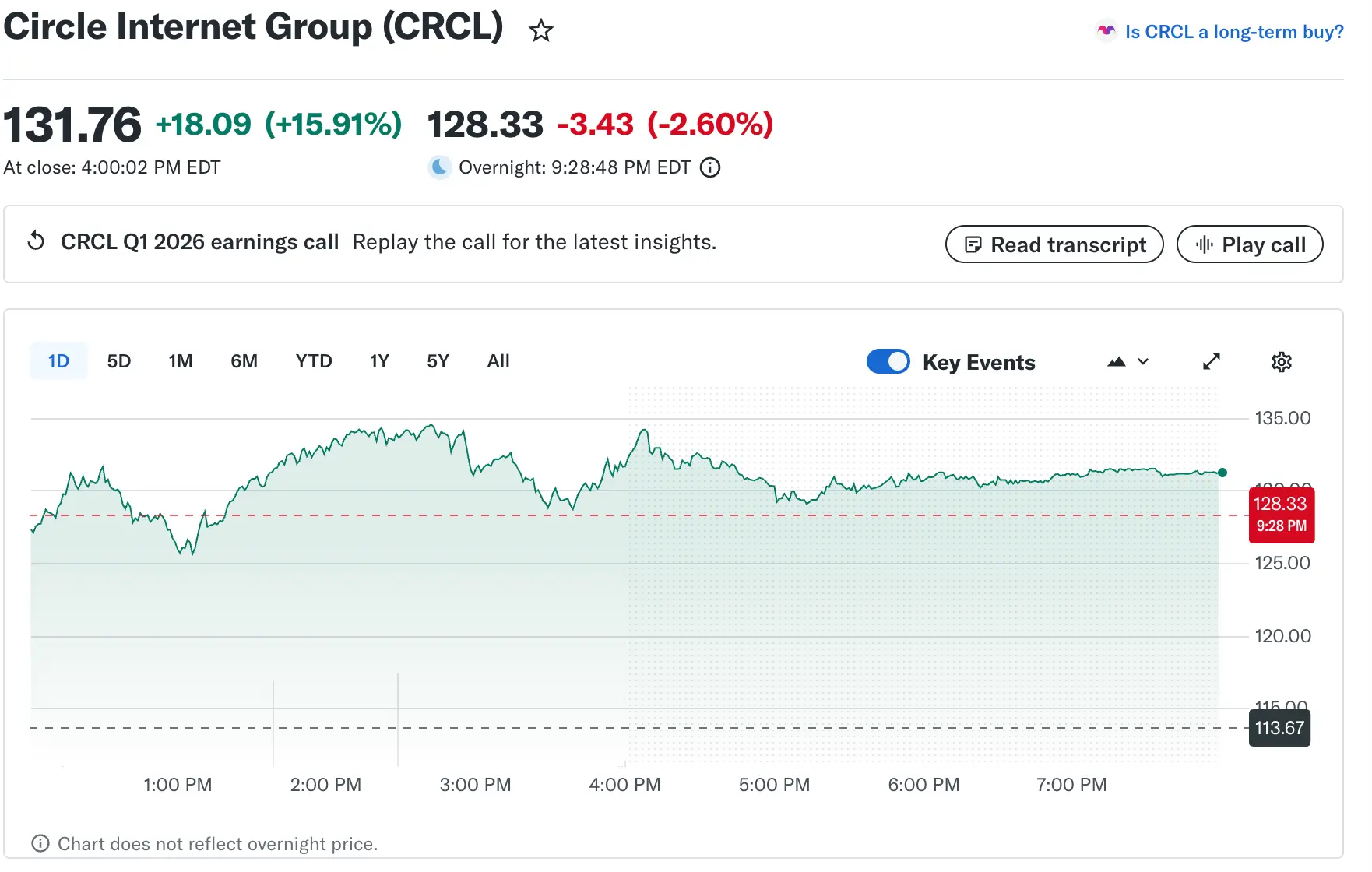
Circle released its first-quarter earnings for 2026 before the market opened yesterday, posting double-digit year-over-year revenue growth and simultaneously disclosing that its new public chain Arc's native token completed a pre-sale of $222 million at a $3 billion valuation. Although net profit declined 15% year-over-year due to increased stock-based compensation and operational investments, market focus remained centered on the long-term narrative of Arc and AI agent payments. CRCL's stock price surged nearly 16% that day, closing at $131.76, hitting a new high since mid-March.
USDC Scale Hits New Record, On-chain Transaction Volume Up 263% YoY

Circle's first-quarter total revenue and reserve income reached $694 million, a 20% increase year-over-year. Breakdown:

  • Reserve Income: $653 million, up 17% YoY, primarily benefiting from a 39% YoY increase in average USDC circulation, partially offset by a 66 basis point decrease in reserve yield (down to 3.5%).

  • Other Revenue: $42 million, roughly doubling YoY, reflecting strong growth in subscription, service, and transaction revenues.

  • Net Income from Continuing Operations: $55 million, down 15% YoY, mainly due to stock-based compensation and related payroll taxes post-IPO, as well as increased investment in products, distribution, and operational infrastructure.

  • Adjusted EBITDA: $151 million, up 24% YoY; Adjusted EBITDA margin was 53%.

Notably, both revenue and net income fell short of Wall Street analysts' expectations prior to the earnings release. According to Bloomberg, sell-side analysts had forecast revenue around $720.8 million and a reserve yield of 3.56%, neither of which were met. However, the adjusted EBITDA of $151 million exceeded the market expectation of $137.9 million, providing some support. This also indicates that the interest rate environment will be one of the most critical external variables for Circle moving forward.

On the operational front, USDC circulation reached $77 billion, up 28% YoY. First-quarter USDC on-chain transaction volume reached $21.5 trillion, a 263% YoY increase, reflecting a significant rise in stablecoin usage density as a payment and settlement medium.

According to Visa Onchain Analytics data, USDC accounted for 63% of stablecoin transaction volume in Q1. Meanwhile, Circle's USYC has become the world's largest tokenized money market fund as of May 7. Other key operational metrics include a USDC "platform retention" balance of $13.7 billion at quarter-end, up 254% YoY; 7.2 million "active wallets" holding over $10 in USDC, up 47% YoY; and a stablecoin market share of 28%, down 62 basis points YoY, directly reflecting competitive pressure from Tether and other rivals.

Public Chain Arc Completes $222 Million Token Financing with Star-Studded Investor Lineup

Circle also announced that the native token ARC for Arc, its institutionally-focused Layer 1 public chain, has completed a $222 million pre-sale, with a fully diluted network valuation of $3 billion. According to crypto asset data platform RootData, the financing was led by a16z with a $75 million investment. Other participating investors include BlackRock, Apollo Funds, Intercontinental Exchange (ICE), Standard Chartered Ventures, ARK Invest, Bullish, and over ten other institutions.
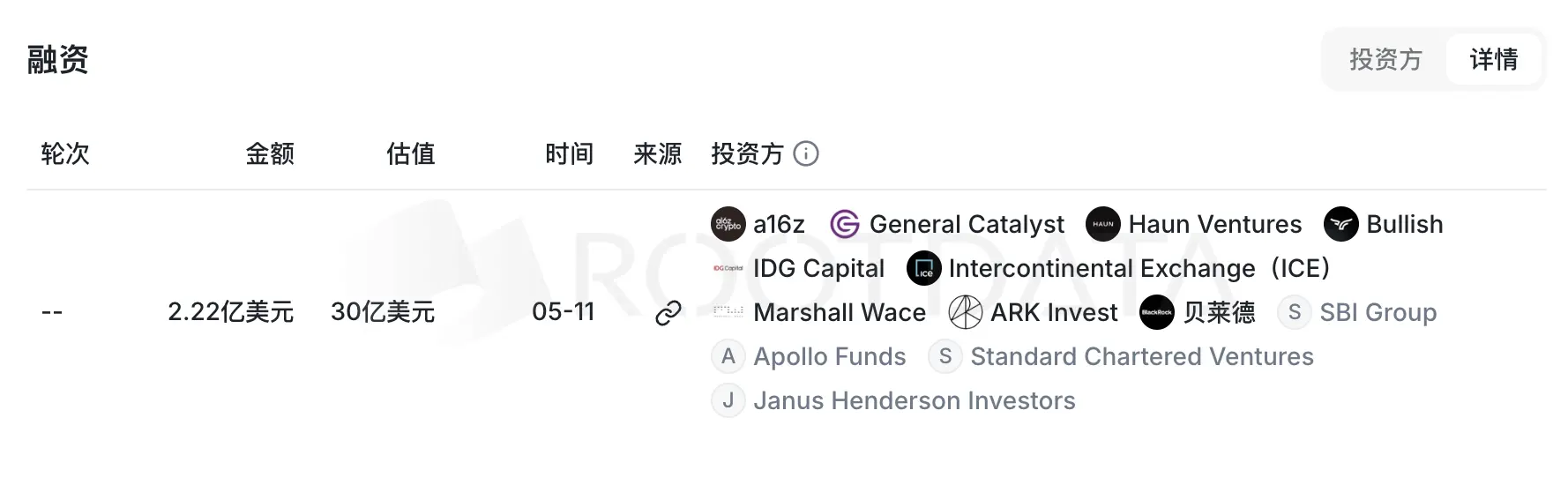
Circle CEO Jeremy Allaire stated that the company is transitioning from a stablecoin issuer to a broader internet platform company, entering the operating system and application business. Regarding token distribution, Circle holds 25% of the initial 10 billion token supply, 60% is allocated to network builders and participants, and 15% is reserved as long-term reserves.

Notably, Circle stated that this financial forecast does not incorporate the financial impact of the ARC token pre-sale, Arc incentive programs, or future Arc-related revenues.

Reaffirms Previously Announced Full-Year Guidance, No Adjustments

Additionally, Circle simultaneously launched a series of "Agent Stack" products, including Circle CLI (Command Line Tool), Agent Wallets, and Agent Marketplace, enabling developers and merchants to create, fund, and monetize AI agent-driven activities using USDC across multiple public chains and payment protocols.

The earnings report also revealed that, in terms of payment business, the Circle Payments Network (CPN) processed an annualized transaction volume of $8.3 billion as of March 31, based on the past 30 days of activity. Managed Payments, launched in April, allows financial institutions to offer stablecoin payment services without managing digital assets themselves.

New enterprise use cases for USDC include: Kyriba embedding USDC into its corporate treasury system, and Polymarket expanding its use of USDC as a core collateral and settlement asset.

Finally, regarding the outlook for the full year 2026, Circle chose to reiterate its previously announced performance guidance without any upward or downward revisions. Specifically, USDC circulation is still expected to maintain a 40% compound annual growth rate (CAGR) over multi-year cycles. FY2026 other revenue is projected between $150 million and $170 million; RLDC margin is expected between 38% and 40%; and adjusted operating expenses are forecast at $570 million to $585 million.

Similarly, this set of guidance does not incorporate the financial impact of the ARC token pre-sale, Arc incentive programs, or future Arc-related revenues, meaning there is room for upward revision once the Arc ecosystem successfully launches.

Majority of Wall Street Analysts Issue Bullish Ratings

Following the earnings release, CRCL surged approximately 16% that day, closing at $131.76, reaching its highest level since March 18. The stock has gained 66% year-to-date, with market capitalization rebounding to around $35 billion.

Wall Street analysts are generally optimistic about Circle's stock price performance over the next 12 months and beyond. According to TipRanks statistics, the consensus target price is $138.50. Among them, Peter Christiansen of Citi gave a 12-month target of $243, while Gautam Chhugani of Bernstein set a target of $190. Along with ten other analysts, all issued "Buy" ratings.

However, analysts still retain some reservations about short-term execution risks. Clear Street analyst Owen Lau pointed out that while the narratives of Arc and Agent Stack are eye-catching, they are "not yet a material business." John Todaro of Needham & Co. noted that recent DeFi protocol hacks could indirectly affect USDC use cases: "If capital leaves DeFi, how does that impact Circle's business?" Andrew Jeffrey of William Blair believes that CRCL stock price volatility will remain high in the short term, but Circle holds a significant advantage in "stablecoin commerce" with multiple catalysts progressing simultaneously.

It can be seen that Circle's earnings report presents a dual structure: the stablecoin business is still scaling rapidly, but unit economics are being compressed by interest rates and distribution costs. The market's willingness to award a 16% single-day gain is more of a bet that the Arc public chain, ARC tokenomics, and AI agent payments can reposition Circle from a stablecoin issuer to a "network financial operating system" in the medium to long term, opening up second and third growth curves beyond the existing USDC spread model.

Perhaps the market's focus going forward will be on the Arc mainnet launch timeline, market acceptance of the ARC token after public circulation, and the impact of subsequent U.S. GENIUS Act and Clarity Act implementations on the overall stablecoin competitive landscape.


Câu hỏi Liên quan

QWhat was Circle's stock price performance after the release of its Q1 2026 earnings report?

AFollowing the release of its Q1 2026 earnings report, Circle's stock (CRCL) rose nearly 16% on the day, closing at $131.76, which was a new high since mid-March.

QWhat major development did Circle announce alongside its earnings?

AAlongside its earnings, Circle announced that the native token ARC of its new institutional finance-focused Layer 1 blockchain, Arc, completed a pre-sale of $222 million at a fully diluted network valuation of $30 billion.

QWhat were the key financial results for Circle in Q1 2026?

AIn Q1 2026, Circle's total revenue and reserve income was $694 million, a 20% year-over-year increase. However, net income from continuing operations was $55 million, down 15% YoY. Adjusted EBITDA was $151 million, a 24% YoY increase.

QWho led the funding round for the ARC token?

AThe funding round for the ARC token was led by the venture capital firm Andreessen Horowitz (a16z), which invested $75 million.

QAccording to the article, what is the main transformation that Circle's CEO Jeremy Allaire described for the company?

ACircle's CEO Jeremy Allaire stated that the company is transforming from a stablecoin issuer into a broader internet platform company, entering the operating system and application businesses.

Nội dung Liên quan

Ủy ban Hạ viện Công bố 7 Dự thảo Thuế Tiền mã hóa - Một Cuộc Đại Tu Chính về Cách Đánh Thuế Tài sản Kỹ thuật số

Ủy ban Cách thức và Phương tiện Hạ viện Hoa Kỳ đã công bố 7 dự thảo thảo luận về thuế tiền mã hóa, nhằm tạo khuôn khổ rõ ràng hơn cho việc đánh thuế nhà đầu tư tài sản số. Đây là nỗ lực đầu tiên có sự ủng hộ từ lãnh đạo một ủy ban soạn thảo thuế của Quốc hội, với mục tiêu làm rõ các quy tắc về thời điểm và cách thức đánh thuế. Các dự thảo tập trung vào các vấn đề cốt lõi như: thời điểm đánh thuế đối với token tạo ra từ khai thác (mining) hoặc phần thưởng từ staking; xử lý thuế đối với giao dịch stablecoin, bao gồm khả năng miễn thuế lãi vốn cho một số giao dịch; và áp dụng các hạn chế giao dịch "wash sale" (bán lỗ để mua lại ngay) lên tài sản số, tương tự luật hiện hành với chứng khoán. Đại diện Kevin Hern nhấn mạnh việc giải quyết vấn đề thời điểm và xử lý thuế cho staking và khai thác là trọng tâm. Bộ Tài chính, Thương mại và Nhà Trắng cũng đang tham gia thảo luận. Trong khi đó, các nhà soạn thảo thuế hàng đầu tại Thượng viện cũng đang xây dựng luật riêng, cho thấy xu hướng tiếp cận thống nhất hơn giữa hai viện.

bitcoinist49 phút trước

Ủy ban Hạ viện Công bố 7 Dự thảo Thuế Tiền mã hóa - Một Cuộc Đại Tu Chính về Cách Đánh Thuế Tài sản Kỹ thuật số

bitcoinist49 phút trước

Cục Tình báo TechFlow: Cổ phiếu chip mất nghìn tỷ USD trong một ngày, Bitcoin xuống dưới 60.000 USD, căng thẳng Mỹ-Iran leo thang

Tổng quan thị trường ngày 6 tháng 6 ghi nhận đợt bán tháo mạnh trên nhiều lĩnh vực, chủ yếu do dữ liệu việc làm Mỹ (Nonfarm) tháng 5 vượt xa kỳ vọng, làm dấy lên lo ngại Cục Dự trữ Liên bang (Fed) có thể trì hoãn cắt giảm lãi suất hoặc thậm chí tăng lãi suất. Chỉ số Philadelphia Semiconductor (SOXX) lao dốc 10%, xóa sổ hơn 1 nghìn tỷ USD giá trị vốn hóa chỉ trong một ngày. Bitcoin cũng giảm xuống dưới mốc 60.000 USD, với chỉ số RSI chạm mức bán quá mức tương tự thời điểm sụp đổ do đại dịch Covid-19 năm 2020. Trong lĩnh vực AI/Web3, Anthropic cảnh báo về khả năng AI tự cải tiến (RSI), trong khi cộng đồng tranh luận về chất lượng code do AI tạo ra sau sự cố với rsync. GitHub Copilot mở cửa cho các mô hình cục bộ, còn Ethereum vẫn bị chỉ trích về trải nghiệm thanh toán cho người dùng phổ thông. Căng thẳng địa chính trị leo thang khi Mỹ và Iran trao đổi các cuộc tấn công, với việc Mỹ đánh chặn tên lửa và không kích các trạm radar Iran, đe dọa làm gián đoạn nguồn cung dầu mỏ qua eo biển Hormuz. Bài viết chỉ ra mâu thuẫn sâu sắc: dữ liệu việc làm mạnh mẽ trái ngược với cảnh báo từ các CEO như Kraft hay McDonald's về việc người tiêu dùng Mỹ đang cạn kiệt tiền tiết kiệm. Sự kết hợp của áp lực lạm phát tiềm tàng từ giá dầu và tình hình chính sách tiền tệ thắt chặt đang khiến thị trường định giá lại triển vọng trong một môi trường vĩ mô đầy thách thức, nơi kịch bản "hạ cánh mềm" ngày càng khó xảy ra.

marsbit2 giờ trước

Cục Tình báo TechFlow: Cổ phiếu chip mất nghìn tỷ USD trong một ngày, Bitcoin xuống dưới 60.000 USD, căng thẳng Mỹ-Iran leo thang

marsbit2 giờ trước

Tôi mất một năm để nhìn ra sự thật đau lòng về thanh toán Agent

Trong một năm qua, tôi đã làm việc để xây dựng cơ sở hạ tầng cho nền kinh tế Agent, trao đổi với các công ty như Stripe, Visa, Coinbase, Google và nhiều startup. Kết luận chính: nhu cầu thực sự cho thanh toán Agent hiện chưa tồn tại, và các startup đối mặt với nhiều vấn đề cấu trúc. **Phân tích bốn lĩnh vực:** 1. **Agent với Người bán:** Trải nghiệm mua sắm qua chat thường kém hơn giao diện thương mại điện tử trực quan cho các mặt hàng như quần áo, điện tử. Nhu cầu từ người bán chủ yếu là phòng thủ (tối ưu hóa cho Agent - AEO), không phải thiết yếu. Cơ hội tồn tại ở giao dịch tần suất cao, quyết định nhanh (như gọi đồ ăn) hoặc cho các giao diện phức tạp, nhưng đòi hỏi kênh phân phối B2C quy mô lớn – lợi thế của các gã khổng lồ. 2. **Agent với API:** Các nhà phát triển đã có sẵn cơ chế thanh toán (thẻ tín dụng, nạp tiền trước) cho các API. Vấn đề sâu xa là mô hình kinh doanh của nhiều nhà cung cấp SaaS dựa trên hợp đồng doanh nghiệp dài hạn, không thích hợp cho giao dịch vi mô. Cơ hội nằm ở thị trường dài (long-tail) với các dịch vụ nhỏ, nhưng đây là thị trường ngách với người dùng sẵn sàng chi trả thấp. 3. **Agent với Agent:** Đây là tầm nhìn dài hạn, hiện chủ yếu là lý thuyết, chưa có khối lượng giao dịch đáng kể. Kịch bản này sẽ yêu cầu cơ sở hạ tầng thanh toán chuyên biệt cho các giao dịch tốc độ cao, khác biệt với các mô hình hiện có, nhưng là một lĩnh vực đáng đầu tư lâu dài. 4. **Agent với Tài chính:** Đây là lĩnh vực duy nhất có nhu cầu hiện tại rõ ràng, từ các quỹ, nhóm tài chính và người dùng DeFi. AI có thể nâng cao đáng kể khả năng, tạo ra các hành vi mới. Thách thức chính là cạnh tranh với các định chế tài chính lớn đã có giấy phép, quan hệ khách hàng và cơ sở hạ tầng. **Điểm mấu chốt thực sự:** Lý do các công ty vẫn xây dựng là: 1) Các gã khổng lồ có dòng tiền để đặt cược phòng thủ cho tương lai, và 2) Có sự thiên kiến nhận định vấn đề là vấn đề thanh toán. Tuy nhiên, thanh toán chỉ là một phần của vấn đề lớn hơn: **Sự phối hợp (Orchestration)** – điều phối công việc giữa Agent và con người, xác minh kết quả và quyết toán. Thanh toán sẽ nảy sinh từ nhu cầu phối hợp quy mô lớn. Các công ty giải quyết được bài toán phối hợp sẽ chiếm lĩnh thị trường, không phải ngược lại. Khác với các tập đoàn lớn, các startup không có thời gian chờ đợi và cần tìm kiếm thị trường thực sự đang hoạt động và tăng trưởng – một thị trường nằm ngoài bốn danh mục phân tích trên.

marsbit3 giờ trước

Tôi mất một năm để nhìn ra sự thật đau lòng về thanh toán Agent

marsbit3 giờ trước

Tôi mất một năm mới nhận ra sự thật trần trụi về thanh toán Agent

Tác giả, với một năm kinh nghiệm xây dựng cơ sở hạ tầng cho nền kinh tế Agent, chia sẻ những nhận thức thực tế về thị trường thanh toán Agent hiện nay. **Hiện trạng & Thách thức:** - **Nhu cầu thực tế còn hạn chế:** Dữ liệu từ Stripe, Visa, Coinbase cho thấy khối lượng giao dịch Agent thực sự rất thấp, dù có nhiều quan tâm. Các rào cầu pháp lý (như KYC kéo dài, ngưỡng doanh thu cao từ Visa) khiến chỉ các tập đoàn lớn như Amazon mới có thể triển khai. - **Agent vs Người bán (B2C):** Trải nghiệm mua sắm qua chat kém hiệu quả với các mặt hàng cần so sánh trực quan (quần áo, đồ điện tử). Nhu cầu từ người bán hiện chủ yếu mang tính phòng thủ ("tối ưu hóa cho Agent - AEO") chứ không phải từ làn sóng người dùng thực sự. Các điểm sáng như đặt đồ ăn lại bị cản trở bởi thiếu API mở từ các nền tảng lớn và chi phí vận hành cao. - **Agent vs API (B2B):** Nhu cầu thanh toán vi mô cho API tồn tại nhưng khó mở rộng vì mô hình kinh doanh của nhiều nhà cung cấp SaaS dựa vào hợp đồng doanh nghiệp dài hạn. Các giao thức như MPP, x402 phù hợp với thị trường ngách nhưng quy mô nhỏ. - **Agent vs Agent:** Vẫn là tầm nhìn dài hạn, chưa có khối lượng giao dịch đáng kể. Nếu phát triển, nó sẽ cần cơ sở hạ tầng thanh toán chuyên biệt với tốc độ cao, độ trễ thấp. - **Agent vs Tài chính:** Đây có lẽ là lĩnh vực có nhu cầu hiện tại rõ ràng nhất, với người dùng sẵn sàng trả phí (quản lý quỹ, DeFi). Tuy nhiên, thị trường bị chi phối bởi các định chế lâu năm với lợi thế về giấy phép và quan hệ khách hàng. **Điểm mấu chốt thực sự:** Lý do nhiều công ty vẫn xây dựng là: 1) Động cơ phòng thủ của các gã khổng lồ (họ có đủ nguồn lực để đặt cược vào tương lai), và 2) Tư duy thiên lệch khi nhìn mọi vấn đề qua lăng kính "thanh toán". Tuy nhiên, vấn đề cốt lõi không phải là **thanh toán**, mà là **sự phối hợp (coordination)** giữa Agent và con người - bao gồm xác thực công việc, xử lý kết quả và sau đó mới là thanh toán. Thanh toán chỉ là một phần của giải pháp phối hợp. Các công ty giải quyết được bài toán phối hợp quy mô lớn sẽ chiếm lĩnh thị trường. Đối với startup, cần tìm kiếm thị trường thực sự đang hoạt động và tăng trưởng thay vì chờ đợi làn sóng tương lai.

链捕手3 giờ trước

Tôi mất một năm mới nhận ra sự thật trần trụi về thanh toán Agent

链捕手3 giờ trước

Giao dịch

Giao ngay
Hợp đồng Tương lai
活动图片




