New Fed Communications Liaison: Despite Walsh's 'Tough Talk', Data Reigns Supreme; Two Inflation Reports May Decide September's Rate Fate

marsbitXuất bản vào 2026-08-11Cập nhật gần nhất vào 2026-08-11

Tóm tắt

Upcoming inflation reports will be a critical test for Fed Chair Wash's credibility. The July CPI and core PCE data, expected around 0.2% month-on-month for core CPI, will likely determine whether the Fed hikes rates in September or holds steady. Data above this threshold would pressure Wash to act on his hawkish rhetoric or risk widening a credibility gap opened after a vague July press conference. Analyst Nick Timiraos notes that market confidence was shaken by Wash's performance in July, where he gave ambiguous answers on combating persistent inflation, leading to an unusual rise in long-term bond yields. Internal divisions are also growing, with at least six voting members signaling openness to a rate hike if inflation doesn't improve, three of whom voted for one in July. Wash's communication philosophy—avoiding forward guidance to get a "purer" market signal—is colliding with practical pressures. Critics argue his approach limits policy flexibility and clarity. The Jackson Hole symposium may offer a chance to reset messaging. If the Fed skips a hike in September, the next meeting falls just after the midterm elections, potentially delaying action until December and relying on inflation forecasts that officials themselves find increasingly unconvincing.

By: Zhao Ying, Wall Street Insights

The two upcoming inflation reports will serve as a real stress test for Federal Reserve Chair Walsh's credibility.

According to the latest report from The Wall Street Journal, Nick Timiraos, an economic reporter known as the "new Fed communications liaison," argues that while Walsh has consistently made lowering inflation the core theme of his Fed leadership, a somewhat ambiguous press conference following last month's FOMC meeting has cast significant doubt on his willingness to back up his tough rhetoric with action.

The July Consumer Price Index (CPI) and the Fed's preferred inflation gauge, the core PCE, to be released successively within the next month, will directly determine whether Fed officials will choose to raise interest rates or keep them unchanged at the September meeting.

If the data comes in hot, Walsh will face a dilemma: either raise rates to prove his words have weight, or hold rates steady while facing more internal dissent, which would make it harder to mend the credibility crack left by the July meeting. If the data is mild, it could buy him some breathing room, allowing him to proactively clarify his policy thinking at this month's Jackson Hole symposium rather than being forced to respond to market pressure.

The Data Threshold: 0.2% is the Line

Economists expect the month-on-month increase in July's core CPI to be 0.2%. Timiraos points out that a reading at or below this level would mean inflation trends are aligned with the Fed's 2% target; anything above would constitute a clear signal of policy pressure.

The CPI data will further feed into the Fed's more relied-upon inflation measure, which will be released later this month. Notably, the core inflation rate within the Fed's preferred gauge had already risen to 3.3% in June, up significantly from 2.8% a year ago.

Nick Timiraos notes that the current data is under such scrutiny because previous predictions by several officials have already proven off the mark. They initially expected the tariff impact to be a one-time event and energy prices to fall with oil prices, believing inflation would return to target without further policy tightening. However, these shocks have not only persisted but have also overlapped with surging prices for tech equipment and software driven by the AI construction boom, making officials' forecasts increasingly difficult to justify.

Press Conference Misstep Damages Market Confidence

Nick Timiraos believes Walsh's performance after the July FOMC meeting greatly disappointed the market. When asked whether he would respond with a rate hike if inflation failed to decline, his answer was vague and evasive—hinting that rising bond yields had already somewhat substituted for monetary policy tightening and vaguely mentioning a possible redefinition of the Fed's inflation target.

The market's reaction was notably unusual: the yield on the 30-year U.S. Treasury rose during Walsh's remarks and did not retreat afterward. James Egelhof, Chief U.S. Economist at BNP Paribas, said such a move is uncommon around FOMC meetings, suggesting "a more fundamental shift is occurring in how the market perceives the Fed under Walsh's leadership."

Paul McCulley, former Chief Economist at Pimco, was more direct, saying Walsh's habit of substituting broad principles for concrete statements has actually limited his own policy room for maneuver. "He speaks in such lofty terms that he's practically boxed himself in operationally," McCulley said.

Internal Divisions Surface, Dissenting Votes Rise

After the meeting, 10 of the 19 participating officials—including half of the 12 voting members—publicly spoke out in the following days, proactively supplementing the policy logic that Walsh failed to clarify at the press conference.

Currently, at least 6 voting members have publicly stated that if inflation shows no improvement, they might support an eventual rate hike; three of them voted for an immediate hike at the July meeting.

Nick Timiraos notes that some people familiar with Walsh acknowledge that the communication confusion caused by the July press conference needs to be repaired, and the Jackson Hole symposium might be an appropriate window. However, others believe the market reaction was exaggerated—former Fed Vice Chair Donald Kohn pointed out that market-based inflation expectation indicators haven't changed much. "The market reaction is not as pessimistic as some commentators have described. But you don't want to walk into that press conference and get that result: long-term rates up, short-term rates down."

The Collision of Communication Philosophy and Real-World Pressure

Upon taking office, Walsh intended to change the Fed's communication style. He believes that pre-announcing the conditions and factors triggering policy action would instead tie the central bank's hands and interfere with a valuable signal—namely, the market's own assessment of economic trends. Reducing forward guidance, in his view, could provide a purer market signal.

However, Kohn questioned this approach: "If you don't articulate your framework for thinking, how do you know when your assessment isn't being validated?"

From a scheduling perspective, if the September meeting opts against a hike, the next meeting falls just days before the midterm elections—a time when officials may be reluctant to initiate a first hike. This means that if the window is missed in September, the decision would effectively be postponed until December. By then, the justification for this wait would rely on an inflation forecast that even Walsh's colleagues find increasingly difficult to adhere to.


Tiền kỹ thuật số thịnh hành

Câu hỏi Liên quan

QWhat is the key data that will determine whether the Fed hikes rates in September, according to Nick Timiraos?

AAccording to the article, the key data that will decide the fate of a September rate hike are the upcoming reports for July's Consumer Price Index (CPI) and the core Personal Consumption Expenditures (PCE) price index. The 0.2% month-on-month forecast for core CPI is seen as a crucial threshold.

QWhat specific issue at the July FOMC press conference damaged Chair Wash's credibility with the markets, as described in the article?

AAt the July FOMC press conference, Chair Wash's credibility was damaged when he gave vague and evasive answers to questions about whether the Fed would raise rates if inflation failed to cool. He suggested rising bond yields were doing some of the tightening work and hinted at a potential redefinition of the inflation target, leaving markets confused and disappointed.

QHow did the market react unusually to Chair Wash's July press conference remarks?

AThe market reacted unusually with a rise in 30-year Treasury yields during Chair Wash's press conference, and the yields did not retrace afterward. According to economists cited, this atypical movement signaled a deeper shift in market perception regarding the Fed's resolve under Wash's leadership.

QWhat is the internal dissent within the FOMC regarding potential rate hikes, as highlighted in the article?

AInternal dissent within the FOMC is rising. After the July meeting, half of the 12 voting members publicly clarified policy logic that Wash failed to communicate. At least 6 voting members have stated they could support a rate hike if inflation doesn't improve, with 3 of them already having voted for an immediate hike in July.

QWhat is the potential consequence if the Fed chooses not to raise rates at its September meeting?

AIf the Fed chooses not to raise rates in September, the next meeting is scheduled just days before the midterm elections—a politically sensitive period where officials may be reluctant to initiate a hike. This would effectively delay any potential tightening action until December, a decision that would then need to be justified by inflation forecasts that even Wash's colleagues find increasingly hard to defend.

Nội dung Liên quan

EToro mua TradeZero khi doanh thu crypto quý 2 giảm 30%

Sàn giao dịch eToro công bố kế hoạch mua lại công ty môi giới trực tuyến TradeZero của Mỹ để mở rộng hoạt động tại thị trường này. Thông báo này được đưa ra cùng với báo cáo tài chính quý II/2026, cho thấy doanh thu tổng thể giảm còn 1,59 tỷ USD từ mức 2 tỷ USD cùng kỳ năm 2025. Đáng chú ý, doanh thu từ tài sản tiền điện tử giảm khoảng 30%, xuống 1,34 tỷ USD. Mặc dù vậy, lĩnh vực này vẫn mang về lợi nhuận ròng 19,7 triệu USD, góp phần vào tổng lợi nhuận ròng của eToro là 53,4 triệu USD. Hoạt động giao dịch mở rộng sang các loại tài sản khác như cổ phiếu và hàng hóa đã tạo ra 141 triệu USD lợi nhuận ròng. Công ty cho biết có sự chuyển dịch tích cực khi phần lớn người dùng giao dịch hàng hóa cuối năm 2025 - đầu 2026 sau đó đã giao dịch cổ phiếu và tiền điện tử trong quý II/2026. Tuy nhiên, số lượng giao dịch tiền điện tử trên nền tảng vào tháng 7 đã giảm 73% so với cùng kỳ. TradeZero, đối tượng được eToro thâu tóm, đạt doanh thu khoảng 80 triệu USD với biên lợi nhuận gộp 81% trong 12 tháng qua. Thương vụ dự kiến hoàn tất trong nửa đầu năm 2026 và được kỳ vọng sẽ làm tăng lợi nhuận trên mỗi cổ phiếu điều chỉnh ngay trong năm đầu tiên. Cổ phiếu ETOR trên sàn Nasdaq đã giảm hơn 5% trong giao dịch trước giờ mở cửa.

cointelegraph12 phút trước

EToro mua TradeZero khi doanh thu crypto quý 2 giảm 30%

cointelegraph12 phút trước

Sau khi khối lượng giao dịch giảm một nửa, hai sàn giao dịch tiền mã hóa lớn tại Hàn Quốc phát động 'cuộc chiến niêm yết'

Tác giả: Zen, PANews Trong bối cảnh thị trường chứng khoán Hàn Quốc hạ nhiệt, cuộc cạnh tranh niêm yết tiền mã hóa giữa hai sàn giao dịch lớn Upbit và Bithumb lại nóng lên. Sau mùa hè sôi động của thị trường cổ phiếu, khối lượng giao dịch tiền mã hóa Hàn Quốc trong quý II đã giảm gần một nửa so với cùng kỳ năm ngoái. Upbit giảm 54%, Bithumb giảm 41.7%. Tuy nhiên, từ đầu tháng 7 đến giữa tháng 8, cả hai sàn đều tăng tốc niêm yết, mỗi bên bổ sung 17 tài sản giao dịch bằng Won, cao hơn nhiều so với nhịp độ trung bình 6-10 token/tháng trước đó. Sự gia tăng này trùng hợp với thời điểm khối lượng giao dịch và tỷ lệ nhà đầu tư cá nhân trên sàn chứng khoán KOSPI bắt đầu giảm từ đỉnh, cho thấy một chiến lược tranh giành sự chú ý và vốn nhàn rỗi của nhà đầu tư trong thị trường ảm đạm. Các token mới niêm yết đã góp phần đáng kể vào khối lượng giao dịch 24h trên Upbit. Tuy nhiên, động thái này chủ yếu phân bổ lại nhu cầu trong thị trường nội bộ hơn là thu hút dòng tiền mới lớn. Upbit và Bithumb, nơi mà doanh thu chủ yếu phụ thuộc vào phí giao dịch, đang cạnh tranh khốc liệt cho cùng một nhóm vốn hạn chế. Điều này dẫn đến xu hướng lựa chọn tài sản niêm yết ngày càng giống nhau giữa hai ông lớn. Cuộc chiến niêm yết trở thành nỗ lực để giữ chân những nhà đầu tư còn lại và luân chuyển vốn nhàn rỗi trên chính nền tảng của họ.

marsbit15 phút trước

Sau khi khối lượng giao dịch giảm một nửa, hai sàn giao dịch tiền mã hóa lớn tại Hàn Quốc phát động 'cuộc chiến niêm yết'

marsbit15 phút trước

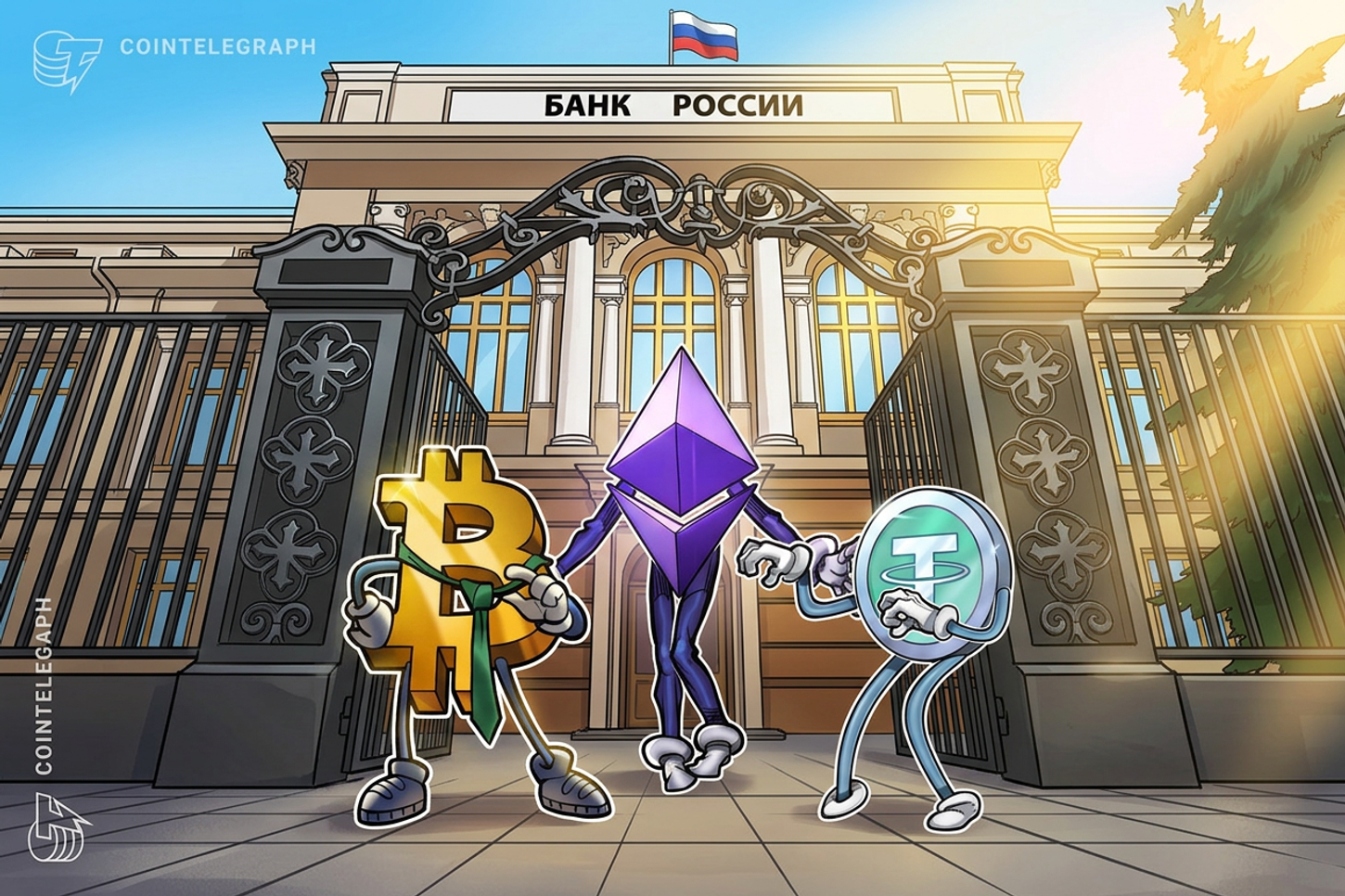
Nga đề xuất giao dịch Bitcoin, Ether và USDT của Tether trên sàn giao dịch

Ngân hàng Trung ương Nga đã công bố danh sách dự thảo các tài sản tiền mã hóa có thể được phép giao dịch công khai trên các sàn giao dịch theo quy định mới được phê duyệt tuần trước. Danh sách này bao gồm Bitcoin, Ether và stablecoin USDT của Tether. Các tài sản này đáp ứng các tiêu chí như vốn hóa thị trường, khối lượng giao dịch trung bình hàng ngày và có lịch sử giá ít nhất 5 năm trên thị trường nước ngoài. Quyết định này được đưa ra sau khi Tổng thống Vladimir Putin ký ban hành luật mới vào ngày 4/8, trao quyền cho Ngân hàng Trung ương Nga xác định loại tiền kỹ thuật số nào được phép tham gia giao dịch có tổ chức. Theo quy định, nhà đầu tư không chuyên nghiệp có thể mua tối đa 300.000 rúp Nga (tương đương 3.650 USD) tiền mã hóa mỗi năm thông qua mỗi trung gian. Nhà đầu tư chuyên nghiệp sẽ không bị giới hạn mua. Tất cả nhà đầu tư đều phải vượt qua một bài kiểm tra và tìm hiểu về rủi ro trước khi giao dịch. Các hạn chế này nhằm bảo vệ nhà đầu tư không chuyên trước những biến động mạnh của thị trường tiền mã hóa. Ngân hàng Trung ương đang tiếp nhận ý kiến đóng góp cho đề xuất này đến hết ngày 24/8.

cointelegraph27 phút trước

Nga đề xuất giao dịch Bitcoin, Ether và USDT của Tether trên sàn giao dịch

cointelegraph27 phút trước

Giao dịch

Giao ngay

Bài viết Nổi bật

Làm thế nào để Mua DATA

Chào mừng bạn đến với HTX.com! Chúng tôi đã làm cho mua DATA Network (DATA) trở nên đơn giản và thuận tiện. Làm theo hướng dẫn từng bước của chúng tôi để bắt đầu hành trình tiền kỹ thuật số của bạn.Bước 1: Tạo Tài khoản HTX của BạnSử dụng email hoặc số điện thoại của bạn để đăng ký tài khoản miễn phí trên HTX. Trải nghiệm hành trình đăng ký không rắc rối và mở khóa tất cả tính năng. Nhận Tài khoản của tôiBước 2: Truy cập Mua Crypto và Chọn Phương thức Thanh toán của BạnThẻ Tín dụng/Ghi nợ: Sử dụng Visa hoặc Mastercard của bạn để mua DATA Network (DATA) ngay lập tức.Số dư: Sử dụng tiền từ số dư tài khoản HTX của bạn để giao dịch liền mạch.Bên thứ ba: Chúng tôi đã thêm những phương thức thanh toán phổ biến như Google Pay và Apple Pay để nâng cao sự tiện lợi.P2P: Giao dịch trực tiếp với người dùng khác trên HTX.Thị trường mua bán phi tập trung (OTC): Chúng tôi cung cấp những dịch vụ được thiết kế riêng và tỷ giá hối đoái cạnh tranh cho nhà giao dịch.Bước 3: Lưu trữ DATA Network (DATA) của BạnSau khi mua DATA Network (DATA), lưu trữ trong tài khoản HTX của bạn. Ngoài ra, bạn có thể gửi đi nơi khác qua chuyển khoản blockchain hoặc sử dụng để giao dịch những tiền kỹ thuật số khác.Bước 4: Giao dịch DATA Network (DATA)Giao dịch DATA Network (DATA) dễ dàng trên thị trường giao ngay của HTX. Chỉ cần truy cập vào tài khoản của bạn, chọn cặp giao dịch, thực hiện giao dịch và theo dõi trong thời gian thực. Chúng tôi cung cấp trải nghiệm thân thiện với người dùng cho cả người mới bắt đầu và người giao dịch dày dạn kinh nghiệm.

Tổng lượt xem 604Xuất bản vào 2026.07.01Cập nhật vào 2026.07.01

Làm thế nào để Mua DATA

Thảo luận

Chào mừng đến với Cộng đồng HTX. Tại đây, bạn có thể được thông báo về những phát triển nền tảng mới nhất và có quyền truy cập vào thông tin chuyên sâu về thị trường. Ý kiến ​​của người dùng về giá của DATA (DATA) được trình bày dưới đây.

活动图片