Glass Substrate Suddenly Accelerates

marsbitXuất bản vào 2026-06-25Cập nhật gần nhất vào 2026-06-25

Tóm tắt

The adoption of glass substrates in the semiconductor industry is accelerating unexpectedly. Following collaboration announcements between BOE and Corning in late May, and earlier moves by Intel and TSMC, the market for related upstream companies has surged. Intel's "Glass Core Substrate" aims to replace the IC substrate between the circuit board and the chip, primarily addressing thermal warping issues in large AI chips. TSMC's focus is on replacing the expensive silicon interposer layer within the chip package to significantly reduce costs. While initially cautious, with timelines stretching towards 2030, progress has been dramatically pulled forward. Key drivers are NVIDIA, whose ever-larger GPUs like the upcoming Rubin make glass substrates a necessity, and the display panel industry. Companies like Innolux and BOE, leveraging their extensive experience and production lines in panel-grade glass substrates, are rapidly retooling for semiconductor packaging. Innolux has already established production lines and secured orders, while BOE has built pilot lines and is sampling customers. Although technical hurdles remain, such as advanced multi-layer glass processing and copper electroplating, the path to commercialization is now clearer. Large-scale adoption is estimated to begin by late 2027, marking glass substrates as a critical next step in supporting advancing AI computing power.

The AI computing power market is advancing in waves, with gains moving from one segment to another, and now it's the turn of glass substrates.

In late May, BOE announced a memorandum of cooperation with Corning on glass substrates, completely igniting the market.

Not only did its own steady stock price suddenly spike "like a jolt from a heartbeat monitor," with two consecutive trading days of limit-up gains, but upstream companies like Rainbow Display and Wufang Optoelectronics also hit the daily limit-up, Dier Laser's stock price reached a record high, and Vogo Optoelectronics has surged nearly 300% over the past two months.

Institutions have identified 2026 as the first year for commercial validation of glass substrates. Besides the cooperation between BOE and Corning, Intel announced successful mass production of glass core substrates in its latest server CPUs, and TSMC revealed the establishment of a glass substrate CoPoS packaging trial production line.

The two giants are pushing hard, setting the stage perfectly for the bullish atmosphere.

It must be said that the commercialization speed of glass substrates has already exceeded most people's expectations.

Replacing the "Board" in Chips

Intel and TSMC are the current top promoters of glass substrates, but the "glass substrates" they refer to are not exactly the same thing.

A chip is composed of various components mounted on carrier substrates, forming functional units. These functional units are then mounted on the next layer of carrier substrate, creating a larger functional unit, and so on, presenting a hierarchical structure.

For example, the most familiar circuit board is the bottom-most carrier substrate. Further up, there are core substrates, IC substrates, and so on.
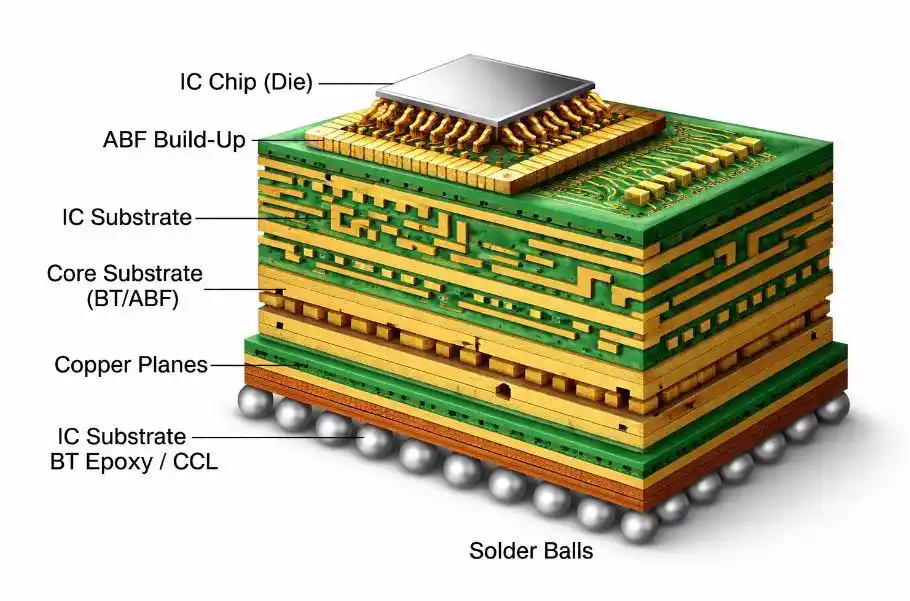
Different layers of "boards" inside a chip; Image source: IC Components

These carrier substrates were traditionally mostly made of materials like resin, fiberglass, copper foil, silicon, etc. As the name suggests, a glass substrate uses glass as the primary material for the substrate.

What Intel and TSMC aim to do is replace mainstream carrier substrates with glass substrates, but they are not targeting the same "board."

Intel's "advanced packaging glass substrate," officially named "Glass Core Substrate," replaces the IC substrate layer between the circuit board and the chip.
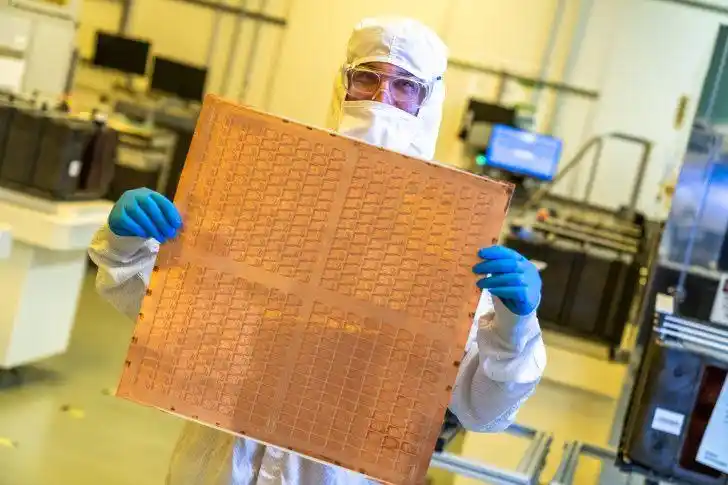
A test glass core substrate displayed by Intel

Currently, mainstream AI chips, including Nvidia GPUs, use substrates primarily made of ABF material. The biggest drawback is their tendency to warp and deform when heated. A one-meter-long ABF carrier substrate expands about 15 micrometers for every 1°C increase in temperature.

In contrast, the silicon chip placed on top of the ABF substrate shows almost no deformation when heated.

Thus, when heat is generated during chip operation, the bottom ABF substrate expands outward due to heat, while the upper silicon chip remains unchanged, causing the entire substrate to bend or "warp."

The larger the chip size, the more severe the warping becomes—imagine a credit card with all four corners curling up simultaneously. The consequences could be catastrophic.
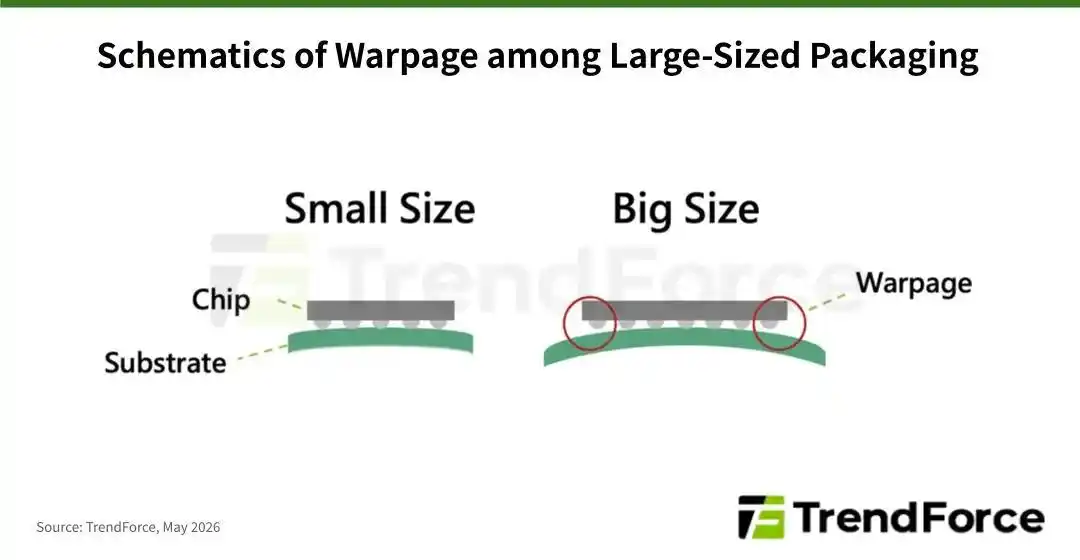
The larger the carrier substrate size, the more obvious the warping; Image source: TrendForce

This is why glass substrates are being considered. Due to their "heat resistance" being comparable to silicon chips, even if they deform at high temperatures, they can maintain synchronization with the silicon chip, effectively preventing warping.

Compared to Intel, TSMC wants to replace a carrier substrate located one layer higher—the bare die layer of the chip.

A GPU bare die consists of computing core units (CPU/GPU) and multiple HBM stacks, placed on a silicon interposer. This silicon interposer is the "board" TSMC most wants to replace.
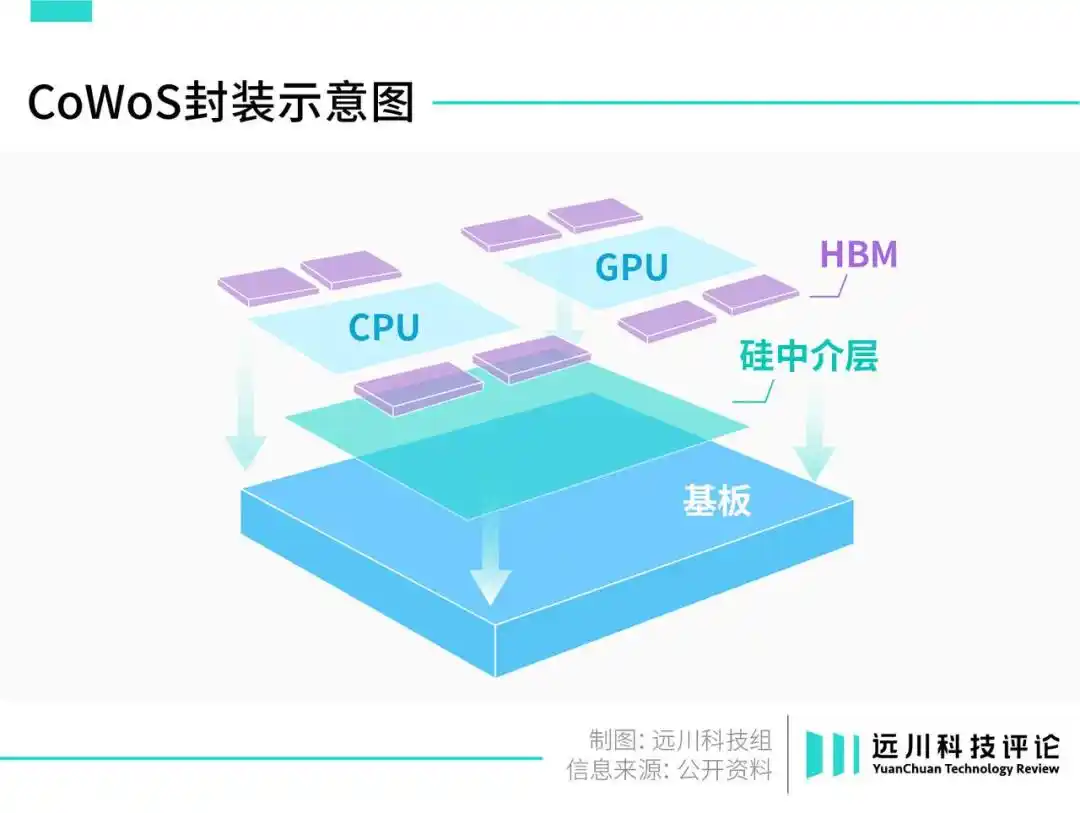
The manufacturing cost of a silicon interposer is extremely high, with a unit price exceeding $100 for a large-size silicon interposer [2]. For comparison, the A19 Pro chip in the iPhone 17 Pro Max costs only about $90 per unit for procurement.

Moreover, compared to these powerful computing SoCs for phones, the silicon interposer's main function is merely data transfer, akin to buying a scooter for the price of a sports car, which sounds even worse.

The size of the silicon interposer is directly related to the size of the AI chip and the number of HBM stacks used. As AI chips become larger and more HBM is used, the cost sinkhole for silicon interposers deepens.

For companies purchasing AI chips, it's like buying a car for $100,000 and having to spend an additional $50,000 on a license plate to drive it.

Replacing the silicon interposer with a glass substrate offers the biggest advantage: cost. For the same size, it costs less than half of the silicon counterpart [2].

The ideas from Intel and TSMC are both reasonable, but the implementation of new technology is never a simple order. Especially in the chip industry, new technology challenges not just the laws of physics.

Chip manufacturing is humanity's most complex activity to date, having solidified over the past half-century into an extremely strict set of rules. The upstream and downstream segments have meticulously built a standardized system where everything is tightly interlocked; a small adjustment can affect everything.

Even the slightest adjustment may lead to changes or complete overhauls in upstream equipment and materials.

Hence, while giants talk boldly about innovation, their actions remain conservative and cautious.

Intel proposed the glass core substrate concept in 2023, with mass production vaguely scheduled for sometime between 2026 and 2030. TSMC has been secretive about its CoPoS plan, only recently revealing for the first time that it would take 2-3 years to scale up to a certain size.

However, a few big hands have forcefully yanked the progress bar forward by a large margin.

Who is Pulling the Progress Bar?

The first big hand is Nvidia.

Just a few months after Intel announced the glass core substrate, Morgan Stanley released a report predicting that GB200 "might" use glass substrates for packaging.

This report was once overinterpreted as "Nvidia officially announced GB200 will use glass substrates," causing another surge in related concept stocks.

Putting the misunderstanding aside, the fact that an unsupported speculation could have such strong persuasive power is because, in the public's perception, Nvidia indeed has the greatest motivation to push glass substrate adoption.

Nine out of ten AI computing power chips are Nvidia GPUs. Bearing the weight of exponentially increasing computing demands, each GPU generation strives to pack more transistors, leading to larger and larger GPUs.

The B200's area is nearly double that of its predecessor, the H100, almost 10 times the size of Apple's M2 Ultra chip, roughly half the size of a bank card, already pushing the warping limits of ordinary IC substrates.

The upcoming Rubin, set for mass production in the second half of the year, is even larger than the B200. Changing materials is not an option but a necessity.
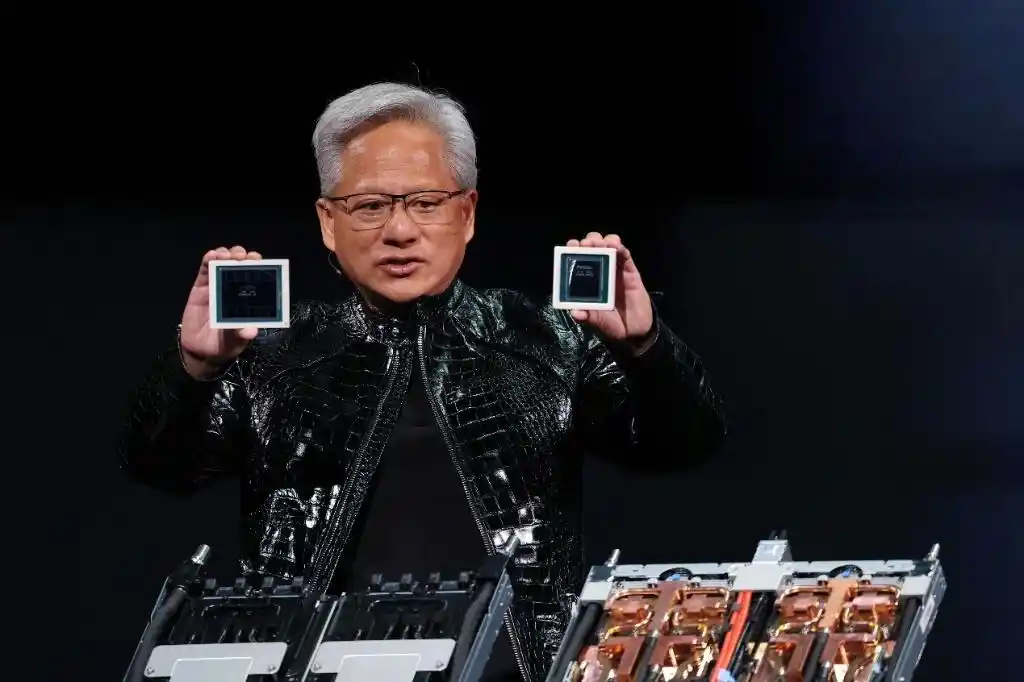
Jensen Huang holding B200 (left) and H100 (right)

In March this year, Nvidia announced a full shift to glass substrates, with Rubin leading the trial, fast-forwarding the commercialization timeline to the end of this year.

With Nvidia's big hand pulling from the front, an unexpected big hand is pushing from behind. It's not from the upstream chip industry, but from a neighboring sibling industry—display panels.

Before being used in chip packaging, the largest downstream application for glass substrates was display panels.

A display panel has a sandwich structure internally, with the two "slices of bread" being glass substrates—one controlling brightness, the other controlling color.
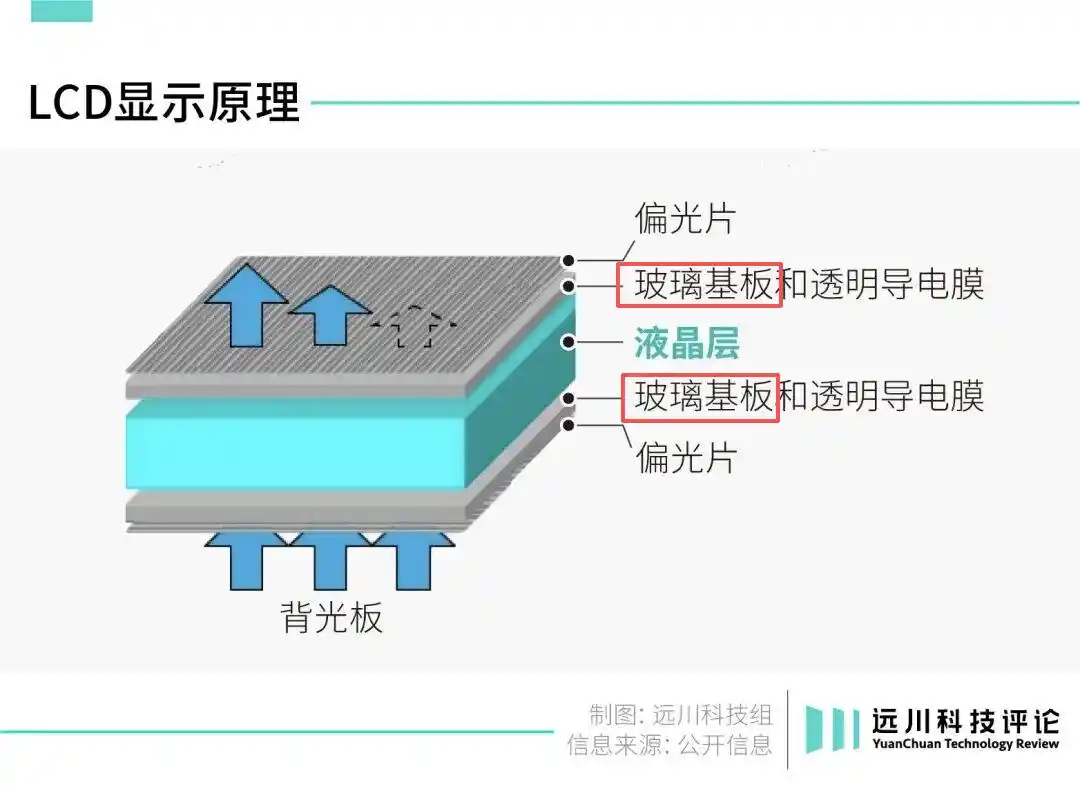
Glass substrates in an LCD panel

The precision processing technologies and equipment used here have extremely high overlap with those needed for glass substrates in chips. Exaggerating a bit, high-end production lines can be modified for use.

Therefore, regarding glass substrate implementation, the most enthusiastic are actually brothers from the panel industry.

For example, Taiwan's major panel maker Innolux plotted a transition to chip packaging as early as 2019.

With a global panel price war raging fiercely, Innolux, seeing it couldn't hold out, accepted an olive branch from Taiwan's Industrial Technology Research Institute (ITRI) to jointly develop glass substrate-based chip packaging technology, modifying its own panel production lines.

By the time Intel announced glass substrate technology in 2023, Innolux had already built the world's first FOPLP packaging production line converted from a panel line.

The following year, it secured major orders from chip giants NXP and STMicroelectronics, and sold an idle 5.5-generation panel line at a high price to TSMC to alleviate the latter's shortage of advanced packaging capacity.

By early this year, Innolux's FOPLP advanced packaging line had increased monthly production tenfold to tens of millions, not only firmly embracing TSMC's leg but reportedly also entering SpaceX's Starlink supply chain.

Taiwan's panel makers work fiercely hard, and progress on the mainland side is equally rapid.

BOE began researching and developing glass substrates in 2020, invested nearly 1 billion yuan in building a pilot line in 2024, and achieved fully automated equipment operation in the first half of this year [4].

It has already started sending samples to customers for testing and validation. The cooperation with Corning in May was to lock in future years of upstream specialty glass supply, with large-scale mass production imminent.

Mainland China holds over 60% of global panel capacity, especially in high-generation panels with the world's most mature and highly automated production lines. A bigger advantage lies in having a complete upstream industry chain for support.

Several companies currently of most interest in the secondary market, such as Dier Laser, Han's Laser, and Delong Laser, are upstream manufacturers of TGV (Through Glass Via) laser microvia equipment. Vogo Optoelectronics is midstream, handling glass substrate processing.

Beyond Chinese manufacturers, Korea's Samsung Electro-Mechanics, LG Innotek, Japan's Dainippon Printing, and Nippon Electric Glass are all active proponents of glass substrates—familiar faces from the panel wars.

With downstream demand secured by big spenders and upstream sibling industries providing warm support, glass substrates have quickly progressed from being seriously criticized as "concept hype" to the "eve of mass production." Securities firms have changed their cautious stance, drawing bigger and bigger pies.

Objectively speaking, there are still several technical hurdles to overcome before glass substrates achieve large-scale implementation.

For example, the core material—specialty glass—currently only Corning can process up to 11 layers without cracking, while the domestic supply chain can manage at most 3-4 layers [5]. Other issues include insufficient copper electroplating equipment and processes [5].

According to industry chain estimates, the earliest large-scale volume production for glass substrates will likely be by the end of 2027.

The end of computing power is electricity, but before reaching that end, the industry chain must cross another hurdle—perhaps one more glass substrate.

References

[1] Research on Warpage of 2.5D CoWoS Packaging Based on Glass Substrate, Shi Hangbo, Wang Xu, Fan Jilei, et al.

[2] Large Silicon Interposer Unit Price Exceeds $100, Accounting for Half the Cost; How Can AI Computing Chips Break Through the Packaging Cost Bottleneck? Yue Tou Gu

[3] Complete Breakdown of TGV Glass Via: After Intel's Glass Substrate Entry, Understanding the Hard Barriers, 2027 Mass Production Countdown, and Taiwan Supply Chain Investment Map, Sinopac Securities

[4] BOE: Glass Substrate Packaging Carrier Pilot Line Operational, Design Capacity 1000 Sheets/Month, Future Semiconductor

[5] Glass Substrate Industry Exchange, Summary Research Report

This article is from the WeChat public account "Yuanchuan Technology Review" (ID: kechuangych), author: He Lüheng, editor: Li Motian

Tiền kỹ thuật số thịnh hành

Câu hỏi Liên quan

QWhat are the two main applications of glass substrates in the chip industry, as promoted by Intel and TSMC respectively?

AIntel promotes the use of 'Glass Core Substrate' to replace the IC substrate layer (between the circuit board and the chip). TSMC aims to use glass substrates to replace the silicon interposer layer (within the chip's bare die layer).

QWhy is the transition to glass substrates becoming increasingly necessary for high-performance AI chips like NVIDIA's GPUs?

AAs AI GPUs become larger (e.g., B200, Rubin) to pack more transistors, the traditional organic ABF substrates are prone to warping due to heat. Glass substrates have thermal properties similar to silicon, preventing this warping and enabling larger chip designs.

QWhich non-semiconductor industry is playing a significant role in accelerating the adoption of glass substrates for chip packaging, and why?

AThe display panel industry is a key accelerator. Companies like Innolux and BOE are repurposing their mature, high-precision panel manufacturing lines and expertise for glass substrate processing, providing ready-made production capacity and supply chain support.

QWhat is the primary benefit for TSMC in replacing silicon interposers with glass substrates in its CoWoS packaging?

AThe primary benefit is significant cost reduction. Large silicon interposers are extremely expensive (over $100 each), while similarly sized glass substrates are estimated to cost less than half that amount.

QAccording to the article, what are some of the key technical challenges that still need to be overcome before glass substrates can achieve mass adoption?

AKey challenges include: 1) Developing special glass materials that can withstand multiple layers (e.g., 11+) of processing without breaking; 2) Improving copper electroplating equipment and processes for creating high-quality interconnects within the glass substrate.

Nội dung Liên quan

Siêu Vô Địch Xoắn Ốc Nổ Lớn, Báo Cáo Tài Chính Micron Thổi Bùng Lại Cơn Bò Dài Của Bán Dẫn

Báo cáo tài chính quý III năm tài khóa 2026 của Micron đã công bố vào sáng 25/6, vượt xa mọi kỳ vọng thị trường. Doanh thu quý đạt 41,456 tỷ USD (dự kiến 35,4 tỷ USD), tăng 346%; lợi nhuận ròng GAAP là 28,243 tỷ USD, tăng gần 15 lần. Dự báo doanh thu quý IV lên tới 50 tỷ USD, cao hơn nhiều so với dự kiến trước đó. Động lực tăng trưởng chính vẫn là AI, nhưng tác động đã lan rộng ra toàn bộ chuỗi lưu trữ. Ngoài HBM (bộ nhớ băng thông cao) - sản phẩm đã bán hết công suất năm 2026 và HBM4 đang được giao hàng - nhu cầu về DRAM cao cấp, SSD doanh nghiệp và NAND cũng tăng mạnh, kéo theo chu kỳ định giá mạnh nhất trong nhiều năm. Micron lạc quan rằng tình trạng cung-cầu căng thẳng sẽ kéo dài đến sau năm 2027. Điểm đáng chú ý là Micron đã ký 16 thỏa thuận khách hàng chiến lược dài hạn (SCA), phần lớn kéo dài 5 năm, một số đến năm 2030, bao phủ 20% sản lượng DRAM và 1/3 sản lượng NAND. Các thỏa thuận theo mô hình "Take-or-Pay" ràng buộc chặt chẽ, đảm bảo doanh thu cơ sở khoảng 100 tỷ USD và nhận 22 tỷ USD tiền đặt cọc thực hiện hợp đồng. Điều này đánh dấu sự chuyển đổi từ mô hình "mở rộng sản xuất trước, chờ nhu cầu" sang "khóa đơn hàng trước, rồi mở rộng công suất". Để đáp ứng nhu cầu, Micron dự kiến chi tiêu vốn quý IV lên tới 10 tỷ USD, tập trung vào năng lực sản xuất HBM, DRAM tiên tiến và đóng gói tiên tiến. Việc mở rộng này được hỗ trợ bởi các đơn hàng dài hạn đã ký kết, giảm rủi ro chu kỳ. Báo cáo của Micron không chỉ củng cố triển vọng của công ty mà còn tiếp thêm sức mạnh cho ngành bán dẫn toàn cầu, khẳng định câu chuyện AI vẫn đang trong giai đoạn tăng tốc xây dựng cơ sở hạ tầng, với lưu trữ đóng vai trò ngày càng quan trọng.

Odaily星球日报6 phút trước

Siêu Vô Địch Xoắn Ốc Nổ Lớn, Báo Cáo Tài Chính Micron Thổi Bùng Lại Cơn Bò Dài Của Bán Dẫn

Odaily星球日报6 phút trước

Giải Mã Cấu Trúc Mới của Ethereum Foundation: Tái Khẳng Định Chủ Quyền Bản Thân trong Xu Hướng Thể Chế Hóa

Ethereum Foundation (EF) đã công bố cấu trúc mới gồm 5 tầng công việc, đi kèm với việc cắt giảm 20% nhân sự, nhằm định hướng rõ ràng hơn trong bối cảnh crypto ngày càng có xu hướng thể chế hóa. 5 tầng này bao gồm: Protocol Layer (bảo vệ các thuộc tính cốt lõi CROPS: chống kiểm duyệt, mạnh mẽ, mở, riêng tư, an toàn), Access Layer (đảm bảo khả năng tự chủ thực tế cho người dùng với nguyên tắc "zero option"), User Layer (kết nối phát triển kỹ thuật với nhu cầu thực tế của người dùng), Community Layer (duy trì và truyền bá sự đồng thuận về giá trị của Ethereum), và Institutional Layer (tương tác với các tổ chức nhưng vẫn dựa trên nền tảng tự chủ). Cấu trúc mới này được coi là một sự tái khẳng định về chủ quyền tự thân của Ethereum. Bài viết chỉ ra rằng, trong khi việc đón nhận các tổ chức và thị trường là cần thiết để phát triển, EF nhấn mạnh không được hy sinh các nguyên tắc phi tập trung cốt lõi vì lợi ích thương mại ngắn hạn. Đặc biệt, sự xuất hiện của stablecoin, ETF và các công ty DAT đang dần thay đổi logic nền tảng của thị trường, làm lu mờ các giá trị về "tiền tệ gốc" và tính phi tập trung. EF kỳ vọng, thông qua cấu trúc mới, có thể cân bằng giữa việc đáp ứng nhu cầu của thế giới thực và việc bảo vệ một "thế giới mới" trung lập, không bị kiểm soát bởi bất kỳ lợi ích tập trung hay yếu tố chính trị nào, giống như "vùng biển công bằng" cho các hoạt động toàn cầu.

marsbit23 phút trước

Giải Mã Cấu Trúc Mới của Ethereum Foundation: Tái Khẳng Định Chủ Quyền Bản Thân trong Xu Hướng Thể Chế Hóa

marsbit23 phút trước

Giải mã cấu trúc mới của Ethereum Foundation: Khẳng định lại chủ quyền tự thân trong xu hướng thể chế hóa

Ethereum Foundation (EF) đã công bố một cấu trúc tổ chức mới với 5 tầng làm việc, cùng với việc cắt giảm 20% nhân sự. Động thái này nhằm định hình rõ ràng hơn vai trò của EF trong bối cảnh crypto đang có xu hướng thể chế hóa, đồng thời tái khẳng định các giá trị tự chủ cốt lõi. 5 tầng làm việc bao gồm: 1. **Protocol Layer (Tầng Giao thức)**: Duy trì các thuộc tính cốt lõi CROPS của Ethereum (Chống kiểm duyệt, Mạnh mẽ, Mở, Riêng tư, An toàn). Đây là nhiệm vụ then chốt để bảo vệ giá trị tự chủ của Ethereum, không hy sinh vì lợi ích tài chính ngắn hạn. 2. **Access Layer (Tầng Truy cập)**: Đảm bảo người dùng có thể thực tế sử dụng khả năng tự chủ của Ethereum thông qua các thao tác như đọc chuỗi, giao dịch, ủy quyền... Nguyên tắc "zero option" được nhấn mạnh: luôn phải có một con đường thay thế phi tập trung, đáng tin cậy. 3. **User Layer (Tầng Người dùng)**: Kết nối nhu cầu thực tế của người dùng và tổ chức với các tầng kỹ thuật, đảm bảo sự phát triển phù hợp và hiệu quả, tránh xa rời thực tế. 4. **Community Layer (Tầng Cộng đồng)**: Duy trì và truyền bá sự đồng thuận về giá trị của Ethereum, cả trong nội bộ và với các lĩnh vực liên quan bên ngoài. Trọng tâm là chống lại sự chi phối của lợi ích tập trung, giữ vững tính trung lập kỹ thuật và các giá trị CROPS. 5. **Institutional Layer (Tầng Thể chế)**: Tương tác với các tổ chức nhưng với tiền đề là tự chủ. EF muốn tạo ra các ví dụ tích hợp tốt hơn bằng công nghệ Ethereum, chứ không phải để các tổ chức dễ dàng kiểm soát người dùng. Bài viết phản ánh lo ngại về sự xói mòn các giá trị phi tập trung khi crypto bước vào xu hướng thể chế hóa (như ETF, stablecoin pháp định, các công ty DAT). Tuy nhiên, EF tái khẳng định rằng Ethereum, với tư cách là "vùng biển công cộng" trung lập và phi tập trung, vẫn là nền tảng lý tưởng cho các dịch vụ toàn cầu, lâu dài, bởi vì nó có khả năng chống lại sự can thiệp và kiểm soát tập trung.

链捕手27 phút trước

Giải mã cấu trúc mới của Ethereum Foundation: Khẳng định lại chủ quyền tự thân trong xu hướng thể chế hóa

链捕手27 phút trước

OpenRouter: Làm thế nào mà một 'Trạm trung chuyển mô hình' lại có thể tạo ra một công ty 10 tỷ USD?

OpenRouter là một nền tảng trung gian thống nhất giao diện API, cho phép các nhà phát triển sử dụng một tài khoản và hóa đơn duy nhất để truy cập hơn 400 mô hình AI từ các nhà cung cấp như OpenAI, Claude, Gemini, DeepSeek. Nền tảng xử lý 100 nghìn tỷ token mỗi tháng, phục vụ hơn 10 triệu người dùng toàn cầu. Giá trị chính của OpenRouter không chỉ là "siêu thị mô hình" mà là khả năng định tuyến và điều phối thông minh giữa các mô hình và nhà cung cấp. Nó giúp nhà phát triển tự động chuyển đổi dự phòng (fallback), kiểm soát chi phí, quản lý nhật ký và tuân thủ chính sách dữ liệu (như tuyến đường không lưu giữ dữ liệu). Điều này rất quan trọng khi các ứng dụng AI trong doanh nghiệp phát triển, cần sử dụng nhiều mô hình cho các tác vụ khác nhau dựa trên hiệu quả, chi phí và tốc độ. OpenRouter kiếm tiền bằng cách thu phí nền tảng 5,5% trên số tiền nạp của người dùng, mô hình kinh doanh dựa trên khối lượng token xử lý. Sự tăng trưởng nhanh của họ nhờ ba xu hướng: sự đa dạng hóa của các mô hình AI, nhu cầu kiểm soát chi phí trong các ứng dụng thực tế và sự phát triển của các tác nhân AI (AI agents) tiêu thụ nhiều token hơn. Tuy vậy, OpenRouter đối mặt với rủi ro như sự cạnh tranh từ các nhà cung cấp đám mây lớn (AWS, Google Cloud, Azure) có thể phát triển dịch vụ tương tự, nguy cơ các doanh nghiệp lớn tự xây dựng giải pháp nội bộ, và áp lực về mối quan hệ với các nhà cung cấp mô hình khi nền tảng mở rộng.

marsbit43 phút trước

OpenRouter: Làm thế nào mà một 'Trạm trung chuyển mô hình' lại có thể tạo ra một công ty 10 tỷ USD?

marsbit43 phút trước

Bitcoin Lại Lần Nữa Rơi Xuống Dưới Mức 60.000 USD; 20 Tháng Rồi, Điều Chúng Ta Đợi Lại Là Mức Thấp Mới

Bitcoin (BTC) vừa một lần nữa lao xuống dưới mốc tâm lý quan trọng 60.000 USD, chạm đáy 59,023 USD - mức thấp nhất trong gần 20 tháng kể từ tháng 10/2024. Tại thời điểm bài viết, giá phục hồi nhẹ lên khoảng 60.600 USD. Đợt giảm giá lần này xảy ra trong bối cảnh hai áp lực chính: 1. **Dòng tiền ETF rút ồ ạt:** Các quỹ ETF Bitcoin Mỹ ghi nhận dòng tiền ròng rút liên tục trong 6 tuần, với khoảng 59,4 tỷ USD bị rút ra trong 30 ngày, tạo ra áp lực bán trực tiếp trên thị trường giao ngay. 2. **Kỳ vọng chính sách tiền tệ thắt chặt:** Dữ liệu việc làm Mỹ mạnh và tuyên bố của Fed về khả năng tăng lãi suất đã đảo ngược kỳ vọng nới lỏng, khiến dòng vốn rời khỏi tài sản rủi ro cao như Bitcoin. Các quan điểm phân tích trái chiều: * **21Shares:** Duy trì kỳ vọng giá lên 100.000 USD cuối năm, cho rằng đây là đợt điều chỉnh điển hình sau halving và danh mục ETF lớn sẽ tạo đáy. * **Arthur Hayes:** Bi quan hơn, dự đoán đáy khoảng 40.000 USD trong 6 tháng tới do chính sách thắt chặt của Fed. * **CryptoQuant:** Chỉ ra giá thực hiện trung bình của nhà đầu tư là 53.000 USD và cho rằng thị trường gấu có thể kéo dài đến cuối 2026, đầu 2027 do thiếu tín hiệu hồi phục nhu cầu rõ ràng. Triển vọng ngắn hạn phụ thuộc vào dữ liệu lạm phát sắp tới và tín hiệu chính sách từ Fed. Khả năng giữ vững hay mất mốc 60.000 USD sẽ là yếu tố then chốt định hình hướng đi tiếp theo của thị trường.

Odaily星球日报1 giờ trước

Bitcoin Lại Lần Nữa Rơi Xuống Dưới Mức 60.000 USD; 20 Tháng Rồi, Điều Chúng Ta Đợi Lại Là Mức Thấp Mới

Odaily星球日报1 giờ trước

Giao dịch

Giao ngay
Hợp đồng Tương lai

Bài viết Nổi bật

Làm thế nào để Mua WAVES

Chào mừng bạn đến với HTX.com! Chúng tôi đã làm cho mua Waves (WAVES) trở nên đơn giản và thuận tiện. Làm theo hướng dẫn từng bước của chúng tôi để bắt đầu hành trình tiền kỹ thuật số của bạn.Bước 1: Tạo Tài khoản HTX của BạnSử dụng email hoặc số điện thoại của bạn để đăng ký tài khoản miễn phí trên HTX. Trải nghiệm hành trình đăng ký không rắc rối và mở khóa tất cả tính năng. Nhận Tài khoản của tôiBước 2: Truy cập Mua Crypto và Chọn Phương thức Thanh toán của BạnThẻ Tín dụng/Ghi nợ: Sử dụng Visa hoặc Mastercard của bạn để mua Waves (WAVES) ngay lập tức.Số dư: Sử dụng tiền từ số dư tài khoản HTX của bạn để giao dịch liền mạch.Bên thứ ba: Chúng tôi đã thêm những phương thức thanh toán phổ biến như Google Pay và Apple Pay để nâng cao sự tiện lợi.P2P: Giao dịch trực tiếp với người dùng khác trên HTX.Thị trường mua bán phi tập trung (OTC): Chúng tôi cung cấp những dịch vụ được thiết kế riêng và tỷ giá hối đoái cạnh tranh cho nhà giao dịch.Bước 3: Lưu trữ Waves (WAVES) của BạnSau khi mua Waves (WAVES), lưu trữ trong tài khoản HTX của bạn. Ngoài ra, bạn có thể gửi đi nơi khác qua chuyển khoản blockchain hoặc sử dụng để giao dịch những tiền kỹ thuật số khác.Bước 4: Giao dịch Waves (WAVES)Giao dịch Waves (WAVES) dễ dàng trên thị trường giao ngay của HTX. Chỉ cần truy cập vào tài khoản của bạn, chọn cặp giao dịch, thực hiện giao dịch và theo dõi trong thời gian thực. Chúng tôi cung cấp trải nghiệm thân thiện với người dùng cho cả người mới bắt đầu và người giao dịch dày dạn kinh nghiệm.

Tổng lượt xem 351Xuất bản vào 2024.12.11Cập nhật vào 2026.06.02

Làm thế nào để Mua WAVES

Thảo luận

Chào mừng đến với Cộng đồng HTX. Tại đây, bạn có thể được thông báo về những phát triển nền tảng mới nhất và có quyền truy cập vào thông tin chuyên sâu về thị trường. Ý kiến ​​của người dùng về giá của WAVES (WAVES) được trình bày dưới đây.

活动图片