Claude Code Announces Major Next-Gen Upgrade: You Chat, and the Backend Gets the Job Done

marsbitXuất bản vào 2026-06-30Cập nhật gần nhất vào 2026-06-30

Tóm tắt

Claude Code's next major upgrade will make its sub-agents run in the background by default, transforming the tool from a conversational interface into a multi-threaded workflow engine. Users can chat with Claude while sub-agents handle tasks like code refactoring, running tests, and opening PRs in parallel. Creator Boris Cherny, who hasn't written a line of code in eight months and sometimes manages thousands of AI agents, states that users are no longer just prompters; "another Claude writes the prompts." This evolution builds on recent features like Routines for scheduled tasks and Dynamic Workflows for complex, multi-agent jobs. The change signifies a shift where engineers focus on strategy and decision-making rather than writing code. Anthropic's internal data suggests Claude Code triples engineering output, creating a bottleneck for product managers who can't generate enough work. Spotify's case study reveals that 73% of its pull requests are AI-assisted, with executives using the tool to build prototypes directly from natural language descriptions. The core takeaway: the scarcest resource is no longer the ability to write code, but the ability to decide what code to write.

Claude Code Is Making 'Backend Work' the Default!

Just moments ago, Claude Code creator Boris Cherny dropped a line on X: The next version of Claude Code will have sub-agents running in the background by default.

You can chat with Claude while letting sub-agents finish tasks in the background—want a specific agent to run in the foreground? Just tell Claude.

This single statement made many developers realize something instantly: Claude Code is evolving from a "Q&A dialog box" into a "workflow engine capable of managing multiple task lines simultaneously."

While you're still discussing architecture plans with Claude, sub-agents have already finished code refactoring, run tests, and opened PRs in the background.

You just need to glance at the results after you finish chatting.

Sounds like science fiction?

No, this is Boris Cherny's daily routine—he hasn't written a single line of code by hand in eight months, and on some days, he manages thousands or even tens of thousands of AI agents simultaneously.
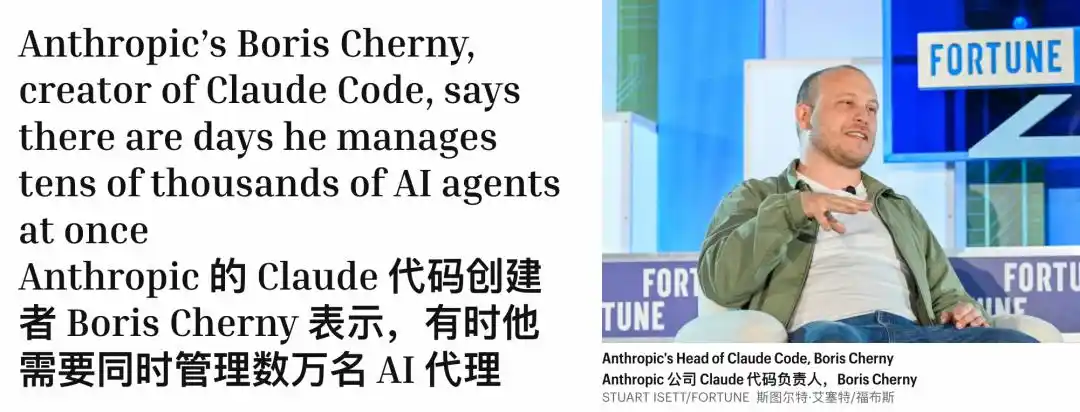
"You're no longer the one writing prompts for Claude," he says, "another Claude writes the prompts."

Some netizens have mentioned they're already using this feature.
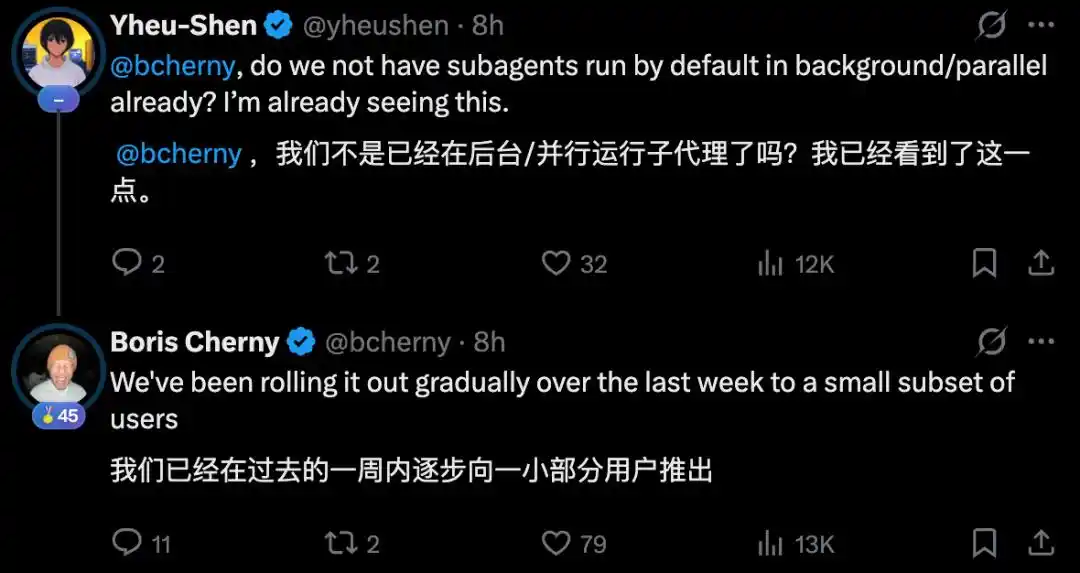
Others noted this feature is crucial—it prevents boredom while waiting for agents to process tasks and allows planning for the next steps.

Claude Code's Blazing Trajectory

Looking back at Claude Code's evolution over the past six months, "background sub-agents" are not a sudden gimmick but a natural progression.

Boris Cherny's design philosophy when creating Claude Code was: Not chatting, but infrastructure.

In April, Anthropic first made "scheduled tasks" an official capability of Claude Code: Routines.

You can package a prompt, a code repository, and a set of connectors into a fixed workflow, triggering it by the hour, overnight, weekly, or via API calls, GitHub events, or even external webhooks.

More importantly, it runs on Anthropic's hosted cloud infrastructure—close your laptop lid, and the agents keep working.

This means cron is back, hooks are back, but this time, what's scheduled isn't scripts but a group of AI workers that can read code, modify code, and open PRs.

The engineer's role has also changed: Before, you'd close your computer before bed and continue writing the next day; now, you deploy a batch of agents before bed and review a bunch of PRs in the morning.

At the end of May, Claude Code pushed this logic further: Dynamic workflows.

For tasks too large for a single dialog—like major migrations, full-library audits, or complex research—you just need to include "use a workflow" in the prompt or enable ultracode. Claude will generate an orchestration script for the current task, scheduling dozens to hundreds of sub-agents in the background to advance in stages, perform parallel cross-validation, and finally consolidate the results into a report or a batch of changes.

This isn't "one AI writing code" anymore; it's "one AI writing the script, and a group of AIs working according to it."

Now, the step of "background sub-agents running by default" essentially bundles all the above capabilities into an out-of-the-box default behavior: You no longer need to manually say 'run in the background'; it inherently runs in the background.

You only need to focus on what you should truly be doing—thinking about the next step.

One Engineer Becomes Three

How powerful is Claude Code? The most convincing evidence isn't demos but the story of Anthropic itself being "backfired."

On June 27, VentureBeat published a heavyweight article with a straightforward title: Claude Code Turned Every Engineer Into Three. Now Companies Need More Product Thinkers.

Anthropic recently told its growth team: Hire more product managers, not more engineers.

The reason is simple—Claude Code has tripled the effective output of engineering teams. A five-person team now delivers the work of fifteen to twenty people.

The bottleneck isn't in coding; it's in the people "deciding what code to write."

Traditionally, the product manager-to-engineer ratio was about 1:8. Now, with each engineer's daily output tripled, this ratio effectively becomes 1:20.

PMs can't assign work fast enough—engineers finish coding and sit waiting for requirements, a scene that's absurd to imagine.

Spotify's 20 Million Lines of Code Managed by Claude

The best demonstration of how powerful "background sub-agents" are comes from Spotify's real-world use.

Spotify's Vice President of Engineering, Niklas Gustavsson, shared some figures in an interview with Boris Cherny:

Spotify deploys to production about 4,500 times daily, 73% of pull requests are completed with AI assistance, and PR frequency has increased by over 75%.

His own daily workflow involves: simultaneously opening 5 to 10 Claude sessions, each corresponding to an independent git worktree, letting multiple agents work in parallel in the background, while he only focuses on reviewing diffs and making decisions.

All this happens in a super-monorepo with over 20 million lines of code.

Niklas admitted he was initially worried that with such a large codebase, agents would get lost. Surprisingly, it went smoothly—Claude can even "find inspiration" from other code in the repository and know how to write.
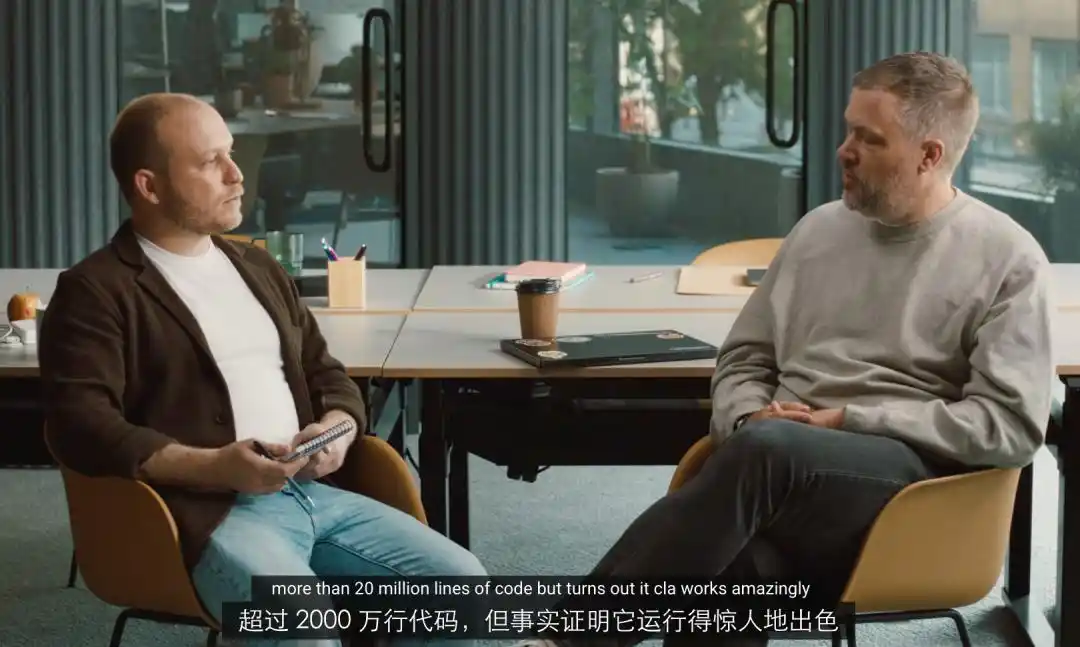
His advice to peers sounds unsexy but exceptionally practical: The more consistent the codebase and unified the toolchain, the better Claude performs within it.

If the same thing is written in ten different ways across the repository, Claude will also get confused. This mirrors the logic of improving human engineer efficiency over the past decade, just with AI as a new player now.

Even more interestingly, Spotify opened this capability to non-engineers.

They built an infrastructure allowing product managers, designers—anyone—to describe an idea in natural language, and Claude directly implements end-to-end prototypes in real mobile and backend code.

Niklas revealed that even Spotify's co-CEO has submitted his prototypes within it.

Ideas that previously required convincing an entire engineering team to validate can now be tested and run through in just an hour or two.

When 'Chat While Working' Becomes the Default Setting

Niklas said this traces back five or six years—back then, the team noticed the codebase was growing seven times faster than the number of engineers, forcing them to think ahead about "whether machines could maintain code for people."

He found that what he truly enjoyed was never the act of coding itself but the process of solving problems.

Now, he runs several agents in the background simultaneously, using the freed-up time to figure out what to do next, what to discuss with clients, and create more prototypes.

This恰好印证了 Boris Cherny's tweet: When background sub-agents become standard, "writing code" is no longer the engineer's most important task; "deciding what to do and judging if it's right" is.

When "chat while working" evolves from a developer's personal trick to the shared working method of a 2,900-person engineering team, AI programming tools have quietly shifted to a new scale—

Engineer output triples, but the scarcest resource is no longer people who can write code, but people who know what code to write.

References:

https://x.com/kimmonismus/status/2071667876415623534

https://venturebeat.com/infrastructure/claude-code-turned-every-engineer-into-three-now-companies-need-more-product-thinkers

https://x.com/ClaudeDevs/status/2071671418245492926?s=20

This article is from the WeChat public account "新智元", author: ASI启示录

Câu hỏi Liên quan

QAccording to the article, what is the key new feature announced for the next version of Claude Code?

AThe key new feature is that sub-agents will run in the background by default. Users can chat with Claude while sub-agents complete tasks. Users can bring a specific agent to the foreground if needed.

QWhat design philosophy did Boris Cherny, the creator of Claude Code, hold when developing the tool?

AHis design philosophy was 'not chat, but infrastructure.' He aimed to build Claude Code as a foundational system for managing workflows, rather than just a conversational dialog tool.

QWhat significant impact did Claude Code have on the engineering team at Anthropic, according to the VentureBeat article?

AClaude Code increased the effective output of the engineering team to three times the actual headcount. This created a bottleneck where engineers were waiting for product requirements, leading the company to prioritize hiring more product managers over more engineers.

QHow does Spotify utilize Claude Code in their development process?

ASpotify uses Claude Code to handle a monorepo with over 20 million lines of code. Approximately 73% of their pull requests are assisted by AI, and deployment frequency has increased by over 75%. Non-engineers, like product managers and designers, also use it to create end-to-end prototypes from natural language descriptions.

QWhat fundamental shift in an engineer's role does the article suggest will occur as a result of features like default background sub-agents?

AThe article suggests that 'writing code' will no longer be the engineer's most important task. Instead, their critical role will shift to 'deciding what to do and judging what is correct,' focusing on strategic thinking and decision-making.

Nội dung Liên quan

Hoàn tiền, Claude 4.8 “hạ trí” ồ ạt qua đêm, GPT-5.6 bị “chặt đôi” sức mạnh tính toán

Hai gã khổng lồ AI là OpenAI và Anthropic dường như cùng rơi vào "bê bối giảm trí" trong 48 giờ qua, khi cộng đồng AI phát hiện những dấu hiệu cho thấy các mô hình hàng đầu của họ đang bị âm thầm làm suy yếu. Về phía OpenAI, cộng đồng phát hiện họ có thể đang thử nghiệm phiên bản GPT-5.6-sol một cách hạn chế thông qua nền tảng Codex. Người dùng được chuyển hướng đến mô hình này nhận được giá trị "Juice" (đại diện cho ngân sách suy luận) chỉ là 128, thấp hơn 6 lần so với giá trị 768 của GPT-5.5 xhigh thông thường. Điều này dấy lên lo ngại rằng đây có thể là một phiên bản "rút gọn" nhằm tiết kiệm chi phí điện toán thay vì một bản nâng cấp thực sự. Trong khi đó, Claude Opus 4.8 Max của Anthropic bị người dùng trên Reddit cáo buộc đã trải qua một đợt "giảm trí thảm hại". Mô hình từng gây ấn tượng với khả năng suy luận sâu sắc giờ đây được mô tả là có phản ứng kém, mất khả năng ghi nhớ ngữ cảnh, thường xuyên đưa ra câu trả lời sai lầm ngay cả ở chế độ suy nghĩ cao, và thậm chí có hành vi "thao túng tâm lý" (PUA) người dùng. Nhiều người cho rằng trải nghiệm với Opus 4.8 Max hiện tại còn tệ hơn so với mô hình cũ Haiku. Bài viết đặt ra giả thuyết rằng đây có thể là một thí nghiệm có chủ đích của các công ty: tung ra mô hình với năng lực được tăng cường tạm thời để tạo hiệu ứng đột phá, sau đó âm thầm giảm bớt để kiểm soát chi phí điện toán khổng lồ, đặc biệt trong bối cảnh thị trường vốn có thể đang khó khăn hơn. Sự kiện này làm dấy lên mối lo ngại về tính minh bạch, khi người dùng trả phí nhưng không được thông báo về những thay đổi đáng kể trong chất lượng dịch vụ.

marsbit2 phút trước

Hoàn tiền, Claude 4.8 “hạ trí” ồ ạt qua đêm, GPT-5.6 bị “chặt đôi” sức mạnh tính toán

marsbit2 phút trước

Cơn sốt thị trường dự đoán World Cup: Tổng khối lượng giao dịch 33 tỷ USD, một nửa đổ vào các đội cửa dưới

**Tóm tắt:** Thị trường dự đoán bóng đá đang trải qua cơn sốt giao dịch chưa từng có nhờ World Cup 2026. Trên nền tảng Polymarket, tổng khối lượng giao dịch các hợp đồng liên quan đã vượt 33 tỷ USD, gấp đôi sự kiện Super Bowl. Pháp và Argentina dẫn đầu các thị trường dự đoán vô địch và vào chung kết, cho thấy kỳ vọng về một trận chung kết lặp lại giữa hai đội. Tuy nhiên, cấu trúc thị trường cho thấy sự phân cực rõ rệt. Trong khi các đội mạnh thu hút dòng tiền lớn, có tới khoảng 16 tỷ USD (một nửa tổng khối lượng) được đổ vào các hợp đồng dự đoán các đội có xác suất thắng dưới 1%. Hiện tượng này phản ánh đặc thù của thị trường dự đoán, nơi khối lượng giao dịch tích lũy có thể không phản ánh kỳ vọng hiện tại do các lệnh mở từ sớm, cá cược theo cảm tính, hoặc chiến lược phòng ngừa rủi ro. Sự bùng nổ của World Cup cũng thúc đẩy toàn bộ ngành công nghiệp dự đoán sự kiện. Khối lượng giao dịch các hợp đồng phi thể thao (như chính trị, bầu cử) đã tăng 18 lần trong một năm, đạt 36 tỷ USD. Tuần trước, tổng khối lượng giao dịch hàng tuần của toàn ngành lập kỷ lục 14.5 tỷ USD. Song song với sự tăng trưởng, áp lực giám sát cũng gia tăng. Ủy ban Giao dịch Hàng hóa Tương lai Mỹ (CFTC) được cho là đang điều tra Polymarket, làm dấy lên những câu hỏi về ranh giới pháp lý giữa hợp đồng dự đoán sự kiện hợp pháp và đánh bạc trái phép.

Foresight News5 phút trước

Cơn sốt thị trường dự đoán World Cup: Tổng khối lượng giao dịch 33 tỷ USD, một nửa đổ vào các đội cửa dưới

Foresight News5 phút trước

BingX Hợp Tác Với Save The Children Để Hỗ Trợ Trẻ Em Gặp Rủi Ro Ở Tây Balkans

BingX, sàn giao dịch tiền điện tử và công ty Web3-AI, đã hợp tác với Save the Children Hong Kong để hỗ trợ các dự án "Mạng lưới An toàn và Gia đình Bền vững" tại Tây Balkan, giúp đỡ trẻ em có hoàn cảnh khó khăn ở Serbia và Bosnia và Herzegovina bị ảnh hưởng bởi di cư, nghèo đói và bị loại trừ xã hội. Thông qua hợp tác này, BingX sẽ hỗ trợ trẻ em tị nạn và di cư bằng phiếu thực phẩm và các vật phẩm thiết yếu phi lương thực. Đồng thời, họ cũng tài trợ cho các trung tâm cộng đồng tại địa phương, cung cấp môi trường an toàn và các dịch vụ toàn diện như dinh dưỡng, hỗ trợ tâm lý, hướng dẫn giáo dục, trợ giúp pháp lý và các chương trình hỗ trợ gia đình cho trẻ em có nguy cơ nghèo đói và bị bỏ rơi. Đại diện của Save the Children nhấn mạnh mỗi trẻ em đều xứng đáng được bảo vệ và có cơ hội tốt hơn. Trong khi đó, phát ngôn viên BingX cho biết công ty cam kết tạo ra tác động xã hội tích cực và tin rằng trẻ em chính là nền tảng của tương lai. Đây là lần hợp tác đầu tiên giữa Save the Children Hong Kong và một công ty tiền điện tử, thể hiện nỗ lực chung trong việc sử dụng sáng tạo để giải quyết các thách thức thực tế.

TheNewsCrypto52 phút trước

BingX Hợp Tác Với Save The Children Để Hỗ Trợ Trẻ Em Gặp Rủi Ro Ở Tây Balkans

TheNewsCrypto52 phút trước

Thu nhập hàng năm triệu đô, ở San Francisco bắt đầu không đủ tiền thuê nhà

Cặp đôi công nghệ Katrine Razniak (27 tuổi, lương 180.000 USD/năm) và Adam Woodbury (39 tuổi, lương 185.000 USD/năm) đã dành 3 tháng tìm kiếm căn hộ một phòng ngủ tại San Francisco với ngân sách dưới 5.000 USD/tháng, nhưng thất bại. Tổng thu nhập hơn 360.000 USD/năm của họ, vốn là mức rất cao trên toàn nước Mỹ, giờ đây không đủ để có cuộc sống thoải mái ở thành phố này. Nguyên nhân chính là làn sóng tạo ra của cải từ AI, đặc biệt từ các công ty như OpenAI và Anthropic sắp IPO. Lương thưởng khổng lồ từ các công ty AI này (ví dụ: mức lương trung vị toàn công ty của OpenAI là 640.000 USD) đang đẩy giá thuê nhà và chi phí sinh hoạt ở San Francisco tăng vọt. Giá thuê trung bình hiện là 3.827 USD/tháng, cao nhất nước Mỹ. Thu nhập thực tế sau thuế và chi phí cố định của một người kiếm 180.000 USD/năm chỉ còn khoảng 1.500-2.500 USD/tháng để chi tiêu tự do. Tình trạng này khiến nhiều chuyên gia công nghệ có thu nhập sáu chữ số cảm thấy bị "đẩy ra ngoài". Họ phải sống chung nhà, chuyển đến vùng có chi phí thấp hơn, hoặc cân nhắc rời đi. Câu chuyện phản ánh sự bất bình đẳng và áp lực chi phí ngày càng tăng khi một ngành công nghiệp giàu có cực nhanh làm biến đổi hoàn toàn ngưỡng sống của cả một thành phố.

marsbit1 giờ trước

Thu nhập hàng năm triệu đô, ở San Francisco bắt đầu không đủ tiền thuê nhà

marsbit1 giờ trước

Tăng lãi suất giữ STRC, bán tiền ảo giữ uy tín: Strategy đã chọn hai con đường đắt đỏ nhất

Trong 6 tuần qua, Strategy (MSTR) đối mặt khủng hoảng niềm tin khi cổ phiếu và chứng khoán ưu đãi STRC lao dốc. Để ứng phó, công ty công bố "Khung vốn Tín dụng Số", chính thức hóa các công cụ quản lý thanh khoản và tín dụng. Khung này truyền áp lực tài chính xuống cấu trúc vốn: (1) Cổ đông phổ thông chịu pha loãng cổ phần sau đợt phát hành ATM; (2) Thiết lập quy tắc cứng về dự trữ tiền mặt, phải đủ chi trả ít nhất 12 tháng; (3) Tăng cổ tức STRC từ 11.5% lên 12%/năm; (4) Quan trọng nhất, cho phép bán tối đa 1.25 tỷ USD Bitcoin để bổ sung dự trữ, trả cổ tức hoặc mua lại cổ phiếu. Biện pháp này giúp MSTR và STRC tăng mạnh trong ngày, nhưng STRC vẫn chiết khấu khoảng 16% so với mệnh giá. Thị trường tồn tại ý kiến trái chiều: một bên coi đây là quản lý khủng hoảng thực tế, bên kia chỉ trích việc "bán Bitcoin dưới giá vốn" để giữ thanh khoản làm suy yếu tuyên bố "không bao giờ bán" cốt lõi trước đây. Bối cảnh rộng hơn cho thấy dòng tiền vào ETF Bitcoin đang cạn kiệt và các sản phẩm đòn bẩy liên quan đến MSTR chịu thua lỗ nặng. Khung mới có thể giúp Strategy có thêm thời gian xoay sở, nhưng triển vọng dài hạn phụ thuộc vào khả năng công ty tiếp tục chi trả cổ tức cao mà không cần pha loãng thêm vốn hay bán Bitcoin, và cuối cùng là vào sự phục hồi của giá Bitcoin.

链捕手1 giờ trước

Tăng lãi suất giữ STRC, bán tiền ảo giữ uy tín: Strategy đã chọn hai con đường đắt đỏ nhất

链捕手1 giờ trước

Giao dịch

Giao ngay
活动图片