Tencent Reaps a Paper Profit of 50 Billion

marsbitXuất bản vào 2026-08-17Cập nhật gần nhất vào 2026-08-17

Tóm tắt

A decade ago, China held no share in the global DRAM market. Today, Changxin Technology, after listing on the STAR Market, has become the most valuable A-share company. Its landmark IPO has generated historic returns for investors. Among them, Tencent, which invested approximately 2 billion RMB in 2022 through its entity Beijing Fengyi, now holds an estimated paper gain of around 50 billion RMB based on Changxin's current market valuation of approximately 4 trillion RMB. Alibaba also made significant bets. Its affiliates invested a total of roughly 7.6 billion RMB across two funding rounds in 2022 and 2025. Their combined stake is now worth an estimated 170 billion RMB—a paper profit surpassing Alibaba's entire net profit for fiscal year 2026. The shareholder registry reveals a who's who of Chinese capital. Major state-backed funds like the National Integrated Circuit Industry Investment Fund (Big Fund II) and Anhui provincial capital hold stakes worth hundreds of billions. Early and crucial support came from the Hefei municipal government, which played a foundational role in the company's establishment and growth. Strategic industrial investor GigaDevice, under the same leadership as Changxin, invested about 2.3 billion RMB, now worth roughly 53 billion. Home appliance giant Midea's 1 billion RMB investment has ballooned to an estimated 22 billion RMB. Virtually all major domestic financial institutions, venture capital, and private equity firms participated. However, t...

Ten years ago, when Changxin was founded, China had not yet claimed a single inch of territory on the global DRAM map.

Ten years later, Changxin Technology landed on the STAR Market, becoming the company with the highest market capitalization on the A-share market.

As the bell rang, the heroes of the old days all stepped forward.

The investors behind the scenes all reaped their single largest return to date. The Hefei state-owned capital, having bet right, earned trillions, a feat that will go down in history.

Yet Tencent has rarely been mentioned by the outside world: having invested around 2 billion yuan, its paper profit amounts to approximately 50 billion yuan based on today's market capitalization of 4 trillion yuan.

From Tencent to Alibaba, Accompanying Changxin Past 4 Trillion

Tencent entered the picture at Changxin in 2022.

In February of that year, Changxin's shareholder list saw changes, with a group of institutions including Tencent, Alibaba, and Yunfeng Fund appearing simultaneously.

Tencent's investment vehicle was Beijing Fengyi. The prospectus disclosed that Beijing Fengyi held 901 million shares of Changxin Technology, representing a 1.50% stake before the IPO issuance, diluted to 1.35% after the issuance of new shares.

At that time, Changxin was still nearly three years away from mass-producing its first domestic DRAM chip and had not yet emerged from a period of massive investment. In the first full year disclosed after Tencent's investment, 2023, Changxin's revenue was about 9 billion yuan, while its net loss reached 19.2 billion yuan.

There were no profits, nor a clear timeline for going public, but Tencent still invested 2 billion yuan.

Four years later, Changxin went public on the STAR Market. Based on the market capitalization of approximately 4 trillion yuan as of August 17th, Tencent's paper profit reached 50 billion yuan.

Alibaba was also part of that round. The prospectus disclosed that Alibaba Network invested approximately 1.5 billion yuan to subscribe for new shares, obtaining about 676 million shares of Changxin Technology.

Three years later, the Alibaba system made another move.

In June 2025, Changxin completed its final pre-IPO financing round. Alibaba Cloud invested 6.1 billion yuan at a price of 2.6302 yuan per share, acquiring 2.319 billion shares.

With these two bets, the Alibaba system invested a total of about 7.6 billion yuan, holding 2.995 billion shares of Changxin. After dilution from the IPO issuance of new shares, Alibaba Cloud and Alibaba Network held 3.47% and 1.01% respectively, for a combined stake of approximately 4.48%.

Calculated based on Changxin's market cap of 4 trillion yuan, this shareholding is worth about 170 billion yuan, representing an astounding paper profit.

What does this number mean? Alibaba's net profit for fiscal year 2026 was 102.1 billion yuan. In other words, the paper profit from this single investment in Changxin alone is equivalent to more than a year's net profit for Alibaba.

Joy and Regret

Opening Changxin's shareholder register reveals a vivid portrait of China's capital landscape.

A partner at a well-known domestic industrial capital firm once revealed to investors that when Changxin Technology was preparing for a certain financing round, there were 220 investment institutions queuing up to get in. They had to conduct three reverse roadshows and then select just over 10 potential investors for further consideration, setting a high bar.

The group portrait unfolds one by one.

Post-IPO, the National Integrated Circuit Industry Investment Fund Phase II holds 7.86%, Anhui Provincial Investment Group holds 7.12%, and China Structural Reform Fund holds 1.01%. At 49 yuan per share, their combined shareholding value exceeds 520 billion yuan.

Even earlier, Hefei state-owned capital had been deeply involved in Changxin's construction through multiple platforms. From project landing and factory construction to successive rounds of capital increases, Hefei built the city, fortified the walls, and supplied the provisions for Changxin. Without this city's unwavering bet over the years, the later story of a trillion-yuan market cap would have been impossible.

Among industrial investors, GigaDevice is another major backer.

As a leading storage design company also led by Zhu Yiming, GigaDevice has deep ties with Changxin. In 2020, GigaDevice invested 300 million yuan in Hefei Changxin Integrated via convertible bonds. In 2021, it invested 500 million yuan in Ruili Integration. In 2024, it participated in Changxin Technology's capital increase with 1.5 billion yuan. Summing these principal investments simply totals about 2.3 billion yuan.

Calculated at the closing price of 49 yuan per share on July 27, 2026, the first day of listing, this shareholding is worth about 53 billion yuan.

In 2021, Midea invested approximately 1 billion yuan in Changxin. Post-IPO, Midea holds a 0.67% stake, corresponding to a market value of about 22 billion yuan.

Bank-affiliated capital has almost all shown up, and the insurance capital camp is also well represented. RMB funds are crowded—National Integrated Circuit Industry Investment Fund Phase II, China Structural Reform Fund, CICC Capital, Cornerstone Capital, Legend Capital, Yanchuang Venture Capital, China Merchants Capital, Walden International, Qianhai FOF, Shenzhen Investment Holdings, CCB International, Yunfeng Fund, Guangdong-Hong Kong-Macao Greater Bay Area Fund, CCB Trust, China Life Investment, Hengxu Capital, Wan Investment Group, Junhe Capital, Orient Asset Management, Hexie Health, Sunshine Insurance, Guangzhou Xinde, Lanpu Investment, Xinke Venture Capital, Huafu Jiaye, Advantage Capital, New Ding Capital, Gaoxin Capital, Pro Capital...

In this feast, if there is one story that evokes the deepest regret, it must be Country Garden.

In 2021, Country Garden Venture Capital invested about 900 million yuan to acquire a stake in Changxin. At the end of 2024, Huibi V, under Country Garden, transferred its 901 million Changxin shares to Hefei Jianchang for a transaction price of 2 billion yuan.

For the same 901 million shares, based on Changxin's closing price of 49 yuan per share on its first trading day, the value is about 44 billion yuan.

Some entered the city on a cold night; some left the table before dawn. Country Garden took away 2 billion yuan, solving its predicament at that time.

The curtain fall of the real estate cycle and the rise of the semiconductor cycle happened to intersect at this juncture.

A matter of timing, a matter of fate.

This article is from the WeChat public account "投资界" (ID: pedaily2012), author: Chen Jia

Câu hỏi Liên quan

QAccording to the article, how much did Tencent initially invest in ChangXin Technology, and what is its approximate paper profit after the company's IPO?

ATencent initially invested approximately 2 billion RMB (about 20 billion yuan) and has a paper profit of around 50 billion RMB (about 500 billion yuan) based on ChangXin's market valuation of about 4 trillion RMB.

QWhat were the key financial details of Alibaba's investment in ChangXin Technology as described in the article?

AAlibaba invested twice. First, Alibaba Network invested about 1.5 billion RMB (15 billion yuan) in 2022. Second, Alibaba Cloud invested 6.1 billion RMB (61 billion yuan) in a pre-IPO round in 2025. Their total combined stake, post-IPO, is about 4.48%, valued at approximately 1.7 trillion RMB, representing a massive paper profit.

QWhy is Country Garden (BGY) mentioned as a source of regret in the context of ChangXin's investment story?

ACountry Garden's venture capital arm invested about 900 million RMB in 2021. However, in late 2024, due to financial pressures in the real estate sector, it sold its 901 million shares for 2 billion RMB. Those same shares would have been worth about 44 billion RMB at ChangXin's IPO price, meaning it missed out on enormous gains by exiting just before the company went public.

QWhat role did the Hefei municipal government play in the development of ChangXin Technology?

AThe Hefei state-owned capital played a foundational and continuous role. It was deeply involved from the project's inception, providing support for land, factory construction, and multiple rounds of funding. The article states that without Hefei's long-term strategic bet, the later story of ChangXin's trillion-RMB market value would not have been possible.

QWhich other major domestic industry player, besides Tencent and Alibaba, made a significant early investment in ChangXin, and what was the outcome?

AGigaDevice (Zhaoyi Innovation), a memory design leader also chaired by Zhu Yiming, made significant early investments totaling approximately 2.3 billion RMB through convertible bonds and direct equity. Post-IPO, this stake was valued at around 53 billion RMB, representing a substantial return.

Nội dung Liên quan

Dự báo giá Solana đạt mức $110 khi BSOL của Bitwise ghi nhận khối lượng giao dịch kỷ lục

Dự báo giá Solana (SOL) tiến tới mục tiêu 110 USD, được hỗ trợ bởi khối lượng giao dịch kỷ lục của ETF BSOL từ Bitwise. Giá SOL hiện giao dịch quanh 101.36 USD, đang thử thách vùng kháng cự quan trọng 102-103 USD trong một mô hình nêm tăng. Chỉ báo kỹ thuật như Parabolic SAR và MACD vẫn nghiêng về xu hướng tăng. Hoạt động mạng lưới Solana đạt kỷ lục với 1.31 tỷ giao dịch trong tuần, cho thấy nhu cầu sử dụng cao và ổn định. Dòng tiền vào các ETF Solana, đặc biệt là BSOL, cũng rất mạnh mẽ, với dòng tiền ròng một ngày đạt 33.49 triệu USD. Tuy nhiên, có dấu hiệu thận trọng khi một "cá voi" lớn đã rút hơn 40,000 SOL khỏi staking và chuyển sang sàn, chốt lỗ 3.3 triệu USD. Hợp đồng tương lai dài hạn cũng đang giao dịch ở mức chiết khấu. **Kịch bản tăng (Bullish):** Nếu SOL phá vỡ đóng cửa trên vùng kháng cự 102-103 USD, nó có thể mở đường chạm mục tiêu 110 USD, nhờ dữ liệu mạng lưới và ETF tích cực. **Kịch bản giảm (Bearish):** Nếu giá bị từ chối lần thứ ba tại vùng kháng cự và phá vỡ hỗ trợ của mô hình nêm (93-95 USD), điều này có thể xác nhận sự thận trọng và dẫn đến đợt điều chỉnh sâu hơn. Tóm lại, thị trường SOL đang ở ngã ba đường với các tín hiệu kỹ thuật tích cực và dữ liệu cơ bản mạnh, nhưng cũng tồn tại những dấu hiệu bán ra từ các nhà đầu tư lớn cần theo dõi.

cryptonews.ru9 phút trước

Dự báo giá Solana đạt mức $110 khi BSOL của Bitwise ghi nhận khối lượng giao dịch kỷ lục

cryptonews.ru9 phút trước

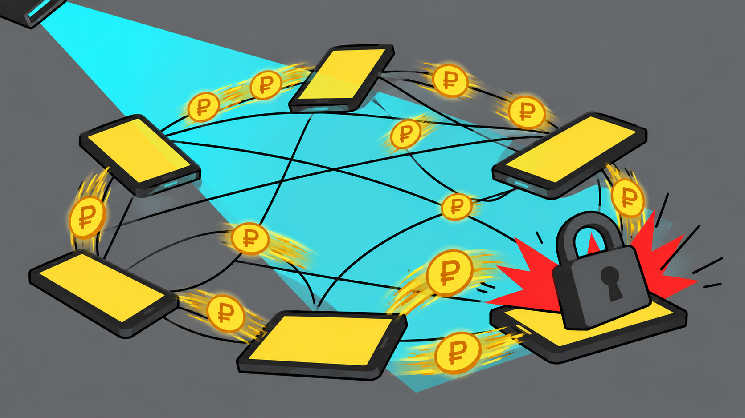
Tài khoản của bạn chưa bị khóa? Cơ quan Giám sát Tài chính Nga sẽ có quyền truy cập trực tiếp vào Hệ thống Thanh toán Nhanh và thẻ 'Mir'

Từ ngày 1/9/2026, theo Luật Liên bang số 461-FZ, Cơ quan Giám sát Tài chính Nga (Rosfinmonitoring) sẽ có quyền trực tiếp nhận thông tin từ Hệ thống Thẻ Thanh toán Quốc gia (NSPK) về các giao dịch sử dụng Hệ thống Thanh toán Nhanh của Ngân hàng Trung ương, mã QR thanh toán thống nhất và thẻ "Mir". Thay đổi này nhằm mở rộng nguồn dữ liệu cho hệ thống chống rửa tiền. NSPK là trung tâm xử lý chính cho hầu hết các thanh toán nội địa. Rosfinmonitoring sẽ có quyền truy cập dữ liệu mà không cần sự đồng ý của khách hàng hoặc lệnh tòa, và khách hàng sẽ không được thông báo. Không có ngưỡng số tiền tối thiểu cho các yêu cầu dữ liệu. Quy trình và phạm vi truy cập chính xác sẽ được xác định bởi một thỏa thuận riêng không công khai giữa Rosfinmonitoring và NSPK. Luật không tạo ra thuế mới, khóa tài khoản tự động hay các biện pháp cưỡng chế mới. Nếu phát hiện dấu hiệu nghi ngờ rửa tiền, quy trình xử lý hiện hành vẫn được áp dụng. Sự thay đổi chính là tốc độ thu thập dữ liệu ban đầu sẽ nhanh hơn, đặc biệt với các giao dịch chuyển khoản phức tạp qua nhiều ngân hàng. Mô hình này tập trung thông tin nhạy cảm vào một điểm, làm tăng tầm quan trọng của việc bảo mật kỹ thuật. Điểm khác biệt với các quy định tương tự ở châu Âu là việc thiếu văn bản thỏa thuận công khai và việc cấm thông báo cho khách hàng, làm giảm tính minh bạch. Câu hỏi đặt ra là quyền lực này sẽ chỉ được sử dụng cho mục đích chống rửa tiền hay sẽ được mở rộng trong tương lai, cần có thêm thực tiễn áp dụng pháp luật để trả lời.

cryptonews.ru10 phút trước

Tài khoản của bạn chưa bị khóa? Cơ quan Giám sát Tài chính Nga sẽ có quyền truy cập trực tiếp vào Hệ thống Thanh toán Nhanh và thẻ 'Mir'

cryptonews.ru10 phút trước

Giao dịch

Giao ngay
活动图片