Revealing the Flow of $11.2 Billion in Funding Over Six Months: The Most Valuable Asset in Crypto Is Shifting from Code to Licenses

marsbitXuất bản vào 2026-08-17Cập nhật gần nhất vào 2026-08-17

Tóm tắt

The article reveals that in the first half of 2026, all $11.2 billion in disclosed crypto industry funding flowed exclusively to businesses requiring regulatory licenses to operate, signaling a major shift in institutional valuation. Top-funded sectors were payments/stablecoins ($3.7B), prediction markets ($2B), and exchanges/trading platforms ($1.7B). The core argument is that capital's focus has moved from technological innovation ("what code can do") to compliance capability ("possession of a license"), as licenses represent a slow, costly barrier to entry that code cannot easily replicate. This mirrors the evolution of traditional fintech. Notably, a split is emerging: while institutional capital floods licensed, centralized entities, retail user activity continues to thrive on permissionless DeFi protocols. The article concludes that within the institutional framework, the industry's most valuable asset is being redefined from code to regulatory approval.

Author: Xiao Bing

Dubai crypto lawyer Irina Heaver and her team NeosLegal did something simple yet powerful: they meticulously sorted through all publicly disclosed crypto industry funding deals in the first half of 2026, totaling 377 deals amounting to approximately $11.2 billion.

The conclusion is just one sentence: Every single funding deal with a disclosed amount flowed to businesses that require regulatory approval to operate.

The top three sectors were: Payments & Stablecoins at $3.7 billion, Prediction Markets at $2 billion, and Exchanges & Trading Platforms at $1.7 billion. These three areas share a common feature: legal operation in any major jurisdiction requires a license.

Institutional capital's valuation logic for the crypto industry has shifted from "what the code can do" to "do you have a license."

Who's Writing the Checks

First, let's look at who is paying.

Kalshi raised $1 billion in May, with investors including Sequoia, Morgan Stanley, Ark Invest, and a16z. Polymarket secured $600 million, led by Intercontinental Exchange (ICE), the parent company of the New York Stock Exchange. The prediction market sector alone saw 34 funding rounds within six months.

In the $3.7 billion Payments & Stablecoins sector, names like BlackRock, Goldman Sachs, and Gulf sovereign wealth funds appeared repeatedly.

Vineet Budki, Managing Partner at Sigma Capital, made a straightforward statement: Regulatory licenses have evolved from a compliance footnote to a core valuation metric.

Behind this judgment lies hard arithmetic. Obtaining an MiCA license or a Dubai VARA permit typically takes 18 to 24 months and costs millions of dollars. Code can be forked over a weekend; a license cannot. When venture capitalists evaluate two functionally similar projects, the one with the license naturally possesses a moat that competitors cannot quickly replicate.

The License is the New Moat

Looking at this phenomenon over a longer timeline.

In 2020-2021, the main theme of crypto funding was protocols and infrastructure. Public blockchains, DeFi protocols, and NFT platforms took most of the VC money. The investment logic was based on technological barriers and network effects; whoever had the highest TVL or the most active developer ecosystem was the most valuable.

In 2022-2023, the bear market washed out many purely narrative projects, and funding began tilting towards businesses with actual revenue. The proportion of funding for exchanges, wallets, and infrastructure companies increased.

Data from the first half of 2026 shows this trend has reached its logical conclusion: Capital is no longer paying for technological innovation itself, but for the "ability to operate technological innovation within a compliant framework." Simply put, code is a necessary condition, but a license is the sufficient condition.

This aligns highly with the evolution path of the traditional financial industry. Fintech companies raised funds on technical disruption in the early 2010s, and by the late 2010s, they raised funds based on licenses and compliance capabilities. Stripe is valued at hundreds of billions; its core moat is its ability to operate compliantly in over 40 countries, far exceeding the mere technical gap of its payment APIs.

The crypto industry is walking the same path, just faster.

Funding Flows and User Activity Are Diverging

But there is an important blind spot in this data: it only counted funding, not users.

On-chain data shows that in the first half of 2026, DeFi protocol TVL, DEX trading volume, and active address counts were all growing. Daily active users and trading volumes for permissionless protocols like Uniswap, Aave, and Jupiter have not shrunk just because VC money is no longer flowing to them. Retail users are still trading, lending, and providing liquidity on-chain.

This means what is happening is a more nuanced split, not the "death of permissionless protocols": Institutional capital is flowing into compliant, licensed centralized businesses, while retail user activity remains distributed across permissionless on-chain markets. Money and people are moving in two different directions.

This split is most evident in prediction markets. Both Kalshi and Polymarket operate in prediction markets, but Kalshi is a CFTC-registered exchange, while Polymarket has no US license. Kalshi secured $1 billion in funding and backing from Morgan Stanley; Polymarket secured $600 million and backing from ICE. Both are moving towards compliance, but their user bases and product experiences still have significant differences.

A Redefinition of "Value"

Heaver used an accurate formulation in an interview: Capital is no longer chasing permissionless, but rather regulated business.

The deeper meaning of this shift is that "what constitutes a valuable asset" in the crypto industry is being redefined. In 2021, the most valuable asset was a widely forked smart contract protocol. In 2026, the most valuable asset might be an MiCA electronic money license covering 27 EU countries, or an entity with a financial services permit from Abu Dhabi's ADGM.

Code is still important. But code solves the problem of "can it be done," while a license solves the problem of "is it allowed to be done." When $11.2 billion in institutional capital votes with its feet, telling you the latter is scarcer and more valuable, the industry's power center has already shifted.

For developers, this is not necessarily bad news. Permissionless protocols can run without VC money; they have token incentives, communities, and on-chain revenue. But for entrepreneurs, the 2026 funding reality is clear: If you want institutional money, get a license first.


Tiền kỹ thuật số thịnh hành

Câu hỏi Liên quan

QAccording to the article, what was the key finding from Irina Heaver's analysis of crypto industry funding in the first half of 2026?

AThe key finding was that every single funding deal with a disclosed amount went to a business that required a regulatory license to operate. The valuation logic of institutional capital has shifted from 'what the code can do' to 'whether you have a license.'

QWhat are the top three sectors that received funding according to the analysis, and what is their common characteristic?

AThe top three funded sectors are: 1) Payments & Stablecoins ($3.7B), 2) Prediction Markets ($2.0B), and 3) Exchanges & Trading Platforms ($1.7B). Their common characteristic is that legally operating in these fields in any major jurisdiction requires a regulatory license.

QHow does the article describe the evolution of crypto industry funding trends from 2020-2021 to 2026?

AFrom 2020-2021, funding focused on protocols and infrastructure, valuing technical barriers and network effects. In 2022-2023, it shifted towards businesses with real revenue. By 2026 H1, the trend reached a logical endpoint: capital is no longer funding technological innovation itself, but the 'ability to operate that innovation within a compliant framework.' The license has become the core valuation metric and a new moat.

QWhat 'split' or divergence does the article highlight based on the funding data and on-chain activity?

AThe article highlights a split between funding flows and user activity. Institutional capital is flowing towards compliant, licensed, centralized businesses. Meanwhile, retail user activity (TVL, DEX volume, active addresses) continues to grow on permissionless, on-chain protocols. Money and people are moving in two different directions.

QWhat is the article's conclusion regarding the most valuable asset in the crypto industry in 2026 compared to 2021?

AIn 2021, the most valuable asset was a widely forked smart contract protocol (code). In 2026, the most valuable asset is becoming a regulatory license, such as a MiCA e-money license covering the EU or a financial services permit from ADGM in Abu Dhabi. Code solves 'can it be done,' while a license solves 'is it allowed to be done,' with the latter now being seen as more scarce and valuable by institutional capital.

Nội dung Liên quan

Ảnh hưởng của việc mua lại trái phiếu kho bạc Mỹ chỉ kéo dài 24 giờ? Bộ trưởng Tài chính Bạch Tấn: Chúng tôi có rất nhiều công cụ, hãy đợi xem

Ngày 20/8 (giờ Mỹ), Bộ trưởng Tài chính Mỹ Bescent đã đưa ra nhiều tín hiệu chính sách. Ông khẳng định Bộ Tài chính có đủ công cụ can thiệp thị trường trái phiếu kho bạc, sau khi thông báo tăng gấp đôi quy mô mua lại trái phiếu dài hạn vào ngày hôm trước chỉ mang lại tác động tích cực ngắn ngủi dưới 24 giờ. Bescent cho biết, quy mô mua lại mỗi lần có thể vượt 4 tỷ USD và một kế hoạch củng cố tài khóa mới sẽ được công bố vào cuối tuần hoặc đầu tuần tới. Ông nhấn mạnh lợi suất trái phiếu hiện tại không phản ánh đúng nền tảng kinh tế cơ bản, đặc biệt là tính thanh khoản kém của trái phiếu 30 năm. Bescent cũng tái khẳng định chính sách duy trì đồng USD mạnh. Về vấn đề Iran, Bescent tiết lộ sẽ tổ chức họp báo vào ngày 24/8 để trình bày kế hoạch hành động, với trọng tâm là gia tăng sức ép kinh tế nhằm cô lập Iran, qua đó giảm khả năng xảy ra xung đột quân sự quy mô lớn. Ông bày tỏ không hiểu về việc giá dầu tăng mạnh vào thứ Năm và tin rằng các hành động sắp tới của Mỹ sẽ giúp giá dầu hạ nhiệt nhanh chóng. Bescent còn đề cập, các khoản đầu tư vào AI khiến doanh nghiệp ít nhạy cảm hơn với chi phí vay khi phát hành trái phiếu, và ông lạc quan rằng đầu tư doanh nghiệp cuối cùng sẽ thúc đẩy tăng trưởng năng suất. Phân tích thị trường chỉ ra rằng, dù Bộ Tài chính có thể cải thiện cấu trúc thanh khoản, nhưng các hoạt động mua lại khó có thể đơn phương thay đổi cục diện cung-cầu trái phiếu dài hạn trước áp lực thâm hụt ngân sách, nguồn cung nợ và rủi ro lạm phát.

marsbit32 phút trước

Ảnh hưởng của việc mua lại trái phiếu kho bạc Mỹ chỉ kéo dài 24 giờ? Bộ trưởng Tài chính Bạch Tấn: Chúng tôi có rất nhiều công cụ, hãy đợi xem

marsbit32 phút trước

Solana Tăng 7% Sau Khi Phá Vỡ Xu Hướng Giảm Kéo Dài Nhiều Tuần

Solana (SOL) đã tăng khoảng 7% từ mức thấp ngày 7/8 lên mức cao trong ngày 10/8, phá vỡ đường xu hướng giảm kéo dài nhiều tuần kể từ tháng 7. Giá di chuyển từ khoảng 72,49 USD lên 77,36 USD. Đây là một tín hiệu kỹ thuật tích cực trong ngắn hạn, cho thấy đà bán có thể đã chậm lại và thu hút sự quan tâm của nhà giao dịch. Tuy nhiên, động thái này chưa đủ để xác nhận một sự đảo chiều xu hướng dài hạn. Giá Solana vẫn chịu ảnh hưởng lớn từ thị trường rộng, bao gồm biến động của Bitcoin, thanh khoản, dòng tiền ETF và tâm lý rủi ro chung. Một đợt tăng giá không đảm bảo cho một xu hướng tăng bền vững tiếp theo. Điều quan trọng cần phân biệt là hành động giá này có thể phản ánh các dòng giao dịch kỹ thuật, sự đóng vị thế bán hoặc đà tăng của thị trường altcoin, chứ không nhất thiết cho thấy sự cải thiện trong các chỉ số cơ bản như mức độ sử dụng mạng lưới hay sự phát triển hệ sinh thái. Để củng cố tín hiệu tích cực, phe mua cần theo dõi khả năng giá SOL duy trì trên đường xu hướng đã phá vỡ, hình thành các đáy cao hơn và có khối lượng giao dịch hỗ trợ trong vài phiên tới. Nếu không, đợt bứt phá này có nguy cơ chỉ là một đợt phục hồi ngắn.

bitcoinist46 phút trước

Solana Tăng 7% Sau Khi Phá Vỡ Xu Hướng Giảm Kéo Dài Nhiều Tuần

bitcoinist46 phút trước

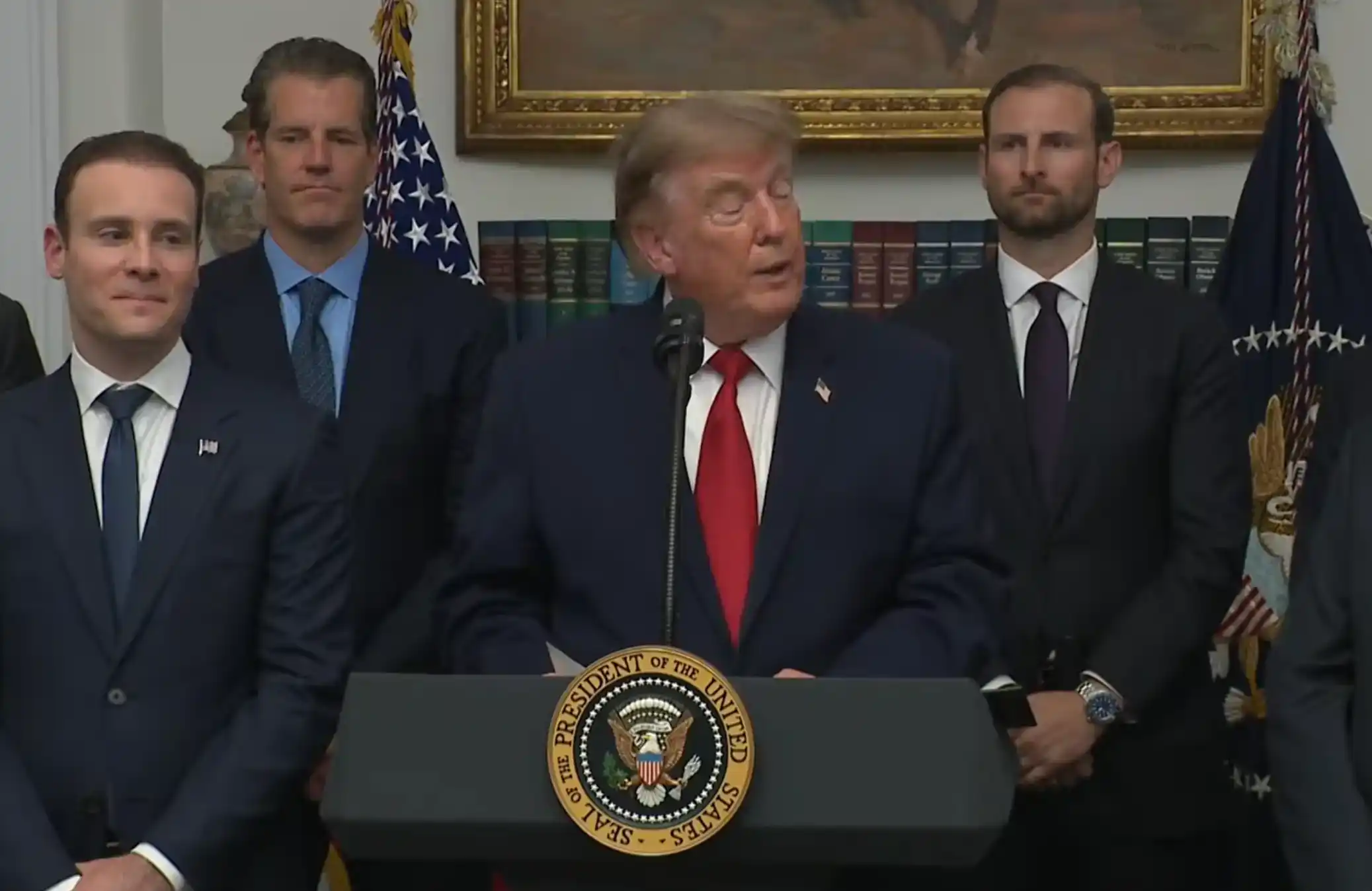
Tổng hợp nội dung chính trong bài phát biểu của Trump: Giới thiệu Hyperliquid, kêu gọi thông qua dự luật

Đêm qua, Bitcoin tăng vọt từ 65.000 lên 70.000 USD trong thời gian ngắn, trong khi Ethereum tăng gần 20%. Nguyên nhân chính đến từ sự kiện quan trọng tại Mỹ: ngày 20/7, cựu Tổng thống Donald Trump đã chủ trì một cuộc họp bàn tròn và phát biểu công khai tại Nhà Trắng với sự tham dự của các lãnh đạo cơ quan quản lý và giám đốc điều hành hàng đầu trong ngành tài chính, tiền mã hóa và công nghệ. Trọng tâm bài phát biểu của Trump xoay quanh hai vấn đề chính: 1. **Thúc đẩy thông qua dự luật tiền mã hóa:** Trump kêu gọi Quốc hội Mỹ đẩy nhanh việc thông qua **"Đạo luật Clarity"**, nhằm thiết lập ranh giới rõ ràng giữa "chứng khoán mã hóa" và "hàng hóa mã hóa". Ông cũng nhắc lại tác động của "Đạo luật GENIUS" đã được ký trước đó, giúp mở đường cho việc áp dụng rộng rãi stablecoin tuân thủ. 2. **Cập nhật tiến độ quản lý và các đề xuất mới:** * **CFTC:** Chủ tịch CFTC Mike Selig xác nhận đã ra mắt hợp đồng futures bitcoin vĩnh viễn tuân thủ đầu tiên tại Mỹ. Quan trọng hơn, CFTC đang nỗ lực đưa giao thức giao dịch phi tập trung **Hyperliquid** vào hoạt động hợp pháp tại Mỹ, đây là lý do chính khiến token HYPE tăng mạnh. * **SEC:** Chủ tịch SEC Paul Atkins công bố đề xuất quy tắc tài sản mã hóa mới, nhằm giải quyết triệt để vấn đề các công ty khởi nghiệp có thể huy động vốn hợp pháp thông qua tài sản kỹ thuật số tại Mỹ. Ngoài ra, Trump cũng bày tỏ thái độ cởi mở về việc chính phủ Mỹ có thể mở rộng dự trữ bitcoin trong tương lai, đồng thời đề cập đến các chính sách thúc đẩy phát triển năng lượng cho ngành AI.

marsbit1 giờ trước

Tổng hợp nội dung chính trong bài phát biểu của Trump: Giới thiệu Hyperliquid, kêu gọi thông qua dự luật

marsbit1 giờ trước

Chủ tịch CFTC: Cơ quan sẽ tiếp tục công việc quản lý tiền mã hóa nếu luật CLARITY không được thông qua

Chủ tịch CFTC, Michael Selig, tuyên bố cơ quan này sẽ tiếp tục thúc đẩy quy định riêng cho ngành công nghiệp tiền mã hóa nếu Đạo luật CLARITY không được Quốc hội thông qua. Ông nhấn mạnh đây là cách để hỗ trợ Tổng thống Trump thực hiện lời hứa về môi trường pháp lý rõ ràng cho tiền số, đồng thời đã chỉ đạo nhân viên cho phép các tổ chức cung cấp giao dịch tiền mã hóa có đòn bẩy và nghiên cứu biện pháp bảo vệ nhà phát triển. Việc xem xét dự luật CLARITY tại Thượng viện hiện bị tạm dừng cho đến tháng 9. Dự luật cần 60 phiếu để thông qua, nhưng sự ủng hộ từ đảng Dân chủ vẫn chưa chắc chắn, một phần do những lo ngại về các vấn đề đạo đức liên quan đến khoản lợi nhuận 1,4 tỷ USD từ đầu tư tiền mã hóa của gia đình Trump. Phát biểu của Selig diễn ra sau cuộc gặp tại Nhà Trắng với Tổng thống Trump, người kêu gọi thông qua dự luật để Mỹ vượt Trung Quốc. Động thái của CFTC diễn ra song song với SEC, cơ quan vừa đề xuất bộ quy tắc mới cho tài sản số. CFTC hiện chỉ có một ủy viên được Thượng viện phê chuẩn là Selig. Dưới sự lãnh đạo của ông, CFTC cũng khẳng định thẩm quyền độc quyền đối với thị trường dự đoán và sẽ kiện các chính quyền tiểu bang phản đối quan điểm này.

cryptonews.ru3 giờ trước

Chủ tịch CFTC: Cơ quan sẽ tiếp tục công việc quản lý tiền mã hóa nếu luật CLARITY không được thông qua

cryptonews.ru3 giờ trước

Giao dịch

Giao ngay

Bài viết Nổi bật

Làm thế nào để Mua FLOW

Chào mừng bạn đến với HTX.com! Chúng tôi đã làm cho mua Flow (FLOW) trở nên đơn giản và thuận tiện. Làm theo hướng dẫn từng bước của chúng tôi để bắt đầu hành trình tiền kỹ thuật số của bạn.Bước 1: Tạo Tài khoản HTX của BạnSử dụng email hoặc số điện thoại của bạn để đăng ký tài khoản miễn phí trên HTX. Trải nghiệm hành trình đăng ký không rắc rối và mở khóa tất cả tính năng. Nhận Tài khoản của tôiBước 2: Truy cập Mua Crypto và Chọn Phương thức Thanh toán của BạnThẻ Tín dụng/Ghi nợ: Sử dụng Visa hoặc Mastercard của bạn để mua Flow (FLOW) ngay lập tức.Số dư: Sử dụng tiền từ số dư tài khoản HTX của bạn để giao dịch liền mạch.Bên thứ ba: Chúng tôi đã thêm những phương thức thanh toán phổ biến như Google Pay và Apple Pay để nâng cao sự tiện lợi.P2P: Giao dịch trực tiếp với người dùng khác trên HTX.Thị trường mua bán phi tập trung (OTC): Chúng tôi cung cấp những dịch vụ được thiết kế riêng và tỷ giá hối đoái cạnh tranh cho nhà giao dịch.Bước 3: Lưu trữ Flow (FLOW) của BạnSau khi mua Flow (FLOW), lưu trữ trong tài khoản HTX của bạn. Ngoài ra, bạn có thể gửi đi nơi khác qua chuyển khoản blockchain hoặc sử dụng để giao dịch những tiền kỹ thuật số khác.Bước 4: Giao dịch Flow (FLOW)Giao dịch Flow (FLOW) dễ dàng trên thị trường giao ngay của HTX. Chỉ cần truy cập vào tài khoản của bạn, chọn cặp giao dịch, thực hiện giao dịch và theo dõi trong thời gian thực. Chúng tôi cung cấp trải nghiệm thân thiện với người dùng cho cả người mới bắt đầu và người giao dịch dày dạn kinh nghiệm.

Tổng lượt xem 642Xuất bản vào 2024.12.10Cập nhật vào 2026.06.02

Làm thế nào để Mua FLOW

Thảo luận

Chào mừng đến với Cộng đồng HTX. Tại đây, bạn có thể được thông báo về những phát triển nền tảng mới nhất và có quyền truy cập vào thông tin chuyên sâu về thị trường. Ý kiến ​​của người dùng về giá của FLOW (FLOW) được trình bày dưới đây.

活动图片