Goldman Sachs Research Report Analysis: Potential U.S. Ban on Chinese Optical Modules, Leading Manufacturers' Moat Deeper Than Market Anticipates

marsbitXuất bản vào 2026-08-12Cập nhật gần nhất vào 2026-08-12

Tóm tắt

In response to reports that the U.S. is drafting a plan to ban imports of Chinese data center components, including optical modules, Goldman Sachs addresses key investor concerns in an August 10th research report. The firm highlights the resilient competitive advantages of leading Chinese manufacturers like InnoLight (Xinsheng) and RoboTec (Luoboteke). It argues that rapid technological iteration in AI-driven optical modules (from 400G to 1.6T+), high SKU variety, and stringent manufacturing requirements for miniaturization and thermal management increase client reliance on established players. New suppliers face significant hurdles in proving product stability and achieving cost efficiency. While macro uncertainties exist, leading firms are mitigating risks through overseas production capacity expansion in regions like Southeast Asia, which already manufactures advanced products. Goldman Sachs concludes that the core moats of these leaders—deep R&D, automated production, and strong customer collaboration—are more robust than the market perceives, and their market share expansion trend is unlikely to be reversed by proposed bans. The report maintains a Buy rating on the mentioned firms.

Written by: Rita

According to a Reuters report on August 4th, the Trump administration and the FCC are drafting a plan to ban U.S. imports of Chinese data center components, with optical modules specifically mentioned. In a research report dated August 10th, Goldman Sachs responded to the three most pressing questions from investors: why leading Chinese optical module manufacturers continue to gain customer favor, whether production capacity and cost efficiency constitute a competitive moat, and whether overseas capacity布局 can hedge risks. Goldman Sachs judges that rapid technological iteration, strong AI demand, tight raw material supply, and the high R&D requirements for multiple SKU varieties make customers more reliant on existing leading manufacturers in the current environment and less likely to switch to new suppliers easily. Goldman Sachs gives a Buy rating to Chinese optical module leaders New Easynet and Robotech, while also assigning Buy ratings to FOCI, LandMark, and VPEC (all listed in Taiwan), believing these companies possess difficult-to-replicate competitive advantages in technology, capacity, and customer collaboration.

Rapid Technological Iteration, Leading Manufacturers' R&D Advantage Continues to Expand

AI server architecture is still evolving rapidly. Optical module speeds progress from 400G to 800G to 1.6T, packaging forms evolve from pluggable to LPO to NPO to CPO, materials shift from EML to silicon photonics to lithium niobate, and fiber types range from single-mode to multi-mode. SKU varieties are numerous and continuously expanding, with each new specification requiring manufacturers to possess rapid response and R&D capabilities.

Goldman Sachs believes this rapidly evolving technological environment will only increase customer reliance on existing leading manufacturers. New suppliers would need more time to demonstrate product stability while also needing to re-coordinate with chip suppliers, system integrators, and other component manufacturers to meet quality and design specifications. Historically, leading Chinese manufacturers successfully launched the world's first 400G (2018), 800G (2020), and 1.6T (2023) optical modules. This leading position is widening as AI continues its upgrade cycle.

Capacity and Costs Form Barriers, Small-to-Medium Manufacturers Hard-Pressed to Catch Up Short-Term

Seven of the world's top ten optical module suppliers are headquartered in China, with their market share in 2025 projected to further increase compared to 2024. Beyond R&D capabilities, leading manufacturers' advantages in capacity commitment, automated production, and manufacturing efficiency are equally prominent. Proprietary production lines and specialized equipment allow them to achieve rapid product deployment at competitive prices.

Goldman Sachs points out that product specification upgrades to 1.6T and beyond not only increase design difficulty but also manufacturing complexity. The volume of optical modules does not increase, yet more fibers and lasers must be packed into the same space to achieve higher speeds, multiplying coupling and thermal dissipation challenges. Small-to-medium manufacturers in this fast-evolving technological landscape would require significantly more time to reach the same level of manufacturing efficiency.

Overseas Capacity Layout Underway, Southeast Asian Factories Already in Mass Production

Macro uncertainties are not new. From geopolitical tensions in 2019, the pandemic from 2020 to 2022, to tariff increases in 2025, technology supply chains have been mitigating risks through geographically dispersed production over the past few years. Leading manufacturers are not only expanding capacity in Southeast Asia (capable of producing high-end products like 1.6T) but are also making布局 in other countries to further diversify manufacturing bases.

New Easynet's Thailand Phase 1 is already at full capacity, with Phase 2 expansion planned for 2026. Goldman Sachs believes the提前布局 of overseas capacity provides leading manufacturers with a buffer space. This view does not contradict the judgment in Citigroup's report that "overseas capacity is insufficient to fill the gap"—it is insufficient to cover all demand in the short term, but the long-term trend towards diversification is already established.

Goldman Sachs concludes that while market concerns over a potential U.S. ban are understandable, the competitive moat of leading Chinese optical module manufacturers is far deeper than the impact of short-term tariff shocks. Accumulated technological R&D, automated production line efficiency, deep collaboration with customers, and提前布局 overseas capacity together constitute competitive barriers that are difficult to replicate in the short term. AI-driven demand for optical modules continues to accelerate its upgrade cycle, and the market share expansion trend of leading manufacturers is unlikely to reverse due to a draft ban proposal that has not yet been implemented.

Disclaimer

This article is Trend Research's整理与解读 of a third-party securities research report (Goldman Sachs, August 10, 2026), combined with整理 of publicly available market information. The ratings, target prices, profit forecasts, and related judgments cited in the article are the views of the analyst(s) of that securities firm, representing only the stance of their institution, and do not represent the views of Trend Research, nor do they constitute any investment advice.

The market carries risks; decisions must be made independently. This article should not serve as the basis for trading any securities.


Tiền kỹ thuật số thịnh hành

Câu hỏi Liên quan

QAccording to the Goldman Sachs report, what are the main reasons why customers continue to prefer leading Chinese optical module manufacturers despite potential US import bans?

AThe report states that rapid technology iteration, strong AI demand, tight raw material supply, and high R&D requirements for diverse SKUs make customers heavily reliant on existing leading manufacturers. Customers are unlikely to easily switch to new suppliers as these leaders have proven capabilities in product stability, design coordination, and time-to-market.

QWhat specific technical advantages and milestones do Goldman Sachs highlight for leading Chinese optical module companies?

AGoldman Sachs notes that Chinese leading manufacturers have successfully launched the world's first 400G (2018), 800G (2020), and 1.6T (2023) optical modules. Their R&D advantage is expanding amidst fast-evolving AI server architectures involving changes in data rates, packaging, materials, and fiber types.

QHow does the Goldman Sachs report characterize the competitive barriers formed by production capacity and cost for leading optical module manufacturers?

AThe report identifies that barriers come from leaders' advantages in capacity commitment, automated production, and manufacturing efficiency. Self-developed production lines and specialized equipment enable competitive pricing and rapid deployment. The increasing complexity of manufacturing higher-speed modules like 1.6T further widens the gap with smaller players who need more time to achieve similar efficiency.

QWhat is the status of overseas capacity expansion by leading Chinese optical module manufacturers, as mentioned in the article?

ALeading manufacturers have been expanding overseas capacity to mitigate geopolitical and tariff risks. Factories in Southeast Asia are already mass-producing, including high-end products like 1.6T modules. For example, New Easun's Thailand Phase I is at full capacity, with Phase II expansion planned for 2026. This provides a buffer, though it may not cover all demand in the short term.

QWhich companies received a 'Buy' rating from Goldman Sachs in the report discussed in the article?

AGoldman Sachs gave a 'Buy' rating to Chinese optical module leaders New Easun and Robotec. It also gave a 'Buy' rating to the Taiwan-listed companies FOCI, LandMark, and VPEC, citing their difficult-to-replicate competitive advantages in technology, capacity, and customer synergy.

Nội dung Liên quan

Grayscale Dự Báo Ethereum và Solana Sẽ Trở Nên Khan Hiếm Hơn

Grayscale dự báo Ethereum và Solana sẽ trở nên khan hiếm hơn do các thay đổi tokenomics có thể được thực hiện. Nhà nghiên cứu Zach Pandl cho rằng cả hai blockchain này đang xem xét sửa đổi giao thức để giảm tốc độ phát hành token mới hàng năm. Theo phân tích, nếu các thay đổi được thông qua, lạm phát nguồn cung hàng năm của Ethereum và Bitcoin có thể chỉ còn khoảng 0,4% vào năm 2031, trong khi Solana là khoảng 1,1%. Con số này thấp hơn so với tốc độ tăng nguồn cung vàng (1,8%) và lạm phát giá tiêu dùng Mỹ (3,3%). Việc giảm phát hành token sẽ ảnh hưởng trực tiếp đến phần thưởng staking, vì chúng được trả bằng token mới. Tuy nhiên, sự khan hiếm hơn có thể tạo áp lực tăng giá cho tài sản. Do đó, người nắm giữ không stake có thể hưởng lợi, trong khi kết quả cho staker sẽ phụ thuộc vào sự đánh đổi giữa phần thưởng thấp hơn và giá token tăng tiềm năng. Cộng đồng Solana được cho là ủng hộ các đề xuất thay đổi rộng rãi hơn so với Ethereum. Song song đó, mạng lưới Solana tiếp tục phát triển cơ sở hạ tầng và chứng kiến khối lượng tài sản token hóa tăng mạnh, từ 2,69 tỷ USD lên 5,7 tỷ USD trong nửa đầu năm 2026.

cryptonews.ru41 phút trước

Grayscale Dự Báo Ethereum và Solana Sẽ Trở Nên Khan Hiếm Hơn

cryptonews.ru41 phút trước

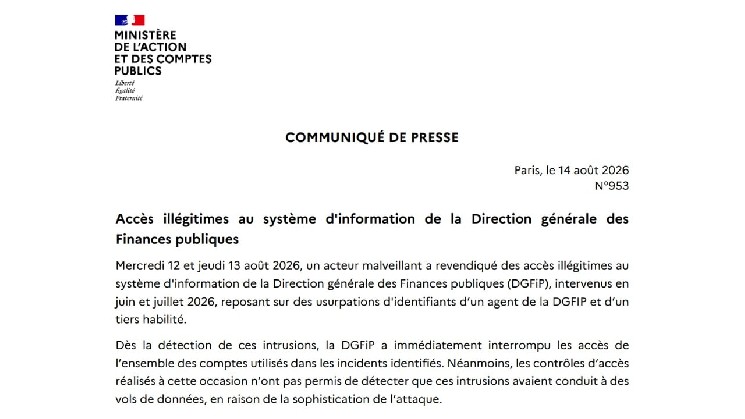
Cơ quan thuế Pháp thừa nhận rò rỉ dữ liệu: Hacker đánh cắp 678 nghìn hồ sơ

Cơ quan thuế Pháp xác nhận vi phạm dữ liệu: Hacker đánh cắp 678.000 hồ sơ Một mối đe dọa mới đã xuất hiện đối với chủ sở hữu tiền mã hóa ở Pháp sau khi tin tặc có biệt danh Zerobytes xâm nhập thành công và đánh cắp dữ liệu của 678.438 người nộp thuế từ trang web của Tổng cục Quản lý Tài chính Công (DGFiP). Vụ tấn công xảy ra vào ngày 12/6. Tin tặc này được cho là đã sử dụng công cụ tìm kiếm nội bộ thông qua VPN để xâm phạm máy chủ. Mặc dù quyền truy cập của kẻ tấn công đã bị chặn và không thể lấy toàn bộ dữ liệu, nhưng một tập tin dữ liệu vẫn đang được rao bán với giá vài nghìn euro. DGFiP thừa nhận các biện pháp kiểm soát truy cập hiện tại không thể phát hiện vụ trộm dữ liệu này do tính chất tinh vi của cuộc tấn công. Cơ quan này khẳng định thông tin đăng nhập vào trang web không bị lộ và đang triển khai các biện pháp bảo mật mới. DGFiP cho biết sẽ liên hệ trực tiếp với từng cá nhân và chuyên gia bị ảnh hưởng vào tuần tới để thông báo chi tiết về dữ liệu có khả năng bị xem hoặc lấy cắp, cùng các biện pháp phòng ngừa cần thiết. Sự việc làm dấy lên lo ngại trong cộng đồng tiền mã hóa Pháp về nguy cơ gia tăng các vụ tấn công "giữ con tin" nhắm vào họ. Đây là bối cảnh sau những cáo buộc trước đó về việc một nhân viên thuế bán dữ liệu của các chủ sở hữu tiền mã hóa có hồ sơ lớn. Tính đến tháng Tư, Pháp đã ghi nhận 41 vụ tấn công và buộc tội 88 người trong 12 vụ bắt cóc liên quan đến tiền mã hữu. Ông Alexandre Stachtchenko, Giám đốc Chiến lược và Truyền thông của Bitstack, kêu gọi áp dụng lệnh tạm ngừng thu thập dữ liệu cá nhân của các cơ quan nhà nước cho đến khi họ có khả năng bảo vệ dữ liệu hiệu quả, nhấn mạnh quyền riêng tư là một quyền tự do cơ bản cần được bảo đảm.

cryptonews.ru43 phút trước

Cơ quan thuế Pháp thừa nhận rò rỉ dữ liệu: Hacker đánh cắp 678 nghìn hồ sơ

cryptonews.ru43 phút trước

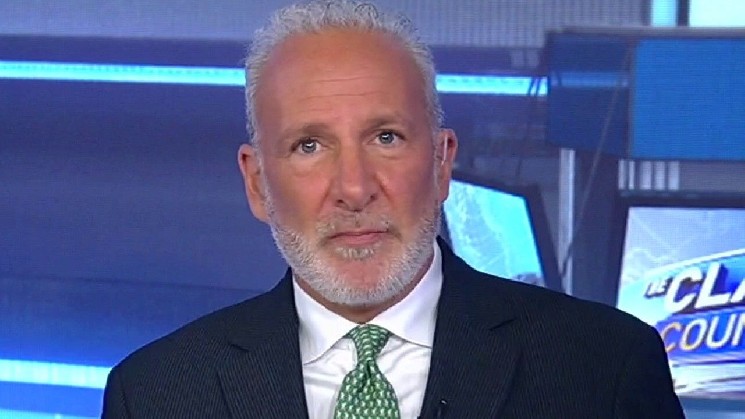
Peter Schiff cho rằng Michael Saylor có thể sẽ bán thêm nhiều Bitcoin

Peter Schiff tin rằng Michael Saylor có thể sẽ phải bán thêm Bitcoin và cổ phiếu MSTR nếu MicroStrategy đặt mục tiêu đưa cổ phiếu ưu đãi STRC trở lại mức mục tiêu 100 USD. Hiện STRC vẫn giao dịch dưới 95 USD dù công ty đã dùng tiền từ việc bán tài sản để mua lại cổ phiếu. Đầu tháng 8, MicroStrategy bán 1.637 Bitcoin với giá 102 triệu USD và dùng số tiền này mua lại khoảng 1,15 triệu cổ phiếu STRC. Công ty cũng bán 6,59 triệu cổ phiếu MSTR với giá 653,1 triệu USD, bổ sung khoảng 650 triệu USD vào dự trữ tiền mặt, nâng tổng số dư lên 4,65 tỷ USD. Đợt mua lại cổ phiếu STRC gần đây là lần thứ ba trong chương trình mua lại cổ phiếu 1 tỷ USD của MicroStrategy. Schiff cho rằng việc tiếp tục bán Bitcoin và MSTR để hỗ trợ cổ phiếu ưu đãi sẽ tạo thêm áp lực lên Bitcoin, khiến nó một lần nữa thua kém vàng. Ông cũng chỉ ra rằng nguyên nhân khiến Bitcoin suy yếu là do giá vàng gần đây tăng lên trên 4.300 USD, trong khi Bitcoin giảm xuống vùng 62.000 USD. Schiff dự báo vàng sẽ tiếp tục tăng giá, gây thêm áp lực lên Bitcoin. Tuy nhiên, dữ liệu việc làm yếu của Mỹ đã củng cố kỳ vọng về chính sách nới lỏng của Fed, điều này có thể tạo động lực tích cực cho các tài sản rủi ro, bao gồm tiền mã hóa.

cryptonews.ru45 phút trước

Peter Schiff cho rằng Michael Saylor có thể sẽ bán thêm nhiều Bitcoin

cryptonews.ru45 phút trước

Công ty Nvidia bất ngờ thông báo đã bán 122,8 triệu cổ phiếu SpaceX trị giá 21 tỷ USD

Công ty Nvidia (NVDA) đã tiết lộ khoản đầu tư trị giá 21 tỷ USD vào SpaceX (SPCX), sở hữu 122,8 triệu cổ phiếu loại A của công ty vũ trụ Elon Musk. Đây là khoản đầu tư được công bố lớn thứ hai của Nvidia, chỉ sau cổ phần của họ tại Intel. Thông báo này diễn ra trong bối cảnh quan hệ đối tác kinh doanh giữa hai công ty ngày càng sâu sắc. Trong báo cáo thu nhập đầu tiên sau khi lên sàn, Elon Musk xác nhận SpaceX đã chọn Nvidia làm nhà cung cấp chip duy nhất cho trung tâm dữ liệu của mình, dự định sử dụng kiến trúc Vera Rubin mà họ đánh giá là tốt nhất cho AI. Về phía Nvidia, công ty cũng được cho là đang chuẩn bị gói tài trợ khổng lồ 500 tỷ USD với sự tham gia của các ngân hàng lớn Phố Wall. Một tài liệu riêng biệt cũng làm rõ cơ cấu sở hữu của Elon Musk tại SpaceX. Tính đến ngày 30/6, ông sở hữu 48,4% lợi ích kinh tế của công ty, tương đương khoảng 907 tỷ USD. Tuy nhiên, ông nhấn mạnh một phần đáng kể trong số cổ phiếu này vẫn phụ thuộc vào việc đạt được các mục tiêu hiệu suất cực kỳ cao. Mặc dù sở hữu kinh tế dưới 50%, Musk kiểm soát hơn 82% quyền biểu quyết, cho phép ông có ảnh hưởng chi phối đối với các quyết định của công ty.

cryptonews.ru45 phút trước

Công ty Nvidia bất ngờ thông báo đã bán 122,8 triệu cổ phiếu SpaceX trị giá 21 tỷ USD

cryptonews.ru45 phút trước

Giao dịch

Giao ngay

Bài viết Nổi bật

Làm thế nào để Mua BAN

Chào mừng bạn đến với HTX.com! Chúng tôi đã làm cho mua Comedian (BAN) trở nên đơn giản và thuận tiện. Làm theo hướng dẫn từng bước của chúng tôi để bắt đầu hành trình tiền kỹ thuật số của bạn.Bước 1: Tạo Tài khoản HTX của BạnSử dụng email hoặc số điện thoại của bạn để đăng ký tài khoản miễn phí trên HTX. Trải nghiệm hành trình đăng ký không rắc rối và mở khóa tất cả tính năng. Nhận Tài khoản của tôiBước 2: Truy cập Mua Crypto và Chọn Phương thức Thanh toán của BạnThẻ Tín dụng/Ghi nợ: Sử dụng Visa hoặc Mastercard của bạn để mua Comedian (BAN) ngay lập tức.Số dư: Sử dụng tiền từ số dư tài khoản HTX của bạn để giao dịch liền mạch.Bên thứ ba: Chúng tôi đã thêm những phương thức thanh toán phổ biến như Google Pay và Apple Pay để nâng cao sự tiện lợi.P2P: Giao dịch trực tiếp với người dùng khác trên HTX.Thị trường mua bán phi tập trung (OTC): Chúng tôi cung cấp những dịch vụ được thiết kế riêng và tỷ giá hối đoái cạnh tranh cho nhà giao dịch.Bước 3: Lưu trữ Comedian (BAN) của BạnSau khi mua Comedian (BAN), lưu trữ trong tài khoản HTX của bạn. Ngoài ra, bạn có thể gửi đi nơi khác qua chuyển khoản blockchain hoặc sử dụng để giao dịch những tiền kỹ thuật số khác.Bước 4: Giao dịch Comedian (BAN)Giao dịch Comedian (BAN) dễ dàng trên thị trường giao ngay của HTX. Chỉ cần truy cập vào tài khoản của bạn, chọn cặp giao dịch, thực hiện giao dịch và theo dõi trong thời gian thực. Chúng tôi cung cấp trải nghiệm thân thiện với người dùng cho cả người mới bắt đầu và người giao dịch dày dạn kinh nghiệm.

Tổng lượt xem 811Xuất bản vào 2024.12.11Cập nhật vào 2026.06.02

Làm thế nào để Mua BAN

Thảo luận

Chào mừng đến với Cộng đồng HTX. Tại đây, bạn có thể được thông báo về những phát triển nền tảng mới nhất và có quyền truy cập vào thông tin chuyên sâu về thị trường. Ý kiến ​​của người dùng về giá của BAN (BAN) được trình bày dưới đây.

活动图片