Why do people like Luke still want to fork Bitcoin despite having no support? BIP-100 has already been declared a failure!

marsbitXuất bản vào 2026-08-11Cập nhật gần nhất vào 2026-08-11

Tóm tắt

On August 8th, the Bitcoin network experienced a contentious fork triggered by BIP-110, despite the proposal having only 2.53% miner signaling support in the prior period. Led primarily by developer Luke Dashjr and based on his Bitcoin Knots implementation (not merged into Bitcoin Core), this User-Activated Soft Fork (UASF) aimed to impose strict new limits on non-financial data (like Ordinals inscriptions) within blocks to reduce long-term node costs. The fork activated at block height 961632, with BIP-110 nodes rejecting blocks without the required signaling. This created two chains: the dominant original chain continuing normally, and a low-hashrate BIP-110 chain which quickly fell behind. The core conflict is between those viewing block space as a fee market open to all data and those prioritizing Bitcoin as a monetary network, seeking to ban what they see as blockchain "spam." BIP-110's strategy relied on economic nodes (exchanges, wallets) adopting the new rules first, hoping to force miners to follow. However, this has not materialized. The BIP-110 chain now faces severe challenges: extremely slow block times potentially stretching over 1.9 years before its rules would even activate, a lack of broad economic support, and no automatic replay protection. For most users, Bitcoin's main chain operates unchanged. The immediate technical impact is limited to services running BIP-110 software, which now see a different blockchain. The event highlights ongoing ideological d...

Author:Bitcoin Orange Trader

With only 2.53% support, BIP-110 still forked Bitcoin: Can it succeed?
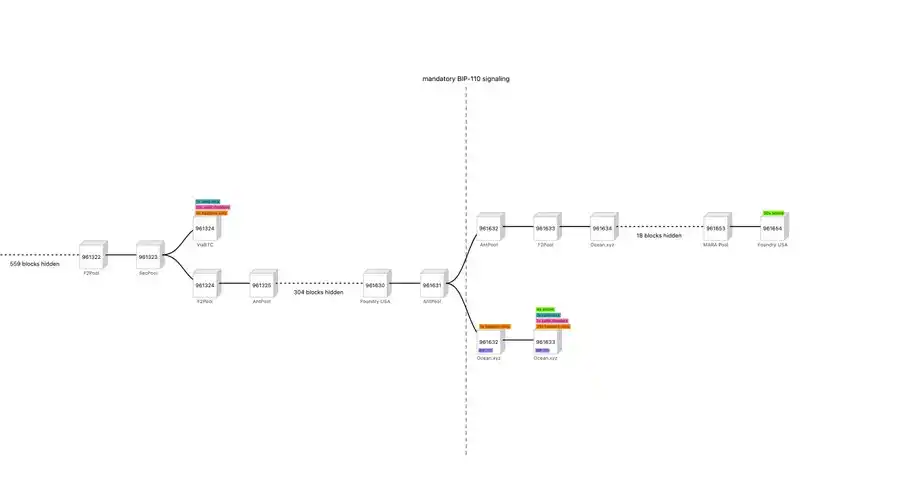
On August 8, the Bitcoin network split into two mutually incompatible chains.

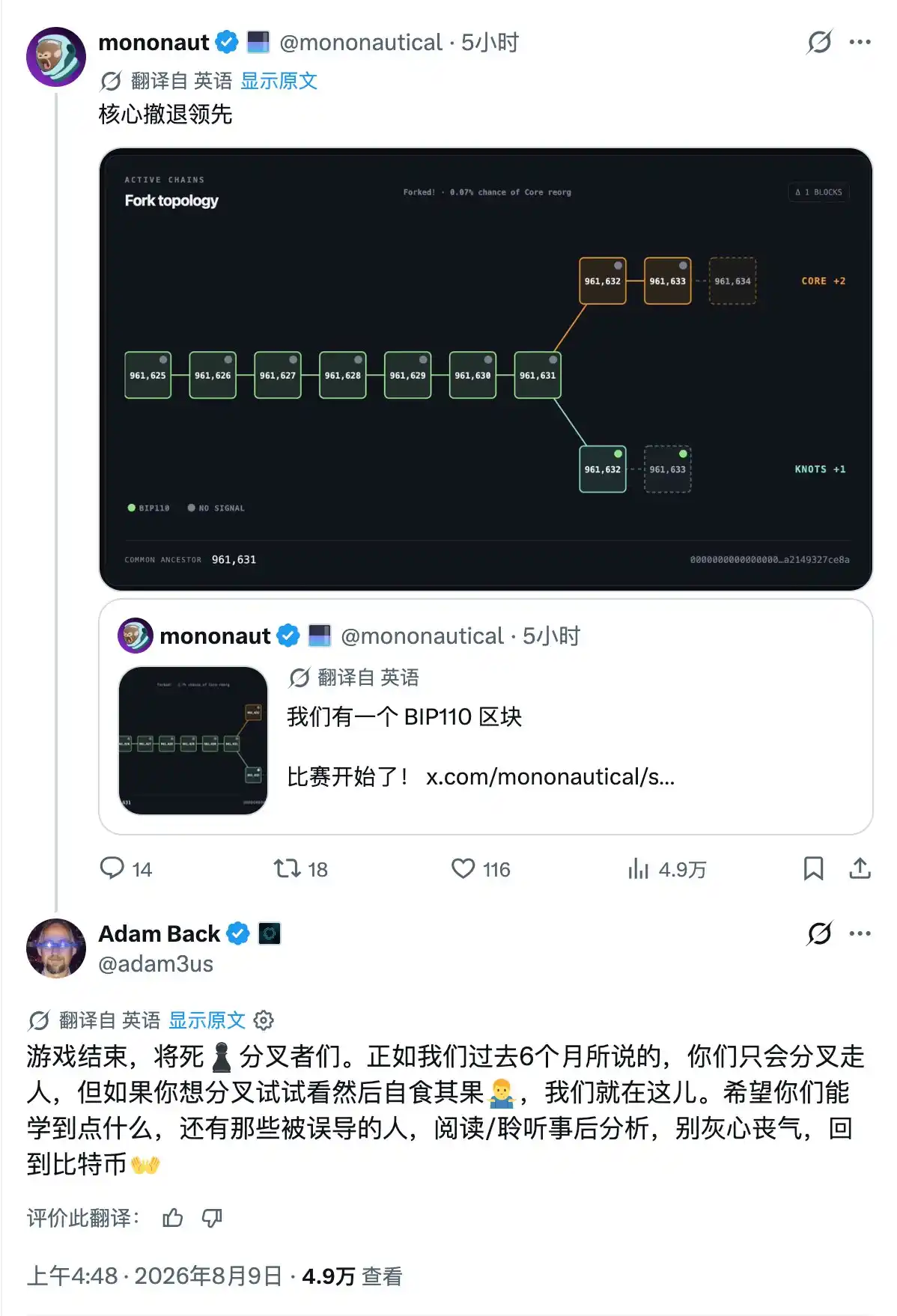
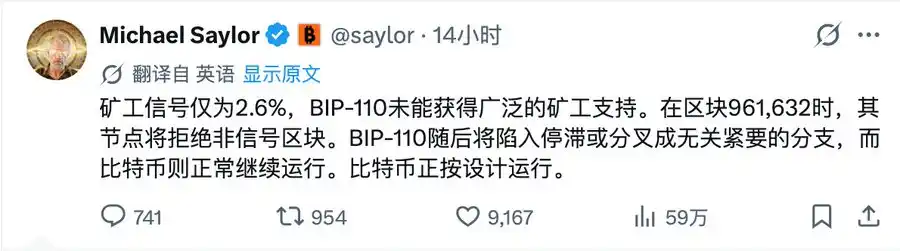
What was even more unusual was that BIP-110, which drove this fork, had only received signaling support from 51 blocks in the previous 2016-block cycle, representing a mere 2.53% support rate. However, after block height 961632, nodes running BIP-110 followed the predetermined rules and began rejecting all blocks that did not signal bit 4.

The majority of miners did not support it and continued to mine blocks under the original rules. The minority of nodes and miners executing BIP-110 remained on the other chain. As of 9:00 AM Beijing Time on August 9, the main chain with higher cumulative proof-of-work had reached block 961654, while the BIP-110 execution chain was stuck at 961633, lagging by 21 blocks. In the first 23 blocks of the new cycle, not a single one signaled support for BIP-110 on the main chain.

This is not an evenly matched hash power battle. The main chain is progressing normally, while the BIP-110 chain, due to its low hash power, is significantly lagging in block production speed.

Who is driving this fork?

BIP-110 was proposed by pseudonymous developer Dathon Ohm, with Luke Dashjr participating in early drafts and technical advice. Its reference implementation is based on Bitcoin Knots maintained by Luke, and it was not merged into Bitcoin Core, nor did it gain support from a majority of miners.
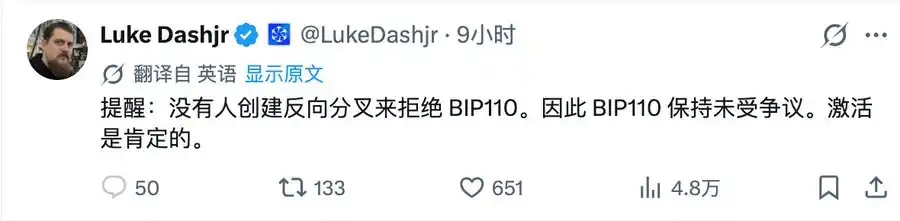
It is not part of Bitcoin Core's mainnet upgrade roadmap. The actual drivers are some Knots node operators and a minority of miners. This is a UASF attempt: even if miners do not achieve sufficient signaling support, nodes can still proactively tighten the rules for the blocks they accept, forcing the network to make a choice.

Why are these people insisting on pushing BIP-110?

The background remains the ongoing controversy over inscriptions spanning several years.

Ordinals, BRC-20, and Runes write image, text, and token data into Bitcoin blocks. Supporters of these use cases believe that block space is essentially a fee market; miners can include whatever people are willing to pay for. Supporters of BIP-110, on the other hand, believe that Bitcoin should primarily be a monetary and payment network, and that large amounts of arbitrary data increase blockchain size, imposing long-term storage, bandwidth, verification, and propagation costs on all full nodes.

Data publishers pay a fee only once, but once the data enters a block, nodes worldwide must store it permanently. The publisher and miner complete a transaction, but the subsequent costs are left to the entire network. BIP-110 aims to turn this conflict from a policy issue of "whether nodes are willing to relay, whether mining pools are willing to include" into a consensus rule.

It plans to be temporarily enforced for about one year upon activation. Most new output scripts cannot exceed 34 bytes, the OP_RETURN limit becomes 83 bytes, data pushes and some witness elements cannot exceed 256 bytes, and certain Taproot constructions that could be used to carry data are disabled. Old UTXOs are exempt, and regular payment transactions are mostly unaffected.

Opponents are concerned about more than just whether inscriptions can still be created. BIP-110 turns some transaction uses from a fee market issue into a consensus judgment of valid or invalid, which could affect Miniscript, BitVM, and future protocols using Taproot. It also cannot completely eliminate on-chain data; users can still split data and change encodings, albeit at higher costs and with more complex operations.
Why push so hard despite such low support?

Because BIP-110 supporters do not believe miner signaling equals a final vote. In the logic of a UASF, nodes have the right to decide what blocks are valid; if enough users, wallets, exchanges, and payment services adopt the new rules, miners will ultimately follow to avoid mining blocks that no one accepts.

BIP-110 sets the miner lock-in threshold at 55%, lower than the traditional BIP9 common 95%. The more radical part comes later: even if the threshold is not met in the long term leading up to it, the period from block 961632 to 963647 will still enter a mandatory signaling period. BIP-110 nodes will consider blocks not signaling bit 4 as invalid. Their chain will lock in after block 963648, go through another 2016-block cycle, and plan to formally enforce data restrictions at block 965664.

It bets that nodes and economic actors will take sides first, forcing hash power to follow. Current on-chain results show this bet has not paid off yet. The majority of miners continue to extend the original chain, while nodes running BIP-110 can only wait for their blocks on a low-hash-power branch.

What is currently happening is only a signaling rule fork. The data limits of 34, 83, and 256 bytes have not taken effect on the Bitcoin mainnet; the BIP-110 chain hasn't even reached the formal lock-in and enforcement stage yet.

Is success still possible?

We need to look at two separate things.

As long as there are miners willing to produce blocks, the BIP-110 chain can continue to exist and will eventually activate its rules at its own chain height. However, for it to become the Bitcoin main chain in economic terms, it requires sustained hash power and collective recognition from exchanges, wallets, custody platforms, Lightning services, and coin holders. Nodes can reject main chain blocks, but rejection alone cannot make others recognize their chain.

Time is also a significant hard barrier. When the BIP-110 chain forked, it inherited the mainnet's mining difficulty. Bitcoin adjusts difficulty only every 2016 blocks, with a maximum downward adjustment of 4x per period. Roughly estimating the execution chain's hash power using the previous 2.53% signaling rate, completing its first cycle might take about 553 days; after difficulty adjustment, reaching the formal activation would take another approximately 138 days, totaling nearly 690 days, or about 1.9 years.
This is not a fixed date. The timeframe can be significantly shortened with the addition of new hash power. However, it illustrates that BIP-110, even if it can activate on its own chain, might first experience a very long period of slow progress. The wait before activation could even be longer than the rule's originally planned one-year enforcement period.

Ordinary coin holders currently do not need to interpret this as "Bitcoin's rules have already changed."

The main chain with the highest cumulative proof-of-work still operates under the original rules. The 21 million coin cap, existing balances, and daily payments remain unchanged. The risks are primarily concentrated on nodes, wallets, and service providers using the BIP-110 backend: the two chains see different confirmation states, and this fork lacks dedicated replay protection, meaning a single regular transaction might be valid on both sides.

The current outcome: BIP-110 has not activated on the Bitcoin mainnet; it first created a low-hash-power execution chain.


Tiền kỹ thuật số thịnh hành

Câu hỏi Liên quan

QWhat is the BIP-110 fork described in the article, and what was its goal?

AThe BIP-110 fork was a recent attempt to split the Bitcoin network, initiated on August 8th. Its primary goal was to impose new consensus rules limiting the size of non-financial data, such as inscriptions (Ordinals, BRC-20, Runes), within Bitcoin blocks. Proponents argued this data imposes long-term storage and bandwidth costs on all nodes. The change aimed to enforce stricter limits on script sizes and certain Taproot constructs to curb these uses.

QWhy did BIP-110 proceed with the fork despite having very low miner support (2.53%)?

ABIP-110 proceeded based on a UASF (User-Activated Soft Fork) philosophy. Its supporters believe that nodes (users, exchanges, wallets) ultimately decide which blocks are valid, not just miners. They enforced new signaling rules starting at block 961632, rejecting blocks that did not signal support for BIP-110. The strategy was to force a network choice, hoping economic actors would adopt the new rules and miners would eventually follow to avoid having their blocks rejected.

QWhat is the current state of the BIP-110 chain compared to the main Bitcoin chain?

AAs of the article's reporting, the BIP-110 chain has effectively split off but is struggling. It lags significantly behind the main chain in block height (21 blocks behind at one point) due to having very low hashrate support. The main chain continues normally with overwhelming miner support, while the BIP-110 chain experiences slow block production. The new data-limiting rules have not yet activated on either chain; currently, only the signaling rules differ.

QAccording to the article, what are the main arguments for and against BIP-110's proposed rules?

A**For BIP-110:** Supporters argue Bitcoin should prioritize being a currency and payment network. Inscriptions and similar data create a negative externality where data publishers pay a one-time fee, but the cost of storing and propagating that data indefinitely is borne by all network nodes. The rules aim to protect the network from bloating with non-monetary data. **Against BIP-110:** Opponents argue that block space is a fee market, and miners should be free to include any paying transaction. They also worry the rules could negatively impact other legitimate uses of Bitcoin's scripting capabilities, such as Miniscript, BitVM, and future Taproot-based protocols. Furthermore, they believe such rules cannot eliminate on-chain data entirely but only make it more cumbersome to publish.

QWhat challenges does the BIP-110 chain face in becoming the economically dominant Bitcoin chain?

AThe BIP-110 chain faces significant challenges: 1) **Extremely low hashrate**, leading to very slow block times until the next difficulty adjustment (which could take over 1.5 years at current levels). 2) **Lack of broad economic adoption** from exchanges, wallets, payment processors, and holders, who continue to recognize the original chain. 3) **No automatic replay protection**, creating risks for users. 4) **Time constraint**: The chain's planned ~1-year activation period for data rules may be shorter than the time it takes to even activate them on its own low-hashrate chain.

Nội dung Liên quan

Chu kỳ này, đừng bỏ tiền ra mua câu chuyện nữa

Sau khi trao đổi sâu với một số chuyên gia dày dạn kinh nghiệm, tác giả rút ra các quy tắc sống còn cho chu kỳ thị trường hiện tại, nơi đã chuyển từ "nghe câu chuyện, đầu cơ kỳ vọng" sang "xem dòng tiền, kiểm chứng ứng dụng thực tế". Các nguyên tắc chính bao gồm: 1. **Ưu tiên tài sản có khả năng nắm bắt giá trị thực**: Tập trung vào các giao thức tạo ra doanh thu bền vững và trực tiếp chia sẻ lợi nhuận cho người nắm giữ token thông qua mua lại, đốt hoặc cổ tức (ví dụ: $UNI, $PUMP, $HYPE). 2. **Chọn dự án đã hoàn thiện sản phẩm và vòng kín**: Thị trường sẽ kiểm chứng tính hữu dụng thực tế, đặc biệt trong các lĩnh vực như "token hóa tài sản" và "Kinh tế Tác nhân AI". Cần xem xét số liệu người dùng thực, khối lượng giao dịch và doanh thu (ví dụ: $ONDO, $VVV). 3. **Chọn tài sản có "sự đồng thuận" mạnh**: Đó là sự đồng thuận tự nhiên, vượt chu kỳ, có tính cộng đồng và thanh khoản bền vững, như các meme coin lâu đời ($DOGE, $PEPE) hoặc tài sản hàng đầu trong từng phân khúc ($ZEC, $TAO). 4. **Hạn chế tiếp xúc với token VC thuần túy**: Các token VC thường có định giá cao, tỷ lệ lưu hành thấp và áp lực giải ngân liên tục, dễ dẫn đến tình trạng bán tháo khi unlock, gây rủi ro lớn cho nhà đầu tư nhỏ lẻ. Lưu ý: Đây là quan điểm tổng hợp từ trao đổi cá nhân, các token nêu trên chỉ là ví dụ và không phải lời khuyên đầu tư.

marsbit1 phút trước

Chu kỳ này, đừng bỏ tiền ra mua câu chuyện nữa

marsbit1 phút trước

Sự thật khắc nghiệt về cơ sở hạ tầng tiền điện tử và các thương vụ M&A

Sự thật phũ phàm về cơ sở hạ tầng crypto và các thương vụ M&A Bài viết lập luận rằng cộng đồng crypto hiện nay đang mắc kẹt trong một cạm bẫy: các startup Web3 chi hàng trăm nghìn từ quỹ vốn mạo hiểm để tài trợ cho các dự án thí điểm (pilot) với các tập đoàn Web2 và tổ chức tài chính truyềnền thống (TradFi), với hy vọng có được quan hệ đối tác. Tuy nhiên, 95% các dự án này không bao giờ được triển khai đại trà. Các công ty Web2 thường chỉ tìm kiếm lợi ích tài chính và PR, trong khi cơ cấu tổ chức và mức độ chấp nhận rủi ro của họ không phù hợp để tích hợp lâu dài cơ sở hạ tầng của bên thứ ba. Thay vì trở thành khách hàng lâu dài, khi một công nghệ Web3 trở nên thực sự quan trọng, các gã khổng lồ Web2 sẽ mua lại hoàn toàn. Các ví dụ như Stripe mua lại Bridge hay Robinhood mua Bitstamp minh họa cho xu hướng này, đánh dấu sự khởi đầu của một chu kỳ củng cố thị trường M&A mạnh mẽ. Tương lai sẽ được chia theo tỷ lệ 80/20: Khoảng 80% khối lượng giao dịch và thanh khoản sẽ được kiểm soát bởi một số ít cổng tiêu dùng được quản lý chặt chẽ như Visa, Stripe, PayPal... Họ sẽ cung cấp giao diện đơn giản, tuân thủ pháp lý và tích hợp fiat cho người dùng phổ thông. 20% còn lại sẽ là "sân chơi" DeFi tự do, nơi các nhà phát triển đổi mới và thử nghiệm các nguyên thủy (primitive) cơ bản. Lộ trình để startup Web3 thành công vì thế đã thay đổi: Trước tiên cần chứng minh sản phẩm phù hợp thị trường (PMF) trong "sân chơi" DeFi 20%. Sau đó, việc mở rộng quy mô sẽ không phải bằng cách xây dựng thương hiệu B2C độc lập, mà thông qua việc được tích hợp hoặc mua lại bởi một trong số ít các cổng phân phối Web2 nắm giữ 80% thị phần còn lại. Người chiến thắng sẽ là những đội ngũ xây dựng cơ sở hạ tầng cấp tổ chức có khả năng kết nối trực tiếp với các kênh phân phối này.

cryptonews.ru4 phút trước

Sự thật khắc nghiệt về cơ sở hạ tầng tiền điện tử và các thương vụ M&A

cryptonews.ru4 phút trước

ZachXBT tiết lộ danh tính nữ tội phạm lừa đảo tiền điện tử liên quan đến vụ trộm 5 triệu USD

ZachXBT, một nhà điều tra blockchain, đã tiết lộ danh tính Tiffany Milanovich, một đối tượng khủng bố trực tuyến ở Mỹ bị cáo buộc liên quan đến các vụ trộm tiền điện tử ít nhất 5 triệu USD. Milanovich và cộng sự (biệt danh "bled" và "harm") thực hiện các vụ lừa đảo giả mạo dịch vụ hỗ trợ của các sàn giao dịch tập trung hoặc ví phần cứng. Họ gọi điện cho nạn nhân, dụ dỗ họ tiết lộ thông tin truy cập, đồng thời sử dụng các trang web giả mạo để đánh cắp dữ liệu. Một vụ việc điển hình xảy ra vào tháng 6, nạn nhân mất 1,2 triệu USD Bitcoin và Ethereum từ ví Trezor sau khi bị giả mạo nhân viên BitcoinIRA. ZachXBT theo dõi thấy phần lớn tài sản bị đánh cắp vẫn chưa được di chuyển. Milanovich còn công khai chế giễu nạn nhân trên kênh Telegram của mình, khoe khoang các giao dịch mua xa xỉ và đánh bạc bằng tiền bất hợp pháp, thậm chí chỉnh sửa video để phóng đại quy mô trộm cắp. Điều tra cũng phát hiện Milanovich có liên hệ với John Daghita, một đối tượng bị cáo buộc đánh cắp hơn 46 triệu USD trước đó. Chính việc Daghita tiết lộ danh tính thật của Milanovich trong một cuộc tranh cãi đã giúp ZachXBT truy ra manh mối. Gần đây, ZachXBT còn cảnh báo về rủi ro bảo mật tiềm ẩn với ví phần cứng Ledger do các bản cập nhật thường xuyên có thể làm thay đổi giao diện và chức năng.

cryptonews.ru4 phút trước

ZachXBT tiết lộ danh tính nữ tội phạm lừa đảo tiền điện tử liên quan đến vụ trộm 5 triệu USD

cryptonews.ru4 phút trước

Giao dịch

Giao ngay

Bài viết Nổi bật

Làm thế nào để Mua PEOPLE

Chào mừng bạn đến với HTX.com! Chúng tôi đã làm cho mua ConstitutionDAO (PEOPLE) trở nên đơn giản và thuận tiện. Làm theo hướng dẫn từng bước của chúng tôi để bắt đầu hành trình tiền kỹ thuật số của bạn.Bước 1: Tạo Tài khoản HTX của BạnSử dụng email hoặc số điện thoại của bạn để đăng ký tài khoản miễn phí trên HTX. Trải nghiệm hành trình đăng ký không rắc rối và mở khóa tất cả tính năng. Nhận Tài khoản của tôiBước 2: Truy cập Mua Crypto và Chọn Phương thức Thanh toán của BạnThẻ Tín dụng/Ghi nợ: Sử dụng Visa hoặc Mastercard của bạn để mua ConstitutionDAO (PEOPLE) ngay lập tức.Số dư: Sử dụng tiền từ số dư tài khoản HTX của bạn để giao dịch liền mạch.Bên thứ ba: Chúng tôi đã thêm những phương thức thanh toán phổ biến như Google Pay và Apple Pay để nâng cao sự tiện lợi.P2P: Giao dịch trực tiếp với người dùng khác trên HTX.Thị trường mua bán phi tập trung (OTC): Chúng tôi cung cấp những dịch vụ được thiết kế riêng và tỷ giá hối đoái cạnh tranh cho nhà giao dịch.Bước 3: Lưu trữ ConstitutionDAO (PEOPLE) của BạnSau khi mua ConstitutionDAO (PEOPLE), lưu trữ trong tài khoản HTX của bạn. Ngoài ra, bạn có thể gửi đi nơi khác qua chuyển khoản blockchain hoặc sử dụng để giao dịch những tiền kỹ thuật số khác.Bước 4: Giao dịch ConstitutionDAO (PEOPLE)Giao dịch ConstitutionDAO (PEOPLE) dễ dàng trên thị trường giao ngay của HTX. Chỉ cần truy cập vào tài khoản của bạn, chọn cặp giao dịch, thực hiện giao dịch và theo dõi trong thời gian thực. Chúng tôi cung cấp trải nghiệm thân thiện với người dùng cho cả người mới bắt đầu và người giao dịch dày dạn kinh nghiệm.

Tổng lượt xem 939Xuất bản vào 2024.12.12Cập nhật vào 2026.06.02

Làm thế nào để Mua PEOPLE

Thảo luận

Chào mừng đến với Cộng đồng HTX. Tại đây, bạn có thể được thông báo về những phát triển nền tảng mới nhất và có quyền truy cập vào thông tin chuyên sâu về thị trường. Ý kiến ​​của người dùng về giá của PEOPLE (PEOPLE) được trình bày dưới đây.

活动图片