GSR Market Director: Nearly 70% of DAO Treasuries Are Betting on Their Own Tokens; When the Bull Market Ends, It's a Triple Blow

marsbitXuất bản vào 2026-08-10Cập nhật gần nhất vào 2026-08-10

Tóm tắt

A GSR market executive highlights a critical vulnerability in DAO treasury management: nearly 70% of DAO treasury assets remain concentrated in their own native tokens. This creates a structurally pro-cyclical risk where, during a market downturn, protocols face a triple threat: plummeting treasury value, sharp declines in protocol revenue, and collapsing on-chain activity simultaneously. The article observes that projects typically seek downside protection too late, when volatility and option costs are already high. It advocates for proactive treasury structuring, separating operational reserves (in stable assets) from longer-term holdings and employing hedging strategies like zero-cost collars to lock in a value floor without selling tokens. This approach, establishing risk management policies before markets weaken, is presented as key to preserving operational runway and continuing development through bear cycles. GSR positions itself as a provider of OTC execution, structured derivatives, and treasury risk management solutions for foundations and DAOs.

Author: GSR (Spencer Hallarn)

Compiled by: Deep Tide TechFlow

Deep Tide Guide: The fatal flaw in DAO treasury management is being exposed—most assets are concentrated in native tokens. Once the market turns, the protocol will face a triple blow of plummeting token prices, sharply reduced revenue, and collapsing on-chain activity. Spencer Hallarn, Global Head of Markets at GSR, breaks down the survival rules after the bull market recedes, which is extremely important for everyone holding DAO tokens or participating in protocol governance.

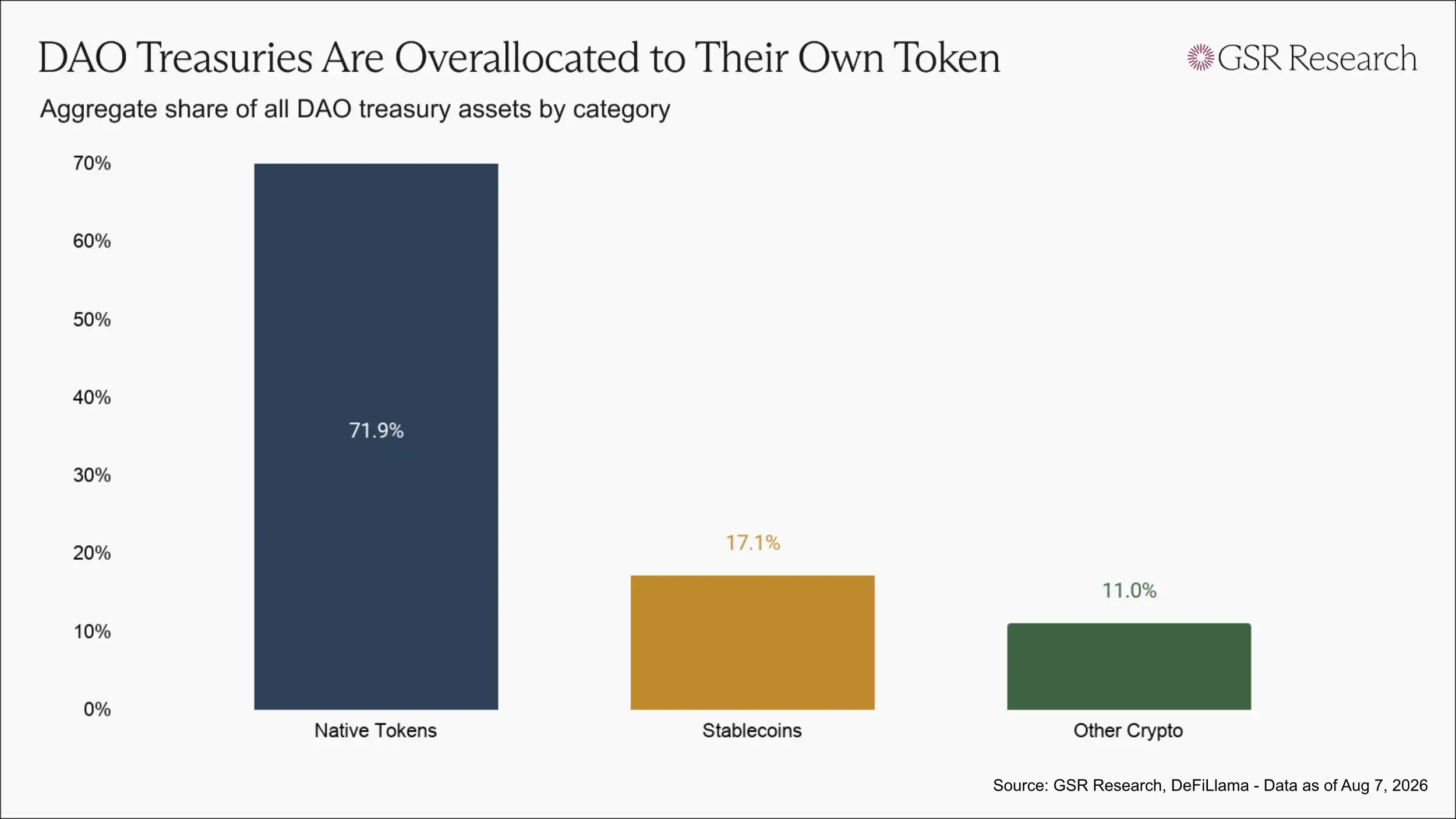
Nearly 70% of DAO treasury assets remain concentrated in native tokens, structurally exposing protocols to the simultaneous decline of treasury value, revenue, and on-chain activity.

Key Takeaways

  • The industry remains highly concentrated. Nearly 70% of DAO treasury assets are held in native tokens, leaving many projects facing a single source of risk during downturns.
  • Crypto treasuries are structurally pro-cyclical. Because most projects keep the majority of their reserves in their own tokens, their treasury value, protocol revenue, and market activity tend to decline simultaneously.
  • Projects always hedge too late. Our OTC desk observes a surge in demand for downside protection after price drops, at which point option premiums have already risen, and any floor price set by projects is far below the token's starting point.
  • Protection does not require selling. Collar strategies pay for downside protection by giving up some upside potential rather than consuming stablecoins, allowing projects to maintain both their positions and operational reserves.
  • Treasury structure is more important than timing. Separating operational reserves from long-term holdings and establishing risk management policies before market conditions deteriorate can extend the operational runway.
  • GSR is an active participant in the crypto treasury and risk management market. Our activities include providing OTC execution, block trades, and structured derivatives—including collar strategies and other hedging structures—for foundations, protocols, and other market participants.
At GSR, we see the same story repeating every market cycle.

Crypto treasuries are structurally pro-cyclical because most DAO treasuries remain highly concentrated in their own tokens. Overall, over 70% of treasury assets are held in the project's own tokens, with relatively low allocations to stable assets or diversified reserves.

We see the consequences of this configuration in every downturn.
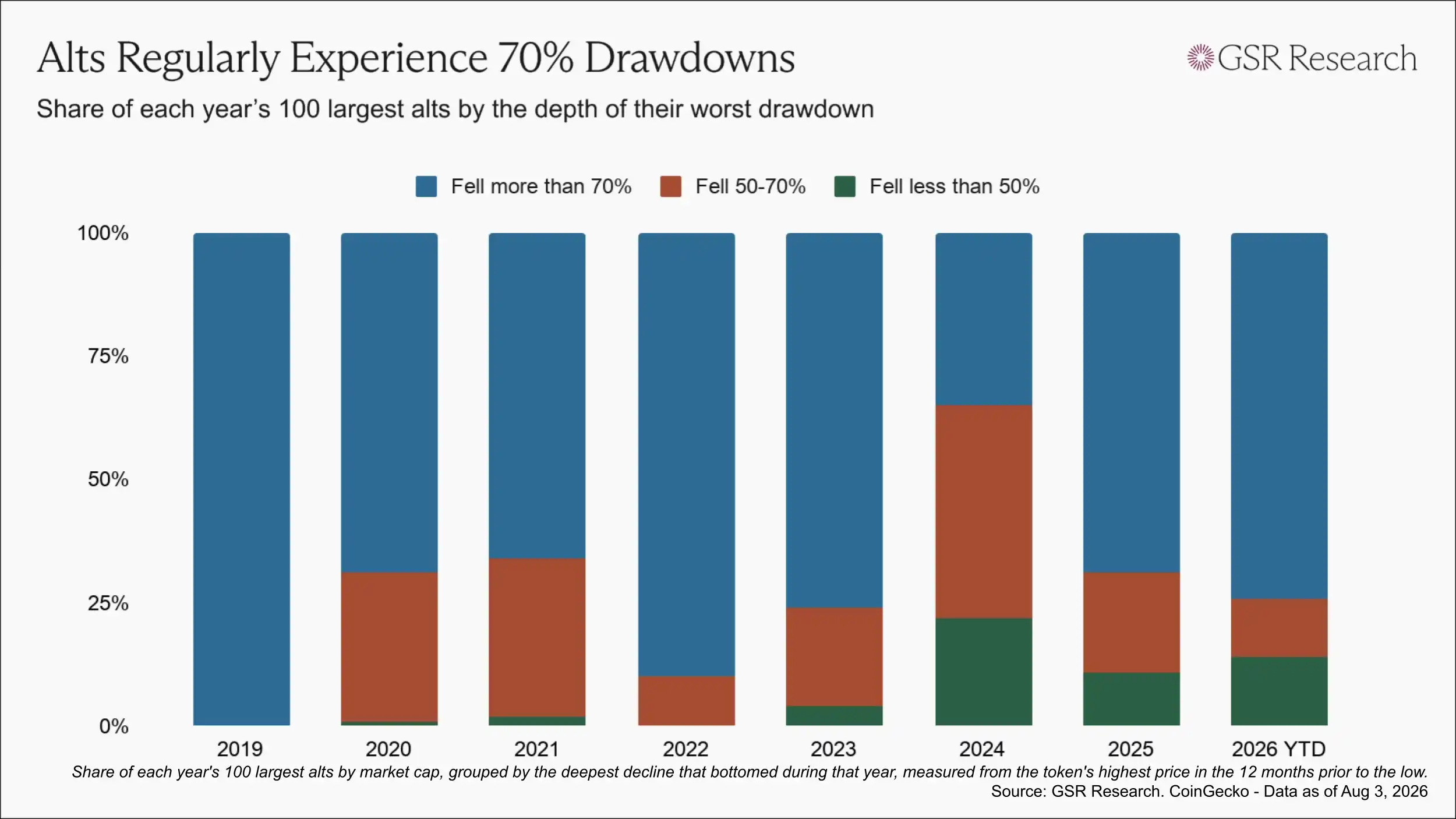
When the cycle reverses and token prices fall, the treasury originally intended to fund the roadmap suddenly becomes the project's biggest source of risk.

Given the current environment, we are having more of these conversations with clients than ever. Clients are not only suddenly asking when the market will recover but also whether the project has enough operational runway to continue building until the market does.

When Prices Fall, Activity Shrinks
The second challenge is structural.

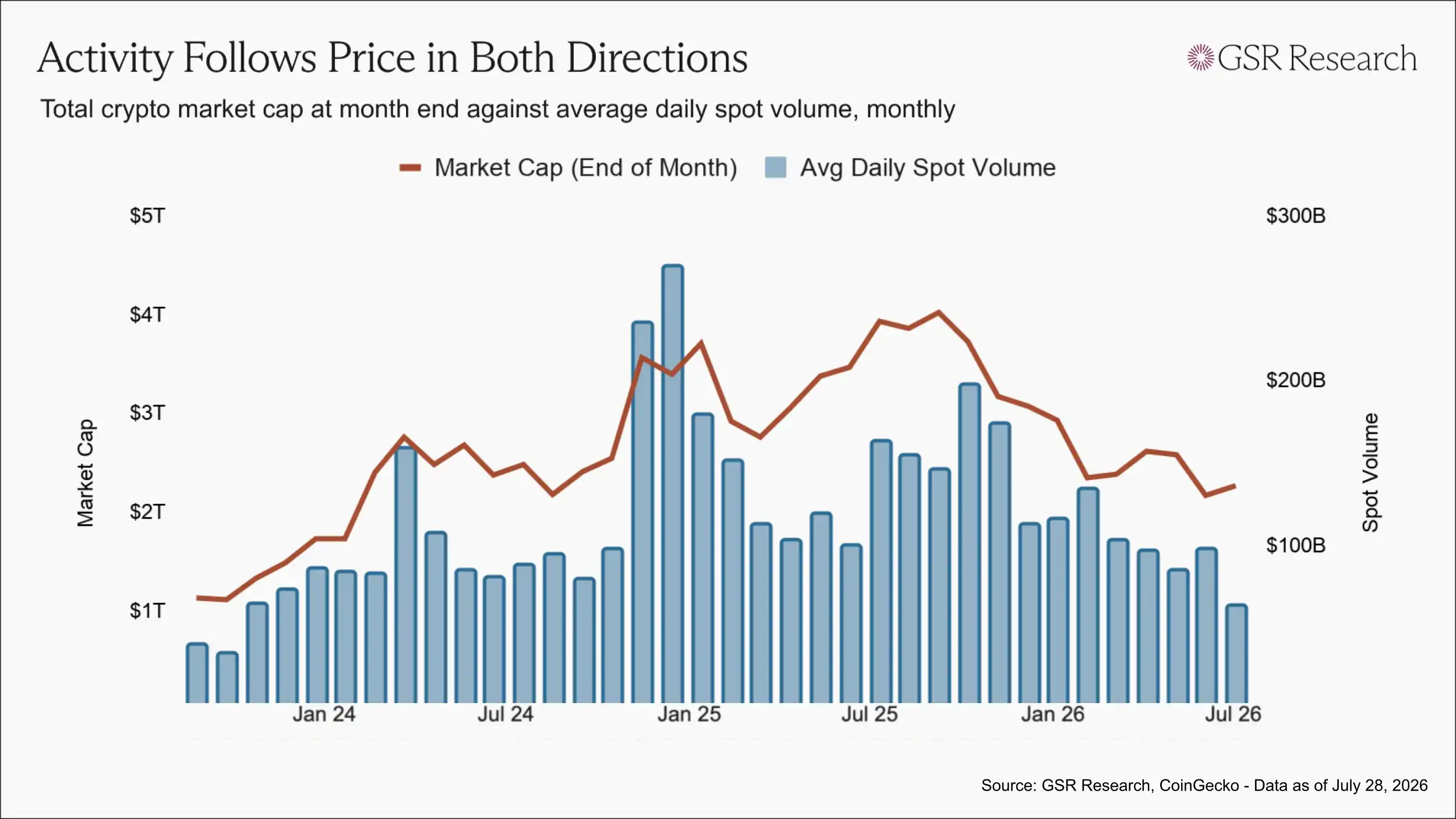
As treasury value declines, protocol activity weakens, fee generation slows, and liquidity deteriorates simultaneously. The treasury becomes least valuable precisely when it is needed most.

We see this across cycles. Teams think they have a treasury that can sustain them through difficult markets, but both sides of the balance sheet are exposed to the same underlying risks.

Costs do not fall with token prices. Salaries, audits, infrastructure, and grants are denominated in dollars, so projects financing through token sales must sell more tokens to raise the same amount. Selling more supply in a weak market further depresses the price, increasing the number of tokens needed next quarter. The treasury burns down faster than a simple drawdown suggests.

This is exactly the first question we ask every client: If the market falls for another 12 months, can your treasury still fund the roadmap?

Protection is Cheapest Before It's Needed
This is a clear pattern we observe on our OTC desk.

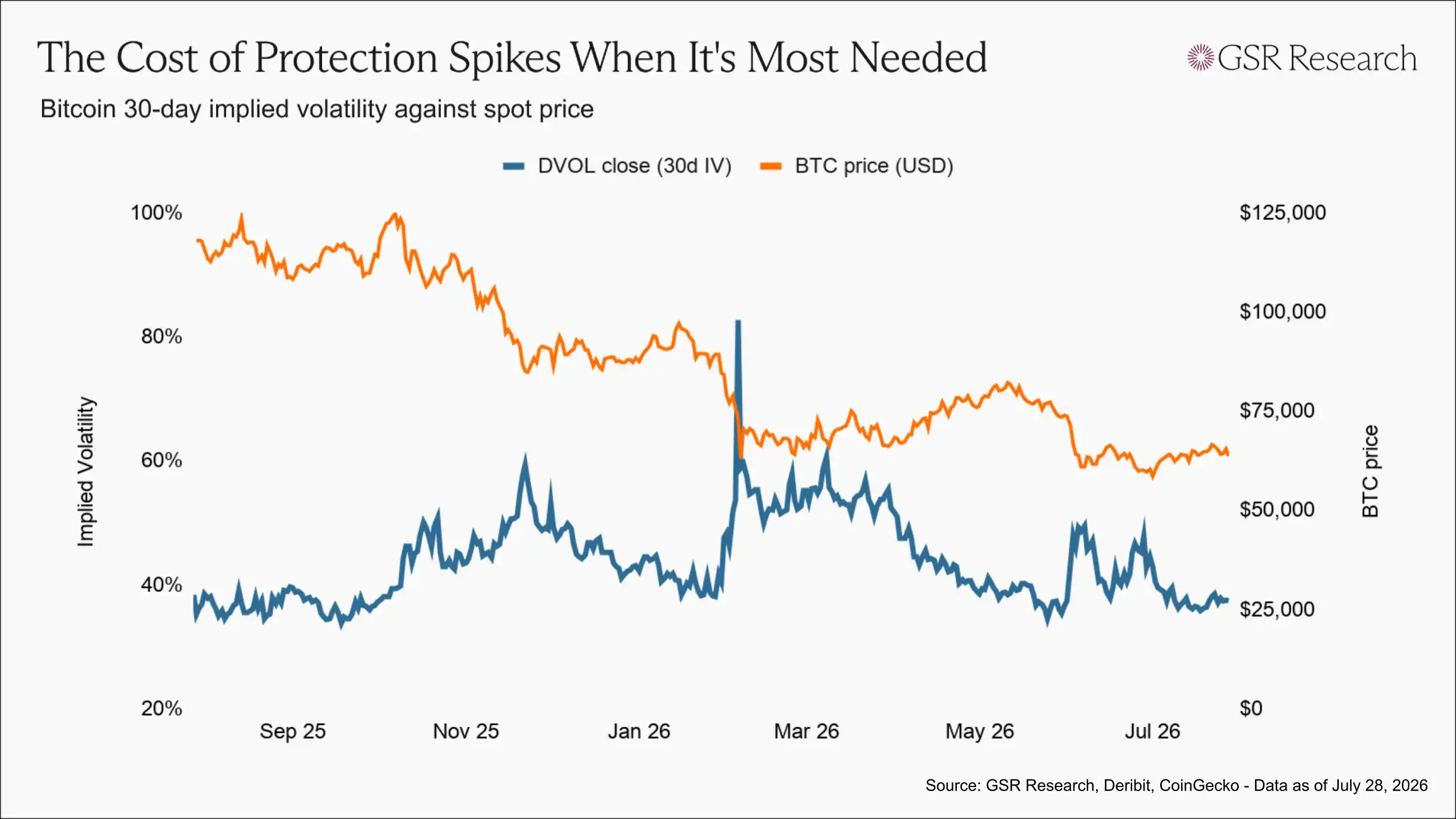
In bull markets, very few projects want to hedge because paying option premiums feels like sacrificing upside. Then the market sells off, and the conversation changes almost overnight. Suddenly everyone wants protection.

Unfortunately, that is also when protection is most expensive.

As shown in the chart above, implied volatility typically rises after market declines, driving up the cost of downside protection precisely when demand is highest. Financially, this is the equivalent of buying insurance when the storm is already overhead.

We've seen this play out repeatedly. Every client wishes they had hedged when volatility was low. But none can go back in time to do it.

Hedging should be seen as an ongoing treasury policy, not a last-minute panic call. You don't need to predict where the price will go next, only ensure that known liabilities can be funded regardless of market moves.

There is also more than one way to pay for protection. Because crypto asset volatility is typically more expensive than traditional assets, the structure we execute most often is the collar. A project sells a call option above the current price and uses the premium received to buy a put option below the current price. Ultimately, this sets a defined range for the project's tokens. Value is protected below the put strike price in exchange for giving up gains above the call strike price. If structured properly, the two legs can offset each other, allowing the trade to be executed at zero cost. This makes collars the hedging tool of choice for many projects, as outright put purchases consume the very reserves the hedge aims to protect.

A collar is not a sale because the project retains exposure within its chosen range. It trades away gains above the call strike for a known floor price. When dollar-denominated budgets are set a year in advance, collars can turn a volatile asset into a range the finance team can plan around.

None of this diminishes the case for acting early. A collar is a tool that provides protection starting from the day the token is priced. A project setting a floor when the token is $10 protects most of the value. A project waiting until the token falls to $4 ends up with a floor near $4. The structure is available in both cases, but it cannot recover what has already been lost.

Treasury Structure Determines Operational Runway
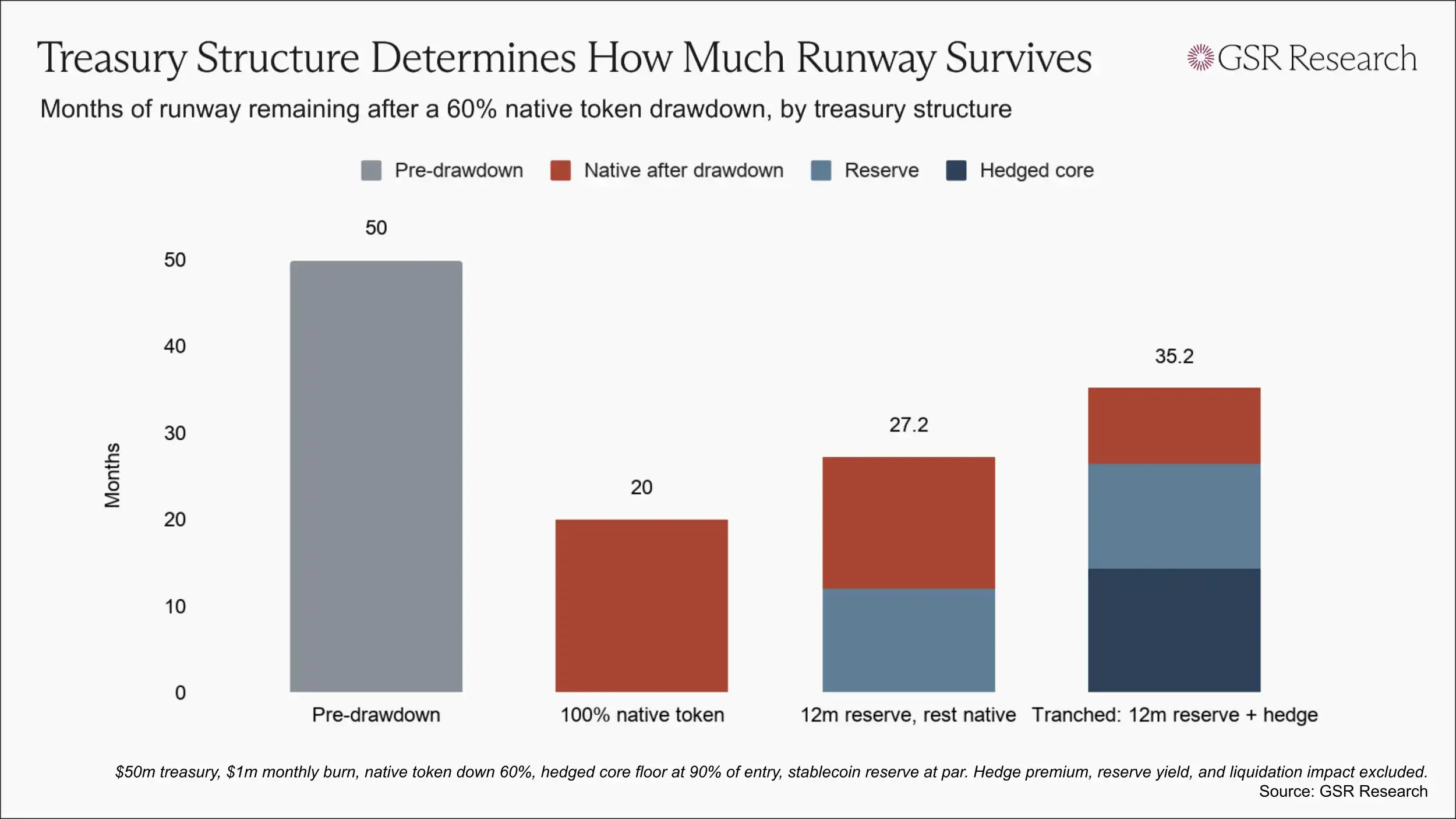
Projects that successfully navigate multiple cycles have treasuries with separate compartments, each with a clear purpose.

Operational reserves are held in cash or stable assets to cover salaries and operating expenses. Longer-term crypto holdings remain invested but are hedged where appropriate. Strategic positions stay intact without threatening the organization's survival.

The chart above illustrates the difference. A treasury held entirely in native tokens could lose years of operational runway in one significant drawdown. Separating reserves and protecting long-term holdings preserves much more operational runway, even without assuming any market recovery.

Survive first, then grow.

How GSR Can Help

This is exactly the area where we dedicate our efforts.

Every treasury is different. Liquidity, governance structure, vesting schedules, operational budgets, jurisdictional restrictions, and token concentration all influence how a treasury is built and the risks and trade-offs involved.

GSR works with foundations, DAOs, and protocols to provide OTC execution, collars and other custom derivatives, structured hedging solutions, and block trades. These transactions can be used to manage treasury concentration, market risk, and liquidity, tailored to the specific circumstances of the relevant treasury.

GSR's activity in these markets includes executing and structuring treasury transactions across different market conditions.

Our industry remains cyclical. The projects that ultimately stand out will be those that never stop building because their treasuries were built from the outset to withstand the valleys.

This material is provided by GSR ("the Company") for informational purposes only. It does not constitute advice or a recommendation to buy, sell, or hold any investment mentioned. Investors should form their own views regarding any proposed investment.

This material is intended only for sophisticated institutional investors and does not constitute an offer or commitment, an invitation to offer or commitment, or any advice or recommendation to enter into or conclude any transaction (whether or not on the terms indicated), or to provide any investment services in any state or country where such an offer, invitation, or service would be unlawful. In providing this material, the Company is not acting as and does not purport to be an advisor or fiduciary.

This material is not independent research and has not been prepared in accordance with any legal requirements designed to promote the independence of investment research issued by any regulator, including the FCA, FINRA, or CFTC.

This material is not independent of the Company's own interests, which may conflict with the interests of any of the Company's counterparties. The Company may trade for its own account in the investments discussed in this material, may engage in transactions contrary to the views expressed herein, and may hold positions in other related instruments. The Company is not subject to any restrictions on dealing ahead of disseminating this material.

The information contained herein is based on sources believed to be reliable, but its accuracy or completeness is not guaranteed. Any opinions or estimates expressed in this material reflect the judgment of the authors as of the date of publication and are subject to change without notice. The Company does not intend to update this information.

Trading and investing in digital assets involve significant risks, including price volatility and illiquidity, and may not be suitable for all investors. The Company is not responsible for any direct or indirect losses resulting from the use of this material. Copyright in this material belongs to GSR. This material or any copy thereof may not be accessed, reproduced, or redistributed directly or indirectly without the prior written consent of GSR.

For relevant regulatory legal notices regarding the United States, the United Kingdom, and Singapore, please see here.

Tiền kỹ thuật số thịnh hành

Câu hỏi Liên quan

QWhat is the main structural risk identified in the article regarding DAO treasuries?

AThe article identifies a structural risk where nearly 70% of DAO treasury assets are concentrated in their native tokens. This creates a pro-cyclical vulnerability where treasury value, protocol revenue, and on-chain activity are all exposed to decline simultaneously during a market downturn, threatening a project's operational runway.

QAccording to the article, what is a major issue with how projects approach hedging their treasury risks?

AProjects typically hedge too late. The article notes that demand for downside protection surges only *after* a price decline, when option premiums (volatility) are higher and any floor price set is far below the token's starting point, making the protection less effective and more expensive.

QWhat is the 'collar strategy' recommended for treasury management, and what is its key advantage?

AA collar strategy involves selling a call option above the current price and using the premium to buy a put option below it. This establishes a price range for the token. Its key advantage is that it provides a known floor price (downside protection) without spending stablecoin reserves, as the cost is funded by giving up potential gains above the call strike price. It can often be structured at zero cost.

QHow does the article suggest successful projects structure their treasuries to survive market cycles?

ASuccessful projects structure their treasuries into separate parts with distinct purposes: an operational reserve held in cash/stable assets to cover expenses, and longer-term crypto holdings that remain invested but are hedged where necessary. This separation ensures the organization's survival isn't threatened by token price volatility, preserving operational runway during downturns.

QWhat is the 'triple impact' or 'triple whammy' that DAOs face when the bull market ends, as described in the article?

AThe 'triple impact' refers to the simultaneous negative effects on a DAO when the market turns: 1) A sharp drop in the value of its treasury (heavily concentrated in its native token), 2) A decline in protocol revenue as on-chain activity weakens, and 3) A collapse in overall on-chain engagement and liquidity. These three factors converge to severely strain a project's finances and operational sustainability.

Nội dung Liên quan

Quan điểm: Đồng tiền ảo (Altcoin) có lẽ còn hy vọng, nhưng đồng tiền VC thì thực sự hết thời rồi

Tác giả Haotian chia sẻ góc nhìn về chiến lược đầu tư trong chu kỳ thị trường tiền điện tử hiện tại, nhấn mạnh sự chuyển dịch từ việc "nghe câu chuyện, đầu cơ vào kỳ vọng" sang "xem dòng tiền, xác minh ứng dụng thực tế". Bài viết đưa ra bốn nguyên tắc chính: 1) Ưu tiên các dự án có khả năng thu giữ giá trị thực, tạo ra doanh thu bền vững và sử dụng phí để mua lại, đốt hoặc chia cổ tức cho người nắm giữ token (ví dụ: $UNI, $PUMP, $PONS, $HYPE). 2) Lựa chọn dự án đã đạt Product-Market Fit (PMF) và có vòng kinh doanh khép kín, đặc biệt trong các lĩnh vực như token hóa tài sản và nền kinh tế agentic (ví dụ: $ONDO, $VVV, $VIRTUAL), tập trung vào số liệu như khối lượng giao dịch và khả năng tạo doanh thu. 3) Chọn tài sản có "sự đồng thuận" mạnh mẽ, được hình thành tự nhiên và có khả năng tồn tại qua nhiều chu kỳ, như các meme coin lâu đời ($DOGE, $PEPE, $PEOPLE) hoặc tài sản hàng đầu trong các phân khúc ($ZEC, $TAO). 4) Tránh xa các token VC thuần túy (do các quỹ mạo hiểm hậu thuẫn) vì chúng thường có định giá cao khi phát hành (FDV), tỷ lệ lưu thông thấp và bị áp lực bán lớn khi token được mở khóa, gây bất lợi cho nhà đầu tư nhỏ lẻ. Tác giả kết luận rằng trong khi các altcoin (tiền điện tử thay thế) vẫn có cơ hội, thì các token VC đã không còn triển vọng trong bối cảnh thị trường hiện nay. Lưu ý: Đây là quan điểm cá nhân, các ví dụ token chỉ để minh họa và không phải là lời khuyên đầu tư.

marsbit10 phút trước

Quan điểm: Đồng tiền ảo (Altcoin) có lẽ còn hy vọng, nhưng đồng tiền VC thì thực sự hết thời rồi

marsbit10 phút trước

Nhà Trắng cam kết đưa Đạo luật CLARITY vượt qua 'vạch đích' vào tháng 9

Chính quyền Tổng thống Mỹ Donald Trump vẫn cam kết thông qua Đạo luật CLARITY vào tháng 9, bất chấp việc Thượng viện quyết định trì hoãn hành động cho đến sau kỳ nghỉ tháng 8, theo quan chức chính sách tiền mã hóa hàng đầu của Nhà Trắng. Patrick Witt, Giám đốc điều hành Hội đồng Cố vấn của Tổng thống về Tài sản Kỹ thuật số, cho biết chính quyền sẽ tiếp tục đàm phán với đảng Dân chủ cho đến tận cuộc bỏ phiếu tháng 9, đồng thời nhấn mạnh "chúng ta cũng không thể chờ đợi mãi". Dự luật CLARITY nhằm thiết lập cấu trúc thị trường liên bang cho tài sản kỹ thuật số, bao gồm các quy tắc xác định khi nào tiền mã hóa thuộc luật chứng khoán hay hàng hóa và cách các nền tảng giao dịch được quản lý. Tuy nhiên, một số bất đồng vẫn chưa được giải quyết, như các yêu cầu của đảng Dân chủ về điều khoản đạo đức nghiêm ngặt hơn liên quan đến lợi ích tiền mã hóa gắn với ông Trump, và các đề xuất thay đổi quy tắc cho phép công ty trả thưởng cho người nắm giữ stablecoin. Thượng viện dự kiến tổ chức một cuộc bỏ phiếu kết thúc tranh luận về dự luật vào giữa tháng 9.

cointelegraph1 giờ trước

Nhà Trắng cam kết đưa Đạo luật CLARITY vượt qua 'vạch đích' vào tháng 9

cointelegraph1 giờ trước

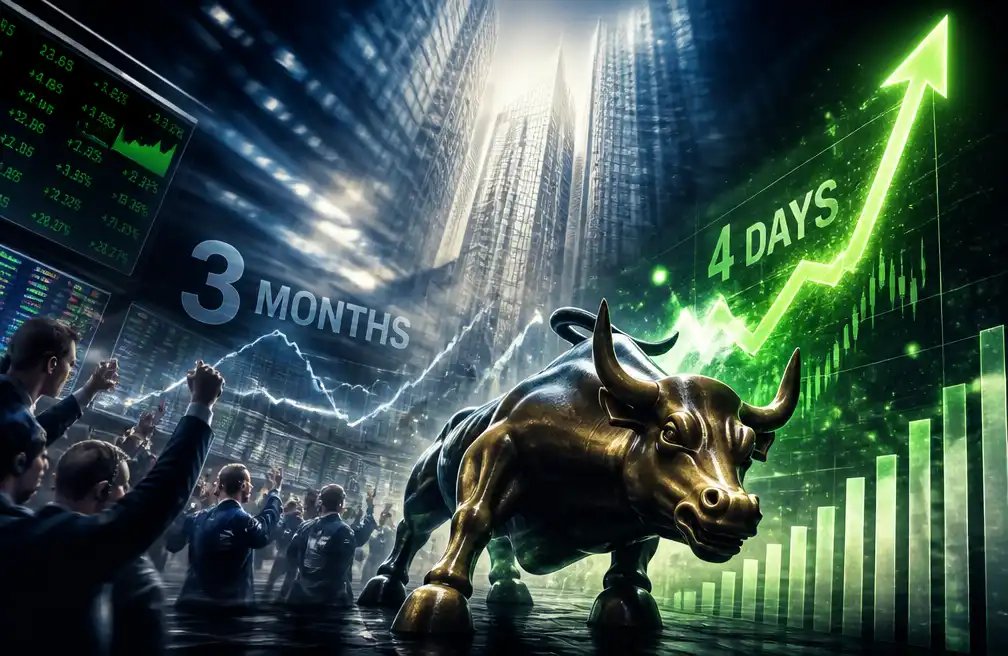
Tâm lý FOMO ở Phố Wall tiếp tục ấm lên, làm sao bốn ngày tăng có thể vượt xa biến động ba tháng?

Sau phiên đóng cửa ngày 4/8, Phố Wall chứng kiến một đợt tăng tốc khó bỏ qua: Chỉ số S&P 500 tăng tích lũy 5.8% chỉ trong bốn phiên giao dịch. Theo Reuters, thị trường quyền chọn cũng ghi nhận mức độ lạc quan hiếm thấy trong ít nhất bốn năm qua. Điểm đặc biệt nằm ở tốc độ tăng giá nhanh chóng. Dữ liệu đóng cửa từ FRED cho thấy, mức di chuyển điểm số trong bốn ngày này thậm chí đã vượt qua khoảng chênh lệch giữa mức đóng cửa cao nhất và thấp nhất của khoảng ba tháng trước đó, khiến nhịp giao dịch thay đổi rõ rệt. Hiện tượng này được mô tả là FOMO (nỗi sợ bỏ lỡ). Xét trong mười năm gần đây, mức tăng 5.7458% trong bốn phiên thuộc phân vị 99.32, cực kỳ hiếm gặp. Chỉ có 18 khoảng thời gian tương tự đạt được biên độ tăng này. Một nghịch lý thú vị xuất hiện: trong khi chỉ số S&P 500 tăng 1.79% vào ngày 4/8, chỉ số VIX (đo lường kỳ vọng biến động) cũng tăng 4.04%. Điều này cho thấy thị trường không hạ thấp định giá rủi ro biến động trong tương lai. Báo cáo chỉ ra rằng độ lệch tăng (call skew) đối với quyền chọn ngắn hạn đạt mức cao nhất trong hai năm, và tỷ lệ call/put trung bình hàng ngày trong một tháng ở mức 0.9 – mức lạc quan nhất trong ít nhất bốn năm, cho thấy sự kết hợp giữa tâm lý tìm kiếm lợi nhuận và phòng ngừa rủi ro.

marsbit1 giờ trước

Tâm lý FOMO ở Phố Wall tiếp tục ấm lên, làm sao bốn ngày tăng có thể vượt xa biến động ba tháng?

marsbit1 giờ trước

Báo buổi sáng Phố Wall: Chỉ số bán dẫn Philadelphia giảm gần 3%, 'đám mây nghi ngờ' về 'tài trợ vòng lặp' của Nvidia gây ra đợt điều chỉnh cổ phiếu công nghệ, cổ phiếu truyền thông quang và chip lao dốc

Báo cáo Buổi sáng Phố Wall: Chỉ số bán dẫn Philadelphia giảm gần 3%, trong khi những nghi ngờ về mô hình tài trợ vòng tuần hoàn của Nvidia khiến cổ phiếu công nghệ điều chỉnh giảm, cổ phiếu quang thông tin và chip lao dốc. Thị trường chứng khoán Mỹ giảm nhẹ từ mức cao kỷ lục vào thứ Hai, chịu áp lực từ phí bảo hiểm địa chính trị và các nghi ngờ về tài trợ AI. Dầu thô tăng mạnh do kỳ vọng mở lại lại eo biển Hormuz nguội lạnh sau các tuyên bố cứng rắn từ Mỹ và Iran. Vàng đạt mức cao nhất trong 2 tháng, trong khi lợi tức trái phiếu kho bạc tăng lên, đẩy tỷ lệ thị trường dự đoán Fed tăng lãi suất vào tháng 9 lên khoảng 54%. Lĩnh vực bán dẫn và cơ sở hạ tầng AI chịu áp lực bán mạnh, với chỉ số bán dẫn Philadelphia giảm gần 3%. Cổ phiếu quang thông tin như Coherent và Lumentum là một trong những mã giảm mạnh nhất. Tâm điểm là thông tin Nvidia đang lên kế hoạch huy động hơn 5000 tỷ USD vốn từ bên thứ ba để xây dựng chip AI, điện lực và trung tâm dữ liệu, làm dấy lên lo ngại về một vòng tuần hoàn tài trợ có thể thổi phồng nhu cầu và định giá. CEO Jensen Huang đã làm rõ đây là vốn huy động tổng thể, không phải doanh thu của Nvidia, nhưng thị trường vẫn tập trung vào khả năng sinh lời cuối cùng của các dự án. Các cổ phiếu phần mềm như Microsoft, Amazon, Palantir lại tăng điểm. Lĩnh vực năng lượng và quốc phòng cũng tăng nhờ động lực địa chính trị. Một số biến động cổ phiếu đáng chú ý: Nvidia giảm 2,86%, Intel giảm hơn 4% do thông báo phát hành cổ phiếu mới, SpaceX tăng 4,23%, trong khi Rocket Lab giảm do kết quả lỗ trên mỗi cổ phiếu và dự báo quý III thất vọng. Các sự kiện sắp tới cần theo dõi: Quyết định lãi suất của Ngân hàng Dự trữ Úc (RBA) và báo cáo tài chính từ Lumentum, CoreWeave và Super Micro Computer, sẽ cung cấp manh mối quan trọng về sức khỏe của lĩnh vực cơ sở hạ tầng AI.

marsbit1 giờ trước

Báo buổi sáng Phố Wall: Chỉ số bán dẫn Philadelphia giảm gần 3%, 'đám mây nghi ngờ' về 'tài trợ vòng lặp' của Nvidia gây ra đợt điều chỉnh cổ phiếu công nghệ, cổ phiếu truyền thông quang và chip lao dốc

marsbit1 giờ trước

Giao dịch

Giao ngay

Bài viết Nổi bật

Làm thế nào để Mua DAO

Chào mừng bạn đến với HTX.com! Chúng tôi đã làm cho mua DAO Maker (DAO) trở nên đơn giản và thuận tiện. Làm theo hướng dẫn từng bước của chúng tôi để bắt đầu hành trình tiền kỹ thuật số của bạn.Bước 1: Tạo Tài khoản HTX của BạnSử dụng email hoặc số điện thoại của bạn để đăng ký tài khoản miễn phí trên HTX. Trải nghiệm hành trình đăng ký không rắc rối và mở khóa tất cả tính năng. Nhận Tài khoản của tôiBước 2: Truy cập Mua Crypto và Chọn Phương thức Thanh toán của BạnThẻ Tín dụng/Ghi nợ: Sử dụng Visa hoặc Mastercard của bạn để mua DAO Maker (DAO) ngay lập tức.Số dư: Sử dụng tiền từ số dư tài khoản HTX của bạn để giao dịch liền mạch.Bên thứ ba: Chúng tôi đã thêm những phương thức thanh toán phổ biến như Google Pay và Apple Pay để nâng cao sự tiện lợi.P2P: Giao dịch trực tiếp với người dùng khác trên HTX.Thị trường mua bán phi tập trung (OTC): Chúng tôi cung cấp những dịch vụ được thiết kế riêng và tỷ giá hối đoái cạnh tranh cho nhà giao dịch.Bước 3: Lưu trữ DAO Maker (DAO) của BạnSau khi mua DAO Maker (DAO), lưu trữ trong tài khoản HTX của bạn. Ngoài ra, bạn có thể gửi đi nơi khác qua chuyển khoản blockchain hoặc sử dụng để giao dịch những tiền kỹ thuật số khác.Bước 4: Giao dịch DAO Maker (DAO)Giao dịch DAO Maker (DAO) dễ dàng trên thị trường giao ngay của HTX. Chỉ cần truy cập vào tài khoản của bạn, chọn cặp giao dịch, thực hiện giao dịch và theo dõi trong thời gian thực. Chúng tôi cung cấp trải nghiệm thân thiện với người dùng cho cả người mới bắt đầu và người giao dịch dày dạn kinh nghiệm.

Tổng lượt xem 467Xuất bản vào 2024.12.11Cập nhật vào 2026.06.02

Làm thế nào để Mua DAO

Thảo luận

Chào mừng đến với Cộng đồng HTX. Tại đây, bạn có thể được thông báo về những phát triển nền tảng mới nhất và có quyền truy cập vào thông tin chuyên sâu về thị trường. Ý kiến ​​của người dùng về giá của DAO (DAO) được trình bày dưới đây.

活动图片