1.65 Billion Yuan: Sichuan Power Semiconductor Company Sells Itself

marsbitXuất bản vào 2026-08-07Cập nhật gần nhất vào 2026-08-07

Tóm tắt

Sichuan-based power semiconductor company Jingyi Semiconductor is being acquired by its customer, Jiangsu-listed power semiconductor firm Suzhou Kaiweite Semiconductor Co., Ltd. ("Kaiweite"), for 1.65 billion yuan. Following the transaction, Jingyi Semiconductor will become a wholly-owned subsidiary of Kaiweite. Kaiweite will pay for the acquisition partly with new shares (approximately 901 million yuan worth) and partly in cash (approximately 749 million yuan). The deal is considered a major asset restructuring as Jingyi Semiconductor's assets and revenue in 2025 were 176.34% and 137.38% of Kaiweite's, respectively. Financially, Kaiweite has reported losses for 2024 and 2025. In contrast, Jingyi Semiconductor has remained profitable. The acquisition is expected to significantly improve Kaiweite's profitability. Jingyi Semiconductor's controlling shareholder and chairman, Yi Kun, along with employee持股 platforms, will hold a 13.28% stake in Kaiweite post-transaction. Founded in 2015 and listed on Shanghai's STAR Market in 2023, Kaiweite is a national-level "Little Giant" specializing in intelligent power semiconductor devices and power integrated chips. Established in 2019, Jingyi Semiconductor is a fabless power semiconductor company and a national-level专精特新重点"Little Giant." Its products, including Intelligent Power Modules (IPM), are supplied to major domestic appliance makers like Midea, Xiaomi, Gree, TCL, and Hisense-Hitachi. The company holds a leading 53.5% market sha...

Reported by CoreThings on August 6th, last night, Jiangsu-listed A-share company and power semiconductor firm Suzhou Kaiweite Semiconductor Co., Ltd. (hereinafter referred to as "Kaiweite") issued an announcement, stating its intention to acquire 100% equity of Chengdu power semiconductor company Jingyi Semiconductor Co., Ltd. (hereinafter referred to as "Jingyi Semiconductor") for 1.65 billion yuan, and to issue shares to no more than 35 specific investors to raise supporting funds.

Upon completion of this transaction, Jingyi Semiconductor will become a wholly-owned subsidiary of Kaiweite.
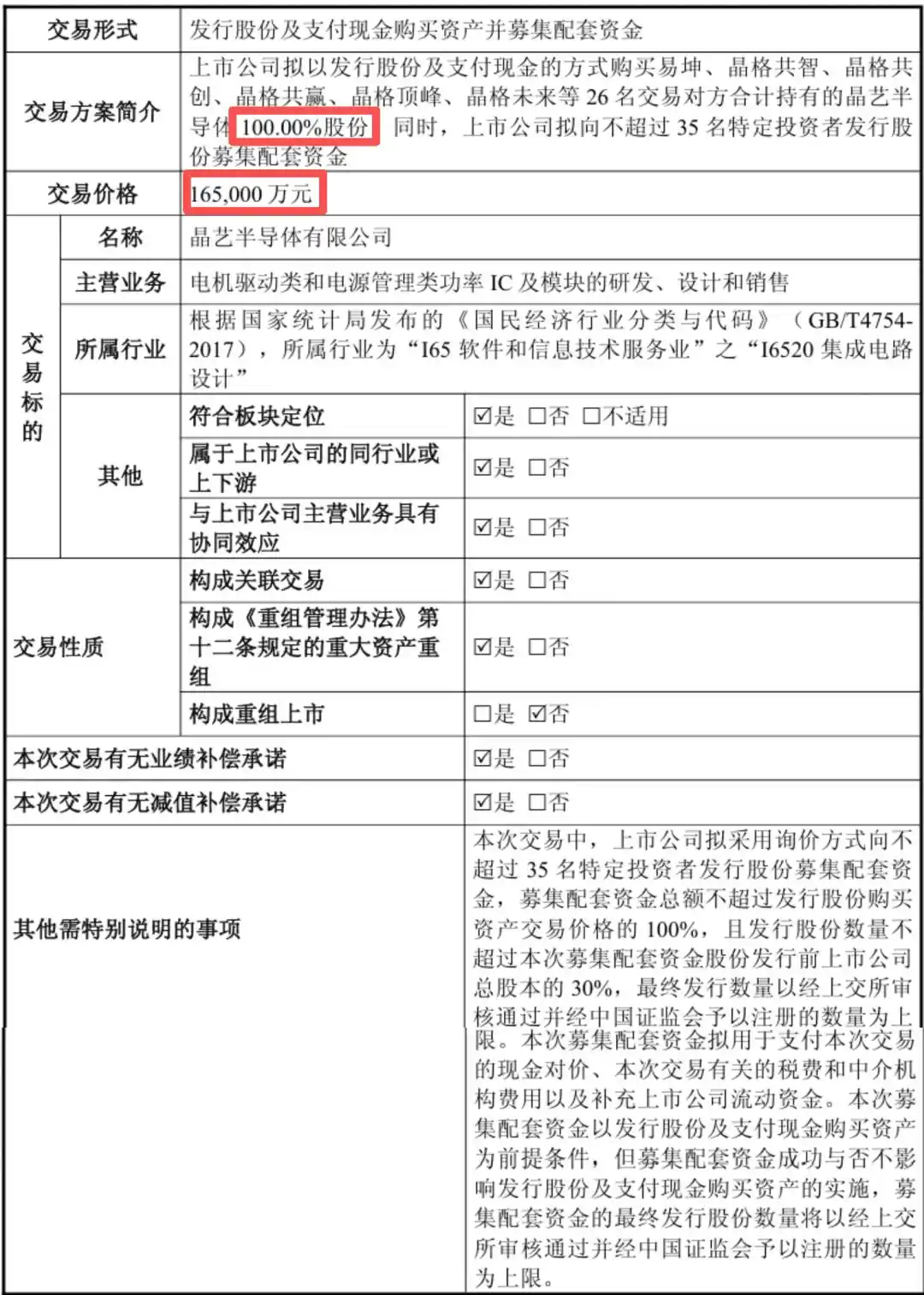
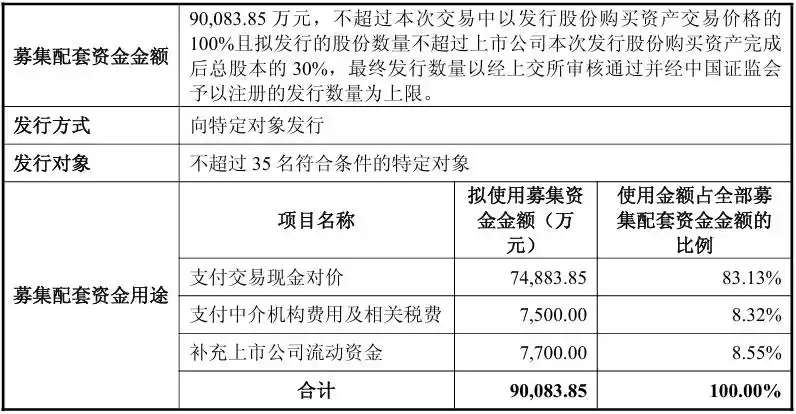
Kaiweite expects to raise supporting funds amounting to approximately 901 million yuan, not exceeding 100% of the transaction price of the share issuance for asset purchase in this deal, and the number of shares to be issued will not exceed 30% of Kaiweite's total share capital after the completion of this share issuance for asset purchase.
Jingyi Semiconductor is one of the major customers of Kaiweite. This acquisition of Jingyi Semiconductor by Kaiweite, described as a "snake swallowing an elephant," constitutes a significant asset restructuring.

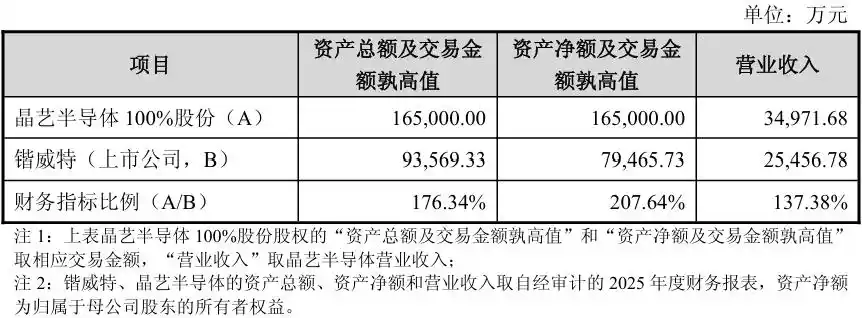
According to the performance data of both parties in the transaction for the year 2025, the higher value between Kaiweite's total assets and the transaction amount is approximately 936 million yuan, with operating revenue around 255 million yuan; the higher value between Jingyi Semiconductor's total assets and the transaction amount is 1.65 billion yuan, with operating revenue around 350 million yuan, which are 176.34% and 137.38% of Kaiweite's respective figures, both higher than Kaiweite's.
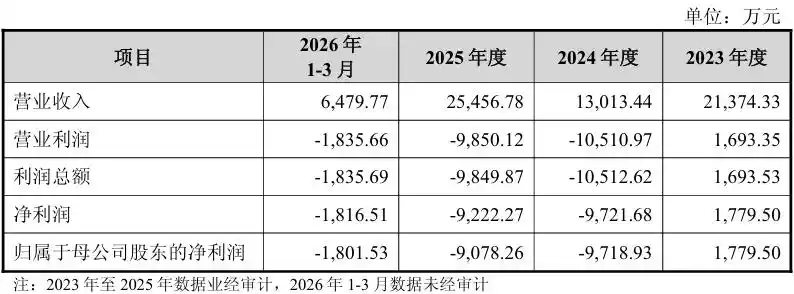
According to Kaiweite's published plan, Kaiweite achieved profitability in 2023, with net profit attributable to the parent company's shareholders being 17.795 million yuan; the company recorded losses in both 2024 and 2025, with net profit attributable to the parent company's shareholders being -97.1893 million yuan and -90.7826 million yuan respectively; in the first quarter of 2026, this figure was -18.0153 million yuan, still in a loss-making state.
For 2024, 2025, and January-February 2026, Jingyi Semiconductor's net profit attributable to the owners of the parent company (excluding share-based payments) was 66.6906 million yuan, 89.6814 million yuan, and 25.8512 million yuan respectively, demonstrating stronger profitability than Kaiweite.
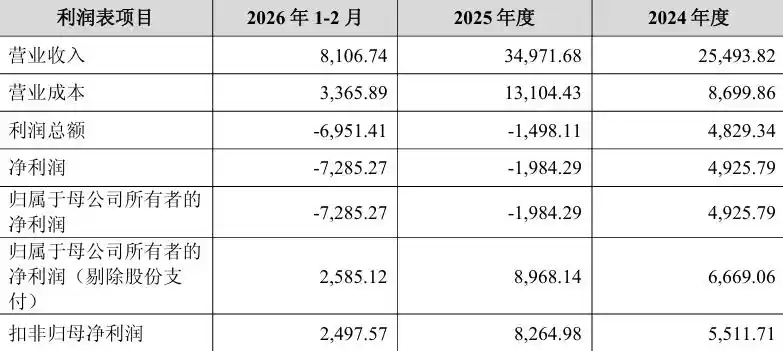
Assuming the acquisition is completed, Kaiweite's net profit attributable to the owners of the parent company for 2025 and January-February 2026 would be 20.9468 million yuan and 18.8593 million yuan respectively, indicating a significant improvement in profitability.

The performance commitments for both parties in this acquisition are: Jingyi Semiconductor's chip customization and mass production business shall achieve cumulative net profit for 2026 and 2027 of no less than 255 million yuan; its self-developed chip business shall achieve revenue for 2026, 2027, and 2028 of no less than 335 million yuan, 452 million yuan, and 566 million yuan respectively, with cumulative revenue over three years no less than 1.353 billion yuan.

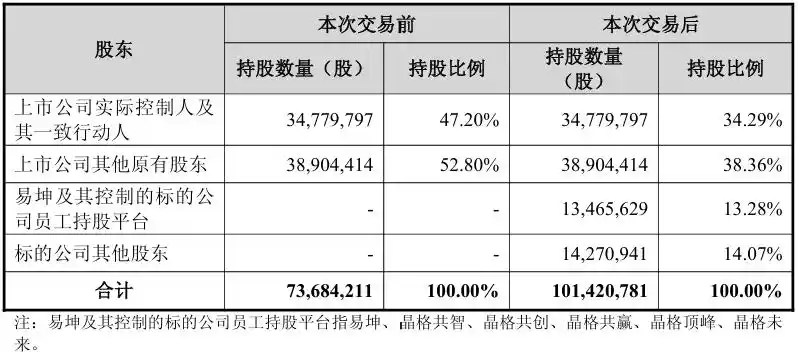
As of February 28, 2026, Kaiweite's total share capital was 73,684,211 shares. In this transaction, Kaiweite will issue 27,736,570 new shares as share consideration to Jingyi Semiconductor.

The share consideration payment in this Kaiweite transaction is approximately 901 million yuan, and the cash payment consideration is approximately 749 million yuan. Among this, the actual controller and chairman of Jingyi Semiconductor, Yi Kun, and entities like Jingge Gongzhi, Jingge Gongchuang, as performance commitment parties, will receive total consideration of approximately 998 million yuan in this transaction, including share consideration of approximately 659 million yuan and cash consideration of approximately 339 million yuan.

Among the share consideration received by the performance commitment parties, the portion corresponding to the chip customization and mass production business (i.e., 296 million yuan) is planned to be issued in two tranches; the remaining share consideration of approximately 363 million yuan is planned to be paid in a lump sum after the completion of this transaction.

After the completion of this transaction (excluding the supporting funds raised), Yi Kun and Jingyi Semiconductor's employee持股平台 (referring to Yi Kun, Jingge Gongzhi, Jingge Gongchuang, Jingge Gongying, Jingge Dingfeng, Jingge Weilai) will hold 13.28% of Kaiweite's shares; after the completion of this issuance of shares and payment of cash for asset purchase, the proportion of Kaiweite's shares controlled by Yi Kun will exceed 5%.
Kaiweite was founded in 2015 by its founders, Chairman Ding Guohua, an alumnus of Xi'an Jiaotong University, and General Manager Luo Yin, an alumnus of Southeast University, both holding master's degrees from Southeast University.

The company is primarily engaged in the R&D, production, and sales of smart power semiconductor devices and power integrated chips. It was listed on the Shanghai Stock Exchange's STAR Market on August 18, 2023, and is recognized as a National-level "Little Giant" Enterprise specializing in niche sectors. Its products include Power Device, power management, power driver, amplifier, power switch, isolation device, and logic device products.

Kaiweite's products are applied in consumer electronics, industrial control, and high-reliability fields, and it now has nearly 800 product types including smart power ICs, Si-based and SiC power devices.

The day after Kaiweite announced the acquisition of Jingyi Semiconductor, its A-share stock price opened with a limit-up (涨停). As of the close of A-shares today, Kaiweite's stock price rose by 20% to 77.82 yuan per share, with a total market capitalization of 5.734 billion yuan.
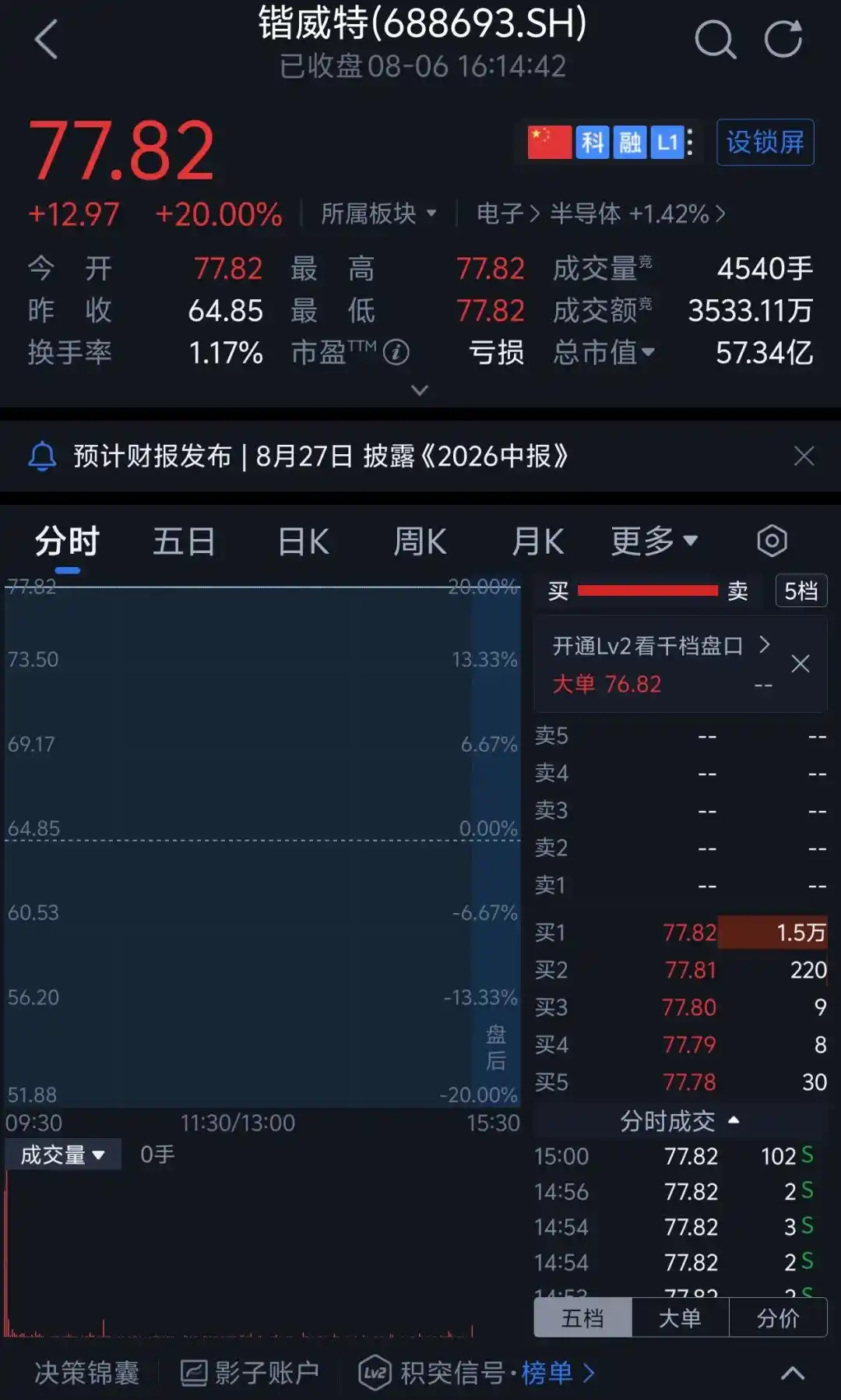
Kaiweite A-share Stock Price (Source: Tencent Self-selected Stocks)

Jingyi Semiconductor was founded in January 2019 and is a fabless power semiconductor enterprise, also recognized as a National-level Key "Little Giant" Enterprise specializing in niche sectors.

The company is mainly engaged in the R&D design and sales of single-chip power ICs, multi-chip hybrid packaging power modules, and system-level power conversion modules. It possesses two major categories of power products: motor drive and power management, specifically covering four product lines: Intelligent Power Module (IPM), micro motor drive IC, high-performance computing power management, and industrial and consumer power management. Its products are applied in markets such as white goods, industrial, smart meters, optical modules, solid-state drives (SSD), security, communications, and high-performance computing.

Simultaneously, Jingyi Semiconductor procures power devices from Kaiweite and packages them with its self-developed power control ICs to form Intelligent Power Module (IPM) products. Related products have been supplied to leading domestic home appliance industry companies such as Midea, Xiaomi, Gree, TCL, Hitachi-Haier, and have successfully achieved batch production, with cumulative mass production cooperation clients exceeding 500.

Jingyi Semiconductor has continuously focused on the layout of half-bridge IPM for air conditioner fans, being the earliest to achieve product introduction and规模化出货 in the white goods half-bridge IPM field. Frost & Sullivan测算 data shows that in 2025, Jingyi Semiconductor's products held a market share of 53.5% in the domestic IPM half-bridge module market.

Furthermore, according to Frost & Sullivan测算, in 2025, Jingyi Semiconductor ranked among the top five local manufacturers in terms of shipment volume in the domestic DC-DC market. Among these, in the smart meter field, Jingyi Semiconductor's DC-DC chips with ultra-low ripple, high抗干扰, and high efficiency降压 hold a leading position in the industry market share, serving core终端 clients such as State Grid and China Southern Power Grid.

In the security field, Jingyi Semiconductor provides customers with solutions featuring极简化 peripheral devices and optimal costs, having successfully supplied leading security industry companies like Hikvision and Dahua Technology; in the optical module field, the company is one of the few domestic chip suppliers capable of mass-producing multiple product categories and providing relatively comprehensive power management solutions, already having头部 clients such as Huagong Tech, Accelink, and Lantech.

Conclusion: M&A Repairs Profitability Level, Expands Power Semiconductor Product Layout

Kaiweite has incurred losses for two consecutive years. This acquisition and merger with Jingyi Semiconductor can further improve Kaiweite's current profit situation of阶段性亏损.

The business fit between these two companies is relatively high. Upon completion of this transaction, Kaiweite and Jingyi Semiconductor can carry out integration in areas such as product layout, technology R&D, client channels, and internal management. Kaiweite can supplement its power semiconductor and other product matrices, while simultaneously enhancing its technological R&D水平, broadening a larger market space for domestic power semiconductors.

This article is from the WeChat public account "CoreThings", author: Liu Yu, editor: Chen Junda

Tiền kỹ thuật số thịnh hành

Câu hỏi Liên quan

QWhat is the total acquisition amount, and which company is acquiring which?

AThe total acquisition amount is 16.5 billion yuan. Suzhou Kaiweite Semiconductor Co., Ltd. (Kaiweite) is acquiring 100% equity of Chengdu Jingyi Semiconductor Co., Ltd. (Jingyi Semiconductor).

QHow does the financial performance of Kaiweite compare to Jingyi Semiconductor in recent years?

AKaiweite reported losses in 2024 and 2025, with net profits of -97.1893 million and -90.7826 million yuan, respectively. In contrast, Jingyi Semiconductor was profitable during the same period, with net profits (excluding share-based payments) of 66.6906 million yuan in 2024 and 89.6814 million yuan in 2025.

QWhat is the primary business relationship between Kaiweite and Jingyi Semiconductor prior to the acquisition?

AJingyi Semiconductor was one of Kaiweite's major customers. Specifically, Jingyi purchased power devices from Kaiweite and integrated them with its self-developed power control ICs to create IPM (Intelligent Power Module) products.

QWhat are the performance commitments made for Jingyi Semiconductor's business segments post-acquisition?

AFor its chip customization and mass production business, cumulative net profit for 2026 and 2027 must not be less than 255 million yuan. For its self-developed chip business, revenue for 2026, 2027, and 2028 must be no less than 335 million, 452 million, and 566 million yuan respectively, with a cumulative three-year revenue not less than 1.353 billion yuan.

QWhat was the market reaction to the acquisition announcement regarding Kaiweite's stock price?

AFollowing the announcement, Kaiweite's A-share stock price opened with a limit-up (涨停) and closed the trading day with a 20% increase, reaching 77.82 yuan per share, giving the company a total market capitalization of 5.734 billion yuan.

Nội dung Liên quan

Bảo mật, An toàn lượng tử, Rollup Gốc: Ethereum đã thêm gì vào lộ trình của mình?

Tác giả sáng lập Ethereum Vitalik Buterin đã cập nhật lộ trình phát triển công nghệ, phản ánh những thay đổi lớn về ưu tiên so với năm 2023. Ba hướng mới nổi bật được bổ sung. **Bảo mật mạnh mẽ trở thành ưu tiên cấp cao:** Lần đầu tiên, bảo vệ quyền riêng tư mạnh mẽ được đưa vào các mục tiêu cấp giao thức. Các đề xuất EIP-8250, EIP-8272 và EIP-8182 hướng tới giải quyết các vấn đề như giao dịch đồng thời, xác minh bằng chứng và tạo nhóm ẩn danh chung cho ETH/ERC-20, nhằm thiết lập nền tảng cho chuyển khoản riêng tư mặc định trong tương lai. **Nâng cao ưu tiên cho an toàn lượng tử:** Việc chuẩn bị cho an ninh hậu lượng tử được đẩy mạnh, nhắm vào các rủi ro tiềm ẩn với chữ ký ECDSA, BLS, cam kết KZG và hệ thống bằng chứng không kiến thức. Lộ trình đề cập đến các giải pháp như chữ ký tổng hợp leanSPHINCS và việc áp dụng rộng rãi STARK đệ quy. Quá trình nâng cấp L1 dự kiến hoàn thành khoảng năm 2029. **Giới thiệu Rollup nguyên sinh (Native Rollup):** EIP-8079 đề xuất cho phép Rollup tương thích EVM tái sử dụng cơ sở hạ tầng xác minh của mạng chính thông qua một hàm biên dịch trước EXECUTE, nhằm giảm thiểu mã xác minh tùy chỉnh và tăng cường kế thừa bảo mật từ L1. Điều này điều chỉnh mối quan hệ xác minh giữa L2 và L1 chứ không thay thế cấu trúc mở rộng đa chuỗi. Các thay đổi đáng chú ý khác bao gồm việc thay thế cây Verkle bằng cây nhị phân phân vùng (PBT) cho thiết kế trạng thái, cùng với các thảo luận dài hạn về hợp đồng tương lai cho Blob/Gas và các tập lệnh kiến trúc không phải EVM. Lộ trình Strawmap vạch ra khoảng 7 đợt nâng cấp tiềm năng đến năm 2029, nhưng đây là định hướng dài hạn và không phải lời hứa triển khai cụ thể. Các đề xuất hiện chủ yếu ở giai đoạn dự thảo hoặc đánh giá, và việc đưa vào hard fork sẽ phụ thuộc vào sự phát triển tiếp theo.

marsbit5 phút trước

Bảo mật, An toàn lượng tử, Rollup Gốc: Ethereum đã thêm gì vào lộ trình của mình?

marsbit5 phút trước

Khối lượng giao dịch Hyperliquid tăng vọt, nhưng tại sao lợi nhuận lại giảm?

Khối lượng giao dịch trên Hyperliquid tăng vọt nhưng lợi nhuận lại giảm. Mặc dù tổng khối lượng hợp đồng mở (OI) đã đạt mức cao kỷ lục hơn 110 tỷ USD và chiếm 9% thị phần OI toàn cầu, thu nhập của nền tảng này đã giảm 43% so với đỉnh vào quý 3/2025. Nguyên nhân chính là do đề xuất HIP-3, cho phép các nhà phát triển bên ngoài triển khai thị trường hợp đồng vĩnh viễn riêng và nhận tới 50% phí giao dịch. Các thị trường này, đặc biệt là các hợp đồng tài sản thực (RWA) như cổ phiếu và hàng hóa do Trade.xyz chi phối, hiện chiếm gần 50% khối lượng giao dịch. Điều này khiến phần phí chia cho bên thứ ba tăng lên, làm giảm thu nhập thực tế của giao thức. Thu nhập giảm dẫn đến quy mô mua lại và đốt token HYPE của quỹ hỗ trợ bị thu hẹp. Áp lực bán thêm từ việc mở khóa token cho đội ngũ và các cảnh báo từ cơ quan quản lý cũng tác động tiêu cực. Trong khi đó, hệ sinh thái của Hyperliquid vẫn phụ thuộc nặng vào token HYPE, thiếu sự đa dạng. Mặc dù vẫn là một nền tảng hàng đầu, xu hướng thu nhập giảm liên tục đang đặt ra thách thức cho mô hình tăng trưởng hiện tại.

marsbit5 phút trước

Khối lượng giao dịch Hyperliquid tăng vọt, nhưng tại sao lợi nhuận lại giảm?

marsbit5 phút trước

Báo cáo phân tích Citi: Mỹ dự định cấm mô-đun quang Trung Quốc chưa có tiến triển thực chất, việc thực thi trong ngắn hạn đối mặt với nút thắt nguồn cung

Theo phân tích của Citi trong báo cáo ngày 9/8, thông tin về việc chính phủ Mỹ có thể cấm module quang (optical module) Trung Quốc vẫn chưa có tiến triển cụ thể và khó thực thi trong ngắn hạn. Cơ quan Truyền thông Liên bang Mỹ (FCC) đã thiết lập hai cơ chế danh sách hạn chế dựa trên nhà sản xuất và xuất xứ, nhưng module quang không nằm trong danh sách nào đã có hiệu lực. Nó chỉ được đề cập một lần trong phần ví dụ về yêu cầu công bố vật tư phần cứng/phần mềm. Citi nhận định, các nhà cung cấp Trung Quốc đang đáp ứng 60-70% nhu cầu module quang tốc độ cao cho các công ty siêu lớn (hyperscaler) tại Mỹ. Các nhà cung cấp không phải Trung Quốc khó có thể lấp đầy khoảng trống này trong thời gian ngắn, do đó, một lệnh cấm thực sự khó có khả năng được thực thi trong tương lai gần. Trong số các công ty được đề cập, XGS (Tân Dịch Thịnh) và DSBJ (Đông Sơn Tinh Mật) có mức độ phơi nhiễm lớn nhất với thị trường Mỹ. Trong khi đó, Tianfu Communication (Thiên Phu Thông Tín), với tư cách là nhà cung cấp linh kiện thụ động, chịu tác động gián tiếp và tương đối ít rủi ro hơn. Báo cáo kết luận, việc thảo luận về lệnh cấm sẽ tiếp tục nhưng khó nhanh chóng thành hiện thực. Điều đáng quan tâm là tốc độ xây dựng năng lực sản xuất trong nước của Mỹ và hướng đi của vấn đề module quang trong lịch trình ngoại giao song phương. Xu hướng thay thế nguồn cung vẫn tồn tại nhưng cửa sổ thời gian có thể dài hơn dự kiến.

marsbit1 giờ trước

Báo cáo phân tích Citi: Mỹ dự định cấm mô-đun quang Trung Quốc chưa có tiến triển thực chất, việc thực thi trong ngắn hạn đối mặt với nút thắt nguồn cung

marsbit1 giờ trước

Công ty mẹ của Truth Social lỗ 238 triệu USD trong một quý: 190 triệu mất vào danh mục tiền mã hóa, công ty tuyên bố thắt chặt chiến lược kho bạc

Công ty mẹ của Truth Social, Trump Media & Technology Group (DJT), đã công bố báo cáo tài chính quý 2/2026 với khoản lỗ ròng lên tới 238,1 triệu USD, tăng mạnh so với con số 20 triệu USD của cùng kỳ năm trước. Nguyên nhân chính dẫn đến thua lỗ là khoản lỗ chưa thực hiện 190,4 triệu USD từ các tài sản kỹ thuật số (chủ yếu là Bitcoin) và chứng khoán vốn chủ sở hữu, do giá Bitcoin điều chỉnh giảm. Đáng chú ý, bất chấp khoản lỗ lớn, công ty đã gia tăng mua vào Bitcoin trong tháng 7, nâng tổng số Bitcoin nắm giữ lên khoảng 14.139 BTC (trị giá khoảng 890,5 triệu USD). Điều này cho thấy cam kết dài hạn của công ty với loại tài sản này. Tuy nhiên, công ty đồng thời tuyên bố sẽ thực hiện một "khuôn khổ quản lý kỷ luật hơn" đối với kho bạc tiền mã hóa, có thể nhằm thu hẹp các hoạt động sử dụng đòn bẩy như cho vay hoặc giao dịch quyền chọn. Về hoạt động kinh doanh chính, doanh thu quý chỉ đạt 1,7 triệu USD. Công ty cho biết đang tập trung nguồn lực trở lại các trụ cột truyền thông cốt lõi như Truth Social và sản phẩm cấp phép dữ liệu Truth API, vốn đã bắt đầu tạo ra doanh thu. Một điểm nhấn quan trọng khác là kế hoạch sáp nhập với công ty công nghệ nhiệt hạch TAE Technologies dự kiến hoàn thành vào quý 4/2026, có thể định hình lại cấu trúc doanh nghiệp trong tương lai.

marsbit1 giờ trước

Công ty mẹ của Truth Social lỗ 238 triệu USD trong một quý: 190 triệu mất vào danh mục tiền mã hóa, công ty tuyên bố thắt chặt chiến lược kho bạc

marsbit1 giờ trước

Giao dịch

Giao ngay

Bài viết Nổi bật

Làm thế nào để Mua NIGHT

Chào mừng bạn đến với HTX.com! Chúng tôi đã làm cho mua Midnight (NIGHT) trở nên đơn giản và thuận tiện. Làm theo hướng dẫn từng bước của chúng tôi để bắt đầu hành trình tiền kỹ thuật số của bạn.Bước 1: Tạo Tài khoản HTX của BạnSử dụng email hoặc số điện thoại của bạn để đăng ký tài khoản miễn phí trên HTX. Trải nghiệm hành trình đăng ký không rắc rối và mở khóa tất cả tính năng. Nhận Tài khoản của tôiBước 2: Truy cập Mua Crypto và Chọn Phương thức Thanh toán của BạnThẻ Tín dụng/Ghi nợ: Sử dụng Visa hoặc Mastercard của bạn để mua Midnight (NIGHT) ngay lập tức.Số dư: Sử dụng tiền từ số dư tài khoản HTX của bạn để giao dịch liền mạch.Bên thứ ba: Chúng tôi đã thêm những phương thức thanh toán phổ biến như Google Pay và Apple Pay để nâng cao sự tiện lợi.P2P: Giao dịch trực tiếp với người dùng khác trên HTX.Thị trường mua bán phi tập trung (OTC): Chúng tôi cung cấp những dịch vụ được thiết kế riêng và tỷ giá hối đoái cạnh tranh cho nhà giao dịch.Bước 3: Lưu trữ Midnight (NIGHT) của BạnSau khi mua Midnight (NIGHT), lưu trữ trong tài khoản HTX của bạn. Ngoài ra, bạn có thể gửi đi nơi khác qua chuyển khoản blockchain hoặc sử dụng để giao dịch những tiền kỹ thuật số khác.Bước 4: Giao dịch Midnight (NIGHT)Giao dịch Midnight (NIGHT) dễ dàng trên thị trường giao ngay của HTX. Chỉ cần truy cập vào tài khoản của bạn, chọn cặp giao dịch, thực hiện giao dịch và theo dõi trong thời gian thực. Chúng tôi cung cấp trải nghiệm thân thiện với người dùng cho cả người mới bắt đầu và người giao dịch dày dạn kinh nghiệm.

Tổng lượt xem 583Xuất bản vào 2025.12.08Cập nhật vào 2026.06.02

Làm thế nào để Mua NIGHT

Thảo luận

Chào mừng đến với Cộng đồng HTX. Tại đây, bạn có thể được thông báo về những phát triển nền tảng mới nhất và có quyền truy cập vào thông tin chuyên sâu về thị trường. Ý kiến ​​của người dùng về giá của NIGHT (NIGHT) được trình bày dưới đây.

活动图片