After the Lending Markets Disappear, What's Left for These Public Chains?

marsbitXuất bản vào 2026-08-06Cập nhật gần nhất vào 2026-08-06

Tóm tắt

"The Lending Market Vanishes: What Remains for These Blockchains?" Last week, Aave announced the closure of its lending markets on six blockchains where each generated less than $5,000 in quarterly revenue. This move highlights a critical trend: while the DeFi lending sector is growing overall, it is becoming highly concentrated on a few leading chains like Ethereum, Base, and Arbitrum. The article analyzes the cascading effects when a major lending protocol like Aave exits a chain. Past examples, such as Harmony Protocol and Fantom (later rebranded as Sonic), demonstrate that losing core lending infrastructure leads to a complete collapse of the credit ecosystem. This is because a functional lending market relies on a costly, interconnected stack of services—including reliable price oracles (often maintained by the largest protocol), deep DEX liquidity for liquidations, and stablecoin issuers willing to support native minting and redemption. Once the primary lending demand disappears, maintaining this infrastructure becomes commercially unviable, triggering an exodus of other service providers. The six chains Aave is leaving (including Soneium, Aptos, zkSync, and Scroll) are in an even weaker position than Harmony or Fantom were. They never developed substantial native lending demand despite significant initial funding. Aave's departure will likely accelerate the withdrawal of oracle providers, market makers, and stablecoin issuers, as their business cases depend on a fun...

Original Author: Vaidik Mandloi

Original Compilation: Chopper, Foresight News

Last week, Aave announced it would shut down lending markets on six blockchains. Each of these six chains individually generated less than $5,000 in quarterly revenue. Based on Aave's typical fee of 13 cents per dollar of interest, the revenue from its deployments on Mentis and Aptos would barely cover a meal. In contrast, Aave's deployment on Ethereum generated $142 million in revenue last year; meanwhile, it expanded to new chains like Linea, and the V4 version surpassed $300 million in deposits within months.

This article will delve into what will happen to these public chains after Aave's departure, and whether any projects will take its place. If no one steps in, these chains may permanently lose their credit function.

The Domino Effect of Collapse

What exactly happens when a leading lending protocol leaves a public chain? Let's review past cases.

The first case is Harmony Protocol. In June 2022, its core cross-chain bridge, Horizon, was hacked, resulting in a loss of approximately $100 million. As the largest lending protocol on the chain, Aave froze all reserve assets on the chain. Later that year, the community proposed a rescue plan, but it was rejected by 99% of Aave token holders. Today, this public chain is dead, primarily due to the complete loss of lending liquidity.

You might wonder: Why not just fork Aave and redeploy it on Harmony? After all, the code is open source, and deploying a lending protocol takes less than a day. That's true, but what's easily overlooked is: a lending market also requires continuous operation, capital-backed oracles to price collateral assets; it requires sufficient DEX liquidity to ensure that when a borrower is liquidated, the collateral can be automatically sold without causing more than 40% price slippage.

It also needs stablecoin issuers to recognize the chain and support native on-chain redemption. That means issuers like Circle and Tether can natively issue tokens on the chain, allowing users to directly redeem USDC for fiat without cross-chain transfers. After Harmony's cross-chain bridge became paralyzed, all stablecoins on the chain depegged, oracle feeds failed, and the liquidation mechanism completely ceased to function. The entire suite of components supporting the lending market collectively failed. After that, no party had the commercial incentive to rebuild this system. On a public chain with no lending demand, who would be willing to pay to maintain oracle price feeds?

Another typical case is Fantom, which also suffered a cross-chain bridge hack in 2023. Prior to that, 78% of the chain's market cap depended on that bridge. After the attack, the price of bridged USDC on Fantom plummeted to about $0.22, causing the value of a large amount of collateral to shrink and become insolvent.

The most thought-provoking point is: Fantom was once the third-largest DeFi public chain in the crypto industry, with real users and lending demand. Even with this foundation, it still failed to rebuild its credit market. For a chain losing users, the cost of rebuilding the entire underlying infrastructure—including oracles and stablecoins—always exceeds the potential revenue, as the core user base has already left.

Later, Fantom attempted a rebranded restart as Sonic, trying to rely solely on capital to turn the situation around. The project conducted a $190 million token airdrop. On the first day of launch, Aave, Silo, and Euler were all deployed, with Wintermute providing market-making support. However, the results backfired, as the project suffered a sybil attack. Depositors and borrowers were largely the same group of users: depositing assets to farm airdrop points, then using the same assets as collateral to borrow, maximizing point gains. The TVL was inflated, with the same capital being double-counted repeatedly through leverage loops.

Lending demand came entirely from airdrop incentives, not from genuine on-chain economic activity requiring working capital or leverage. For example, Ethereum users might borrow to leverage stake stETH or to fund trading strategies; such demand exists regardless of whether the protocol offers rewards. But on Sonic, once the incentives were removed, no real lending demand existed. This directly led to, after Wintermute's partnership expired, the on-chain TVL plummeting by 98%, the token price dropping to less than 1 cent, and both founders resigning from the board. Subsidies and market-making partnerships can create the appearance of a credit market, but cannot sustain its long-term operation.
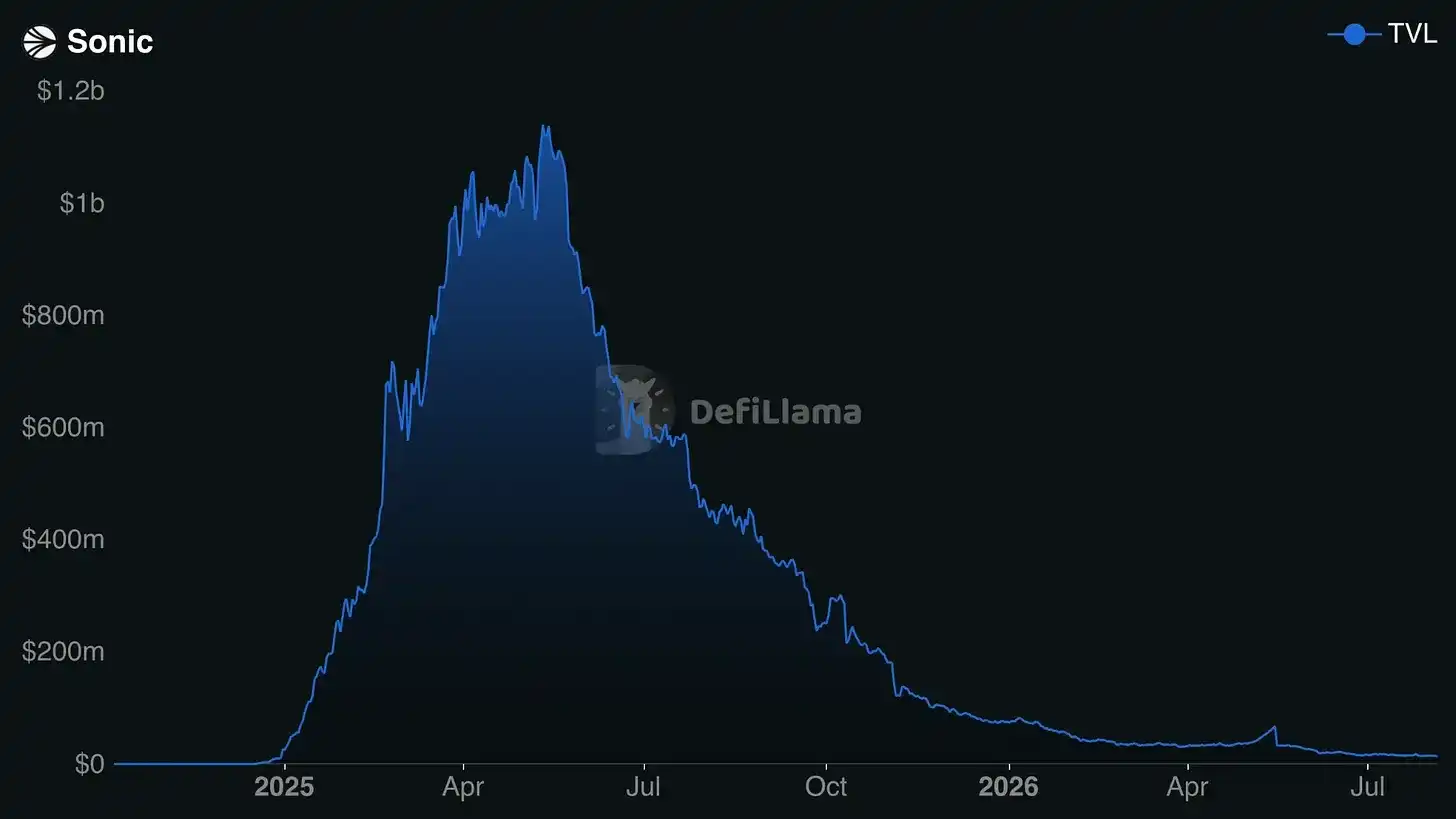
Data Source: DeFiLlama

Now, looking at the public chains from which Aave is about to withdraw—Soneium, Aptos, Zksync, Scroll, etc.—their situation is even worse than Harmony and Fantom. On-chain deposits have already plunged by 95%, and lending business quarterly revenue is less than $5,000.

At least before the hacks, Harmony and Fantom had genuine native lending demand generated by real users. But these six public chains never developed native business demand from the start. These chains raised an average of $250 million each and deployed one of the most cost-efficient lending protocols in DeFi, yet still failed to catalyze real demand.
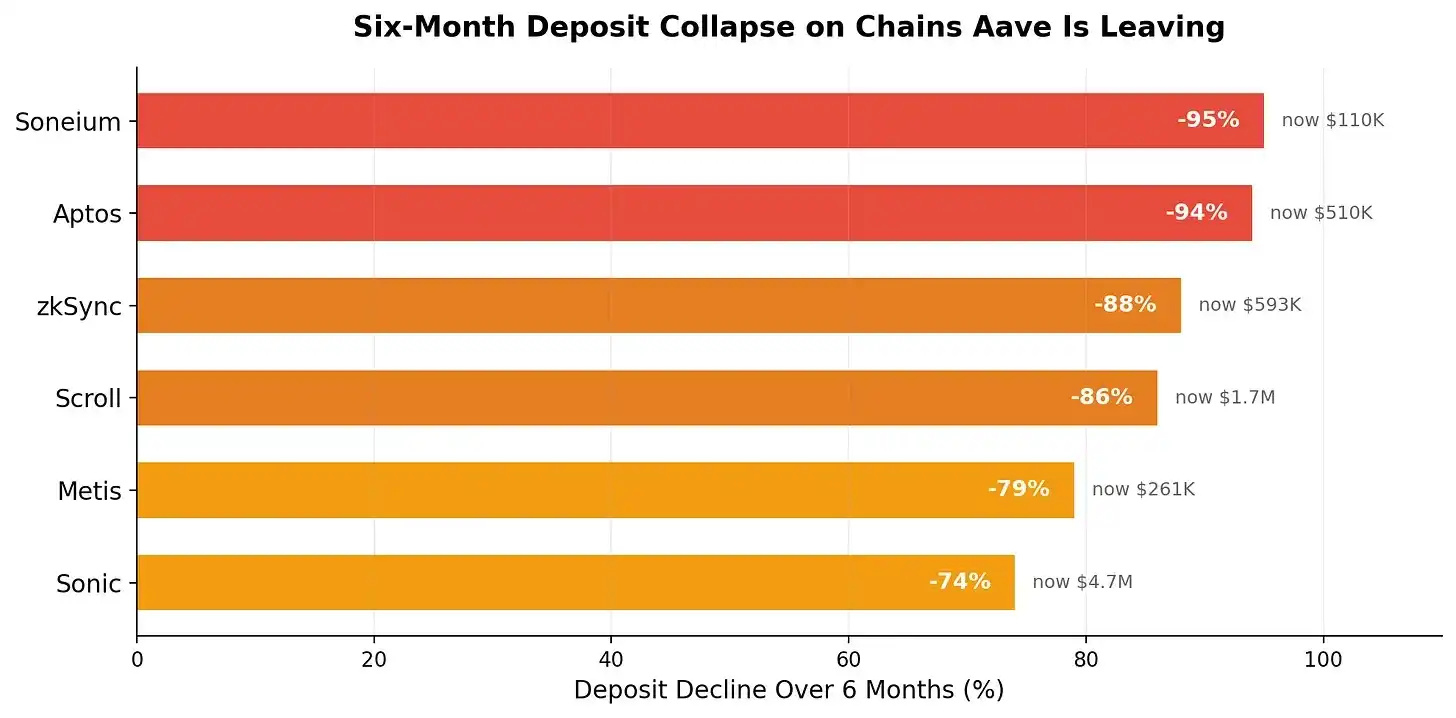
Data Source: Aave Governance Page

Aave's exit will also trigger a chain reaction. Many people don't realize that Aave is the core pillar of the financial infrastructure on these public chains. Almost all Chainlink oracle price feeds on these chains are maintained at Aave's cost, as Aave is the largest caller. After Aave leaves, all oracle service providers will reassess whether it's worth maintaining feeds for a public chain without an active lending market. Market makers will also stop allocating capital to DEXs on these chains for the same reason. Even stablecoin issuers won't provide native issuance support for chains with monthly revenue under a thousand dollars. The departure of one service provider accelerates the next provider's exit. The commercial viability of all these service providers is built on the premise that other supporting services are functioning normally.

Resources will increasingly concentrate towards public chains that are operating well, have ample liquidity, and where lending markets function normally. Every infrastructure withdrawal from a niche public chain further strengthens the aggregation effect of leading chains, making the business case for remaining niche chains to maintain their own lending infrastructure even weaker.

This centralization is self-reinforcing. Lending is the foundation of a public chain's entire financial system. Without lending, most yield strategies cannot operate, as many strategies require borrowing one type of asset by collateralizing another; efficient liquidity market-making also becomes impossible, as concentrated liquidity positions often rely on borrowed funds. Once lending disappears, all financial applications built on top of it lose their foundation. Subsequently, developers gradually leave, on-chain activity further declines, and even fewer infrastructure service providers are willing to stay.

This is precisely why Aave has set thresholds for future deployments on new chains: a minimum annual revenue of $2 million. This amount essentially covers the cost of maintaining the entire lending infrastructure—oracle feeds, risk monitoring, and liquidation—for a single public chain. This also fully illustrates that the past model of public chains raising hundreds of millions and quickly onboarding liquidity through subsidies is no longer viable or sustainable.

A Dilemma Not Unique to the Crypto Industry

The loss of credit infrastructure on public chains is not a phenomenon unique to the crypto space. Any industry with high fixed costs but a small market size faces similar issues.

After 2008, global banks began cutting correspondent banking relationships with some smaller countries. The logic is highly similar to Aave's: anti-money laundering monitoring, regulatory reporting—each relationship established incurs fixed costs, and the revenue from some small-scale cross-border businesses cannot cover these costs. Between 2011 and 2022, the number of active global correspondent banking relationships decreased by 30%. Dollar clearing channels for Pacific island nations shrunk by over 60%, with some countries left with only one correspondent bank. The situation became so severe that the World Bank had to allocate $69 million in subsidies to keep the last clearing service providers operating in eight Pacific nations.
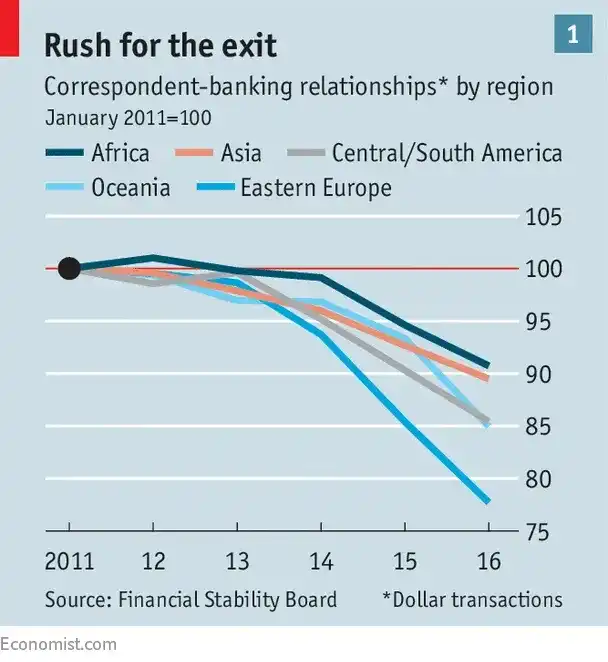
There is a crucial difference between the crypto industry and traditional cases. In the traditional correspondent banking system, entities like the World Bank step in as a backstop, with central banks and development agencies providing subsidies to sustain operations. But the crypto industry almost entirely lacks such a backstop mechanism, which is precisely the reality these public chains are experiencing. A medium-sized bank spends $15–40 million annually on compliance costs alone; the World Bank's $68 million investment merely preserved the last dollar clearing channel for 8 countries. Meanwhile, the total cost for Aave's risk monitoring contracts across all public chains is only $5–8 million, and these six chains can't even afford their share of that cost.

Of course, this doesn't mean DeFi lending as a whole is shrinking; quite the opposite: the industry is growing rapidly, but also highly concentrated. Morpho's TVL grew from $105 million to over $8 billion within a year; Euler expanded from $6 million to $300 million in just a few months. Aave's V4 surpassed $300 million in deposits within months of launch, and Société Générale became the first traditional bank to integrate with a DeFi lending protocol. The credit market is vibrant, but resources are concentrated on Ethereum and two or three layer-2 networks like Base and Arbitrum, rather than being dispersed across dozens of public chains.

The proliferation of many public chains was based on the assumption that deploying infrastructure costs very little, and each chain could build its own financial system. This assumption is only half right. Launching a public chain is indeed cheap, but operating a credit infrastructure on it is extremely costly. Looking at the current layer-2 landscape, Ethereum and the top three public chains command 90% of the TVL. The remaining chains can only compete for meager shares, and this revenue might not even cover the cost of a single set of Chainlink price feeds. In the future, these chains might see a forked version of Aave with flawed oracles, or perhaps nothing at all will remain.


Tiền kỹ thuật số thịnh hành

Câu hỏi Liên quan

QWhy did Aave decide to close its lending markets on six blockchains?

AAave decided to close its lending markets on six blockchains because each of these chains individually generated less than $5,000 in quarterly revenue. For instance, their revenue from Mentis and Aptos was minimal, roughly equivalent to the cost of a meal. In contrast, the deployment on Ethereum generated $142 million in revenue last year.

QWhat are the key components required for a functioning lending market on a blockchain, according to the article?

AAccording to the article, a functioning lending market requires: 1) Continuous operation and well-funded oracles to price collateral assets. 2) Sufficient DEX liquidity to ensure liquidations can occur without causing high price slippage (e.g., over 40%). 3) Recognition from stablecoin issuers (like Circle, Tether) for native issuance and redemption on the chain, allowing users to cash out without cross-chain bridges.

QWhat happened to Fantom (later Sonic) after its cross-chain bridge was hacked, and what did its attempted revival reveal?

AAfter Fantom's cross-chain bridge hack, its bridged USDC depegged to around $0.22, causing collateral values to plummet and loans to become undercollateralized. Its later attempt to revive as Sonic with a $190M airdrop attracted 'sybil attacks,' where users deposited and borrowed the same assets to farm points. The TVL was inflated, and once the airdrop incentives and market-making partnerships (e.g., with Wintermute) ended, the TVL crashed by 98%, showing that the lending demand was artificial and not based on real economic activity.

QWhat 'cascade effect' might occur after Aave's withdrawal from these blockchains?

AAave's withdrawal could trigger a cascade effect where other infrastructure providers also leave. As the primary user, Aave bore the costs for most Chainlink oracle price feeds on these chains. Without an active lending market, oracles, market makers (for DEX liquidity), and stablecoin issuers have little commercial incentive to maintain their services. The exit of one provider accelerates the exit of others, leading to a complete collapse of the financial ecosystem on those chains, as all these services depend on each other to be viable.

QHow does the article compare the situation in crypto to a similar problem in the traditional financial world?

AThe article compares it to the decline of correspondent banking relationships after 2008. Major banks cut ties with smaller nations because the fixed costs of compliance (anti-money laundering monitoring, regulatory reporting) exceeded the revenue from low-volume cross-border transactions. From 2011 to 2022, such relationships fell by 30%. A key difference is that in traditional finance, institutions like the World Bank can provide subsidies (e.g., $69M to maintain services for 8 Pacific nations), whereas such a backstop mechanism is almost non-existent in the crypto industry.

Nội dung Liên quan

Báo cáo phân tích Citi: Mỹ dự định cấm mô-đun quang Trung Quốc chưa có tiến triển thực chất, việc thực thi trong ngắn hạn đối mặt với nút thắt nguồn cung

Theo phân tích của Citi trong báo cáo ngày 9/8, thông tin về việc chính phủ Mỹ có thể cấm module quang (optical module) Trung Quốc vẫn chưa có tiến triển cụ thể và khó thực thi trong ngắn hạn. Cơ quan Truyền thông Liên bang Mỹ (FCC) đã thiết lập hai cơ chế danh sách hạn chế dựa trên nhà sản xuất và xuất xứ, nhưng module quang không nằm trong danh sách nào đã có hiệu lực. Nó chỉ được đề cập một lần trong phần ví dụ về yêu cầu công bố vật tư phần cứng/phần mềm. Citi nhận định, các nhà cung cấp Trung Quốc đang đáp ứng 60-70% nhu cầu module quang tốc độ cao cho các công ty siêu lớn (hyperscaler) tại Mỹ. Các nhà cung cấp không phải Trung Quốc khó có thể lấp đầy khoảng trống này trong thời gian ngắn, do đó, một lệnh cấm thực sự khó có khả năng được thực thi trong tương lai gần. Trong số các công ty được đề cập, XGS (Tân Dịch Thịnh) và DSBJ (Đông Sơn Tinh Mật) có mức độ phơi nhiễm lớn nhất với thị trường Mỹ. Trong khi đó, Tianfu Communication (Thiên Phu Thông Tín), với tư cách là nhà cung cấp linh kiện thụ động, chịu tác động gián tiếp và tương đối ít rủi ro hơn. Báo cáo kết luận, việc thảo luận về lệnh cấm sẽ tiếp tục nhưng khó nhanh chóng thành hiện thực. Điều đáng quan tâm là tốc độ xây dựng năng lực sản xuất trong nước của Mỹ và hướng đi của vấn đề module quang trong lịch trình ngoại giao song phương. Xu hướng thay thế nguồn cung vẫn tồn tại nhưng cửa sổ thời gian có thể dài hơn dự kiến.

marsbit17 phút trước

Báo cáo phân tích Citi: Mỹ dự định cấm mô-đun quang Trung Quốc chưa có tiến triển thực chất, việc thực thi trong ngắn hạn đối mặt với nút thắt nguồn cung

marsbit17 phút trước

Công ty mẹ của Truth Social lỗ 238 triệu USD trong một quý: 190 triệu mất vào danh mục tiền mã hóa, công ty tuyên bố thắt chặt chiến lược kho bạc

Công ty mẹ của Truth Social, Trump Media & Technology Group (DJT), đã công bố báo cáo tài chính quý 2/2026 với khoản lỗ ròng lên tới 238,1 triệu USD, tăng mạnh so với con số 20 triệu USD của cùng kỳ năm trước. Nguyên nhân chính dẫn đến thua lỗ là khoản lỗ chưa thực hiện 190,4 triệu USD từ các tài sản kỹ thuật số (chủ yếu là Bitcoin) và chứng khoán vốn chủ sở hữu, do giá Bitcoin điều chỉnh giảm. Đáng chú ý, bất chấp khoản lỗ lớn, công ty đã gia tăng mua vào Bitcoin trong tháng 7, nâng tổng số Bitcoin nắm giữ lên khoảng 14.139 BTC (trị giá khoảng 890,5 triệu USD). Điều này cho thấy cam kết dài hạn của công ty với loại tài sản này. Tuy nhiên, công ty đồng thời tuyên bố sẽ thực hiện một "khuôn khổ quản lý kỷ luật hơn" đối với kho bạc tiền mã hóa, có thể nhằm thu hẹp các hoạt động sử dụng đòn bẩy như cho vay hoặc giao dịch quyền chọn. Về hoạt động kinh doanh chính, doanh thu quý chỉ đạt 1,7 triệu USD. Công ty cho biết đang tập trung nguồn lực trở lại các trụ cột truyền thông cốt lõi như Truth Social và sản phẩm cấp phép dữ liệu Truth API, vốn đã bắt đầu tạo ra doanh thu. Một điểm nhấn quan trọng khác là kế hoạch sáp nhập với công ty công nghệ nhiệt hạch TAE Technologies dự kiến hoàn thành vào quý 4/2026, có thể định hình lại cấu trúc doanh nghiệp trong tương lai.

marsbit25 phút trước

Công ty mẹ của Truth Social lỗ 238 triệu USD trong một quý: 190 triệu mất vào danh mục tiền mã hóa, công ty tuyên bố thắt chặt chiến lược kho bạc

marsbit25 phút trước

Nhà phân tích hàng đầu khẳng định Bitcoin đang ở giai đoạn cực kỳ quan trọng: 'Chúng ta đang ở đáy thị trường gấu, điều gì sẽ xảy ra tiếp theo...'

Chuyên gia phân tích nổi tiếng Benjamin Cowen mới đây đã đánh giá diễn biến thị trường Bitcoin, cho rằng đồng tiền này đang ở giai đoạn bước ngoặt quan trọng. Bitcoin hiện giao dịch quanh mức 64.000 - 65.000 USD, với động thái và mức độ quan tâm của nhà đầu tư có nhiều điểm tương đồng với các chu kỳ trước đây. Cowen chỉ ra rằng sự quan tâm của công chúng và nhiệt huyết đầu tư vào thị trường tiền mã hóa đã giảm mạnh. Chỉ số "sợ hãi xã hội" giảm xuống 0,2, thấp hơn nhiều so với 4 năm trước. Biến động thị trường giảm đáng kể, trong khi tâm lý hoài nghi chiếm ưu thế. Tình hình hiện tại rất giống với thời điểm kết thúc thị trường gấu vào năm 2018 và 2022. Theo phân tích lịch sử, thị trường Bitcoin thường chạm đáy vào các tháng mùa hè, sau đó là giai đoạn trì trệ với biến động thấp, và động thái chính có thể xảy ra trong quý cuối năm. Tuy nhiên, chỉ số nội bộ như Z-Score MVRV vẫn chưa giảm xuống dưới mức 0 - tín hiệu cho thấy đáy thực sự. Vì vậy, còn quá sớm để khẳng định thị trường đã chạm đáy. Chuyên gia này dự đoán một sự kiện có thể xảy ra trong vài tuần tới, gây chấn động thị trường và tạo ra đợt bán tháo cuối cùng. Sự kiện như vậy được kỳ vọng sẽ thu hút nhà đầu tư quay trở lại và mở đường cho một chu kỳ tăng giá mới. Tháng 10 được xem là thời điểm có khả năng cao nhất để hình thành đáy, dù tháng 9 hoặc tháng 11 cũng là những khả năng. Cowen khuyên người dùng nên thận trọng và sẵn sàng cho thời khắc quyết định sắp tới trên thị trường.

cryptonews.ru26 phút trước

Nhà phân tích hàng đầu khẳng định Bitcoin đang ở giai đoạn cực kỳ quan trọng: 'Chúng ta đang ở đáy thị trường gấu, điều gì sẽ xảy ra tiếp theo...'

cryptonews.ru26 phút trước

Hàn Quốc bãi bỏ ngưỡng áp dụng Quy tắc Đi lại cho các giao dịch chuyển tiền crypto

Hàn Quốc sẽ mở rộng áp dụng Quy tắc Du lịch (Travel Rule) cho mọi giao dịch chuyển tiền điện tử giữa các nhà cung cấp dịch vụ tài sản ảo (VASP) đã đăng ký, bãi bỏ ngưỡng giá trị hiện tại là 1 triệu won (khoảng 700 USD). Thay đổi này nhằm ngăn người dùng chia nhỏ giao dịch để né luật. Các nền tảng nhận tiền phải thu thập thông tin người gửi/nhận và có thể từ chối giao dịch nếu thiếu dữ liệu. Các sửa đổi cũng bổ sung quy định chống rửa tiền (AML) mới cho giao dịch liên quan đến sàn giao dịch nước ngoài và ví cá nhân. VASP trong nước phải đánh giá rủi ro từ đối tác để quyết định cho phép giao dịch. Giao dịch với sàn nước ngoài rủi ro thấp được cho phép, trong khi giao dịch với ví cá nhân thường chỉ được chấp nhận nếu người gửi và người nhận là một. Các giao dịch có đối tác rủi ro cao sẽ bị cấm. Các nền tảng phải thiết lập hệ thống giám sát giao dịch đáng ngờ cho các chuyển khoản từ 10 triệu won trở lên. Ngoài ra, các yêu cầu đăng ký cho VASP được siết chặt, bao gồm tiêu chuẩn về tình hình tài chính, nhân sự và cơ sở hạ tầng. Các quy định về đăng ký VASP có hiệu lực từ ngày 20/8, trong khi Quy tắc Du lịch mở rộng và các yêu cầu AML khác sẽ có hiệu lực sau sáu tháng kể từ khi sắc lệnh được ban hành.

cointelegraph38 phút trước

Hàn Quốc bãi bỏ ngưỡng áp dụng Quy tắc Đi lại cho các giao dịch chuyển tiền crypto

cointelegraph38 phút trước

Động đất Yên: Đường hầm 1.37 nghìn tỷ USD trái phiếu Mỹ hồi hương mở ra, Fed mở rộng bảng cân đối kế toán sẽ bùng nổ Bitcoin và Vàng

**Tóm tắt tiếng Việt:** Arthur Hayes, đồng sáng lập BitMEX, dự đoán một "trận động đất" sắp xảy ra với đồng yên Nhật. Ông cho rằng đây là đồng tiền bị định giá thấp nhất toàn cầu. Để cứu vãn đồng yên, chính quyền Mỹ-Nhật có thể lựa chọn một phương án "chính thức": Bộ Tài chính Nhật sử dụng khoản nắm giữ trái phiếu Mỹ trị giá 1.373 nghìn tỷ USD của mình làm tài sản thế chấp cho Cục Dự trữ Liên bang Mỹ (Fed) thông qua cơ chế FIMA, để vay USD và sau đó bán USD/mua JPY trên thị trường ngoại hối. Thao tác này, về bản chất, không bán tài sản nhưng khiến Fed in thêm tiền và mở rộng bảng cân đối kế toán. Nếu được thực hiện, thanh khoản USD toàn cầu sẽ tăng vọt. Hayes chỉ ra mối tương quan lịch sử rõ ràng: Khi Fed mở rộng bảng cân đối, giá Bitcoin và vàng thường tăng mạnh. Ông đang tập trung đầu tư vào Bitcoin, vàng vật chất và cổ phiếu công ty khai thác vàng. Đối với thị trường tiền điện tử, ông nhận định Ethereum (ETH) bị định giá thấp và Ethena (ENA) có tiềm năng tăng trưởng mạnh nếu thanh khoản tăng đẩy lợi suất cơ sở Bitcoin lên, kích thích dòng tiền vào USDe. Tuy nhiên, động thái then chốt vẫn là việc Fed thay đổi quy tắc FIMA theo đề xuất của Bộ trưởng Tài chính Mỹ Bessent. Hayes kêu gọi nhà đầu tư theo dõi sát diễn biến này vì nó có thể diễn ra bất ngờ, báo hiệu sự kết thúc của thời kỳ đồng yên rẻ kéo dài.

marsbit45 phút trước

Động đất Yên: Đường hầm 1.37 nghìn tỷ USD trái phiếu Mỹ hồi hương mở ra, Fed mở rộng bảng cân đối kế toán sẽ bùng nổ Bitcoin và Vàng

marsbit45 phút trước

Giao dịch

Giao ngay

Bài viết Nổi bật

Làm thế nào để Mua LA

Chào mừng bạn đến với HTX.com! Chúng tôi đã làm cho mua Lagrange (LA) trở nên đơn giản và thuận tiện. Làm theo hướng dẫn từng bước của chúng tôi để bắt đầu hành trình tiền kỹ thuật số của bạn.Bước 1: Tạo Tài khoản HTX của BạnSử dụng email hoặc số điện thoại của bạn để đăng ký tài khoản miễn phí trên HTX. Trải nghiệm hành trình đăng ký không rắc rối và mở khóa tất cả tính năng. Nhận Tài khoản của tôiBước 2: Truy cập Mua Crypto và Chọn Phương thức Thanh toán của BạnThẻ Tín dụng/Ghi nợ: Sử dụng Visa hoặc Mastercard của bạn để mua Lagrange (LA) ngay lập tức.Số dư: Sử dụng tiền từ số dư tài khoản HTX của bạn để giao dịch liền mạch.Bên thứ ba: Chúng tôi đã thêm những phương thức thanh toán phổ biến như Google Pay và Apple Pay để nâng cao sự tiện lợi.P2P: Giao dịch trực tiếp với người dùng khác trên HTX.Thị trường mua bán phi tập trung (OTC): Chúng tôi cung cấp những dịch vụ được thiết kế riêng và tỷ giá hối đoái cạnh tranh cho nhà giao dịch.Bước 3: Lưu trữ Lagrange (LA) của BạnSau khi mua Lagrange (LA), lưu trữ trong tài khoản HTX của bạn. Ngoài ra, bạn có thể gửi đi nơi khác qua chuyển khoản blockchain hoặc sử dụng để giao dịch những tiền kỹ thuật số khác.Bước 4: Giao dịch Lagrange (LA)Giao dịch Lagrange (LA) dễ dàng trên thị trường giao ngay của HTX. Chỉ cần truy cập vào tài khoản của bạn, chọn cặp giao dịch, thực hiện giao dịch và theo dõi trong thời gian thực. Chúng tôi cung cấp trải nghiệm thân thiện với người dùng cho cả người mới bắt đầu và người giao dịch dày dạn kinh nghiệm.

Tổng lượt xem 609Xuất bản vào 2025.06.04Cập nhật vào 2026.06.02

Làm thế nào để Mua LA

Thảo luận

Chào mừng đến với Cộng đồng HTX. Tại đây, bạn có thể được thông báo về những phát triển nền tảng mới nhất và có quyền truy cập vào thông tin chuyên sâu về thị trường. Ý kiến ​​của người dùng về giá của LA (LA) được trình bày dưới đây.

活动图片