Qualcomm: AI Hype Subsides, When Will Smartphones Emerge from the Gloom?

marsbitXuất bản vào 2026-08-03Cập nhật gần nhất vào 2026-08-03

Tóm tắt

Qualcomm reported its Q3 FY2026 results (ending June 2026), with revenue of $9.95B, down 4% YoY but above expectations. Gross margin declined to 53.1%, pressured by rising costs across manufacturing and memory. Key business segments showed mixed performance: Handset revenue fell 19.6% YoY to $5.09B, dragged by an 11% decline in non-Apple Android shipments and weaker high-end mix. Conversely, Automotive revenue surged 61% to $1.59B, and IoT grew 9% to $1.83B. Core operating profit dropped 41% YoY due to margin compression and higher expenses. Management's Q4 FY2026 guidance projects revenue of $9.7B-$10.5B, in line with consensus, but Non-GAAP EPS guidance of $2.05-$2.25 fell short of expectations. Amidst persistent weakness in its core handset market, Qualcomm is pursuing growth in AI, focusing on Edge AI (smartphones, PCs, automotive) and Data Center AI. Its data center strategy includes four pillars: AI accelerators (e.g., AI200), commercial CPUs (Dragonfly C1000), custom silicon, and connectivity solutions. While these initiatives initially boosted its stock, concerns over AI capital expenditure sustainability have since erased those gains. The company targets $5B in data center revenue for FY2027 and $15B for FY2029. The report concludes that with the traditional handset business still under pressure, the data center opportunity is currently viewed as a longer-term option, and a more conservative valuation based on core operations may be warranted until AI contributio...

Qualcomm (QCOM.O) released its fiscal year 2026 third-quarter earnings report (ending June 2026) after the U.S. market closed on the morning of July 30, 2026, Beijing time. Key points are as follows:

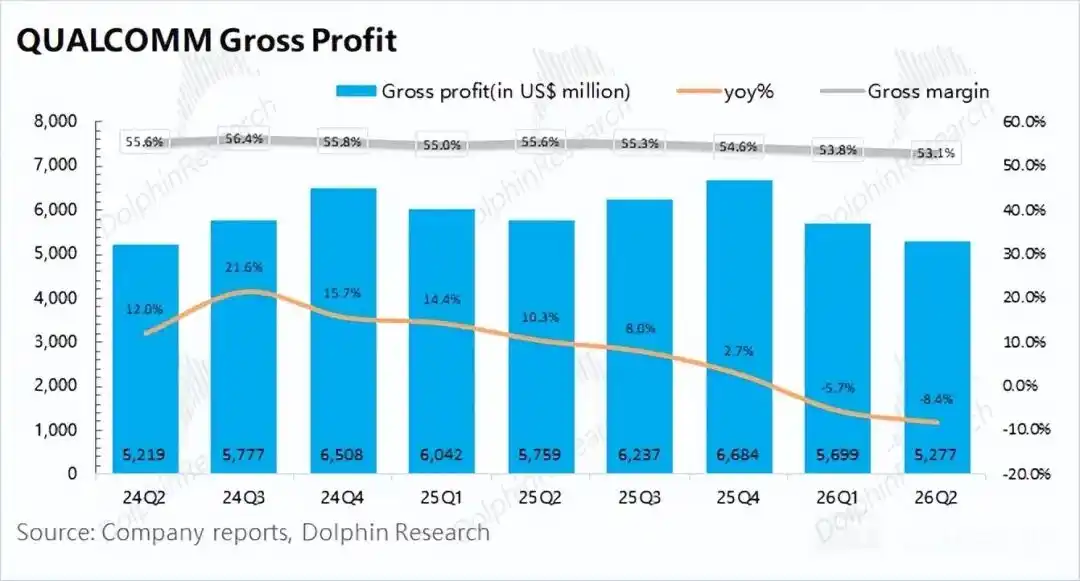
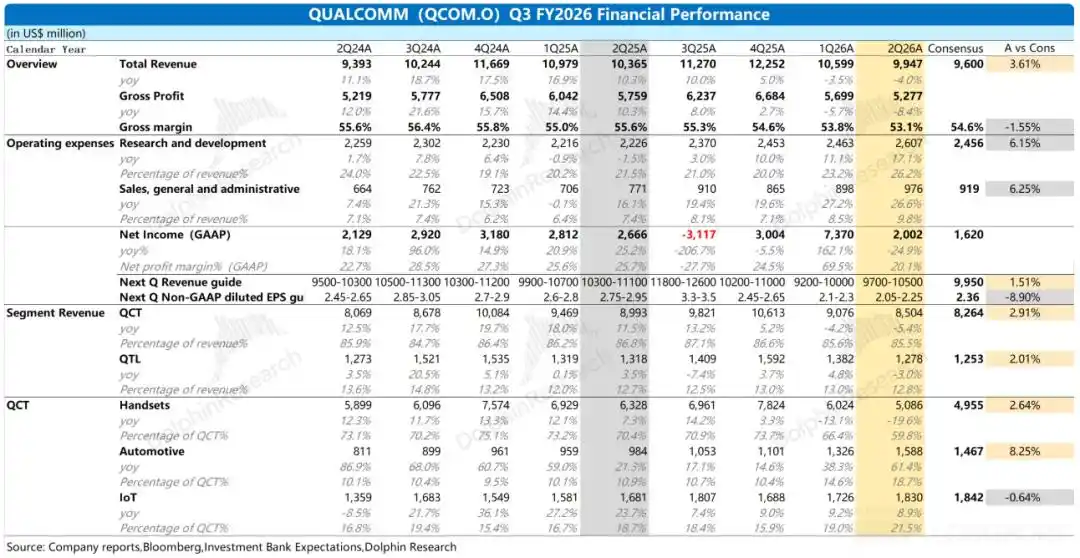
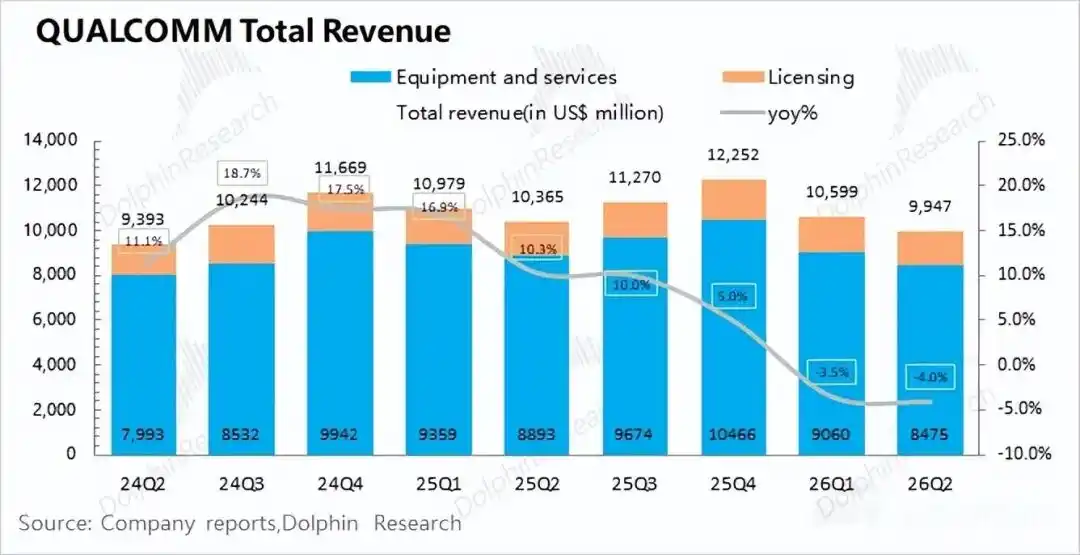
1. Core Data: Qualcomm's revenue for this quarter was $9.95 billion, down 4% year-over-year, better than market expectations ($9.6 billion). Despite significant growth in the automotive business, revenue was still dragged down by the decline in the handset business.

The company's gross margin for this quarter was 53.1%, down 2.5 percentage points year-over-year, below market expectations (54.6%). Increases in costs across wafer fabrication, packaging, testing, advanced packaging, memory, and other materials put significant pressure on the company's gross margin.

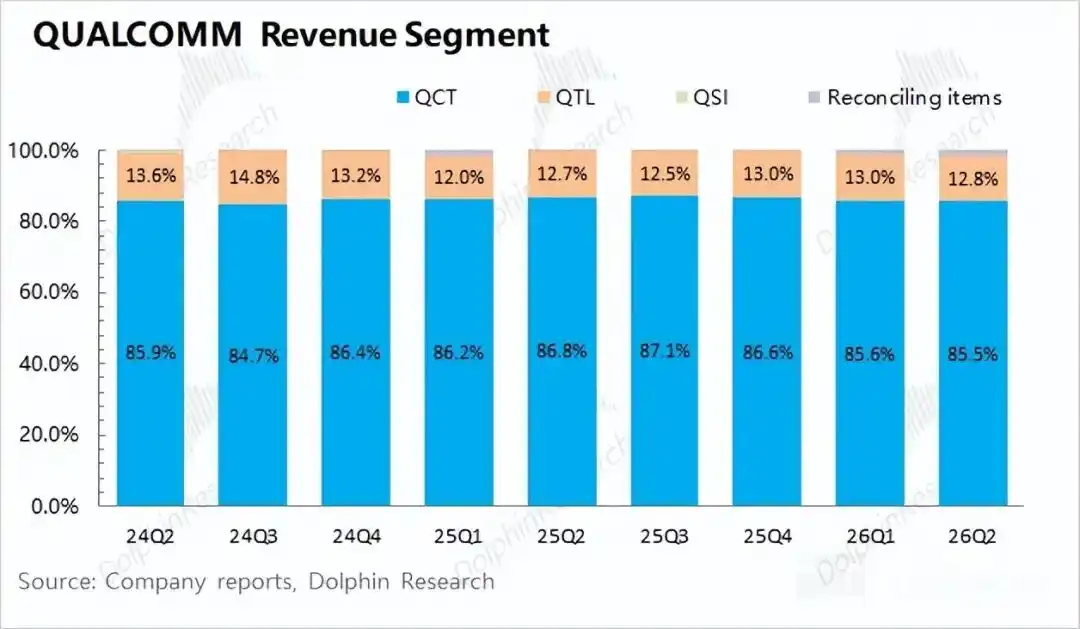
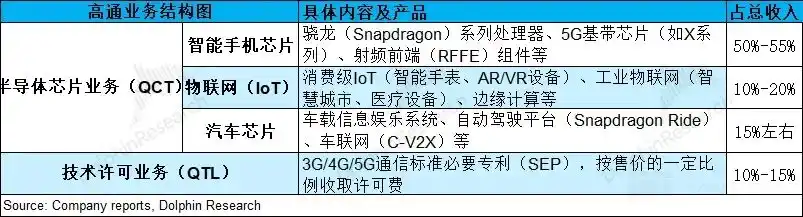
2. Business Segment Details: $Qualcomm's (QCOM.US) business is primarily divided into the Semiconductor Chip business (QCT) and the Technology Licensing business (QTL), with the Semiconductor Chip business being the largest revenue source, accounting for over 80%.

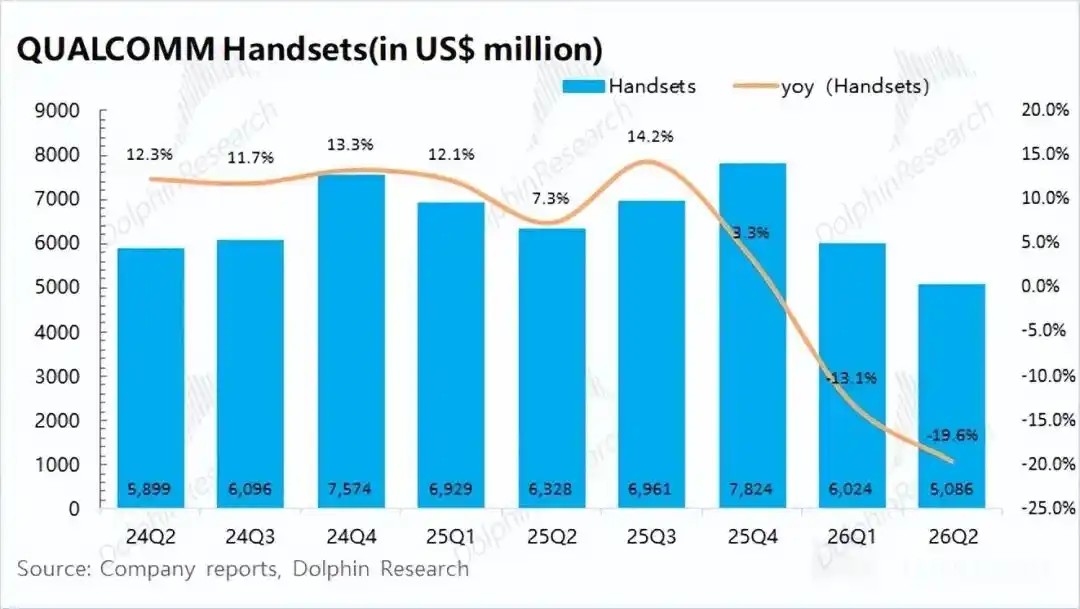
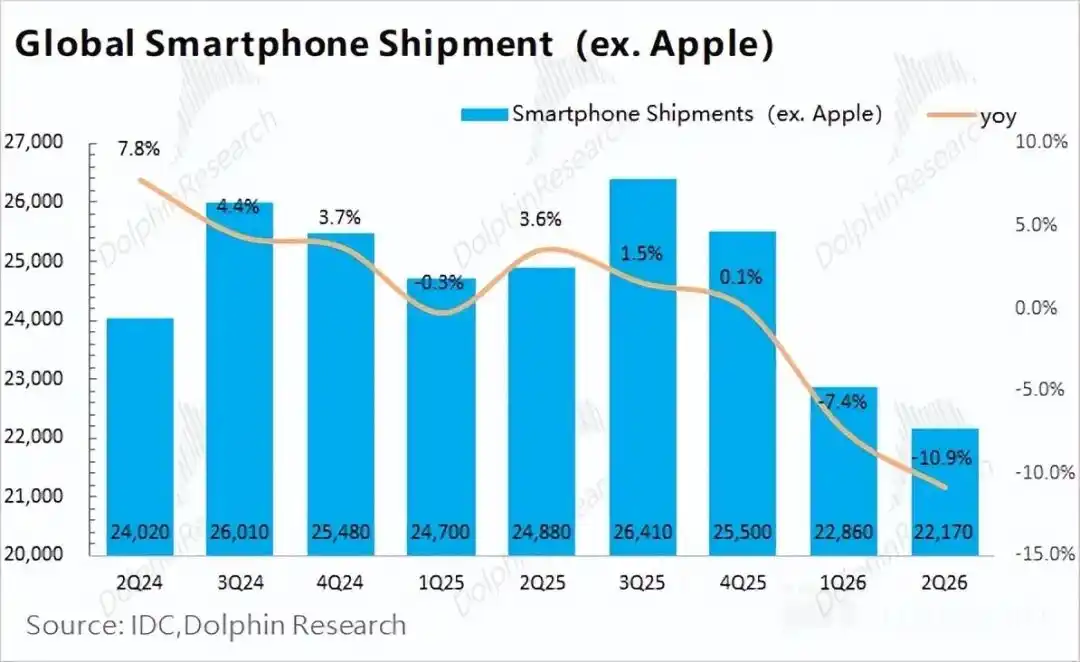
Within the Semiconductor Chip business: 1. Handset business this quarter was $5.09 billion, down 19.6% year-over-year. The decline in the company's handset business was mainly influenced by two factors: Firstly, industry-wide factors, as handset shipments (excluding Apple) fell 11% this quarter; secondly, a weakening internal mix towards premium models, with handset manufacturers tending to use previous-generation platforms to reduce costs.

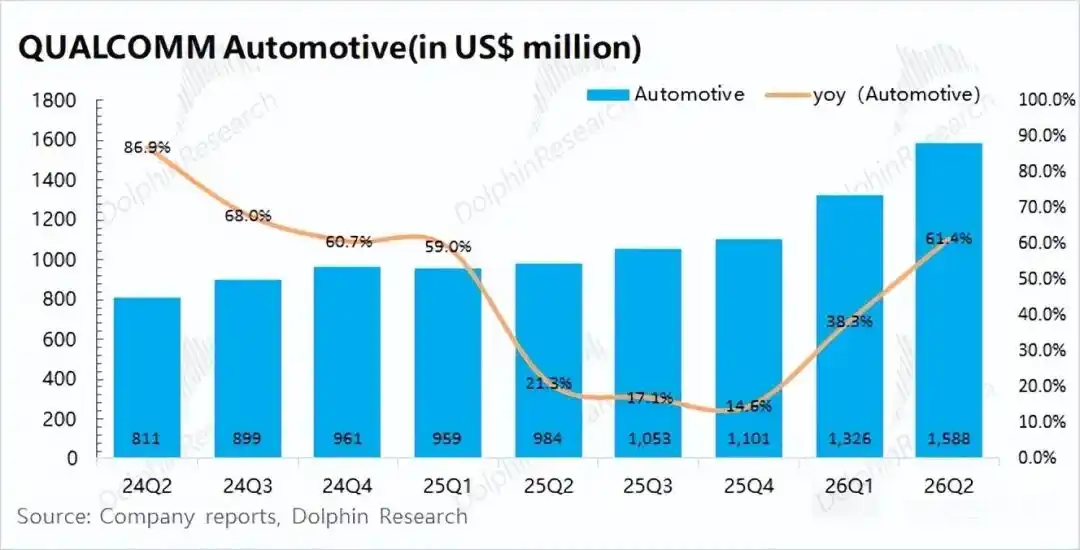
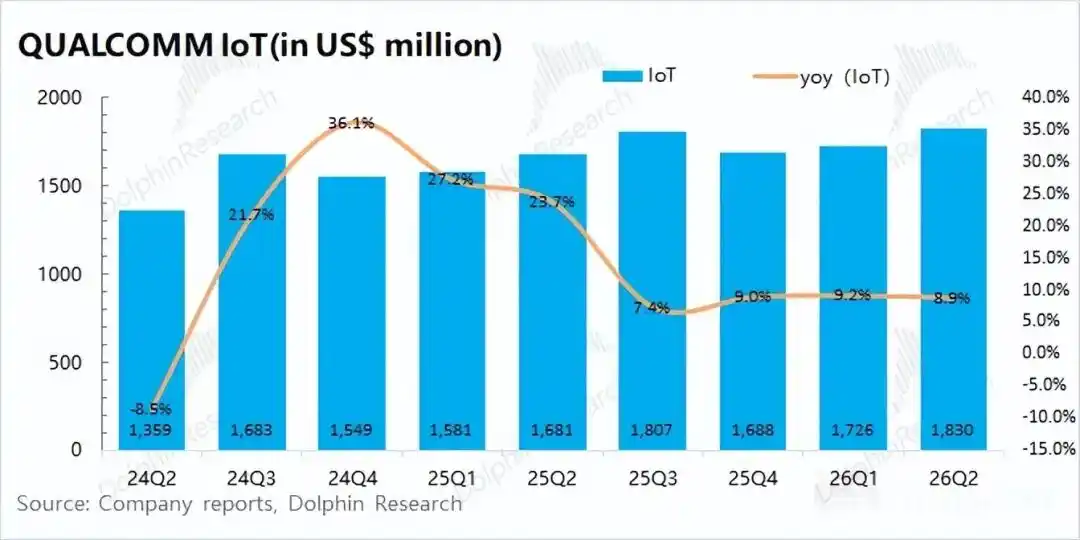
2. Automotive business this quarter was $1.59 billion, up 61% year-over-year, driven by shipments of the fourth-generation Snapdragon Digital Chassis. The company's fifth-generation Snapdragon Digital Chassis will ramp up production in September, with significantly higher value per vehicle. 3. IoT business this quarter was $1.83 billion, up 9% year-over-year, with growth driven by consumer and industrial product demand.

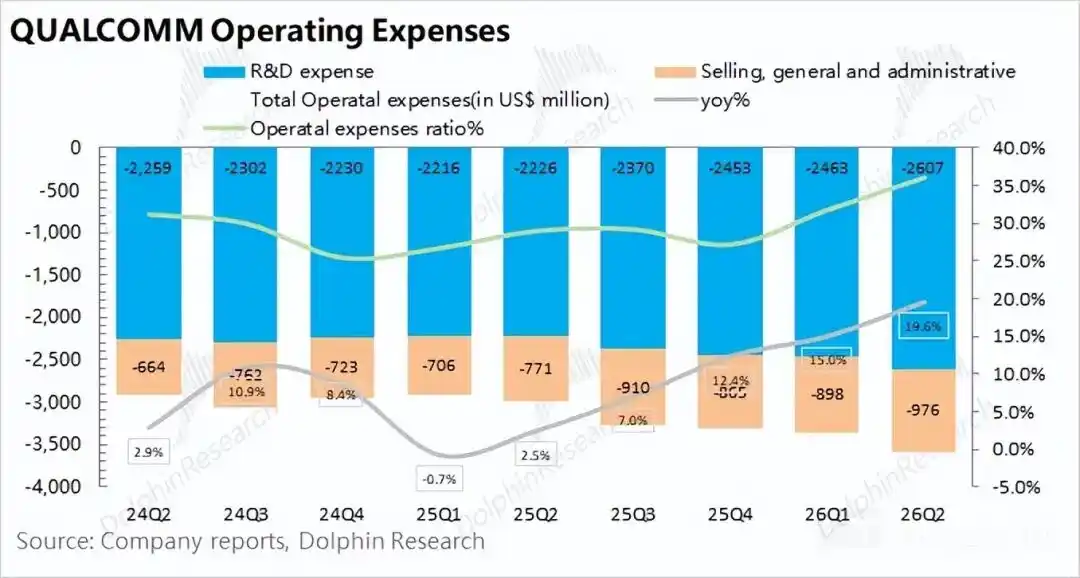
3. Operating Expenses: The company's core operating expenses increased to approximately $3.6 billion, with R&D expenses rising to $2.6 billion this quarter and SG&A expenses amounting to $980 million for the quarter.

The company reported net income of $2.0 billion for the quarter, following the release of a valuation allowance for deferred tax assets (approximately $5.7 billion) in the previous quarter. From an operational perspective, core operating profit for the quarter was $1.63 billion, down 41% year-over-year, primarily due to lower gross margin and increased expenses.

4. Next Quarter Guidance: Qualcomm expects fiscal Q4 2026 revenue of $9.7-$10.5 billion, in line with market expectations ($9.95 billion).; The company expects Non-GAAP EPS for the next quarter to be $2.05-$2.25, below market expectations ($2.36).
Dolphin Research's Overall View: Memory Weighs on Handsets, Data Center "Promises" Await Fulfillment

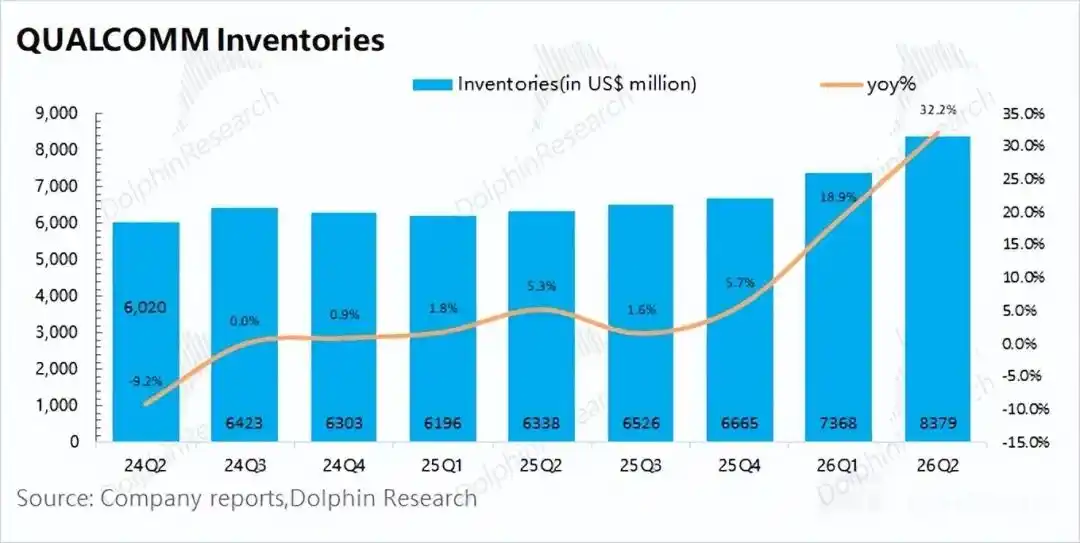
Qualcomm's earnings report this time remains tepid. While revenue met market expectations, it continues to show a declining trend. Gross margin continues to fall, primarily due to factors like memory price increases and weak demand, leading to higher costs.

Looking at the guidance for the next quarter, the company expects revenue of $9.7-$10.5 billion, showing no clear signs of recovery; while Non-GAAP EPS is expected to be $2.05-$2.25, below market expectations ($2.36). Demand in end markets like handsets remains weak, and factors like memory price increases will continue to pressure the company's costs.
While its traditional core business is sluggish, the company is actively seeking breakthroughs in the data center domain. It plans to focus on four areas: custom chips, commercial CPUs, AI accelerators, and connectivity products. This initially pushed the company's stock price above $250. As market concerns grew about the sustainability of AI Capex, the stock price fell back below $160, essentially erasing the gains brought by data center prospects.

Beyond this earnings report, the market is focusing on the following aspects of Qualcomm:

1) Traditional Domains: The Core Business, Bearing the Pressure of Memory

The handset business is Qualcomm's largest segment, accounting for over half of its business. Its weak performance amidst the overall sluggish handset market puts significant pressure on the company's results. Global handset shipments this quarter remained at 290 million units, down 6% year-over-year.

The handset market mainly consists of Apple and Android. Looking in detail, Apple's handset shipments grew nearly 20% year-over-year this quarter. Shipments for the rest of the Android camp fell approximately 11% year-over-year, directly impacting Qualcomm's handset business performance this quarter.
The company expects next quarter's handset business to be around $5.2 billion, down about 25% year-over-year, with Android sequential growth partially offset by declining Apple product revenue (seasonal uptick in the second half, the traditional peak season).

The recent pace of memory price increases has started to slow. As seen in OPPO and VIVO rejecting price hikes from memory suppliers, the "skyrocketing memory" has caused market discontent. If the memory cycle turns downward subsequently, pressure on the company's traditional core business may ease.

2) AI Domain: On-Device AI and Data Center, Potential Growth Markets

While traditional markets are weak, the company is also actively laying out in the AI field, hoping for new breakthroughs.

a) On-Device AI: The company views on-device AI as a core part of its Physical AI strategy, covering all end devices like smartphones, PCs, cars, XR, robots, and industrial IoT, areas where the company already has a presence.

The two main areas: 1. The potential replacement cycle driven by AI Phones, as AI Agents become the "new interface" for smartphones; 2. In the AI PC domain, the company has launched the Snapdragon C platform (for Windows laptops), with core advantages in: Oryon CPU, low-power AI inference, heterogeneous computing (CPU+GPU+NPU collaboration, supporting on-device AI Agent operation).

b) AI Data Center: Qualcomm ultimately couldn't resist entering the main AI arena, which is also the company's most notable strategic plan in the AI field.

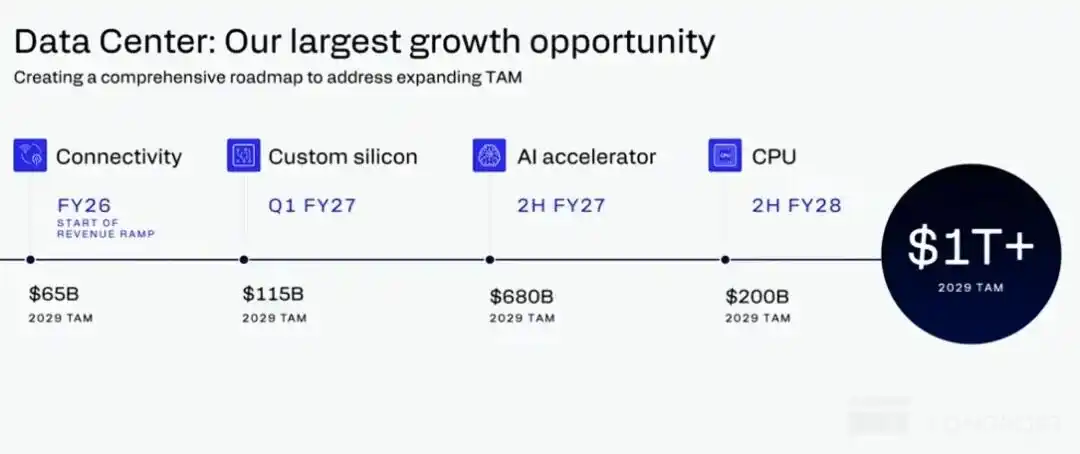
At its investor day on June 24, 2026, Qualcomm disclosed that its AI data center strategy will cover four product lines:

1. AI Accelerators (HBC): Microsoft confirmed a multi-generation partnership.

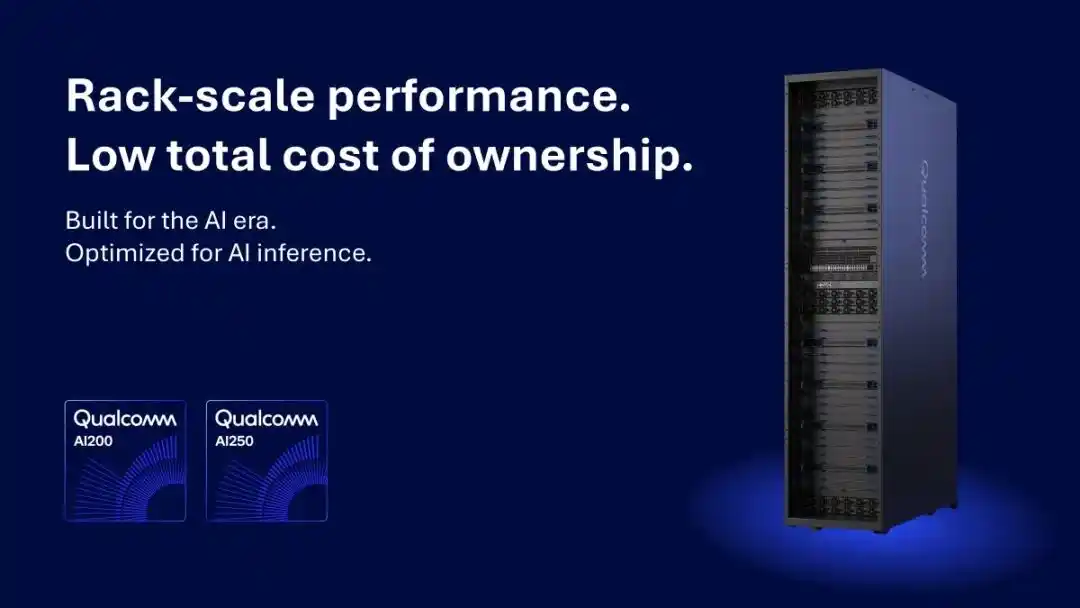
Qualcomm's core differentiated technology, using LPDDR5X (vs. HBM) to enable Processing Near Memory, optimized for memory-capacity-intensive AI inference workloads.

AI200 is currently ramping production; the next-gen AI250 is expected to sample in 2027. Subsequent AI300 will be based on UALink and ESUN for Scale-up network interconnection, with effective bandwidth 54 times that of AI200.
2. Commercial CPU (Dragonfly C1000): Meta confirmed a multi-generation partnership.

This is primarily based on Qualcomm's Oryon CPU architecture from smartphones and PCs, extended to the data center. Positioned as an "Agentic CPU," specifically for CPU-intensive workloads like agent orchestration, multi-step reasoning, and tool invocation.

3. Custom Silicon Business: Confirmed 2 hyperscale customers (each contributing $1 billion+ in FY2027)

This is based on capabilities acquired from Alphawave Semi (SerDes, Die-to-Die, PCIe/CXL, HBM PHY) and Ventana (Veyron V2 RISC-V CPU), primarily providing custom AI chip (XPU) design services to hyperscale customers.

4. Connectivity Business: Secured first hyperscale customer.

Based on Alphawave IP, offering products like 800G/1.6T optical modules, AOCs, AECs. The company currently has 800G LR2 modules, 800G optical modules/AOCs/AECs in production; 1.6T optical modules/AOCs/AECs expected in 2026-2027.
Previously, driven by AI hype, the company's move into the AI data center field once pushed its stock price above $250. Now, with concerns over AI Capex, the stock has fallen back to around $160, erasing the growth expectations from data centers.

Although the company estimates the AI data center business market opportunity at $1 trillion, its data center business currently doesn't contribute significant revenue. Looking back at the traditional business, with weak end markets like handsets, the company's current P/E multiple is actually relatively high.

As for the data center business, while management has set a $15 billion revenue target for FY2029, the focus should currently be on nearer-term performance. Based on the company's FY2027 data center revenue target of $5 billion, this could contribute about $1.2 billion in operating profit (referencing the company's OPM).

In the current fragile market environment, it's more prudent to look for Qualcomm's relatively safe bottom range. From a traditional business perspective, a further decline in the stock price is safer. Of course, this essentially treats the data center business as "an option."

If the company's FY2027 targets are met, they will inject valuation expectations for the data center segment.

Below are relevant charts from Dolphin Research regarding this Qualcomm earnings report:
This article is from the WeChat public account "Dolphin Investment Research" (ID: haituntouyan), author: Dolphin Research


Tiền kỹ thuật số thịnh hành

Câu hỏi Liên quan

QAccording to the article, what were the key financial highlights of Qualcomm's Q3 2026 earnings report?

AIn its Q3 2026 earnings report, Qualcomm's revenue was $9.95 billion, a 4% year-over-year (YoY) decline but surpassing market expectations of $9.6 billion. The company's gross margin was 53.1%, a decrease of 2.5 percentage points YoY, which fell below market expectations of 54.6%. Net profit reached $2 billion.

QWhat were the main factors causing the decline in Qualcomm's mobile phone business revenue in Q3 2026?

AThe decline in Qualcomm's mobile phone business revenue, which fell 19.6% YoY to $5.09 billion, was primarily attributed to two factors: first, a broader industry downturn where smartphone shipments (excluding Apple) declined by 11% in the quarter; second, a weakening structure within the high-end smartphone market, where manufacturers tended to use previous-generation platforms to reduce costs.

QWhat are the four key product lines in Qualcomm's AI data center strategy as mentioned in the article?

AQualcomm's AI data center strategy comprises four key product lines: 1) AI Accelerators (HBC), with Microsoft as a confirmed multi-generation partner; 2) Commercial CPUs (Dragonfly C1000), with Meta as a confirmed multi-generation partner; 3) Custom Silicon, with two confirmed hyperscale customers expected to contribute over $1 billion each in fiscal year 2027; and 4) Connectivity Business, which has secured its first hyperscale customer.

QWhat is the outlook for Qualcomm's mobile phone business in the next quarter (Q4 2026) according to the article?

AFor the next quarter (Q4 2026), Qualcomm expects its mobile phone business revenue to be approximately $5.2 billion, representing a year-over-year decline of around 25%. The article notes that this forecast includes some seasonal recovery in Android phone shipments, which is partly offset by a decline in revenue from Apple's products.

QHow does the article characterize the market's current view of Qualcomm's AI data center business, and what is the company's related financial target?

AThe article characterizes the market's current view of Qualcomm's AI data center business as cautious, describing it as a "piece of 'optionality'" given its lack of significant current revenue contribution. Amid concerns about AI capital expenditure sustainability, the stock price surge driven by this business has largely been erased. However, the article mentions that management has set a target of $15 billion in revenue from the data center business by fiscal year 2029, with a nearer-term goal of $5 billion for fiscal year 2027.

Nội dung Liên quan

OpenAI không bán tiền dựa trên mô hình đắt nhất

OpenAI đã điều chỉnh giá, giảm 80% cho mô hình GPT-5.6 Luna và 20% cho Terra, đồng thời giới thiệu chế độ Fast cho mô hình mạnh nhất Sol. Động thái này, cùng với việc Anthropic giới thiệu Claude Opus 5 với giá bằng một nửa so với flagship Fable 5, đánh dấu sự thay đổi chiến lược quan trọng: các hãng không còn chỉ tập trung bán mô hình mạnh nhất. Thay vào đó, họ khuyến nghị người dùng kết hợp các mô hình theo nhiệm vụ: dùng Sol (đắt, mạnh) để phân tích và lập kế hoạch phức tạp, sau đó giao cho Luna (rẻ, hiệu quả) thực thi. Điều này cho thấy trọng tâm thương mại đang chuyển từ các mô hình flagship (chứng minh năng lực kỹ thuật) sang các mô hình tầm trung, phục vụ cho lượng truy vấn API khổng lồ hàng ngày của doanh nghiệp, nơi hiệu quả chi phí (ROI) và độ ổn định là yếu tố quyết định. Một yếu tố then chốt giúp giảm chi phí là việc chính các mô hình AI (như Sol) tham gia tối ưu hóa mã nguồn và quy trình vận hành của chính chúng, tạo ra một vòng lặp tự thúc đẩy giảm chi phí. Điều này có thể đẩy nhanh hơn nữa đà giảm giá trong tương lai. Cạnh tranh đang chuyển từ "mô hình thông minh nhất" sang "hệ sinh thái hiệu quả nhất". OpenAI muốn biến các mô hình như Luna thành lựa chọn mặc định cho các tác vụ thường ngày, từ đó gia tăng độ phụ thuộc và chi phí chuyển đổi cho doanh nghiệp. Tương tự như ngành điện hay điện toán đám mây, mục tiêu cuối cùng là AI trở thành một tiện ích phổ biến, hoạt động âm thầm và không thể thiếu trong mọi quy trình, thay vì chỉ là một sản phẩm công nghệ đình đám.

marsbit1 giờ trước

OpenAI không bán tiền dựa trên mô hình đắt nhất

marsbit1 giờ trước

Lương trăm nghìn đô la săn thợ điện, Meta vội vàng tự mở trường dạy nghề

Cuộc đua AI đang vấp phải nút thắt mới: thiếu hụt nghiêm trọng lao động lành nghề như thợ điện và công nhân xây dựng để xây dựng các trung tâm dữ liệu quy mô lớn. Tại Mỹ, dự báo cần thêm 130.000 thợ điện và 240.000 công nhân xây dựng từ 2023-2030 cho hạ tầng AI, trong khi mỗi năm có 80.000 vị trí thợ điện không thể lấp đầy. Các công ty AI sẵn sàng trả lương cao (thợ điện giỏi có thể kiếm 240.000-280.000 USD/năm), nhưng sự chậm trễ xây dựng vẫn gây thiệt hại hàng chục triệu USD. Độ phức tạp của các trung tâm dữ liệu AI, với công suất điện khổng lồ, hệ thống phân phối điện và làm mát phức tạp, đòi hỏi lao động có kỹ năng đặc biệt. Để giải quyết, các gã khổng lồ công nghệ như Meta và Google đang đầu tư hàng trăm triệu USD vào đào tạo. Meta mở trường dạy nghề miễn phí, cung cấp cả trợ cấp sinh hoạt, trong khi OpenAI hợp tác với công đoàn xây dựng. Chiến dịch tuyển dụng nhắm đến cả học sinh trung học, góp phần làm tăng mạnh tỷ lệ Gen Z theo học trường nghề. Tuy nhiên, nhu cầu điện cho AI tiếp tục bùng nổ, chiếm phần ngày càng lớn trong tổng tiêu thụ điện và đẩy giá điện lên cao. Một nghịch lý tồn tại: các dự án xây dựng cần hàng nghìn lao động cùng lúc, nhưng khi hoàn thành chỉ cần số ít vận hành, dẫn đến rủi ro dư thừa lao động lành nghề trong tương lai.

marsbit1 giờ trước

Lương trăm nghìn đô la săn thợ điện, Meta vội vàng tự mở trường dạy nghề

marsbit1 giờ trước

Cục Dự trữ Liên bang tháng 9 nhất định tăng lãi suất? Tiền mã hóa và chứng khoán Mỹ sẽ chịu áp lực thế nào?

Tỷ lệ thị trường kỳ vọng Fed tăng lãi suất vào tháng 9 đã tăng vọt từ dưới 50% lên hơn 80% chỉ trong một tuần, chủ yếu do lo ngại lạm phát trỗi dậy từ giá dầu leo thang sau các căng thẳng địa chính trị ở eo biển Hormuz. Cuộc bỏ phiếu 9-3 tại cuộc họp FOMC tháng 7, với 3 thành viên ủng hộ tăng lãi suất ngay lập tức, đã củng cố kỳ vọng này. Mốc then chốt tiếp theo là báo cáo CPI tháng 7 vào ngày 12/8. Đối với tài sản tiền mã hóa, kỳ vọng tăng lãi suất gây áp lực lên Bitcoin, vốn có mối tương quan cao với chu kỳ thanh khoản toàn cầu và thể hiện đặc tính tài sản rủi ro beta cao. Tuy nhiên, tác động có thể không kéo dài nếu thị trường coi đây là bước tăng cuối cùng trong chu kỳ thắt chặt. Trên thị trường chứng khoán Mỹ, các cổ phiếu liên quan đến tiền mã hóa như Coinbase có thể biến động mạnh hơn. Cổ phiếu công nghệ tăng trưởng nói chung phải đối mặt với áp lực định giá do lãi suất chiết khấu tăng. Báo cáo thu nhập quý 2 của các gã khổng lồ công nghệ cho thấy thị trường đang chuyển trọng tâm từ quy mô chi tiêu vốn sang khả năng tạo ra doanh thu và dòng tiền thực tế. Việc tăng lãi suất có thể làm gia tăng chi phí vốn, khiến thị trường khắt khe hơn với câu chuyện tăng trưởng dựa trên việc "đốt tiền" đầu tư.

marsbit1 giờ trước

Cục Dự trữ Liên bang tháng 9 nhất định tăng lãi suất? Tiền mã hóa và chứng khoán Mỹ sẽ chịu áp lực thế nào?

marsbit1 giờ trước

Thợ đào Bitcoin từ từ đầu hàng, nhưng cổ phiếu của họ lại tăng vọt

Tình trạng đầu hàng của thợ đào Bitcoin đang diễn ra, với hash rate và độ khó khai thác giảm mạnh trong nhiều tháng liên tục. Tuy nhiên, có một nghịch lý: trong khi hoạt động khai thác trở nên kém kinh tế và BTC giảm giá khoảng 46%, cổ phiếu của các công ty khai thác niêm yết lại tăng mạnh, thậm chí có mã tăng hơn 430%. Nguyên nhân chính được cho là nhờ câu chuyện về AI, khiến các cổ phiếu này thoát ly khỏi mối tương quan truyền thống với Bitcoin. Thu nhập từ phần thưởng khối (block reward) tính bằng BTC đã chạm mức thấp kỷ lục hàng ngày, phản ánh chu kỳ giảm nửa phần thưởng định kỳ. Hệ số Puell Multiple cho thấy thu nhập hiện tại của thợ đào chỉ bằng khoảng 3/4 mức trung bình năm. Trong khi đó, nguồn thu từ phí giao dịch vẫn rất thấp, chưa đủ để bù đắp cho phần thưởng khối đang teo lại. Sự phân kỳ lần này – thợ đào gặp khó khăn nhưng cổ phiếu ngành lại tăng – cho thấy một động lực mới. Các công ty có thể đang chuyển hướng sang các cơ hội khác như AI. Vấn đề cơ cấu lâu dài vẫn tồn tại: phần thưởng khối sẽ tiếp tục giảm, đặt ra câu hỏi về việc phí giao dịch trong tương lai sẽ đảm bảo an ninh mạng như thế nào. Những thách thức này thường được nhìn nhận nghiêm túc hơn trong thị trường giá xuống.

marsbit1 giờ trước

Thợ đào Bitcoin từ từ đầu hàng, nhưng cổ phiếu của họ lại tăng vọt

marsbit1 giờ trước

Giao dịch

Giao ngay

Bài viết Nổi bật

Làm thế nào để Mua HYPE

Chào mừng bạn đến với HTX.com! Chúng tôi đã làm cho mua Hyperliquid (HYPE) trở nên đơn giản và thuận tiện. Làm theo hướng dẫn từng bước của chúng tôi để bắt đầu hành trình tiền kỹ thuật số của bạn.Bước 1: Tạo Tài khoản HTX của BạnSử dụng email hoặc số điện thoại của bạn để đăng ký tài khoản miễn phí trên HTX. Trải nghiệm hành trình đăng ký không rắc rối và mở khóa tất cả tính năng. Nhận Tài khoản của tôiBước 2: Truy cập Mua Crypto và Chọn Phương thức Thanh toán của BạnThẻ Tín dụng/Ghi nợ: Sử dụng Visa hoặc Mastercard của bạn để mua Hyperliquid (HYPE) ngay lập tức.Số dư: Sử dụng tiền từ số dư tài khoản HTX của bạn để giao dịch liền mạch.Bên thứ ba: Chúng tôi đã thêm những phương thức thanh toán phổ biến như Google Pay và Apple Pay để nâng cao sự tiện lợi.P2P: Giao dịch trực tiếp với người dùng khác trên HTX.Thị trường mua bán phi tập trung (OTC): Chúng tôi cung cấp những dịch vụ được thiết kế riêng và tỷ giá hối đoái cạnh tranh cho nhà giao dịch.Bước 3: Lưu trữ Hyperliquid (HYPE) của BạnSau khi mua Hyperliquid (HYPE), lưu trữ trong tài khoản HTX của bạn. Ngoài ra, bạn có thể gửi đi nơi khác qua chuyển khoản blockchain hoặc sử dụng để giao dịch những tiền kỹ thuật số khác.Bước 4: Giao dịch Hyperliquid (HYPE)Giao dịch Hyperliquid (HYPE) dễ dàng trên thị trường giao ngay của HTX. Chỉ cần truy cập vào tài khoản của bạn, chọn cặp giao dịch, thực hiện giao dịch và theo dõi trong thời gian thực. Chúng tôi cung cấp trải nghiệm thân thiện với người dùng cho cả người mới bắt đầu và người giao dịch dày dạn kinh nghiệm.

Tổng lượt xem 824Xuất bản vào 2024.12.11Cập nhật vào 2026.06.02

Làm thế nào để Mua HYPE

Thảo luận

Chào mừng đến với Cộng đồng HTX. Tại đây, bạn có thể được thông báo về những phát triển nền tảng mới nhất và có quyền truy cập vào thông tin chuyên sâu về thị trường. Ý kiến ​​của người dùng về giá của HYPE (HYPE) được trình bày dưới đây.

活动图片