Now the Greatest Regret Is to My Family: Crypto Experts Took a Stumble in the Stock Market

marsbitXuất bản vào 2026-07-30Cập nhật gần nhất vào 2026-07-30

Tóm tắt

Summary: This article examines the significant losses recently suffered by cryptocurrency traders and influencers who ventured into the stock market, specifically by heavily investing in AI-related and semiconductor storage stocks. The narrative centers on the dramatic reversal in the Korean and US equity markets in late July, with stocks like SK Hynix and related leveraged ETFs experiencing historic plunges, erasing massive gains. The analysis highlights several key factors behind the "flip." Traders, accustomed to crypto's high volatility and frustrated by a stagnant market, chased the apparent momentum in AI-themed equities. Many made fatal mistakes: applying high-leverage strategies common in crypto (e.g., 2x ETFs, on-chain perpetual contracts) to stocks, and failing to understand the distinct rules of different stock markets (like Korean pre-market trading). This led to widespread liquidations, especially when a thin Korean pre-market trade triggered a cascading flash crash on a decentralized exchange. Post-crash reflections from prominent figures reveal deep regret and self-criticism. They acknowledge misjudging their expertise, overestimating their edge against sophisticated institutional players, and the dangers of leverage. The article concludes that while such setbacks are part of trading, surviving long-term requires recognizing one's limitations and the inherent risks of cross-market strategies.

"Now, the greatest regret is to my family."

Lately, the frequency of hearing this phrase is no less than that of "Do you believe in the light?" and "You should stand in the light, not let the light stand there" from two months ago.

These two short sentences encapsulate a 180-degree reversal in the market and a landscape of shattered hearts.

According to public data, South Korean stock SK Hynix has halved from its June high, erasing over 1,000 trillion won (approximately $800 billion) in market capitalization. The KOSPI index has retreated about 30% from its peak and has experienced 9 trading halts this year.

On July 28th, SK Hynix fell over 10%. U.S. memory stocks also plunged collectively, with SanDisk, Western Digital, Seagate, and Micron dropping 8% to 13% in a single day.

On July 29th, SK Hynix fell sharply again, dropping nearly 20% intraday, while a 2x long Hynix ETF plummeted over 30%, both setting their largest single-day declines in history.
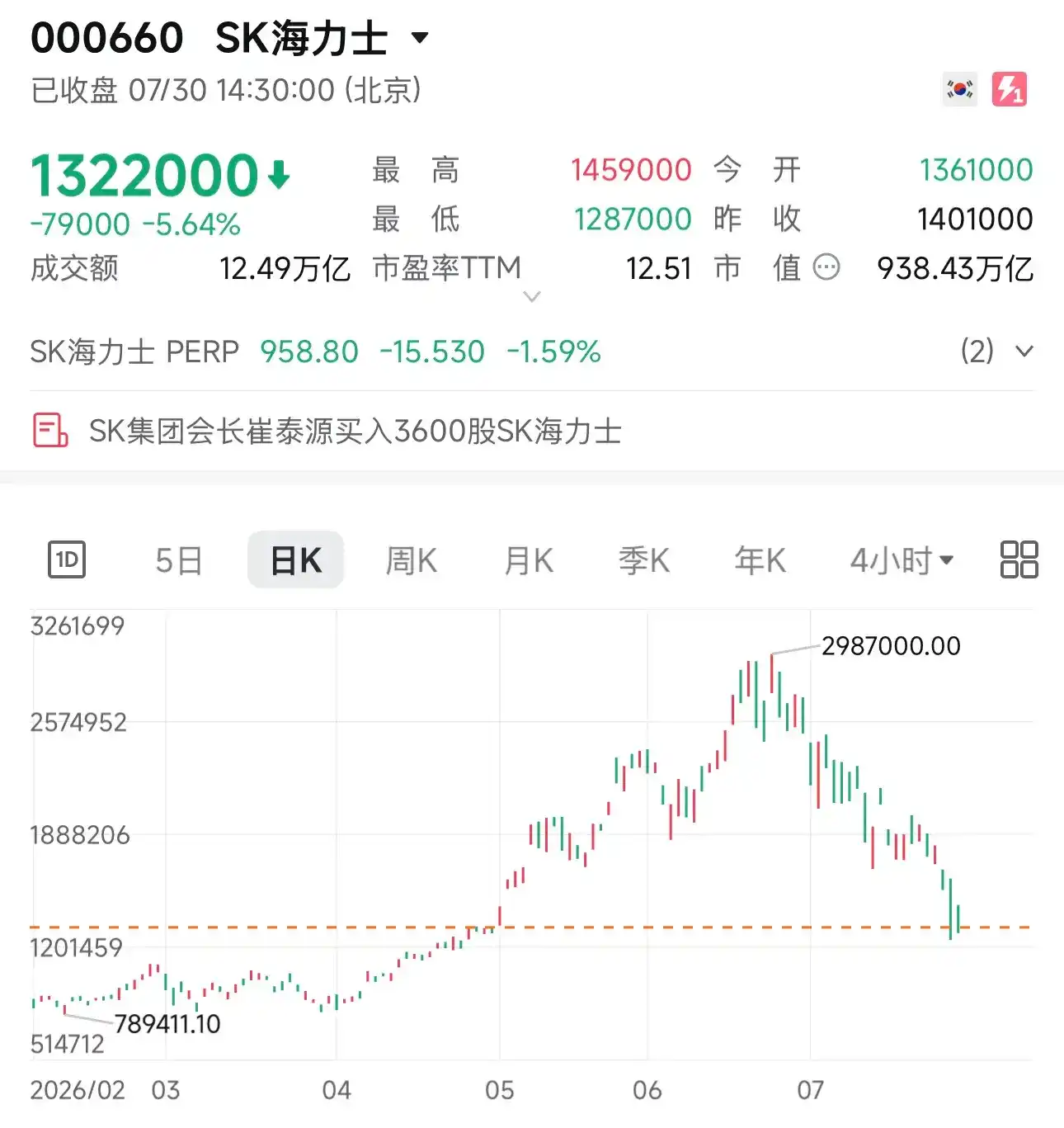
A cross-market bloodbath thus unfolded. The extreme volatility flushed out numerous big V's and traders from the crypto circle. Among them were those who had earned their first pot of gold in the crypto market and those who had already achieved financial freedom. Now, all that's left are reflections and declarations of leaving the scene.

Half Market Conditions, Half Human Nature

Perhaps because the crypto market had been too quiet for too long, memory stocks became the best destination for active capital.

Dp Dapeng (@Dp520888) posted that from the end of last year to the first half of this year, the crypto market was in a constant downtrend. Bitcoin barely caught its breath around $60,000, while South Korean and U.S. stock markets soared on the AI narrative during the same period. Major exchanges, in their efforts to expand markets, had also opened up stock trading access.

He noted that he saw many crypto peers painfully cut losses on their crypto assets and go all-in on Micron and SanDisk at highs, only to lose over 30% subsequently. Had this money stayed in crypto, they could have at least held on until Bitcoin fell to $40,000.

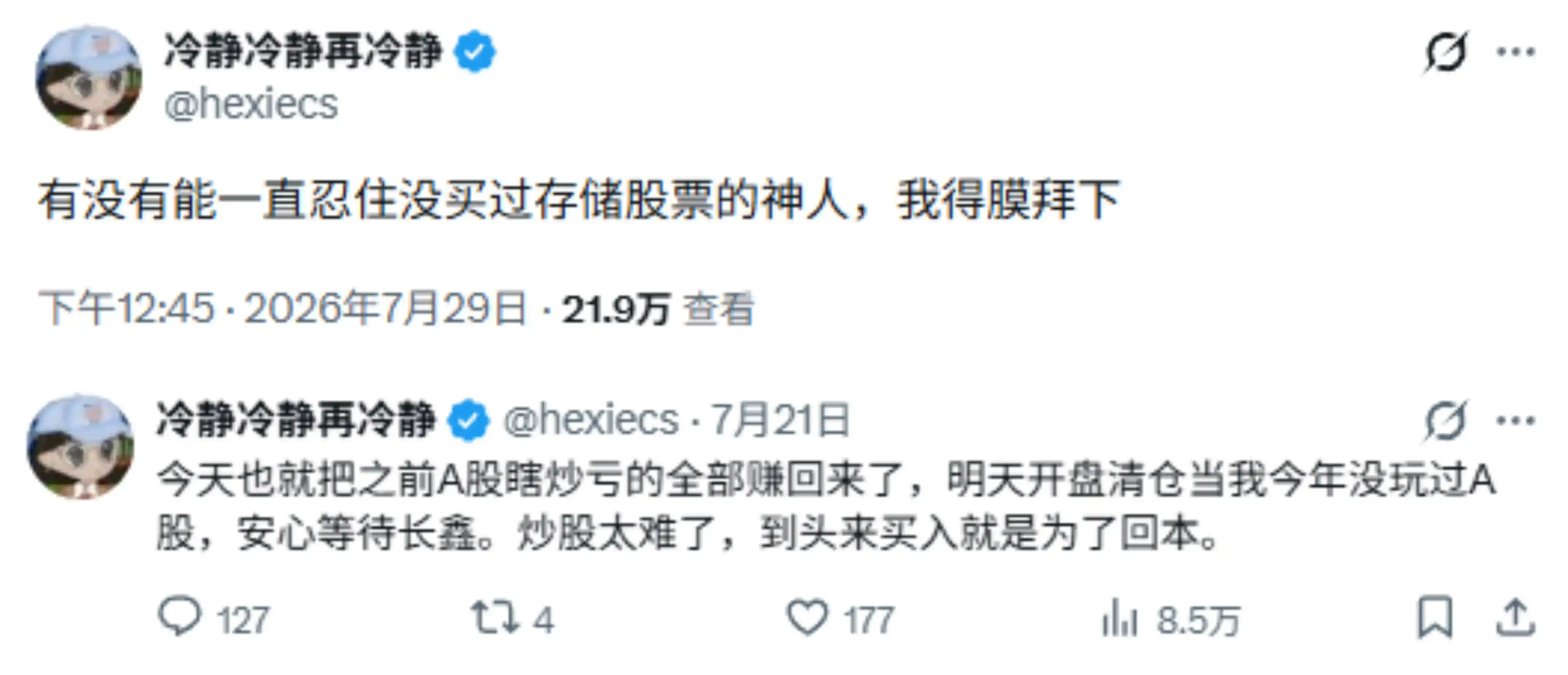
People accustomed to high volatility and tormented by the lack of profit-making opportunities for over half a year found it hard to resist chasing the market that seemed more lucrative. As @hexiecs posted, "Is there any god who has always resisted buying memory stocks? I need to worship them."
However, narratives like AI, GPU, and storage come and go quickly in capital markets. Nvidia's stock price peaked in May and has already wiped out this year's gains, with its total market cap recently overtaken again by Apple. Now it's just storage's turn.

So, the starting point of this crash is half market conditions, half human nature.

Why the Crash This Time?

People transitioning from the crypto circle to the stock market are prone to culture shock.

On one hand, it's the leverage habit. Many start with 2x long positions or add even higher leverage via on-chain perpetual contracts. The same bearish candle that represents a mere pullback in a spot account becomes a liquidation event in a leveraged account.

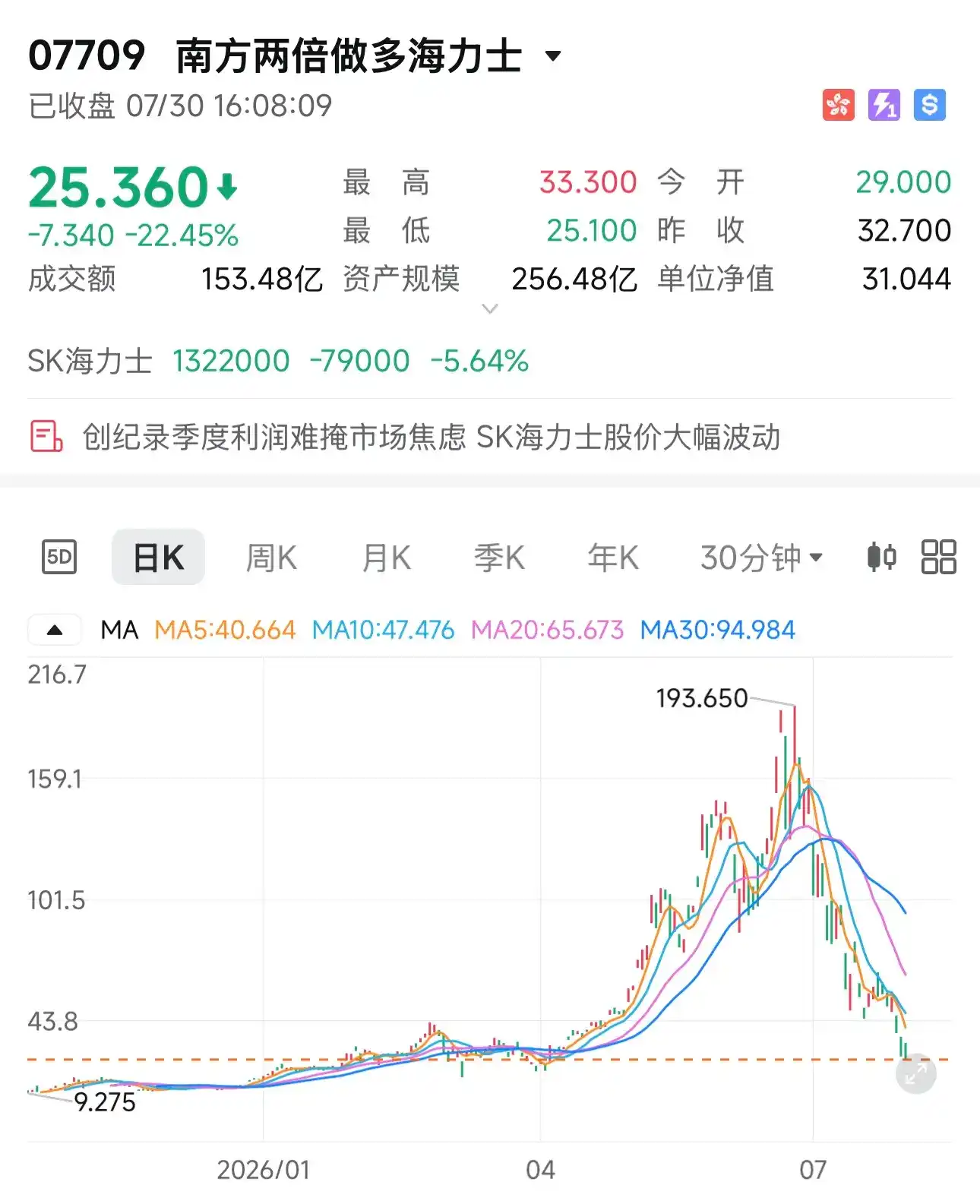
How severe the damage to leveraged products was this round can be seen by looking at the South Korean 2x Long Hynix ETF. This fund was once the world's largest single-stock leveraged product, with peak assets around 130 billion HKD. Its cumulative decline since July has exceeded 80%, with assets now down to 25.6 billion HKD. Another 2x Long Samsung Electronics ETF also fell about 70% this month.
According to Hyperliquid data, on July 29th, the combined 24-hour trading volume for Hynix-related contracts SKHX and SKHY on the platform reached $1.765 billion, becoming the most actively traded asset on the platform, with heat and volume even surpassing BTC.

On the other hand, it's the rule differences. The stock market itself has several sets of rules: U.S. stocks have after-hours trading, South Korean stocks have NXT pre-market, A-shares have price limits, Hong Kong stocks have another set, each with its own trading hours, price bands, and settlement rhythms.

When these underlying assets are packaged into on-chain perpetual contracts, the extreme rules of other markets are bundled in as well. The wick on Hyperliquid on July 28th is a living example.

It is reported that on that day, only one lot of SK Hynix traded in the South Korean pre-market at around $868, about 30% lower than the previous close, right near the lower limit of the price band. This less than $900 real transaction was fed into the chain via the oracle, causing the SKHX perpetual contract to flash crash about 18% in one minute.

According to on-chain data, approximately $80 million was liquidated in the subsequent four hours, with open interest evaporating about $150 million.
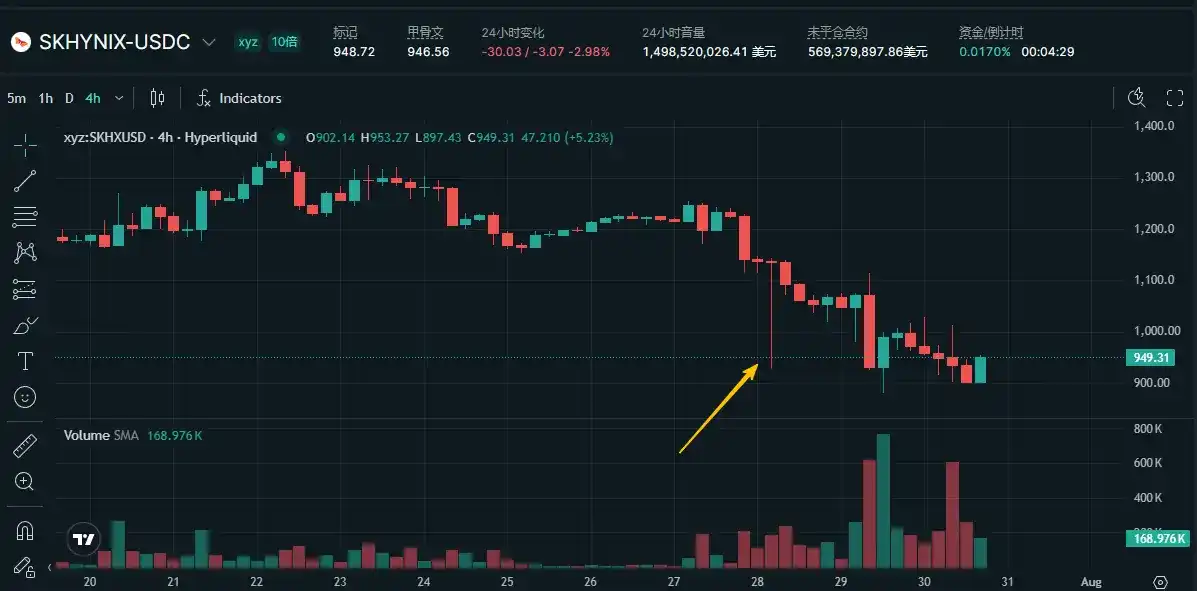
Trade.xyz announced that this price was synchronized from that real transaction in the South Korean pre-market, with the oracle operating according to specifications and no technical error. Although Trade.xyz decided to fully compensate for the liquidation losses this time, it specifically stated this does not constitute a guarantee for similar situations in the future.

Reflections After the Bloodbath

After this bloodbath, many big V's on X began to reflect. Their review focus largely fell on whether the methods they had relied on to make money over the years were still effective after switching markets.

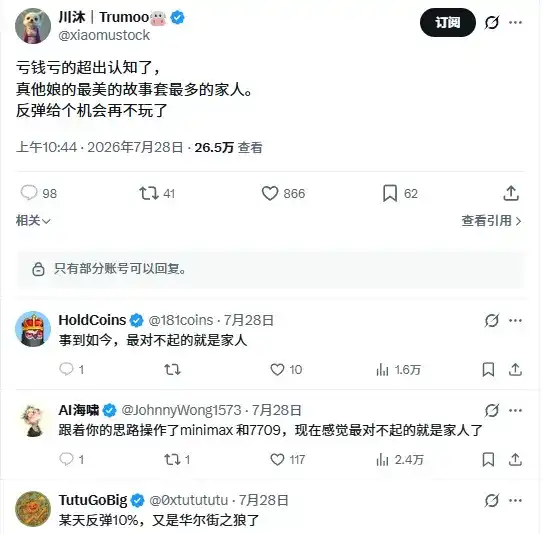
Chuanmu (@xiaomustock) stated that he made and lost money on storage stocks this year. The reason Buffett has survived in the capital market for so long is inseparable from his style of avoiding leverage, not going all-in, and always holding significant idle cash. Ordinary people either lose sleep from anxiety over using leverage to get rich quickly, or continue using leverage after making money, anxious in both profit and loss.
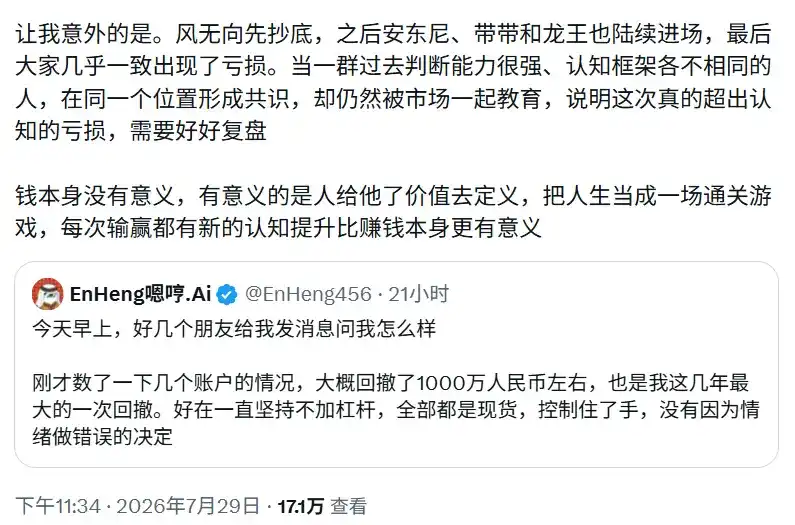
KOL En Heng (@EnHeng456) recounted his three major losses since entering the industry, with this storage wave being the heaviest, resulting in a combined drawdown of over ten million across several accounts, but fortunately, it was all spot trading with no leverage.

He also pointed out that multiple traders with consistently strong judgment and different cognitive frameworks successively entered the market, yet almost all ended up losing. When such a group forms a consensus at the same position but is collectively taught a lesson by the market, it indicates that this loss indeed exceeded their original understanding.
Zishi (@silverfang888), who claimed to have been liquidated for $20 million in semiconductors, also said his biggest regret was moving from crypto to trading stocks. In his view, he is merely a crypto player with limited insight, sitting across from people in the U.S. stock market arena whose cognition and capital far surpass his own.

After being liquidated, many fell into intense self-negation, attributing the losses of these months to their own shallow insight and low cognition. The concentrated outbreak of such emotions also serves as a reminder to everyone using leverage as an amplifier: what the market takes is never just the principal.

Some offered comfort, saying whose trading career hasn't experienced a few such drawdowns? Money lost can be treated as tuition paid. As long as one is still here with spirit intact, there will always be another journey ahead.

In truth, there are very few who can consistently win in the market. Those who can journey a bit further are often those who can still see their own boundaries at different stages.


Tiền kỹ thuật số thịnh hành

Câu hỏi Liên quan

QAccording to the article, what is the main reason behind the significant losses of crypto traders in the stock market?

AThe main reasons are a combination of market conditions and human nature. Crypto traders, accustomed to high volatility, moved to the AI-driven stock market for better returns. However, they faced issues like improper use of leverage and unfamiliarity with the different trading rules of stock markets (like pre-market sessions and price bands), which led to severe losses when the storage sector crashed.

QHow did the specific event on Hyperliquid on July 28th cause major liquidations?

AOn July 28th, a single SK Hynix share traded for around $868 in the Korean pre-market, about 30% lower than the previous close. This price, fed into the chain via an oracle, caused the SKHX perpetual contract on Hyperliquid to flash-crash by about 18% in one minute. This led to approximately $80 million in liquidations and a $150 million drop in open interest over the next four hours.

QWhat is one key trading habit from the crypto world that proved detrimental in the stock market?

AOne key detrimental habit was the immediate use of high leverage. Many traders started with 2x leveraged ETFs or even higher leverage on perpetual contracts. This meant that a price decline that would be a simple drawdown in a spot account resulted in margin calls and liquidations in leveraged positions.

QWhat major reflection did trader '川沐' (@xiaomustock) share after the losses?

ATrader '川沐' reflected that his gains and losses this year both came from the storage sector. He noted that Warren Buffett's longevity in the market is tied to his style of avoiding leverage, not going all-in, and always keeping a large amount of cash on hand. In contrast, ordinary people either lose sleep over leverage-driven anxiety to get rich or continue using leverage after profits, leading to anxiety in both winning and losing.

QWhat was the final attitude or lesson some traders expressed after the market crash?

AAfter the crash, some traders expressed a lesson in humility and recognizing one's boundaries. They acknowledged that moving from the crypto circle to the stock market meant competing against players with far superior knowledge and capital. While some fell into self-doubt, others offered comfort, stating that such drawdowns are part of a trading career, and as long as one's spirit remains, there will always be another opportunity.

Nội dung Liên quan

Dự luật về tiền điện tử được kỳ vọng, được biết đến với tên 'Đạo luật Minh bạch', đang ở giai đoạn quan trọng: Nhà Trắng sẽ xem xét vào cuối tuần này

Dự luật CLARITY Act, một đạo luật được kỳ vọng sẽ thiết lập khung pháp lý rõ ràng cho thị trường tiền mã hóa tại Mỹ, đang ở giai đoạn then chốt. Tương lai của dự luật có thể phụ thuộc vào phản ứng của chính quyền Tổng thống Trump trước một đề xuất mới liên quan đến vấn đề đạo đức. Theo báo cáo, Nhà Trắng dự kiến xem xét một đề xuất do hai Thượng nghị sĩ đảng Dân chủ và Cộng hòa đưa ra nhằm giải quyết lo ngại về việc thực thi các quy tắc đạo đức. Đề xuất này trao quyền cho các công tố viên tiểu bang khởi kiện quan chức liên bang nếu Bộ Tư pháp không thực thi các quy định về xung đột lợi ích, thay vì chỉ dựa vào cơ quan này. Nếu đạt được thỏa thuận về điều khoản đạo đức, dự luật CLARITY có thể được đưa ra biểu quyết tại Thượng viện. Tuy nhiên, dự luật cần ít nhất 60 phiếu ủng hộ để thông qua, và sự ủng hộ này hiện chưa được đảm bảo. Dự luật đã được Ủy ban Ngân hàng Thượng viện thông qua, với mục tiêu xác định rõ thẩm quyền của SEC và CFTC đối với tài sản mã hóa, thiết lập khung thị trường toàn diện, đồng thời bao gồm các quy định về stablecoin và bảo vệ pháp lý cho nhà phát triển phần mềm. Một thỏa hiệp về stablecoin cho phép phần thưởng liên quan đến giao dịch nhưng hạn chế các khoản thanh toán giống lãi suất chỉ dựa trên việc nắm giữ token. Nếu không đạt được thỏa thuận, việc thúc đẩy dự luật CLARITY có thể bị đình trệ một lần nữa, kéo dài sự không chắc chắn trong việc quản lý phần thưởng stablecoin và các quy định khác.

cryptonews.ru28 phút trước

Dự luật về tiền điện tử được kỳ vọng, được biết đến với tên 'Đạo luật Minh bạch', đang ở giai đoạn quan trọng: Nhà Trắng sẽ xem xét vào cuối tuần này

cryptonews.ru28 phút trước

Phỏng vấn lãnh đạo Robinhood: Chiến lược "đòn bẩy" thu hút khách hàng với Meme + token hóa cổ phiếu Mỹ, tất cả các dòng sản phẩm đều đạt doanh thu hàng trăm triệu USD

**Tóm tắt:** Johann Kerbrat, Phó Chủ tịch cấp cao phụ trách mảng Crypto và Kinh doanh Quốc tế của Robinhood, đã chia sẻ chiến lược "đòn bẩy" đằng sau Robinhood Chain sau 3 tuần ra mắt mainnet: song song phát triển meme token và Tài sản Thế giới Thực (RWA). Chuỗi đạt khối lượng giao dịch DEX hàng tuần hơn 30 tỷ USD với hơn 105 triệu giao dịch. Chiến lược này nhằm thu hút hai nhóm người dùng khác nhau: cộng đồng DeFi qua meme và người dùng toàn cầu muốn tiếp cận cổ phiếu Mỹ được mã hóa (hiện có 90+ mã, tại 120+ quốc gia). Robinhood muốn chuyển 27 triệu tài khoản có tiền gửi của mình lên chain bằng cách kết hợp sản phẩm DeFi (như Robinhood Earn) với trải nghiệm người dùng đơn giản, thân thiện của CeFi, không yêu cầu ví tự quản. Về công nghệ, họ chọn stack L2 của Arbitrum thay vì xây L1 riêng để tận dụng bảo mật của Ethereum, hệ sinh thái EVM và tập trung vào sản phẩm tài chính. Kerbrat nhấn mạnh mục tiêu là "mở rộng chiếc bánh" - đưa nhiều người dùng hơn vào thế giới crypto hơn là cạnh tranh thị phần với các chain khác như Base. Các đối tác DeFi được lựa chọn dựa trên khả năng đáp ứng yêu cầu tuân thủ, tạo trải nghiệm độc đáo và khác biệt hóa. Về doanh thu, tất cả các mảng kinh doanh chính của Robinhood (chứng khoán, crypto, v.v.) đều đạt doanh thu hàng trăm triệu USD. Hiện tại, Robinhood Chain ưu tiên tối đa hóa tỷ lệ áp dụng hơn là tối ưu doanh thu từ phí gas, với tầm nhìn dài hạn là trở thành một "siêu ứng dụng" tài chính toàn diện.

marsbit1 giờ trước

Phỏng vấn lãnh đạo Robinhood: Chiến lược "đòn bẩy" thu hút khách hàng với Meme + token hóa cổ phiếu Mỹ, tất cả các dòng sản phẩm đều đạt doanh thu hàng trăm triệu USD

marsbit1 giờ trước

Báo cáo Quý 3 của Fidelity: BTC, ETH và SOL tiếp tục tích lũy đáy, đợt gấu tiền mã hóa này còn kéo dài bao lâu?

Báo cáo Q3 của Fidelity cho thấy thị trường tiền mã hóa đang tiếp tục tìm đáy trong xu hướng giảm hiện tại. Chỉ số NUPL trọng số giảm xuống -0.01, với BTC duy trì lợi nhuận chưa thực hiện trong khi ETH và SOL chìm sâu trong khoản lỗ. Tỷ lệ thống trị của BTC tăng lên 68%, phản ánh xu hướng tập trung vốn vào tài sản có tính thanh khoản cao nhất. Giá cả giảm mạnh, nhiều chỉ số tiệm cận vùng "đầu hàng" lịch sử. Dựa trên chu kỳ đáy khoảng 300 ngày vào các năm 2018 và 2022, đợt điều chỉnh kéo dài 203 ngày hiện tại có thể đã trải qua 2/3 chặng đường. Tháng 10/2026 được đề xuất là khung thời gian đáng quan sát, nhưng không phải là dự báo chắc chắn về điểm đáy. * **Bitcoin (BTC):** NUPL ở mức 0.09 (tích cực), nhưng động lực giá vẫn âm. Chỉ số Yardstick cho thấy BTC có thể bị định giá thấp so với sức mạnh băm của mạng lưới. * **Ethereum (ETH):** NUPL ở mức -0.43 (tích cực cho lợi nhuận dài hạn), động lực âm. Khối lượng chuyển stablecoin vẫn tăng trưởng mạnh, thể hiện nhu cầu sử dụng thực tế. * **Solana (SOL):** NUPL ở mức -0.72 (tích cực), động lực âm. Các chỉ số sử dụng cơ bản và khối lượng chuyển stablecoin vẫn thể hiện sự phục hồi tích cực bất chấp thị trường suy yếu. Báo cáo kết luận rằng thị trường vẫn đang trong giai đoạn tích lũy và điều chỉnh, với sự thận trọng cao.

marsbit2 giờ trước

Báo cáo Quý 3 của Fidelity: BTC, ETH và SOL tiếp tục tích lũy đáy, đợt gấu tiền mã hóa này còn kéo dài bao lâu?

marsbit2 giờ trước

Bitcoin và Ethereum đã thể hiện như thế nào trong tháng 8? Đây là những thông tin chính bạn cần biết

Bitcoin và Ethereum đã bước vào tháng Tám với thành tích lịch sử yếu sau khi kết thúc tháng Bảy tăng trưởng. Dữ liệu lịch sử cho thấy khả năng cả hai đóng cửa tháng với mức lỗ là không thể loại trừ. Trong tháng Bảy, Ethereum vượt trội hơn Bitcoin với mức tăng 18,5%, so với mức tăng 7% của Bitcoin. Tuy nhiên, hiệu suất trong tháng Tám của Ethereum từ năm 2016 trở lại đây khá hỗn hợp: tăng trong 4 lần và giảm trong 6 lần. Đợt tăng mạnh nhất là vào năm 2017 (92,86%), trong khi đợt giảm mạnh nhất là vào năm 2018 (-34,79%). Mặc dù lợi nhuận trung bình của Ethereum trong tháng Tám là 6,74%, nhưng lợi nhuận trung vị âm (-1,74%) cho thấy mức trung bình tích cực chủ yếu được thúc đẩy bởi một vài đợt tăng trưởng mạnh. Bitcoin cũng không có tín hiệu rõ ràng trong tháng Tám. Lợi nhuận trung bình hàng tháng là 1,06%, nhưng lợi nhuận trung vị là -6,99%, điều này cho thấy các phiên đóng cửa thua lỗ phổ biến hơn. Gần đây, Bitcoin thể hiện sự biến động: tăng 8,13% vào tháng 8/2025, tăng 2,95% vào 2024 và giảm 4,02% vào 2023. Tóm lại, mặc dù lợi nhuận trung bình lịch sử của cả Bitcoin và Ethereum trong tháng Tám là dương, nhưng lợi nhuận trung vị âm cho thấy khả năng thua lỗ là phổ biến hơn, với mức trung bình được nâng lên bởi một số đợt tăng mạnh hiếm hoi.

cryptonews.ru2 giờ trước

Bitcoin và Ethereum đã thể hiện như thế nào trong tháng 8? Đây là những thông tin chính bạn cần biết

cryptonews.ru2 giờ trước

Giao dịch

Giao ngay

Bài viết Nổi bật

Làm thế nào để Mua T

Chào mừng bạn đến với HTX.com! Chúng tôi đã làm cho mua Threshold Network Token (T) trở nên đơn giản và thuận tiện. Làm theo hướng dẫn từng bước của chúng tôi để bắt đầu hành trình tiền kỹ thuật số của bạn.Bước 1: Tạo Tài khoản HTX của BạnSử dụng email hoặc số điện thoại của bạn để đăng ký tài khoản miễn phí trên HTX. Trải nghiệm hành trình đăng ký không rắc rối và mở khóa tất cả tính năng. Nhận Tài khoản của tôiBước 2: Truy cập Mua Crypto và Chọn Phương thức Thanh toán của BạnThẻ Tín dụng/Ghi nợ: Sử dụng Visa hoặc Mastercard của bạn để mua Threshold Network Token (T) ngay lập tức.Số dư: Sử dụng tiền từ số dư tài khoản HTX của bạn để giao dịch liền mạch.Bên thứ ba: Chúng tôi đã thêm những phương thức thanh toán phổ biến như Google Pay và Apple Pay để nâng cao sự tiện lợi.P2P: Giao dịch trực tiếp với người dùng khác trên HTX.Thị trường mua bán phi tập trung (OTC): Chúng tôi cung cấp những dịch vụ được thiết kế riêng và tỷ giá hối đoái cạnh tranh cho nhà giao dịch.Bước 3: Lưu trữ Threshold Network Token (T) của BạnSau khi mua Threshold Network Token (T), lưu trữ trong tài khoản HTX của bạn. Ngoài ra, bạn có thể gửi đi nơi khác qua chuyển khoản blockchain hoặc sử dụng để giao dịch những tiền kỹ thuật số khác.Bước 4: Giao dịch Threshold Network Token (T)Giao dịch Threshold Network Token (T) dễ dàng trên thị trường giao ngay của HTX. Chỉ cần truy cập vào tài khoản của bạn, chọn cặp giao dịch, thực hiện giao dịch và theo dõi trong thời gian thực. Chúng tôi cung cấp trải nghiệm thân thiện với người dùng cho cả người mới bắt đầu và người giao dịch dày dạn kinh nghiệm.

Tổng lượt xem 626Xuất bản vào 2024.12.13Cập nhật vào 2026.06.02

Làm thế nào để Mua T

Thảo luận

Chào mừng đến với Cộng đồng HTX. Tại đây, bạn có thể được thông báo về những phát triển nền tảng mới nhất và có quyền truy cập vào thông tin chuyên sâu về thị trường. Ý kiến ​​của người dùng về giá của T (T) được trình bày dưới đây.

活动图片